Close Banner
Free Section  - Video Lectures

06. How Should I Use Antidepressants in Patients at Risk for QTc Prolongation?

Published on March 6, 2019 Expired on March 31, 2022

Scott R. Beach, M.D.

Associate Professor of Psychiatry - Harvard Medical School - Massachusetts General Hospital

Key Points

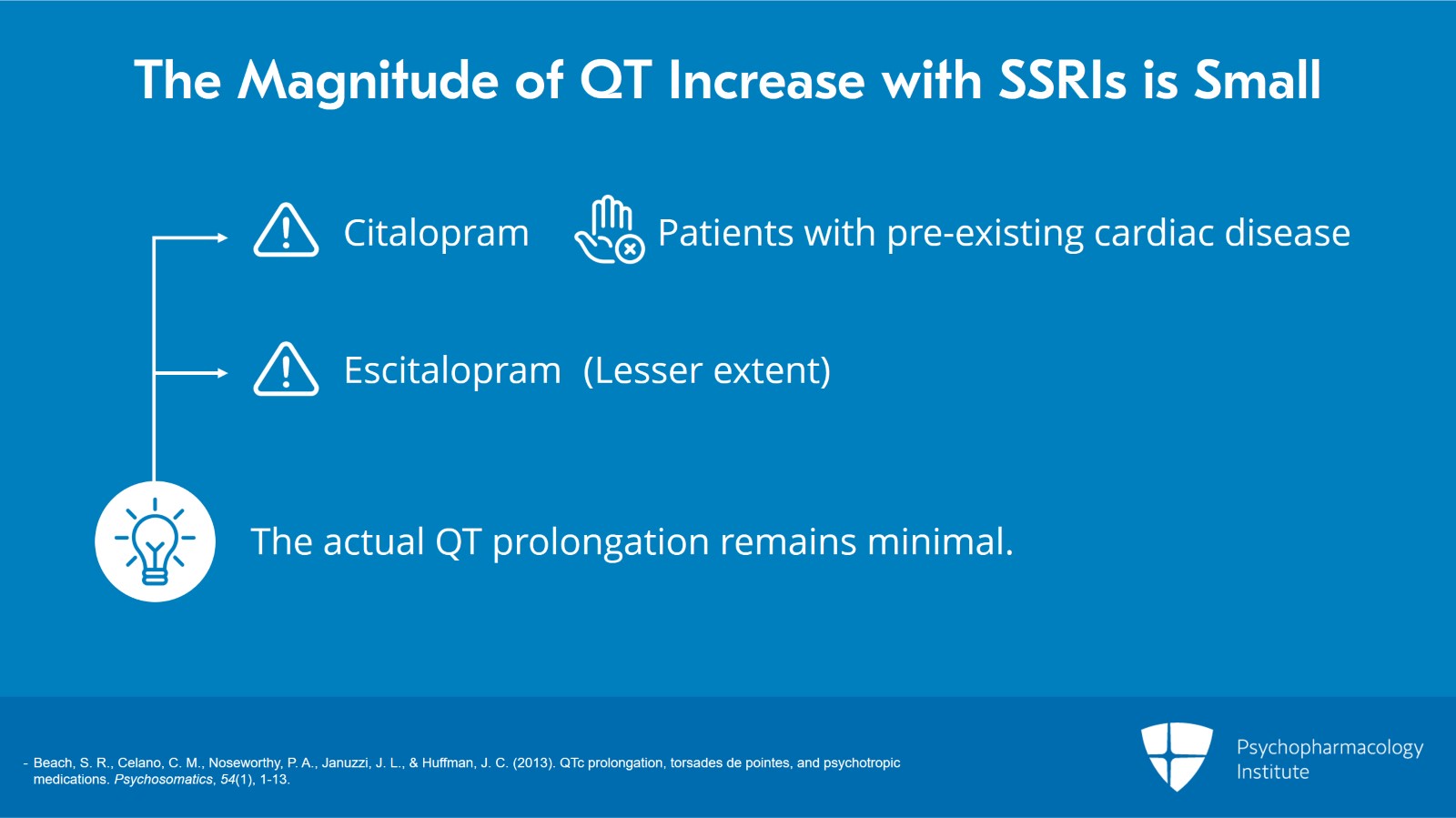
  • The overall magnitude of QT prolongation with SSRIs is small.
  • Sertraline may be the best first-line antidepressant for patients at risk for QT prolongation.
  • Higher doses of citalopram may be appropriate in some patients with careful selection and judicious monitoring.

Free Downloads for Offline Access

  • Free Download Video (MP4)
  • Free Download Audio File (MP3)
  • Free Download Presentation File (PPTX)

Slides and Transcript

Slide 1 of 9

So we’ve talked a lot about antidepressants and their association with QT prolongation. From a practical standpoint, I think it’s important to think through what does this all mean and how should I use antidepressants in patients who may be at risk for QT prolongation. .

Slide 2 of 9

Again, I want to emphasize that the overall magnitude of QT increase with SSRIs is quite small. Citalopram does appear to be the worst offender among that group and escitalopram has also been associated with QT prolongation to a lesser extent. But the actual QT prolongation with either of those agents remains minimal.. One way that we might incorporate this into clinical practice is to think that citalopram may not be an ideal first choice for patients with pre-existing cardiac disease. .
Free Files
Success!
Check your inbox, we sent you all the materials there.

Slide 3 of 9

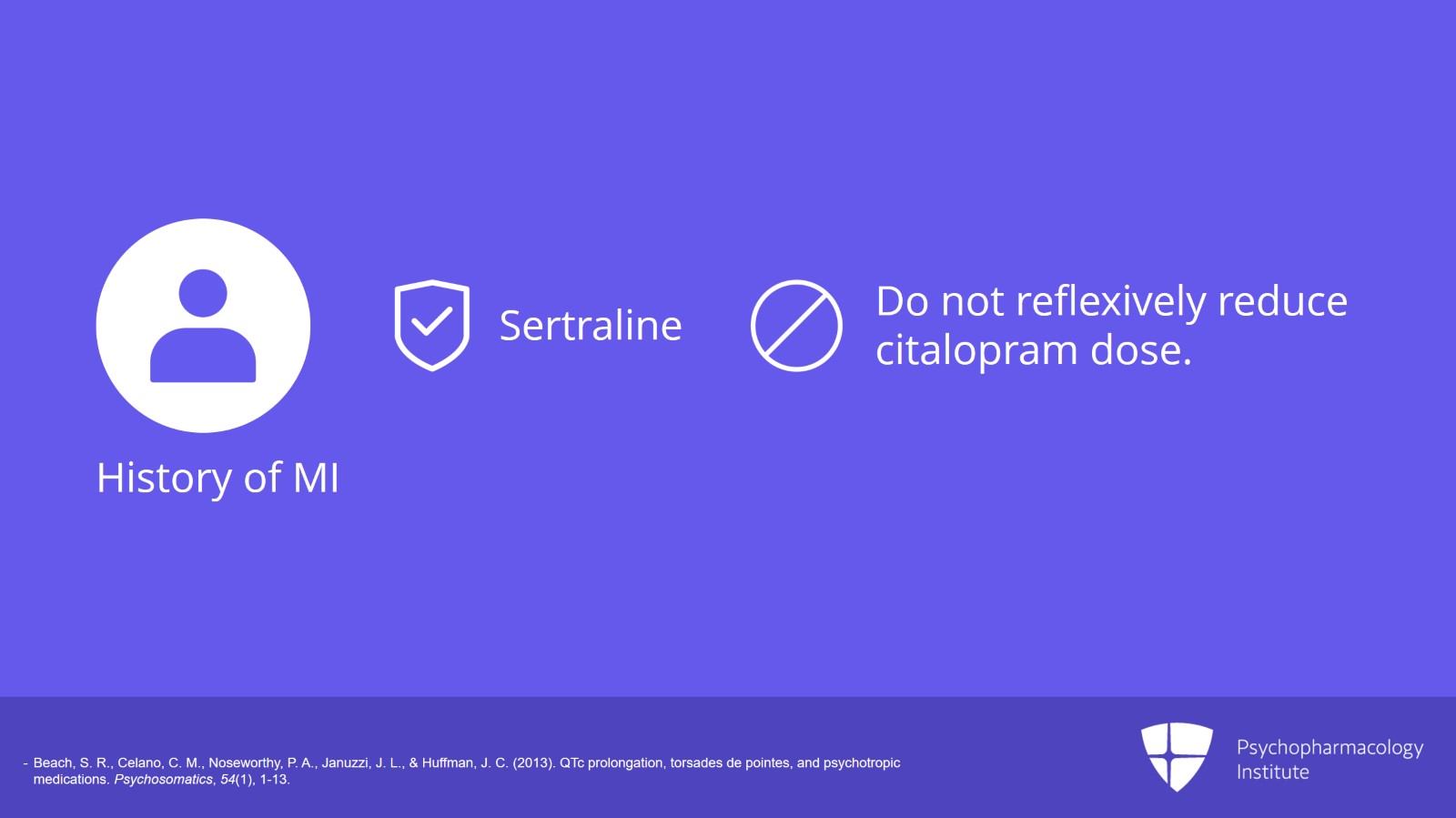
So if I were seeing somebody who had a history of an MI and I had to think about starting them on a new antidepressant, I might not choose citalopram first. In that case, I would probably choose sertraline initially because again, sertraline has been the most studies agent in patients with heart disease and its cardiac safety is very well established. On the other hand, I would significantly recommend against reflexively reducing the dose of citalopram in patients who may be on higher doses without a careful risk-benefit evaluation. So we know that reflexively reducing citalopram leads to increased psychiatric morbidity and I would be hesitant to do so without really thinking through what that might mean for an individual patient..

Slide 4 of 9

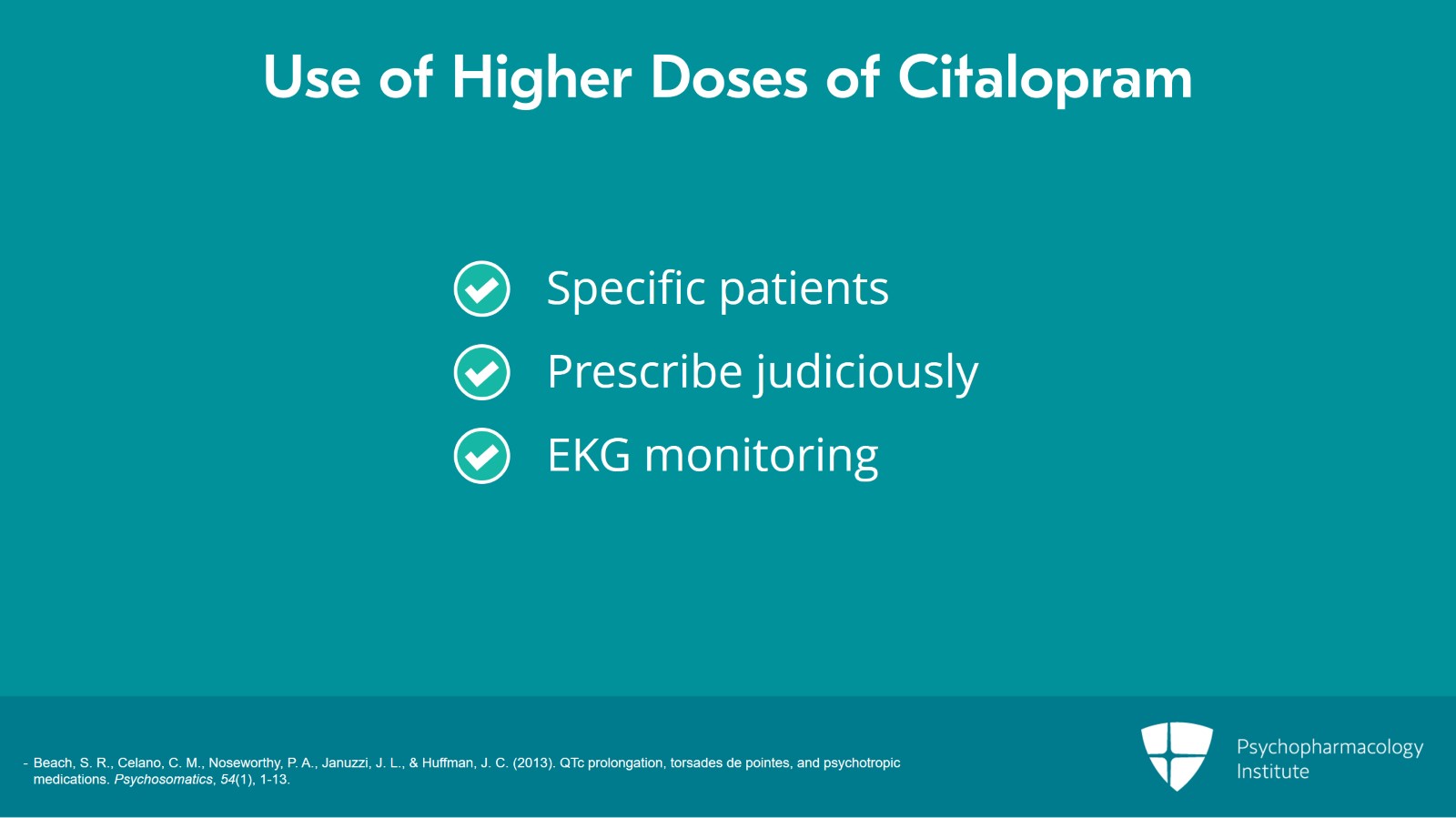
I also think that a compelling case can be made for using higher doses of citalopram in specific patients but that needs to be done judiciously and we need to be thoughtful about using EKG monitoring in that situation.
Free Files
Success!
Check your inbox, we sent you all the materials there.

Slide 5 of 9

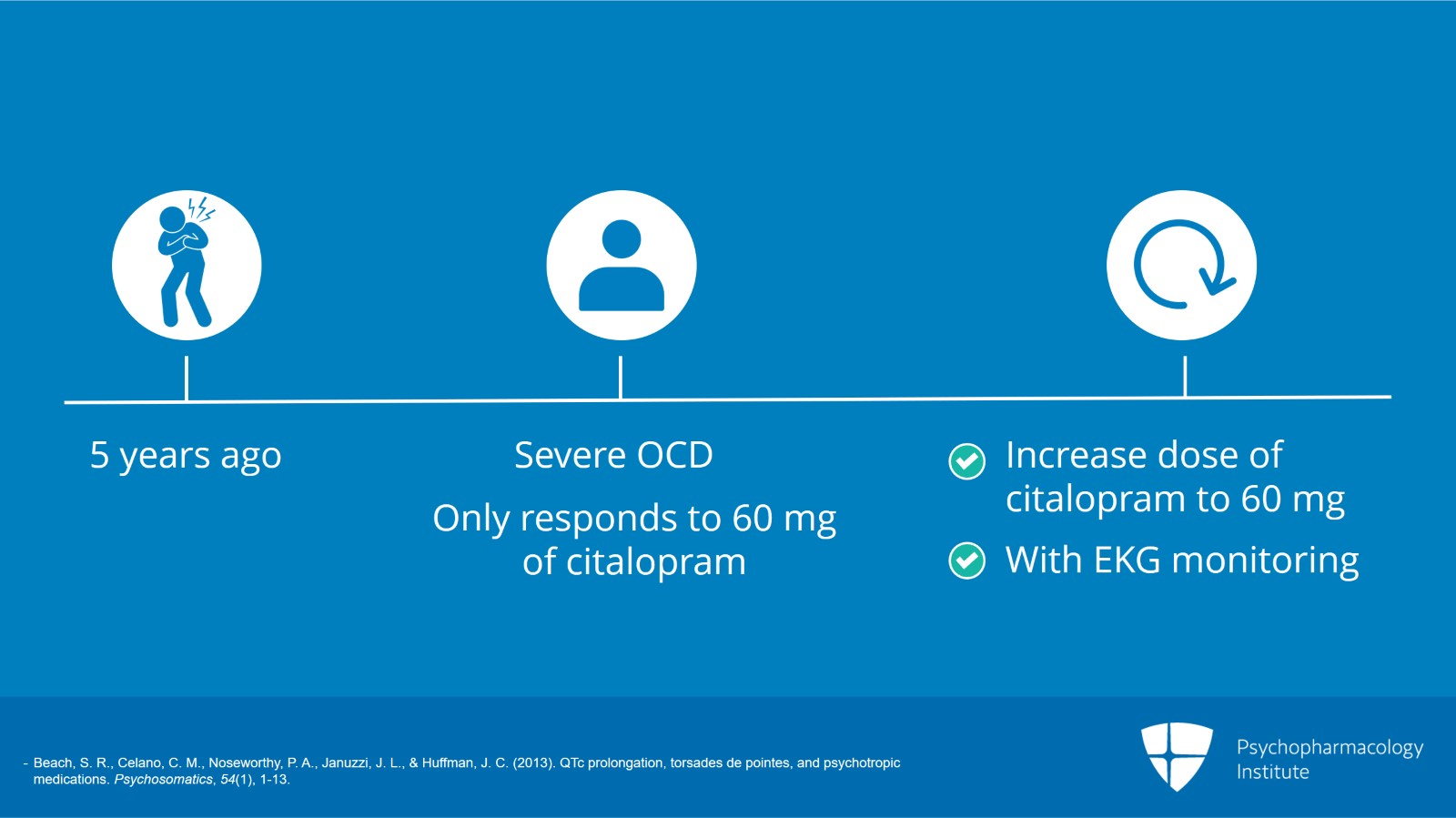
But for example, if I had somebody with bad obsessive-compulsive disorder who had only responded to 60 mg of citalopram in the past and then they had a recurrence of OCD and maybe in the interval they had had an MI five years ago, I might still consider increasing the dose of citalopram to 60 mg in that patient. But I’d want to be careful about monitoring them through that process.

Slide 6 of 9

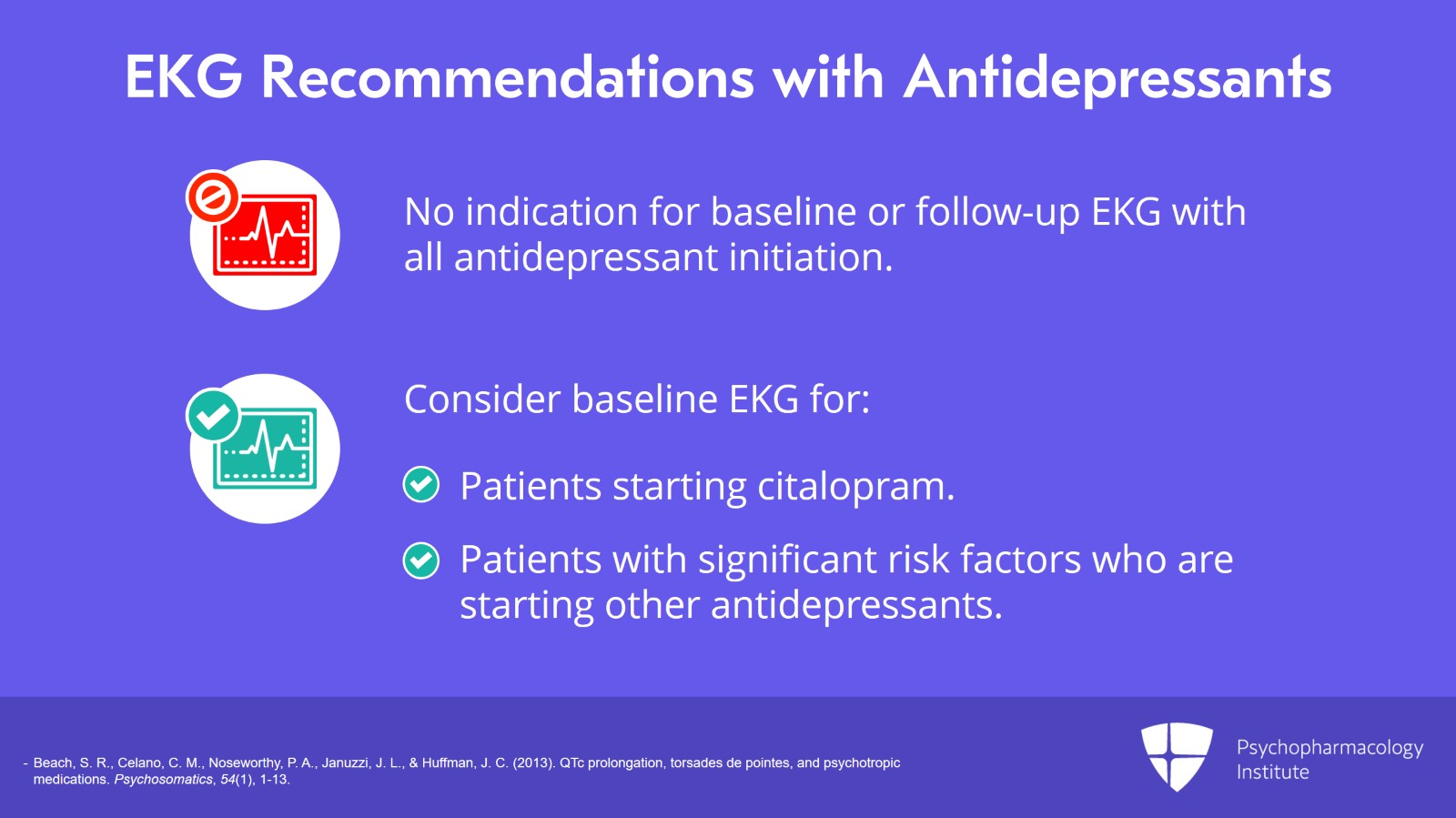
The evidence at this point does not suggest an indication for a baseline EKG with all antidepressant initiation. So if you’re starting an otherwise healthy individual on sertraline or fluoxetine, there’s not sufficient evidence that you need to get a baseline EKG or a . followup. EKG on that patient. . I would recommend considering a baseline EKG for patients being started on citalopram even if they don’t have other risk factors or for patients with significant risk factors being started on other antidepressants. I want to emphasize that this really depends on your setting and what resources are like in your setting. So if you’re in a setting where there’s an EKG machine in the office or down the hall and it’s relatively easy to get an EKG on patients, then it might be wise to check a baseline before starting somebody on citalopram. But if you’re in a resource-poor setting where getting an EKG is actually quite challenging, I probably wouldn’t recommend holding off on antidepressant initiation just because of the EKG issue..
Free Files
Success!
Check your inbox, we sent you all the materials there.

Slide 7 of 9

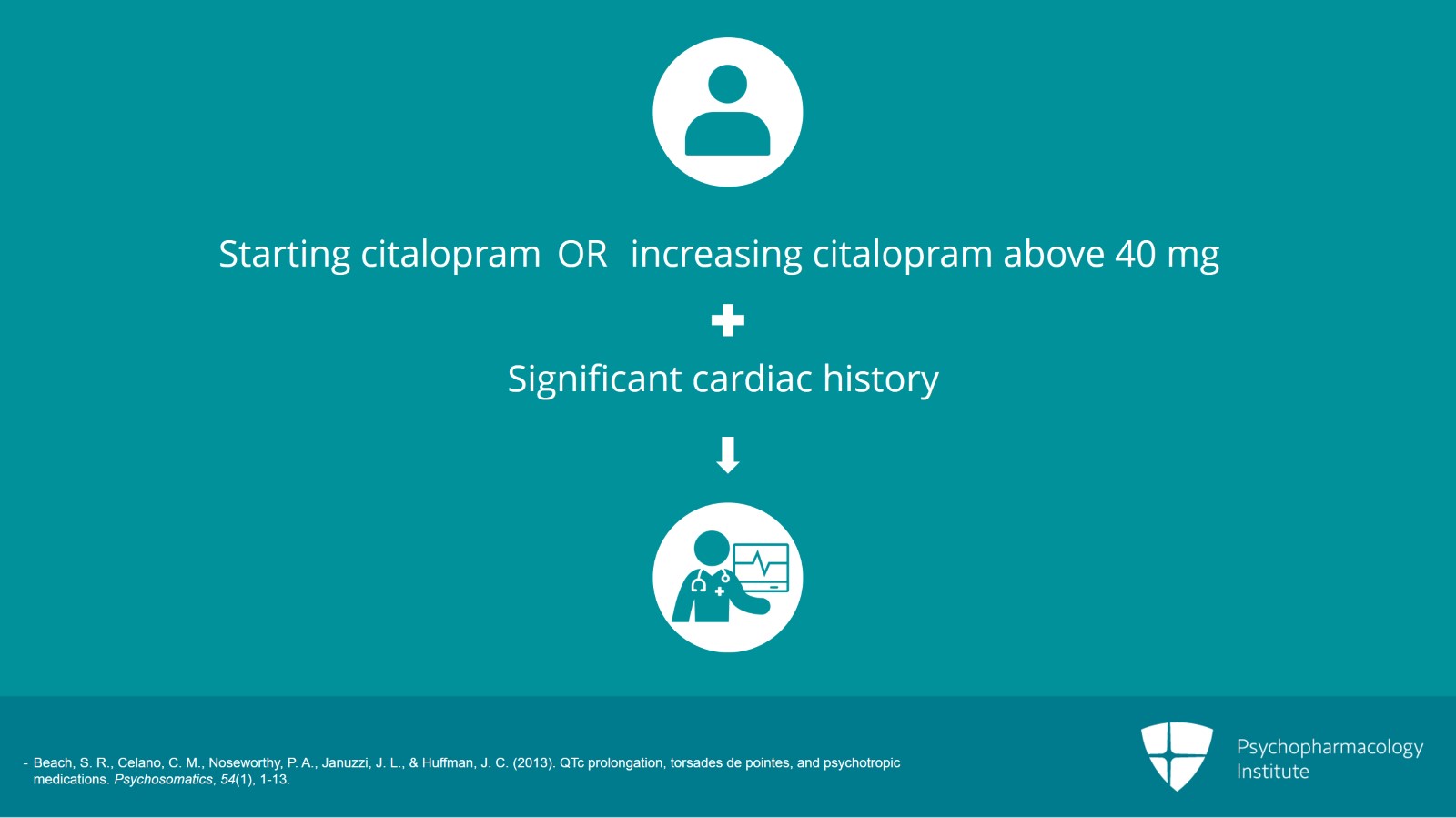
For patients who you’re thinking about starting citalopram and they have a significant cardiac history or for somebody who’s on citalopram and you’re thinking about increasing the dose above 40 mg and they have a significant cardiac history, that might be a time to think about consulting Cardiology or getting Cardiology involved in a curbside fashion. Again, that’s going to depend a lot on your setting and how easy or difficult that is to achieve..

Slide 8 of 9

So summarize, the overall magnitude of QT prolongation with SSRIs is quite small. Sertraline might be a good choice first line antidepressant for patients who are at risk for QT prolongation. And higher doses of citalopram are appropriate in some patients with careful selection and judicious monitoring..
Free Files
Success!
Check your inbox, we sent you all the materials there.

Slide 9 of 9

Learning Objectives:

After completing this activity, the learner will be able to:

  1. Define the cardiac side effects of common psychotropics.
  2. Outline the workup and management of significant cardiac complications of psychotropics.

Original Release Date: March 6, 2019

Expiration Date: March 31, 2022

Relevant Financial Disclosures: 

None of the faculty, planners, and reviewers for this educational activity have relevant financial relationships to disclose during the last 24 months with ineligible companies whose primary business is producing, marketing, selling, re-selling, or distributing healthcare products used by or on patients.

Contact Information: For questions regarding the content or access to this activity, contact us at support@psychopharmacologyinstitute.com

Free Files
Success!
Check your inbox, we sent you all the materials there.
Continue in the website
Instant access modal

Become a Bronze, Silver, Gold, Bronze extended, Silver extended or Gold extended Member.

2025–26 Psychopharmacology CME Program

Unlock up to 155 CME Credits, including 40 SA CME Credits.