Slides and Transcript
Slide 2 of 11
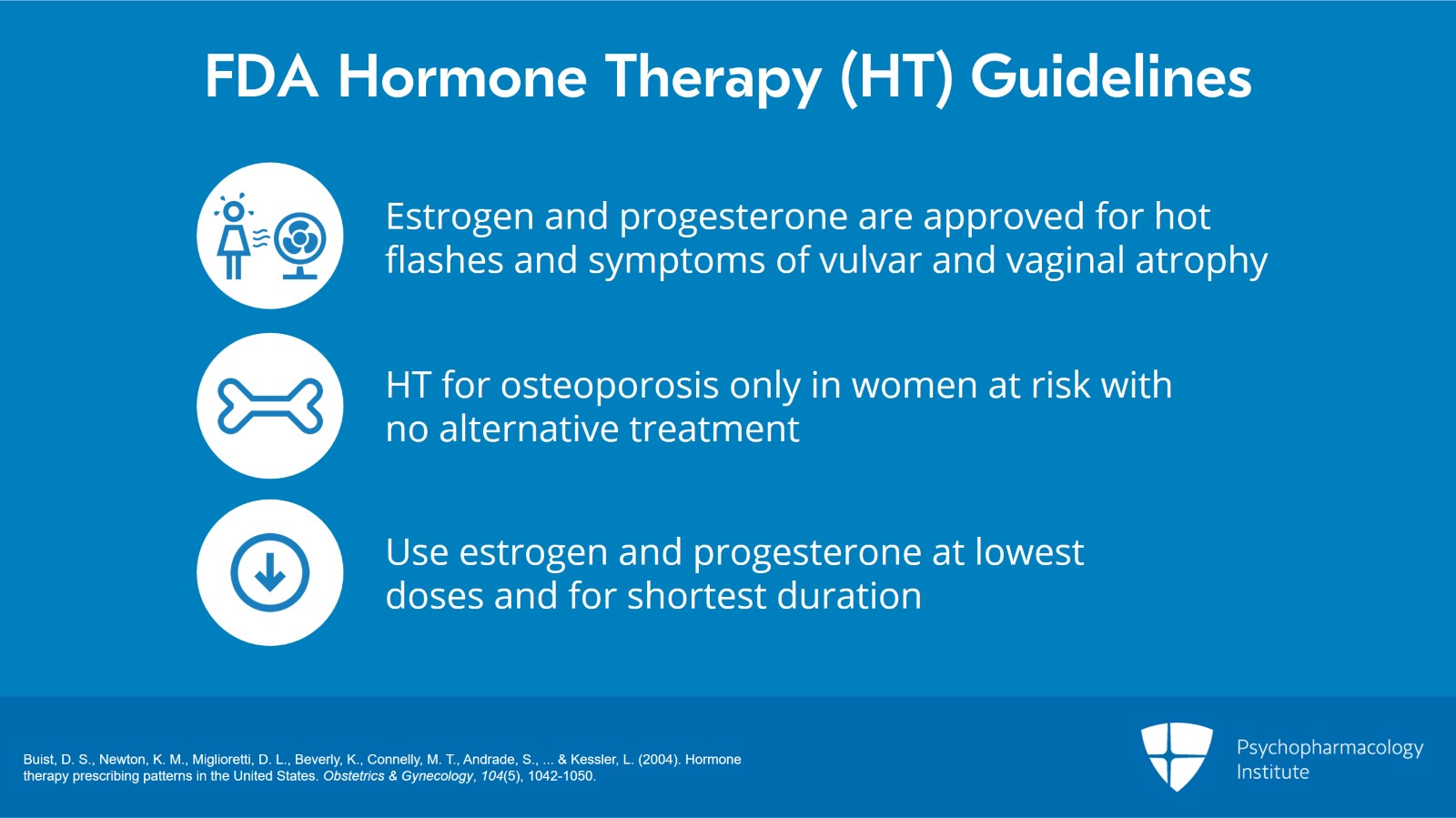
And I’m going to review with you the FDA guidelines regarding hormone therapy which include the following:
Estrogen and progesterone are approved for relief of hot flashes and symptoms of vulvar and vaginal atrophy. What is preferred are low doses of vaginal estrogen.
Although hormone therapy is effective for the prevention of osteoporosis, it should only be considered for women at significant risk of osteoporosis who cannot take alternative treatments.
And additionally, estrogen and progesterone should be used at the lowest doses for the shortest duration in order to achieve treatment goals.
References:
- Buist, D. S., Newton, K. M., Miglioretti, D. L., Beverly, K., Connelly, M. T., Andrade, S., … & Kessler, L. (2004). Hormone therapy prescribing patterns in the United States. Obstetrics & Gynecology, 104(5), 1042-1050.
Free Files
Download PDF and other files
Success!
Check your inbox, we sent you all the materials there.
Slide 3 of 11
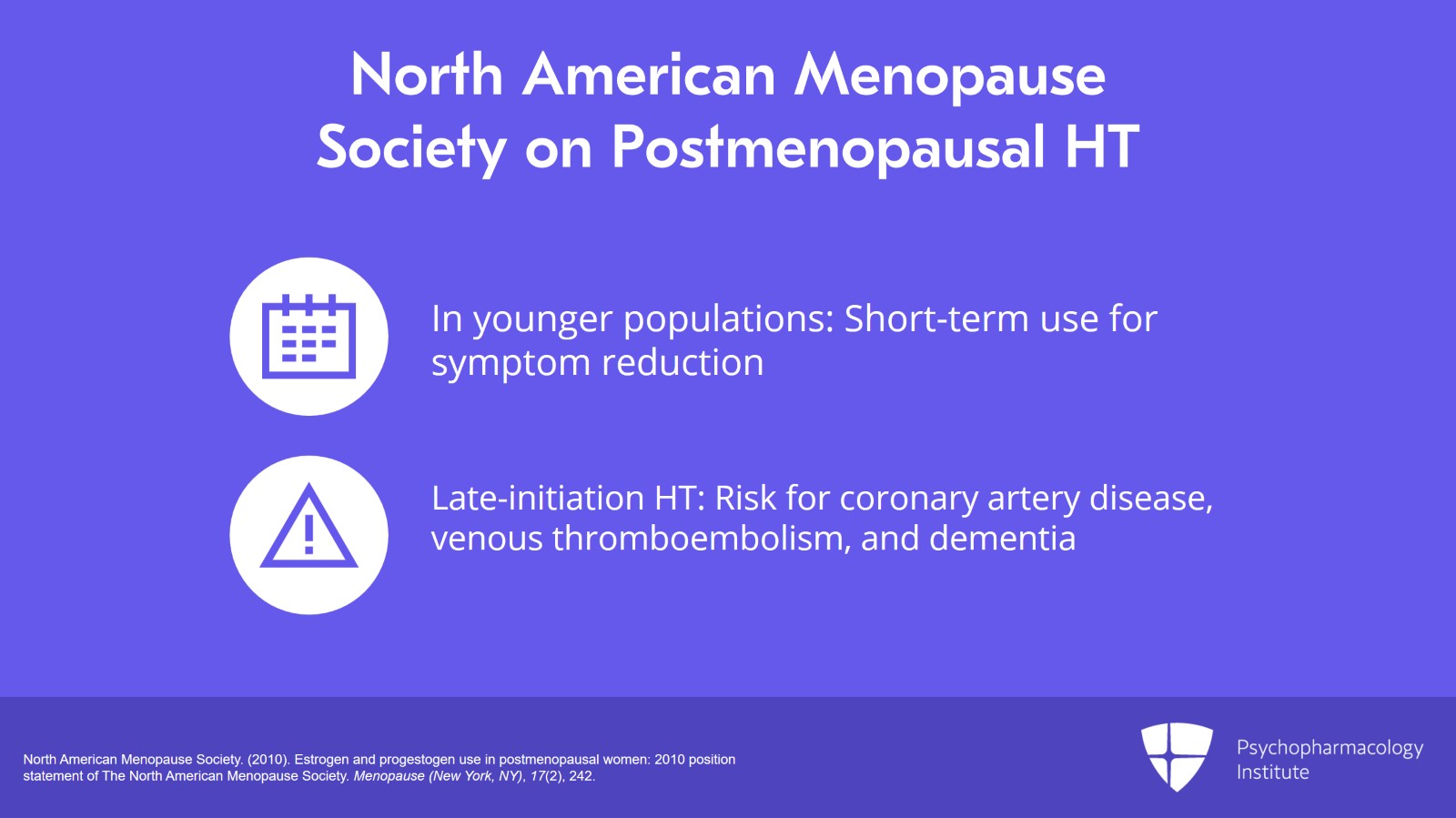
Now, a useful summary of the risks and benefits of hormone therapy have been provided by the North American Menopause Society which has stated because the incidence of disease outcomes increases with age and time since menopause, the benefit-risk ratio for hormone therapy is more likely to be acceptable for short-term use for symptom reduction in a younger population.
And then in an updated version, the risk-benefit ratio is less favorable when hormone therapy initiation is considered in women greater than 60 years or those who are more than 10 years postmenopause. Late initiation of hormone therapy is associated with an increased risk for coronary artery disease events, venous thromboembolism and also dementia.
References:
- North American Menopause Society. (2010). Estrogen and progestogen use in postmenopausal women: 2010 position statement of The North American Menopause Society. Menopause (New York, NY), 17(2), 242.
Slide 4 of 11
It’s my opinion that it is important for psychiatrists to know the current information on the risks and benefits of hormone therapy for their patients which is why I am reviewing these data with you.
So let’s look at the Women’s Health Initiative data which is data from a very, very large community-based study on the risk of hormone therapy in postmenopausal women.
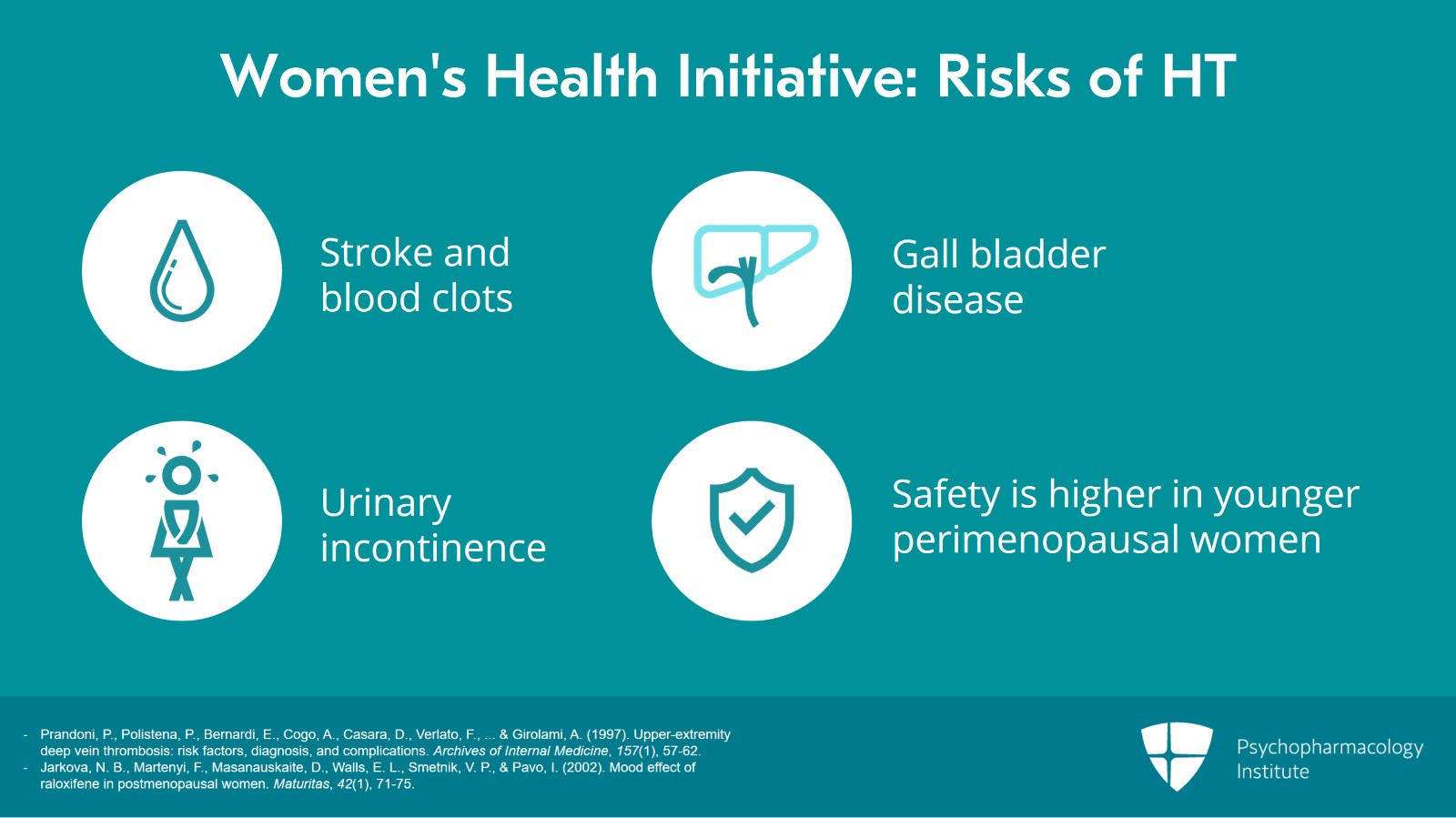
So overall, women on combined hormonal therapy or estrogen alone had fewer fractures but more strokes, blood clots, gallbladder disease and urinary incontinence. It’s important though to know that for strokes, blood clots and all that causes mortality, safety was greater in younger women close to menopause.
References:
- Prandoni, P., Polistena, P., Bernardi, E., Cogo, A., Casara, D., Verlato, F., … & Girolami, A. (1997). Upper-extremity deep vein thrombosis: risk factors, diagnosis, and complications. Archives of Internal Medicine, 157(1), 57-62.
- Jarkova, N. B., Martenyi, F., Masanauskaite, D., Walls, E. L., Smetnik, V. P., & Pavo, I. (2002). Mood effect of raloxifene in postmenopausal women. Maturitas, 42(1), 71-75.
Free Files
Download PDF and other files
Success!
Check your inbox, we sent you all the materials there.
Slide 5 of 11
Now, with regard to the issue of the risk for breast cancer with hormone therapy, let’s look at that data from the Women’s Health Initiative.
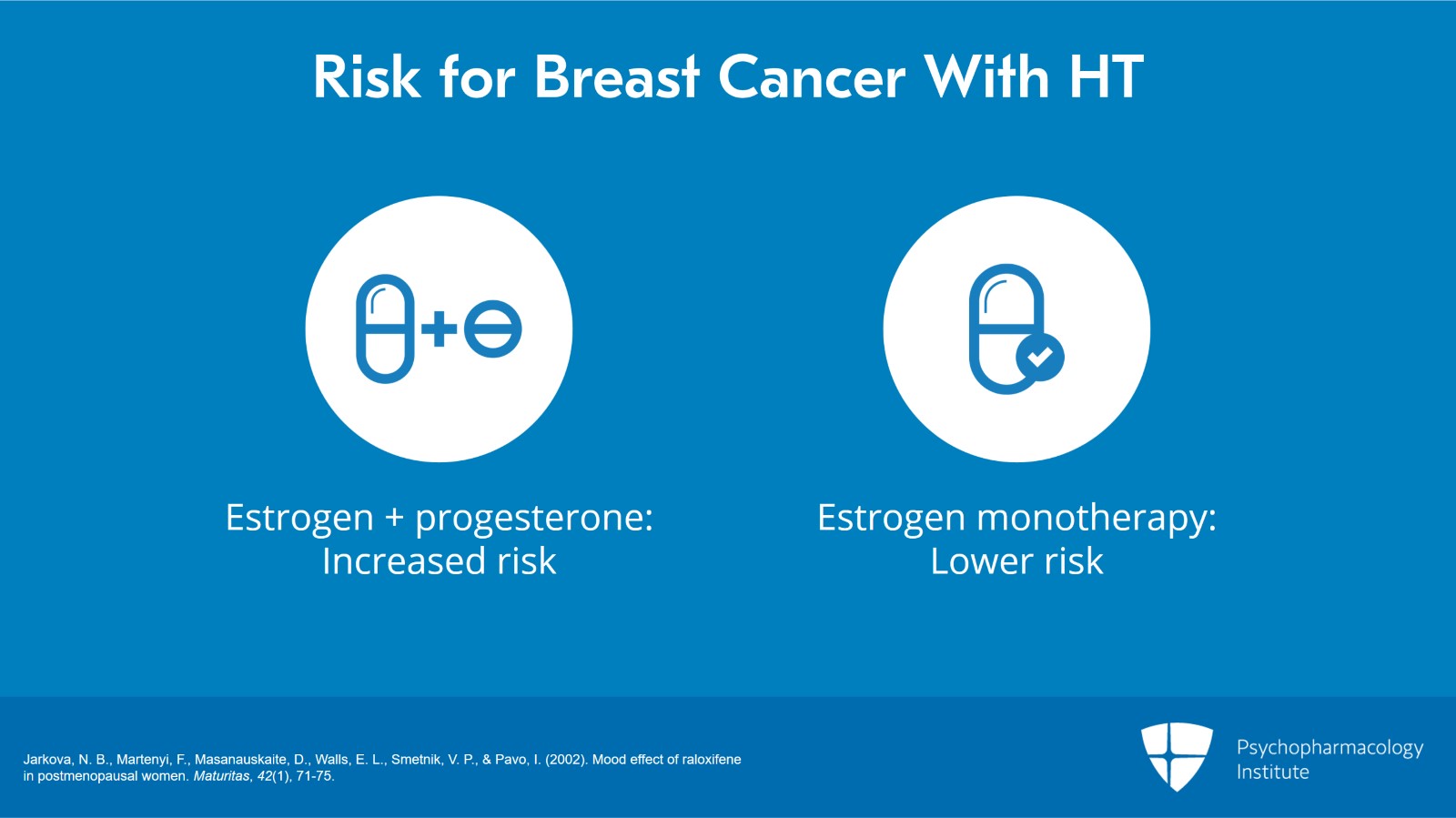
And what they found was that estrogen plus progesterone increased the risk for breast cancer with the risk amounting to about eight additional cases of breast cancer per 10,000 users for five or more years.
The researchers concluded that it probably takes 10 or more years of estrogen monotherapy before the risk for breast cancer goes up but only five to six years if combination estrogen and progesterone therapy were used.
References:
- Jarkova, N. B., Martenyi, F., Masanauskaite, D., Walls, E. L., Smetnik, V. P., & Pavo, I. (2002). Mood effect of raloxifene in postmenopausal women. Maturitas, 42(1), 71-75.
Slide 6 of 11
So what about the risk for heart disease with hormone therapy? This is so important because we know that heart disease is the number one killer of women in the United States.
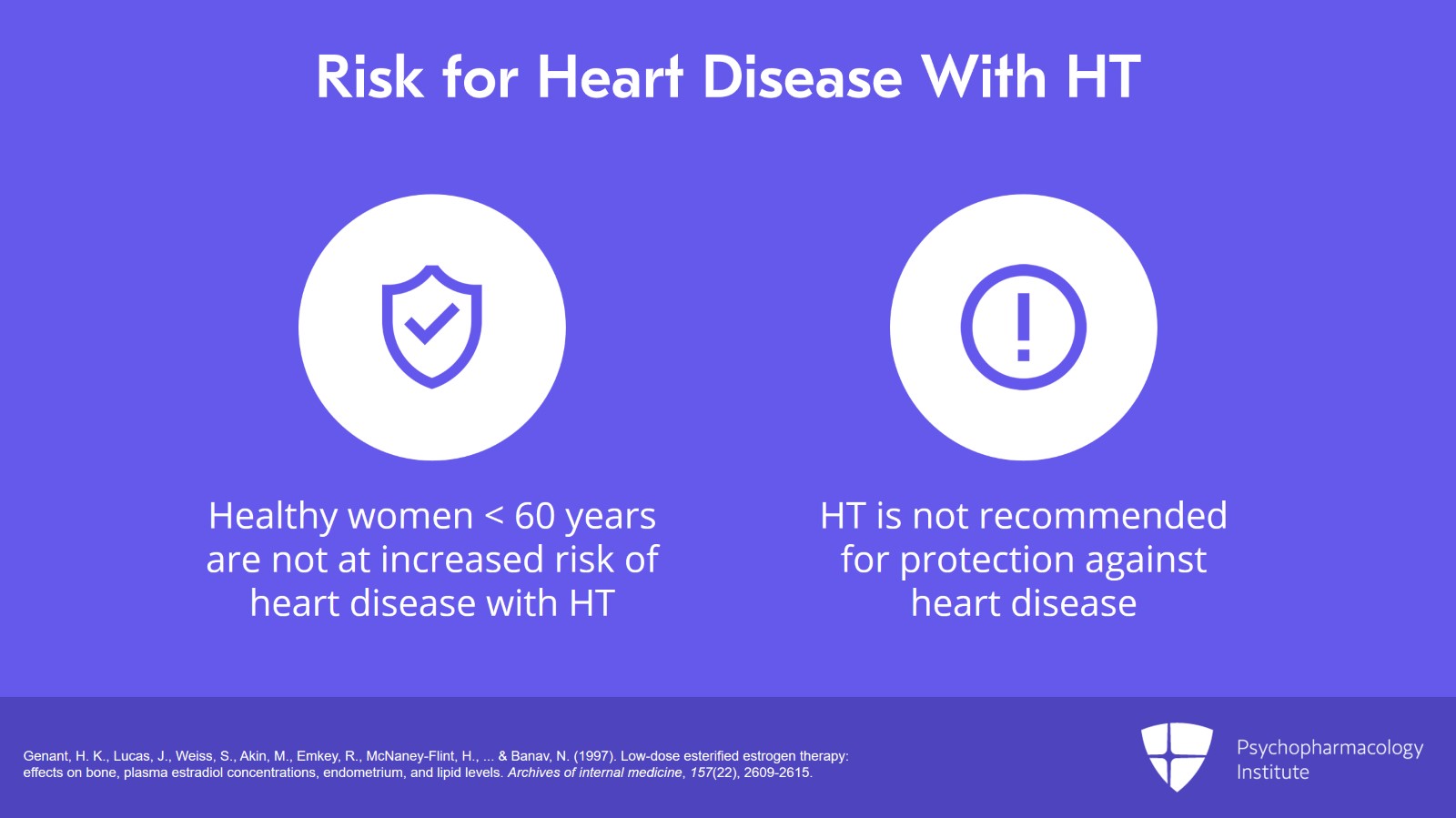
It appears that most healthy women below age 60 will not have an increase in the risk of heart disease with hormone therapy.
Nevertheless, hormone therapy is not recommended for protection against heart disease.
References:
- Genant, H. K., Lucas, J., Weiss, S., Akin, M., Emkey, R., McNaney-Flint, H., … & Banav, N. (1997). Low-dose esterified estrogen therapy: effects on bone, plasma estradiol concentrations, endometrium, and lipid levels. Archives of internal medicine, 157(22), 2609-2615.
Free Files
Download PDF and other files
Success!
Check your inbox, we sent you all the materials there.
Slide 7 of 11
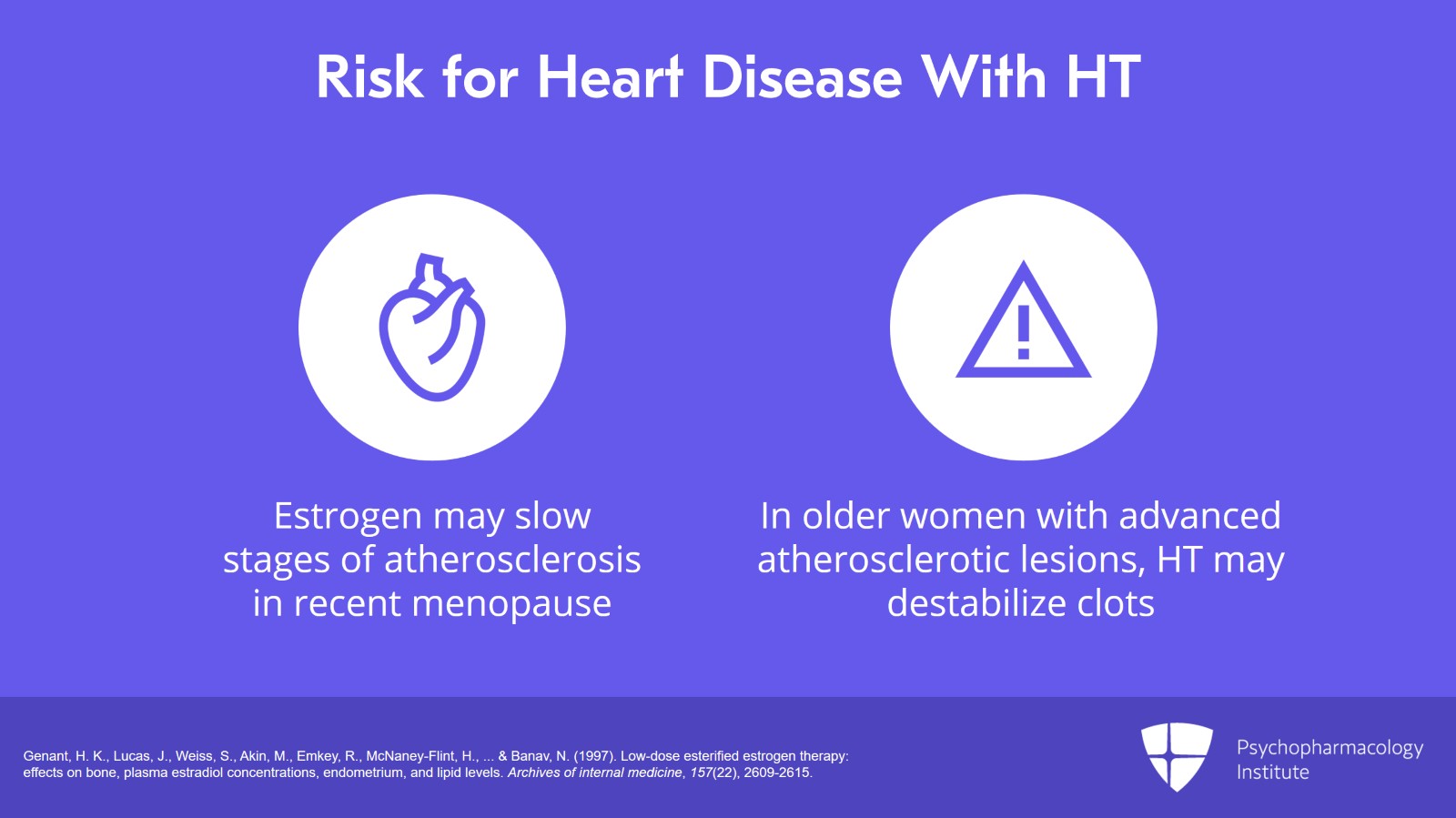
The current hypothesis is that estrogen may slow early stages of atherosclerosis in recently menopausal women but may destabilize plaques or clots in older women who may have advanced atherosclerotic lesions. So moving on, understandably, the issue of heart health and hormone therapy is quite complicated.
References:
- Genant, H. K., Lucas, J., Weiss, S., Akin, M., Emkey, R., McNaney-Flint, H., … & Banav, N. (1997). Low-dose esterified estrogen therapy: effects on bone, plasma estradiol concentrations, endometrium, and lipid levels. Archives of internal medicine, 157(22), 2609-2615.
Slide 8 of 11
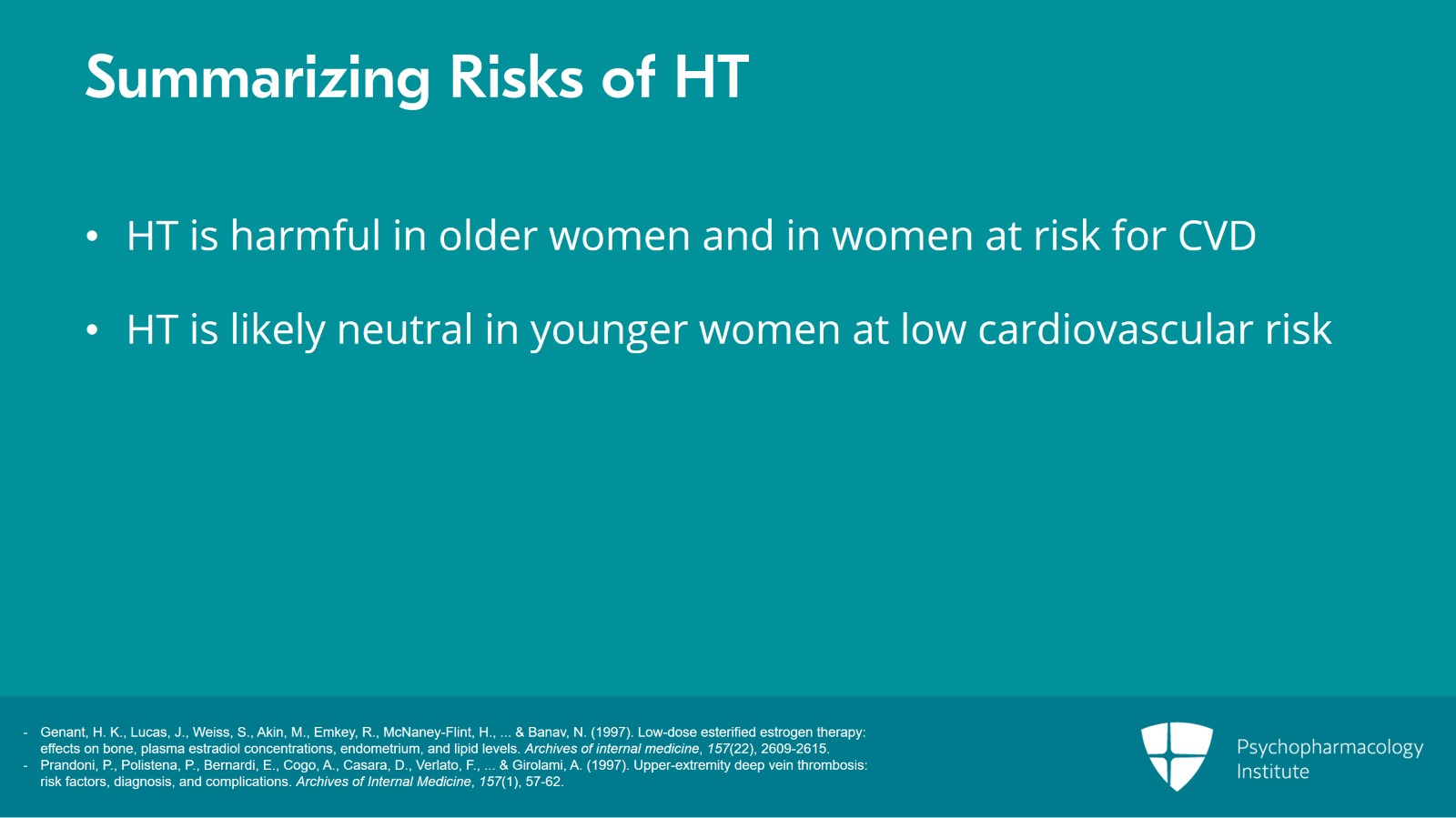
To summarize, hormone therapy is harmful in older women and in women who are at increased risk for coronary vascular disease.
Hormone therapy is probably neutral in younger women or women at low risk for coronary vascular disease.
References:
- Genant, H. K., Lucas, J., Weiss, S., Akin, M., Emkey, R., McNaney-Flint, H., … & Banav, N. (1997). Low-dose esterified estrogen therapy: effects on bone, plasma estradiol concentrations, endometrium, and lipid levels. Archives of internal medicine, 157(22), 2609-2615.
- Prandoni, P., Polistena, P., Bernardi, E., Cogo, A., Casara, D., Verlato, F., … & Girolami, A. (1997). Upper-extremity deep vein thrombosis: risk factors, diagnosis, and complications. Archives of Internal Medicine, 157(1), 57-62.
Free Files
Download PDF and other files
Success!
Check your inbox, we sent you all the materials there.
Slide 9 of 11
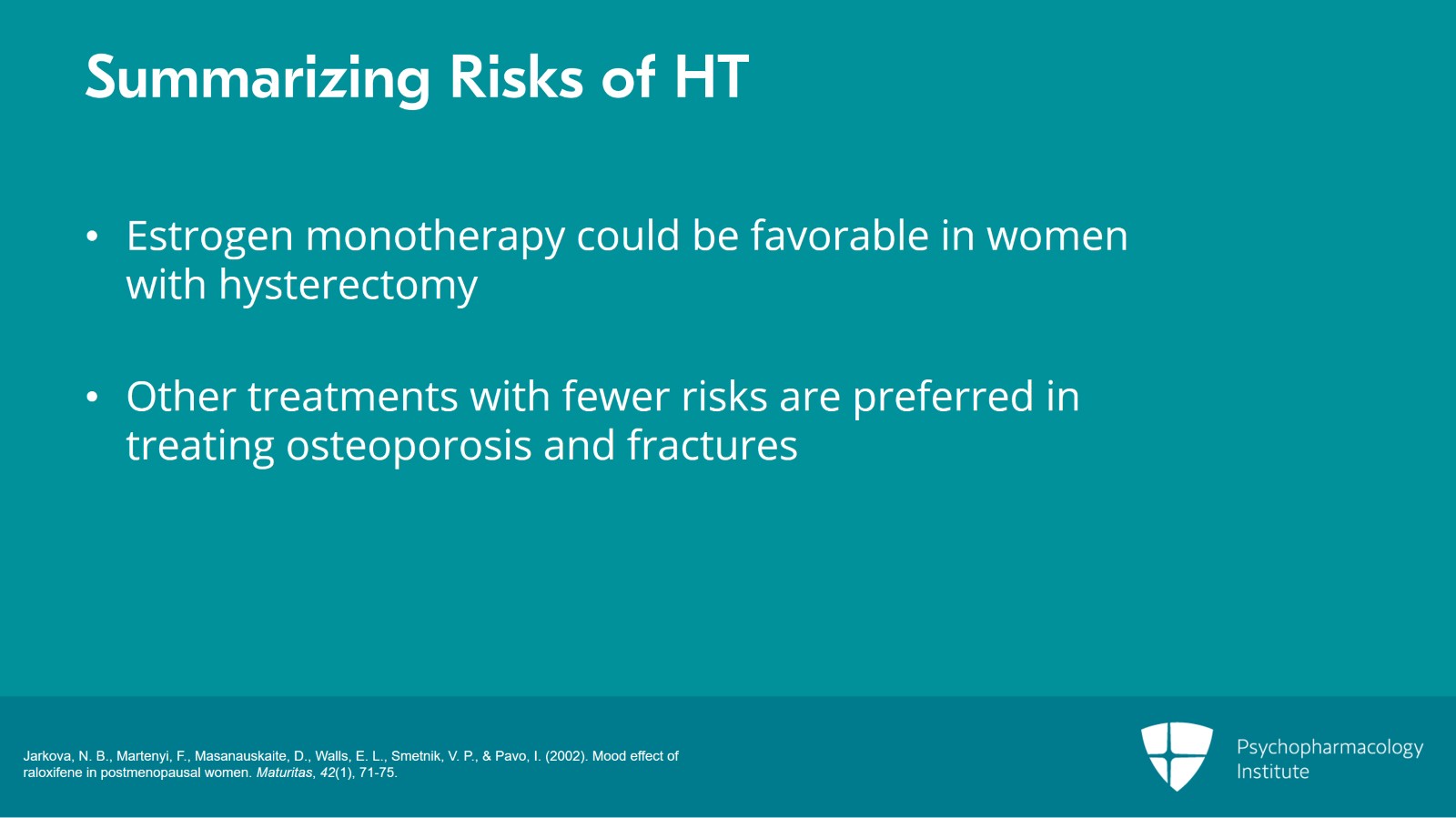
Hormone therapy is probably favorable for women on estrogen monotherapy, in other words, in women without their uterus who have undergone hysterectomy and therefore not at risk for endometrial cancer which is increased with estrogen therapy.
Finally, with regard to fractures due to osteoporosis, hormone therapy prevents bone loss and reduces fracture but there are other treatments with fewer risks than hormone therapy that are preferred to address the problem of osteoporosis and osteoporotic fractures.
References:
- Jarkova, N. B., Martenyi, F., Masanauskaite, D., Walls, E. L., Smetnik, V. P., & Pavo, I. (2002). Mood effect of raloxifene in postmenopausal women. Maturitas, 42(1), 71-75.
Slide 10 of 11
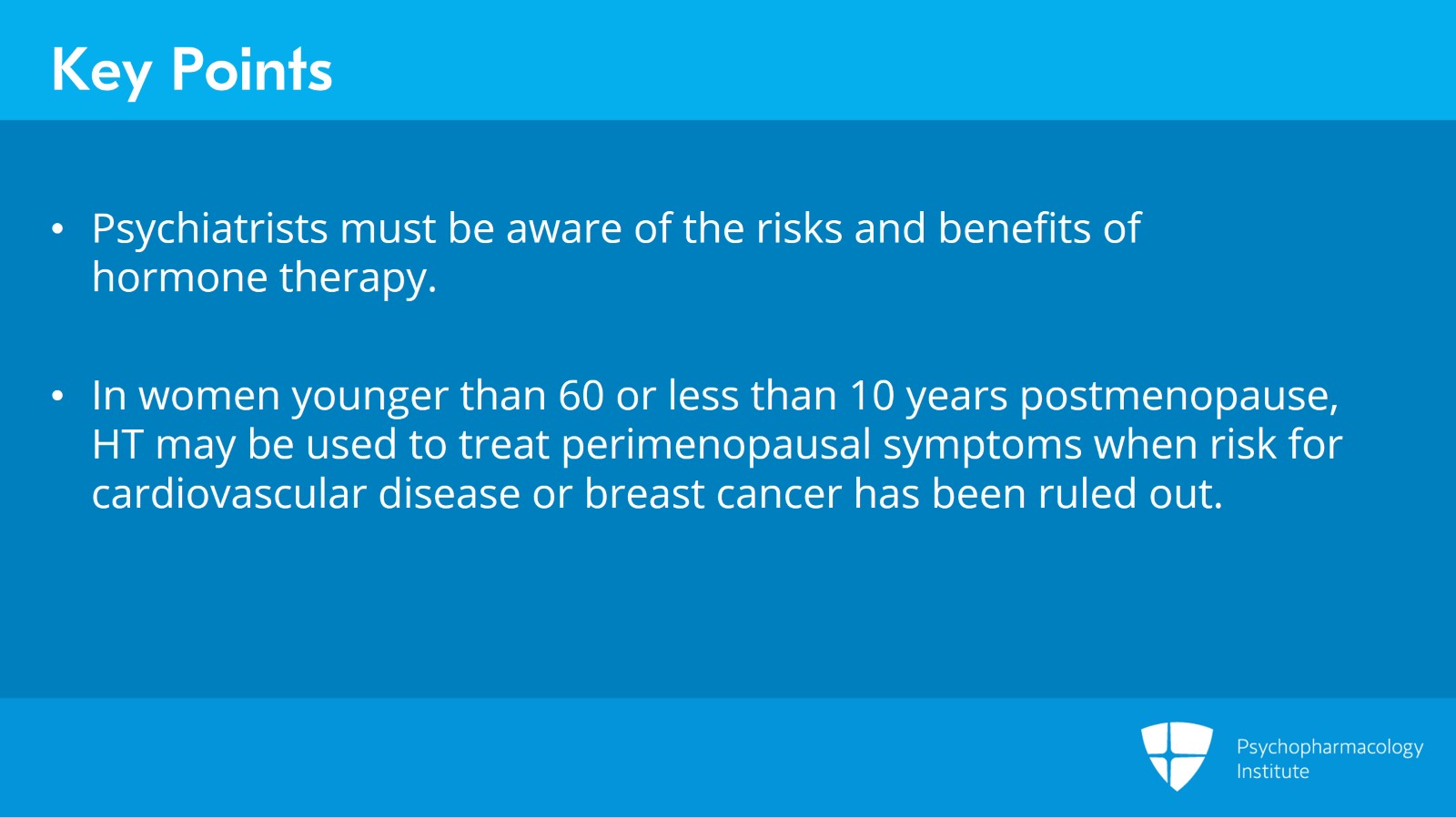
So let’s look at our key points here. So even though psychiatrists wouldn’t treat with hormone therapy in most cases, it’s important that they know the current information on the risks and benefits of hormone therapy for their patients. Our patients ask us and it’s important for us to know the latest data.
For women who have no risk factors for cardiovascular disease or breast cancer, hormone therapy in fact may be a reasonable consideration to treat perimenopausal symptoms if they are less than 60 or less than 10 years postmenopause.
Free Files
Download PDF and other files
Success!
Check your inbox, we sent you all the materials there.