Close Banner
Section Free  - Video Lectures

08. Good Psychiatric Management for BPD

Published on January 1, 2022 Certification expiration date: April 1, 2028

Paul Links, M.D.

Professor with the Department of Psychiatry and Behavioural Neurosciences - McMaster University, Hamilton ON, Canada

Key Points

  • The clinical approach from the Handbook of Good Psychiatric Management is that psychotherapy is the primary treatment.
  • The Handbook of Good Psychiatric Management recommends that psychopharmacology has a role in caring for BPD patients.
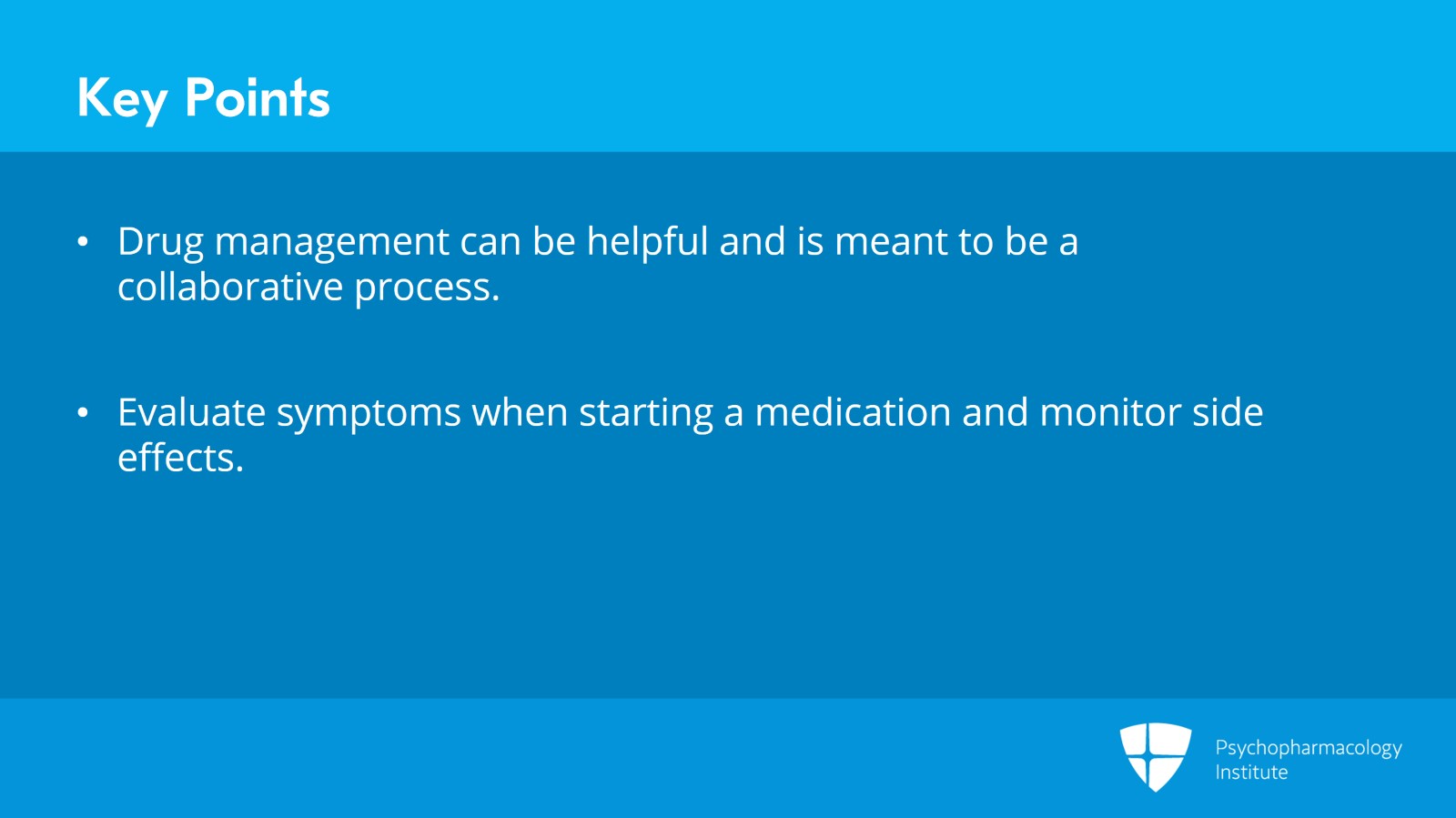
  • Drug management can be helpful and is meant to be a collaborative process.
  • Evaluate symptoms when starting a medication, avoid polypharmacy, and monitor side effects.

Free Downloads for Offline Access

  • Free Download Audio File (MP3)
  • Free Download Video (MP4)
  • Free Download Presentation File (PPTX)

Slides and Transcript

Slide 1 of 10

Now, I'm going to discuss an approach to managing medications with borderline patients and it is based on the Good Psychiatric Management of borderline patients.

Slide 2 of 10

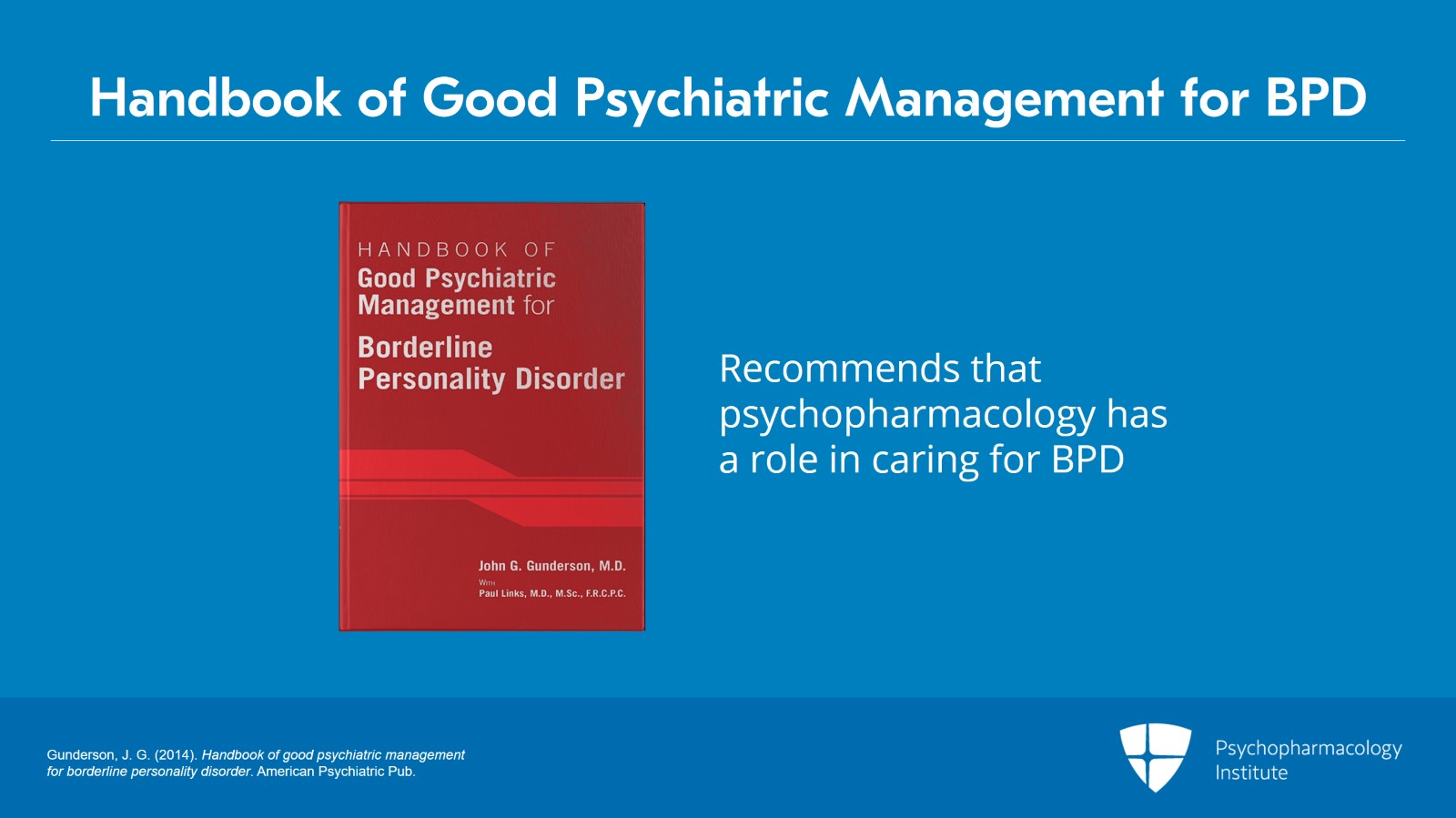
And this is where I'll mention the handbook of Good Psychiatric Management for borderline patients developed by John Gunderson with my participation. And so Good Psychiatric Management does recommend that psychopharmacology has a role to play in caring for borderline patients and that if you're taking this approach you're open to using medication.
References:
  • Gunderson, J. G. (2014). Handbook of good psychiatric management for borderline personality disorder. American Psychiatric Pub.
Free Files
Success!
Check your inbox, we sent you all the materials there.

Slide 3 of 10

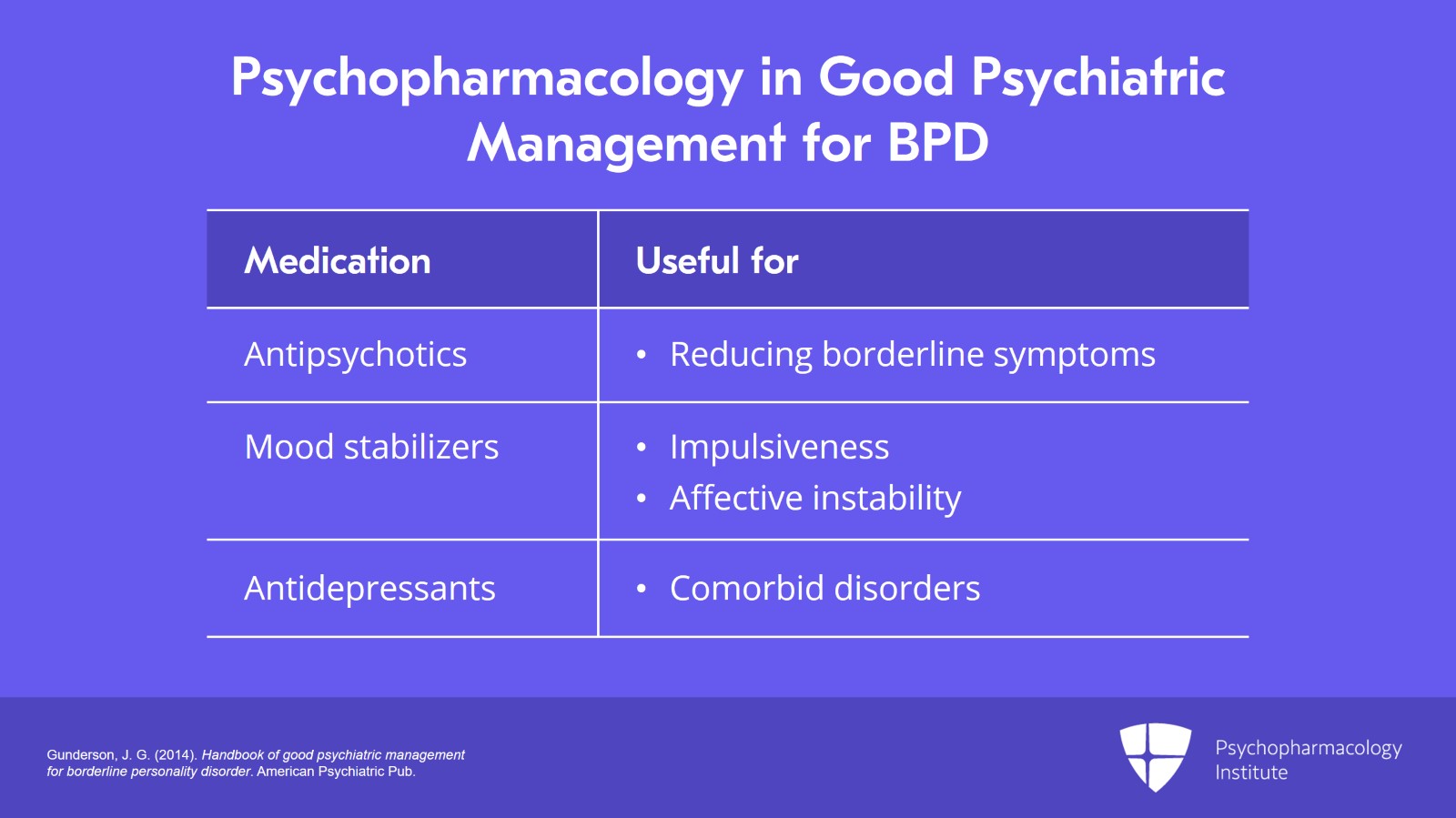
So you may use antipsychotics because they have a value in sort of reducing borderline symptoms. You may use mood stabilizers that can have value for impulsiveness and perhaps for affective instability. Antidepressants, on the other hand, as we've discussed, they'll be usually prescribed for comorbid disorders.
References:
  • Gunderson, J. G. (2014). Handbook of good psychiatric management for borderline personality disorder. American Psychiatric Pub.

Slide 4 of 10

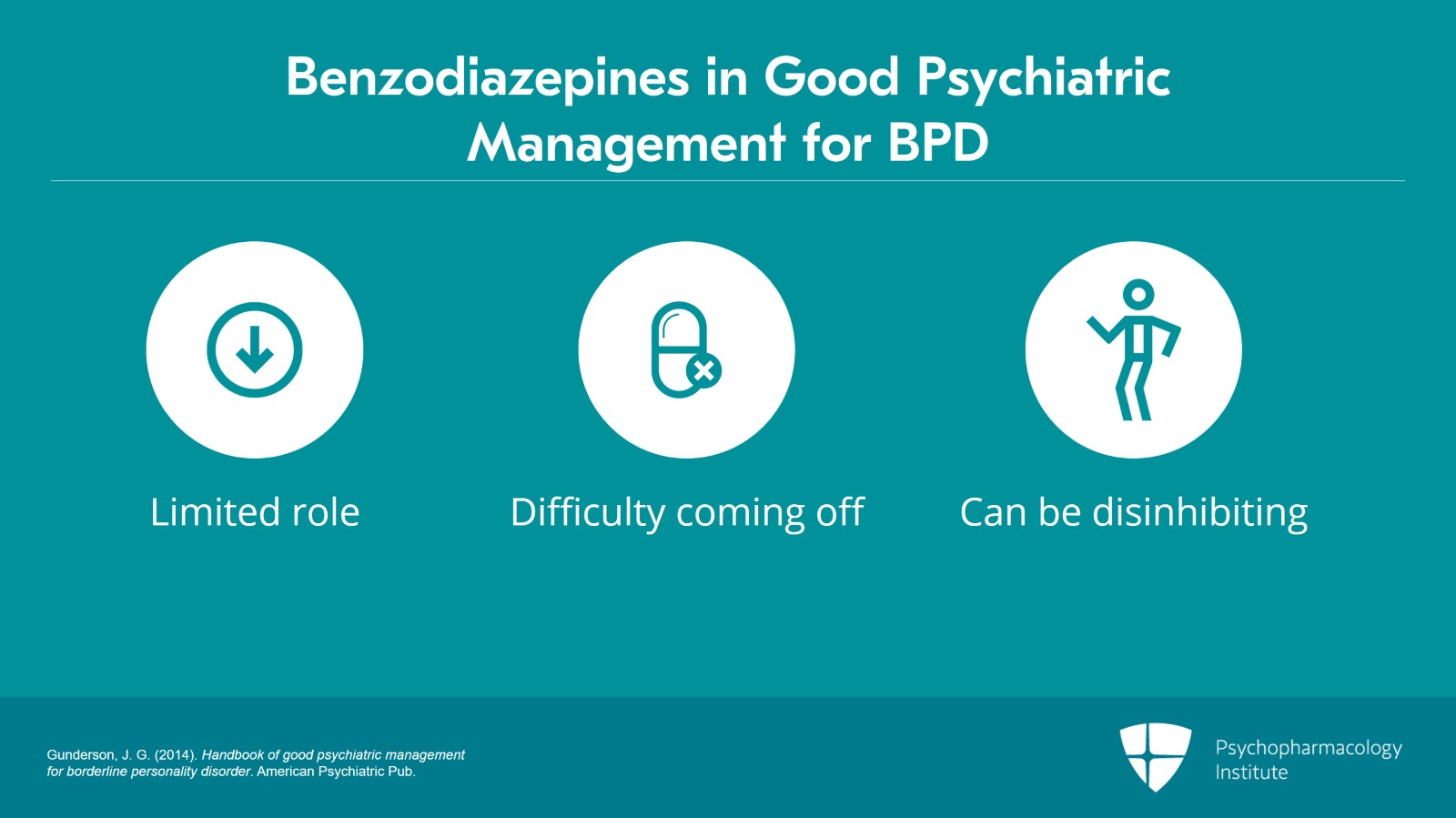
One thing we outline is that benzodiazepines have little role to play in treating borderline patients. Of course, they're habit forming and borderline patients may have particular difficulty coming off benzodiazepines. And of course, they can be disinhibiting.
References:
  • Gunderson, J. G. (2014). Handbook of good psychiatric management for borderline personality disorder. American Psychiatric Pub.
Free Files
Success!
Check your inbox, we sent you all the materials there.

Slide 5 of 10

So the clinical approach we take in Good Psychiatric Management is that psychotherapy is the primary treatment.
References:
  • Gunderson, J. G. (2014). Handbook of good psychiatric management for borderline personality disorder. American Psychiatric Pub.

Slide 6 of 10

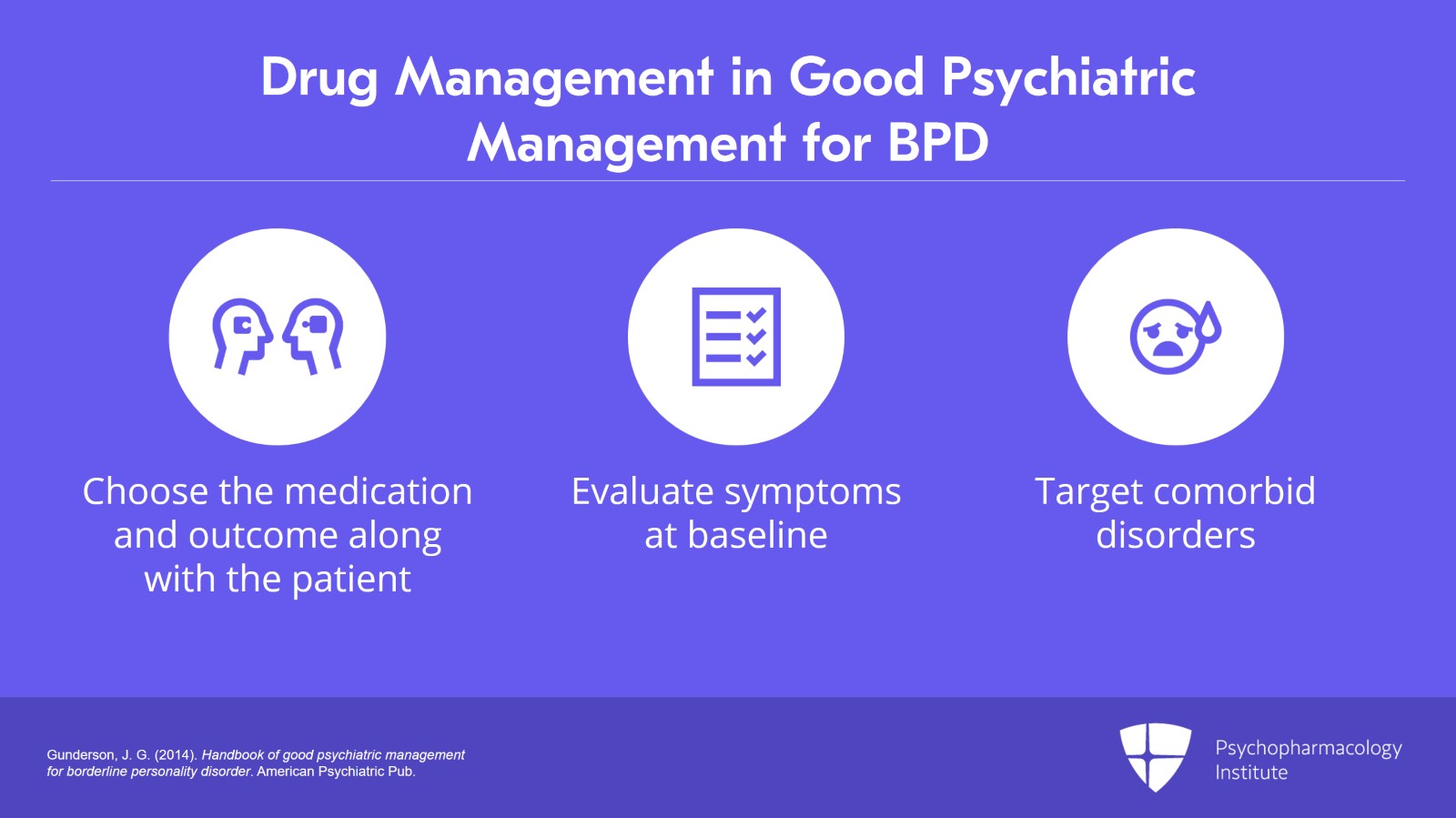
But drug management can be helpful and it's meant to be a collaborative process with the patient on choosing the medication and choosing the outcome, particularly outcomes that might relate to functioning. For example, if we can help you with your irritability and impulsivity, maybe it'll be easier for you to participate in that group program. It's important to evaluate symptoms as you start the medication so you can monitor whether there's been a change both in the outcome and in side effects. As we've discussed through this talk, it would be quite appropriate to target a comorbid disorder that's interfering with the patient's functioning.
References:
  • Gunderson, J. G. (2014). Handbook of good psychiatric management for borderline personality disorder. American Psychiatric Pub.
Free Files
Success!
Check your inbox, we sent you all the materials there.

Slide 7 of 10

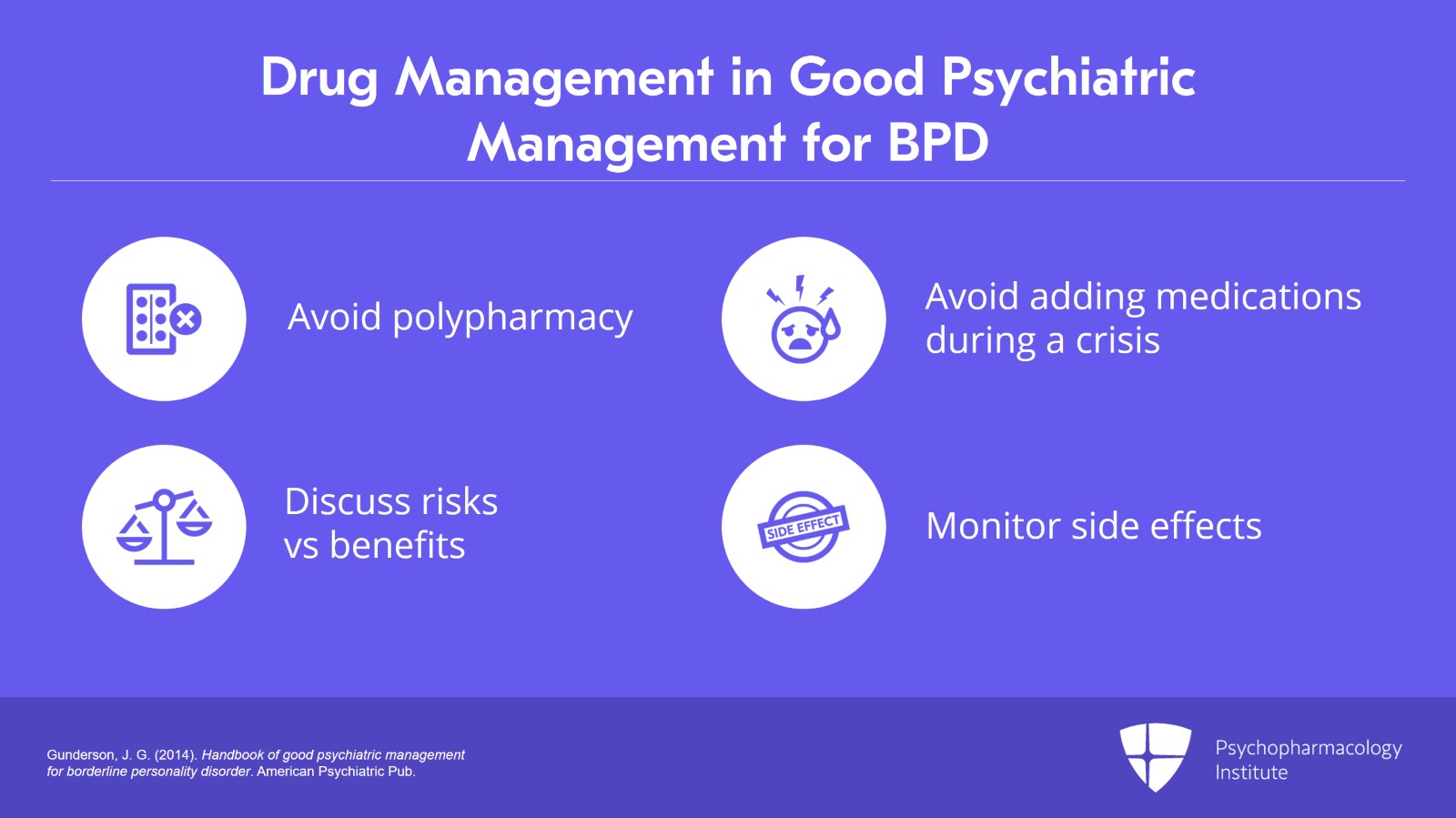
Always try to avoid polypharmacy. So if you're adding a medication, consider whether you can take one away instead of just adding. And one good rule of thumb is it's not a good practice to add a medication during a crisis. Most often, borderline patients have interpersonal crises rather than one that requires medication. And of course, discuss risks versus benefits and monitor their side effects as you move forward with the treatment.
References:
  • Gunderson, J. G. (2014). Handbook of good psychiatric management for borderline personality disorder. American Psychiatric Pub.

Slide 8 of 10

So the clinical approach we take in the handbook of Good Psychiatric Management for borderline patients is that psychotherapy is the primary treatment. Good Psychiatric Management does recommend that psychopharmacology has a role to play in caring for borderline patients.
Free Files
Success!
Check your inbox, we sent you all the materials there.

Slide 9 of 10

Drug management can be helpful, and it's meant to be a collaborative process that you work with the patient. It's important to evaluate symptoms as you start the medication and monitor their side effects.

Slide 10 of 10

Free Files
Success!
Check your inbox, we sent you all the materials there.

Learning Objectives:

After completing this activity, the learner will be able to:

  1. Understand the importance of good psychiatric management in BPD.
  2. Determine which psychotropic medication may be appropriate for each symptom domain and comorbidity in BPD.
  3.  Discuss the available evidence about novel pharmacologic approaches and future research directions in the treatment of BPD.

Original Release Date: January 01, 2022

Review and Re-release Date: April 1, 2025

Expiration Date: April 1, 2028

Expert: Paul Links, M.D.

Medical Editor: Paz Badía, M.D

Relevant Financial Disclosures:

The following planners, faculty, and reviewers have the following relevant financial relationships with commercial interests to disclose:

Dr. Links has disclosed the following relationships:

All of the relevant financial relationships listed for these individuals have been mitigated.

Contact Information: For questions regarding the content or access to this activity, contact us at support@psychopharmacologyinstitute.com

Instructions for Participation and Credit:

Participants must complete the activity online during the valid credit period that is noted above.

Follow these steps to earn CME credit:

  1. View the required educational content provided on this course page.
  2. Complete the Post Activity Evaluation for providing the necessary feedback for continuing accreditation purposes and for the development of future activities. NOTE: Completing the Post Activity Evaluation after the quiz is required to receive the earned credit.
  3. Download your certificate.

Accreditation Statement

This activity has been planned and implemented in accordance with the accreditation requirements and policies of the Accreditation Council for Continuing Medical Education through the joint providership of Medical Academy LLC and the Psychopharmacology Institute. Medical Academy is accredited by the ACCME to provide continuing medical education for physicians.

Credit Designation Statement

Medical Academy designates this enduring activity for a maximum of 0.50 AMA PRA Category 1 credit(s). Physicians should claim only the credit commensurate with the extent of their participation in the activity.


Free Files
Success!
Check your inbox, we sent you all the materials there.
Continue in the website
Instant access modal

Become a Bronze, Silver, Gold, Bronze extended, Silver extended or Gold extended Member.

2025–26 Psychopharmacology CME Program

Unlock up to 155 CME Credits, including 40 SA CME Credits.