Close Banner
Section Free  - Video Lectures

02. Exploring the Evidence of N-Acetyl-Cysteine (NAC) for Mood Disorders

Published on November 1, 2023 Certification expiration date: November 1, 2026

David Mischoulon, M.D., Ph.D.

Professor of Psychiatry - Harvard Medical School

Key Points

  • NAC promotes the synthesis of glutathione-stimulating hormone (GSH).
  • GSH reduces oxidative stress and protects brain cells.
  • NAC has potential applications in unipolar depression and bipolar disorder.
  • NAC may have benefits in children.

Free Downloads for Offline Access

  • Free Download Presentation File (PPTX)
  • Free Download Audio File (MP3)
  • Free Download Video (MP4)

Slides and Transcript

Slide 1 of 12

The first agent that we will talk about today is N-acetylcysteine or NAC which is often used for the treatment of mood disorders.

Slide 2 of 12

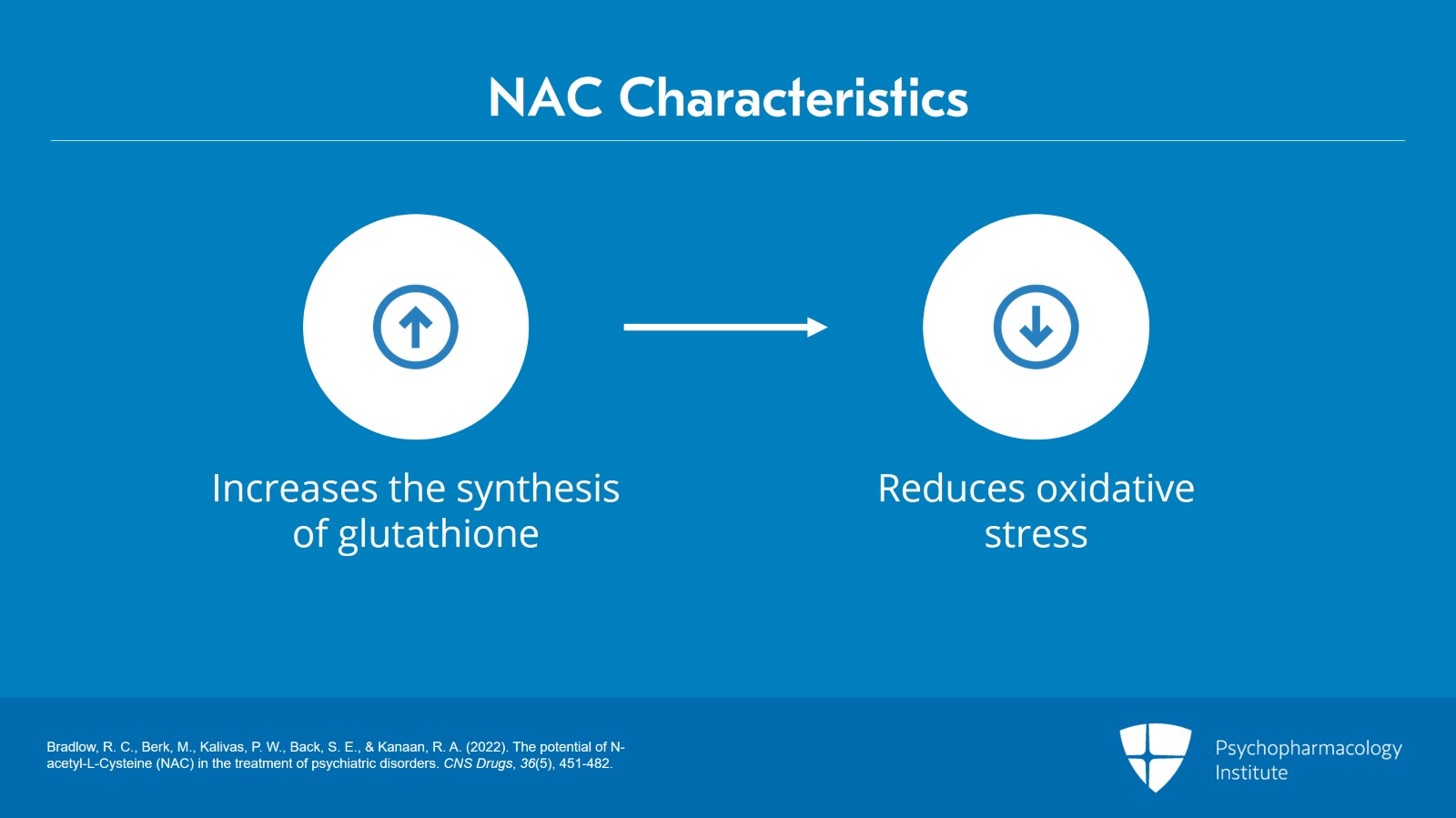
NAC is a natural compound that functions primarily by increasing the synthesis of glutathione in the body and this helps to reduce oxidative stress in the mitochondrial electron transport chain.
References:
  • Bradlow, R. C., Berk, M., Kalivas, P. W., Back, S. E., & Kanaan, R. A. (2022). The potential of N-acetyl-L-Cysteine (NAC) in the treatment of psychiatric disorders. CNS Drugs, 36(5), 451-482.
Free Files
Success!
Check your inbox, we sent you all the materials there.

Slide 3 of 12

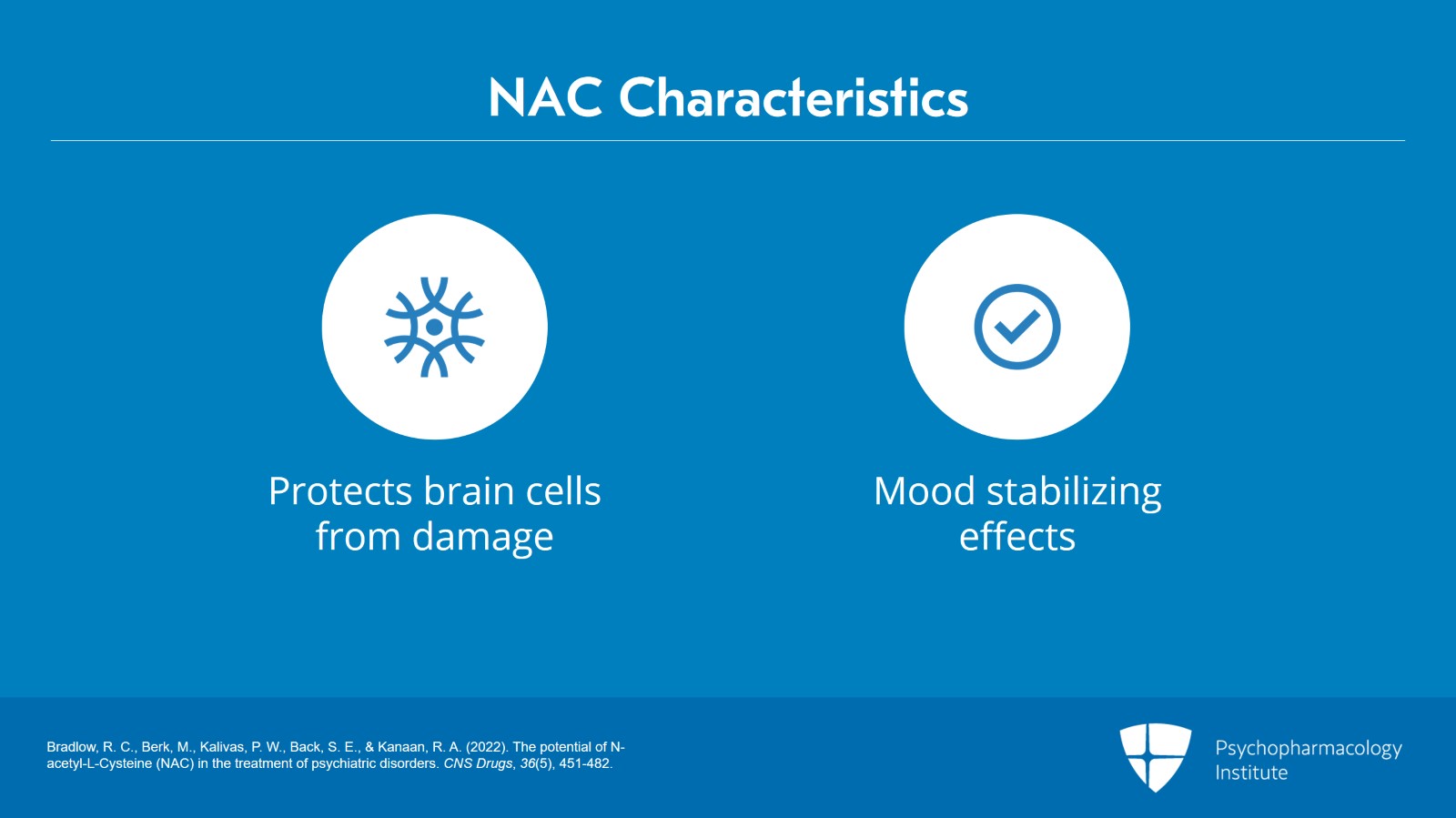
In addition to reducing oxidative stress, NAC and glutathione may help to protect brain cells from damage that may occur through oxidation or other pathological processes. It has been suggested that some of its mood stabilizing effects may be similar to those that you see with lithium or valproic acid which are common mood stabilizers.
References:
  • Bradlow, R. C., Berk, M., Kalivas, P. W., Back, S. E., & Kanaan, R. A. (2022). The potential of N-acetyl-L-Cysteine (NAC) in the treatment of psychiatric disorders. CNS Drugs, 36(5), 451-482.

Slide 4 of 12

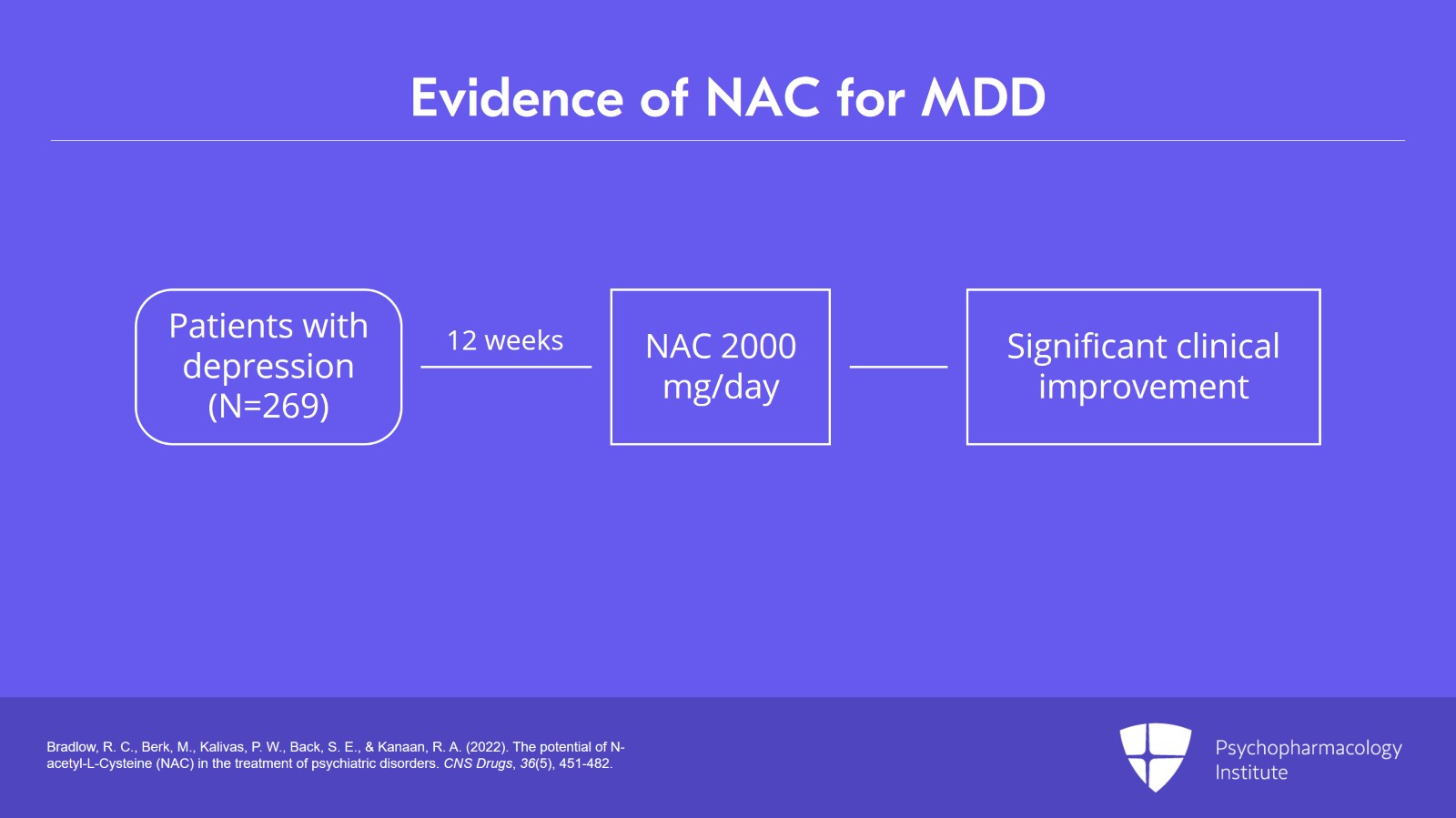
Now, let’s discuss some of the clinical trial-based evidence for NAC in various psychiatric conditions. In major depressive disorder, there are currently two published randomized clinical trials. The first one by Berk and colleagues came out in 2014. They recruited 269 patients with depression, treated them for 12 weeks at a dose of 2000 mg a day and they found significant clinical improvement in various scales measuring depression.
References:
  • Bradlow, R. C., Berk, M., Kalivas, P. W., Back, S. E., & Kanaan, R. A. (2022). The potential of N-acetyl-L-Cysteine (NAC) in the treatment of psychiatric disorders. CNS Drugs, 36(5), 451-482.
Free Files
Success!
Check your inbox, we sent you all the materials there.

Slide 5 of 12

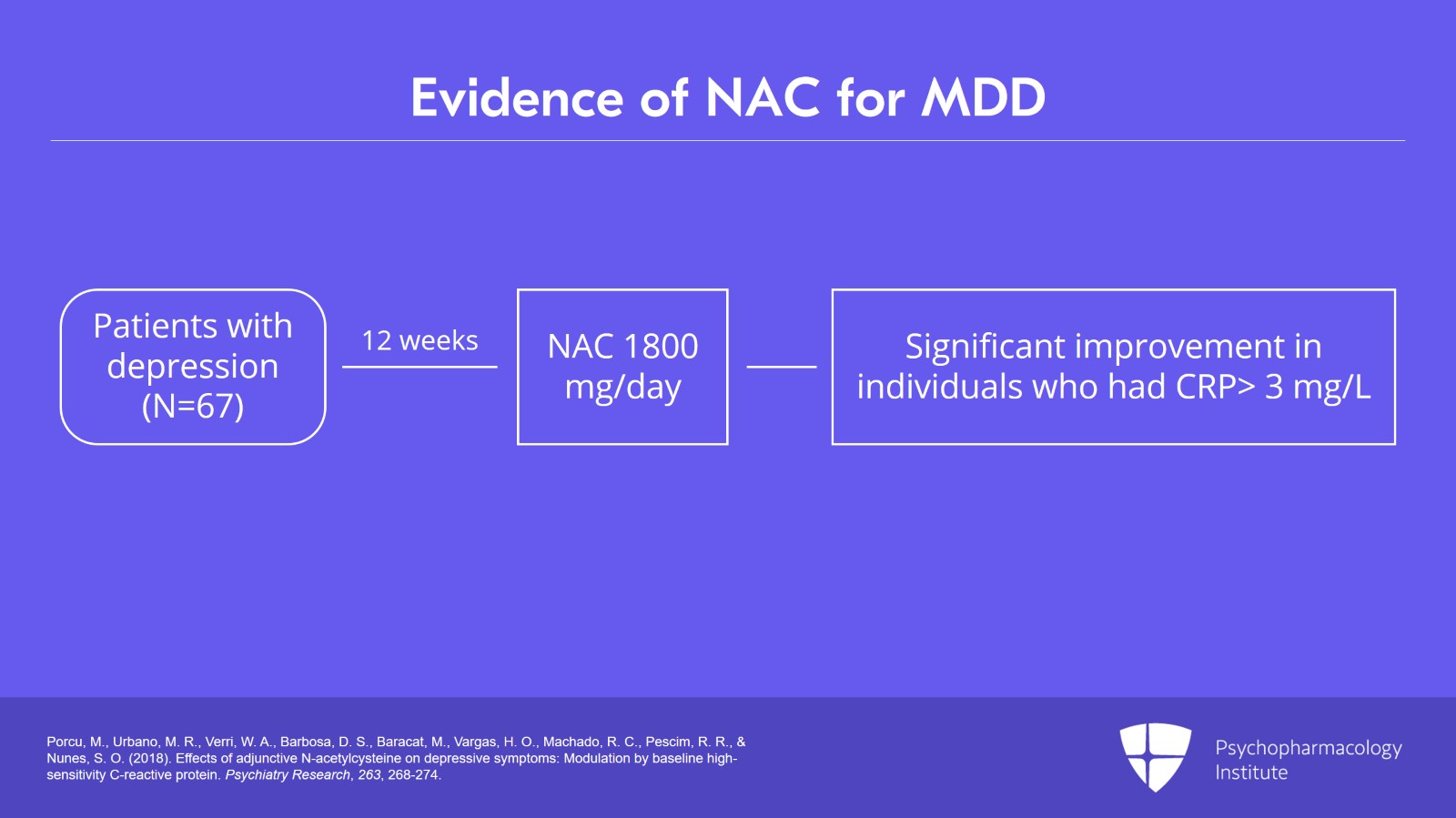
The second study was by Porcu and colleagues published in 2018. This study was smaller with only 67 patients. They followed the patients for 12 weeks at a dose of 1800 mg a day. In this study, they found a significant improvement in the CGI, Clinical Global Improvement Scale, only in individuals who had C-reactive protein levels higher than 3 as opposed to those who had levels of less than 3.
References:
  • Porcu, M., Urbano, M. R., Verri, W. A., Barbosa, D. S., Baracat, M., Vargas, H. O., Machado, R. C., Pescim, R. R., & Nunes, S. O. (2018). Effects of adjunctive N-acetylcysteine on depressive symptoms: Modulation by baseline high-sensitivity C-reactive protein. Psychiatry Research, 263, 268-274.

Slide 6 of 12

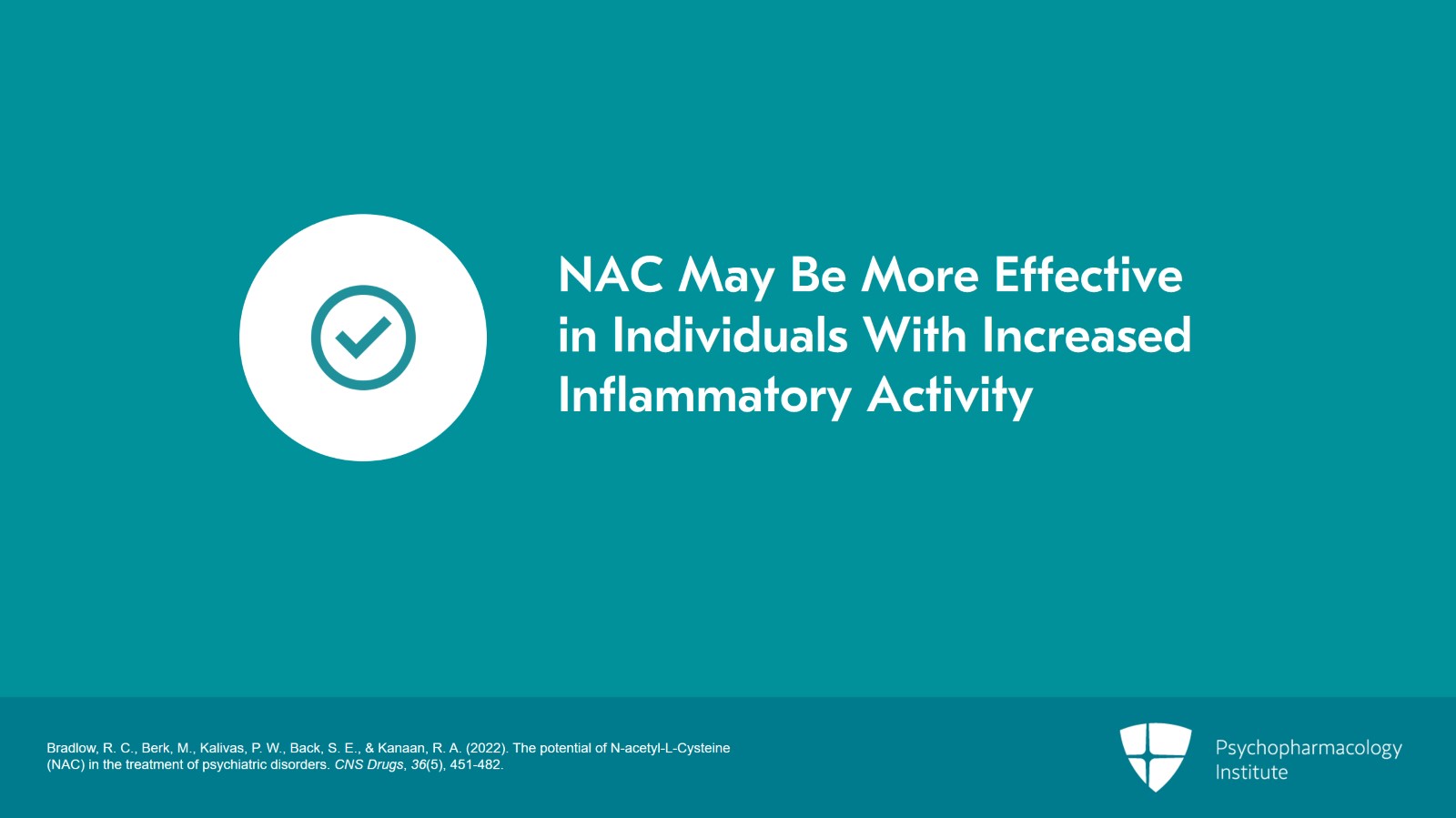
C-reactive protein is a measure of inflammatory activity and this suggests that NAC might be more effective in people with higher inflammatory activity but this remains to be worked out in more detail.
References:
  • Bradlow, R. C., Berk, M., Kalivas, P. W., Back, S. E., & Kanaan, R. A. (2022). The potential of N-acetyl-L-Cysteine (NAC) in the treatment of psychiatric disorders. CNS Drugs, 36(5), 451-482.
Free Files
Success!
Check your inbox, we sent you all the materials there.

Slide 7 of 12

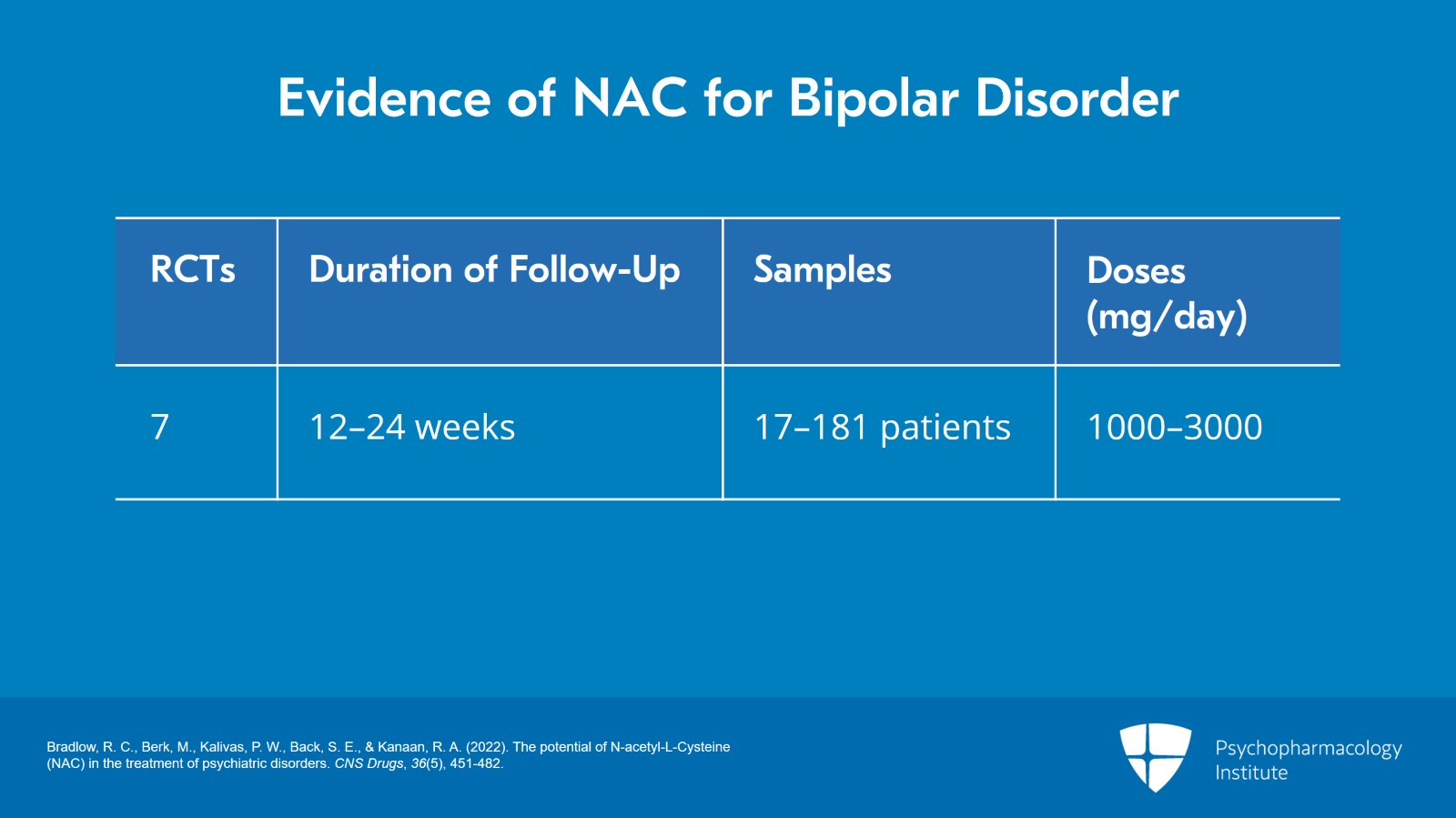
Next, what do we know about NAC as a treatment for bipolar disorder? There are seven randomized clinical trials published. They typically included patients with bipolar disorder type 1, the manic type and bipolar disorder type 2, the hypomanic type. Collectively, these studies followed patients for anywhere from 12 to 24 weeks and the samples varied from relatively small at 17 to as large as 181 patients and doses ran between 1000 to 3000 mg a day.
References:
  • Bradlow, R. C., Berk, M., Kalivas, P. W., Back, S. E., & Kanaan, R. A. (2022). The potential of N-acetyl-L-Cysteine (NAC) in the treatment of psychiatric disorders. CNS Drugs, 36(5), 451-482.

Slide 8 of 12

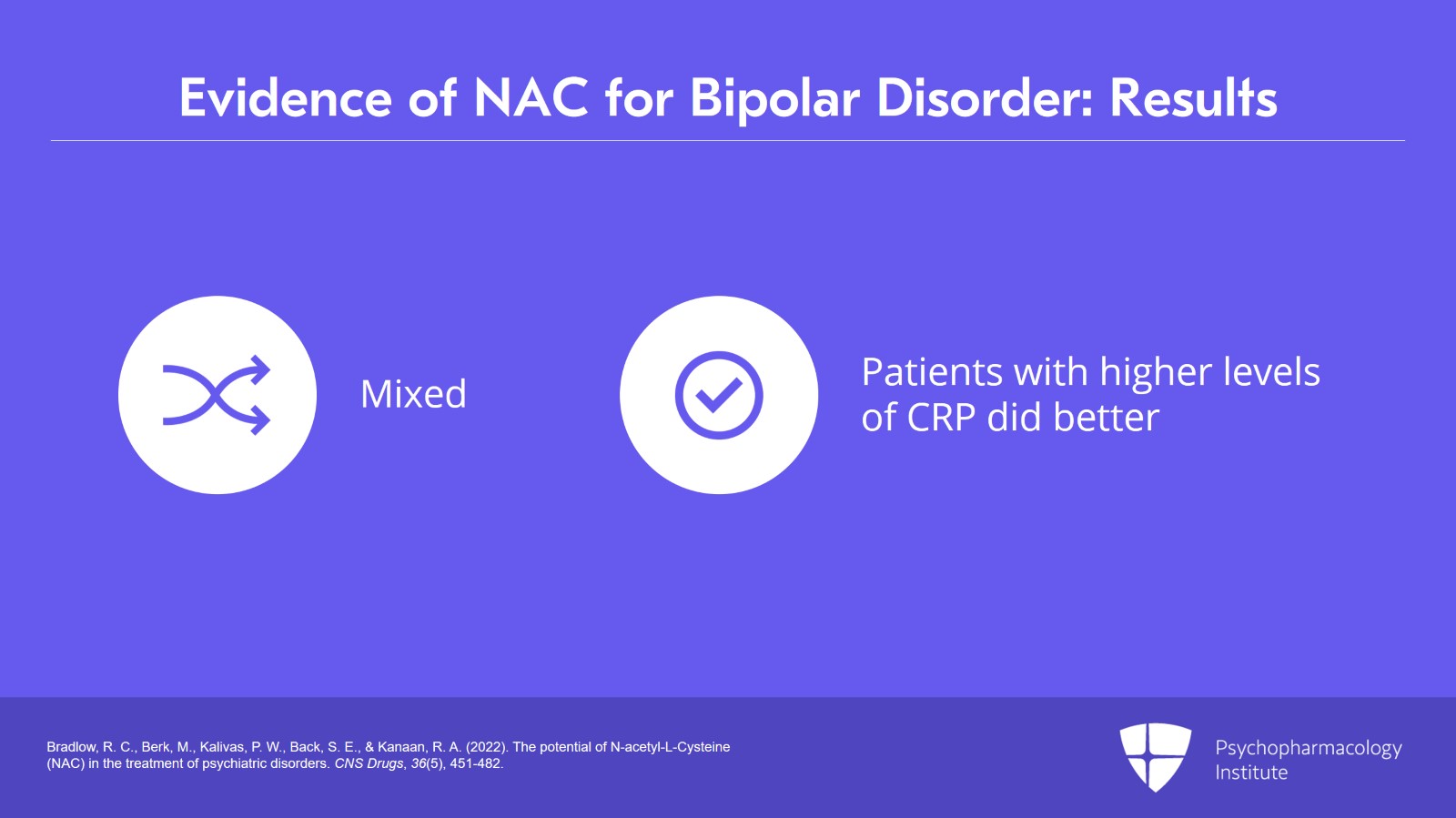
The results overall were mixed and again the patients with higher levels of C-reactive protein seemed to do better. Again, the degree of inflammation may impact on the efficacy of this treatment both for unipolar and bipolar disorder.
References:
  • Bradlow, R. C., Berk, M., Kalivas, P. W., Back, S. E., & Kanaan, R. A. (2022). The potential of N-acetyl-L-Cysteine (NAC) in the treatment of psychiatric disorders. CNS Drugs, 36(5), 451-482.
Free Files
Success!
Check your inbox, we sent you all the materials there.

Slide 9 of 12

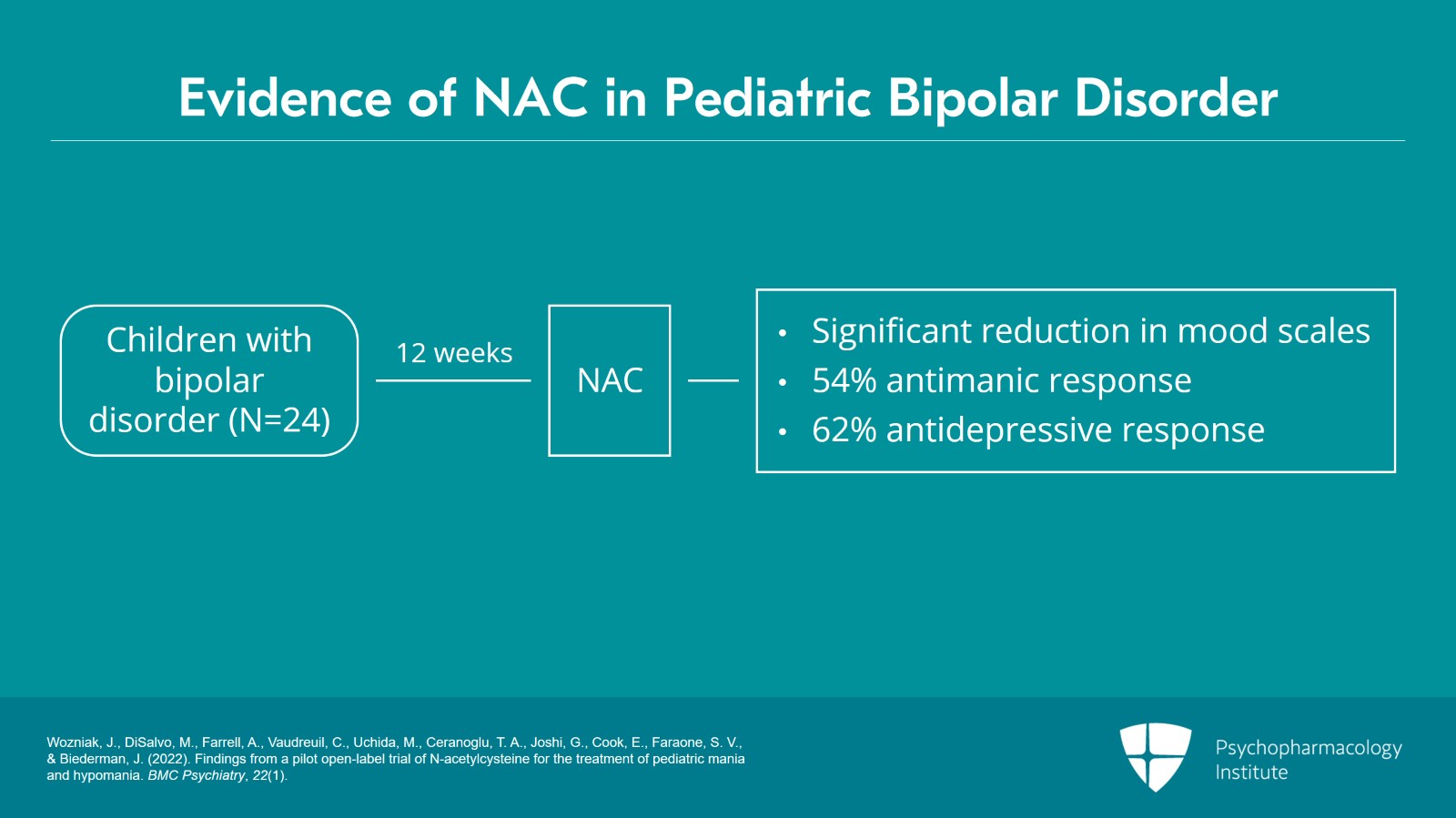
Next, what about evidence in children? There is a study by Wozniak and colleagues published in 2022 in which they tried NAC in children with bipolar disorder. The sample size was 24 so this was essentially a small pilot study. This was an open label trial, meaning that no placebo was used. And the children ages 5 to 17 with bipolar spectrum disorder were treated for 12 weeks. 53% of the patients completed the study and it was found that they had a significant reduction in various mood scales such as the Young Mania Rating Scale, the Hamilton Depression Scale, for example. And about 54% demonstrated an anti-manic response. So it seems that NAC can help to reduce mania. 62% experienced an anti-depressive response. So this suggests that NAC can work both to prevent mania and depression in children.
References:
  • Wozniak, J., DiSalvo, M., Farrell, A., Vaudreuil, C., Uchida, M., Ceranoglu, T. A., Joshi, G., Cook, E., Faraone, S. V., & Biederman, J. (2022). Findings from a pilot open-label trial of N-acetylcysteine for the treatment of pediatric mania and hypomania. BMC Psychiatry, 22(1).

Slide 10 of 12

I’ll summarize with these key points. N-acetylcysteine is a natural agent that functions as a mitochondrial modulator by promoting the synthesis of glutathione stimulating hormone or GSH. The production of GSH reduces oxidative stress and protects brain cells.
Free Files
Success!
Check your inbox, we sent you all the materials there.

Slide 11 of 12

NAC has potential applications in mood disorders including unipolar depression and bipolar disorder and may have benefits in children.

Slide 12 of 12

Free Files
Success!
Check your inbox, we sent you all the materials there.

Learning Objectives:

After completing this activity, the learner will be able to:

  • Evaluate the evidence-based applications and benefits of natural medication in psychiatric treatments.
  • Analyze the potential risks and side effects of using natural medication in psychiatric treatments.
  • Identify potential combinations of natural remedies and acquire strategies to optimize their use in psychiatric care.

Original Release Date: November 1, 2023

Review and Re-release Date: March 1, 2024

Expiration Date: November 1, 2026

Expert: David Mischoulon, M.D.

Medical Editor: Paz Badía, M.D.

Relevant Financial Disclosures: 

David Mischoulon declares the following interests:

- Nordic Naturals:  Received research support (medication and placebo for a study)

- heckel medizintechnik GmbH:  Received research support (Whole Body Hyperthermia device for research study)

- MGH Clinical Trials Network and Institute (CTNI):  Received salary support

All of the relevant financial relationships listed above have been mitigated by Medical Academy and the Psychopharmacology Institute.

None of the others faculty, planners, and reviewers for this educational activity have relevant financial relationships to disclose during the last 24 months with ineligible companies whose primary business is producing, marketing, selling, re-selling, or distributing healthcare products used by or on patients.

Contact Information: For questions regarding the content or access to this activity, contact us at support@psychopharmacologyinstitute.com

Instructions for Participation and Credit:

Participants must complete the activity online during the valid credit period that is noted above.

Follow these steps to earn CME credit:

  1. View the required educational content provided on this course page.

  2. Complete the Post Activity Evaluation for providing the necessary feedback for continuing accreditation purposes and for the development of future activities. NOTE: Completing the Post Activity Evaluation after the quiz is required to receive the earned credit.

  3. Download your certificate.

Accreditation Statement

This activity has been planned and implemented in accordance with the accreditation requirements and policies of the Accreditation Council for Continuing Medical Education through the joint providership of Medical Academy LLC and the Psychopharmacology Institute. Medical Academy is accredited by the ACCME to provide continuing medical education for physicians.

Credit Designation Statement

Medical Academy designates this enduring activity for a maximum of 0.75 AMA PRA Category 1 credit(s)™. Physicians should claim only the credit commensurate with the extent of their participation in the activity.


Free Files
Success!
Check your inbox, we sent you all the materials there.
Continue in the website
Instant access modal

Become a Bronze, Silver, Gold, Bronze extended, Silver extended or Gold extended Member.

2025–26 Psychopharmacology CME Program

Unlock up to 155 CME Credits, including 40 SA CME Credits.