



Slides and Transcript
Slide 1 of 12
So this segment is going to be a little bit more practical and I will preface this talk on examining the combined use of psychedelics and psychiatric drugs with the fact that at least in the United States all the psychedelics mentioned in this talk are schedule 1 DEA controlled substances and that means that there’s no accepted medical use and they’re illegal outside of research settings.
And so it’s very important to be aware of potential drug interactions of patients who are going to do this.
Slide 2 of 12
So first, in terms of SSRIs and SNRIs. Obviously, psychedelics have the most attention for treating depression, anxiety disorders, PTSD. Many, if not most, patients are on SRIs of one sort or another. Is there an interaction between these and psychedelic drugs?
Now, it’s long been held in, mostly just in lore in psychedelic-using communities but a pretty dense history of reports online that taking an SSRI or SNRI will blunt the effect of psychedelics.
A survey of depressed patients who were on bupropion, SNRIs and SSRIs published a couple of years ago found the same thing, that people reported online if they were on serotonergic, serotonin reuptake inhibiting drugs, they had a blunted effect from psilocybin as compared to the arm who were taking bupropion.
References:
- Gukasyan, N., Griffiths, R. R., Yaden, D. B., Antoine, D. G., & Nayak, S. M. (2023). Attenuation of psilocybin mushroom effects during and after SSRI/SNRI antidepressant use. Journal of Psychopharmacology, 37(7), 707-716. https://doi.org/10.1177/02698811231179910
Free Files
Download PDF and other files
Success!
Check your inbox, we sent you all the materials there.
Slide 3 of 12
Now, this has been contradicted by a pair of fairly recent and very small studies.
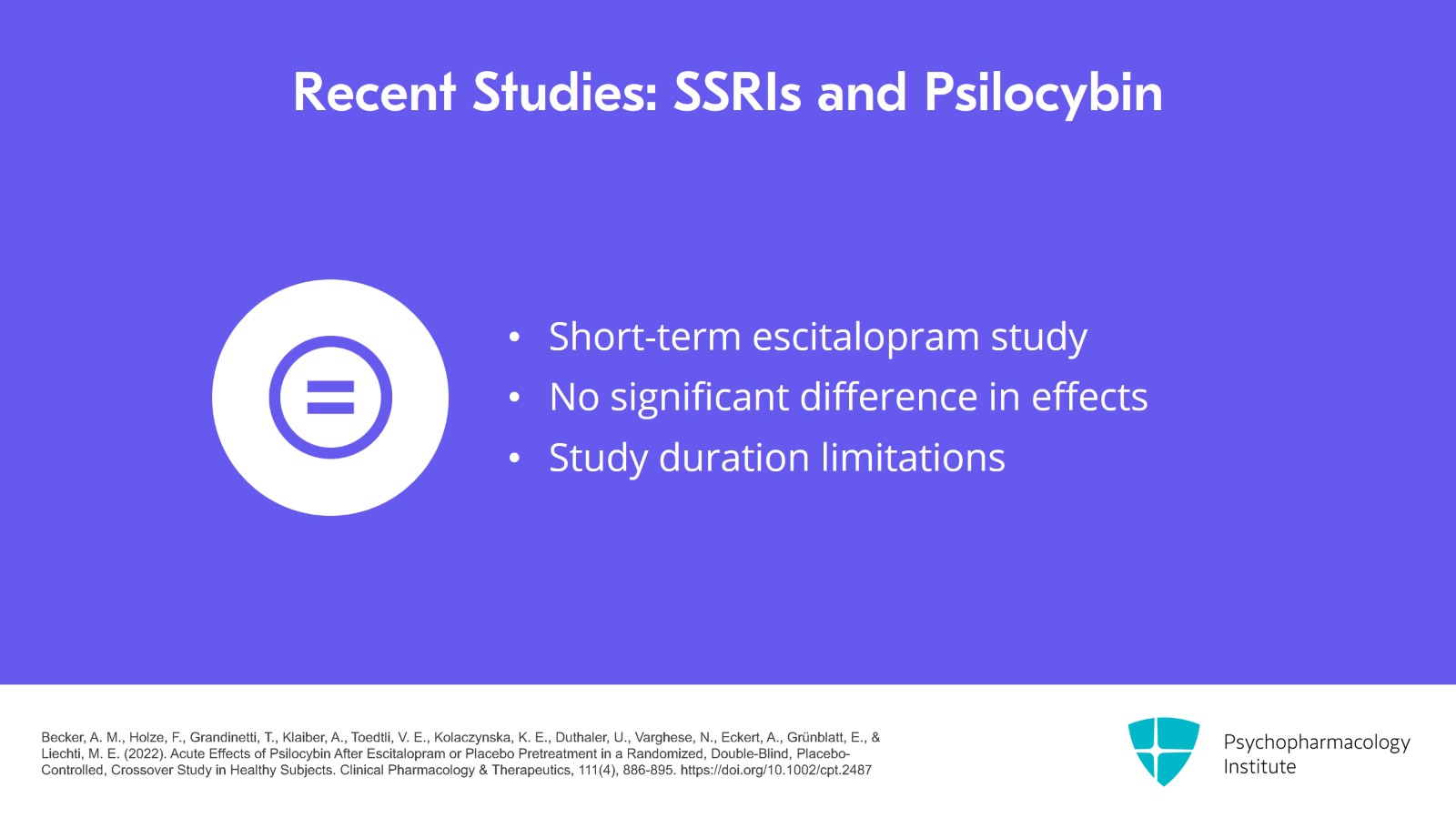
So one of them is a study that enrolled people and gave them escitalopram daily for two weeks.
They were taking escitalopram versus placebo and then they were given psilocybin, both groups. And this research group did not find any significant difference in the subjective effects of psilocybin whether somebody had been on escitalopram or not.
Now, the weakness of this study of course is that, this was a pretty short timeline and I’m not sure that it would be valid for knowing what the potential effects of being on an SSRI for two months or for a year or many years might be.
References:
- Becker, A. M., Holze, F., Grandinetti, T., Klaiber, A., Toedtli, V. E., Kolaczynska, K. E., Duthaler, U., Varghese, N., Eckert, A., Grünblatt, E., & Liechti, M. E. (2022). Acute Effects of Psilocybin After Escitalopram or Placebo Pretreatment in a Randomized, Double-Blind, Placebo-Controlled, Crossover Study in Healthy Subjects. Clinical Pharmacology & Therapeutics, 111(4), 886-895. https://doi.org/10.1002/cpt.2487
Slide 4 of 12
However, a second study, this is a study published by the folks at Compass which I mentioned in my disclosure slides, so I’m not endorsing this.
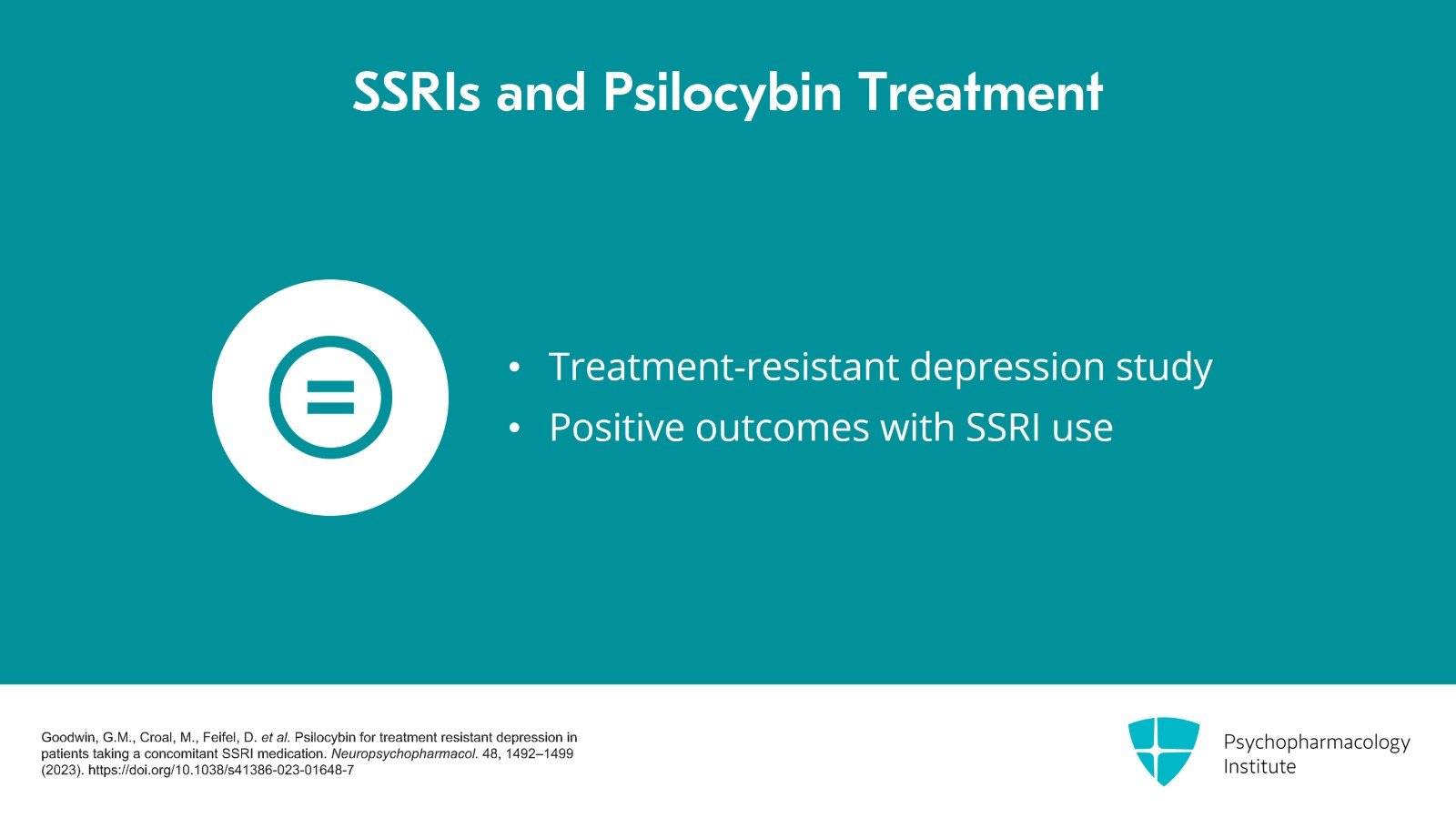
This is an open-label study of patients with treatment-resistant depression. They were given psilocybin with psychological support.
All participants in this study were already on SSRIs and they reported substantial reductions in depression despite the participants being on SSRIs.
And so these two studies while small and may be not the best quality research given the sample size and methods seem to potentially at least hint at the possibility that SSRIs may neither block the subjective effects of psychedelics nor block more importantly the therapeutic effects of them.
More research is needed on this.
References:
- Goodwin, G.M., Croal, M., Feifel, D. et al. Psilocybin for treatment resistant depression in patients taking a concomitant SSRI medication. Neuropsychopharmacol. 48, 1492–1499 (2023). https://doi.org/10.1038/s41386-023-01648-7
Free Files
Download PDF and other files
Success!
Check your inbox, we sent you all the materials there.
Slide 5 of 12
Now, other than SSRIs, there’s a variety of psychiatric drugs that we do know have notable or in some cases dangerous interactions.
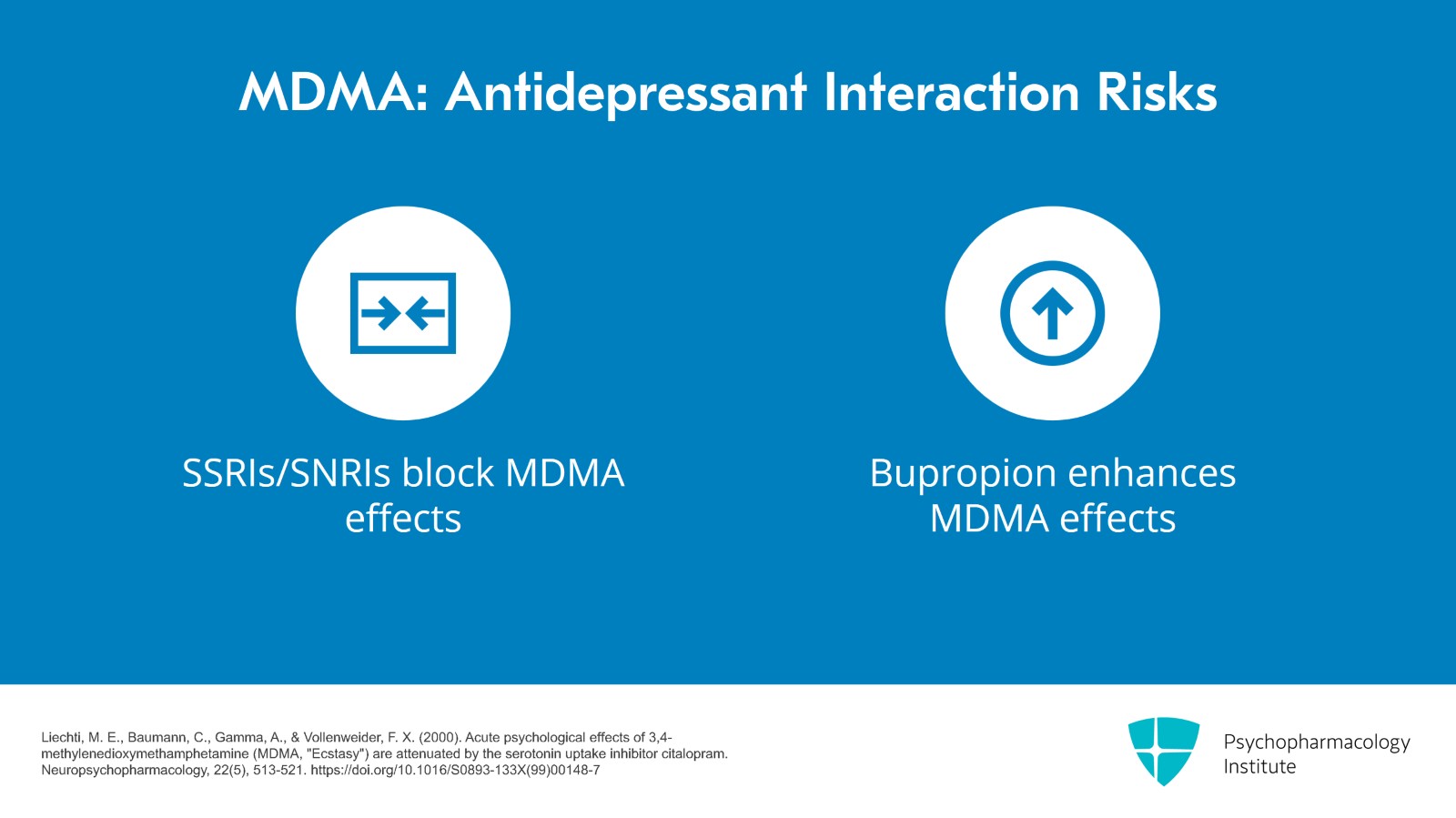
So first is that in contrast to psychedelics, MDMA is quite definitely blocked by SSRIs and SNRIs.
This is based on controlled studies conducted in Switzerland with citalopram and duloxetine. And we know that the effects of MDMA other than the mild stimulant properties are essentially fully blockaded by these. And so somebody’s not going to get an effect of MDMA if they’re on one of these drugs. Bupropion, on the other hand, unsurprisingly because it’s a stimulant can enhance the effect of MDMA.
References:
- Liechti, M. E., Baumann, C., Gamma, A., & Vollenweider, F. X. (2000). Acute psychological effects of 3,4-methylenedioxymethamphetamine (MDMA, "Ecstasy") are attenuated by the serotonin uptake inhibitor citalopram. Neuropsychopharmacology, 22(5), 513-521. https://doi.org/10.1016/S0893-133X(99)00148-7
Slide 6 of 12
Ayahuasca is probably the most important drug-drug interaction to be aware of as you remember from the DMT conversation earlier, ayahuasca contains DMT and another plant that inhibits monoamine oxidase.
So basically, think about ayahuasca as an MAOI. Anybody who is on an antidepressant particularly an SSRI or a TCA would be at potential risk of serotonin syndrome if they consume this because it would be the equivalent of taking a, a monoamine oxidase inhibiting drug.
References:
- Ruffell, S., Netzband, N., Bird, C., Young, A. H., & Juruena, M. F. (2020). The pharmacological interaction of compounds in ayahuasca: a systematic review. Revista brasileira de psiquiatria (Sao Paulo, Brazil : 1999), 42(6), 646–656. https://doi.org/10.1590/1516-4446-2020-0884

Free Files
Download PDF and other files
Success!
Check your inbox, we sent you all the materials there.
Slide 7 of 12
Ibogaine is the particularly long-acting drug which has been studied and is used in legal settings in certain countries for treatment of opioid use disorder.
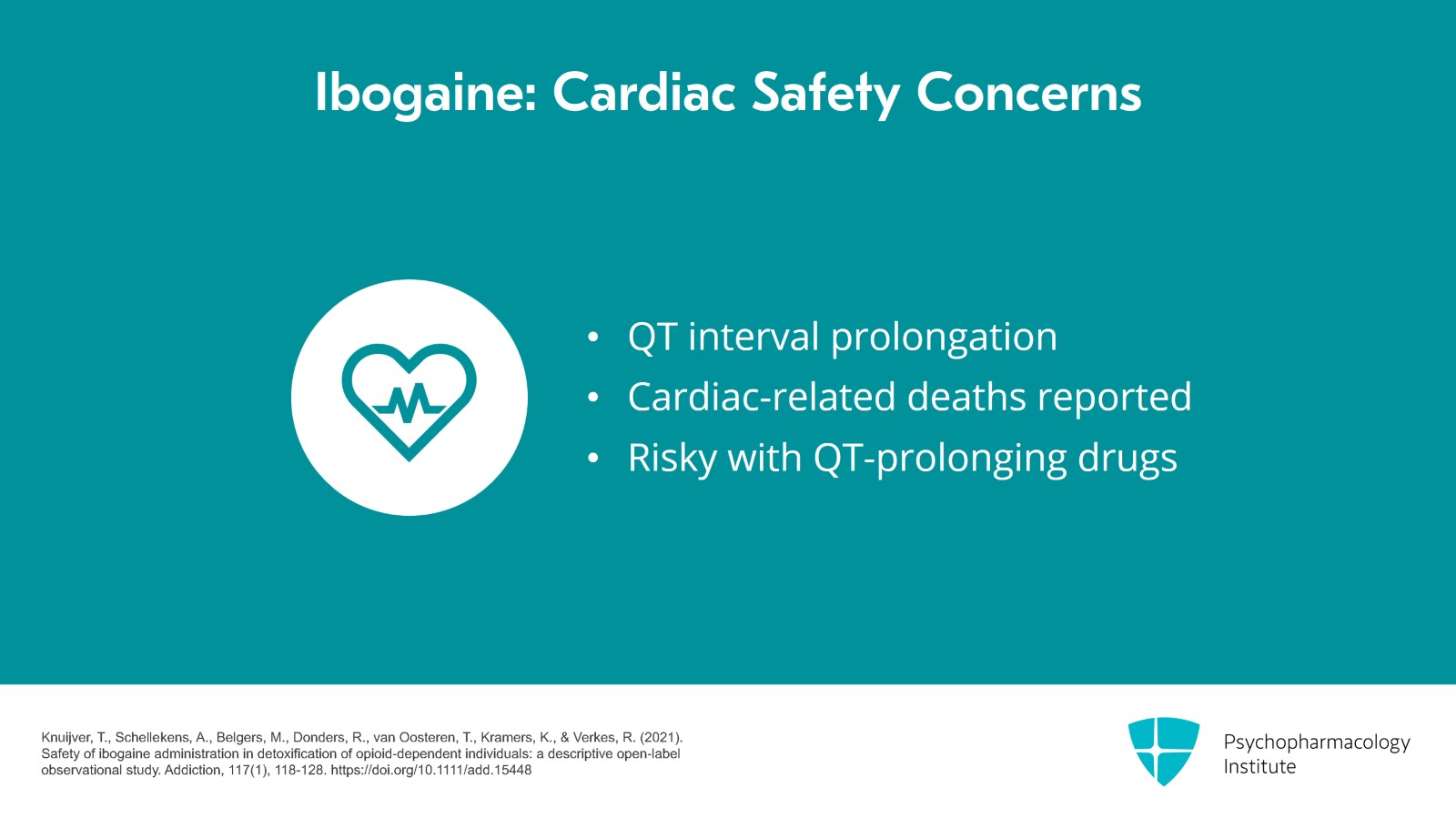
This is a drug with some very potent QT prolonging impacts and there have been a number of deaths associated with cardiac causes from this drug.
Particularly relevant that it prolongs the QT interval given the fact that many people going to ibogaine clinics may also be on methadone. So QT prolonging agents do not mix well with ibogaine.
References:
- Knuijver, T., Schellekens, A., Belgers, M., Donders, R., van Oosteren, T., Kramers, K., & Verkes, R. (2021). Safety of ibogaine administration in detoxification of opioid‐dependent individuals: a descriptive open‐label observational study. Addiction, 117(1), 118-128. https://doi.org/10.1111/add.15448
Slide 8 of 12
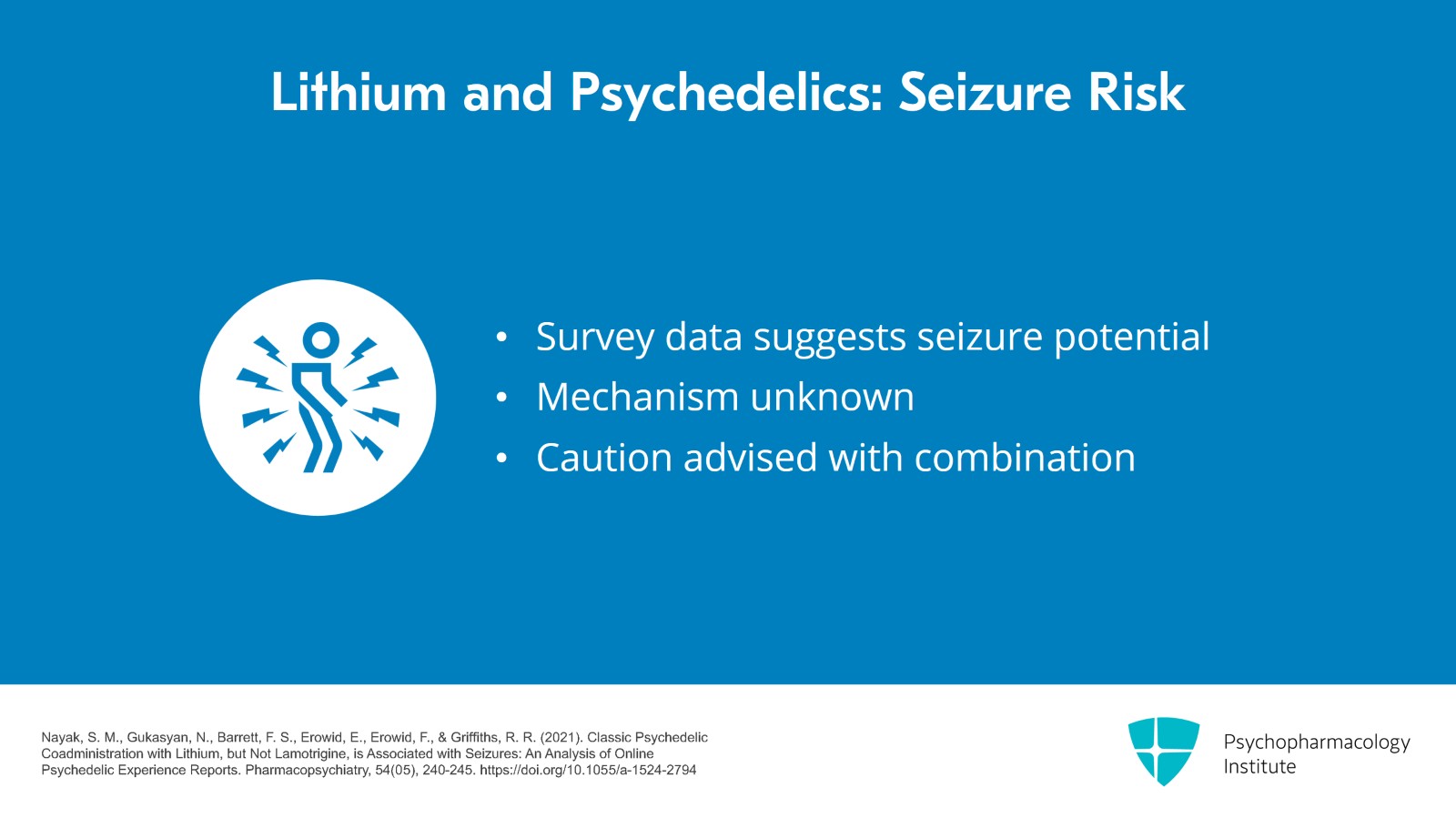
Lithium. There’s some data not controlled but based on surveys that taking a classic psychedelic like psilocybin or LSD while on lithium may lead to a risk of seizure.
The mechanism is not known but there are enough reports out there that had been collated in a paper published last year that I think this is worth taking seriously.
References:
- Nayak, S. M., Gukasyan, N., Barrett, F. S., Erowid, E., Erowid, F., & Griffiths, R. R. (2021). Classic Psychedelic Coadministration with Lithium, but Not Lamotrigine, is Associated with Seizures: An Analysis of Online Psychedelic Experience Reports. Pharmacopsychiatry, 54(05), 240-245. https://doi.org/10.1055/a-1524-2794
Free Files
Download PDF and other files
Success!
Check your inbox, we sent you all the materials there.
Slide 9 of 12
Second-generation antipsychotics, these are not only dopamine antagonist but also 5-HT2A antagonists, right? So they’re going to more fully antagonize the effect of psychedelics.
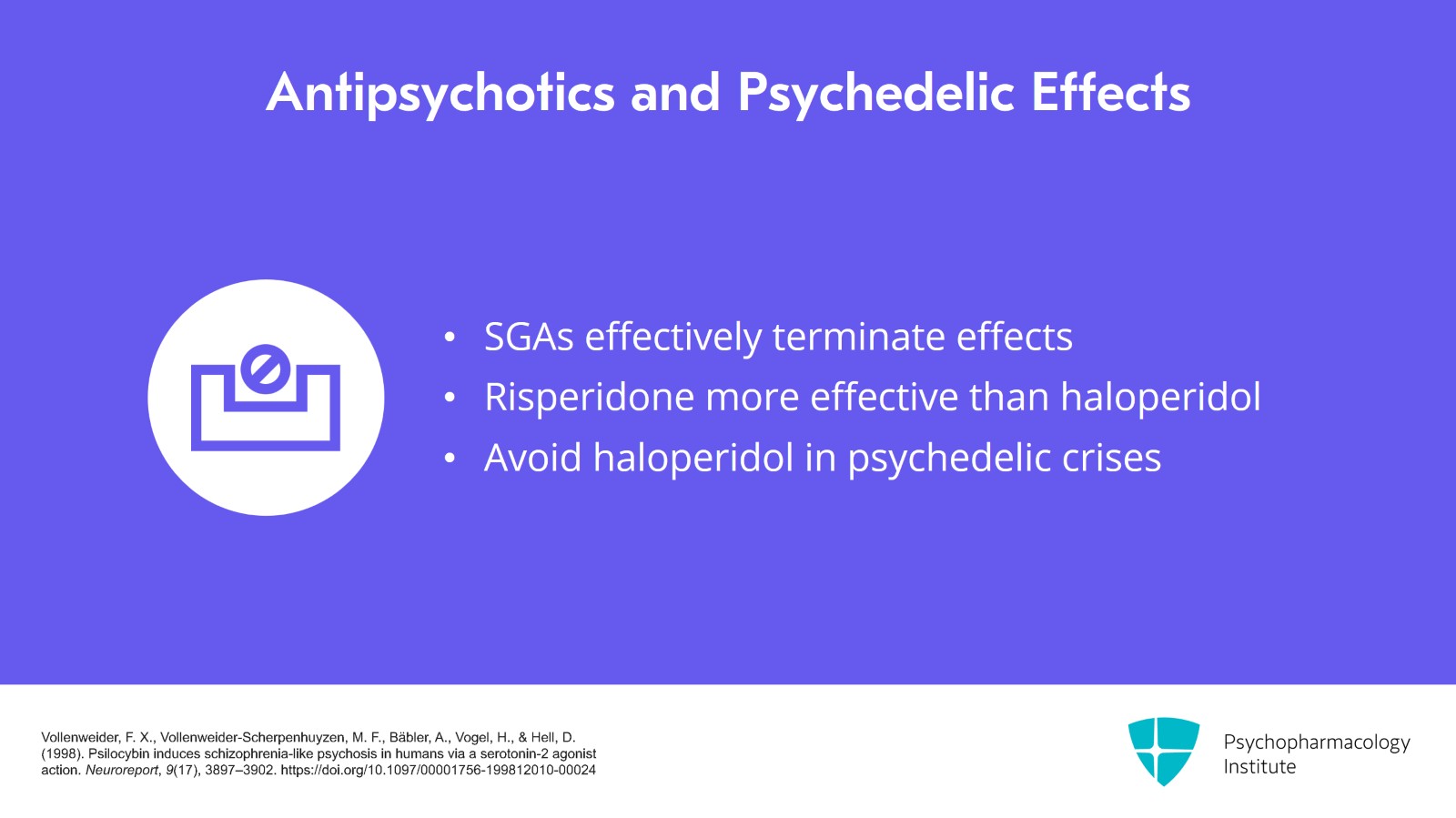
For those working in emergency settings, somebody coming in who really needs to have a psychedelic effect blockaded, second-generation antipsychotics are superior to the effects of Haldol.
And this has actually been studied where psilocybin was more effectively terminated by risperidone than with haloperidol.
And in fact, haloperidol led to some worsening of the effects of psilocybin in this study.
References:
- Vollenweider, F. X., Vollenweider-Scherpenhuyzen, M. F., Bäbler, A., Vogel, H., & Hell, D. (1998). Psilocybin induces schizophrenia-like psychosis in humans via a serotonin-2 agonist action. Neuroreport, 9(17), 3897–3902. https://doi.org/10.1097/00001756-199812010-00024
Slide 10 of 12
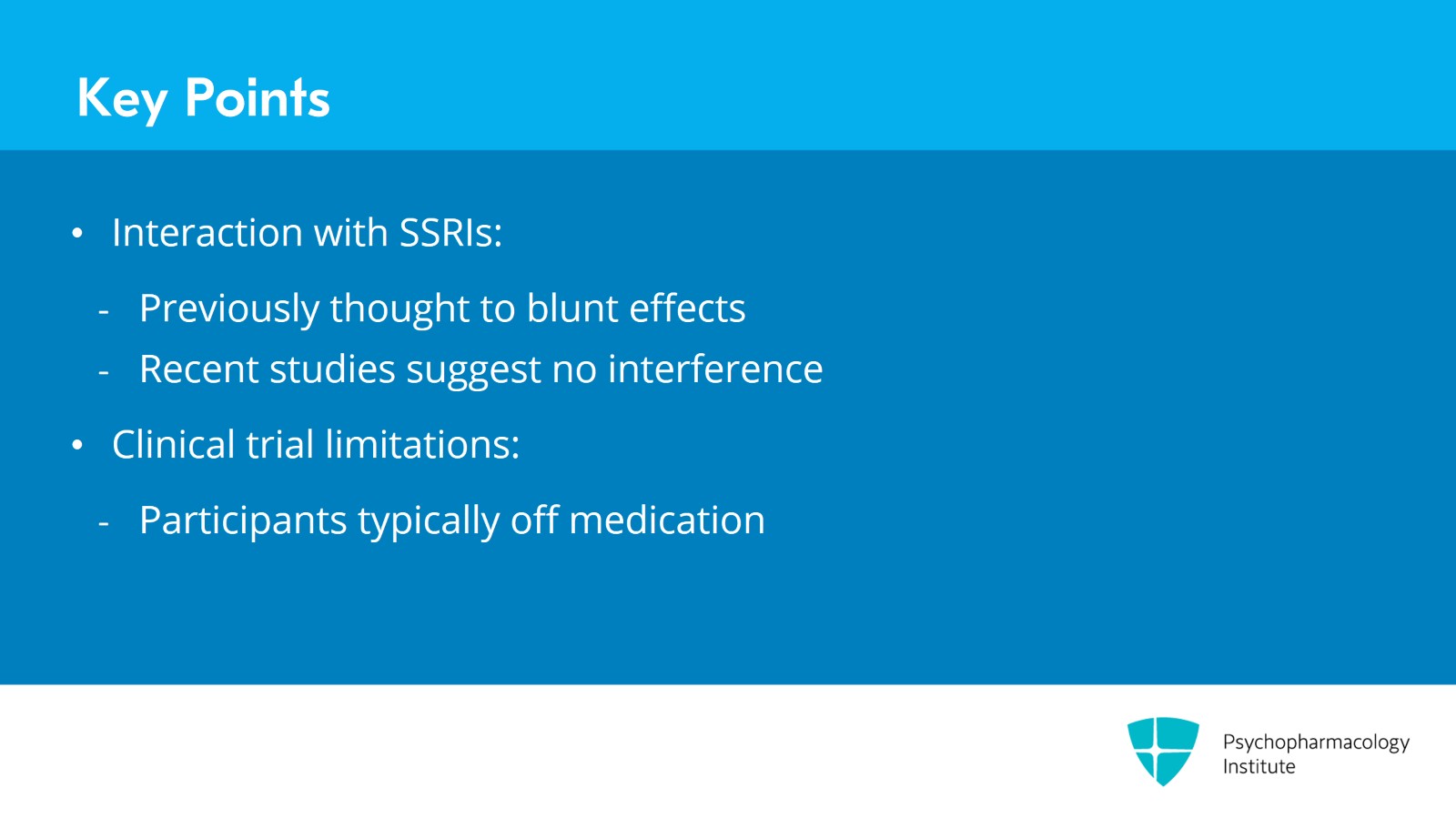
So key points here are that although psychedelics have long been reported to be blunted in the presence of antidepressants such as SSRIs, two small studies have recently suggested that SSRIs neither block the effects of psychedelics nor prevent the therapeutic effects.
More studies are needed to clarify this as most clinical trials up to this date have tapered participants off of antidepressants prior to enrollment. Pretty much every clinical trial that you’ve seen has mandated that patients are not on not only SSRIs but almost every psychiatric drug, right, which will be a, be a challenge for drug implementation.
Free Files
Download PDF and other files
Success!
Check your inbox, we sent you all the materials there.
Slide 11 of 12
MDMA on the other hand has been shown to be completely blocked by SSRIs as well as SNRIs. Ibogaine is an atypical psychedelic that has been studied for use in opioid use disorder. It has strong QT prolonging effects and has been associated with a number of deaths in ibogaine clinics around the world.
Third, because ayahuasca contains an MAOI, there’s a risk of serotonin syndrome if combining ayahuasca with antidepressants. There also may be a risk of seizure when combining lithium with classic psychedelics. Somebody who’s on lithium probably should not be exposed to a psychedelic anyway.

Slide 12 of 12
Free Files
Download PDF and other files
Success!
Check your inbox, we sent you all the materials there.
