Close Banner
Section Free  - Video Lectures

08. ECG Changes With Psychotropic Treatment

Published on February 1, 2020 Expired on April 1, 2023

Sandra A. Jacobson, M.D.

Research Associate Professor - University of Arizona

Key Points

  • QT interval prolongation can be caused by tricyclic antidepressants and first- and second-generation antipsychotics.
  • When using tricyclic antidepressants, follow guidelines for checking the ECG.

Free Downloads for Offline Access

  • Free Download Audio File (MP3)
  • Free Download Video (MP4)
  • Free Download Presentation File (PPTX)

Slides and Transcript

Slide 1 of 13

We’re going to move on now to talk about the case of Sue W. involving ECG changes with psychotropic treatment. And this is a very important one because it illustrates some concepts that you absolutely need to know for clinical work.

Slide 2 of 13

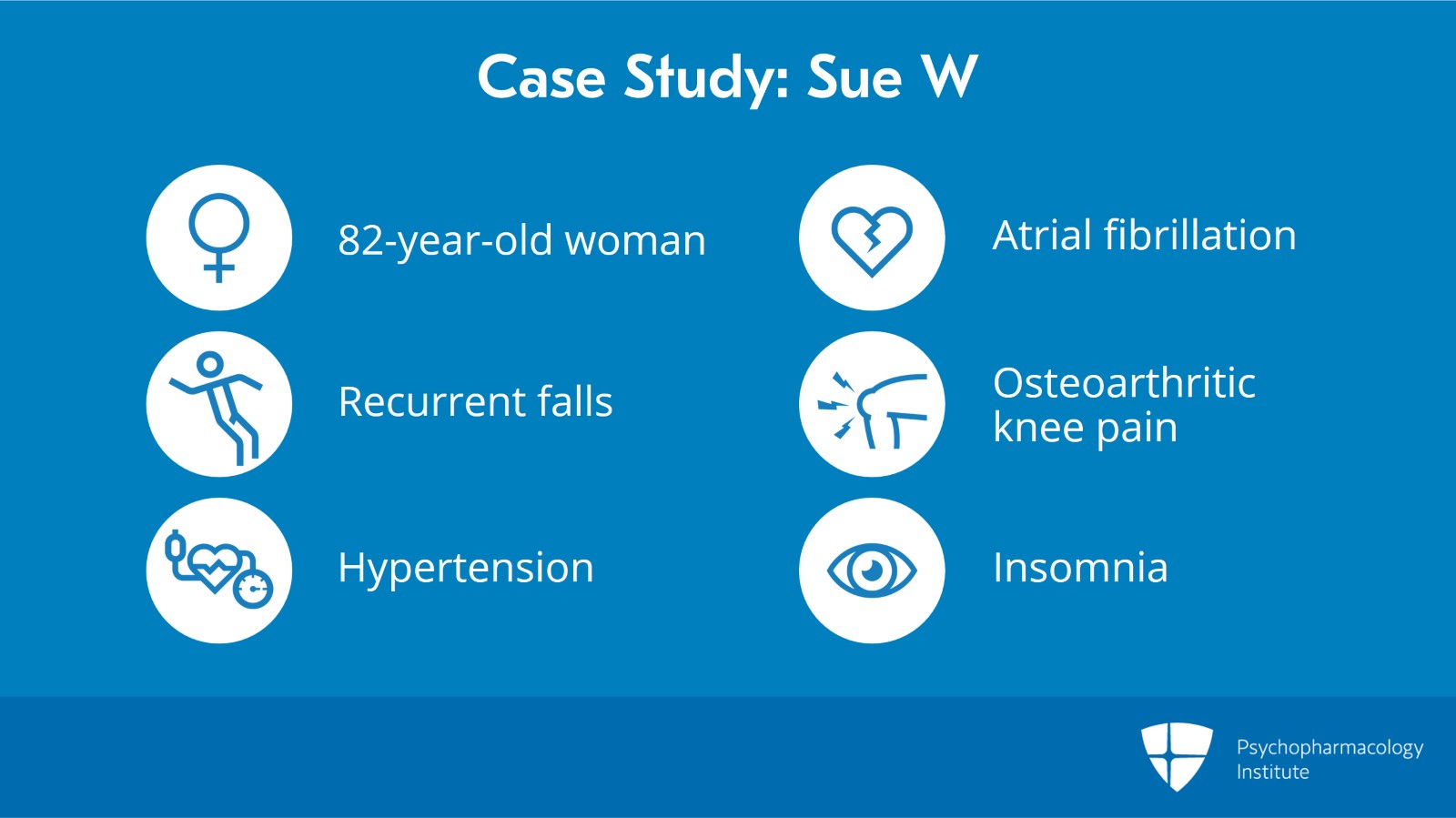
Sue W. is an 82-year-old woman admitted to the internal medicine service for recurrent falls. Her medical history is significant for hypertension, atrial fibrillation, osteoarthritic knee pain and insomnia.
Free Files
Success!
Check your inbox, we sent you all the materials there.

Slide 3 of 13

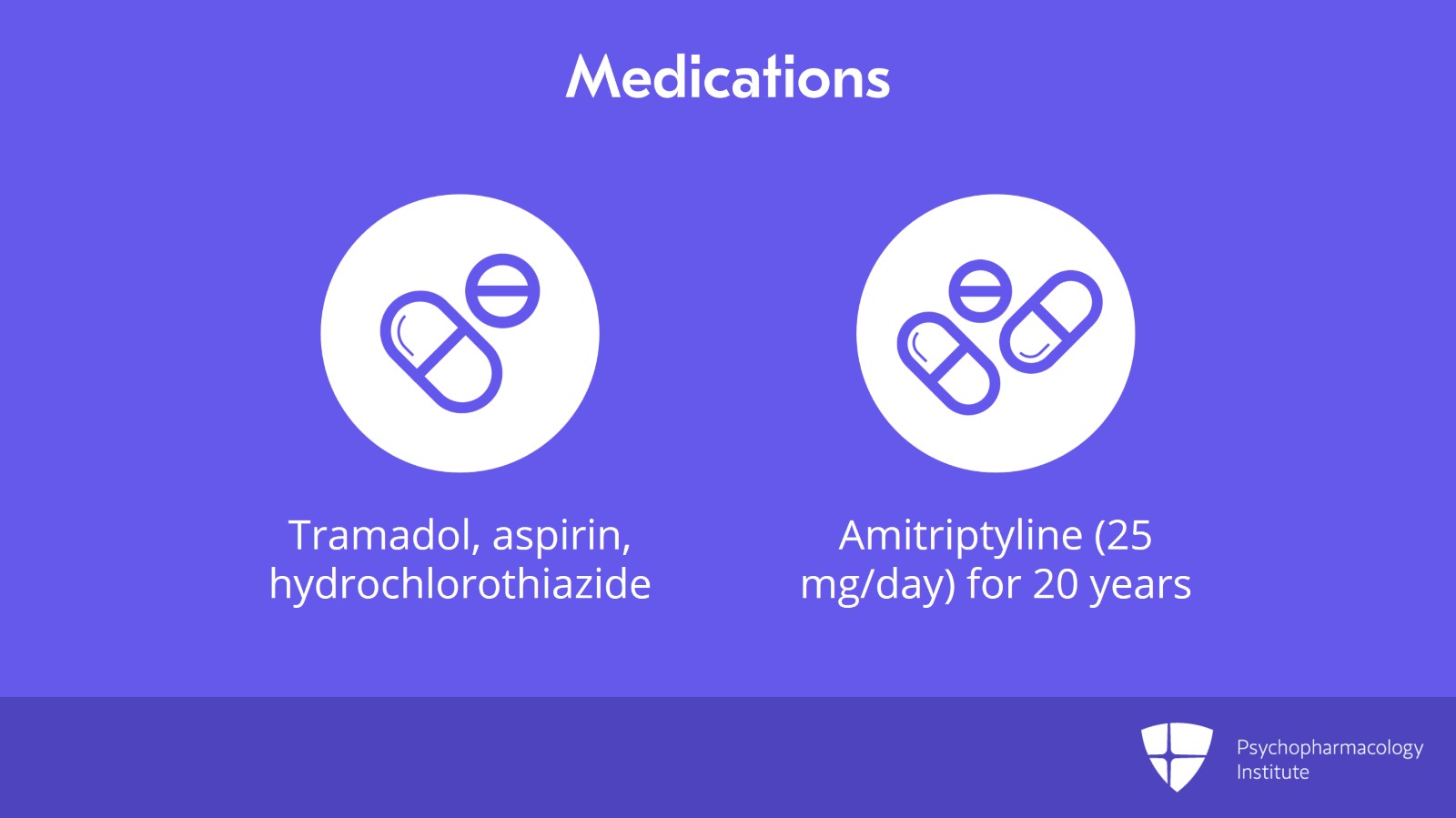
Medications include tramadol, aspirin, hydrochlorothiazide and amitriptyline 25 mg which she has taken at bedtime for more than 20 years.

Slide 4 of 13

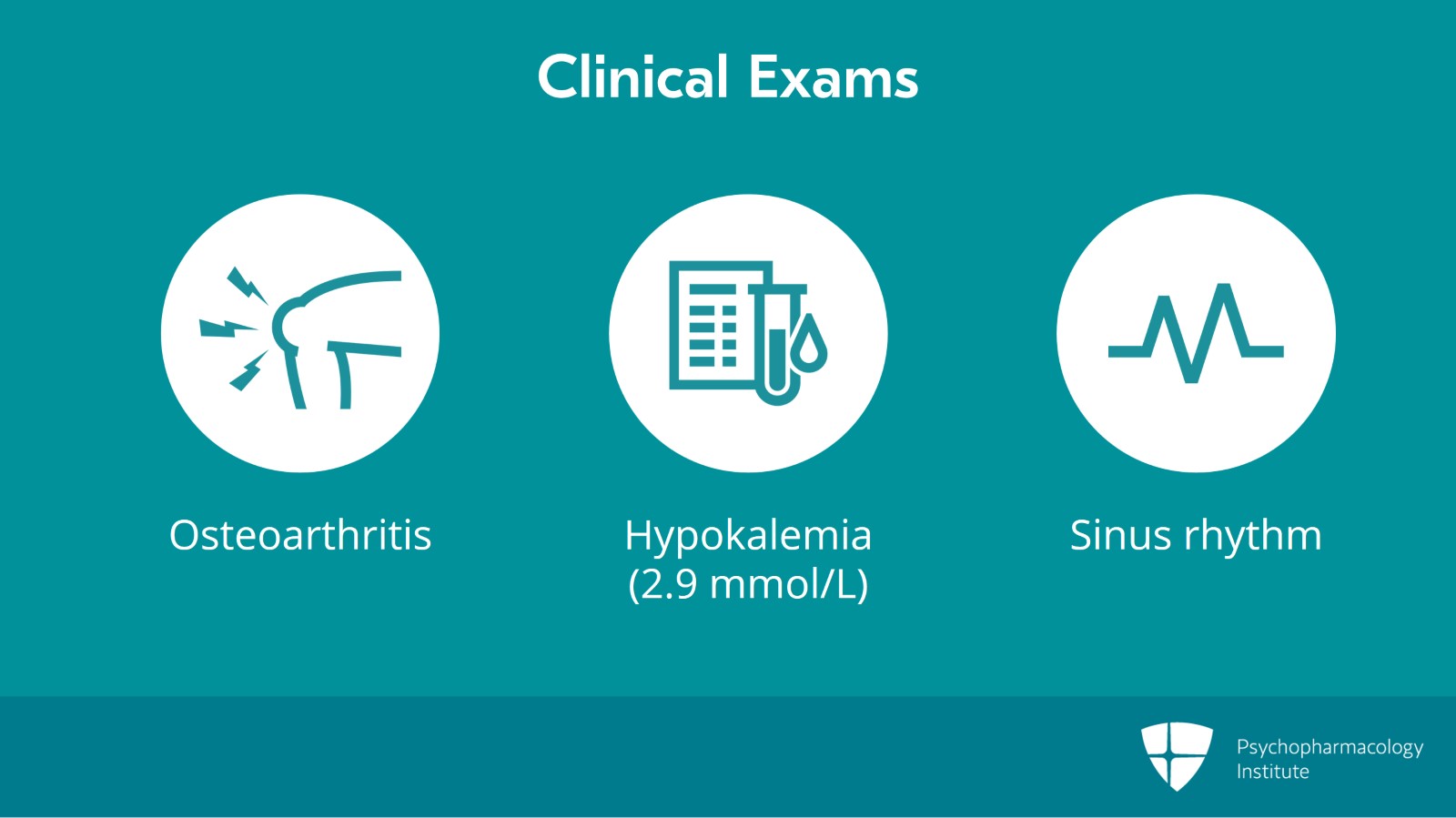
On admission, her exam was said to be normal except for osteoarthritis and her lab exam showed only hypokalemia at 2.9 mmol/L which was attributed to diuretic treatment. Her ECG showed sinus rhythm with no reported abnormalities. Discharge was scheduled.
Free Files
Success!
Check your inbox, we sent you all the materials there.

Slide 5 of 13

The day before discharge, Sue W. suffered cardiovascular collapse and was found to be in ventricular fibrillation. She was successfully defibrillated and Psychiatry was consulted later in the day.

Slide 6 of 13

So here’s a question for you. Now, in the meantime, before Psychiatry comes over, what should the medical team be thinking about? If this were your patient on the psychiatry service, what critical piece of information would you want to get from Sue W.’s admission records? I’m going to pause and let you think about this. Now, what you need to know is what is Sue W.’s corrected QT interval from the ECG. Hers turned out to be 592 msec.
References:
  • Wenzel-Seifert, K., Wittmann, M., & Haen, E. (2011). QTc prolongation by psychotropic drugs and the risk of Torsade de Pointes. Deutsches Ärzteblatt International, 108(41), 687.
Free Files
Success!
Check your inbox, we sent you all the materials there.

Slide 7 of 13

So here’s the second question for you? Is this corrected QT interval normal? What cutoff do we use for deciding whether QTc is prolonged? Well, it’s different for men and women. For men, 450 msec is the cutoff. And for women, 470 msec. Anything greater than those values is prolonged. So Sue W. came to the hospital with a prolonged QT and by the way, a history consistent with syncope. The abnormal QT interval was not recognized on admission. Is this something that could happen on a psychiatry service? It certainly happens on medicine services.
References:
  • Wenzel-Seifert, K., Wittmann, M., & Haen, E. (2011). QTc prolongation by psychotropic drugs and the risk of Torsade de Pointes. Deutsches Ärzteblatt International, 108(41), 687.
  • Honkola, J., Hookana, E., Malinen, S., Kaikkonen, K. S., Junttila, M. J., Isohanni, M., … & Huikuri, H. V. (2011). Psychotropic medications and the risk of sudden cardiac death during an acute coronary event. European heart journal, 33(6), 745-751.

Slide 8 of 13

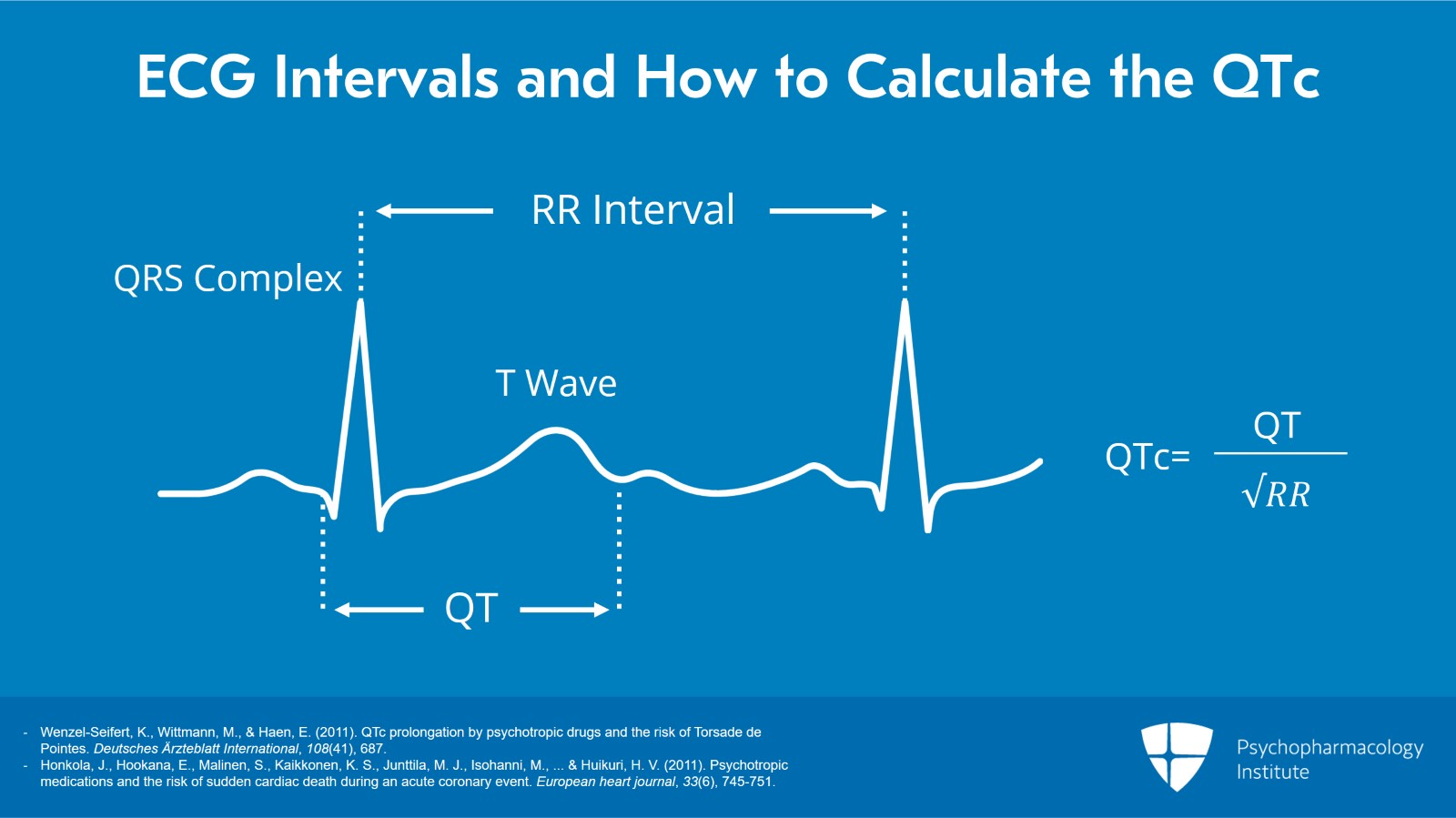
And here’s another thing for you to think about. Are you yourself familiar with ECG intervals and how to calculate the QTc? There should be a slide in your slide set that shows ECG waves and intervals. It shows you the QT interval and how that’s measured and the R-R interval and how that is measured. And the equation you need to use is the QTc is equal to the QT interval divided by the square root of the R-R interval. And you yourself can use that to calculate the corrected QT.
References:
  • Wenzel-Seifert, K., Wittmann, M., & Haen, E. (2011). QTc prolongation by psychotropic drugs and the risk of Torsade de Pointes. Deutsches Ärzteblatt International, 108(41), 687.
  • Honkola, J., Hookana, E., Malinen, S., Kaikkonen, K. S., Junttila, M. J., Isohanni, M., … & Huikuri, H. V. (2011). Psychotropic medications and the risk of sudden cardiac death during an acute coronary event. European heart journal, 33(6), 745-751.
Free Files
Success!
Check your inbox, we sent you all the materials there.

Slide 9 of 13

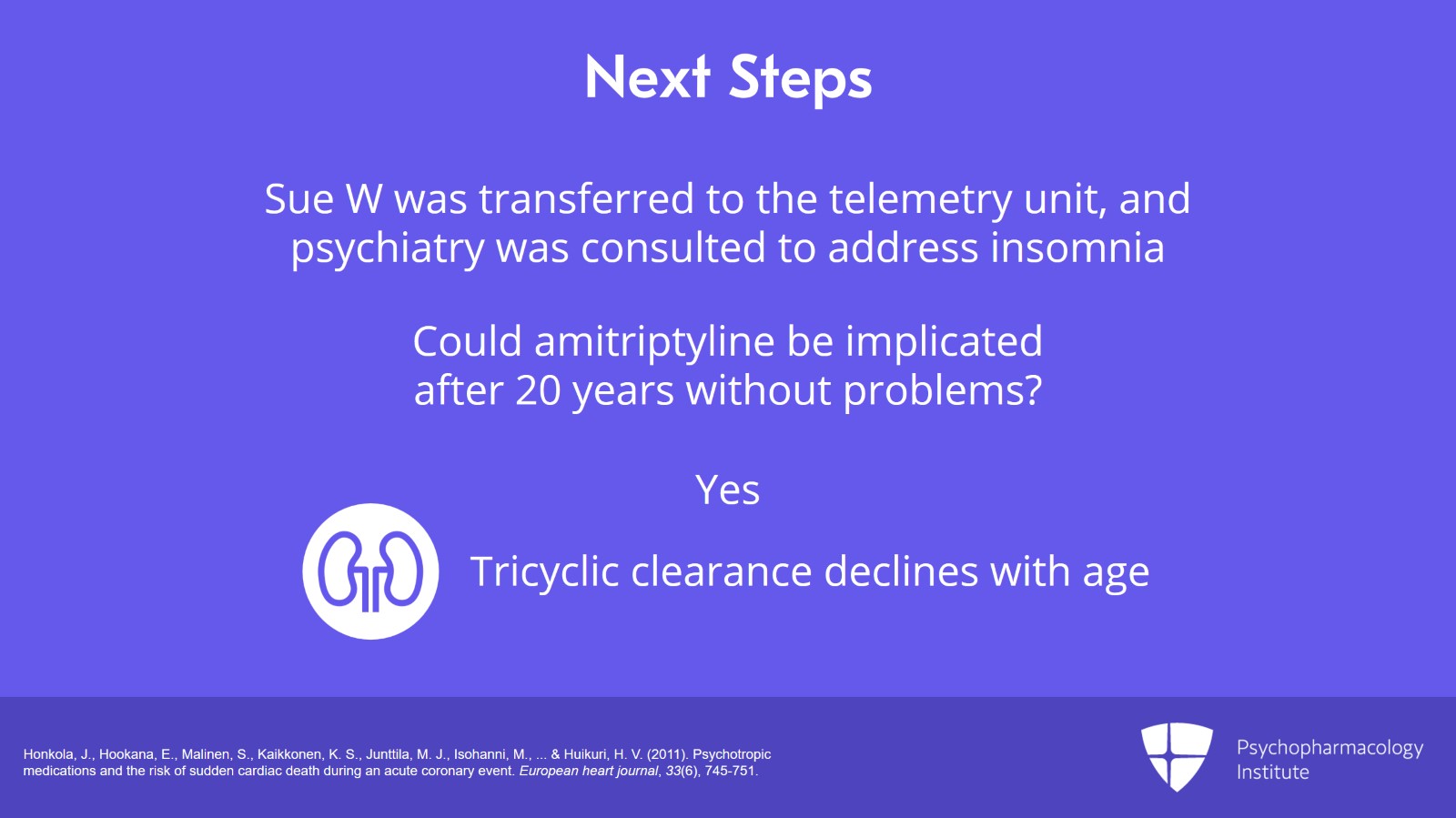
So Sue W. was transferred to the telemetry unit and the psychiatry service was consulted for a replacement treatment for insomnia. Question 3, is a replacement really needed? I mean, Sue W. obviously has some other things going on. Could amitriptyline actually be implicated after 20 years without problems? Some people said no. But the answer is yes, particularly in a patient growing older whose tricyclic clearance is declining. I want to remind you that one of the functions of a consulting psychiatry service is to educate other clinicians and patients about the dangers of some of these older drugs particularly in the geriatric population. In Sue W.’s case, the amitriptyline was stopped. Sue W. was observed on a telemetry unit and had several more episodes of dysrhythmia with syncope. Other interventions were planned in addition to stopping the tricyclic.
References:
  • Honkola, J., Hookana, E., Malinen, S., Kaikkonen, K. S., Junttila, M. J., Isohanni, M., … & Huikuri, H. V. (2011). Psychotropic medications and the risk of sudden cardiac death during an acute coronary event. European heart journal, 33(6), 745-751.

Slide 10 of 13

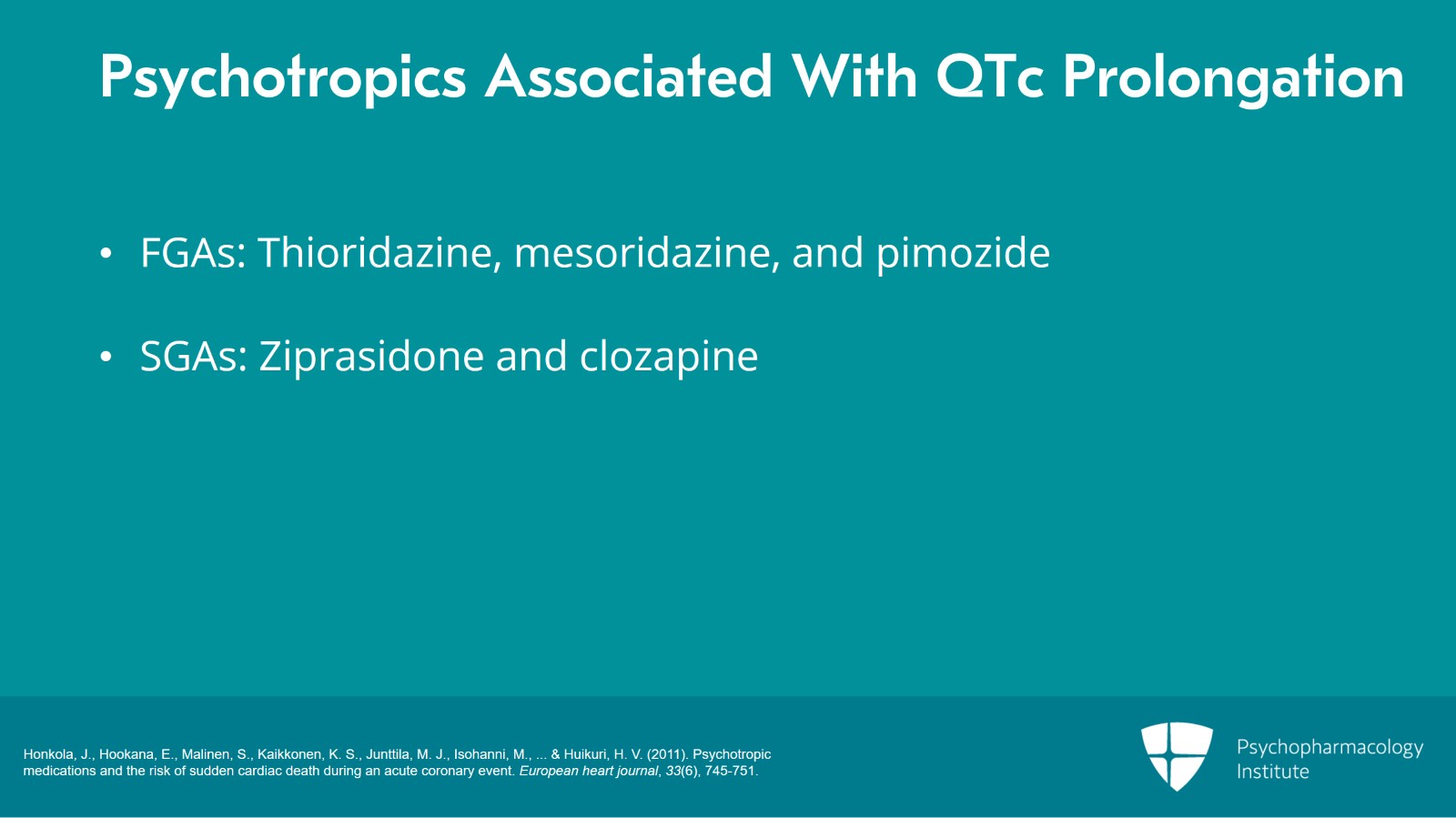
So here’s another question for you. Aside from the tricyclic antidepressants, which of the common psychotropics are particularly problematic from the standpoint of QT prolongation? I’m going to pause here. I want you to pause and think about this. So medications that are especially implicated include specific first-generation antipsychotics namely thioridazine, mesoridazine and pimozide and specific second-generation antipsychotics, ziprasidone and clozapine
References:
  • Honkola, J., Hookana, E., Malinen, S., Kaikkonen, K. S., Junttila, M. J., Isohanni, M., … & Huikuri, H. V. (2011). Psychotropic medications and the risk of sudden cardiac death during an acute coronary event. European heart journal, 33(6), 745-751.
Free Files
Success!
Check your inbox, we sent you all the materials there.

Slide 11 of 13

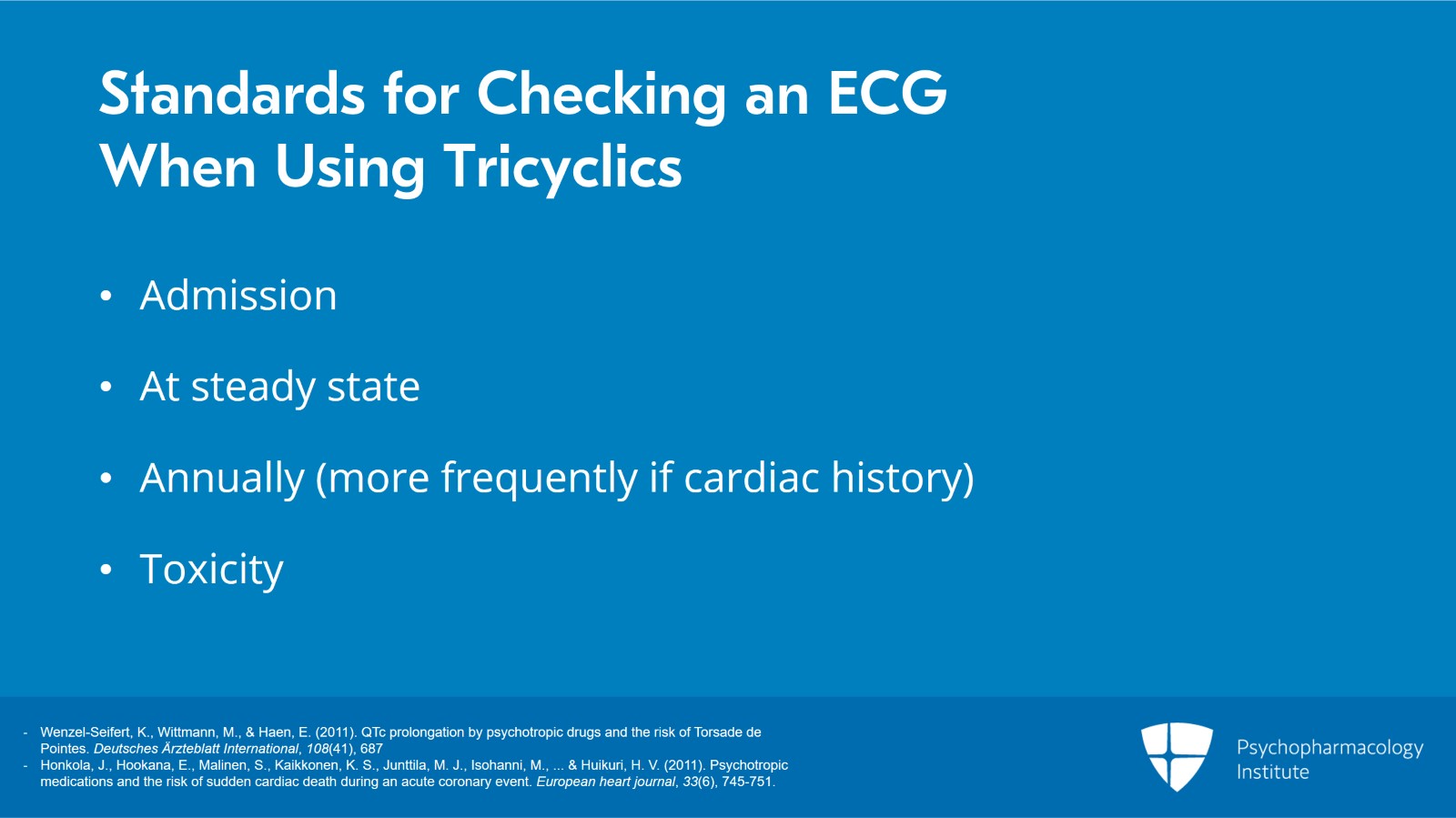
Sue W.’s case shows again why we don’t like to use tricyclic antidepressants in elderly patients. When a tricyclic is used, there are standards for checking an ECG. On admission. At steady state. Annually during treatment, more frequently if the patient has any kind of cardiac history or family cardiac history. If toxicity is suspected. For recommendations as to ECG screening and monitoring for a specific drug, see the references.
References:
  • Wenzel-Seifert, K., Wittmann, M., & Haen, E. (2011). QTc prolongation by psychotropic drugs and the risk of Torsade de Pointes. Deutsches Ärzteblatt International, 108(41), 687
  • Honkola, J., Hookana, E., Malinen, S., Kaikkonen, K. S., Junttila, M. J., Isohanni, M., … & Huikuri, H. V. (2011). Psychotropic medications and the risk of sudden cardiac death during an acute coronary event. European heart journal, 33(6), 745-751.

Slide 12 of 13

Key points. Psychotropic drugs particularly implicated in prolongation of the QT interval include tricyclic antidepressants and specific first- and second-generation antipsychotics. When a tricyclic antidepressant is used, there are guidelines for checking an ECG that must be followed.
Free Files
Success!
Check your inbox, we sent you all the materials there.

Slide 13 of 13

Learning Objectives:

After completing this activity, the learner will be able to:

  1. Identify important laboratory tests in psychiatry and know which to request in specific patients.
  2. Prescribe psychiatric medications while keeping in mind the possible side effects so as to monitor for them adequately with laboratory tests, when indicated.

Original Release Date: 02/01/2020

Review and Re-release Date: 03/01/2023

Expiration Date: 04/01/2023

Relevant Financial Disclosures:

None of the faculty, planners, and reviewers for this educational activity have relevant financial relationship(s) to disclose during the last 24 months with ineligible companies whose primary business is producing, marketing, selling, re-selling, or distributing healthcare products used by or on patients.

Contact Information: For questions regarding the content or access to this activity, contact us at support@psychopharmacologyinstitute.com

Instructions for Participation and Credit:

Participants must complete the activity online during the valid credit period that is noted above.

Follow these steps to earn CME credit:

  1. View the required educational content provided on this course page.
  2. Answer the quiz for promoting retention of knowledge.
  3. Complete the Post Activity Evaluation for providing the necessary feedback for continuing accreditation purposes and for the development of future activities. NOTE: Completing the Post Activity Evaluation after the quiz is required to receive the earned credit.
  4. Download your certificate.

Accreditation Statement

This activity has been planned and implemented in accordance with the accreditation requirements and policies of the Accreditation Council for Continuing Medical Education through the joint providership of Medical Academy LLC and the Psychopharmacology Institute. Medical Academy is accredited by the ACCME to provide continuing medical education for physicians.

Credit Designation Statement

Medical Academy designates this enduring activity for a maximum of 0.75 AMA PRA Category 1 credit(s). Physicians should claim only the credit commensurate with the extent of their participation in the activity.


Free Files
Success!
Check your inbox, we sent you all the materials there.
Continue in the website
Instant access modal

Become a Bronze, Silver, Gold, Bronze extended, Silver extended or Gold extended Member.

2025–26 Psychopharmacology CME Program

Unlock up to 155 CME Credits, including 40 SA CME Credits.