Close Banner
Section Free  - Video Lectures

05. Drug Use in Breastfeeding and Adverse Effects

Published on August 1, 2021 Expired on April 1, 2025

Lauren Osborne, M.D.

Vice Chair of Clinical Research in the Department of Obstetrics and Gynecology - Weill Cornell Medicine

Key Points

  • What matters most is not the dose but the effect on the infant.
  • Some people may be more prone to see adverse effects if the woman is on a drug.
  • Careful monitoring of maternal doses minimizes maternal illness and infant adverse effects.
  • Certain drugs that need to be increased during pregnancy must be decreased in the postpartum.

Free Downloads for Offline Access

  • Free Download Presentation File (PPTX)
  • Free Download Video (MP4)
  • Free Download Audio File (MP3)

Slides and Transcript

Slide 1 of 12

We should talk a little bit more about drug use in breastfeeding and what adverse effects there could be.

Slide 2 of 12

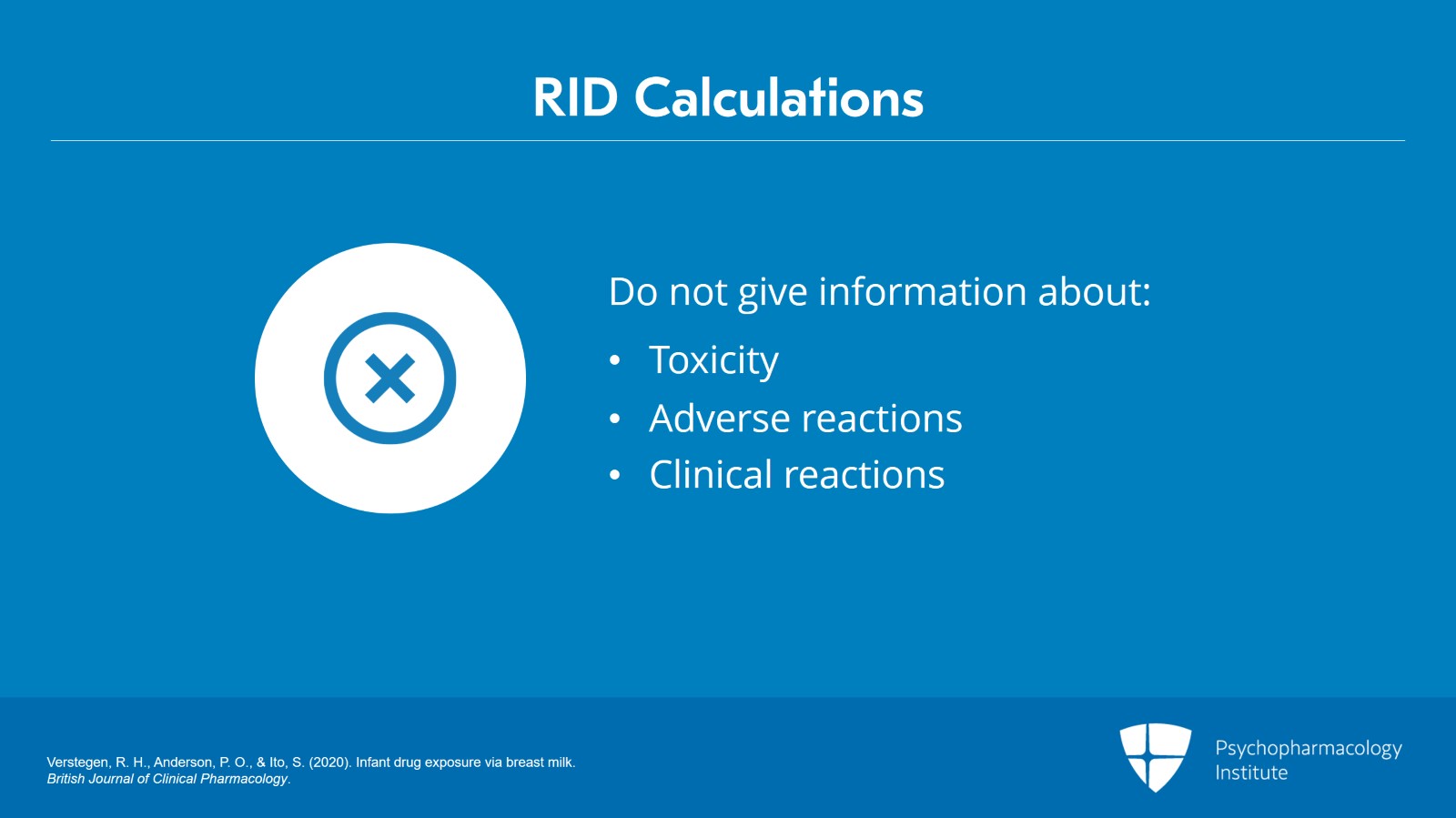
Now, we can calculate how much of the drug the infant is getting but that doesn’t tell us about toxicity. It doesn’t tell us what kind of adverse reaction there could be. It doesn’t tell us what the clinical reaction will be.
References:
  • Verstegen, R. H., Anderson, P. O., & Ito, S. (2020). Infant drug exposure via breast milk. British Journal of Clinical Pharmacology.
Free Files
Success!
Check your inbox, we sent you all the materials there.

Slide 3 of 12

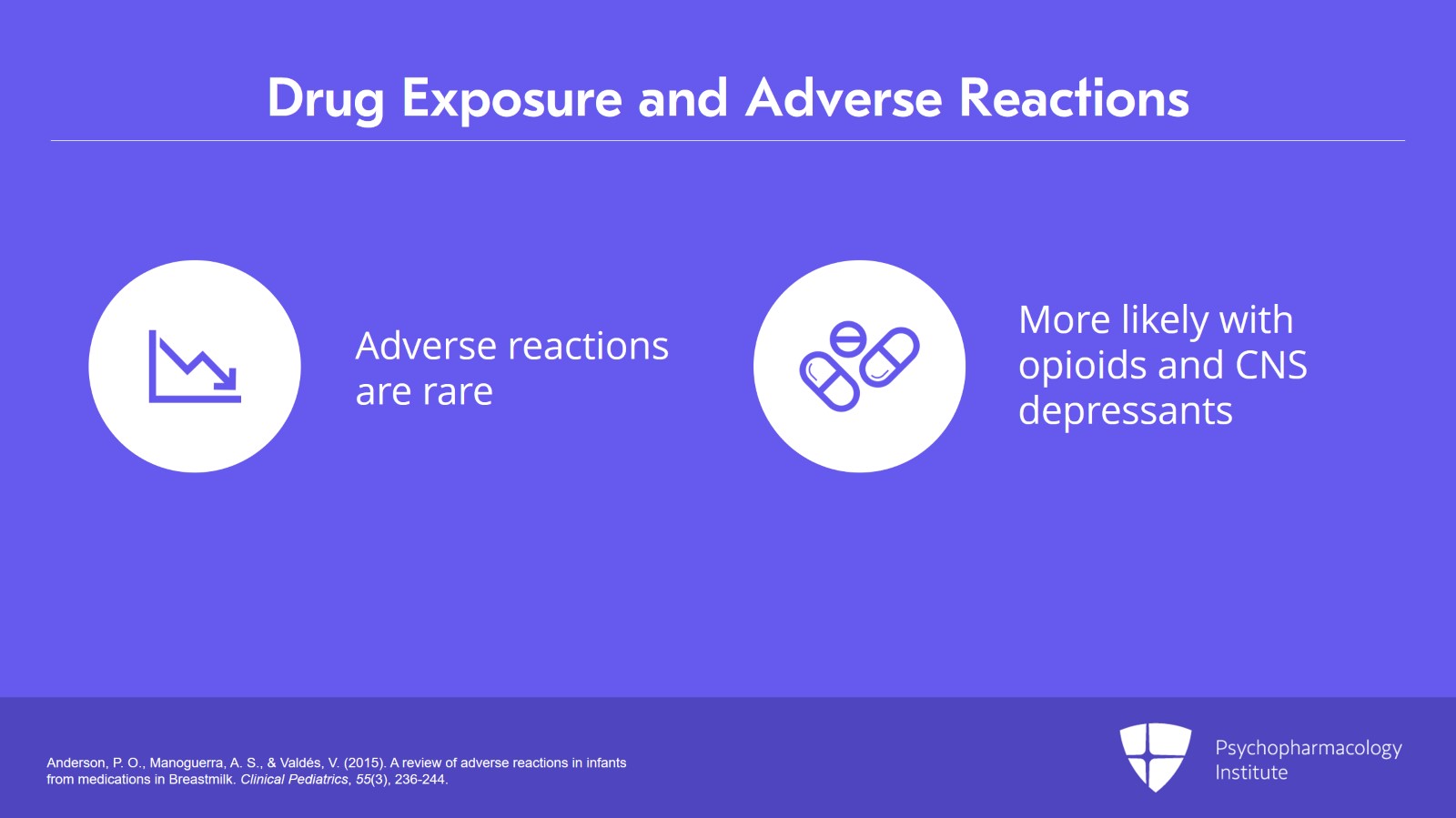
And what really matters is whether that exposure is actually associated with any kind of adverse reaction. And in fact, adverse reactions are quite rare. The most common drugs to cause an adverse reaction are going to be opioids and CNS depressants.
References:
  • Anderson, P. O., Manoguerra, A. S., & Valdés, V. (2015). A review of adverse reactions in infants from medications in Breastmilk. Clinical Pediatrics, 55(3), 236-244.

Slide 4 of 12

Because of that increased permeability of the blood-brain barrier in an infant. The closer to the birth so the more immature the baby, the more likely there is to be an adverse reaction because of that permeability of the blood-brain barrier. There’s also sensitivity of different brain regions that’s likely responsible as in immature babies. Adverse reactions can occur due to high exposure, either a high dose or a high passage into the breastmilk or low clearance.
References:
  • Anderson, P. O., Manoguerra, A. S., & Valdés, V. (2015). A review of adverse reactions in infants from medications in Breastmilk. Clinical Pediatrics, 55(3), 236-244.
Free Files
Success!
Check your inbox, we sent you all the materials there.

Slide 5 of 12

What kind of adverse reactions can we see? Remember that adverse reactions are something that are merely observed and noted. We have no way of knowing if these reactions are actually due to the drug because we lack any randomized controlled trials in this population. Mothers and clinicians may just be more likely to notice or comment on adverse reactions when a woman is taking a drug simply because they expect to see one. This may be particularly true for psychiatric drugs where stigma against mental health plays a part in whether patients and clinicians feel that the medication is really needed.
References:
  • Kelsey, J. J. (2016). Drug Principles in Lactation. In & Murphy, J. E., Lee M. W. L. & Cheang K. I. (Eds.), Women's and Men's Health. https://www.accp.com/docs/bookstore/psap/p2016b3_sample.pdf.

Slide 6 of 12

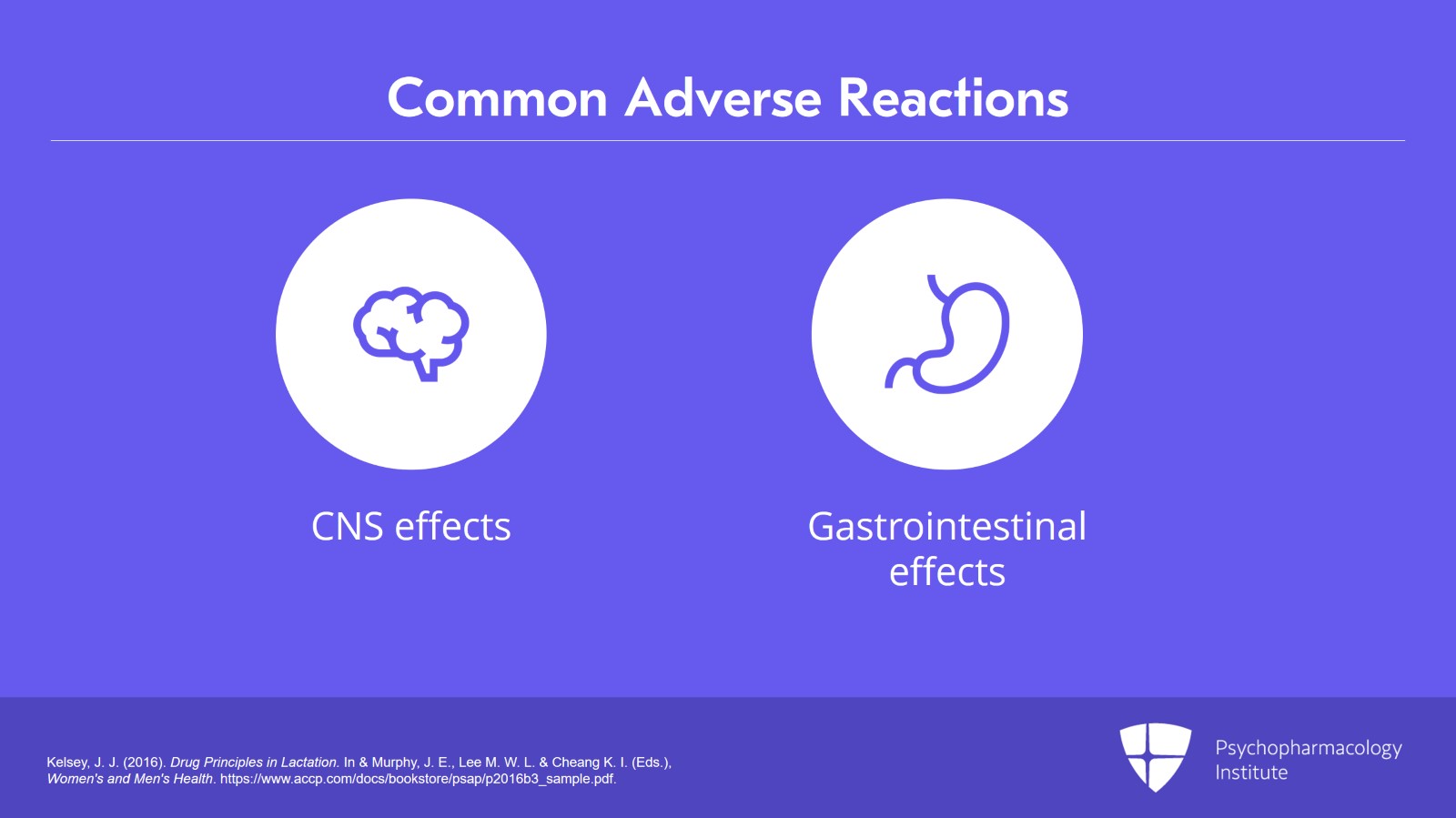
The most likely types of adverse reactions are CNS effects such as sedation and lethargy, respiratory depression, apnea, seizures, and tremor. There have also been adverse effects reported on gastrointestinal effects, such as vomiting, diarrhea and weight loss.
References:
  • Kelsey, J. J. (2016). Drug Principles in Lactation. In & Murphy, J. E., Lee M. W. L. & Cheang K. I. (Eds.), Women's and Men's Health. https://www.accp.com/docs/bookstore/psap/p2016b3_sample.pdf.
Free Files
Success!
Check your inbox, we sent you all the materials there.

Slide 7 of 12

And for sure, we know that polypharmacy increases the risk of adverse effects. At least, it increases the risk of adverse effects we’ve observed because remember, no randomized controlled trials. We also have to think carefully about maternal dosing considerations and what role they might play in adverse effects.
References:
  • Kelsey, J. J. (2016). Drug Principles in Lactation. In & Murphy, J. E., Lee M. W. L. & Cheang K. I. (Eds.), Women's and Men's Health. https://www.accp.com/docs/bookstore/psap/p2016b3_sample.pdf.

Slide 8 of 12

So, a number of drugs have increased clearance during pregnancy which means that doses may be increased during the pregnancy. This is particularly true for lamotrigine which has increased clearance through glucuronidation and lithium which has increased clearance due to increased GFR. When doses are not decreased back to pre-pregnancy levels in the postpartum, that may mean that the infant can get a higher than usual exposure to the drug.
References:
  • Kelsey, J. J. (2016). Drug Principles in Lactation. In & Murphy, J. E., Lee M. W. L. & Cheang K. I. (Eds.), Women's and Men's Health. https://www.accp.com/docs/bookstore/psap/p2016b3_sample.pdf.
Free Files
Success!
Check your inbox, we sent you all the materials there.

Slide 9 of 12

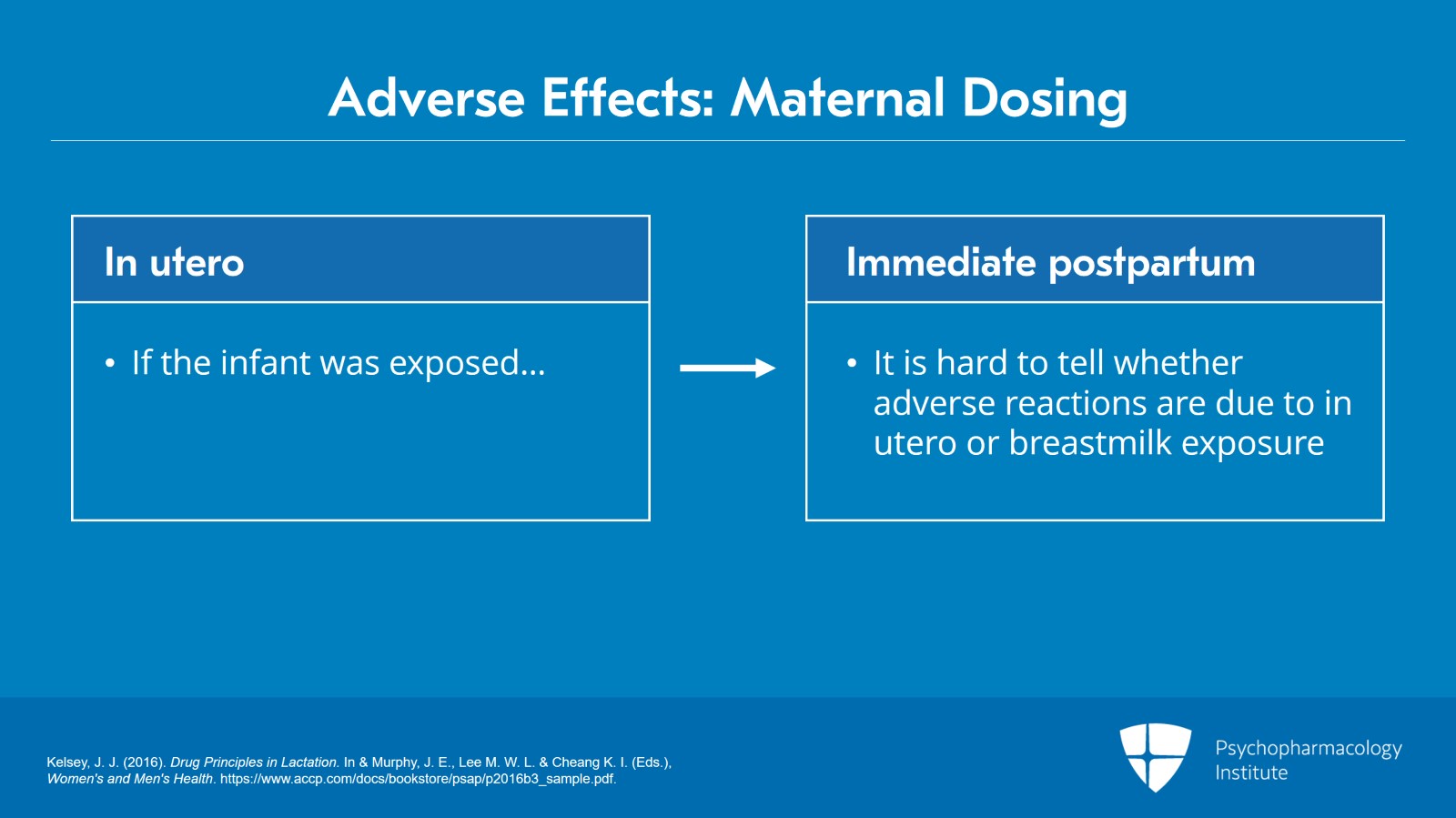
If the infant was exposed in utero, it’s often hard to tell if any adverse reaction in the immediate postpartum period is due to that in utero exposure or due to breastmilk exposure. So, all those reports that we have of adverse reactions, we don’t really know that those are due to the drugs. So, we can only base it on those case reports. We don’t have the randomized controlled trials.
References:
  • Kelsey, J. J. (2016). Drug Principles in Lactation. In & Murphy, J. E., Lee M. W. L. & Cheang K. I. (Eds.), Women's and Men's Health. https://www.accp.com/docs/bookstore/psap/p2016b3_sample.pdf.

Slide 10 of 12

So key points to this section of the talk. Remember that what really matters is not the infant dose but the effect on the infant. CNS and GI effects have been observed but remember none of these are from randomized controlled trials. They’re just people observing effects in the postpartum in a time where they may be more prone to see effects or expect effects because they know the woman is on a drug.
Free Files
Success!
Check your inbox, we sent you all the materials there.

Slide 11 of 12

Careful monitoring of maternal dose in pregnancy and postpartum is really important to minimize both maternal illness and infant adverse effects. And remember that certain drugs that may need to be increased during pregnancy will have to be brought back down again in the postpartum.

Slide 12 of 12

Free Files
Success!
Check your inbox, we sent you all the materials there.

Learning Objectives:

After completing this activity, the learner will be able to:

  1. Assess the risks and benefits of breastfeeding while the mother is using psychotropics.
  2. Describe the tools for calculating the amount of exposure for the infant.
  3. Decide whether breastfeeding is safe on a case-by-case basis.

Original Release Date: 08/01/2021

Review and Re-release Date: 03/01/2024

Expiration Date: 04/01/2025

Expert: Lauren Osborne, M.D.

Medical Editor: Lorena Rodriguez, M.D

Relevant Financial Disclosures:

None of the faculty, planners, and reviewers for this educational activity have relevant financial relationship(s) to disclose during the last 24 months with ineligible companies whose primary business is producing, marketing, selling, re-selling, or distributing healthcare products used by or on patients.

Contact Information: For questions regarding the content or access to this activity, contact us at support@psychopharmacologyinstitute.com

Instructions for Participation and Credit:

Participants must complete the activity online during the valid credit period that is noted above.

Follow these steps to earn CME credit:

  1. View the required educational content provided on this course page.
  2. Complete the Post Activity Evaluation for providing the necessary feedback for continuing accreditation purposes and for the development of future activities. NOTE: Completing the Post Activity Evaluation after the quiz is required to receive the earned credit.
  3. Download your certificate.

Accreditation Statement

This activity has been planned and implemented in accordance with the accreditation requirements and policies of the Accreditation Council for Continuing Medical Education through the joint providership of Medical Academy LLC and the Psychopharmacology Institute. Medical Academy is accredited by the ACCME to provide continuing medical education for physicians.

Credit Designation Statement

Medical Academy designates this enduring activity for a maximum of 1.00 AMA PRA Category 1 credit(s). Physicians should claim only the credit commensurate with the extent of their participation in the activity.


Free Files
Success!
Check your inbox, we sent you all the materials there.
Continue in the website
Instant access modal

Become a Bronze, Silver, Gold, Bronze extended, Silver extended or Gold extended Member.

2025–26 Psychopharmacology CME Program

Unlock up to 155 CME Credits, including 40 SA CME Credits.