Slides and Transcript
Slide 1 of 22
We're going to turn now to the discussion of postpartum obsessive-compulsive disorder or OCD. Now, this isn't strictly a mood syndrome in the postpartum but it has a lot of similarities to the three major mood syndromes that we've talked about – the blues, postpartum depression and postpartum psychosis.
Slide 2 of 22
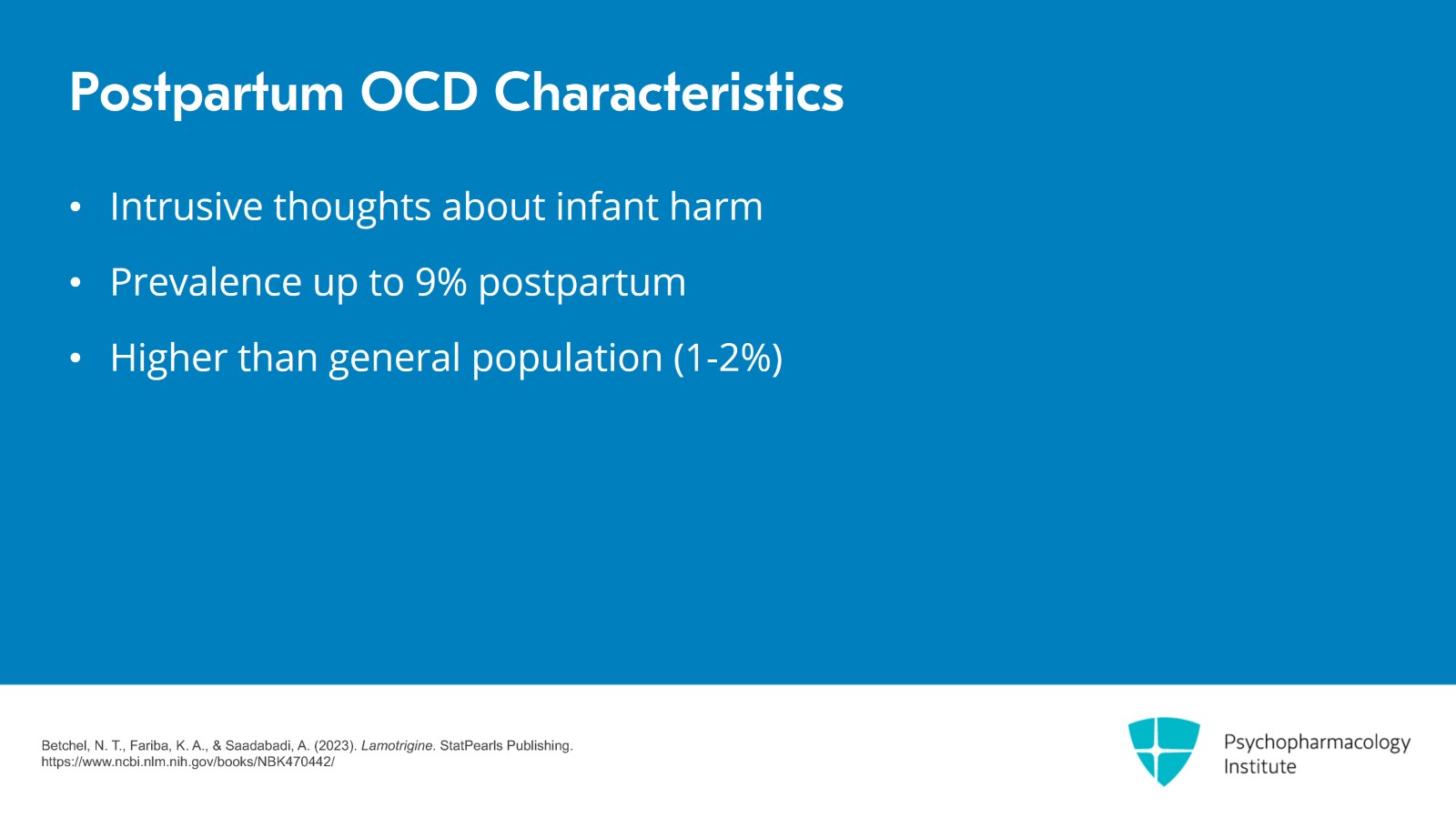
So it's important to understand what it is and what it is not to have real clinical insight and diagnostic clarity into what's going on with our patients in the postpartum. So OCD will typically present in the postpartum with intrusive thoughts and images that will often concern infant harm. The prevalence is unclear, possibly up to 9% in the postpartum. And remember that OCD in the general population is about 1% to 2%. So that's dramatically increased prevalence.
References:
- Uguz, F., Akman, C., Kaya, N., & Cilli, A. S. (2007). Postpartum-onset obsessive-compulsive disorder: incidence, clinical features, and related factors. Journal of Clinical Psychiatry, 68(1), 132-138. https://doi.org/10.4088/jcp.v68n0118
- McGuinness, M., Blissett, J., & Jones, C. (2011). OCD in the Perinatal Period: Is Postpartum OCD (ppOCD) a Distinct Subtype? A Review of the Literature. Behavioural and Cognitive Psychotherapy, 39(3), 285-310. https://doi.org/10.1017/S1352465810000718
Free Files
Download PDF and other files
Success!
Check your inbox, we sent you all the materials there.
Slide 3 of 22
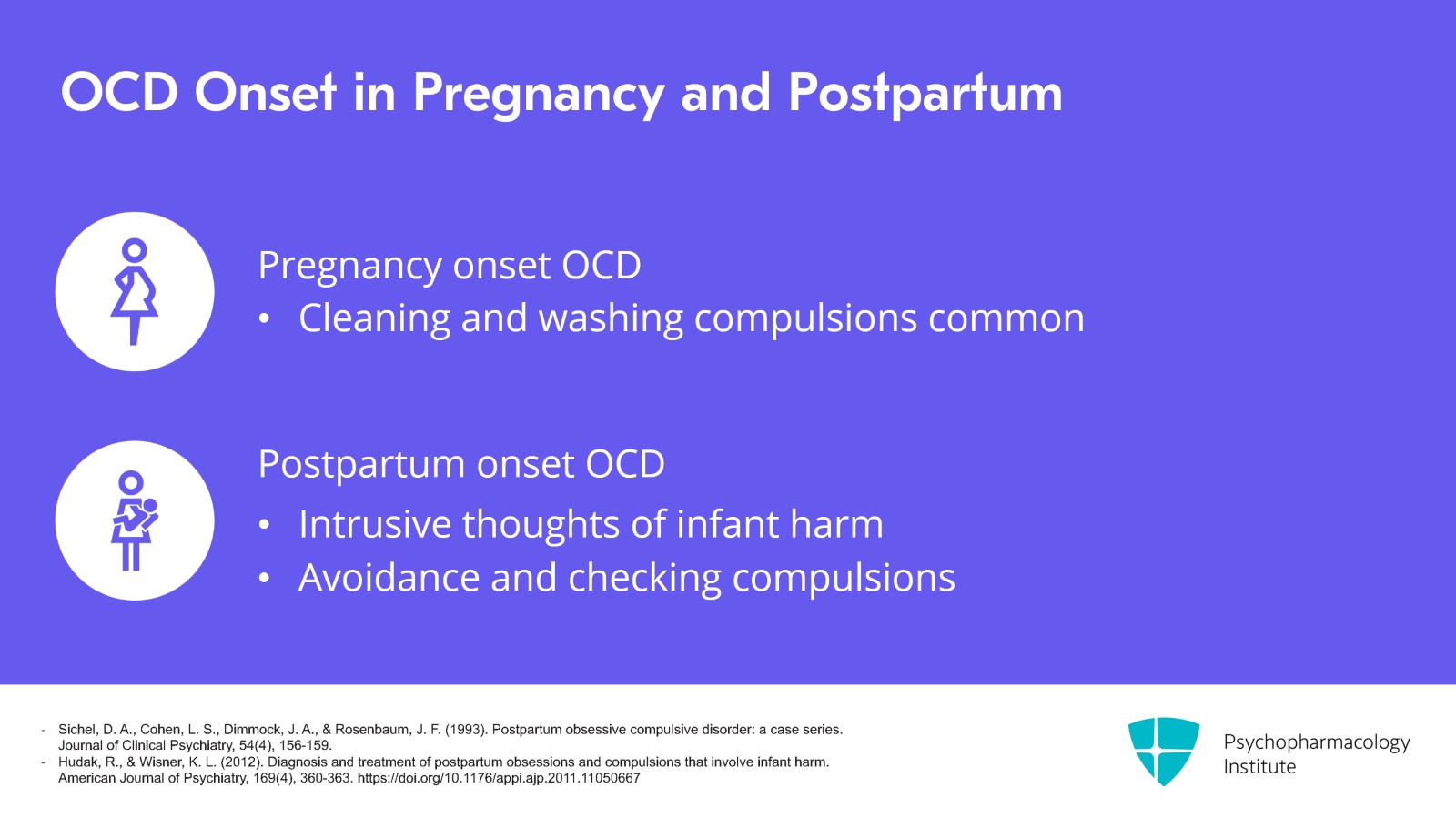
We also know that when people have onset of OCD in pregnancy it's often associated with contamination obsessions and cleaning and washing obsessions. For those who have onset in the postpartum, on the other hand, illness is often associated with intrusive thoughts of infant harm and avoidance and checking compulsions.
References:
- Sichel, D. A., Cohen, L. S., Dimmock, J. A., & Rosenbaum, J. F. (1993). Postpartum obsessive compulsive disorder: a case series. Journal of Clinical Psychiatry, 54(4), 156-159.
- Hudak, R., & Wisner, K. L. (2012). Diagnosis and treatment of postpartum obsessions and compulsions that involve infant harm. American Journal of Psychiatry, 169(4), 360-363. https://doi.org/10.1176/appi.ajp.2011.11050667
Slide 4 of 22
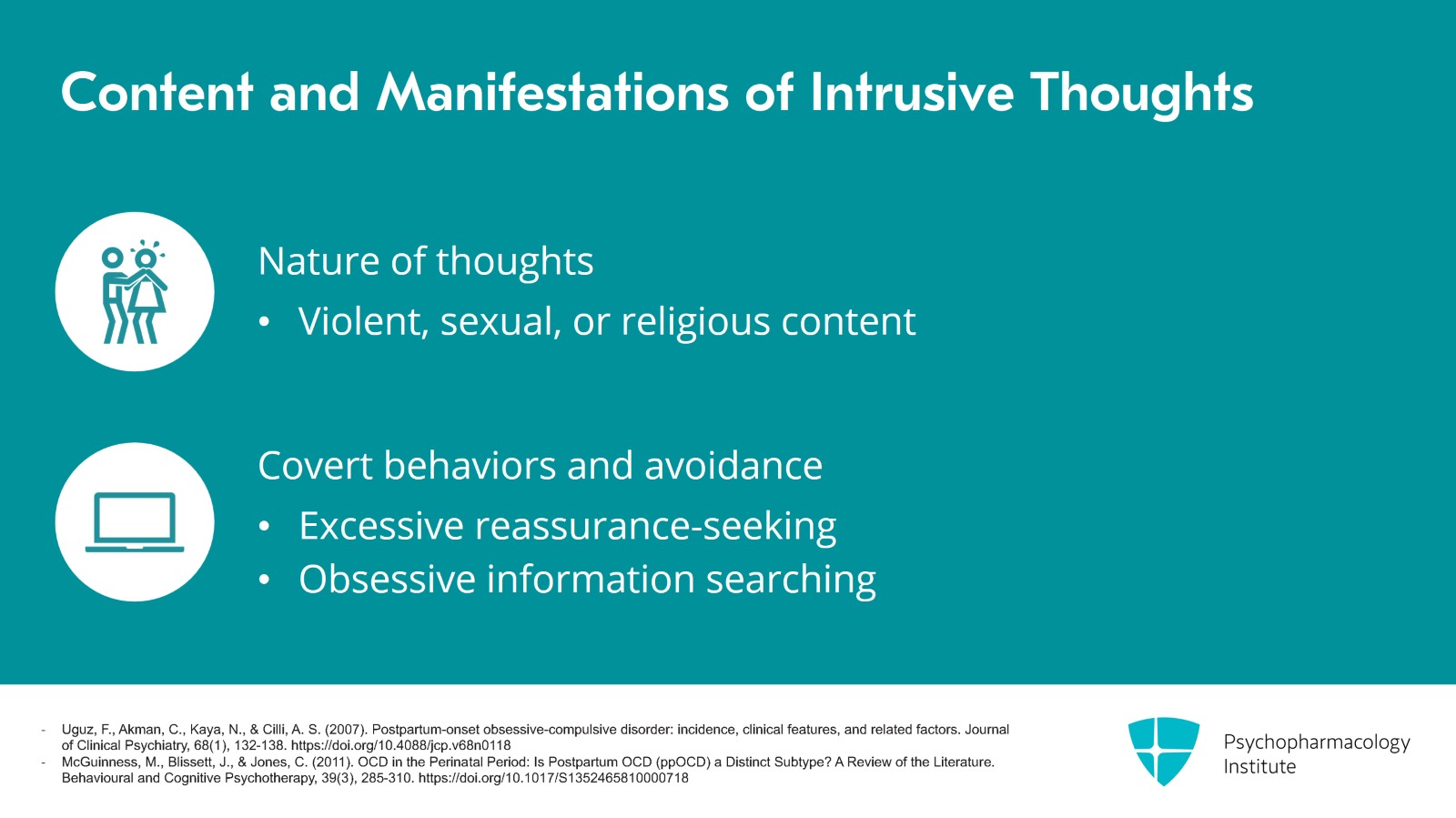
The content of the intrusive thoughts can be violent, sexual or religious in nature and overt compulsions are less common than covert behaviors and situational avoidance. For example, we have to remember mental compulsions, not just physical behavioral compulsions. For example, somebody who is constantly seeking reassurance or calls six different doctors to get an opinion on a symptom that she thinks she is having or obsessively googles to try to find information about something, those may be compulsions that are trying to reassure her for the distress that she has experienced.
References:
- Uguz, F., Akman, C., Kaya, N., & Cilli, A. S. (2007). Postpartum-onset obsessive-compulsive disorder: incidence, clinical features, and related factors. Journal of Clinical Psychiatry, 68(1), 132-138. https://doi.org/10.4088/jcp.v68n0118
- McGuinness, M., Blissett, J., & Jones, C. (2011). OCD in the Perinatal Period: Is Postpartum OCD (ppOCD) a Distinct Subtype? A Review of the Literature. Behavioural and Cognitive Psychotherapy, 39(3), 285-310. https://doi.org/10.1017/S1352465810000718
Free Files
Download PDF and other files
Success!
Check your inbox, we sent you all the materials there.
Slide 5 of 22
One of the key things to understanding this though is to remember that these intrusive thoughts in OCD are ego-dystonic with preserved insight.
References:
- Hudak, R., & Wisner, K. L. (2012). Diagnosis and treatment of postpartum obsessions and compulsions that involve infant harm. American Journal of Psychiatry, 169(4), 360-363. https://doi.org/10.1176/appi.ajp.2011.11050667
Slide 6 of 22
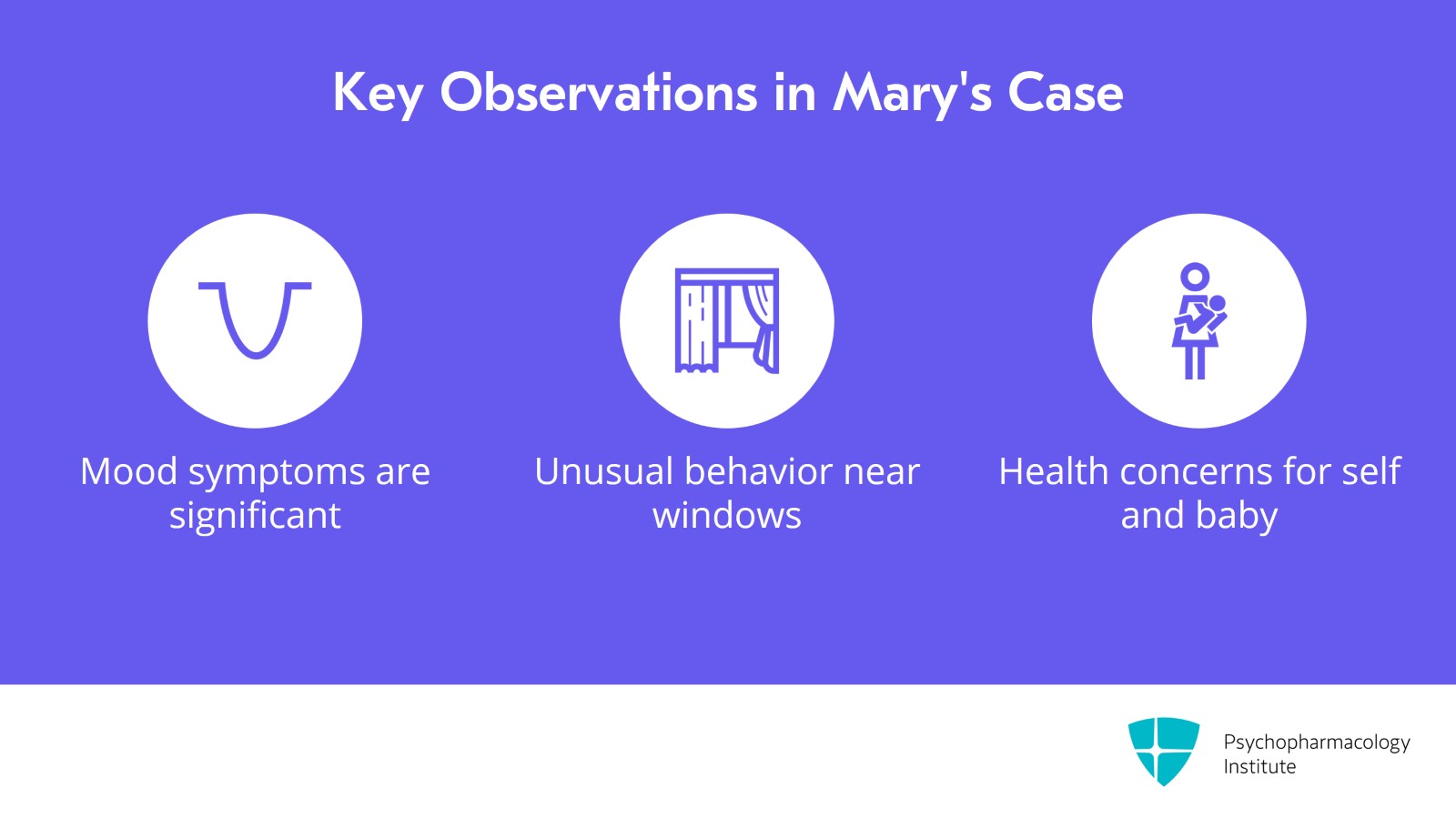
So the question is, does this fit the symptoms of the case we gave of Mary's symptoms? Well, we heard a lot about Mary's mood symptoms but remember we also heard some intriguing vague comments about the fact that she's standing near windows for long periods of time and we don't know what that's about and whether that could be associated with something like intrusive thoughts. We also heard that she has a lot of worries about her health and that of the baby. Could that be associated with intrusive thoughts? We need to ask more questions.
Free Files
Download PDF and other files
Success!
Check your inbox, we sent you all the materials there.
Slide 7 of 22
When you're evaluating a patient for possible postpartum OCD, it's really important to ask directly about thoughts of harming the baby. Clinicians are often scared to do that because it seems like such a sensitive topic but if you don't directly ask, women are not going to volunteer that information. When you ask, it's important to note that these thoughts are common and don't morally condemn the thoughts.
References:
- Hudak, R., & Wisner, K. L. (2012). Diagnosis and treatment of postpartum obsessions and compulsions that involve infant harm. American Journal of Psychiatry, 169(4), 360-363. https://doi.org/10.1176/appi.ajp.2011.11050667
Slide 8 of 22
Talk about it as something that commonly happens in the postpartum and ask the patient if she's experienced, if she's experienced them. The way I often ask is to say, many women in the postpartum will experience sometimes scary thoughts, intrusive thoughts that they can't get out of their mind. Sometimes, those thoughts might even be about harm coming to their child or themselves harming their child. Has that ever happened to you? In that way, the patient knows this is something common and something that she can open up about.
References:
- Hudak, R., & Wisner, K. L. (2012). Diagnosis and treatment of postpartum obsessions and compulsions that involve infant harm. American Journal of Psychiatry, 169(4), 360-363. https://doi.org/10.1176/appi.ajp.2011.11050667
Free Files
Download PDF and other files
Success!
Check your inbox, we sent you all the materials there.
Slide 9 of 22
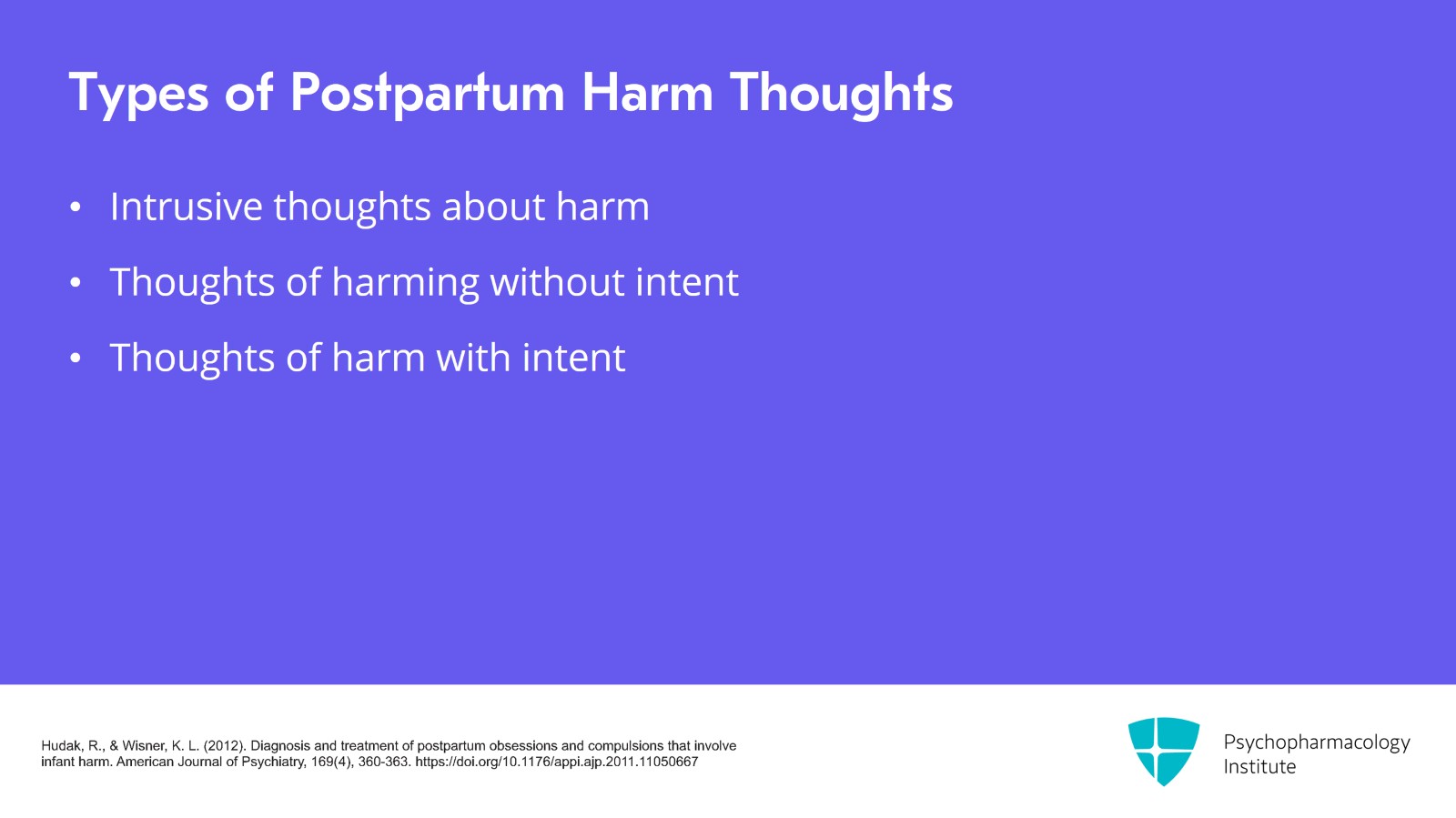
There are three kinds of thoughts of harm to the child that can happen in the postpartum. One is these intrusive thoughts that I've mentioned where it's just thoughts about harm coming to the child. There can be actual thoughts of harming the child but without any intent to do so and there can also be thoughts of harm with intent. Now, that's got to be distinguished from the intrusive thoughts of obsessive-compulsive disorder.
References:
- Hudak, R., & Wisner, K. L. (2012). Diagnosis and treatment of postpartum obsessions and compulsions that involve infant harm. American Journal of Psychiatry, 169(4), 360-363. https://doi.org/10.1176/appi.ajp.2011.11050667
Slide 10 of 22
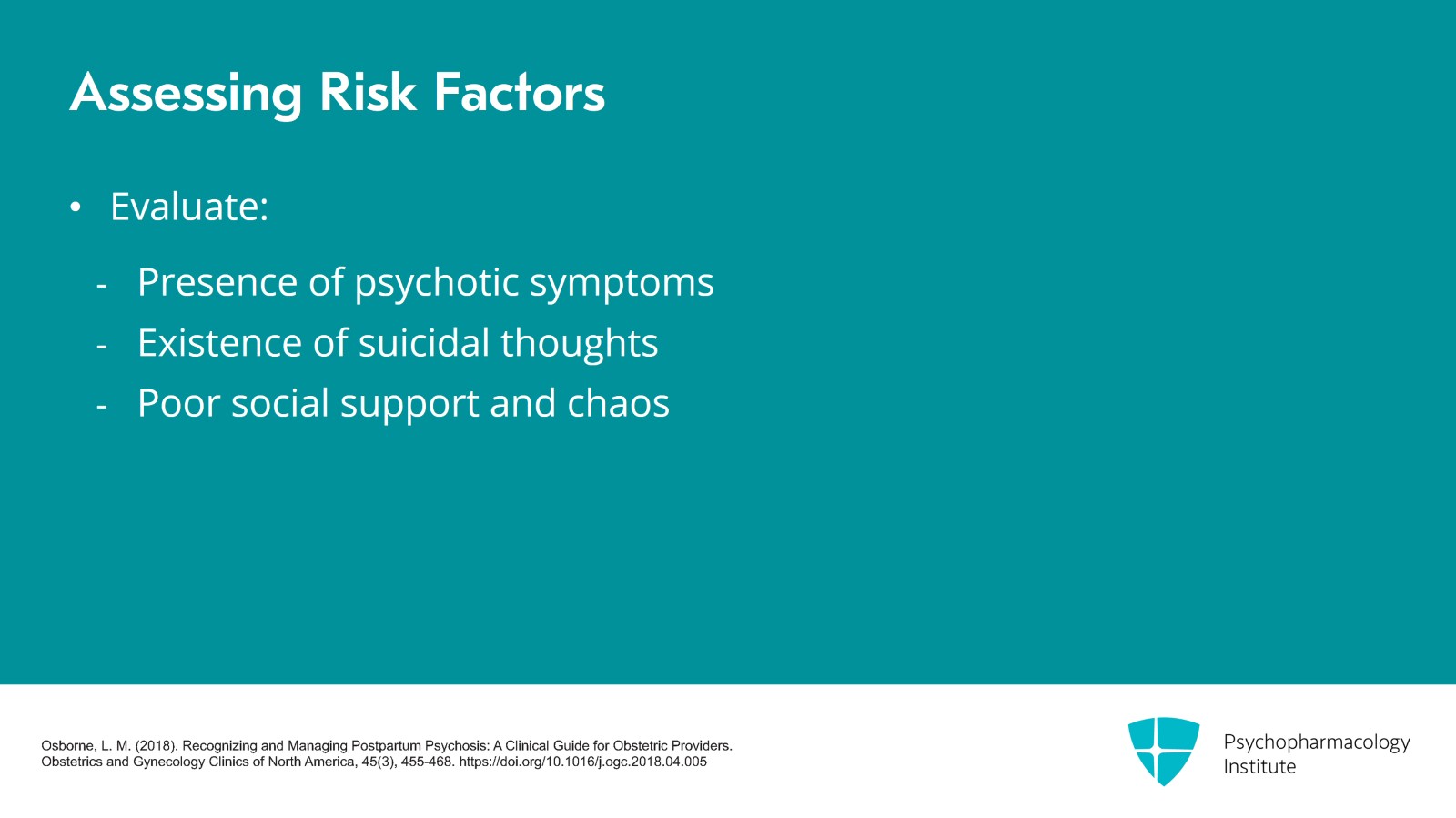
You also want to assess the woman for symptoms that would increase the likelihood of her acting on these thoughts. Does she have any psychotic symptoms? Does she have any suicidal thoughts? Does she have a poor social support and a chaotic life? So how do we tell the difference between obsessions or intrusive thoughts and what I call obsessive anxious thoughts? Remember that both are very common.
References:
- Osborne, L. M. (2018). Recognizing and Managing Postpartum Psychosis: A Clinical Guide for Obstetric Providers. Obstetrics and Gynecology Clinics of North America, 45(3), 455-468. https://doi.org/10.1016/j.ogc.2018.04.005
Free Files
Download PDF and other files
Success!
Check your inbox, we sent you all the materials there.
Slide 11 of 22
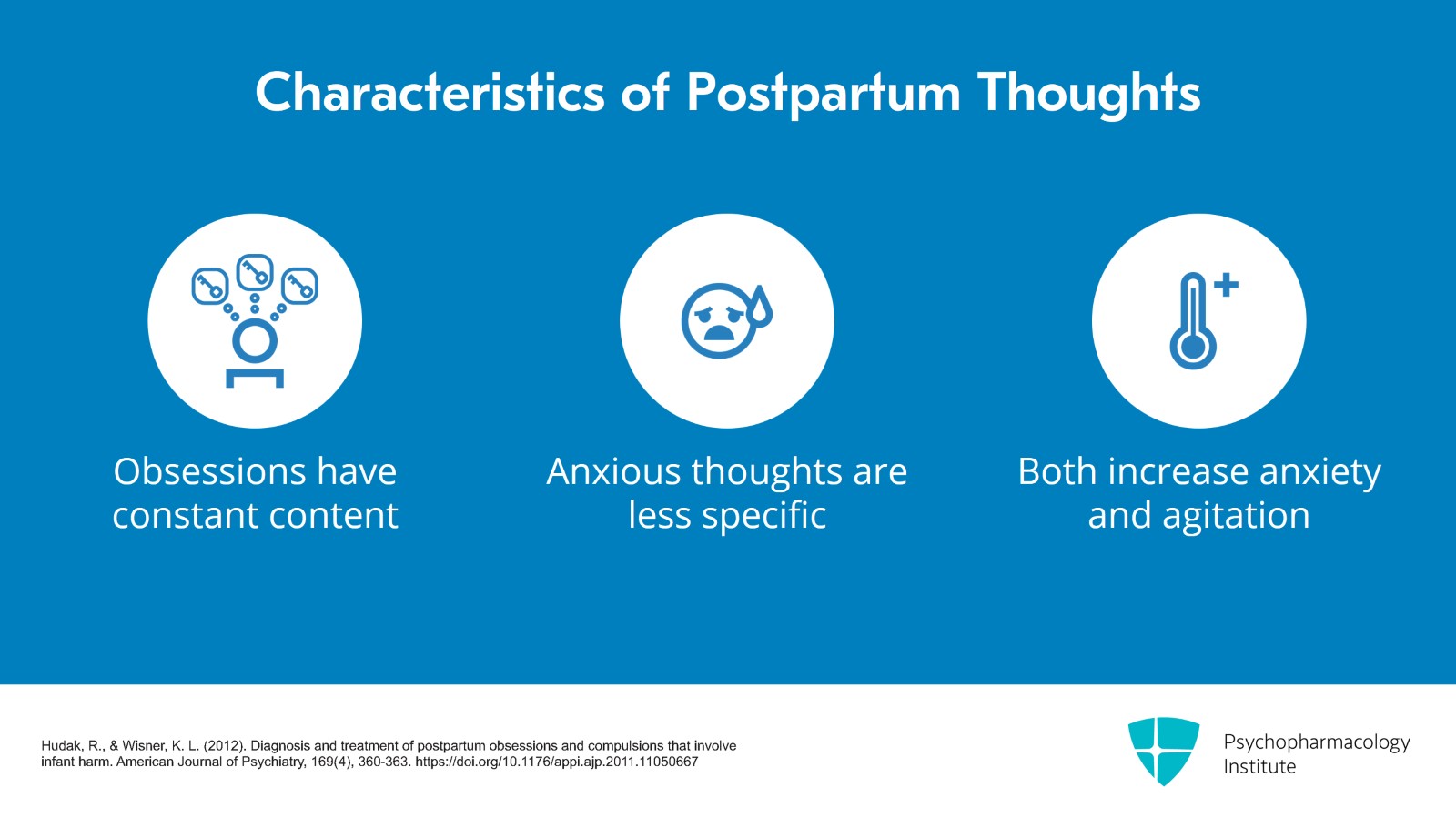
And if they are true obsessions, they may be accompanied by compulsions. Whereas, anxious thoughts may be less specific than true obsessions and the focus of them may change. What if this happens today? What if that happens tomorrow? Whereas, if it's an obsession or an intrusive thought, that content is going to be fairly constant. Both kinds will increase anxiety and agitation and it's important to remember that women will be very ashamed of these thoughts. They think that it's something that's never happened to anybody else. They don't want to reveal them because they're concerned that people may think they're not capable of taking care of their child.
References:
- Hudak, R., & Wisner, K. L. (2012). Diagnosis and treatment of postpartum obsessions and compulsions that involve infant harm. American Journal of Psychiatry, 169(4), 360-363. https://doi.org/10.1176/appi.ajp.2011.11050667
Slide 12 of 22
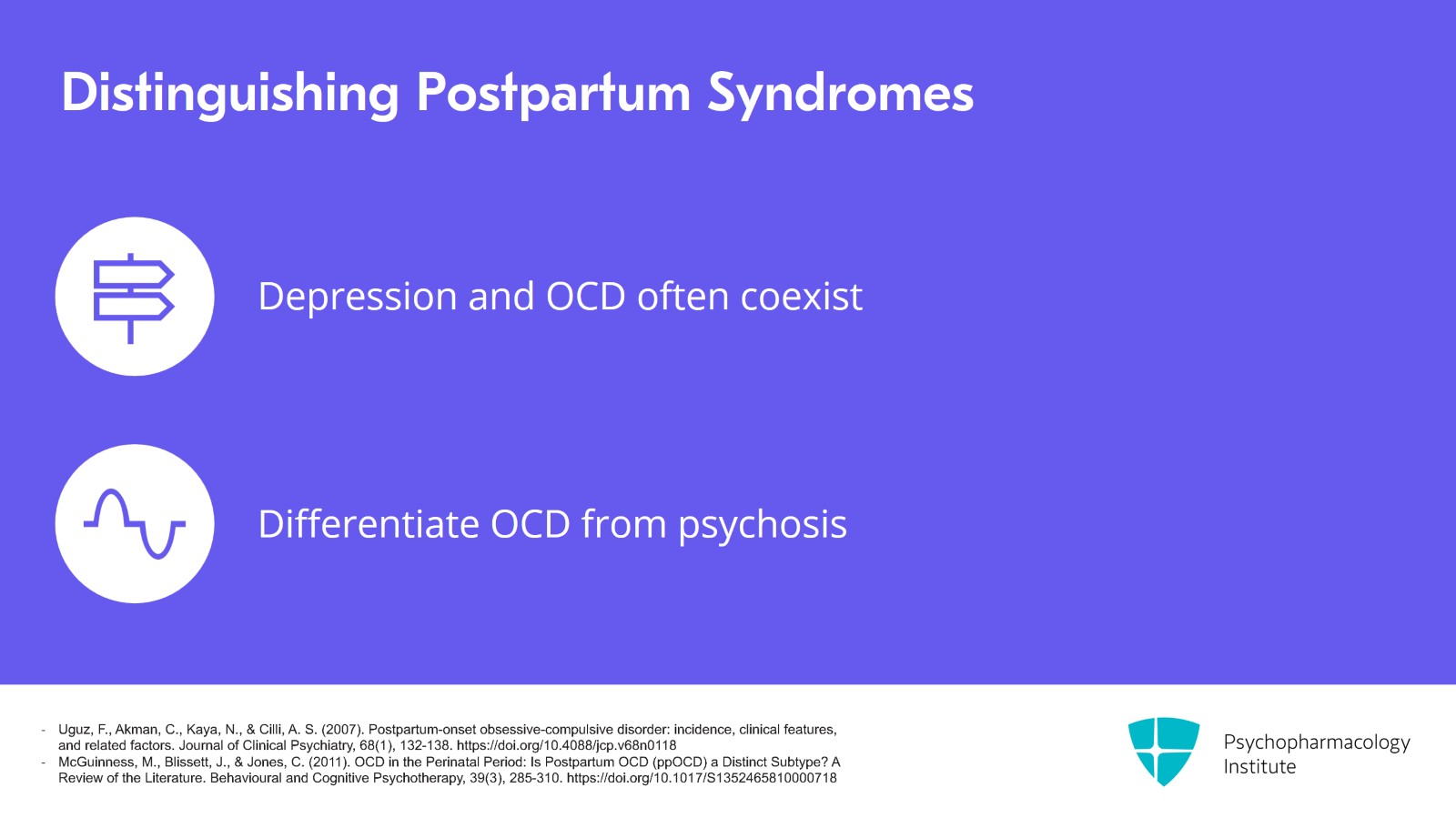
So how do we distinguish among all of these syndromes? Well, one thing to remember is that there's a high comorbidity of depression and obsessive-compulsive disorder as well as a high prevalence of obsessions in postpartum depression. So they're often, intermingling and overlapping. But one thing that's really important is to make sure that we distinguish postpartum obsessive-compulsive disorder from postpartum psychosis. The two can often present in very similar ways but it's vital that we make that distinction.
References:
- Uguz, F., Akman, C., Kaya, N., & Cilli, A. S. (2007). Postpartum-onset obsessive-compulsive disorder: incidence, clinical features, and related factors. Journal of Clinical Psychiatry, 68(1), 132-138. https://doi.org/10.4088/jcp.v68n011
- McGuinness, M., Blissett, J., & Jones, C. (2011). OCD in the Perinatal Period: Is Postpartum OCD (ppOCD) a Distinct Subtype? A Review of the Literature. Behavioural and Cognitive Psychotherapy, 39(3), 285-310. https://doi.org/10.1017/S1352465810000718
Free Files
Download PDF and other files
Success!
Check your inbox, we sent you all the materials there.
Slide 13 of 22
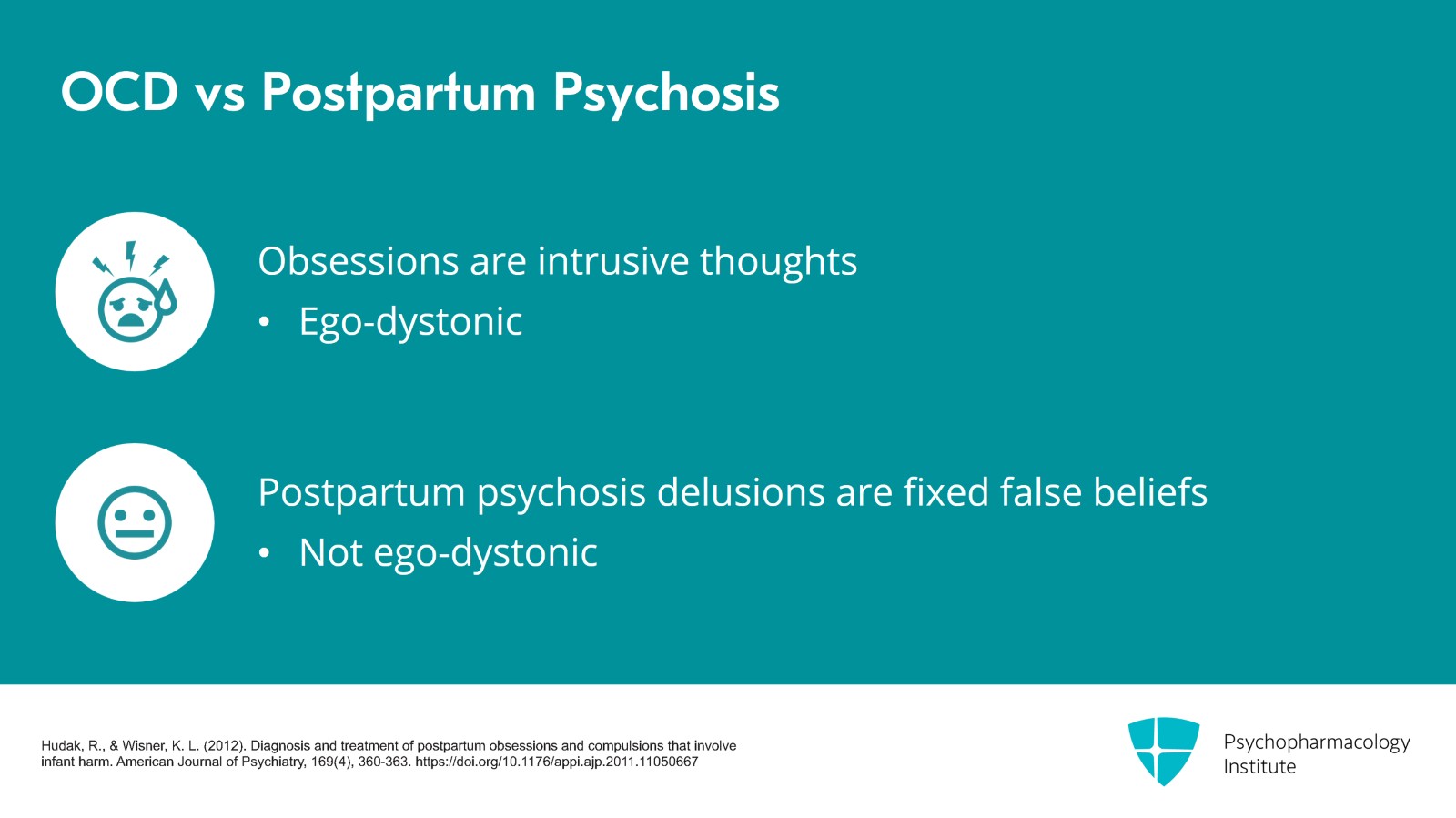
How do we do that? Well, obsessions are intrusive thoughts. Remember they are unwanted and horrifying to patients. So they're ego-dystonic. Whereas, the delusions of postpartum psychosis are fixed false beliefs that aren't ego-dystonic. They are not unwanted and horrifying to patients. The intrusive thoughts of obsessive-compulsive disorder can be sexual, religious or violent so can the delusions of postpartum psychosis. But in postpartum psychosis, the content is often bizarre or unusual which isn't usually the case for obsessive-compulsive disorder.
References:
- Hudak, R., & Wisner, K. L. (2012). Diagnosis and treatment of postpartum obsessions and compulsions that involve infant harm. American Journal of Psychiatry, 169(4), 360-363. https://doi.org/10.1176/appi.ajp.2011.11050667
Slide 14 of 22
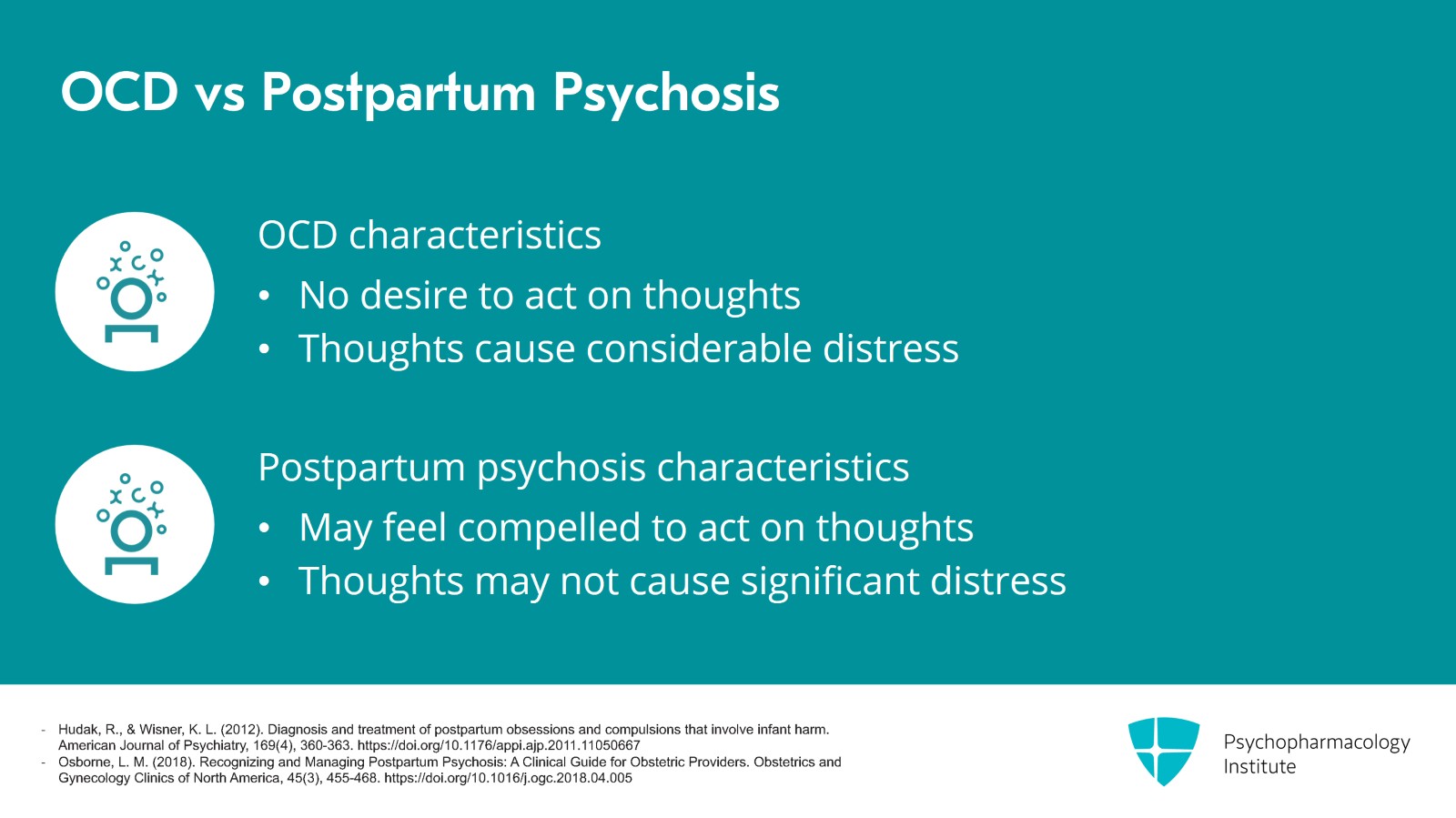
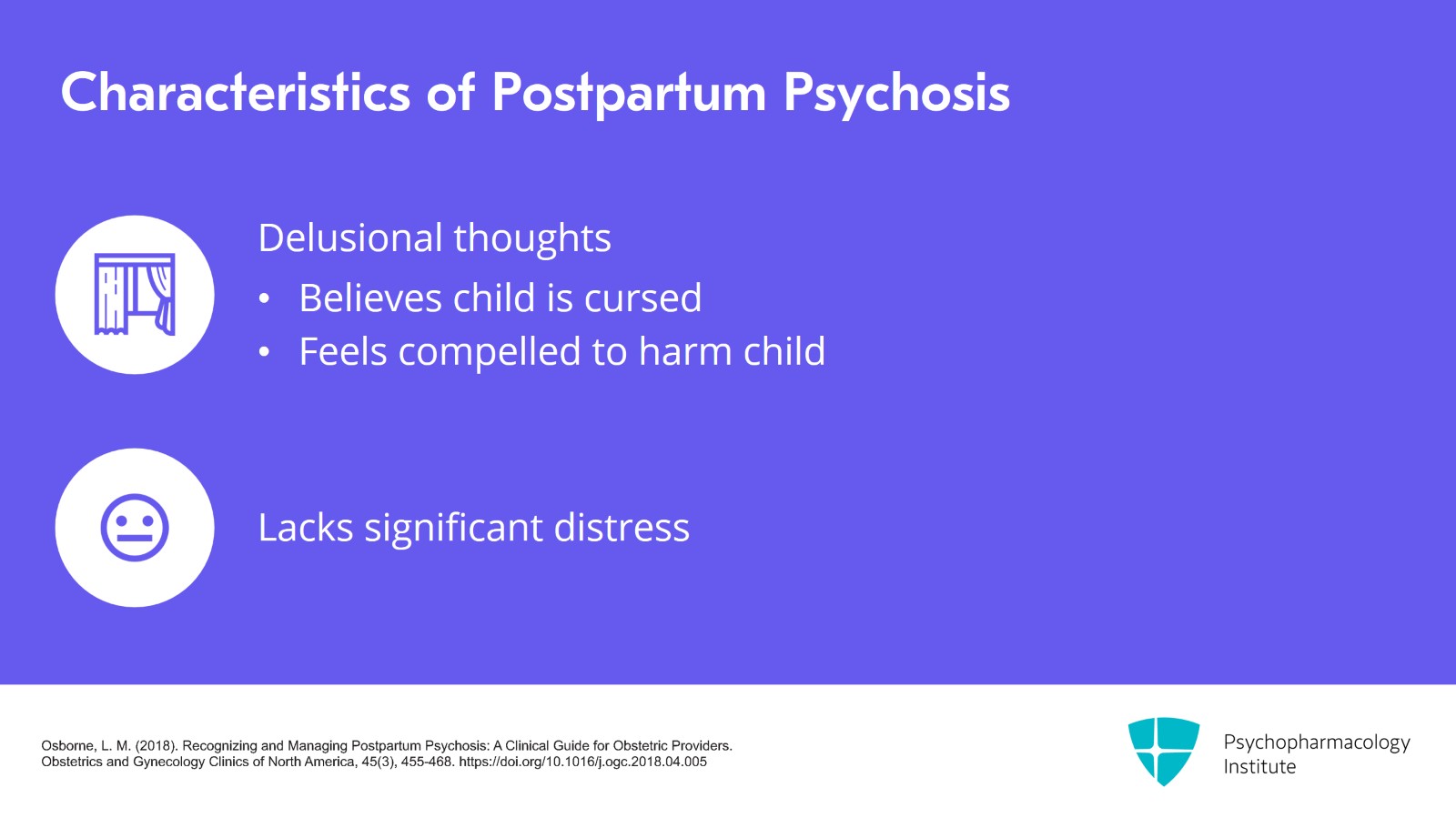
In OCD, the patient has no desire to act on these thoughts, is horrified by that concept. Whereas, in the delusions of postpartum psychosis, patients may want to act on these thoughts or may feel compelled to do so. In OCD, the thoughts cause considerable distress and patients may avoid things or engage in compulsive behavior to ease that distress. Whereas, in postpartum psychosis, the thoughts may not cause significant distress.
References:
- Hudak, R., & Wisner, K. L. (2012). Diagnosis and treatment of postpartum obsessions and compulsions that involve infant harm. American Journal of Psychiatry, 169(4), 360-363. https://doi.org/10.1176/appi.ajp.2011.11050667
- Osborne, L. M. (2018). Recognizing and Managing Postpartum Psychosis: A Clinical Guide for Obstetric Providers. Obstetrics and Gynecology Clinics of North America, 45(3), 455-468. https://doi.org/10.1016/j.ogc.2018.04.005
Free Files
Download PDF and other files
Success!
Check your inbox, we sent you all the materials there.
Slide 15 of 22
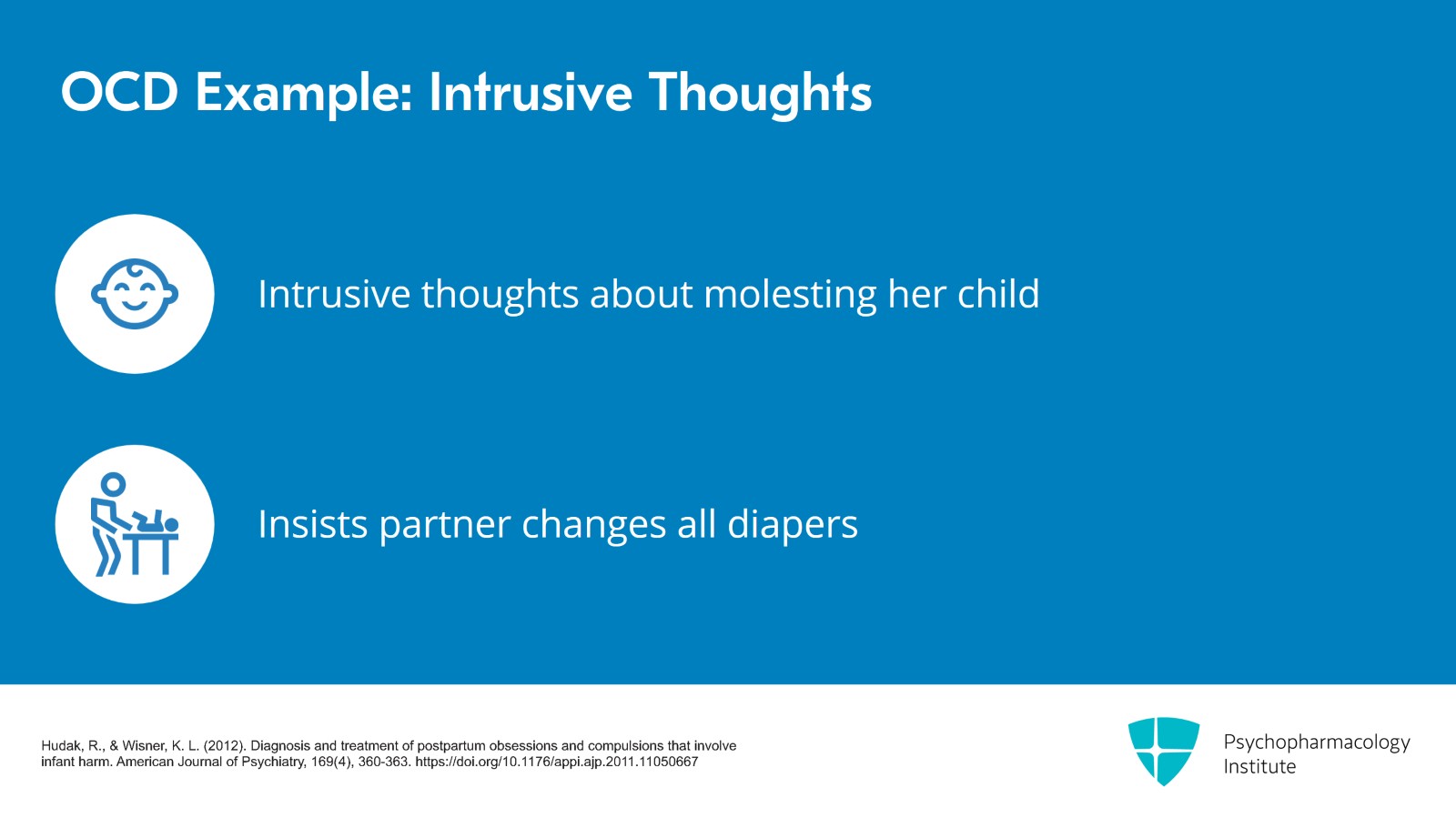
A good example of OCD would be a mother with an intrusive thought about molesting her child which she has whenever she is changing diapers. This horrifies her and she insists that her partner change all the diapers.
References:
- Hudak, R., & Wisner, K. L. (2012). Diagnosis and treatment of postpartum obsessions and compulsions that involve infant harm. American Journal of Psychiatry, 169(4), 360-363. https://doi.org/10.1176/appi.ajp.2011.11050667
Slide 16 of 22
Whereas, in postpartum psychosis, a good example would be a mother who thinks her child has been cursed by the devil and she must throw him or her out the window. She feels compelled to do that and it doesn't cause her significant distress because she knows it's what she has to do.
References:
- Osborne, L. M. (2018). Recognizing and Managing Postpartum Psychosis: A Clinical Guide for Obstetric Providers. Obstetrics and Gynecology Clinics of North America, 45(3), 455-468. https://doi.org/10.1016/j.ogc.2018.04.005
Free Files
Download PDF and other files
Success!
Check your inbox, we sent you all the materials there.
Slide 17 of 22
So why do we distinguish all these syndromes? Why do we care if it's OCD versus postpartum depression? Why do we care if it's postpartum psychosis versus postpartum depression? The real answer is that treatment differs. For the baby blues, no treatment is needed. It resolves on its own within two weeks. It's not a psychiatric syndrome.
References:
- Hudak, R., & Wisner, K. L. (2012). Diagnosis and treatment of postpartum obsessions and compulsions that involve infant harm. American Journal of Psychiatry, 169(4), 360-363. https://doi.org/10.1176/appi.ajp.2011.11050667
Slide 18 of 22
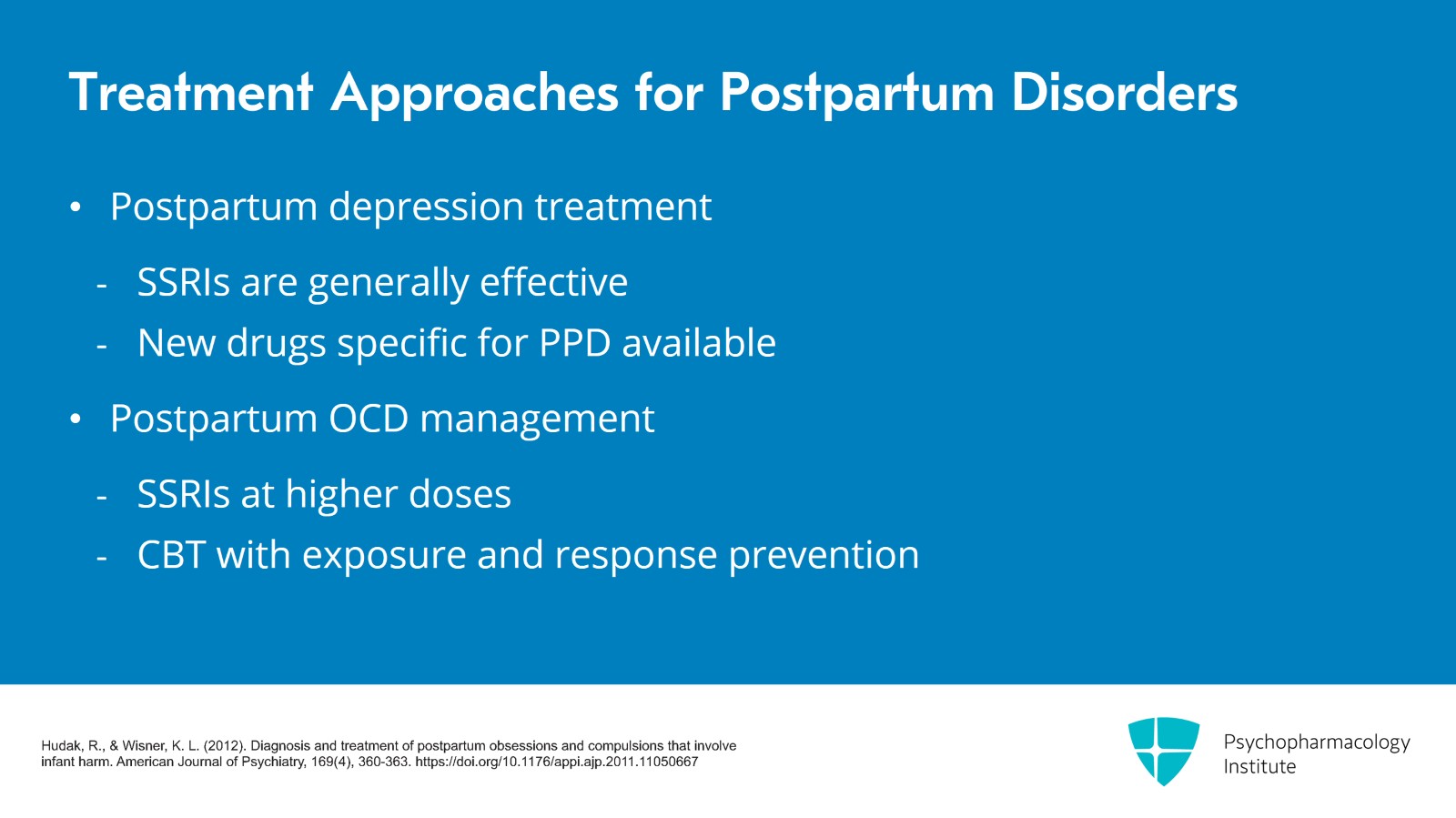
For postpartum depression, we can treat as a major depressive episode. We can give SSRIs and that's usually quite effective. We also have some new drugs for postpartum depression and the data for those is specific to PPD. I'll talk about those a little later in the talk. For postpartum OCD, again we use SSRIs often. They are likely required and we have one form of psychotherapy, CBT with exposure and response prevention, that can be very effective. But remember for SSRIs in OCD we want much higher doses than we do in postpartum depression. So it's important to understand which one we're dealing with.
References:
- Hudak, R., & Wisner, K. L. (2012). Diagnosis and treatment of postpartum obsessions and compulsions that involve infant harm. American Journal of Psychiatry, 169(4), 360-363. https://doi.org/10.1176/appi.ajp.2011.11050667
Free Files
Download PDF and other files
Success!
Check your inbox, we sent you all the materials there.
Slide 19 of 22
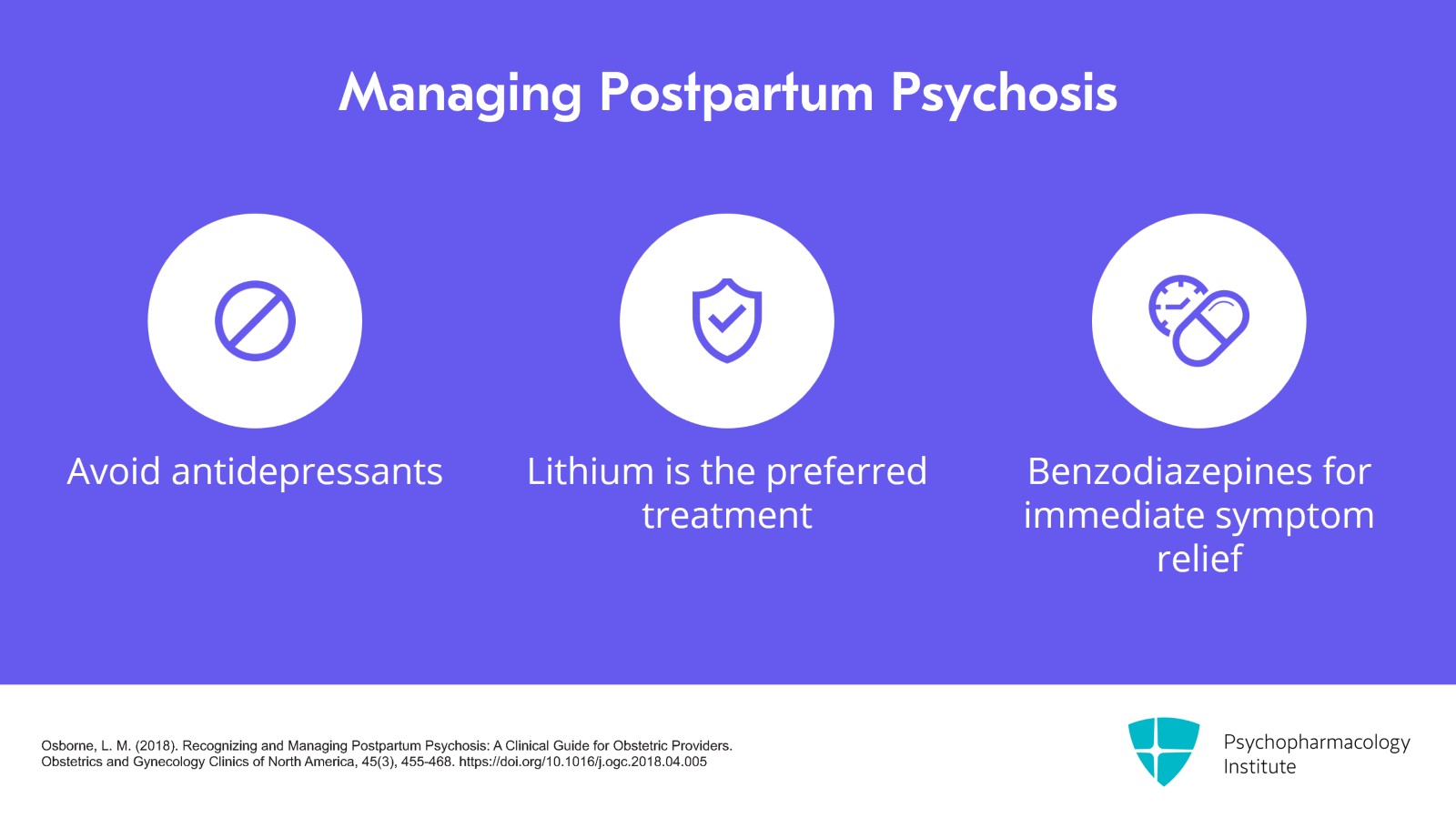
Finally, for postpartum psychosis, an antidepressant is usually one of the worst things you can give because many of these patients are presenting with mania or mixed symptoms. In fact, what we want is lithium. That's the gold standard treatment for postpartum psychosis sometimes with or without an antipsychotic and benzodiazepine for immediate symptom relief but lithium for long-term treatment and for prophylaxis for the next episode.
References:
- Osborne, L. M. (2018). Recognizing and Managing Postpartum Psychosis: A Clinical Guide for Obstetric Providers. Obstetrics and Gynecology Clinics of North America, 45(3), 455-468. https://doi.org/10.1016/j.ogc.2018.04.005
Slide 20 of 22
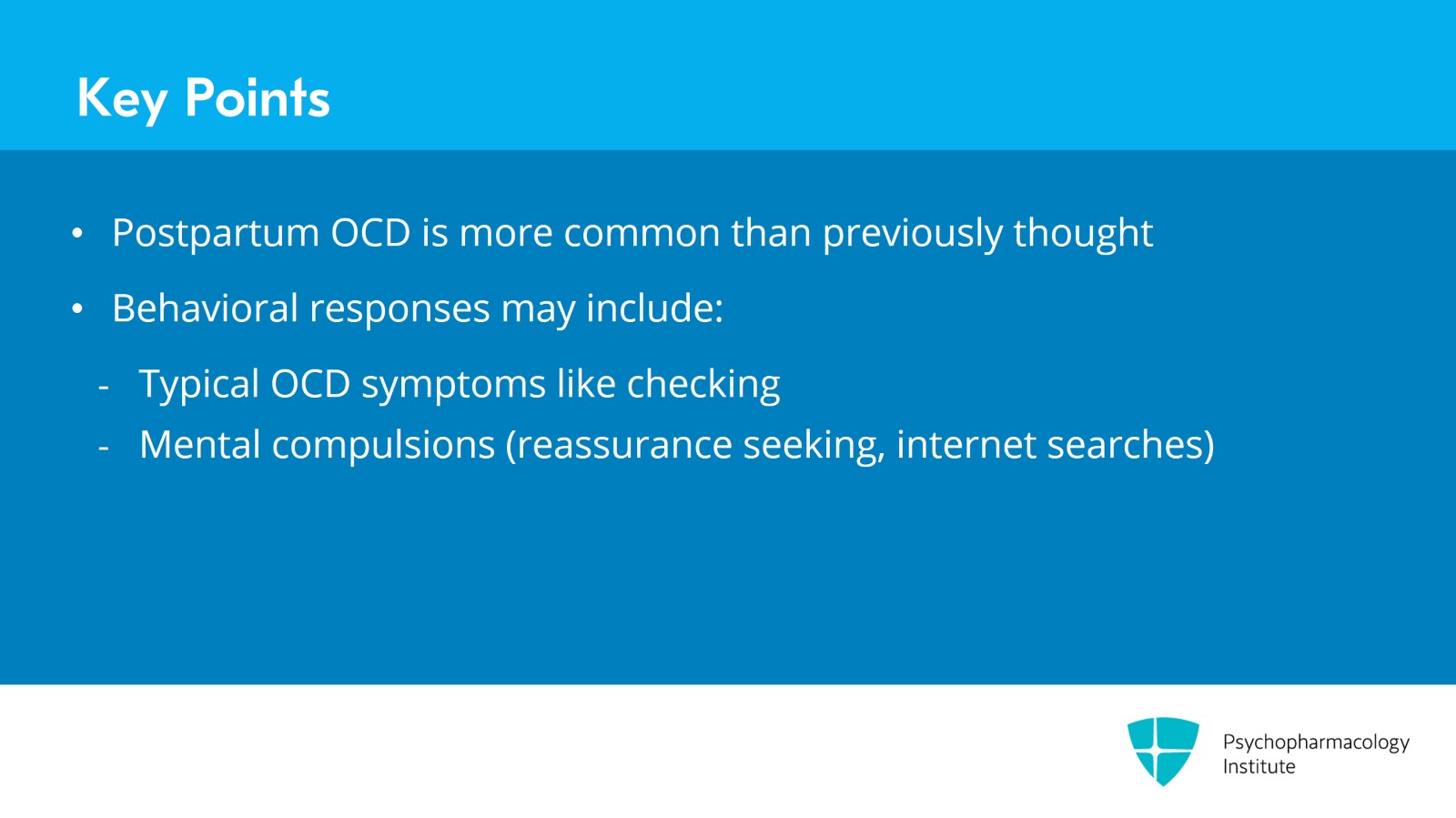
Let's review a few key points here about postpartum OCD. Remember that it's much more common than was once thought and it includes intrusive thoughts and behavioral responses to those thoughts that may decrease the distress of the thoughts. Behavioral responses may be typical physical symptoms such as we think of for OCD at anytime like checking but it also may include mental compulsions such as seeking reassurance or looking things up over and over again on the internet.
Free Files
Download PDF and other files
Success!
Check your inbox, we sent you all the materials there.
Slide 21 of 22
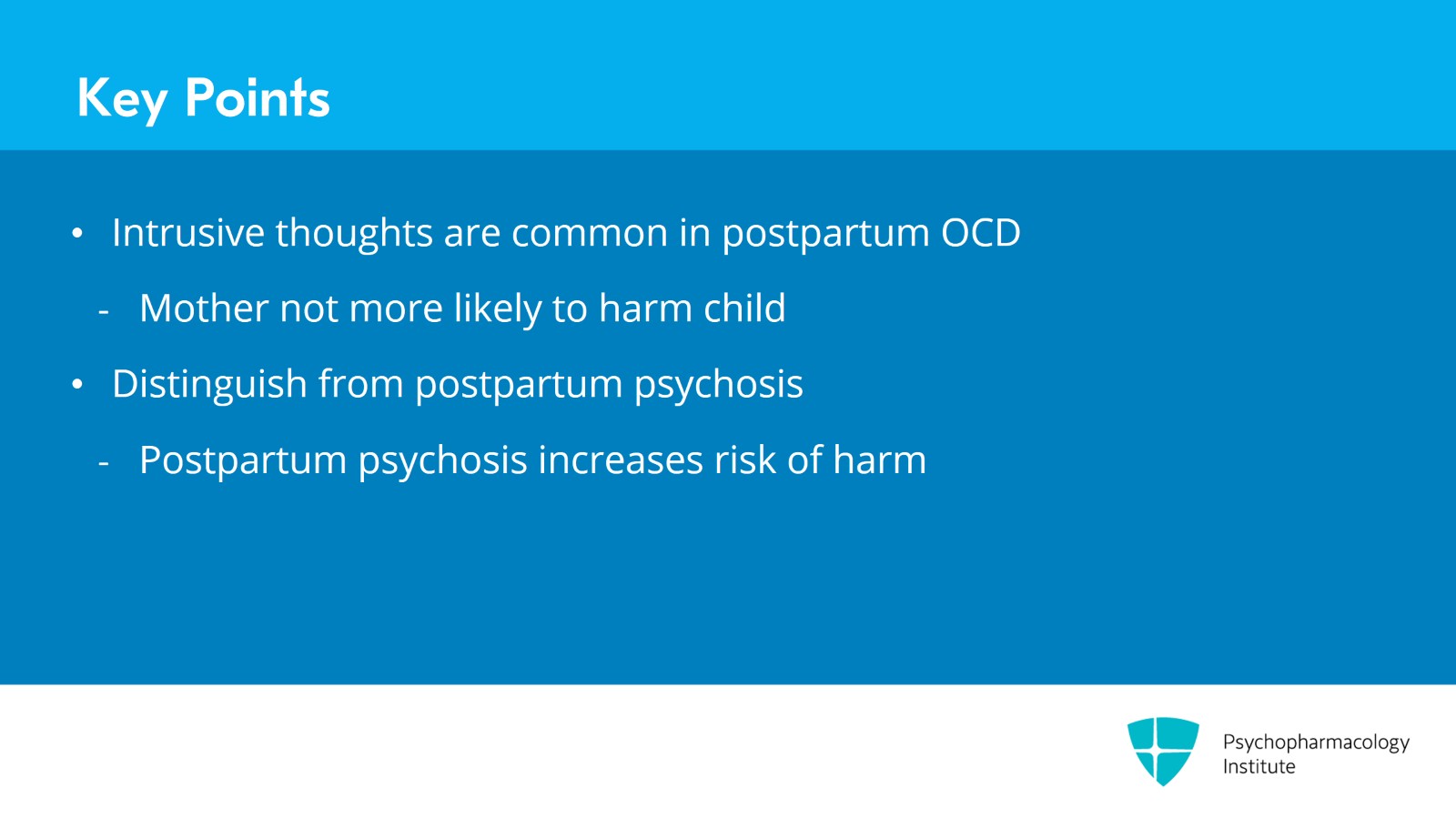
Intrusive thoughts about harming the infant are extremely common in postpartum OCD but they actually do not indicate elevated risk of actually harming the child because the thoughts are horrifying to the patient, they're ego-dystonic and the mother is not more likely to harm the child than somebody who isn't having those thoughts. But with that said, it's very important to make sure that what you're actually seeing is the intrusive thoughts of OCD and not the delusions of postpartum psychosis. Women with postpartum psychosis are at elevated risk of harming their children. So it's really important to make that distinction.
Free Files
Download PDF and other files
Success!
Check your inbox, we sent you all the materials there.