Close Banner
Section Free  - Video Lectures

02. Diagnosing Sleep-Related Eating Disorder (SRED)

Published on March 1, 2023 Certification expiration date: March 1, 2026

Carlos H. Schenck, M.D.

Professor & Senior Staff Psychiatrist at the Hennepin County Medical Center (HCMC) - University of Minnesota

Key Points

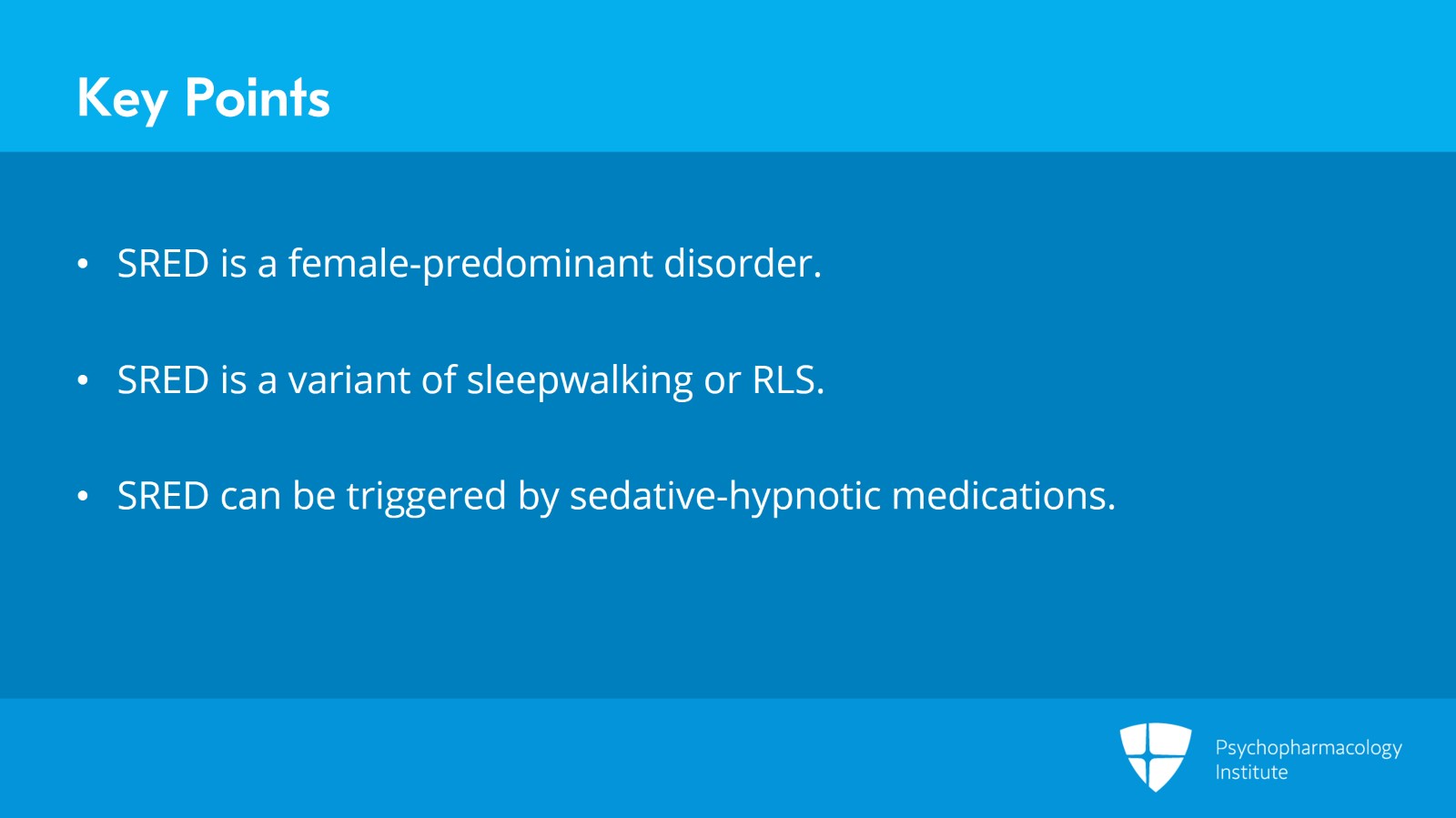
  • SRED is a female-predominant disorder.
  • SRED is a variant of sleepwalking or RLS.
  • SRED can be triggered by sedative-hypnotic medications.

Free Downloads for Offline Access

  • Free Download Presentation File (PPTX)
  • Free Download Video (MP4)
  • Free Download Audio File (MP3)

Slides and Transcript

Slide 1 of 13

I will now discuss diagnosing sleep-related eating disorder. This is again the criteria from the American Academy of Sleep Medicine, the International Classification of Sleep Disorders third edition 2014.

Slide 2 of 13

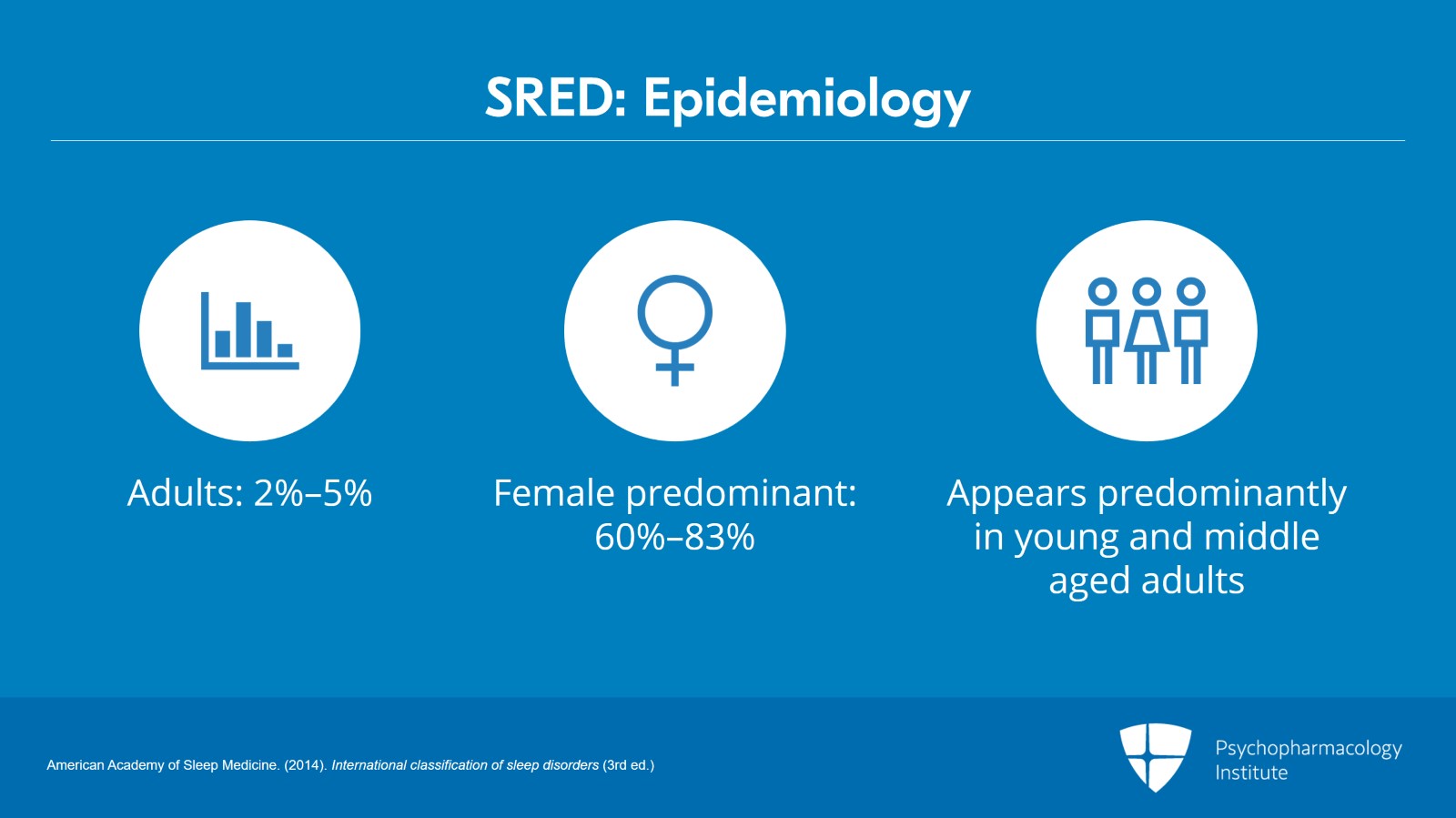
The prevalence of sleep-related eating disorder in adults is at least 2%, if not up to 5%. This is a female predominant disorder with 60% to 83% of patients being female in various reported series. And this is basically a young adult to early, middle-aged adult phenomenon but it certainly can occur in adolescence and extend into the later years.
References:
  • American Academy of Sleep Medicine. (2014). International classification of sleep disorders (3rd ed.)
Free Files
Success!
Check your inbox, we sent you all the materials there.

Slide 3 of 13

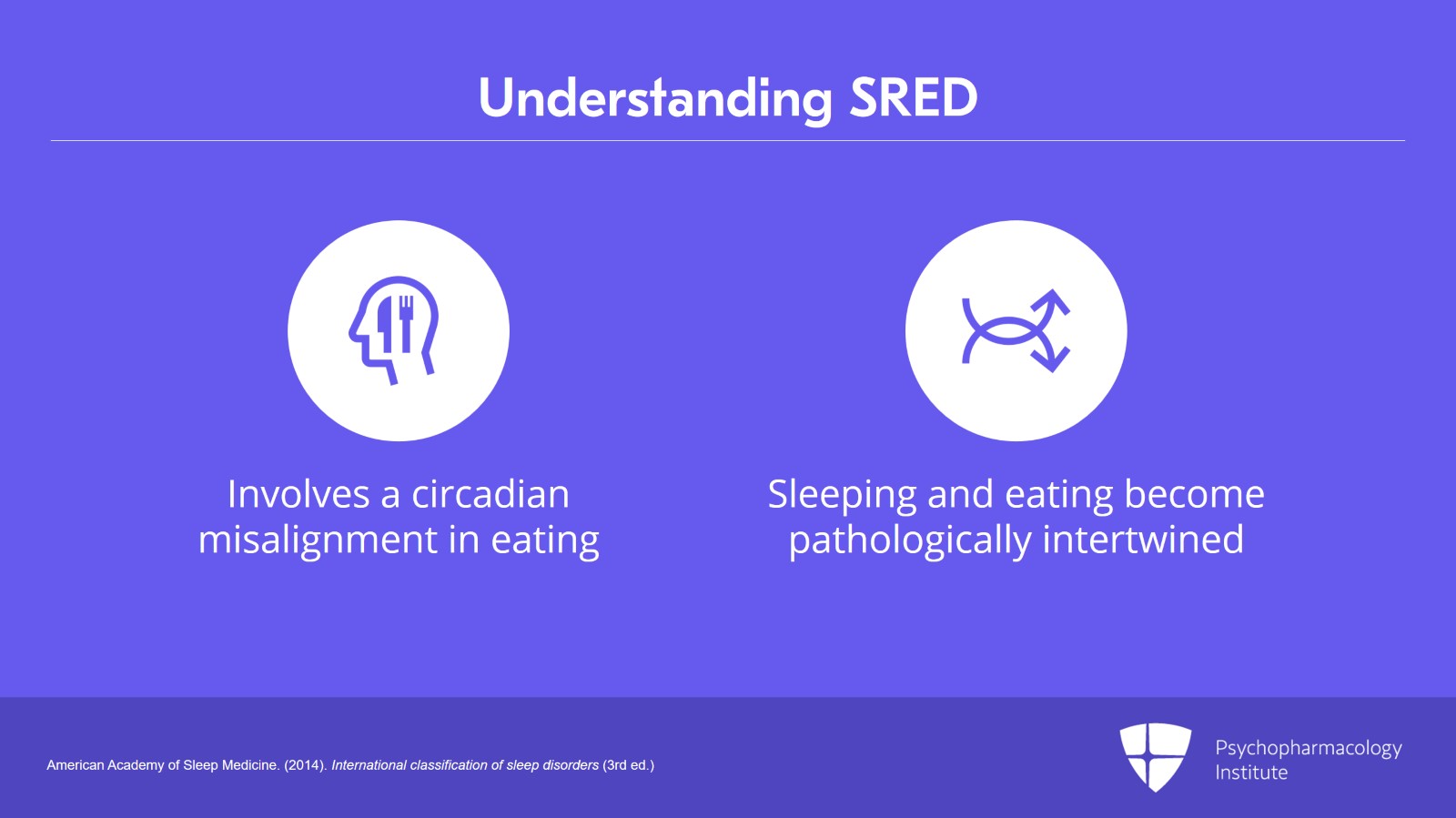
Sleep-related eating disorder is classified as a parasomnia. It involves the circadian misalignment in eating. Sleep and eating are instinctual behaviors that can become pathologically intertwined in sleep-related eating disorder and in fact they mutually reinforce each other.
References:
  • American Academy of Sleep Medicine. (2014). International classification of sleep disorders (3rd ed.)

Slide 4 of 13

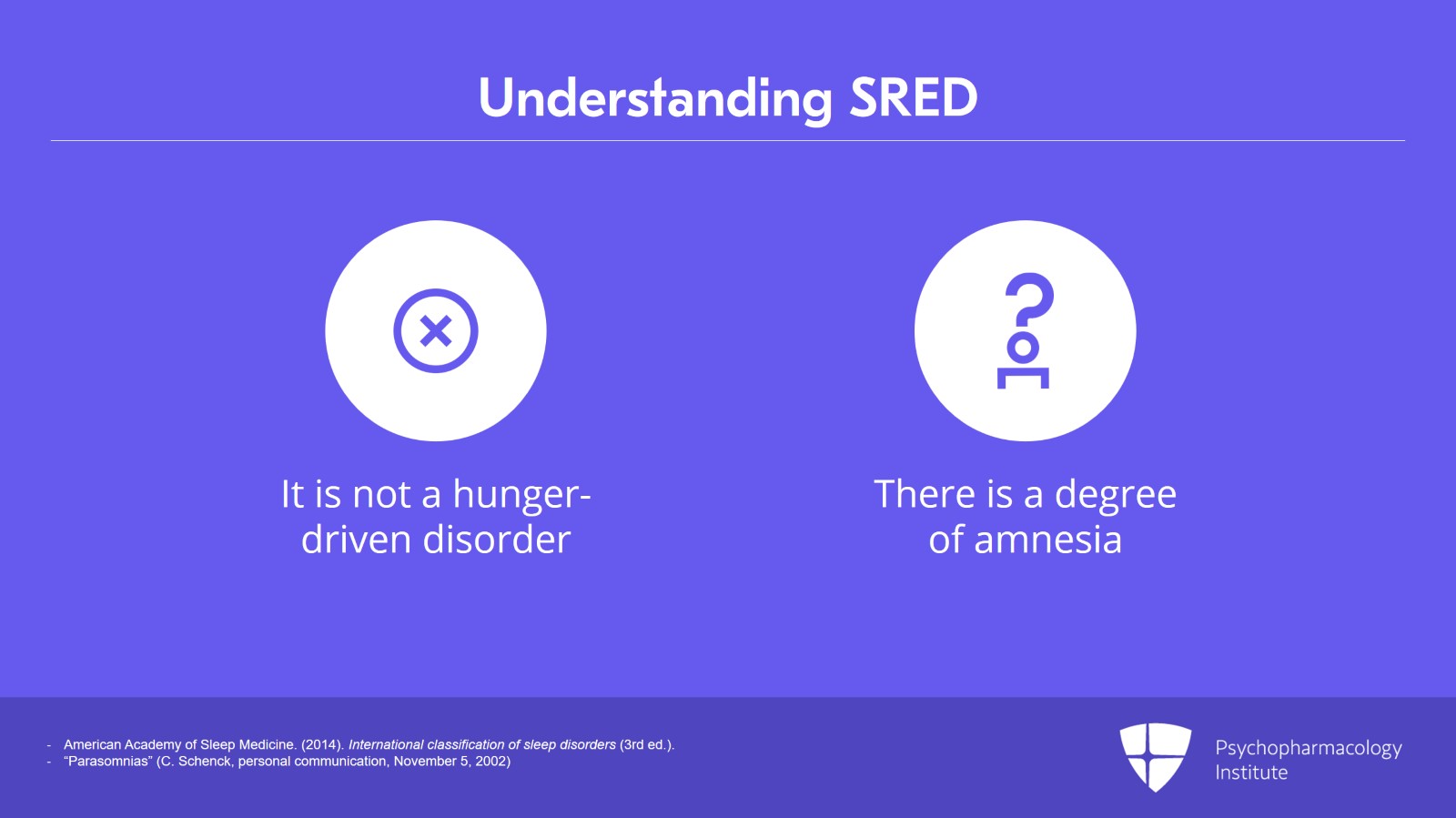
And what’s very interesting is that this is not a hunger-driven disorder. Hunger is virtually never reported in these patients. And even though most of them have some degree of amnesia, they all deny ever feeling hungry and some of them, out of desperation, will have a second dinner before bedtime thinking that will suppress the urge to eat during sleep, but it doesn’t because this is not a hunger-driven behavior disorder.
References:
  • American Academy of Sleep Medicine. (2014). International classification of sleep disorders (3rd ed.).
  • “Parasomnias” (C. Schenck, personal communication, November 5, 2002)
Free Files
Success!
Check your inbox, we sent you all the materials there.

Slide 5 of 13

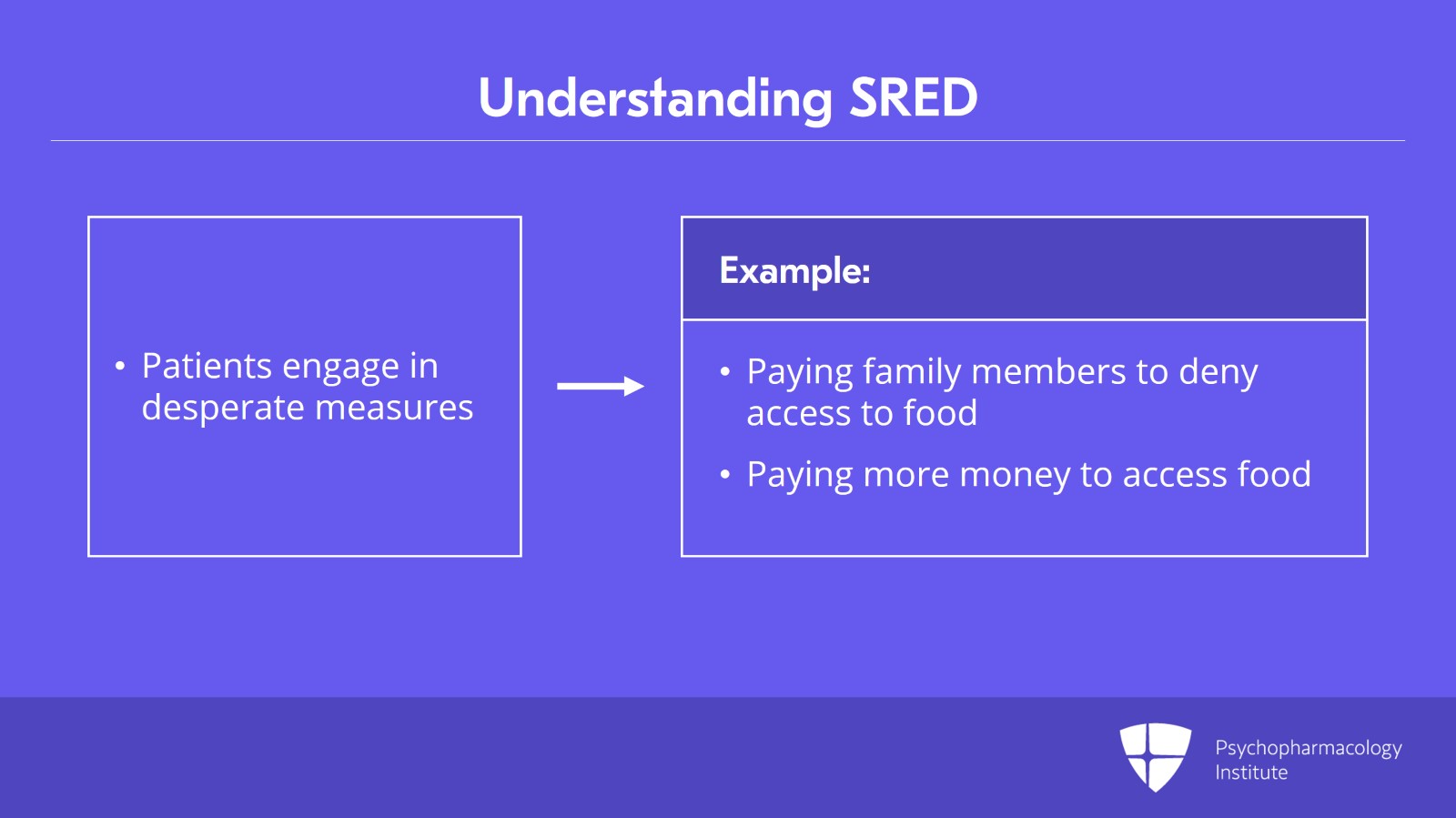
Some patients have to engage in desperate measures. One of my patients was a single mother of three teenage children, and she was so desperate that she paid her children to sleep in sleeping bags in the kitchen so that, when she came at night to get food out of the refrigerator or the cupboard, they would tell their mother “you have to go to bed”. Well, she was so frustrated by the children following the orders and being paid to give the orders that my patient paid her children even more money so they can go back to bed and allow her access to food.

Slide 6 of 13

So even though there’s so much distress related to the eating and these consequences, the denial of access to food is even more frustrating and that’s a curious phenomenon as well about sleep-related eating disorder.
Free Files
Success!
Check your inbox, we sent you all the materials there.

Slide 7 of 13

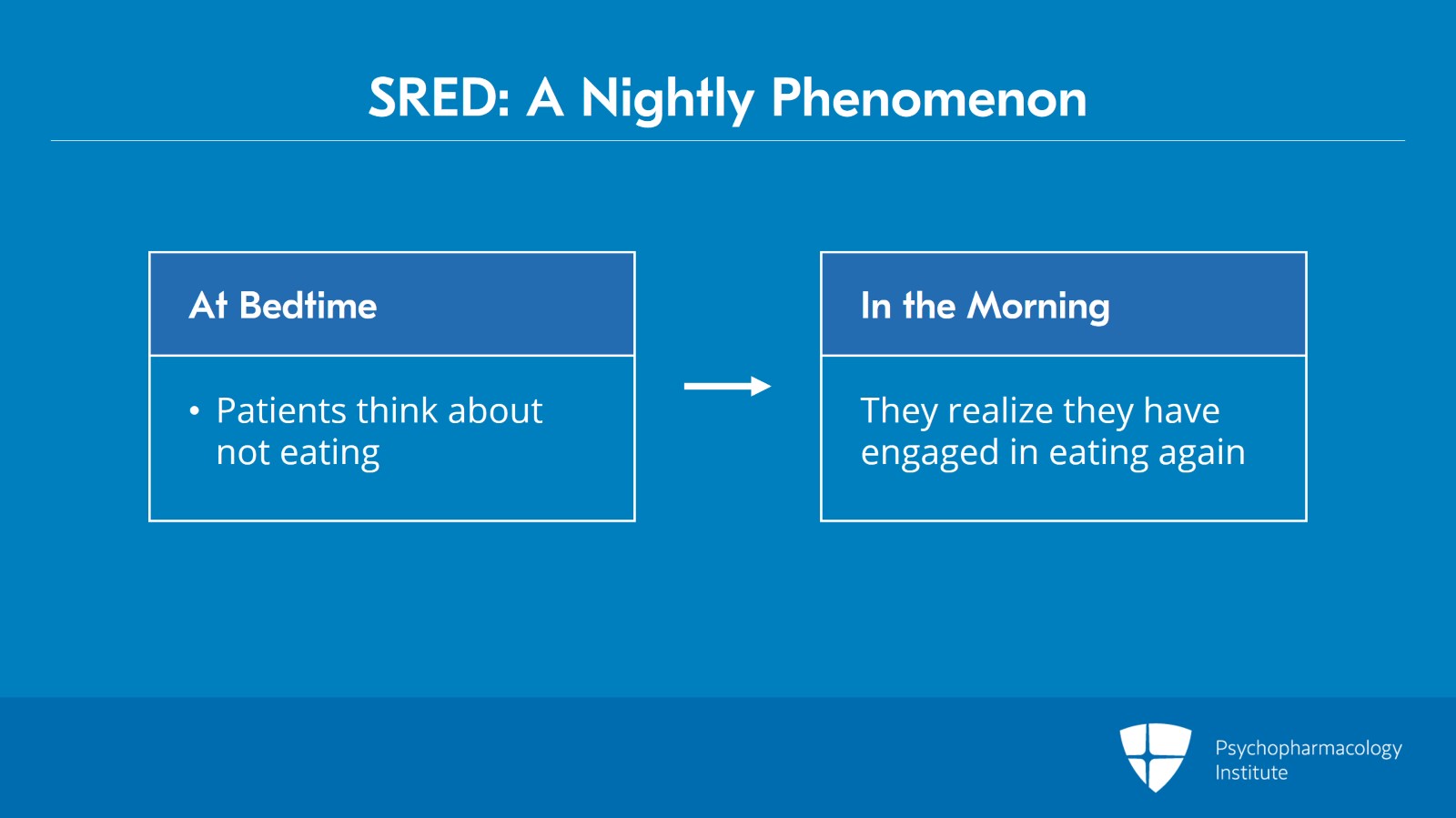
Sleep-related eating disorder is at least in 50% of the published cases a nightly phenomenon. So at bedtime, they all feel like, yes, tonight, I will not eat. And there’s like this New Year’s resolution, positive feeling. And then in the morning when they realize that they have engaged in eating again, there’s tremendous dejection and depression because once again they have lost control over eating during the night.

Slide 8 of 13

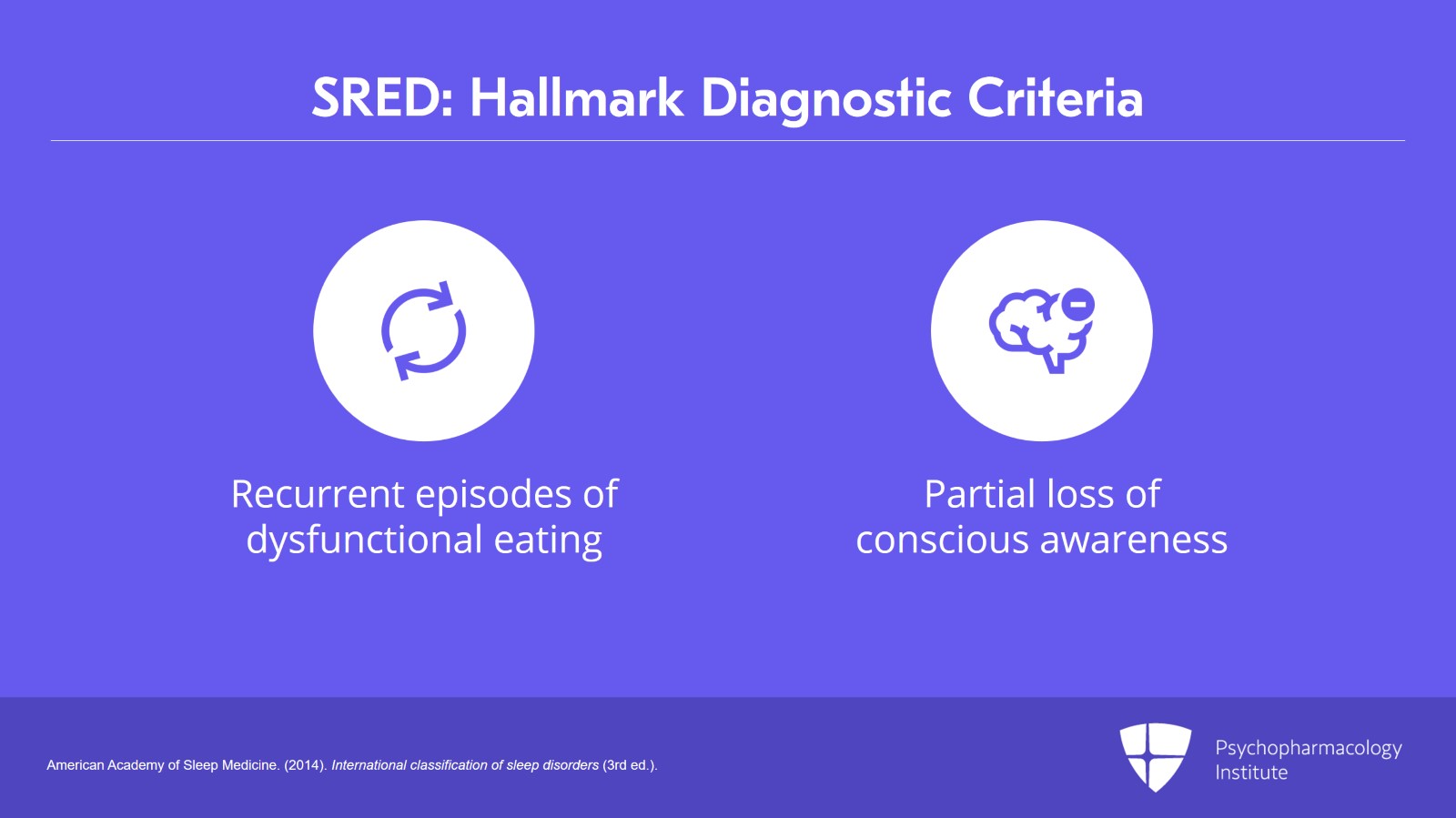
So, for diagnostic criteria, you have to have recurrent episodes of dysfunctional eating that occur after an arousal from sleep during the main sleep period, and there should be at least partial loss of conscious awareness during the eating episode with subsequent impaired recall.
References:
  • American Academy of Sleep Medicine. (2014). International classification of sleep disorders (3rd ed.).
Free Files
Success!
Check your inbox, we sent you all the materials there.

Slide 9 of 13

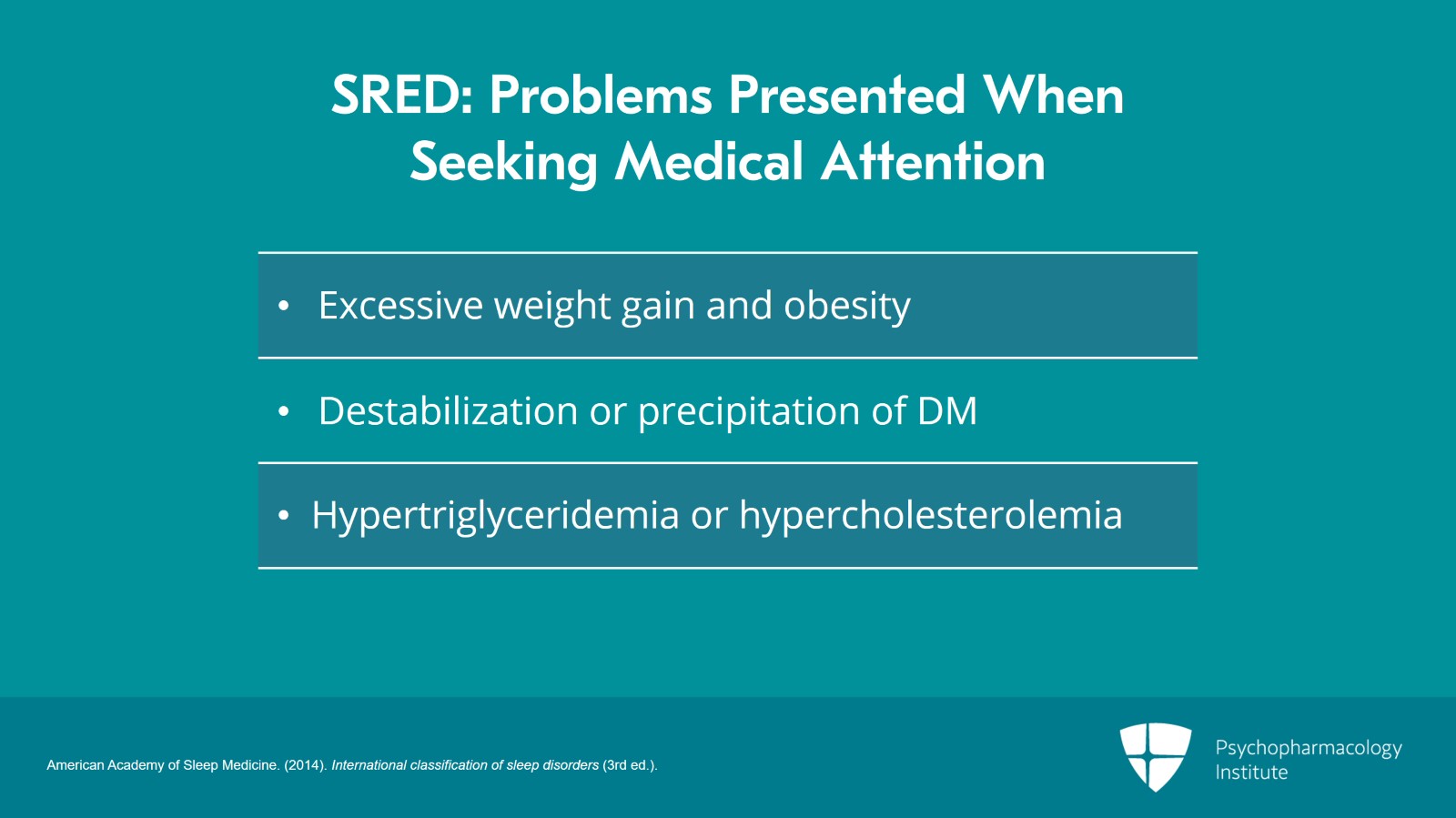
With the recurrent episodes of involuntary eating, these are the problems presented by patients when they seek medical attention: Number one by far is excessive weight gain and obesity. Up to 50% of patients meet BMI criteria for being overweight or obese. Also, destabilization or precipitation of diabetes mellitus type 1 or type 2. Third, hypertriglyceridemia and hypercholesterolemia.
References:
  • American Academy of Sleep Medicine. (2014). International classification of sleep disorders (3rd ed.).

Slide 10 of 13

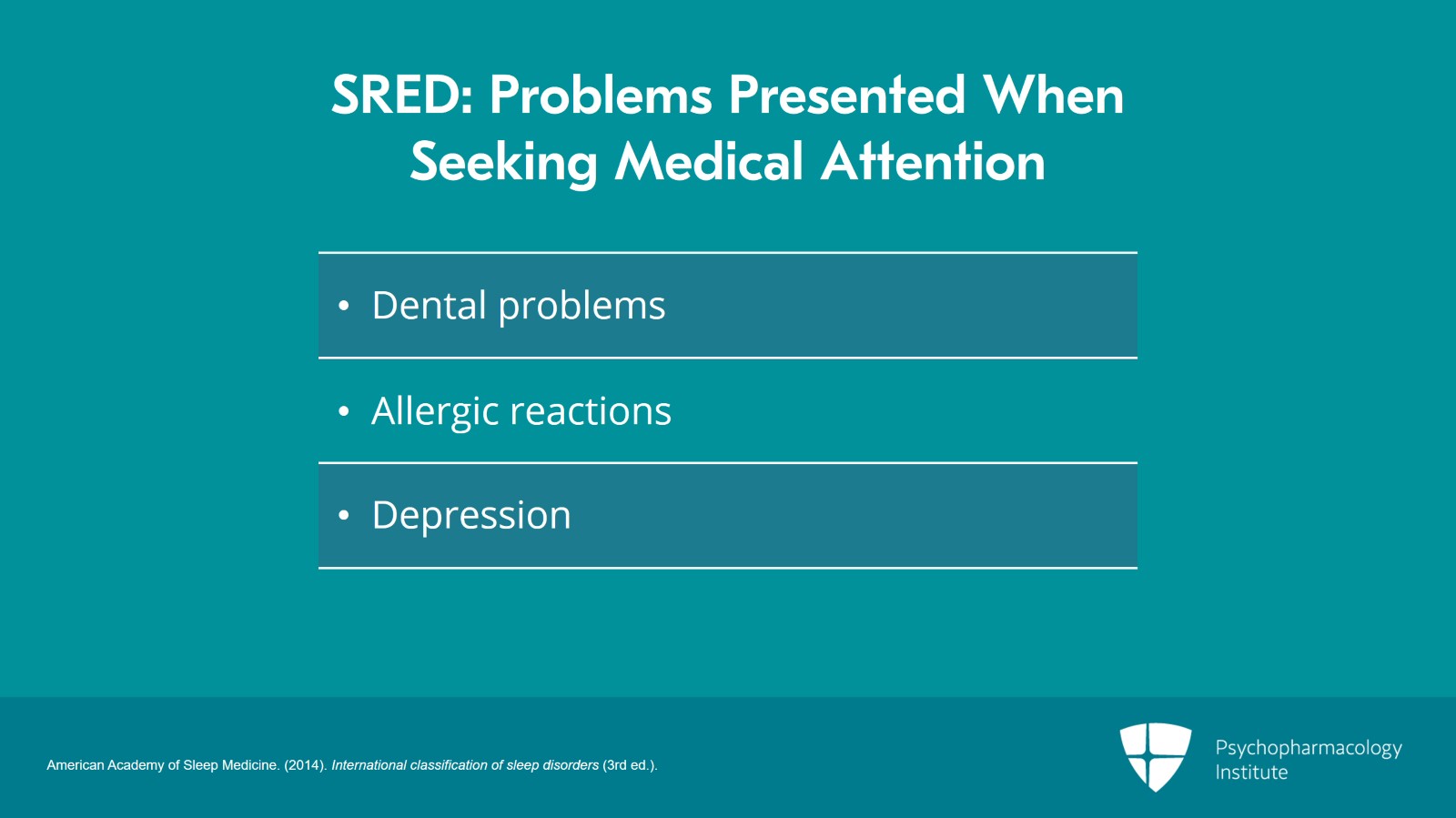
Fourth, dental problems including caries or tooth decay and chipped teeth. Some patients will go to the freezer and try to eat frozen pizza, for example. It’s so inappropriate, but they’re not fully awake. They don’t know what they’re doing that well. Fifth, allergic reaction from carelessly eating foods to which one is allergic. And six is secondary depression from loss of control.
References:
  • American Academy of Sleep Medicine. (2014). International classification of sleep disorders (3rd ed.).
Free Files
Success!
Check your inbox, we sent you all the materials there.

Slide 11 of 13

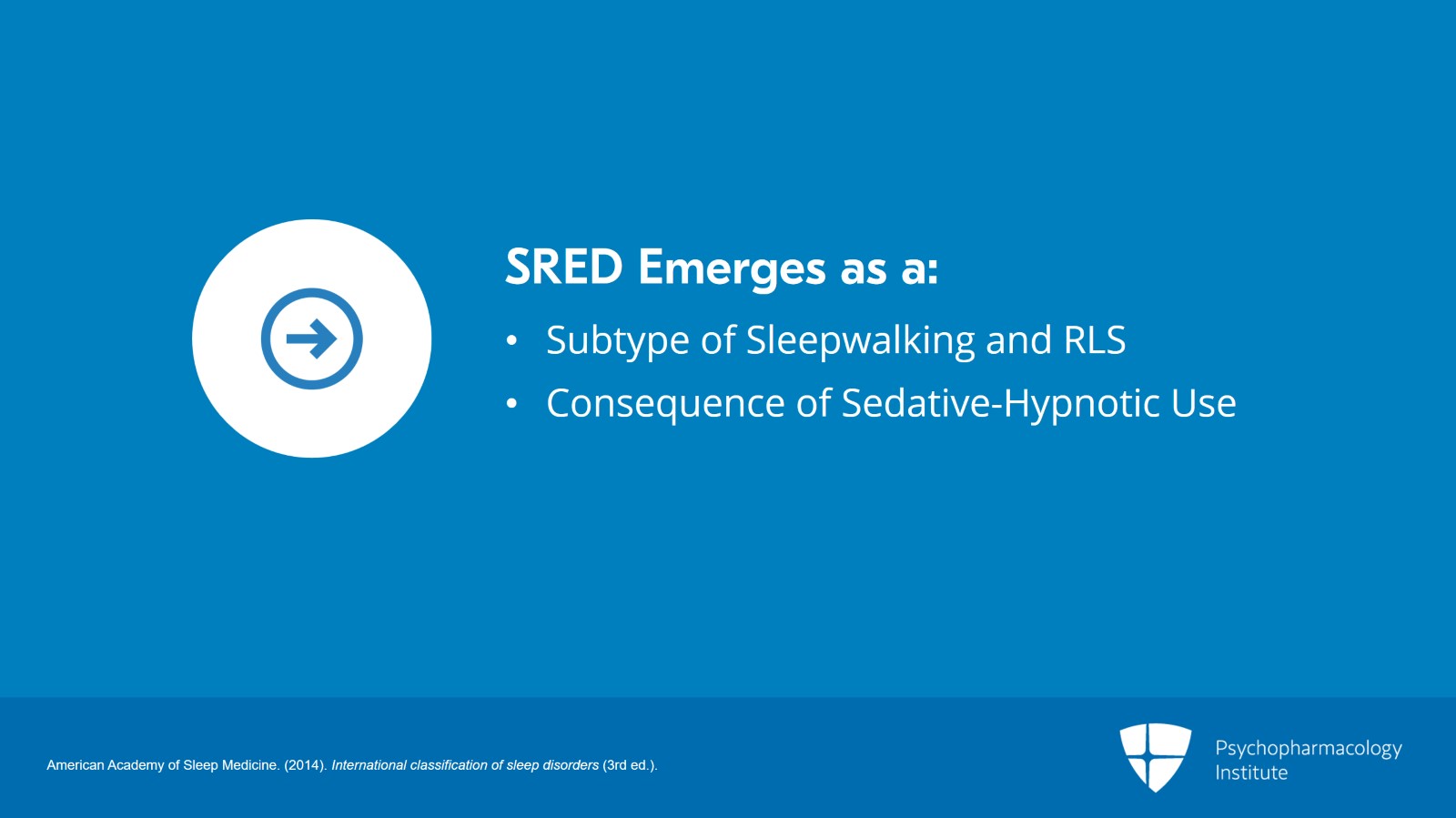
Now, sleep-related eating disorder emerges most commonly as a subtype of sleepwalking and restless legs syndrome, and also commonly emerges from sedative-hypnotic use, with zolpidem being number one, and I will discuss this further.
References:
  • American Academy of Sleep Medicine. (2014). International classification of sleep disorders (3rd ed.).

Slide 12 of 13

Key points: Sleep-related eating disorder is a female predominant disorder in most reported cases. Second, sleep-related eating disorder is often a variant of sleepwalking or restless legs syndrome, and also can be triggered by sedative-hypnotic medications.
Free Files
Success!
Check your inbox, we sent you all the materials there.

Slide 13 of 13

Learning Objectives:

After completing this activity, the learner will be able to:

  1. Recognize and analyze abnormal non-REM sleep behaviors.
  2. Correlate sedative-hypnotics use patterns with the occurrence of parasomnias.
  3. Confidently diagnose sleep-related eating disorder and sleepwalking.

Original Release Date: March 1, 2023

Review and Re-release Date: March 1, 2024

Expiration Date: March 1, 2026

Expert: Carlos Schenck, M.D.

Medical Editor: Horia Batranu, M.D.

Relevant Financial Disclosures: 

Carlos H. Schenck, M.D. declares the following interests:

- Eisai, Inc.:  One time lecture on REM sleep behavior disorder, without any product promotion.

All of the relevant financial relationships listed above have been mitigated by Medical Academy and the Psychopharmacology Institute.

Contact Information: For questions regarding the content or access to this activity, contact us at support@psychopharmacologyinstitute.com

Instructions for Participation and Credit:

Participants must complete the activity online during the valid credit period that is noted above.

Follow these steps to earn CME credit:

  1. View the required educational content provided on this course page.

  2. Complete the Post Activity Evaluation for providing the necessary feedback for continuing accreditation purposes and for the development of future activities. NOTE: Completing the Post Activity Evaluation after the quiz is required to receive the earned credit.

  3. Download your certificate.

Accreditation Statement

This activity has been planned and implemented in accordance with the accreditation requirements and policies of the Accreditation Council for Continuing Medical Education through the joint providership of Medical Academy LLC and the Psychopharmacology Institute. Medical Academy is accredited by the ACCME to provide continuing medical education for physicians.

Credit Designation Statement

Medical Academy designates this enduring activity for a maximum of 0.5 AMA PRA Category 1 credit(s)™. Physicians should claim only the credit commensurate with the extent of their participation in the activity.


Free Files
Success!
Check your inbox, we sent you all the materials there.
Continue in the website
Instant access modal

Become a Bronze, Silver, Gold, Bronze extended, Silver extended or Gold extended Member.

2025–26 Psychopharmacology CME Program

Unlock up to 155 CME Credits, including 40 SA CME Credits.