



Slides and Transcript
Slide 1 of 9
Next, we’ll talk about diagnosing postpartum depression and how to screen for it and we’ll talk about why it’s a frequently missed condition.
Slide 2 of 9
So it is frequently missed and patients often don’t recognize that they have postpartum depression even when they do.
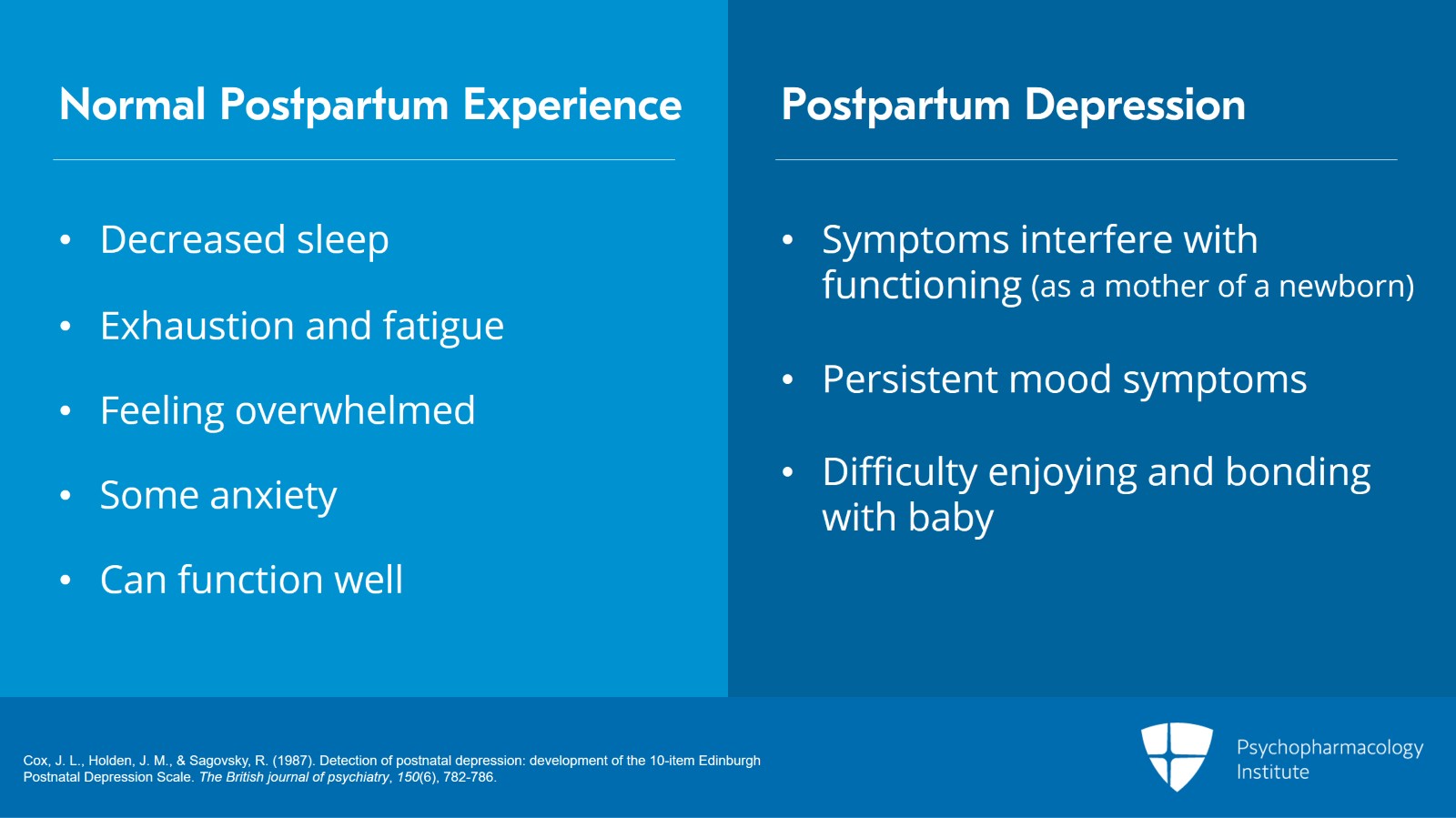
And partly, the reason for that is that there’s confusion about what a normal postpartum experience is versus postpartum depression. So it’s normal and expected for new parents, mothers and their partners, to experience decreased sleep, exhaustion, like fatigue beyond what they had imagined ever possible even especially if it’s a first-time parent, feeling overwhelmed. And some anxiety is perfectly normal for a new parent. Very often, there is some extra concern even if the parent knows it may be a little bit excessive in terms of what’s normal for the baby, when to worry. And so part of that is on-the-job learning. So very often, parents are anxious but can be reassured and can function well.
But when we start to really worry is when any symptoms interfere with functioning. So while it’s normal to be sleep deprived and tired, it is not normal to have persistent mood symptoms, difficulty enjoying the baby, difficulty functioning. And what we have to remind new mothers is that when we’re talking about functioning, we’re talking about functioning as a mother of a newborn. So we wouldn’t expect that somebody can do everything that she would do otherwise in addition to taking care of a brand new baby. But to really qualify, like whether she can do what she needs to do for the baby’s care even if, for example, she’s not getting to all of the household chores. So we have to be generous in terms of what we would consider normal functioning because sometimes new parents are very hard on themselves in terms of what they think they ought to be able to achieve.
So if a woman is experiencing persistently low mood or flatness, decreased interest or pleasure on things, then we become very concerned about postpartum depression.
Also, it’s important that new parents and new mothers can bond with their babies. So it’s important that they can experience some pleasure in being with their baby. It doesn’t mean that they have to enjoy every moment of new parenthood because it is very demanding and exhausting but we want to make sure that women are enjoying their newborn and able to experience a feeling of attachment.
References:
- Cox, J. L., Holden, J. M., & Sagovsky, R. (1987). Detection of postnatal depression: development of the 10-item Edinburgh Postnatal Depression Scale. The British journal of psychiatry, 150(6), 782-786.
Unlock this Video Lecture and earn 1.25 CMEs
Become a Bronze, Silver, Gold, Bronze extended, Silver extended or Gold extended Member.
Already have an account? Sign in
