Close Banner
Section Free  - Video Lectures

09. Consequences of Benzodiazepine Use in Pregnancy, Breastfeeding, and Adolescence

Published on May 1, 2024 Certification expiration date: May 1, 2027

Alexis Ritvo, M.D., M.P.H.

Addiction Psychiatry Fellowship Program director and assistant professor - University of Colorado School of Medicine

Key Points

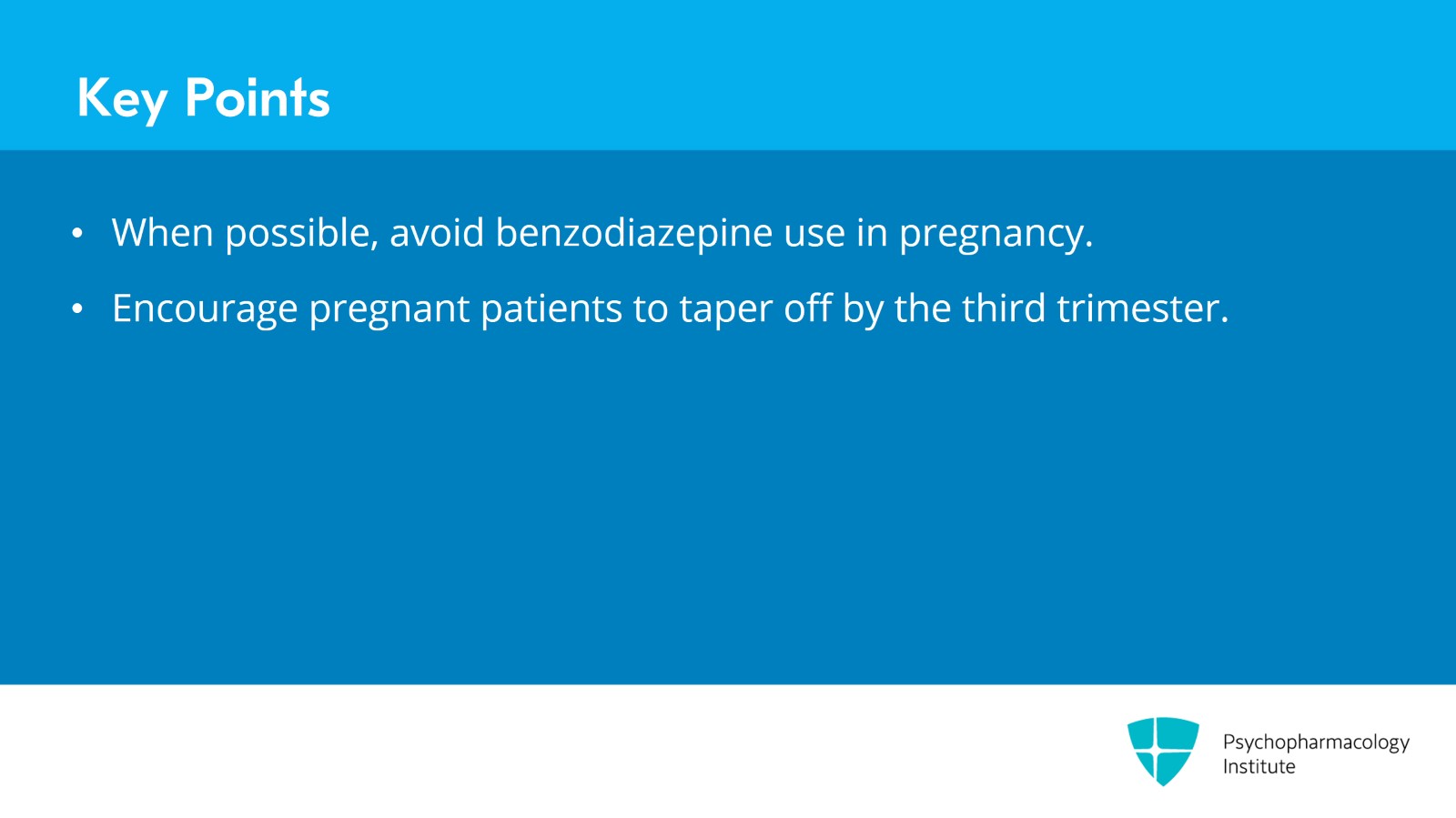
  • When possible, avoid benzodiazepine use in pregnancy.
  • Encourage pregnant patients to taper off by the third trimester.
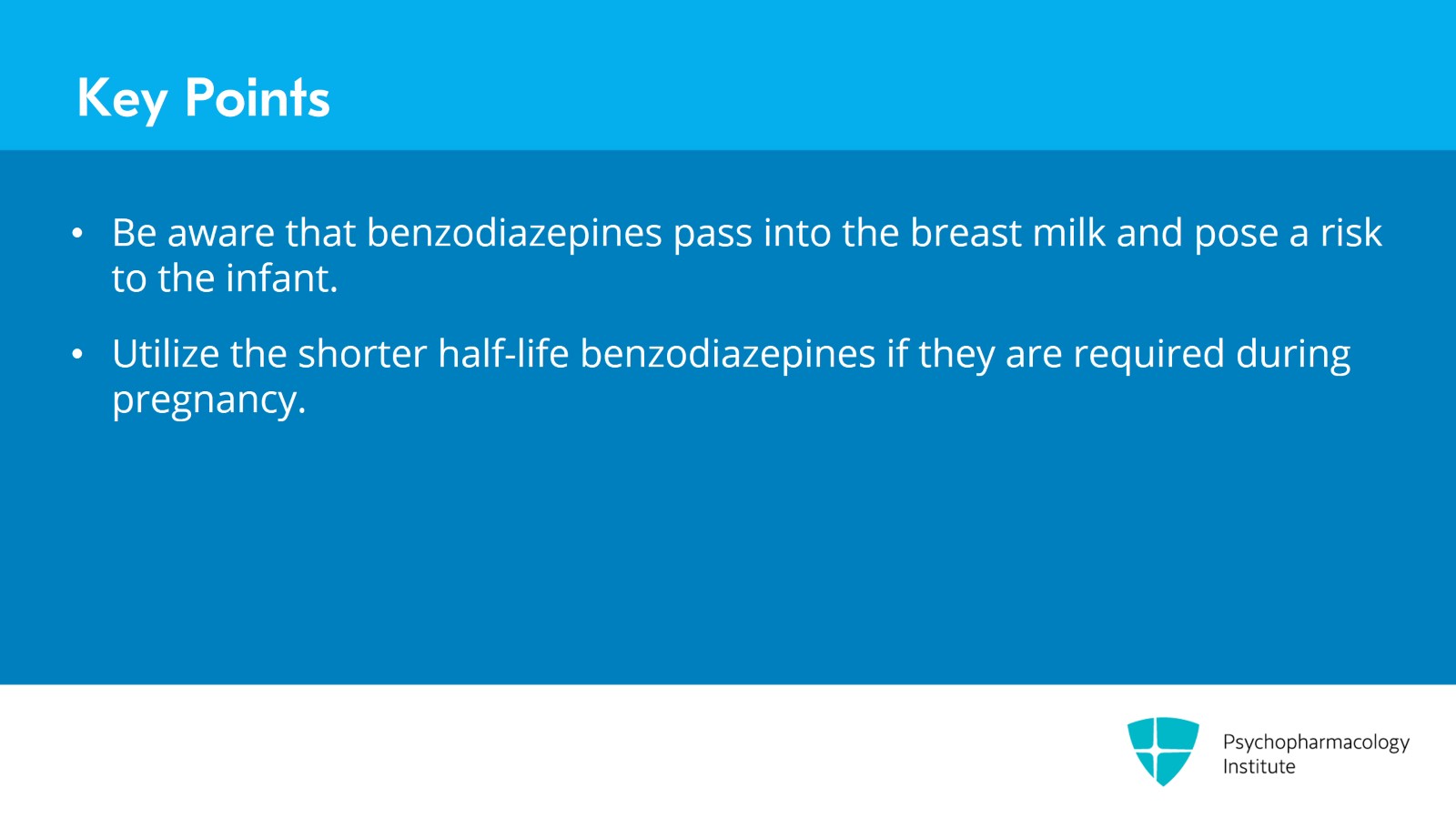
  • Be aware that benzodiazepines pass into the breast milk and pose a risk to the infant.
  • Utilize the shorter half-life benzodiazepines if they are required during pregnancy.
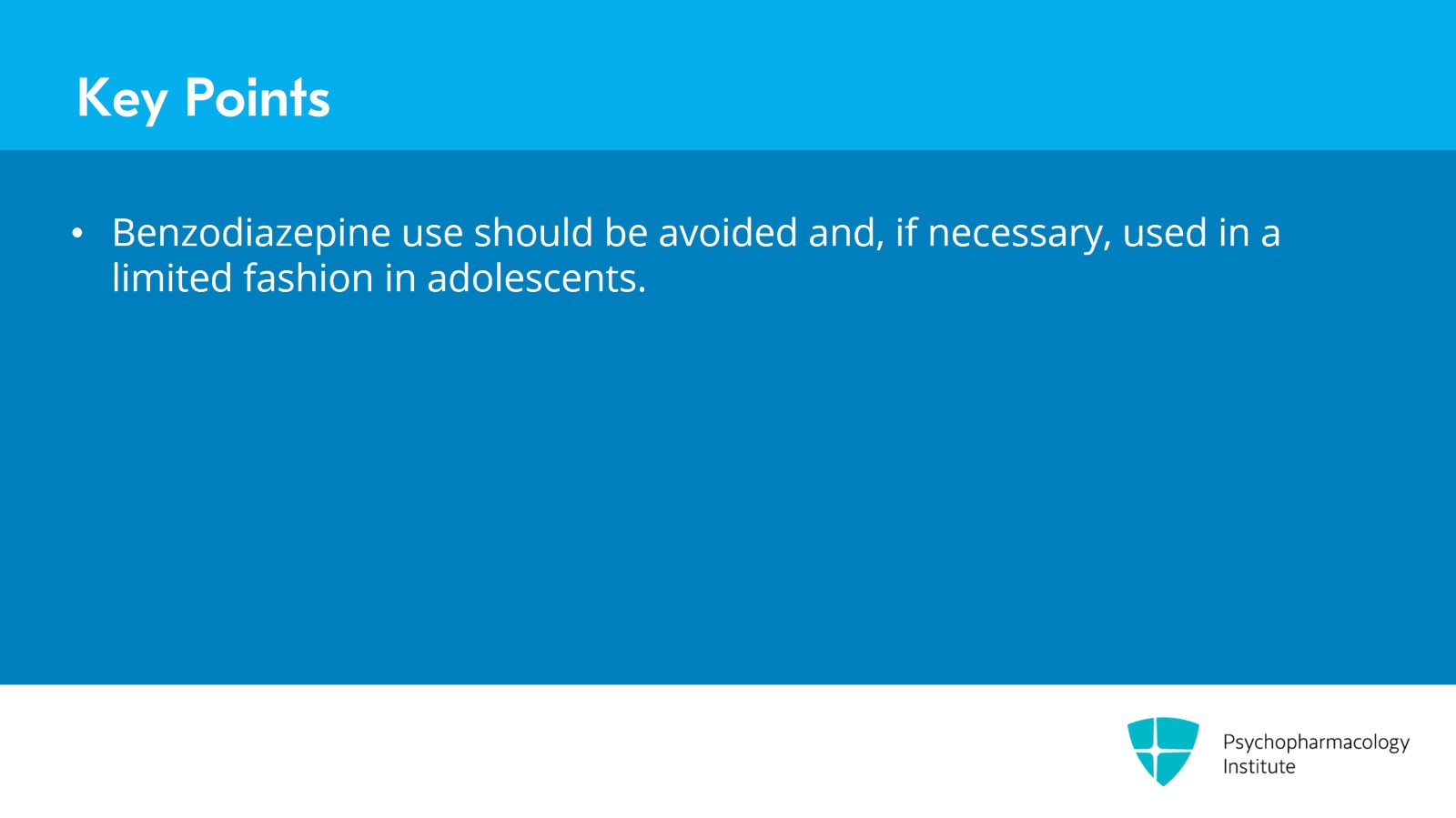
  • Benzodiazepine use should be avoided and, if necessary, used in a limited fashion in adolescents.

Free Downloads for Offline Access

  • Free Download Presentation File (PPTX)
  • Free Download Audio File (MP3)
  • Free Download Video (MP4)

Slides and Transcript
Slide 1 of 21

In this video, I will discuss the consequences of benzodiazepine use in pregnancy, breastfeeding, and adolescents.

Slide 2 of 21

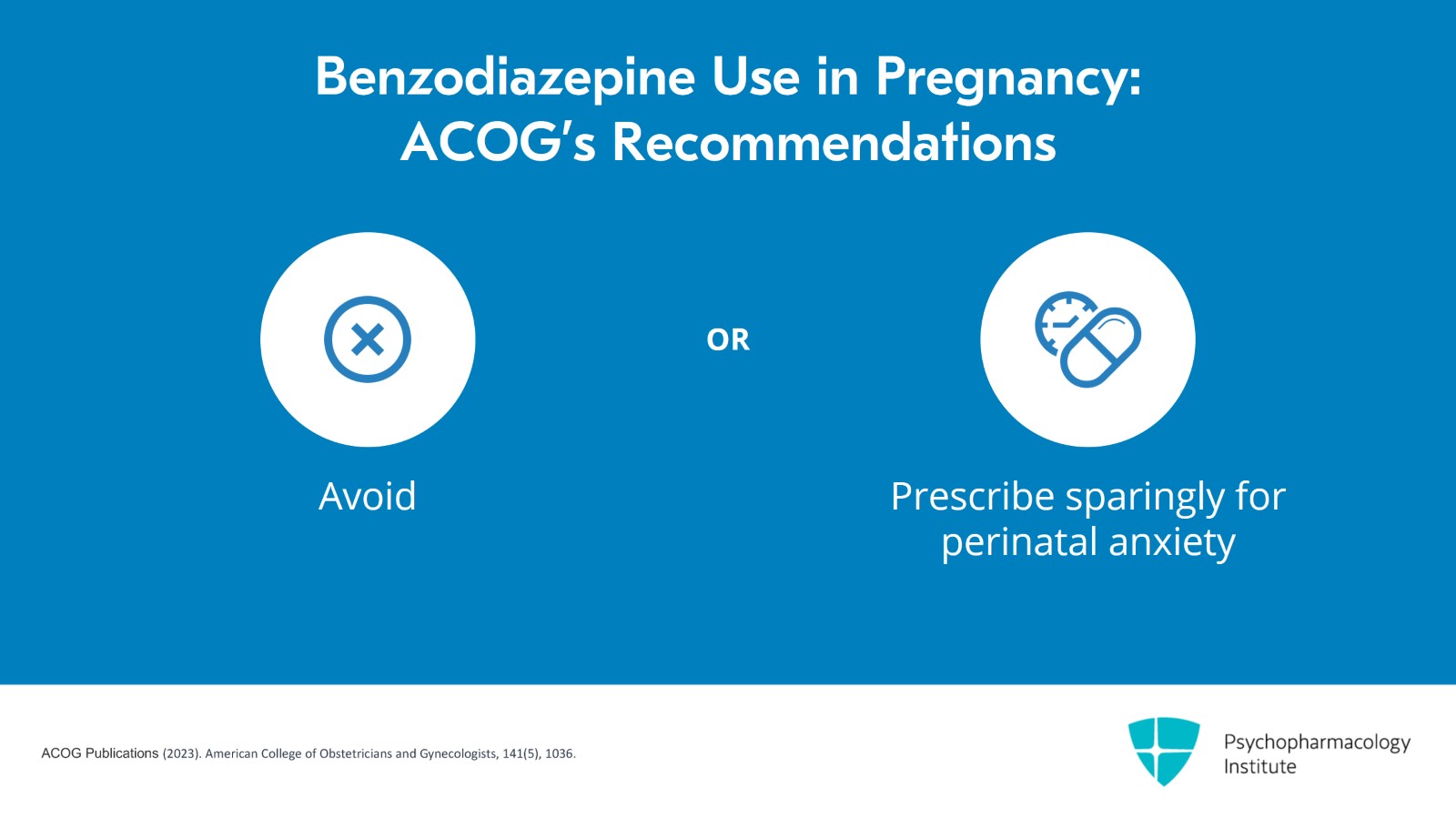
In pregnancy, the American College of Obstetrics and Gynecology, ACOG's guidelines, recommends that benzodiazepines be avoided or prescribed sparingly as treatment for perinatal anxiety.
References:
  • ACOG Publications (2023). American College of Obstetricians and Gynecologists, 141(5), 1036.
Free Files
Success!
Check your inbox, we sent you all the materials there.
Slide 3 of 21

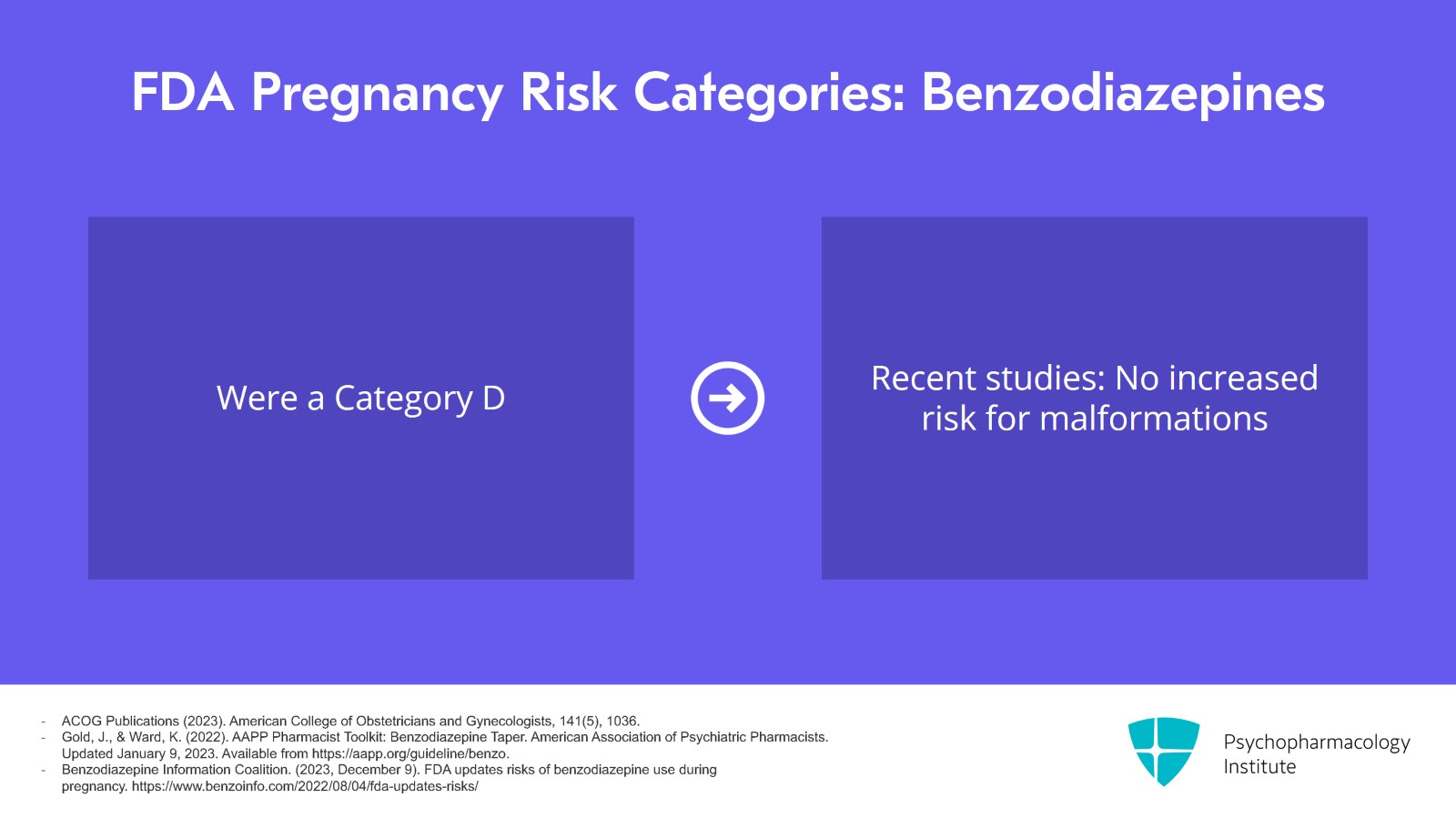
Under FDA's old pregnancy risk classification system, benzodiazepines were a Category D drug due to concerns for development of cleft lip and palate as well as urogenital and neurological malformations. However, recent studies have not shown that there's an increased risk of these complications.
References:
  • ACOG Publications (2023). American College of Obstetricians and Gynecologists, 141(5), 1036.
  • Gold, J., & Ward, K. (2022). AAPP Pharmacist Toolkit: Benzodiazepine Taper. American Association of Psychiatric Pharmacists. Updated January 9, 2023. Available from https://aapp.org/guideline/benzo.
  • Benzodiazepine Information Coalition. (2023, December 9). FDA updates risks of benzodiazepine use during pregnancy. https://www.benzoinfo.com/2022/08/04/fda-updates-risks/

Slide 4 of 21

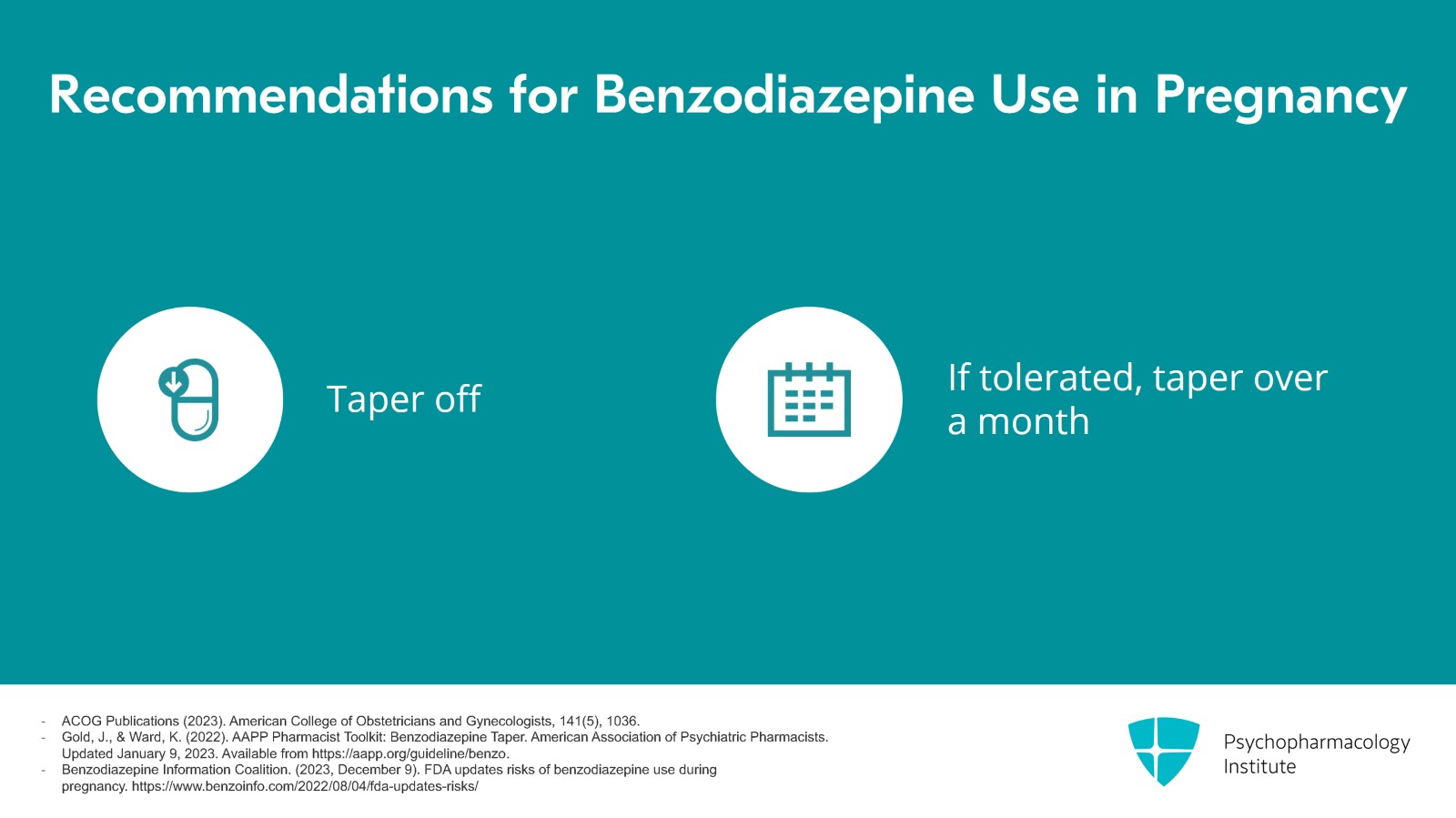
The recommendation remains that patients should try to taper off benzodiazepines in pregnancy and if tolerated, a more rapid taper over a period of a month or so may be employed.
References:
  • ACOG Publications (2023). American College of Obstetricians and Gynecologists, 141(5), 1036.
  • Gold, J., & Ward, K. (2022). AAPP Pharmacist Toolkit: Benzodiazepine Taper. American Association of Psychiatric Pharmacists. Updated January 9, 2023. Available from https://aapp.org/guideline/benzo.
  • Benzodiazepine Information Coalition. (2023, December 9). FDA updates risks of benzodiazepine use during pregnancy. https://www.benzoinfo.com/2022/08/04/fda-updates-risks/
Free Files
Success!
Check your inbox, we sent you all the materials there.
Slide 5 of 21

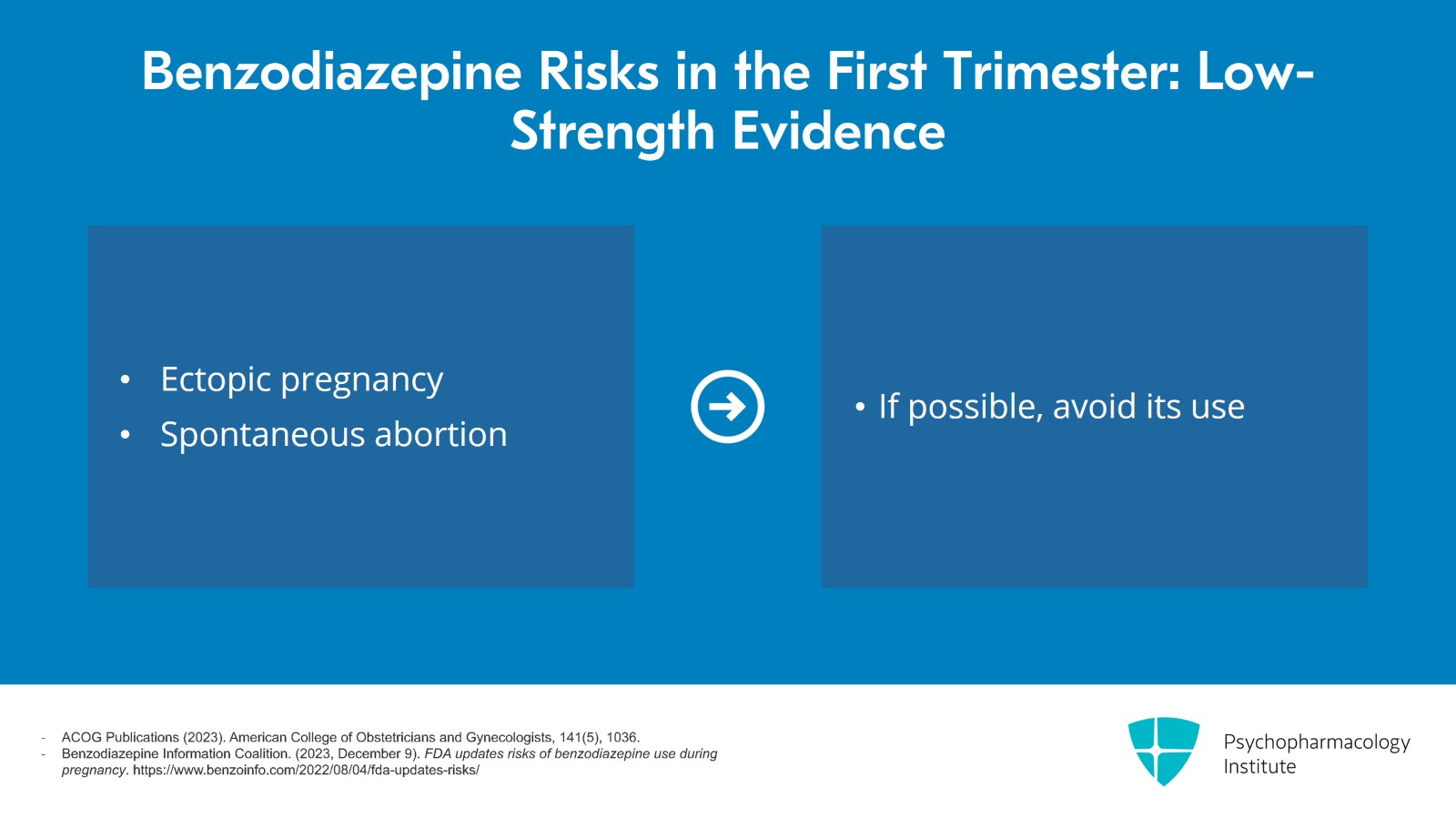
There's some low-strength evidence that there could be an increased risk of ectopic pregnancy and spontaneous abortion in patients that are on these medications during the first trimester. If possible, benzodiazepine use should be avoided during the first trimester.
References:
  • ACOG Publications (2023). American College of Obstetricians and Gynecologists, 141(5), 1036.
  • Benzodiazepine Information Coalition. (2023, December 9). FDA updates risks of benzodiazepine use during pregnancy. https://www.benzoinfo.com/2022/08/04/fda-updates-risks/

Slide 6 of 21

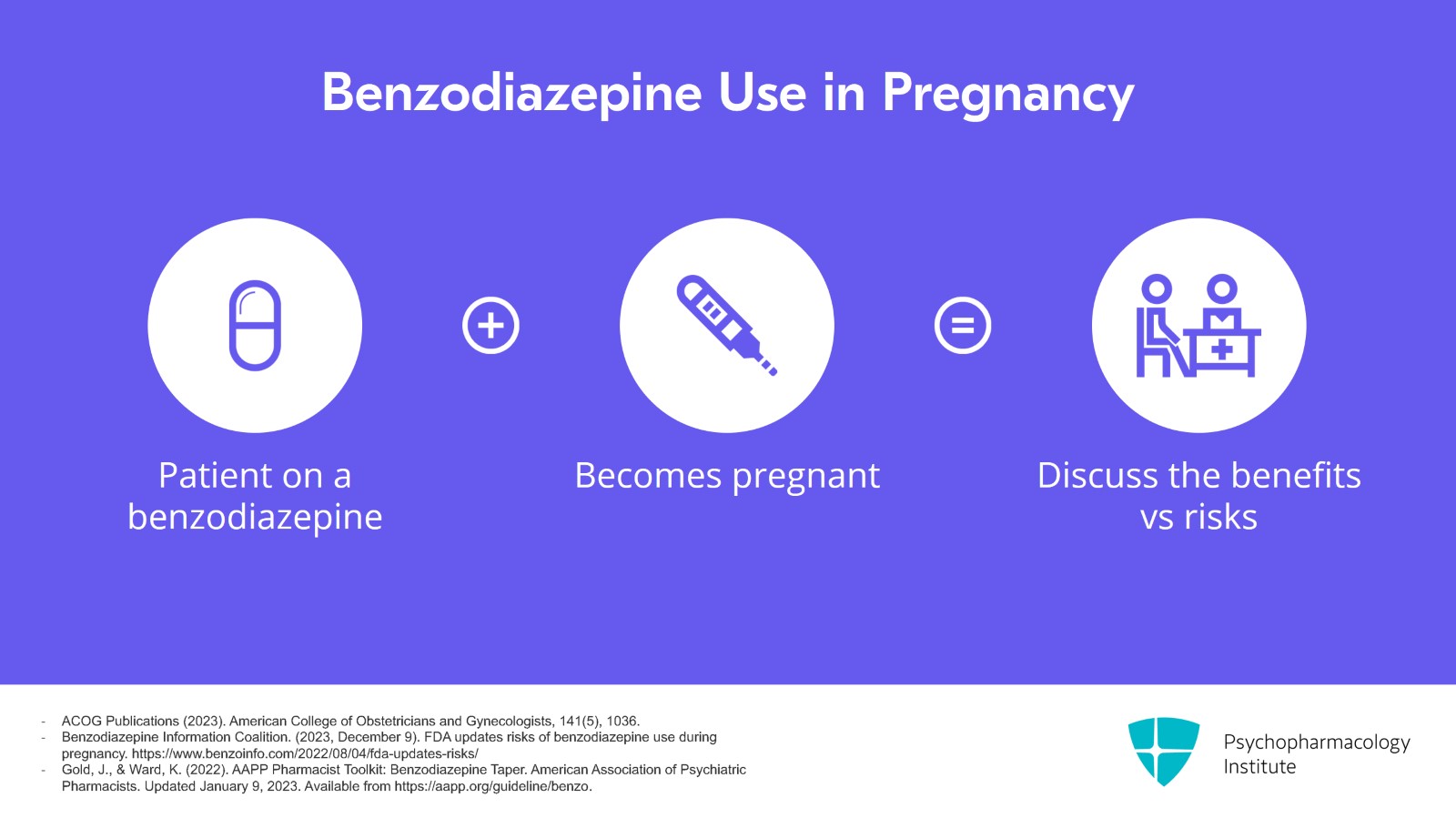
If a patient is already on a benzodiazepine when they become pregnant, it's important to discuss and weigh with them the benefits versus the risks of continuing to use these medications.
References:
  • ACOG Publications (2023). American College of Obstetricians and Gynecologists, 141(5), 1036.
  • Benzodiazepine Information Coalition. (2023, December 9). FDA updates risks of benzodiazepine use during pregnancy. https://www.benzoinfo.com/2022/08/04/fda-updates-risks/
  • Gold, J., & Ward, K. (2022). AAPP Pharmacist Toolkit: Benzodiazepine Taper. American Association of Psychiatric Pharmacists. Updated January 9, 2023. Available from https://aapp.org/guideline/benzo.
Free Files
Success!
Check your inbox, we sent you all the materials there.
Slide 7 of 21

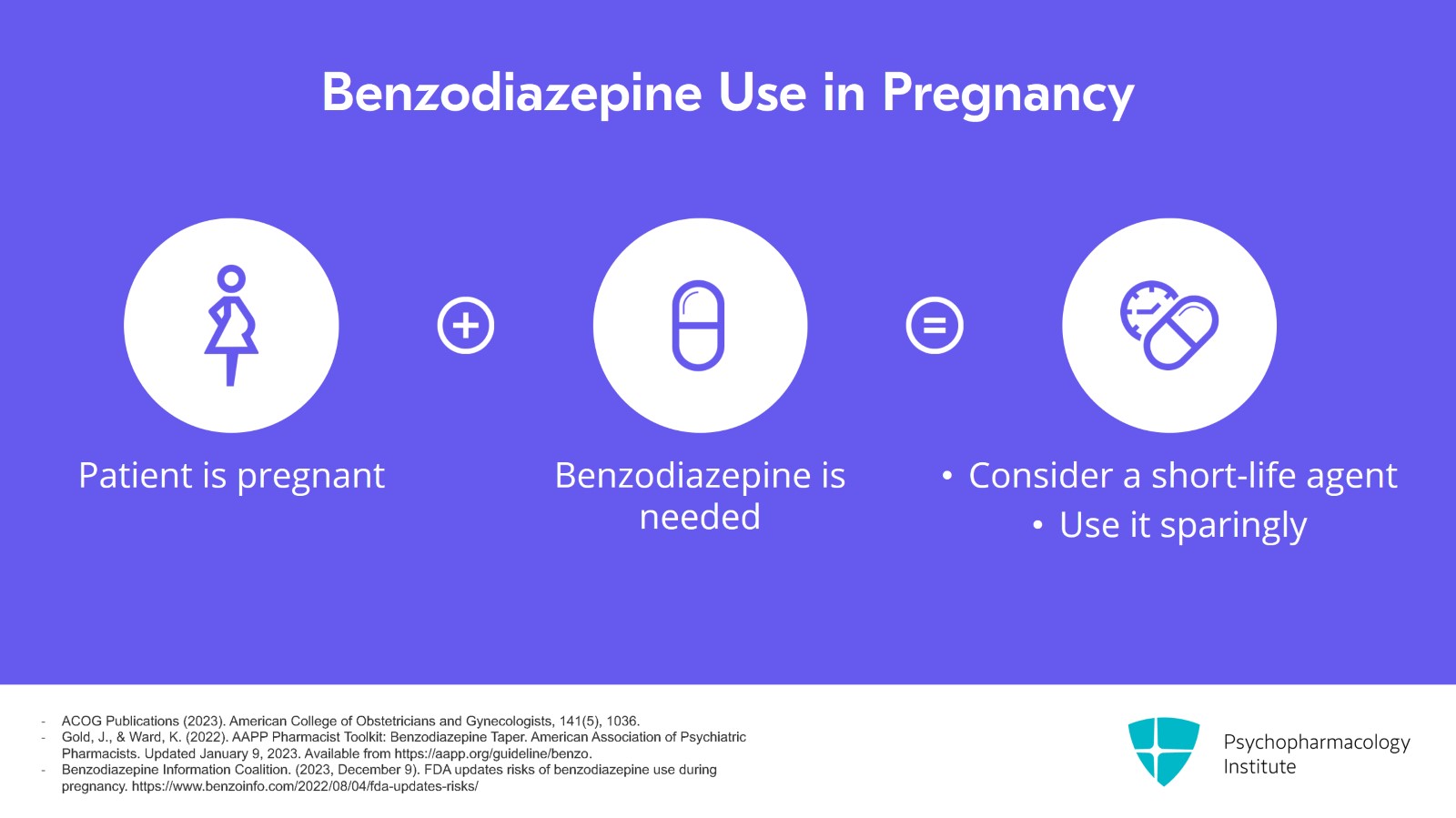
If a patient is already pregnant and a benzodiazepine is needed, consider an agent with a shorter half-life while still using the medication sparingly and intermittently.
References:
  • ACOG Publications (2023). American College of Obstetricians and Gynecologists, 141(5), 1036.
  • Gold, J., & Ward, K. (2022). AAPP Pharmacist Toolkit: Benzodiazepine Taper. American Association of Psychiatric Pharmacists. Updated January 9, 2023. Available from https://aapp.org/guideline/benzo.
  • Benzodiazepine Information Coalition. (2023, December 9). FDA updates risks of benzodiazepine use during pregnancy. https://www.benzoinfo.com/2022/08/04/fda-updates-risks/

Slide 8 of 21

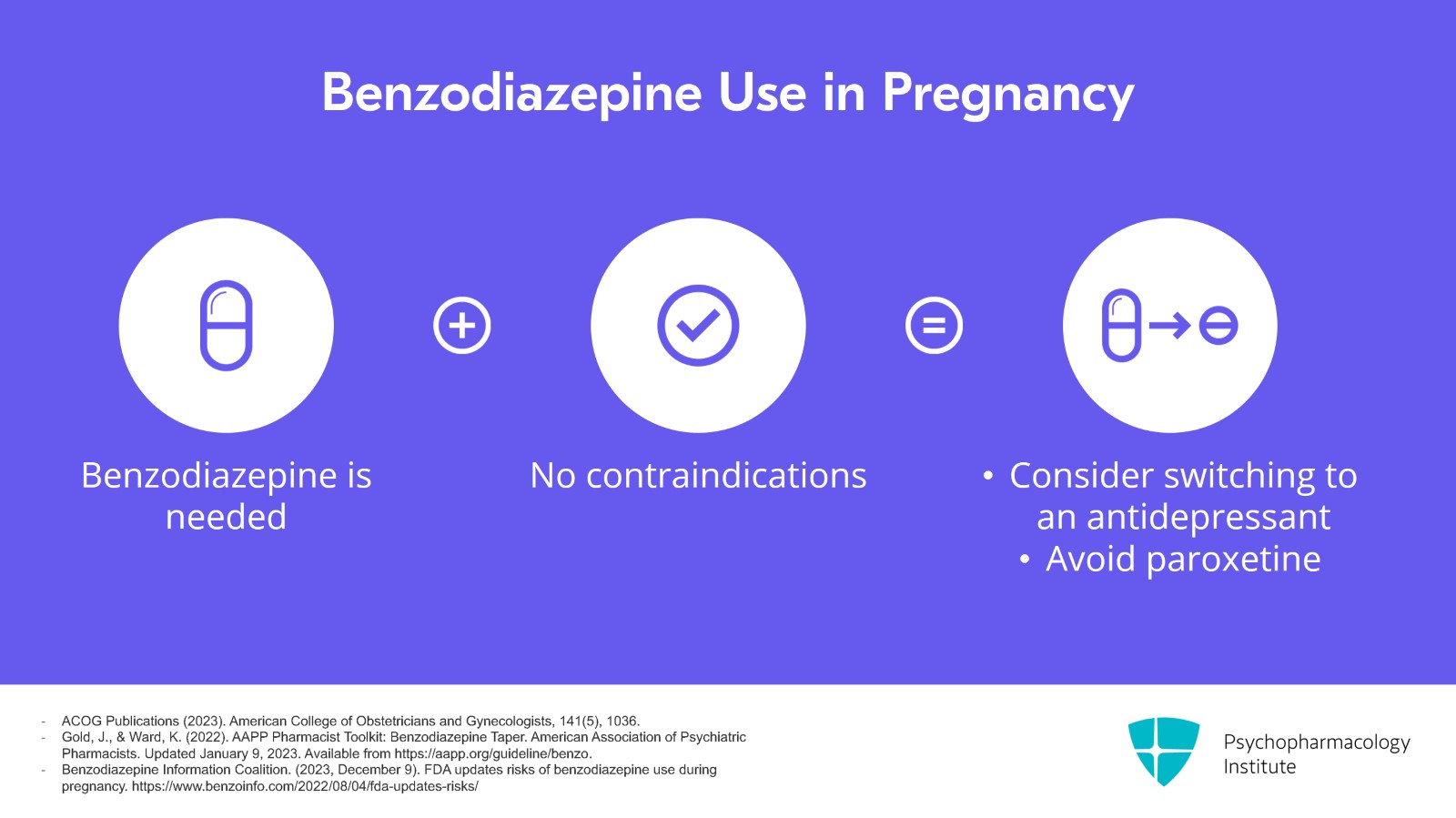
If a benzodiazepine is needed and there's no contraindication, consider switching to an antidepressant to help address ongoing anxiety as these may be safer in pregnancy. Of note, the one antidepressant that is known to be unsafe in pregnancy is paroxetine, so this should be avoided.
References:
  • ACOG Publications (2023). American College of Obstetricians and Gynecologists, 141(5), 1036.
  • Gold, J., & Ward, K. (2022). AAPP Pharmacist Toolkit: Benzodiazepine Taper. American Association of Psychiatric Pharmacists. Updated January 9, 2023. Available from https://aapp.org/guideline/benzo.
  • Benzodiazepine Information Coalition. (2023, December 9). FDA updates risks of benzodiazepine use during pregnancy. https://www.benzoinfo.com/2022/08/04/fda-updates-risks/
Free Files
Success!
Check your inbox, we sent you all the materials there.
Slide 9 of 21

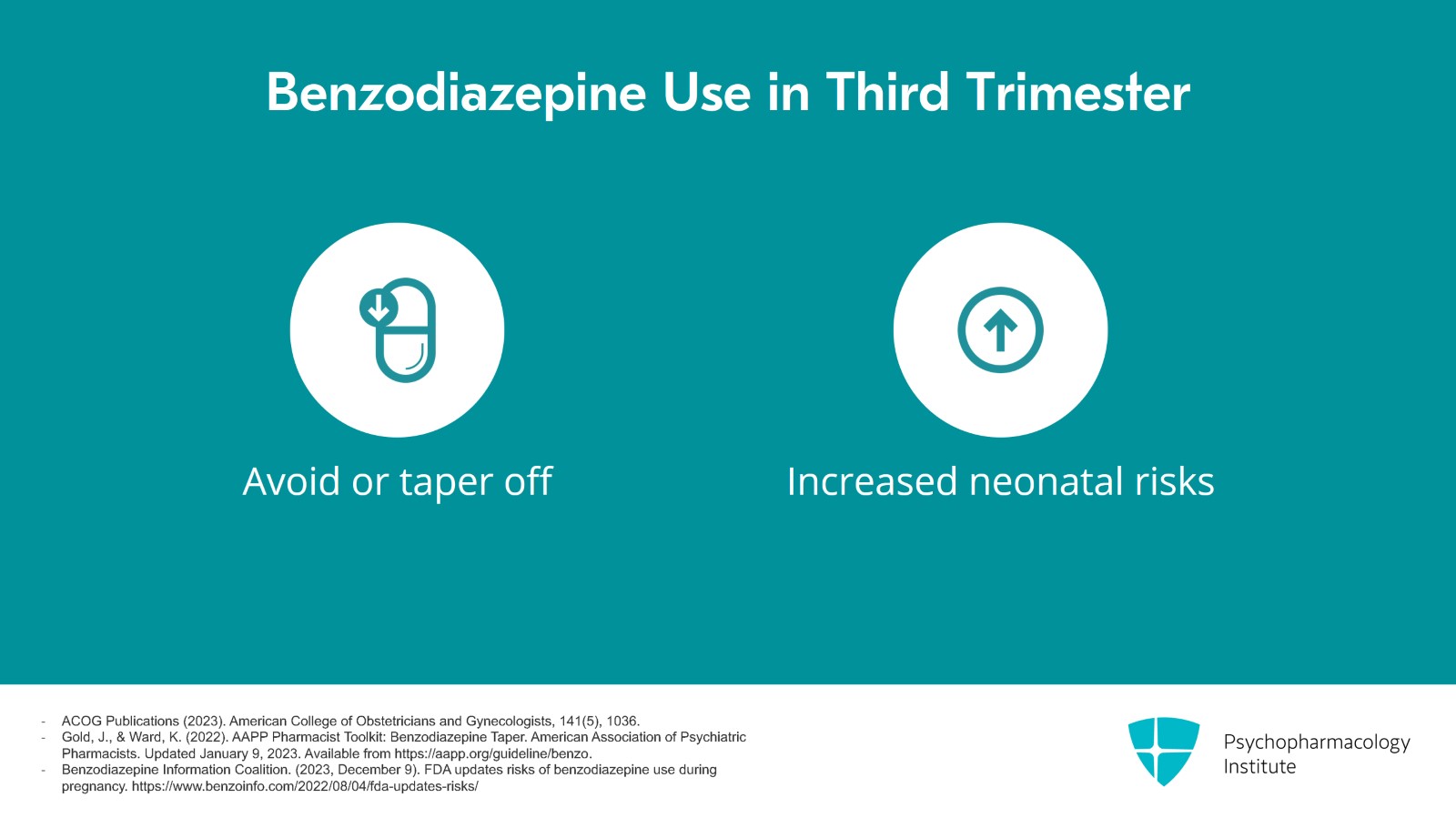
It is recommended that use is avoided or benzodiazepines are tapered off during the third trimester due to risk of neonatal sedation, decreased muscle tone, respiratory depression, increased risk of NICU admission and benzodiazepine withdrawal symptoms in the newborn.
References:
  • ACOG Publications (2023). American College of Obstetricians and Gynecologists, 141(5), 1036.
  • Gold, J., & Ward, K. (2022). AAPP Pharmacist Toolkit: Benzodiazepine Taper. American Association of Psychiatric Pharmacists. Updated January 9, 2023. Available from https://aapp.org/guideline/benzo.
  • Benzodiazepine Information Coalition. (2023, December 9). FDA updates risks of benzodiazepine use during pregnancy. https://www.benzoinfo.com/2022/08/04/fda-updates-risks/

Slide 10 of 21

With regard to breastfeeding and benzodiazepine use, it's important that we are aware that benzodiazepines can cross into breast milk.
References:
  • Gold, J., & Ward, K. (2018). Pharmacist Toolkit: Benzodiazepine Taper. CPNP. https://www.opioidlibrary.org/wp-content/uploads/2019/07/CPNP_BenzoTapering.pdf
Free Files
Success!
Check your inbox, we sent you all the materials there.
Slide 11 of 21

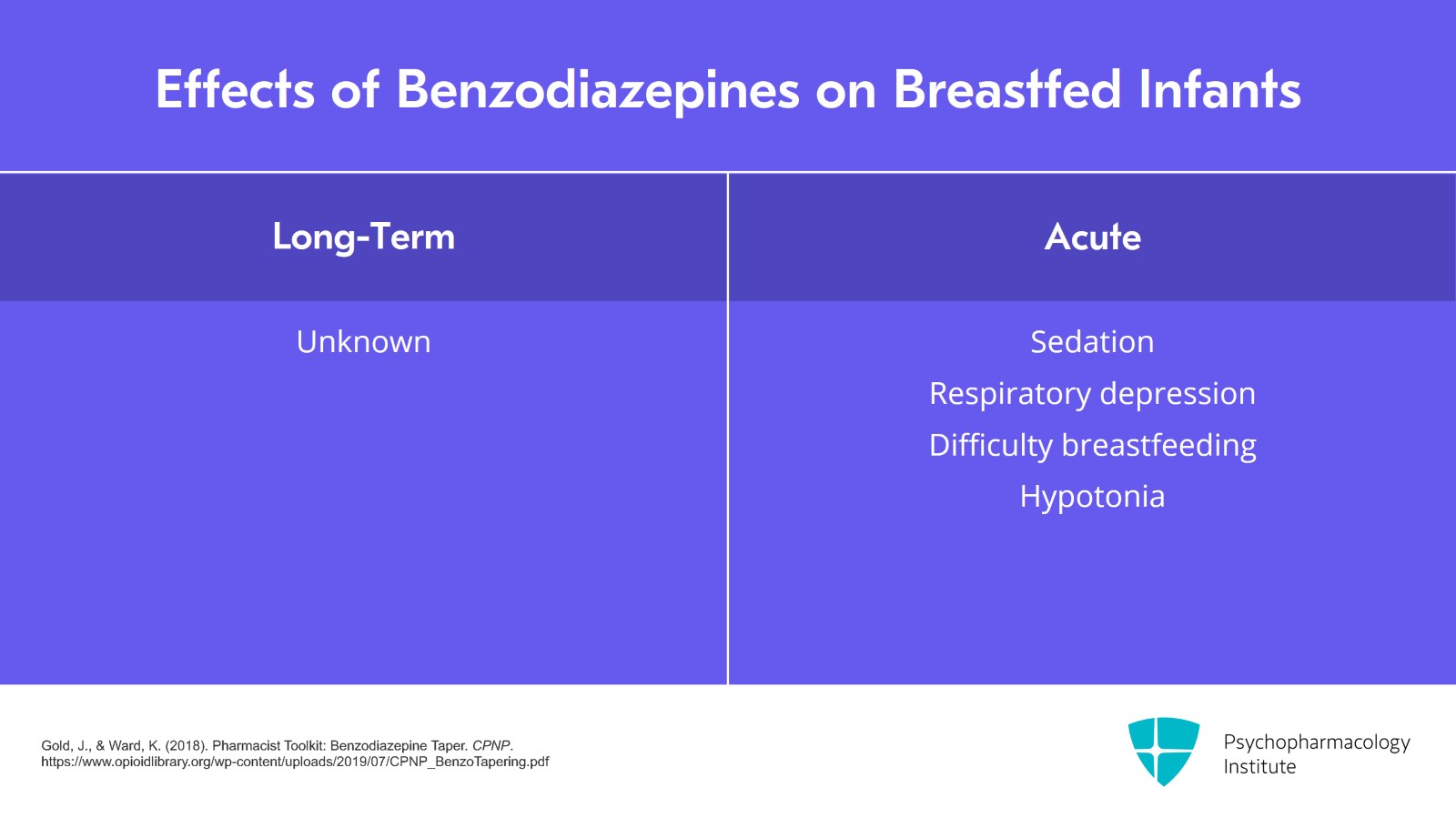
The long-term effects of benzodiazepines on infants that are breastfed is unknown. We do know that babies can experience side effects from exposure to benzodiazepines including sedation, respiratory depression, difficulty breastfeeding and hypotonia or low muscle tone sometimes referred to as floppy baby syndrome.
References:
  • Gold, J., & Ward, K. (2018). Pharmacist Toolkit: Benzodiazepine Taper. CPNP. https://www.opioidlibrary.org/wp-content/uploads/2019/07/CPNP_BenzoTapering.pdf

Slide 12 of 21

Again, similar to the recommendations with pregnancy, if it's necessary that a patient is on these medications during breastfeeding, use an agent with a shorter half-life.
References:
  • Gold, J., & Ward, K. (2018). Pharmacist Toolkit: Benzodiazepine Taper. CPNP. https://www.opioidlibrary.org/wp-content/uploads/2019/07/CPNP_BenzoTapering.pdf
Free Files
Success!
Check your inbox, we sent you all the materials there.
Slide 13 of 21

In adolescents, it is also recommended that the use of benzodiazepines is largely avoided and, if necessary, used sparingly.
References:
  • Johnston, L. D., Miech, R. A., O’Malley, P. M., Bachman, J. G., Schulenberg, J. E., & Patrick, M. E. (2019). Monitoring the Future National Survey Results on Drug Use 1975-2018: Overview, Key Findings on Adolescent Drug Use. University of Michigan, Institute for Social Research. Accessed October 20, 2020. 13

Slide 14 of 21

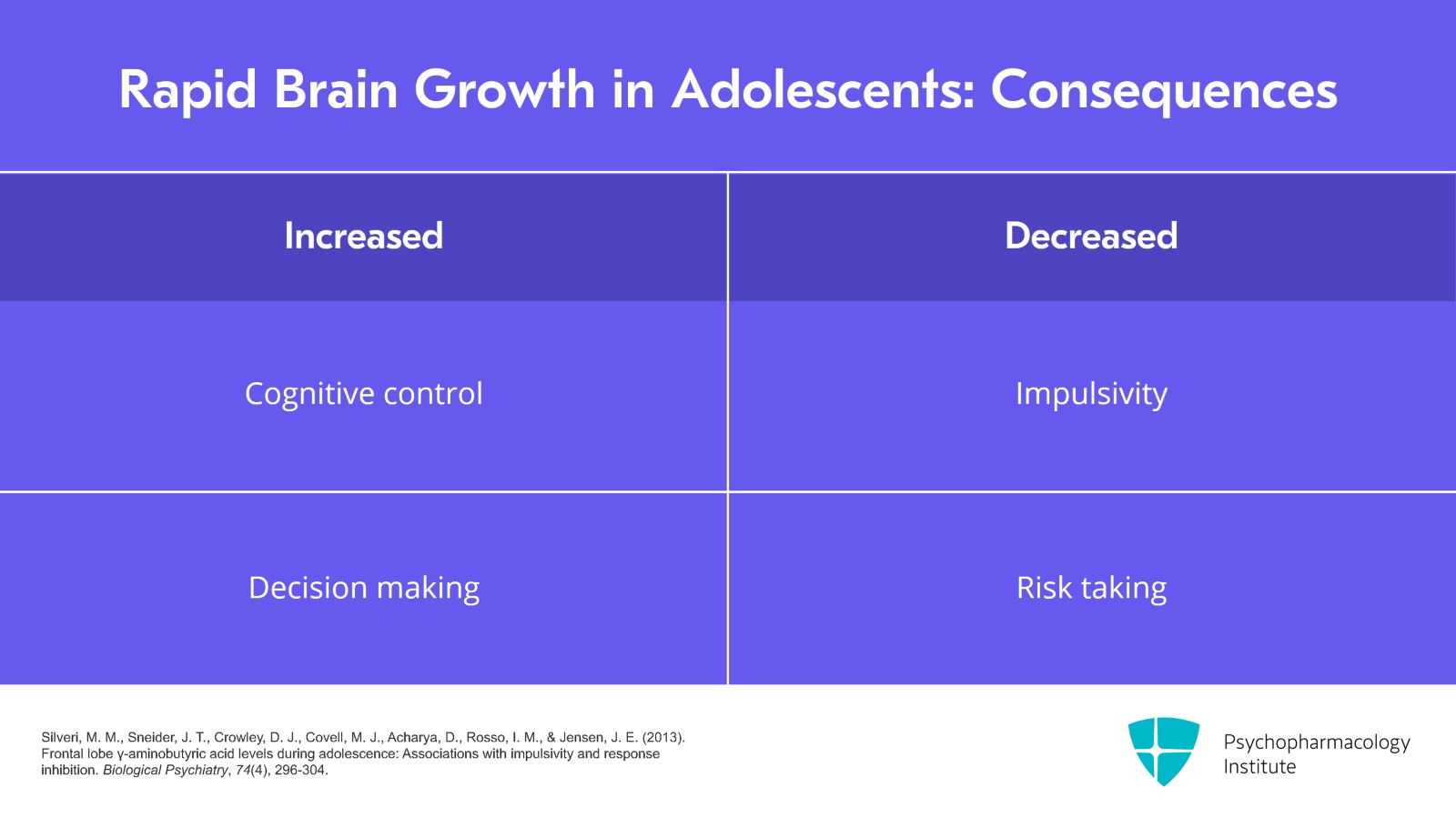
Adolescence is a time of rapid brain growth and remodeling especially in the frontal lobe. As a result of this rapid brain growth, we know that adolescents are developing increased cognitive control and decision-making capacities while also starting to have a decrease in their impulsivity and risk-taking.
References:
  • Silveri, M. M., Sneider, J. T., Crowley, D. J., Covell, M. J., Acharya, D., Rosso, I. M., & Jensen, J. E. (2013). Frontal lobe γ-aminobutyric acid levels during adolescence: Associations with impulsivity and response inhibition. Biological Psychiatry, 74(4), 296-304. 
Free Files
Success!
Check your inbox, we sent you all the materials there.
Slide 15 of 21

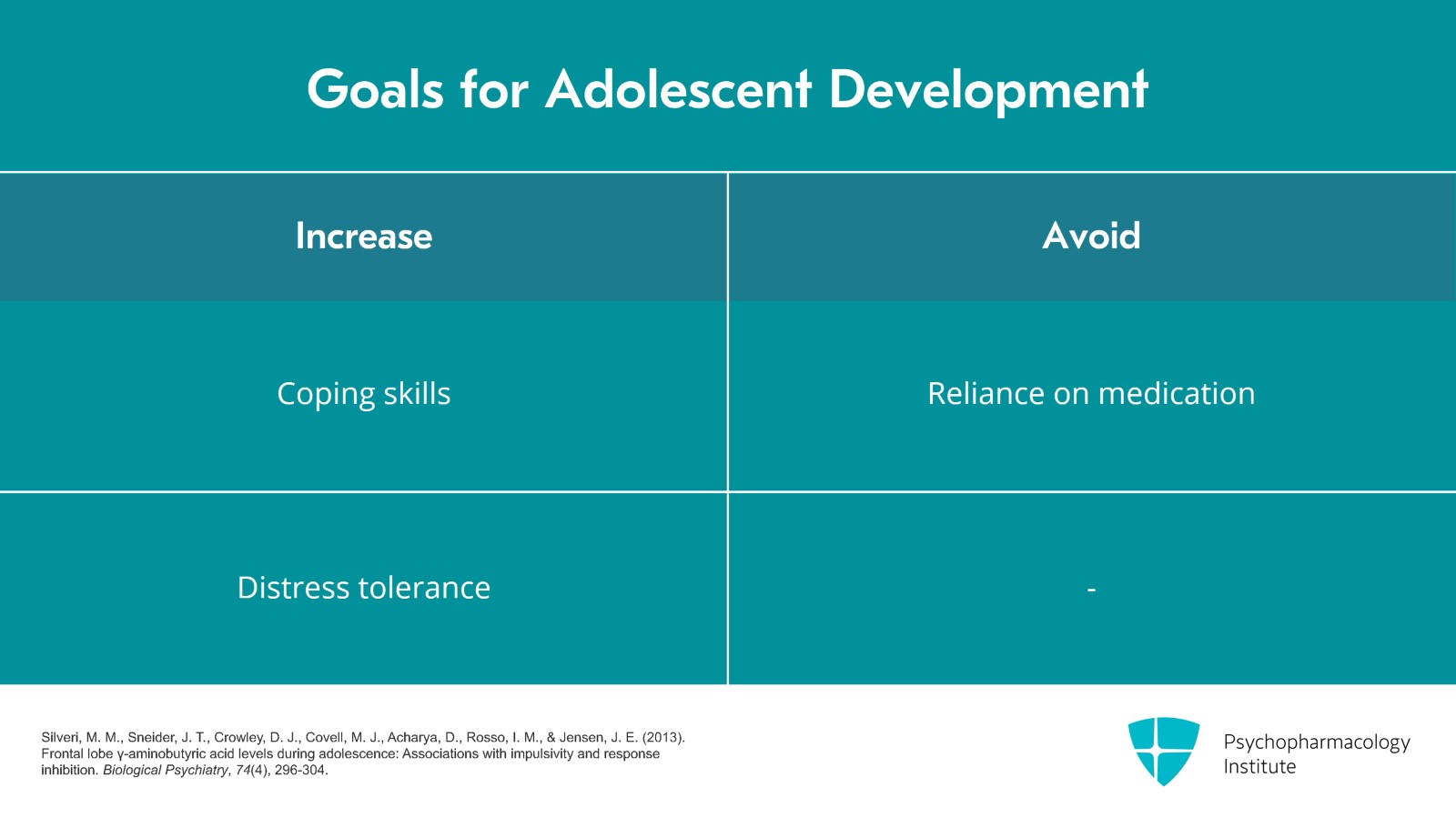
Our goal is to work with adolescents to increase their coping skills and distress tolerance through practice and support and not to have them become reliant on turning to a medication to address distress and anxiety and insomnia.
References:
  • Silveri, M. M., Sneider, J. T., Crowley, D. J., Covell, M. J., Acharya, D., Rosso, I. M., & Jensen, J. E. (2013). Frontal lobe γ-aminobutyric acid levels during adolescence: Associations with impulsivity and response inhibition. Biological Psychiatry, 74(4), 296-304. 

Slide 16 of 21

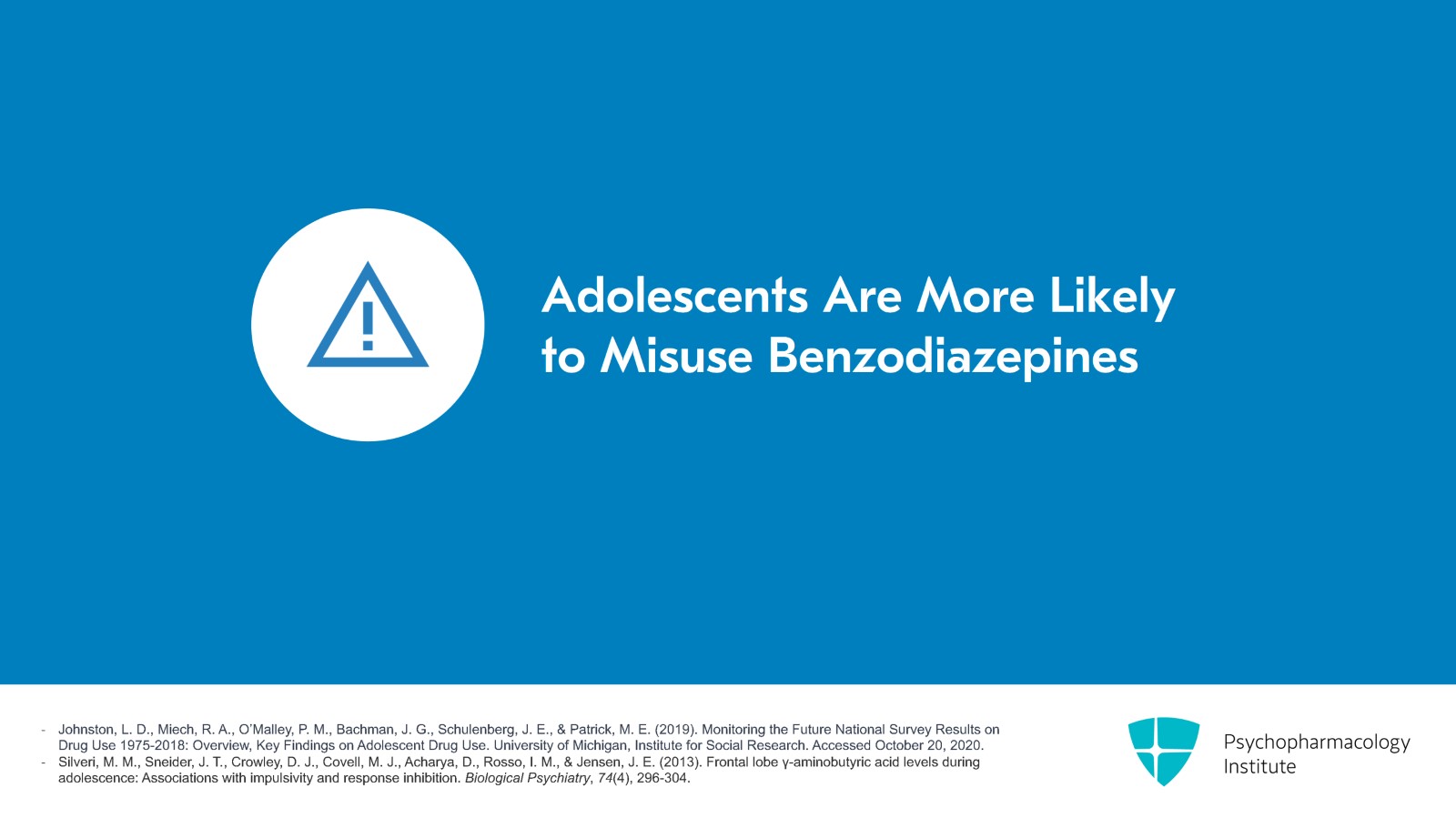
Due to the impulsivity and risk-taking of adolescents, they are more likely to misuse benzodiazepines than the general adult population.
References:
  • Johnston, L. D., Miech, R. A., O’Malley, P. M., Bachman, J. G., Schulenberg, J. E., & Patrick, M. E. (2019). Monitoring the future National survey results on drug use 1975-2018: Overview, key findings on adolescent drug use. University of Michigan, Institute for Social Research. Accessed October 20, 2020.
  • Silveri, M. M., Sneider, J. T., Crowley, D. J., Covell, M. J., Acharya, D., Rosso, I. M., & Jensen, J. E. (2013). Frontal lobe γ-aminobutyric acid levels during adolescence: Associations with impulsivity and response inhibition. Biological Psychiatry, 74(4), 296-304. 
Free Files
Success!
Check your inbox, we sent you all the materials there.
Slide 17 of 21

Overall, adolescents are at increased risk for developing substance use disorders due to their developing brains. And when exposed to substances in adolescence, this may further increase their risk of developing a use disorder in adulthood.
References:
  • Johnston, L. D., Miech, R. A., O’Malley, P. M., Bachman, J. G., Schulenberg, J. E., & Patrick, M. E. (2019). Monitoring the Future National Survey Results on Drug Use 1975-2018: Overview, Key Findings on Adolescent Drug Use. University of Michigan, Institute for Social Research. Accessed October 20, 2020.
  • Silveri, M. M., Sneider, J. T., Crowley, D. J., Covell, M. J., Acharya, D., Rosso, I. M., & Jensen, J. E. (2013). Frontal lobe γ-aminobutyric acid levels during adolescence: Associations with impulsivity and response inhibition. Biological Psychiatry, 74(4), 296-304. 

Slide 18 of 21

To review the key points for this video, when possible, avoid use of benzodiazepines in pregnancy, encourage pregnant patients to work on tapering off by third trimester to limit the risk of adverse effects on the infant.
Free Files
Success!
Check your inbox, we sent you all the materials there.
Slide 19 of 21

Be aware that benzodiazepines do pass into the breast milk and pose a risk to the infant due to their difficulty metabolizing them. Overall, in pregnancy, recommended that the shorter half-life benzodiazepines are used sparingly if required.

Slide 20 of 21

And finally, recommended that benzodiazepines use is largely avoided and, if necessary, used in a limited fashion in adolescents due to the increased risk of misuse in this population.
Free Files
Success!
Check your inbox, we sent you all the materials there.

Slide 21 of 21

Learning Objectives:

After completing this activity, the learner will be able to:

  1. Identify the risks and contraindications associated with benzodiazepines.
  2. Understand the clinical consequences of benzodiazepine misuse and addiction.
  3. Apply effective strategies for safer benzodiazepine prescribing.

Original Release Date: May 1, 2024

Expiration Date: May 1, 2027

Expert: Alexis Ritvo, M.D.

Medical Editor: Paz Badía, M.D. 

Relevant Financial Disclosures: 

None of the faculty, planners, and reviewers for this educational activity have relevant financial relationships to disclose during the last 24 months with ineligible companies whose primary business is producing, marketing, selling, re-selling, or distributing healthcare products used by or on patients.

Contact Information: For questions regarding the content or access to this activity, contact us at support@psychopharmacologyinstitute.com

Instructions for Participation and Credit:

Participants must complete the activity online during the valid credit period that is noted above.

Follow these steps to earn CME credit:

  1. View the required educational content provided on this course page.

  2. Complete the Post Activity Evaluation for providing the necessary feedback for continuing accreditation purposes and for the development of future activities. NOTE: Completing the Post Activity Evaluation after the quiz is required to receive the earned credit.

  3. Download your certificate.

Accreditation Statement

This activity has been planned and implemented in accordance with the accreditation requirements and policies of the Accreditation Council for Continuing Medical Education through the joint providership of Medical Academy LLC and the Psychopharmacology Institute. Medical Academy is accredited by the ACCME to provide continuing medical education for physicians.

Credit Designation Statement

Medical Academy designates this enduring activity for a maximum of 1.0 AMA PRA Category 1 credit(s)™. Physicians should claim only the credit commensurate with the extent of their participation in the activity.

Free Files
Success!
Check your inbox, we sent you all the materials there.
Continue in the website
Instant access modal

Become a Bronze, Silver, Gold, Bronze extended, Silver extended or Gold extended Member.

2025–26 Psychopharmacology CME Program

Unlock up to 155 CME Credits, including 40 SA CME Credits.