



Slides and Transcript
Slide 1 of 9
In the treatment of depression, patients often have questions about herbs and other kinds of remedies. And it’s important to know that CANMAT has evaluated this in terms of evidence and suitability.
Slide 2 of 9
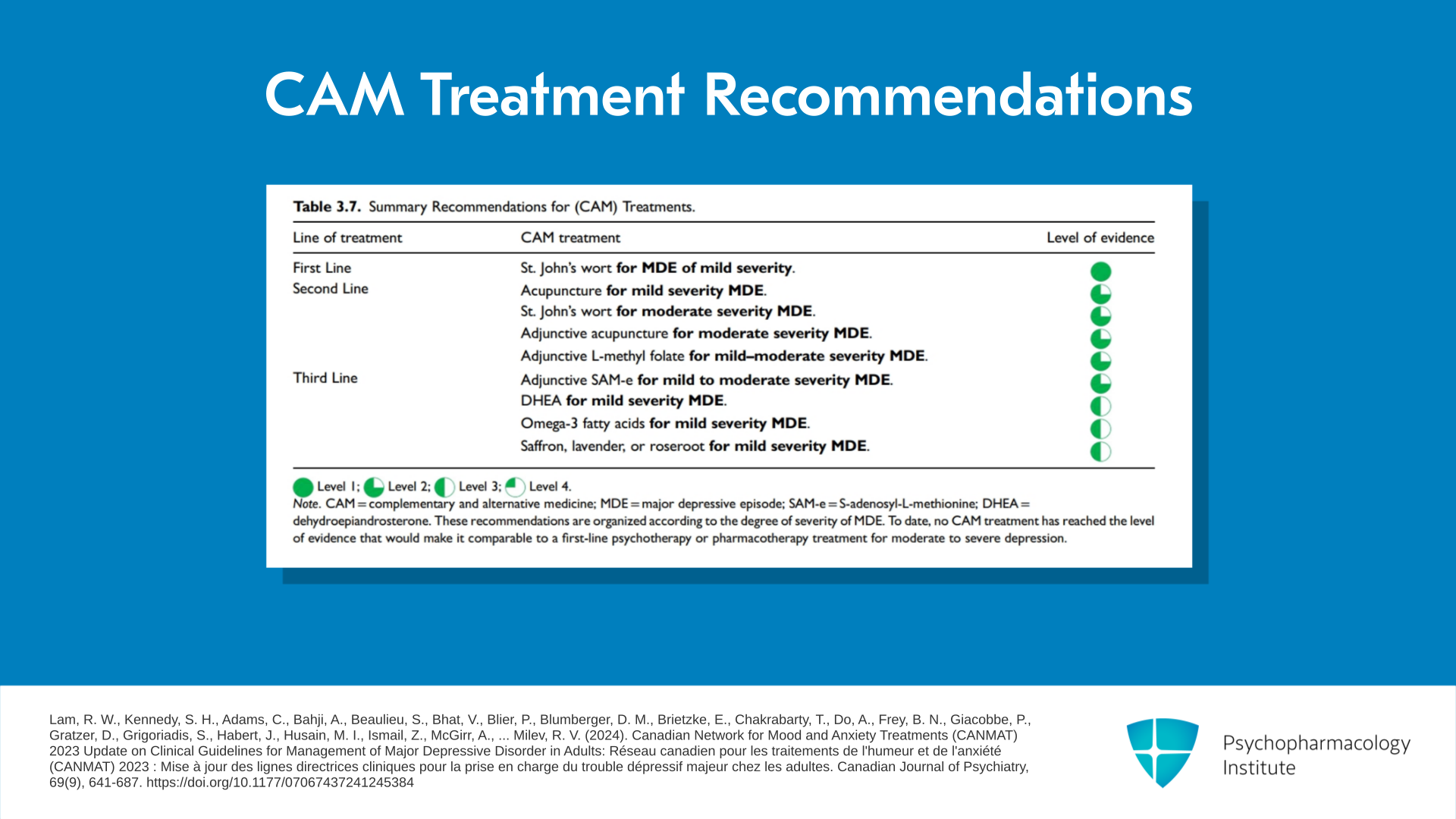
Here, we will just go over one table that provides summary recommendations of what we’re calling complementary and alternative medicine treatments for depression or CAM. So we are using our same format – first-line, second-line, third-line treatment recommendations – and we are using our same way of evaluating evidence. We thought that the evidence should be consistently used in evaluating these treatments in the same way that we evaluated psychotherapy and medication.
References:
- Lam, R. W., Kennedy, S. H., Adams, C., Bahji, A., Beaulieu, S., Bhat, V., Blier, P., Blumberger, D. M., Brietzke, E., Chakrabarty, T., Do, A., Frey, B. N., Giacobbe, P., Gratzer, D., Grigoriadis, S., Habert, J., Husain, M. I., Ismail, Z., McGirr, A., … Milev, R. V. (2024). Canadian Network for Mood and Anxiety Treatments (CANMAT) 2023 Update on Clinical Guidelines for Management of Major Depressive Disorder in Adults: Réseau canadien pour les traitements de l'humeur et de l'anxiété (CANMAT) 2023 : Mise à jour des lignes directrices cliniques pour la prise en charge du trouble dépressif majeur chez les adultes. Canadian Journal of Psychiatry, 69(9), 641-687. https://doi.org/10.1177/07067437241245384
Free Files
Download PDF and other files
Success!
Check your inbox, we sent you all the materials there.
Slide 3 of 9
We are listing a single agent, namely, St. John’s wort as a first-line treatment for major depression of mild severity. Note that we have qualified that recommendation to say that the depression is mild.
References:
- Lam, R. W., Kennedy, S. H., Adams, C., Bahji, A., Beaulieu, S., Bhat, V., Blier, P., Blumberger, D. M., Brietzke, E., Chakrabarty, T., Do, A., Frey, B. N., Giacobbe, P., Gratzer, D., Grigoriadis, S., Habert, J., Husain, M. I., Ismail, Z., McGirr, A., … Milev, R. V. (2024). Canadian Network for Mood and Anxiety Treatments (CANMAT) 2023 Update on Clinical Guidelines for Management of Major Depressive Disorder in Adults: Réseau canadien pour les traitements de l'humeur et de l'anxiété (CANMAT) 2023 : Mise à jour des lignes directrices cliniques pour la prise en charge du trouble dépressif majeur chez les adultes. Canadian Journal of Psychiatry, 69(9), 641-687. https://doi.org/10.1177/07067437241245384
Slide 4 of 9
In second-line treatments, there is the use of adjunct St. John’s wort for moderate severity. There is acupuncture for mild severity, adjunct use of acupuncture for moderate severity and there is adjunct use of L-methylfolate for either mild or moderate severity.
References:
- Lam, R. W., Kennedy, S. H., Adams, C., Bahji, A., Beaulieu, S., Bhat, V., Blier, P., Blumberger, D. M., Brietzke, E., Chakrabarty, T., Do, A., Frey, B. N., Giacobbe, P., Gratzer, D., Grigoriadis, S., Habert, J., Husain, M. I., Ismail, Z., McGirr, A., … Milev, R. V. (2024). Canadian Network for Mood and Anxiety Treatments (CANMAT) 2023 Update on Clinical Guidelines for Management of Major Depressive Disorder in Adults: Réseau canadien pour les traitements de l'humeur et de l'anxiété (CANMAT) 2023 : Mise à jour des lignes directrices cliniques pour la prise en charge du trouble dépressif majeur chez les adultes. Canadian Journal of Psychiatry, 69(9), 641-687. https://doi.org/10.1177/07067437241245384

Free Files
Download PDF and other files
Success!
Check your inbox, we sent you all the materials there.
Slide 5 of 9
When we go to third-line treatments, there are several agents and all of them have only modest evidence but at least they have half of a pie, half of a green circle. And these third-line treatments include: the adjunct SAMe for mild to moderate severity. There is DHEA for for mild major depression. Omega-3 fatty acids which is strictly for mild severity.
References:
- Lam, R. W., Kennedy, S. H., Adams, C., Bahji, A., Beaulieu, S., Bhat, V., Blier, P., Blumberger, D. M., Brietzke, E., Chakrabarty, T., Do, A., Frey, B. N., Giacobbe, P., Gratzer, D., Grigoriadis, S., Habert, J., Husain, M. I., Ismail, Z., McGirr, A., … Milev, R. V. (2024). Canadian Network for Mood and Anxiety Treatments (CANMAT) 2023 Update on Clinical Guidelines for Management of Major Depressive Disorder in Adults: Réseau canadien pour les traitements de l'humeur et de l'anxiété (CANMAT) 2023 : Mise à jour des lignes directrices cliniques pour la prise en charge du trouble dépressif majeur chez les adultes. Canadian Journal of Psychiatry, 69(9), 641-687. https://doi.org/10.1177/07067437241245384

Slide 6 of 9
And there are reports which made it to the third-line recommendation although we had a lot of discussion whether it was really appropriate, in the end we did put it in these tables. So specific doses of saffron, lavender or roseroot for mild severity of major depression.
References:
- Lam, R. W., Kennedy, S. H., Adams, C., Bahji, A., Beaulieu, S., Bhat, V., Blier, P., Blumberger, D. M., Brietzke, E., Chakrabarty, T., Do, A., Frey, B. N., Giacobbe, P., Gratzer, D., Grigoriadis, S., Habert, J., Husain, M. I., Ismail, Z., McGirr, A., … Milev, R. V. (2024). Canadian Network for Mood and Anxiety Treatments (CANMAT) 2023 Update on Clinical Guidelines for Management of Major Depressive Disorder in Adults: Réseau canadien pour les traitements de l'humeur et de l'anxiété (CANMAT) 2023 : Mise à jour des lignes directrices cliniques pour la prise en charge du trouble dépressif majeur chez les adultes. Canadian Journal of Psychiatry, 69(9), 641-687. https://doi.org/10.1177/07067437241245384

Free Files
Download PDF and other files
Success!
Check your inbox, we sent you all the materials there.
Slide 7 of 9
The decision to use complementary and alternative medicine treatments is a controversial one for clinicians. It’s important in the initial phase that we consider collaborative decision making and therapeutic alliance building. Collaborative decision making is a key principle across all treatments for depression. If a person is shy about using medications, show them this table. Look at it collaboratively to help the patient pick what they want but put it in a framework that is, how will we judge if it is working just in the same way that we judge if a psychotherapy or medication is working? And what you should do is engage in a discussion with the patient that you say how long we’re going to try this treatment and how we will know that you find it useful.
References:
- Lam, R. W., Kennedy, S. H., Adams, C., Bahji, A., Beaulieu, S., Bhat, V., Blier, P., Blumberger, D. M., Brietzke, E., Chakrabarty, T., Do, A., Frey, B. N., Giacobbe, P., Gratzer, D., Grigoriadis, S., Habert, J., Husain, M. I., Ismail, Z., McGirr, A., … Milev, R. V. (2024). Canadian Network for Mood and Anxiety Treatments (CANMAT) 2023 Update on Clinical Guidelines for Management of Major Depressive Disorder in Adults: Réseau canadien pour les traitements de l'humeur et de l'anxiété (CANMAT) 2023 : Mise à jour des lignes directrices cliniques pour la prise en charge du trouble dépressif majeur chez les adultes. Canadian Journal of Psychiatry, 69(9), 641-687. https://doi.org/10.1177/07067437241245384

Slide 8 of 9
The time frame for that probably could be similar to what we use for psychotherapy or medication trials. So you could say let’s try this for eight weeks before deciding whether to stick with it or change it. And you can also reassure them there’s no harm in continuing or even adding psychotherapy while we’re investigating this complementary medication treatment.
References:
- Lam, R. W., Kennedy, S. H., Adams, C., Bahji, A., Beaulieu, S., Bhat, V., Blier, P., Blumberger, D. M., Brietzke, E., Chakrabarty, T., Do, A., Frey, B. N., Giacobbe, P., Gratzer, D., Grigoriadis, S., Habert, J., Husain, M. I., Ismail, Z., McGirr, A., … Milev, R. V. (2024). Canadian Network for Mood and Anxiety Treatments (CANMAT) 2023 Update on Clinical Guidelines for Management of Major Depressive Disorder in Adults: Réseau canadien pour les traitements de l'humeur et de l'anxiété (CANMAT) 2023 : Mise à jour des lignes directrices cliniques pour la prise en charge du trouble dépressif majeur chez les adultes. Canadian Journal of Psychiatry, 69(9), 641-687. https://doi.org/10.1177/07067437241245384

Free Files
Download PDF and other files
Success!
Check your inbox, we sent you all the materials there.
Slide 9 of 9
1 CANMAT provides evidence-based recommendations for complementary and alternative medicine (CAM) treatments for depression, categorizing them into first-line, second-line, and third-line options based on efficacy and severity of depression. 2. Collaborative decision-making is crucial when considering CAM treatments for depression.
3. Discuss treatment duration and effectiveness criteria with patients when using CAM treatments.

