Slides and Transcript
Slide 1 of 8
So now that we’ve talked about some of the agents that are used for bipolar mania, it might be helpful to open a bracket here and talk a little more about lithium specifically just because lithium stirs a lot of anxiety in many clinicians when they prescribe that for children just because of the dosing of this medication, just because of the liability and toxicity. So maybe we will open a bracket here and talk more about the prescription of lithium with children.
Slide 2 of 8
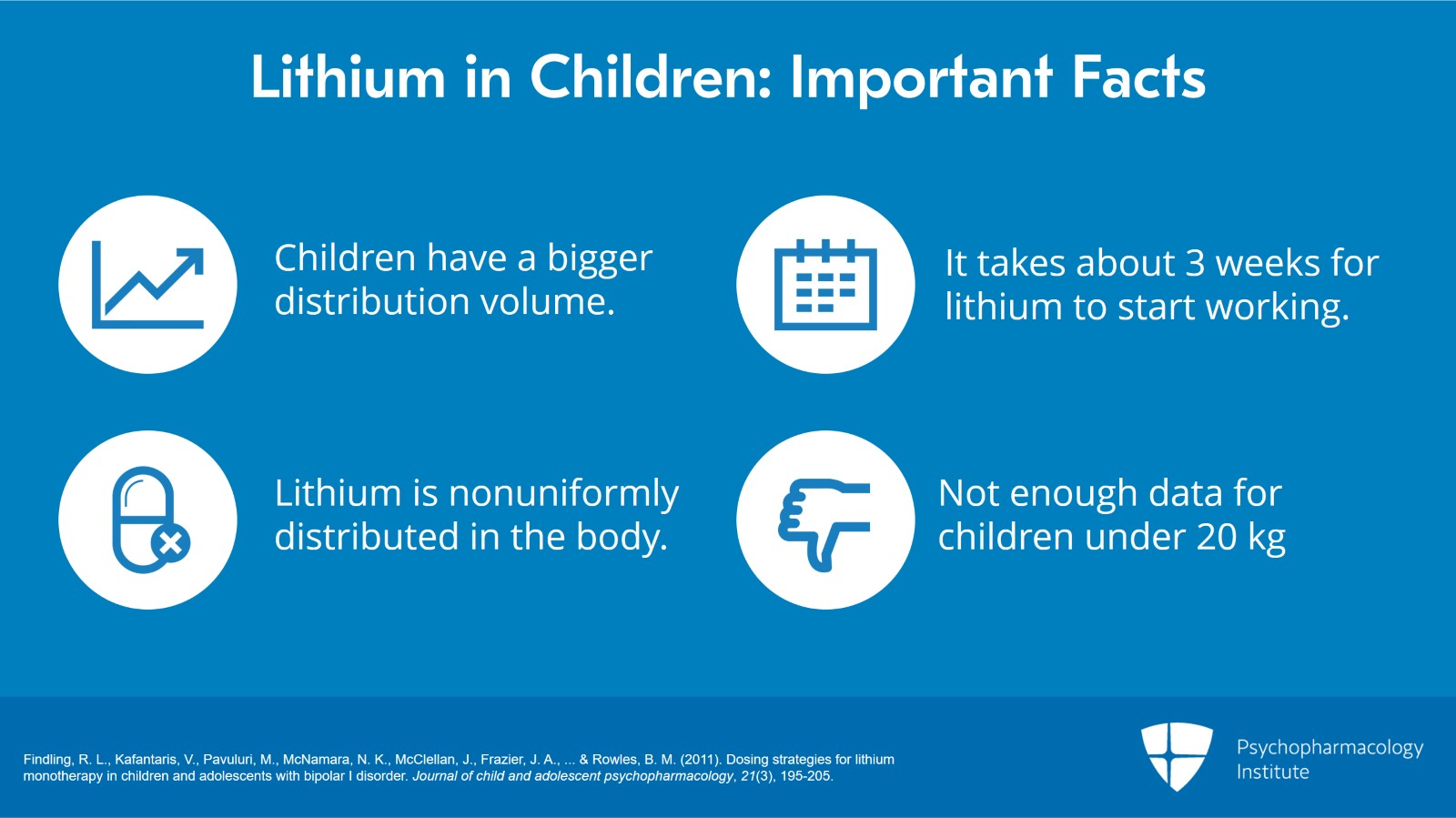
It is important to highlight the fact that children have a bigger distribution volume.
Also, lithium is not metabolized, it is not protein bound and it’s non-uniformly distributed in the body. What that translates to is that you can have a high enough lithium level in the blood without lithium being that abundant in the brain, for example.
And that explains partially why it takes about three weeks for lithium to actually start working even though it is therapeutic in the blood.
Also, in terms of child weight, we don’t have enough data looking at children who are smaller in weight. Some of the studies that looked at young children between the age of 7 to the age of 17, they looked at this medication dosed per weight for child. These studies were not able to recruit any children that are smaller in size than 20 kg. And hence, we don’t have much data prescribing lithium for that small of weight in children.
*References*
References:
- Findling, R. L., Kafantaris, V., Pavuluri, M., McNamara, N. K., McClellan, J., Frazier, J. A., … & Rowles, B. M. (2011). Dosing strategies for lithium monotherapy in children and adolescents with bipolar I disorder. Journal of child and adolescent psychopharmacology, 21(3), 195-205.
Free Files
Download PDF and other files
Success!
Check your inbox, we sent you all the materials there.
Slide 3 of 8
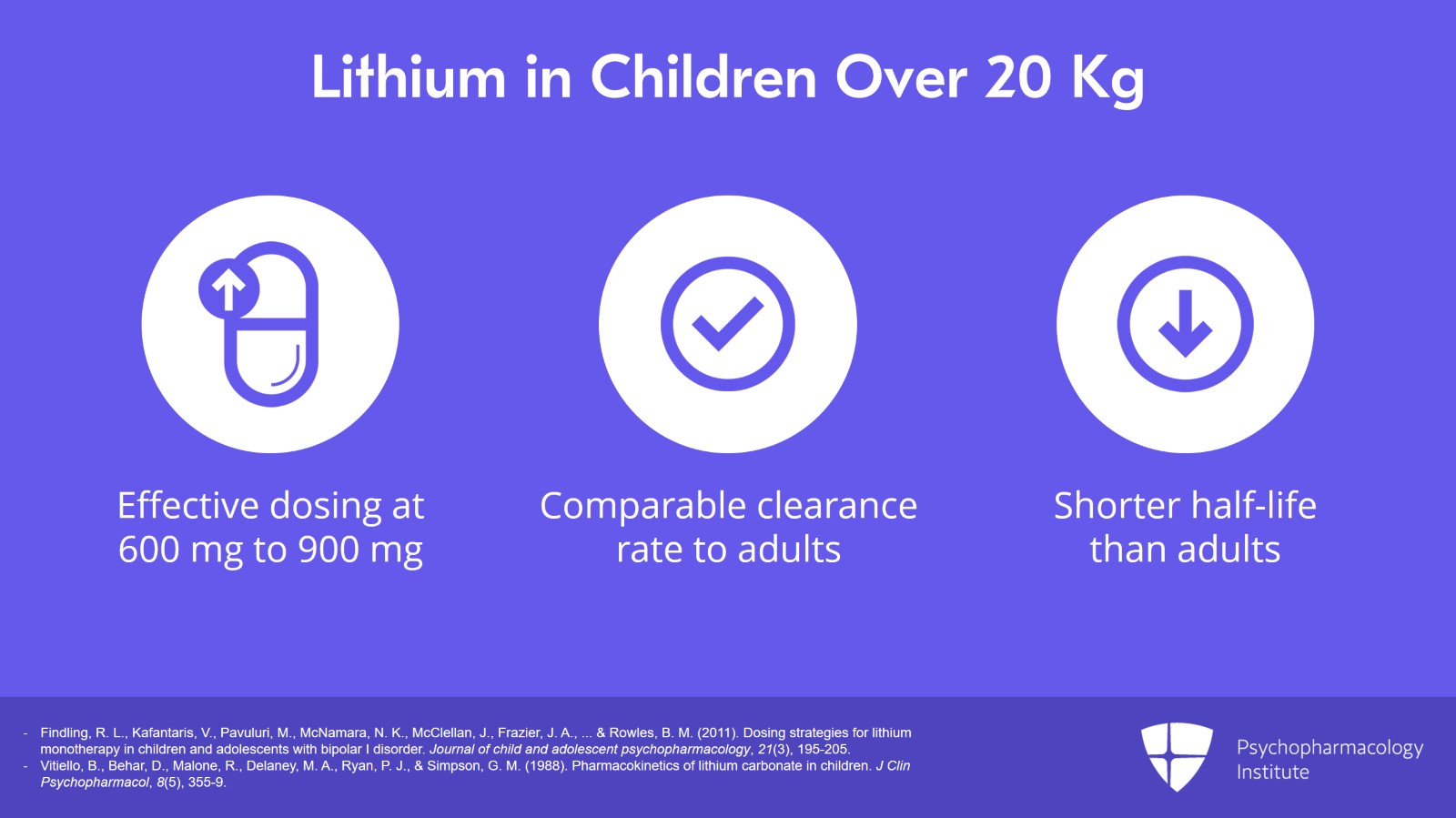
The rest of the patient population were kids who were heavier than 20 kg and we have data on those children with lithium being effective taking doses of 600 mg and 900 mg. So you can go up to 900 mg in children without having any problems.
One of the findings that we can deduce from this study and other studies is that children have a comparable clearance rate but have a shorter elimination half-life compared to adults.
*References*
References:
- Findling, R. L., Kafantaris, V., Pavuluri, M., McNamara, N. K., McClellan, J., Frazier, J. A., … & Rowles, B. M. (2011). Dosing strategies for lithium monotherapy in children and adolescents with bipolar I disorder. Journal of child and adolescent psychopharmacology, 21(3), 195-205.
- Vitiello, B., Behar, D., Malone, R., Delaney, M. A., Ryan, P. J., & Simpson, G. M. (1988). Pharmacokinetics of lithium carbonate in children. J Clin Psychopharmacol, 8(5), 355-9.
Slide 4 of 8
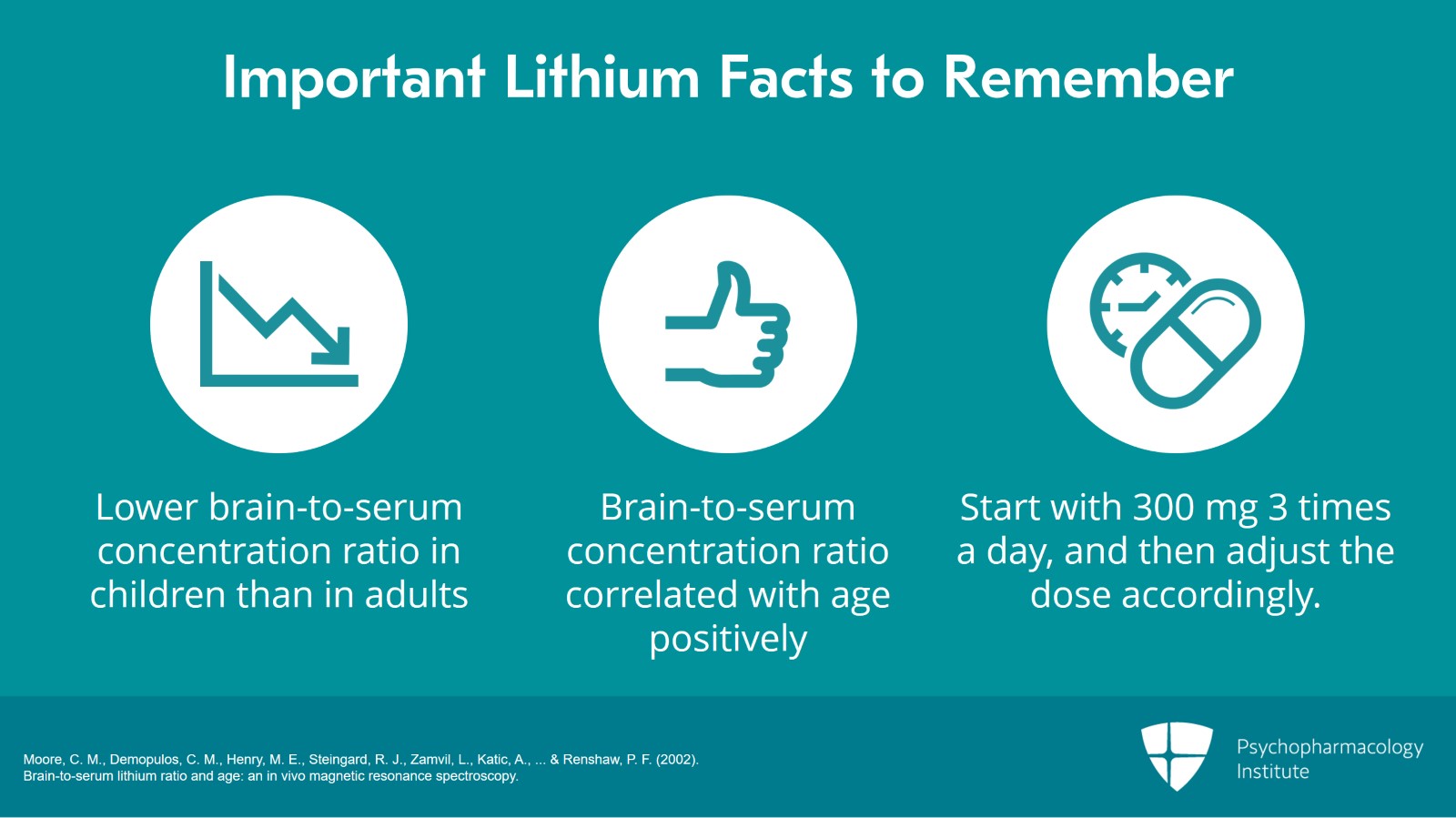
Another thing that is important is to highlight that there is a lower brain to serum concentration ratio in children than in adults.
And this brain to serum concentration ratio correlated with age positively as per one study, Moore et al. 2002, which means that as these children grow older, the more serum lithium is available, the more the brain levels are available but not so much with younger children.
What that translates to clinically is that we can start with a frequent dosing of 300 mg three times a day and then adjust the dose accordingly.
*References*
References:
- Moore, C. M., Demopulos, C. M., Henry, M. E., Steingard, R. J., Zamvil, L., Katic, A., … & Renshaw, P. F. (2002). Brain-to-serum lithium ratio and age: an in vivo magnetic resonance spectroscopy.
Free Files
Download PDF and other files
Success!
Check your inbox, we sent you all the materials there.
Slide 5 of 8
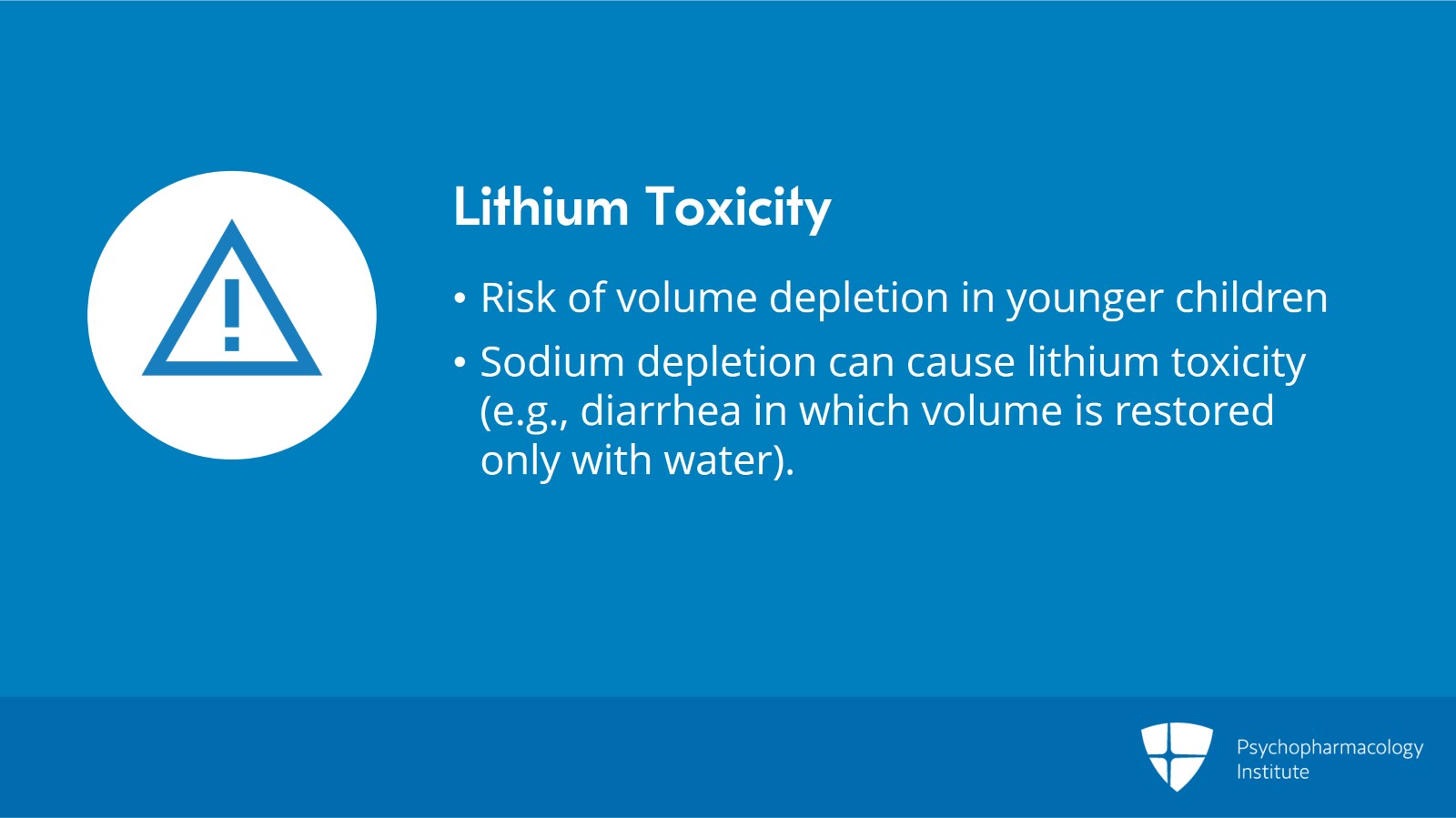
What are some of the other pharmacokinetic pearls that we can take? There is also a high risk of volume depletion with younger children due to the higher body surface area to mass index.
Also, as we know, lithium depends also on the sodium balance in the body for its excretion. And hence, sodium depletion can cause lithium toxicity. So for example, children who have diarrhea that is replenished only with water, free water that is, can also be sodium depleted and that can hinder the excretion of lithium from the kidneys and then that can cause lithium toxicity.
Slide 6 of 8
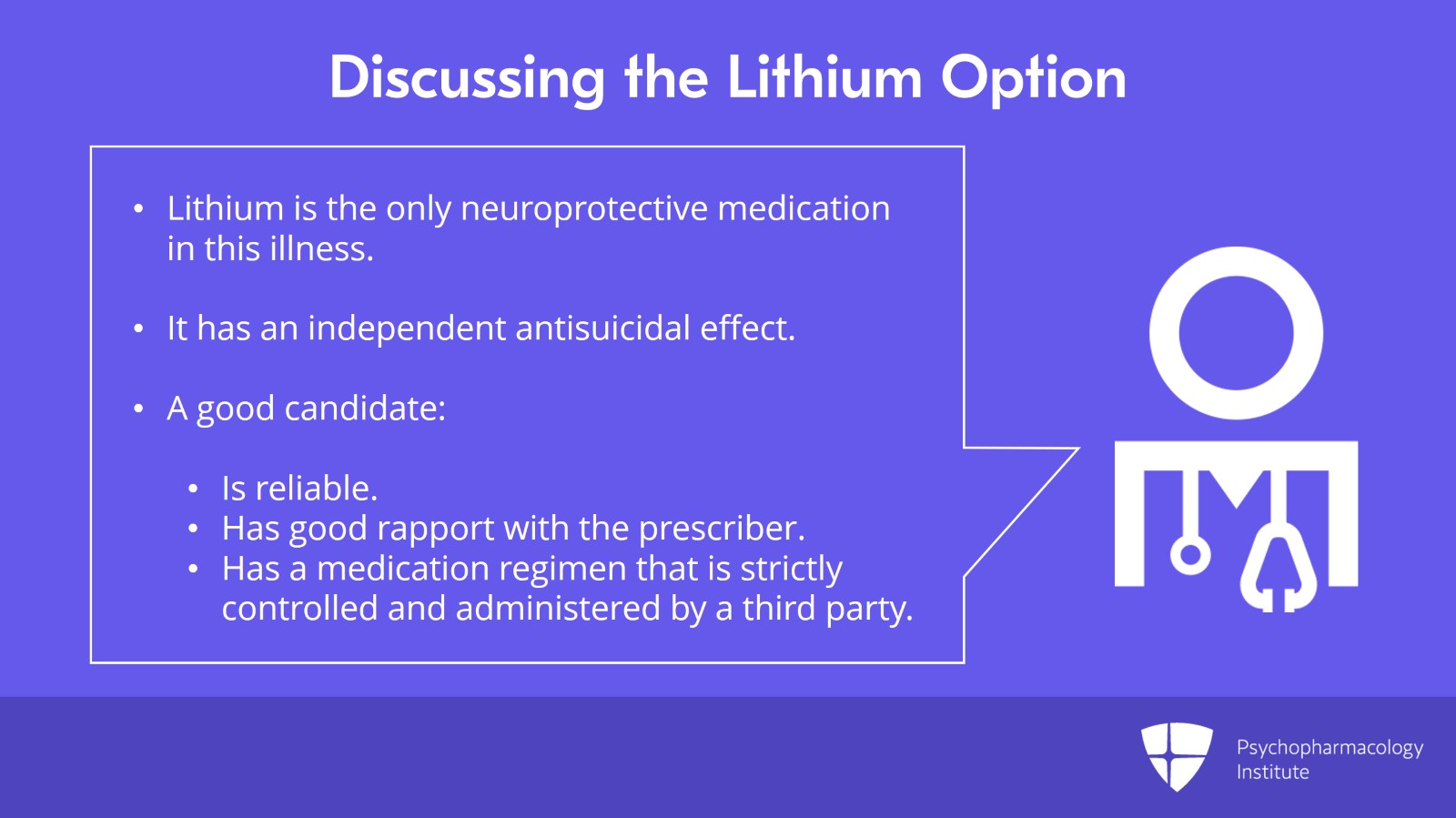
One last important clinical pearl about lithium that we have to keep in the back of our minds as we discuss this option with families is that lithium, to the best of our knowledge, is the only medication that we know of that is neuroprotective in this illness. Hence, we should give it a serious consideration especially that it also has an additional power of having an independent anti-suicidal effect. Hence, a good candidate for treatment with lithium would be a youngster, a child or a teenager who is extremely reliable and has a good rapport and working relationship with the prescriber and also has a medication regimen that is strictly controlled and administered by a third party such as his parents or his guardians or his school system, for example. This would minimize the risk of a serious overdose on this medication in addition to also the very well-known effect of rebound suicidality if this medication is stopped abruptly.
Free Files
Download PDF and other files
Success!
Check your inbox, we sent you all the materials there.
Slide 7 of 8
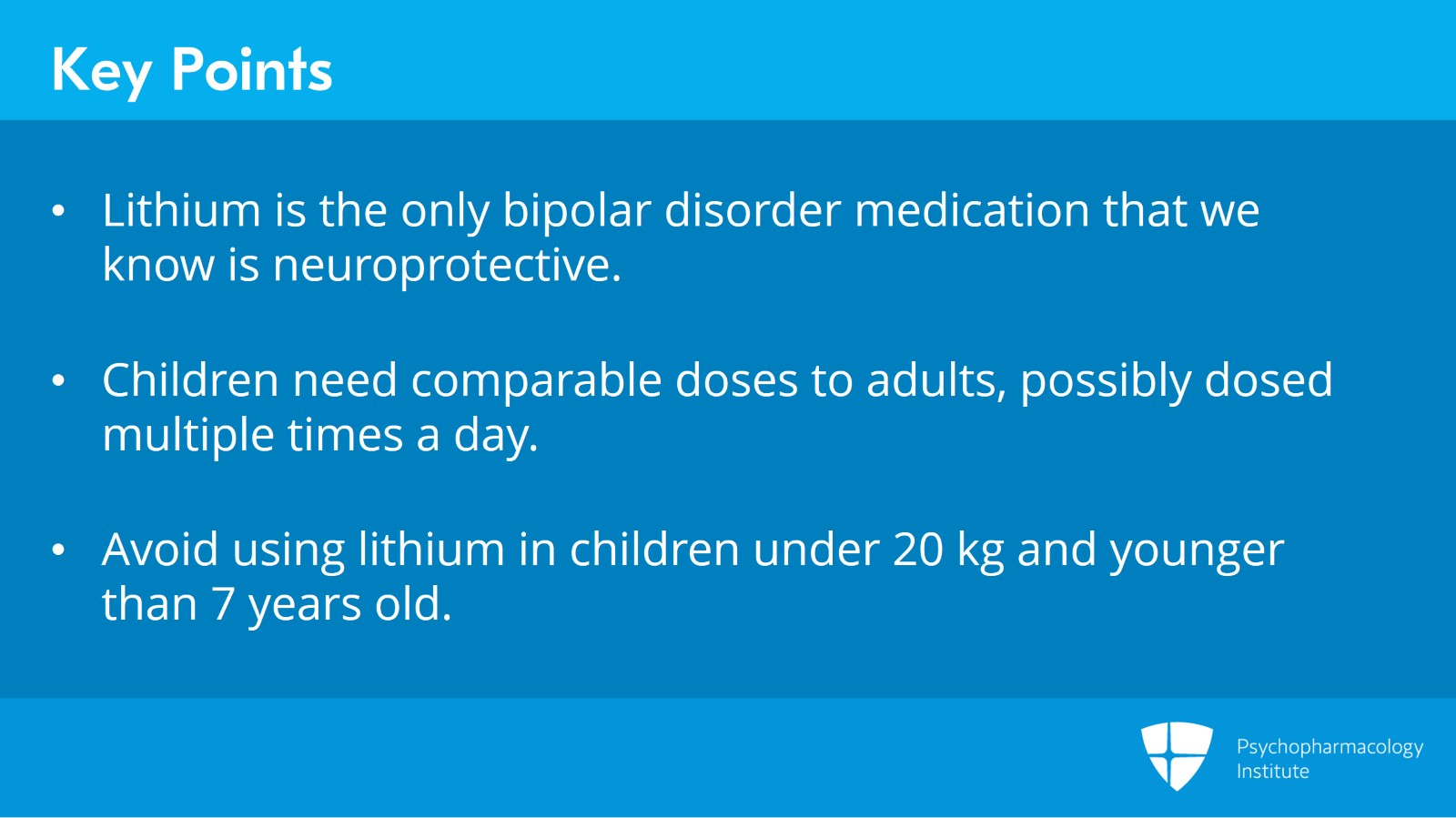
To summarize, some key points about prescribing lithium. Number one, lithium is the only bipolar disorder medication that we know of that is neuroprotective. Number two, children need comparable doses to adults, not lower doses than adults and possibly the medication needs to be dosed multiple times a day. Number three, we should avoid using this medication in children with lower weights such as weight lower than 20 kg and younger age, those children who are 7 years or younger because we have little data on this patient population.
Free Files
Download PDF and other files
Success!
Check your inbox, we sent you all the materials there.