Close Banner
Free Section  - Video Lectures

12. Catatonia Management Algorithm

Published on November 29, 2020 Certification expiration date: April 1, 2028

Scott R. Beach, M.D.

Associate Professor of Psychiatry - Harvard Medical School

Key Points

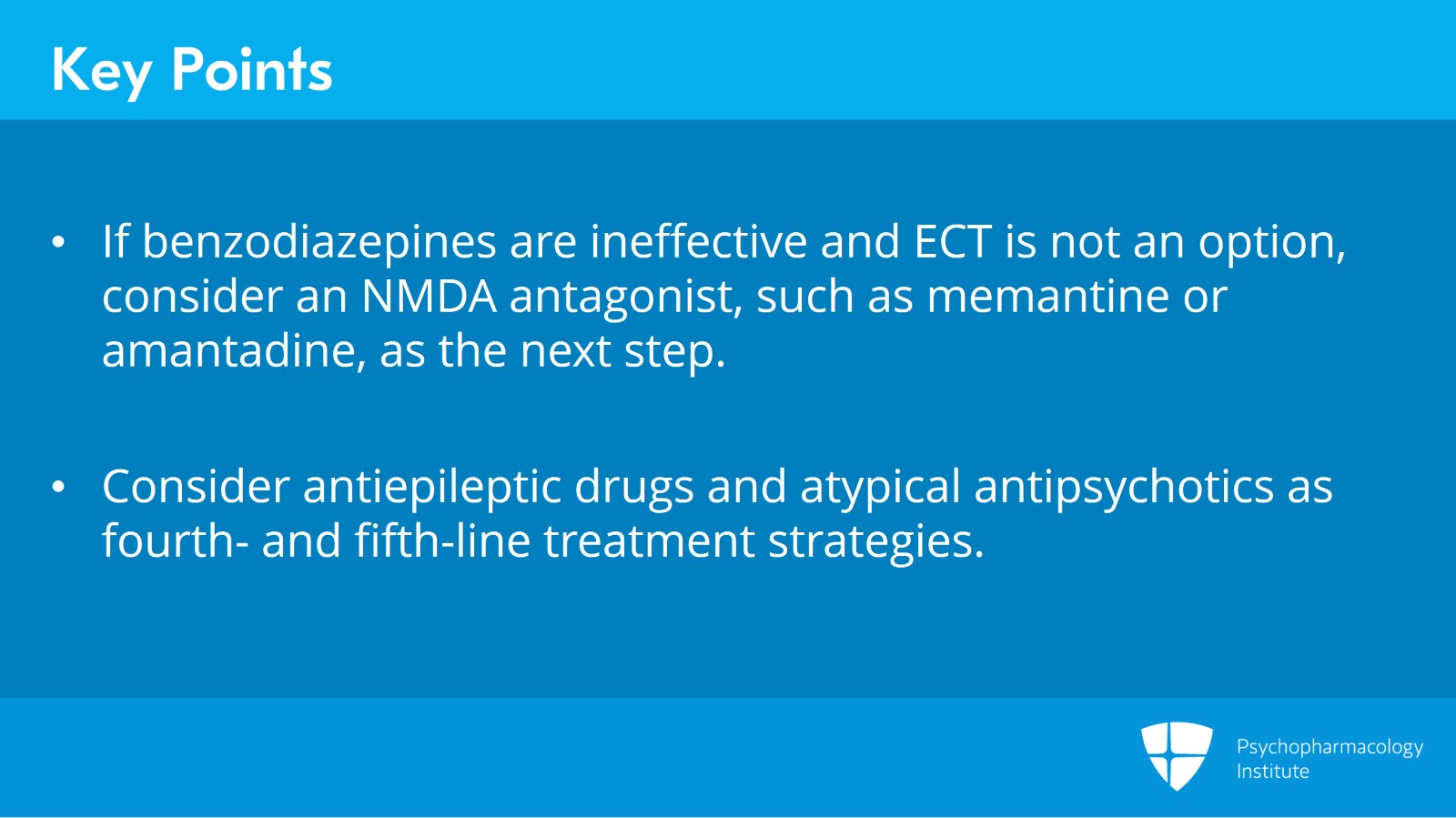
  • If benzodiazepines are ineffective and ECT is not an option, consider an NMDA antagonist, such as memantine or amantadine, as the next step.
  • Consider antiepileptic drugs and atypical antipsychotics as fourth- and fifth-line treatment strategies.
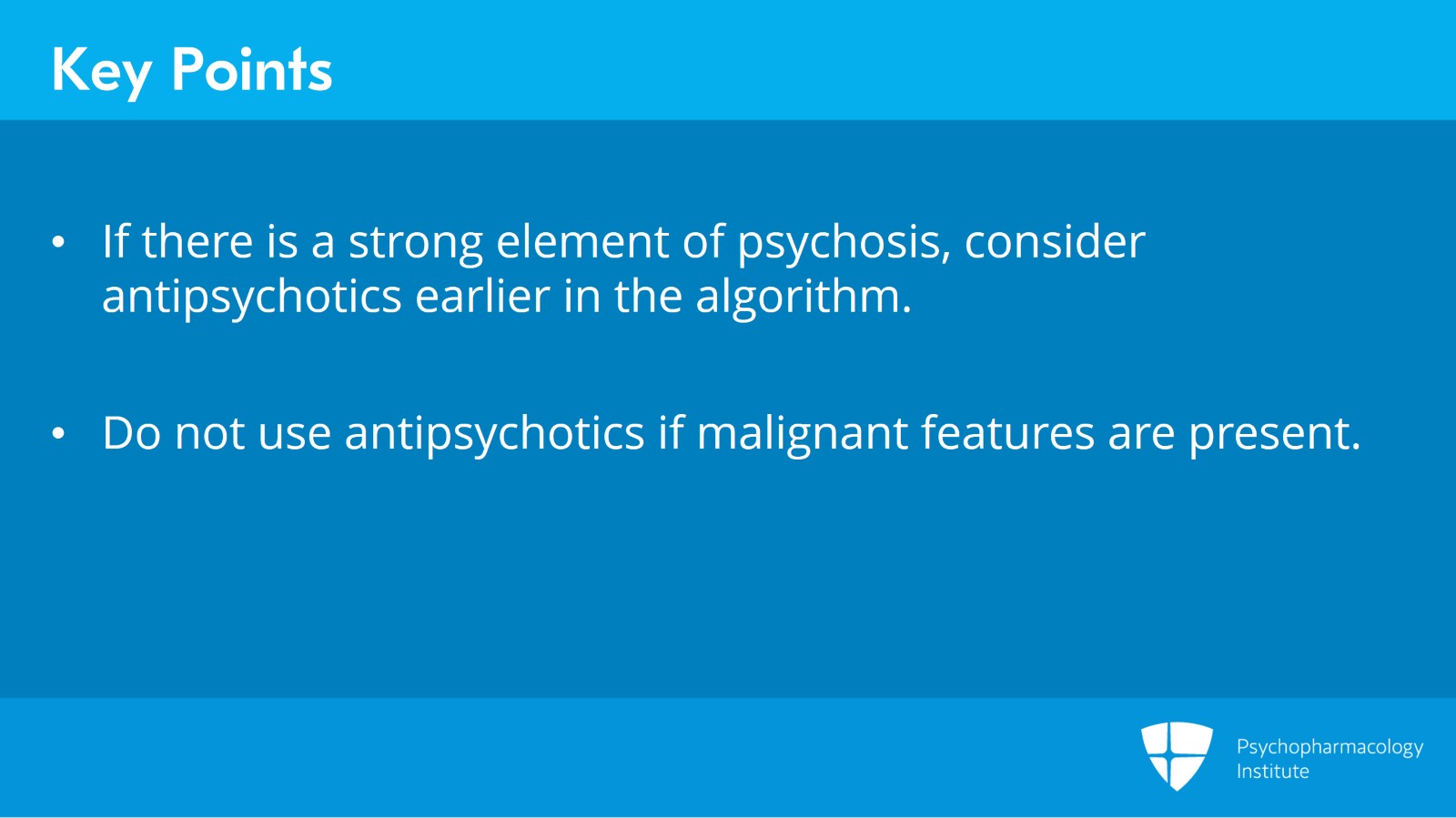
  • If there is a strong element of psychosis, consider antipsychotics earlier in the algorithm, but do not use them if malignant features are present.

Free Downloads for Offline Access

  • Free Download Audio File (MP3)
  • Free Download Video (MP4)
  • Free Download Presentation File (PPTX)

Slides and Transcript
Slide 1 of 16

Based on the literature of agents used in the treatment of catatonia, we’ve constructed a catatonia management algorithm for providers to use to help them think through next steps in the treatment of catatonia.

Slide 2 of 16

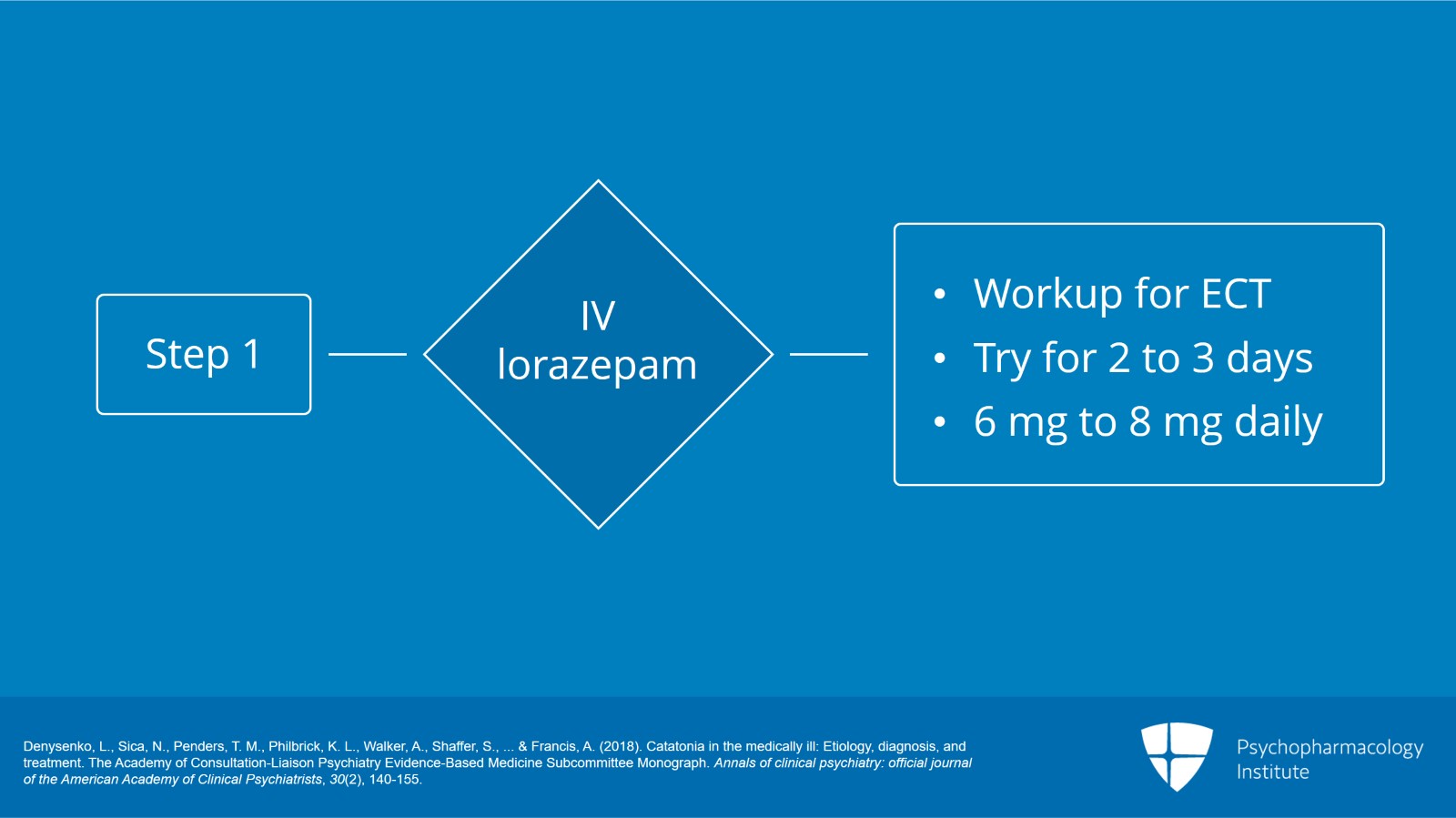
The first step in the algorithm is a trial of lorazepam with the intravenous form preferred. Lorazepam should be tried for at least 2 to 3 days at doses of at least 6 mg to 8 mg daily. During this time, workup for ECT should begin including discussions with the family and any legal steps necessary to initiate that process. *References*
References:
  • Denysenko, L., Sica, N., Penders, T. M., Philbrick, K. L., Walker, A., Shaffer, S., … & Francis, A. (2018). Catatonia in the medically ill: Etiology, diagnosis, and treatment. The Academy of Consultation-Liaison Psychiatry Evidence-Based Medicine Subcommittee Monograph. Annals of clinical psychiatry: official journal of the American Academy of Clinical Psychiatrists, 30(2), 140-155.
Free Files
Success!
Check your inbox, we sent you all the materials there.
Slide 3 of 16

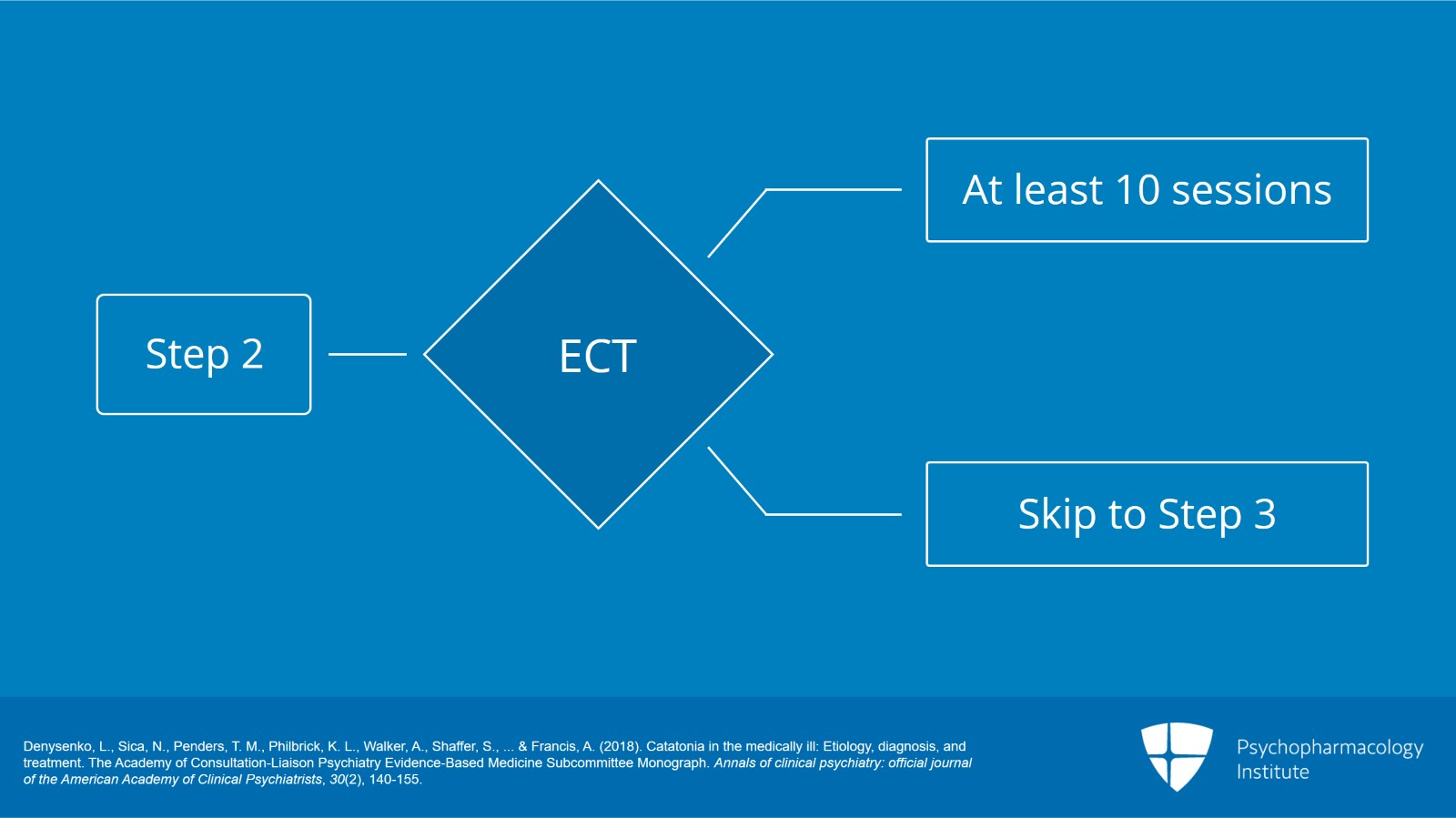
The second step in the algorithm is a trial of ECT for at least six and ideally at least 10 sessions. If ECT is not immediately available, we recommend skipping to step 3. *References*
References:
  • Denysenko, L., Sica, N., Penders, T. M., Philbrick, K. L., Walker, A., Shaffer, S., … & Francis, A. (2018). Catatonia in the medically ill: Etiology, diagnosis, and treatment. The Academy of Consultation-Liaison Psychiatry Evidence-Based Medicine Subcommittee Monograph. Annals of clinical psychiatry: official journal of the American Academy of Clinical Psychiatrists, 30(2), 140-155.

Slide 4 of 16

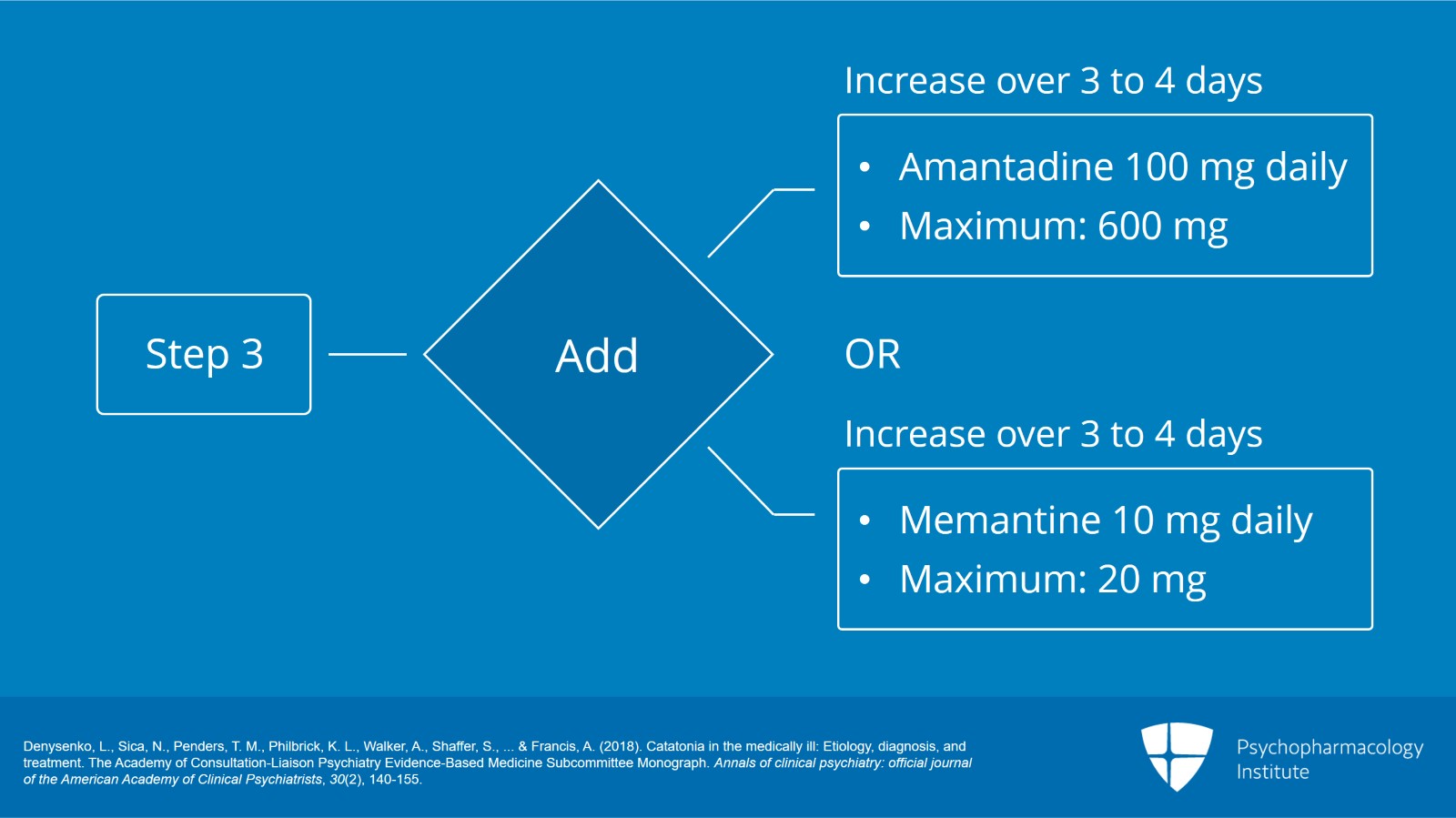
Step 3 of the algorithm includes the addition of either amantadine 100 mg daily or memantine 10 mg daily to the benzodiazepine. It is recommended that the agent is then increased over three to four days to a maximum dose of amantadine 600 mg daily or memantine 20 mg daily. *References*
References:
  • Denysenko, L., Sica, N., Penders, T. M., Philbrick, K. L., Walker, A., Shaffer, S., … & Francis, A. (2018). Catatonia in the medically ill: Etiology, diagnosis, and treatment. The Academy of Consultation-Liaison Psychiatry Evidence-Based Medicine Subcommittee Monograph. Annals of clinical psychiatry: official journal of the American Academy of Clinical Psychiatrists, 30(2), 140-155.
Free Files
Success!
Check your inbox, we sent you all the materials there.
Slide 5 of 16

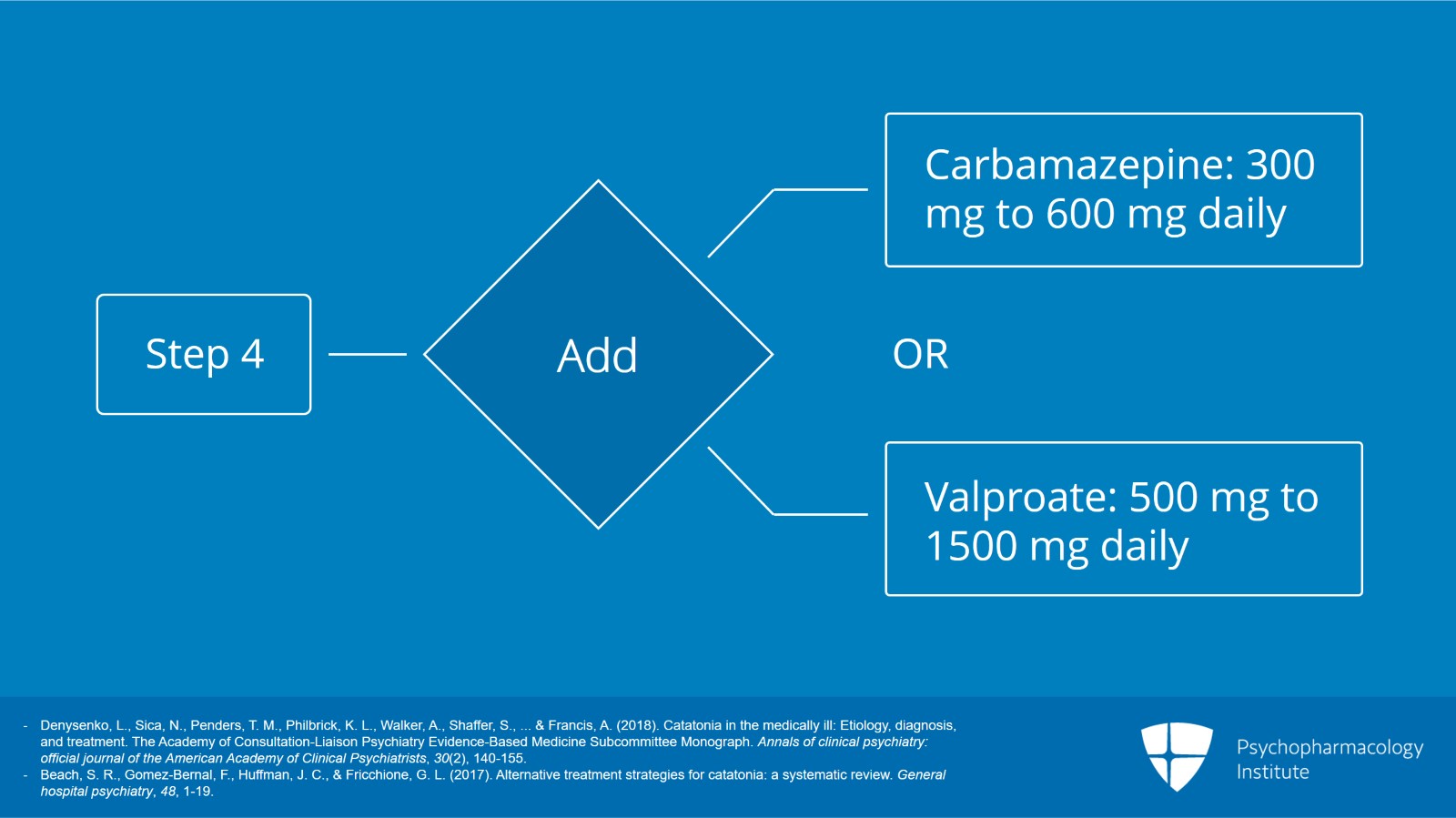
Step 4 of the algorithm involves adding carbamazepine 300 mg to 600 mg daily or valproate 500 mg to 1500 mg daily. *References*
References:
  • Denysenko, L., Sica, N., Penders, T. M., Philbrick, K. L., Walker, A., Shaffer, S., … & Francis, A. (2018). Catatonia in the medically ill: Etiology, diagnosis, and treatment. The Academy of Consultation-Liaison Psychiatry Evidence-Based Medicine Subcommittee Monograph. Annals of clinical psychiatry: official journal of the American Academy of Clinical Psychiatrists, 30(2), 140-155.
  • Beach, S. R., Gomez-Bernal, F., Huffman, J. C., & Fricchione, G. L. (2017). Alternative treatment strategies for catatonia: a systematic review. General hospital psychiatry, 48, 1-19.

Slide 6 of 16

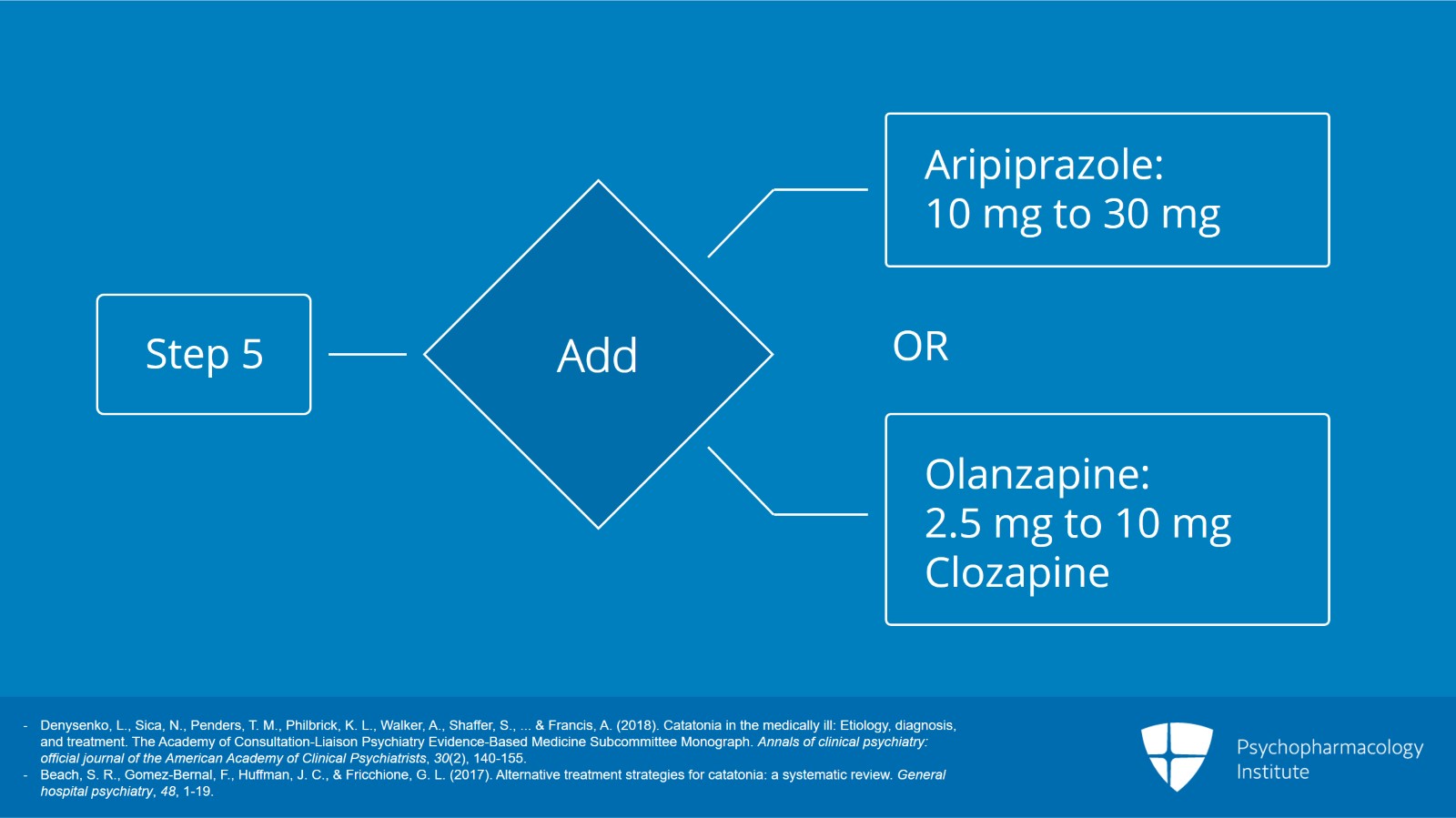
And finally, step 5 of the algorithm involves adding either aripiprazole 10 mg to 30 mg, olanzapine 2.5 mg to 10 mg or clozapine with each dose given in combination with lorazepam. *References*
References:
  • Denysenko, L., Sica, N., Penders, T. M., Philbrick, K. L., Walker, A., Shaffer, S., … & Francis, A. (2018). Catatonia in the medically ill: Etiology, diagnosis, and treatment. The Academy of Consultation-Liaison Psychiatry Evidence-Based Medicine Subcommittee Monograph. Annals of clinical psychiatry: official journal of the American Academy of Clinical Psychiatrists, 30(2), 140-155.
  • Beach, S. R., Gomez-Bernal, F., Huffman, J. C., & Fricchione, G. L. (2017). Alternative treatment strategies for catatonia: a systematic review. General hospital psychiatry, 48, 1-19.
Free Files
Success!
Check your inbox, we sent you all the materials there.
Slide 7 of 16

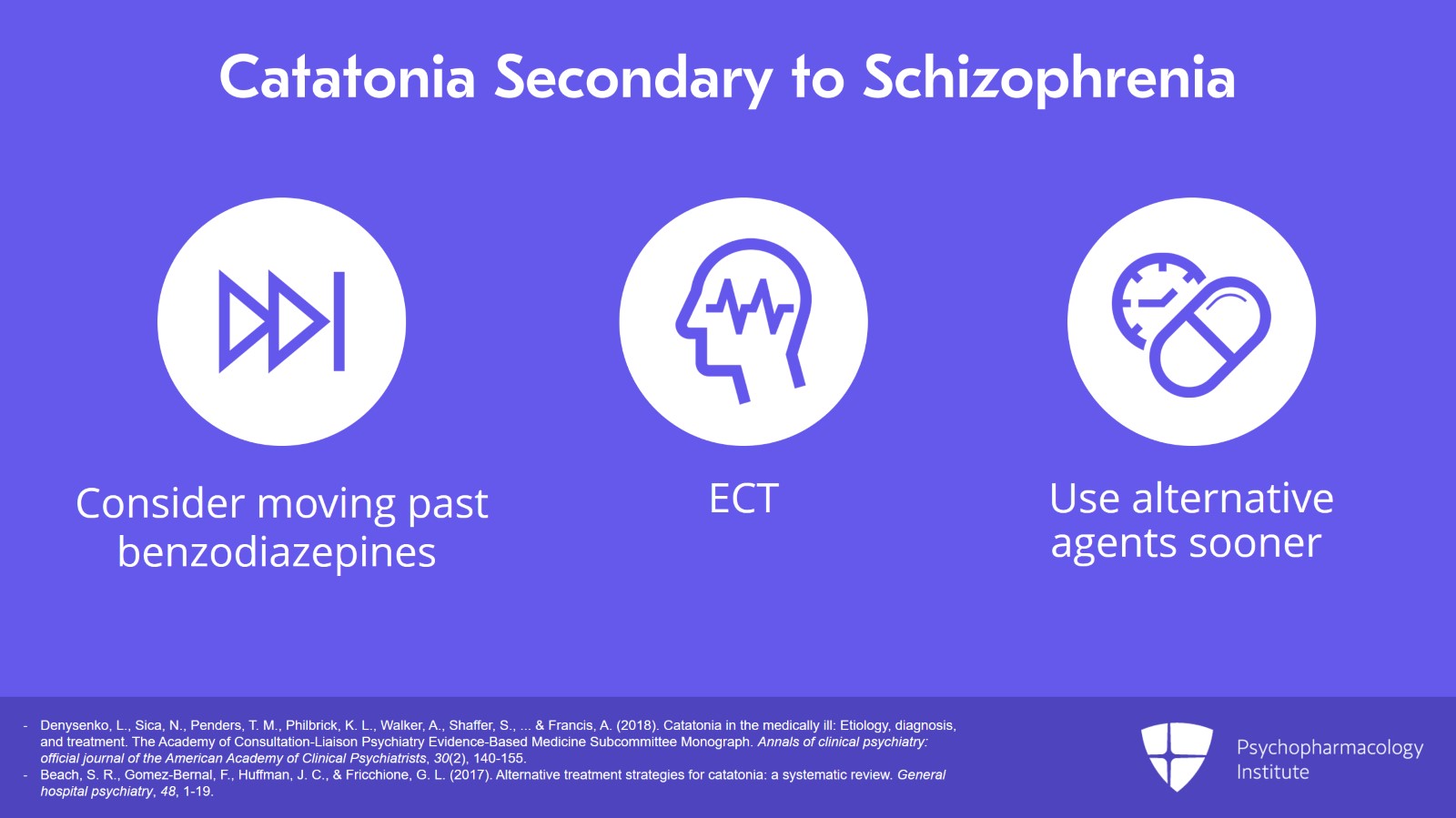
In terms of some practical caveats to this algorithm, if the catatonia is secondary to schizophrenia, we encourage providers to consider moving past benzodiazepines more quickly as there is evidence that catatonia due to schizophrenia is less responsive to benzodiazepines. This may involve moving more quickly towards ECT or it may involve using an additional alternative agent sooner in the process. *References*
References:
  • Denysenko, L., Sica, N., Penders, T. M., Philbrick, K. L., Walker, A., Shaffer, S., … & Francis, A. (2018). Catatonia in the medically ill: Etiology, diagnosis, and treatment. The Academy of Consultation-Liaison Psychiatry Evidence-Based Medicine Subcommittee Monograph. Annals of clinical psychiatry: official journal of the American Academy of Clinical Psychiatrists, 30(2), 140-155.
  • Beach, S. R., Gomez-Bernal, F., Huffman, J. C., & Fricchione, G. L. (2017). Alternative treatment strategies for catatonia: a systematic review. General hospital psychiatry, 48, 1-19.

Slide 8 of 16

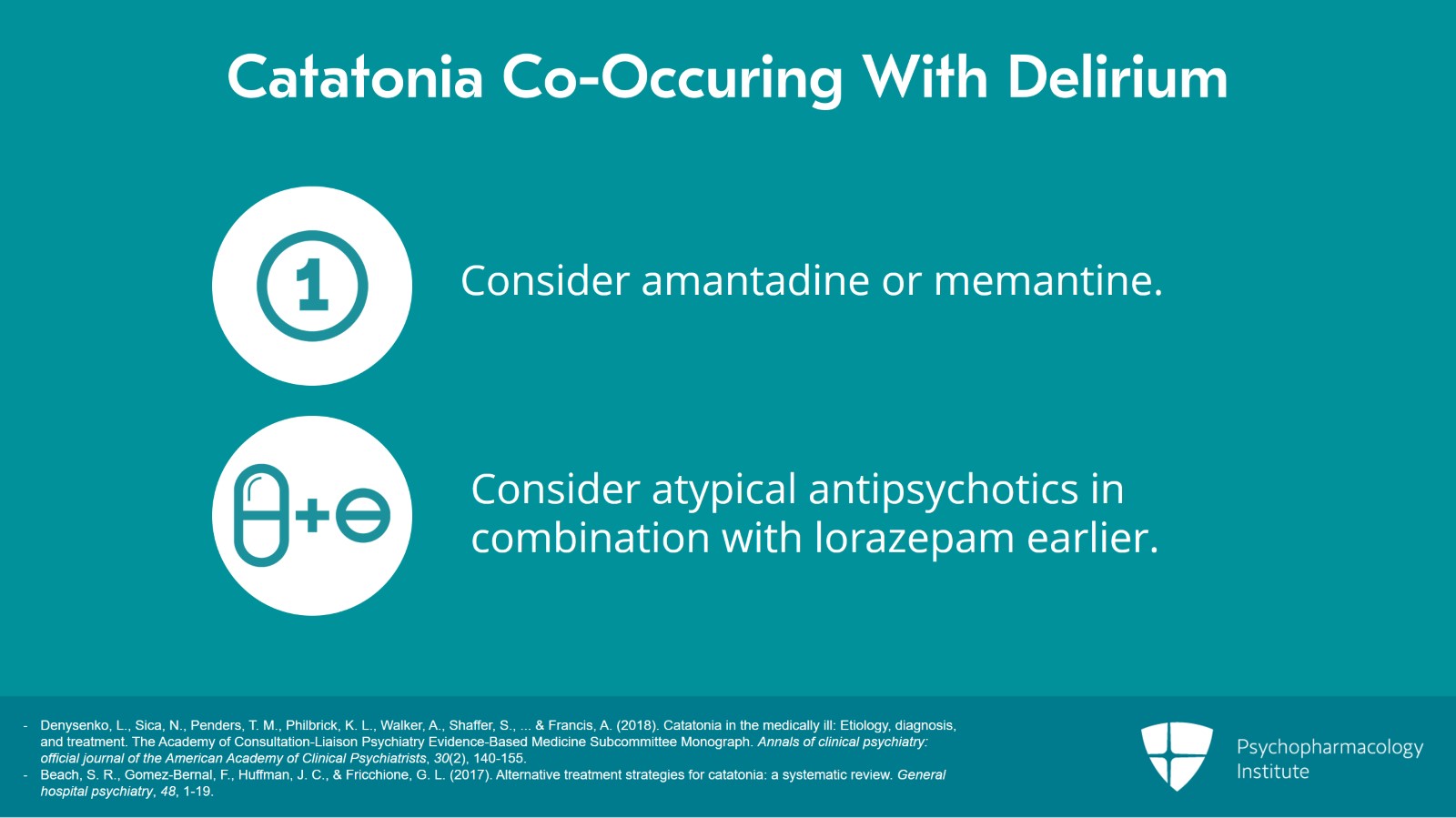
If the catatonia co-occurs with delirium, we would recommend considering amantadine or memantine as a first line treatment strategy and also considering the use of atypical antipsychotics in combination with lorazepam earlier in the process. *References*
References:
  • Denysenko, L., Sica, N., Penders, T. M., Philbrick, K. L., Walker, A., Shaffer, S., … & Francis, A. (2018). Catatonia in the medically ill: Etiology, diagnosis, and treatment. The Academy of Consultation-Liaison Psychiatry Evidence-Based Medicine Subcommittee Monograph. Annals of clinical psychiatry: official journal of the American Academy of Clinical Psychiatrists, 30(2), 140-155.
  • Beach, S. R., Gomez-Bernal, F., Huffman, J. C., & Fricchione, G. L. (2017). Alternative treatment strategies for catatonia: a systematic review. General hospital psychiatry, 48, 1-19.
Free Files
Success!
Check your inbox, we sent you all the materials there.
Slide 9 of 16

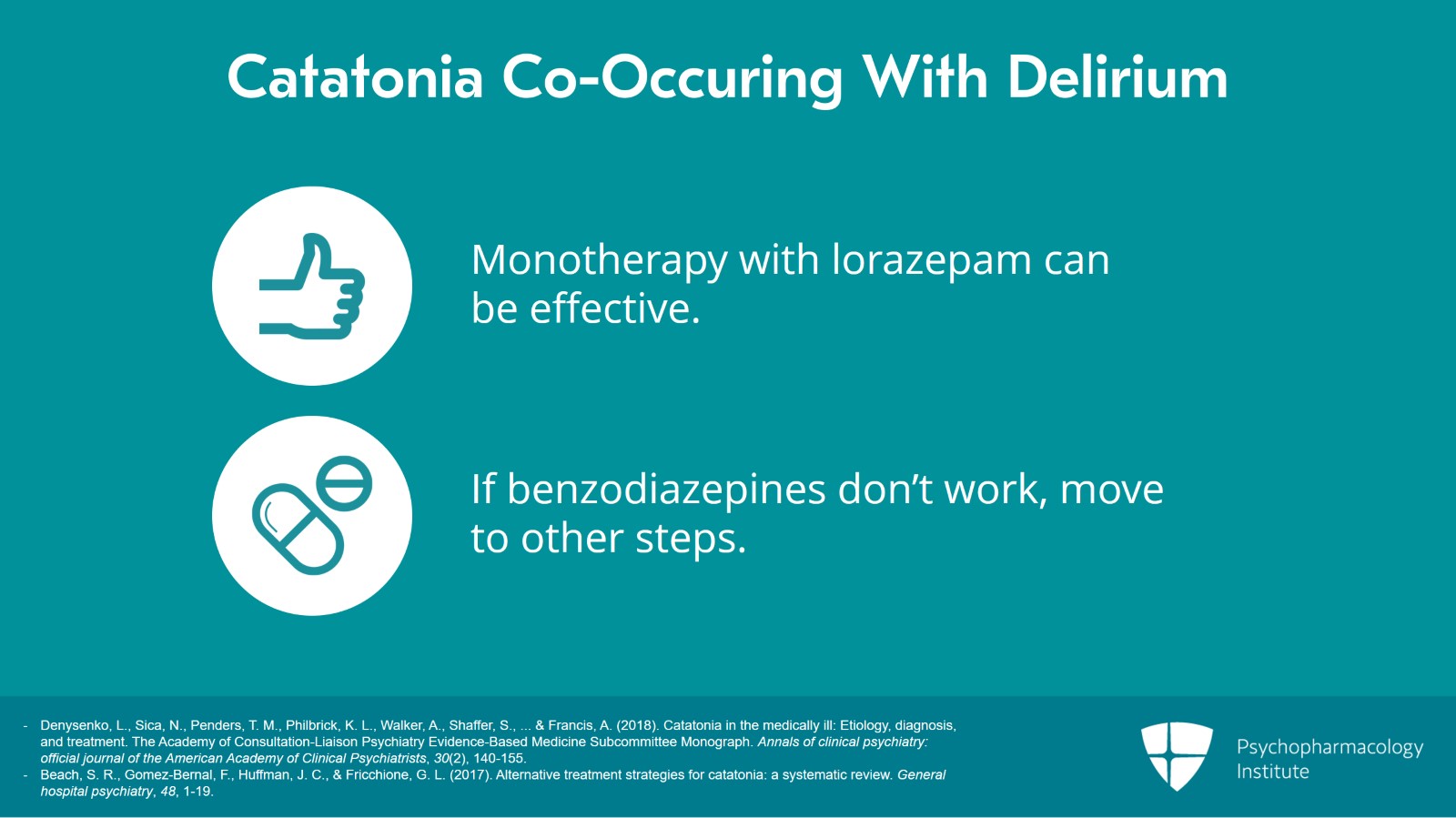
However, it is important to recognize that there are plenty of cases of comorbid catatonia and delirium that respond very well to monotherapy with lorazepam. In other words, you may not want to skip over the possibility of giving the patient benzodiazepines simply because of the presence of delirium. However, if the benzodiazepines don’t seem to be effective or if they seem to make the delirium worse, it may be helpful to move to other steps of the algorithm more quickly. *References*
References:
  • Denysenko, L., Sica, N., Penders, T. M., Philbrick, K. L., Walker, A., Shaffer, S., … & Francis, A. (2018). Catatonia in the medically ill: Etiology, diagnosis, and treatment. The Academy of Consultation-Liaison Psychiatry Evidence-Based Medicine Subcommittee Monograph. Annals of clinical psychiatry: official journal of the American Academy of Clinical Psychiatrists, 30(2), 140-155.
  • Beach, S. R., Gomez-Bernal, F., Huffman, J. C., & Fricchione, G. L. (2017). Alternative treatment strategies for catatonia: a systematic review. General hospital psychiatry, 48, 1-19.

Slide 10 of 16

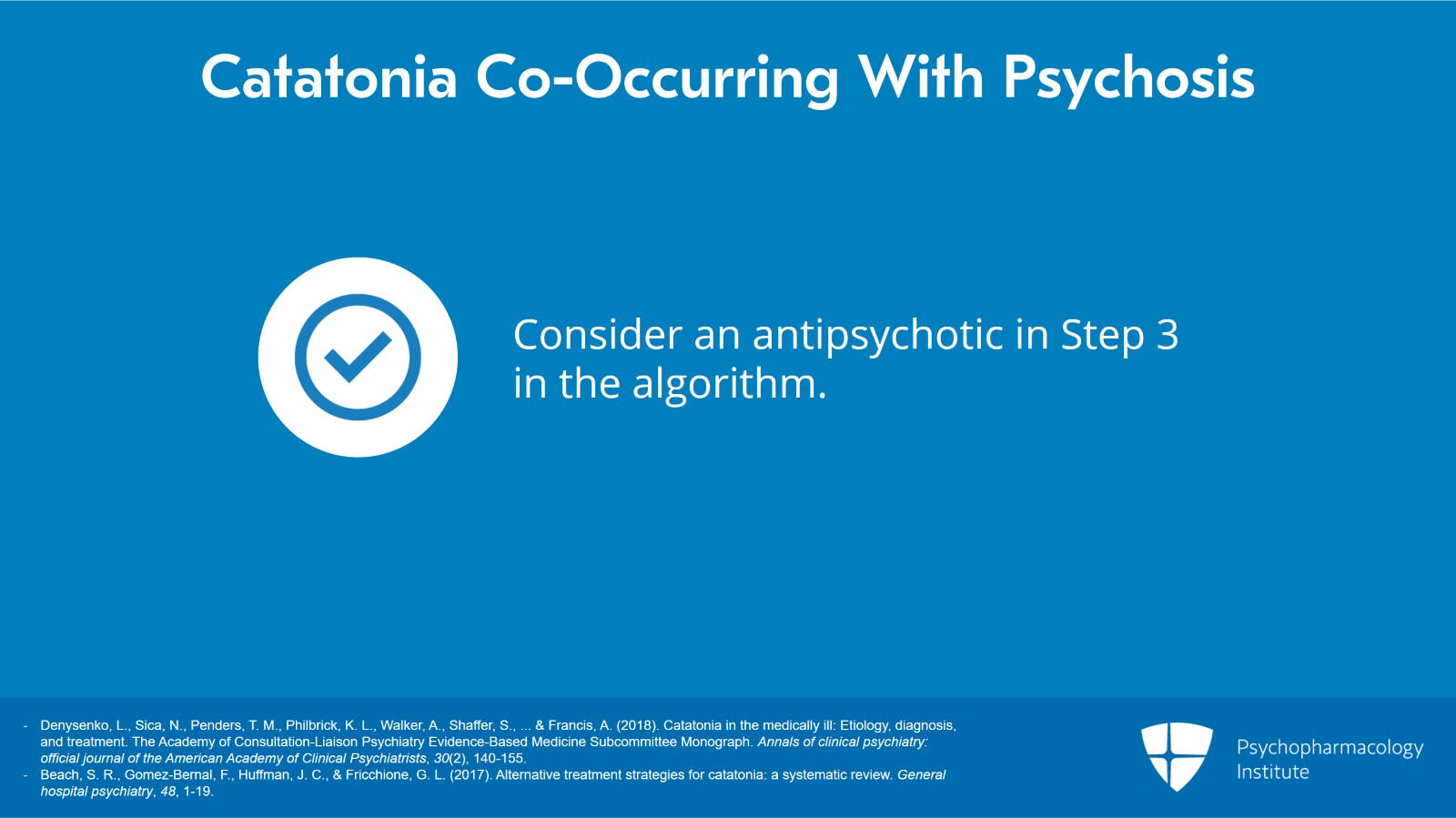
If a strong element of psychosis is present, we would consider using an antipsychotic as early as step 3 in the algorithm. *References*
References:
  • Denysenko, L., Sica, N., Penders, T. M., Philbrick, K. L., Walker, A., Shaffer, S., … & Francis, A. (2018). Catatonia in the medically ill: Etiology, diagnosis, and treatment. The Academy of Consultation-Liaison Psychiatry Evidence-Based Medicine Subcommittee Monograph. Annals of clinical psychiatry: official journal of the American Academy of Clinical Psychiatrists, 30(2), 140-155.
  • Beach, S. R., Gomez-Bernal, F., Huffman, J. C., & Fricchione, G. L. (2017). Alternative treatment strategies for catatonia: a systematic review. General hospital psychiatry, 48, 1-19.
Free Files
Success!
Check your inbox, we sent you all the materials there.
Slide 11 of 16

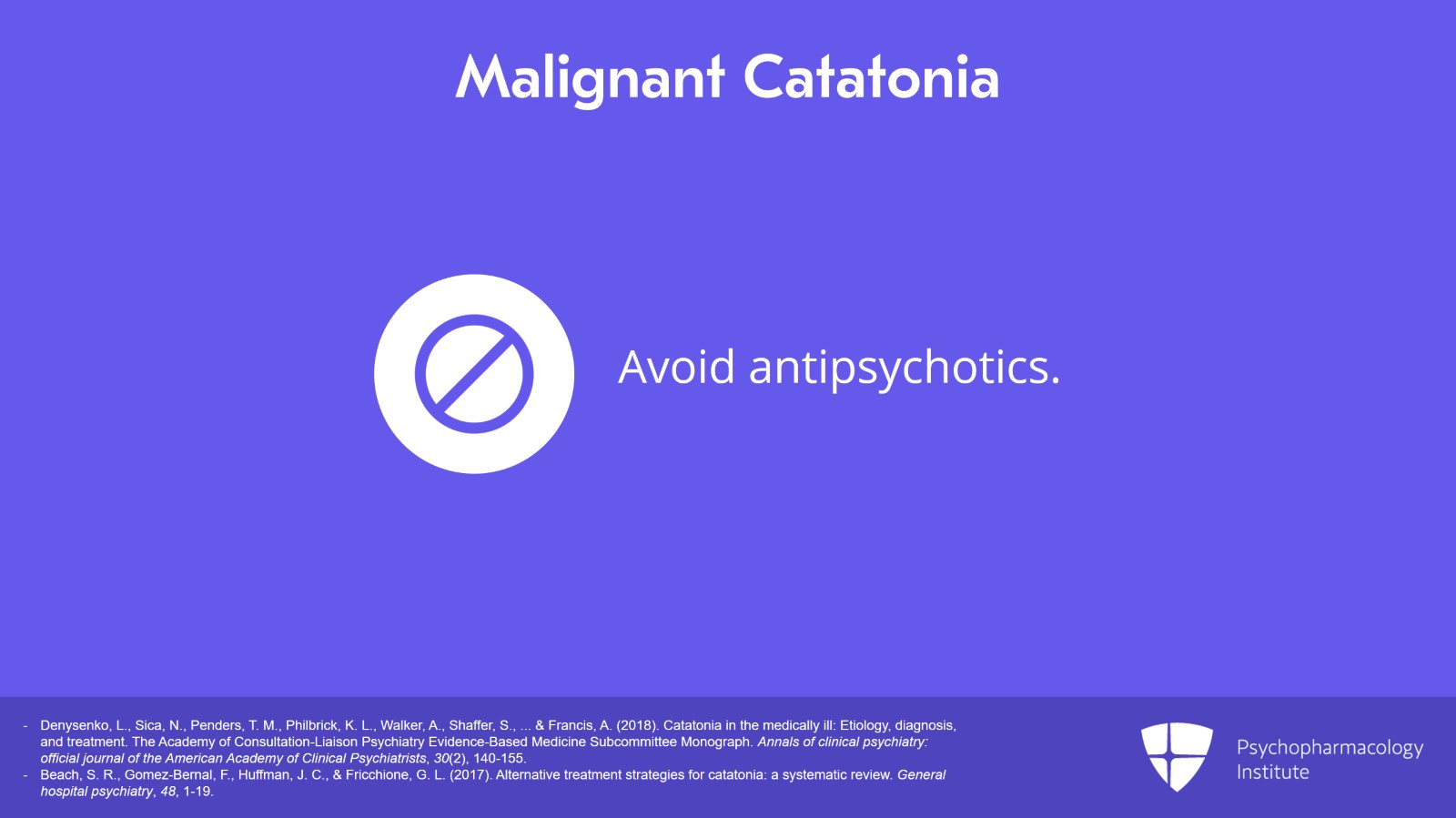
However, if signs of malignant catatonia are present, step 5 of the algorithm should be removed and patient should not be given any antipsychotic agent. *References*
References:
  • Denysenko, L., Sica, N., Penders, T. M., Philbrick, K. L., Walker, A., Shaffer, S., … & Francis, A. (2018). Catatonia in the medically ill: Etiology, diagnosis, and treatment. The Academy of Consultation-Liaison Psychiatry Evidence-Based Medicine Subcommittee Monograph. Annals of clinical psychiatry: official journal of the American Academy of Clinical Psychiatrists, 30(2), 140-155.
  • Beach, S. R., Gomez-Bernal, F., Huffman, J. C., & Fricchione, G. L. (2017). Alternative treatment strategies for catatonia: a systematic review. General hospital psychiatry, 48, 1-19.

Slide 12 of 16

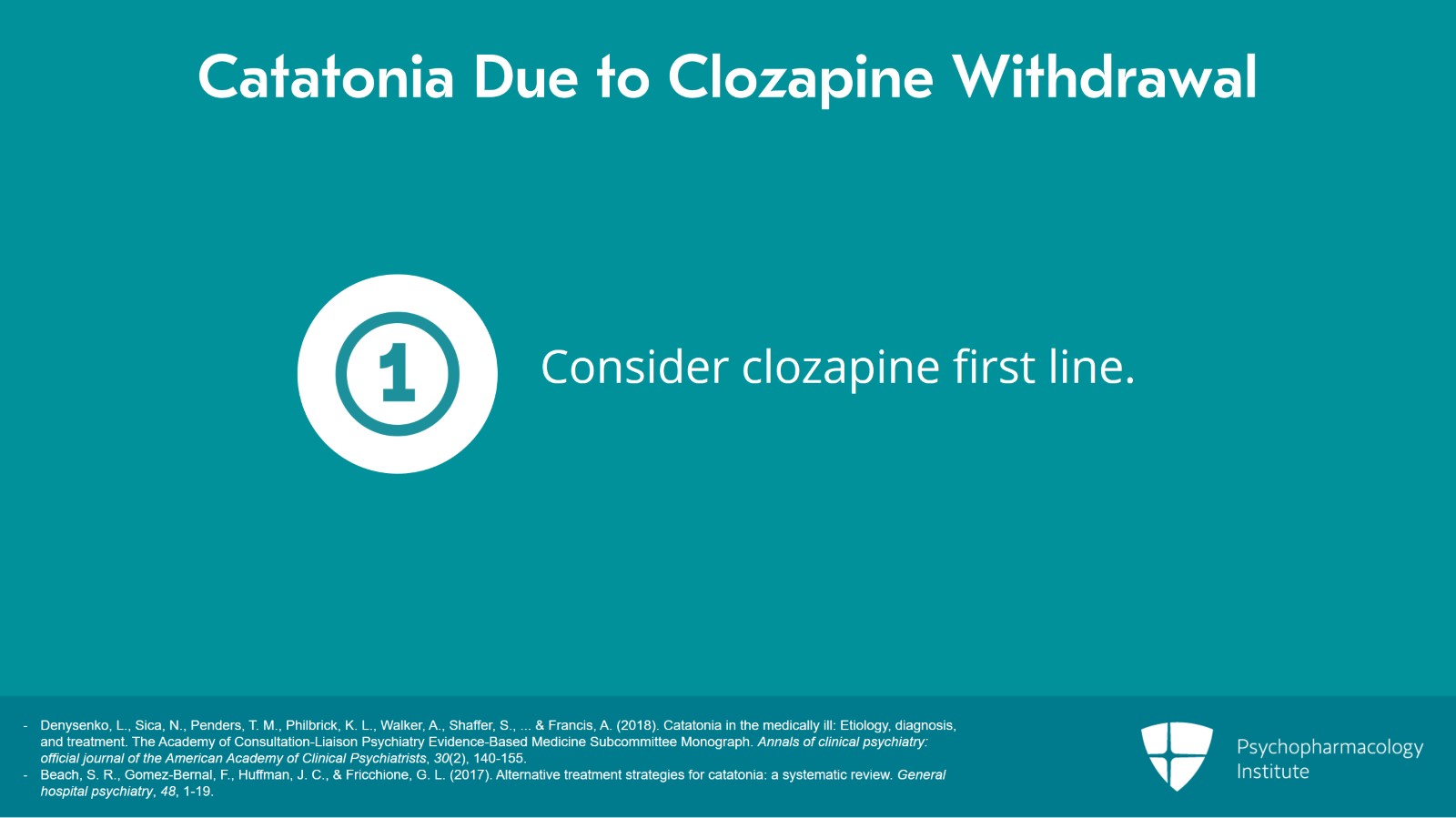
As noted earlier, if the catatonia is due to clozapine withdrawal, you should consider clozapine as the first line treatment strategy. *References*
References:
  • Denysenko, L., Sica, N., Penders, T. M., Philbrick, K. L., Walker, A., Shaffer, S., … & Francis, A. (2018). Catatonia in the medically ill: Etiology, diagnosis, and treatment. The Academy of Consultation-Liaison Psychiatry Evidence-Based Medicine Subcommittee Monograph. Annals of clinical psychiatry: official journal of the American Academy of Clinical Psychiatrists, 30(2), 140-155.
  • Beach, S. R., Gomez-Bernal, F., Huffman, J. C., & Fricchione, G. L. (2017). Alternative treatment strategies for catatonia: a systematic review. General hospital psychiatry, 48, 1-19.
Free Files
Success!
Check your inbox, we sent you all the materials there.
Slide 13 of 16

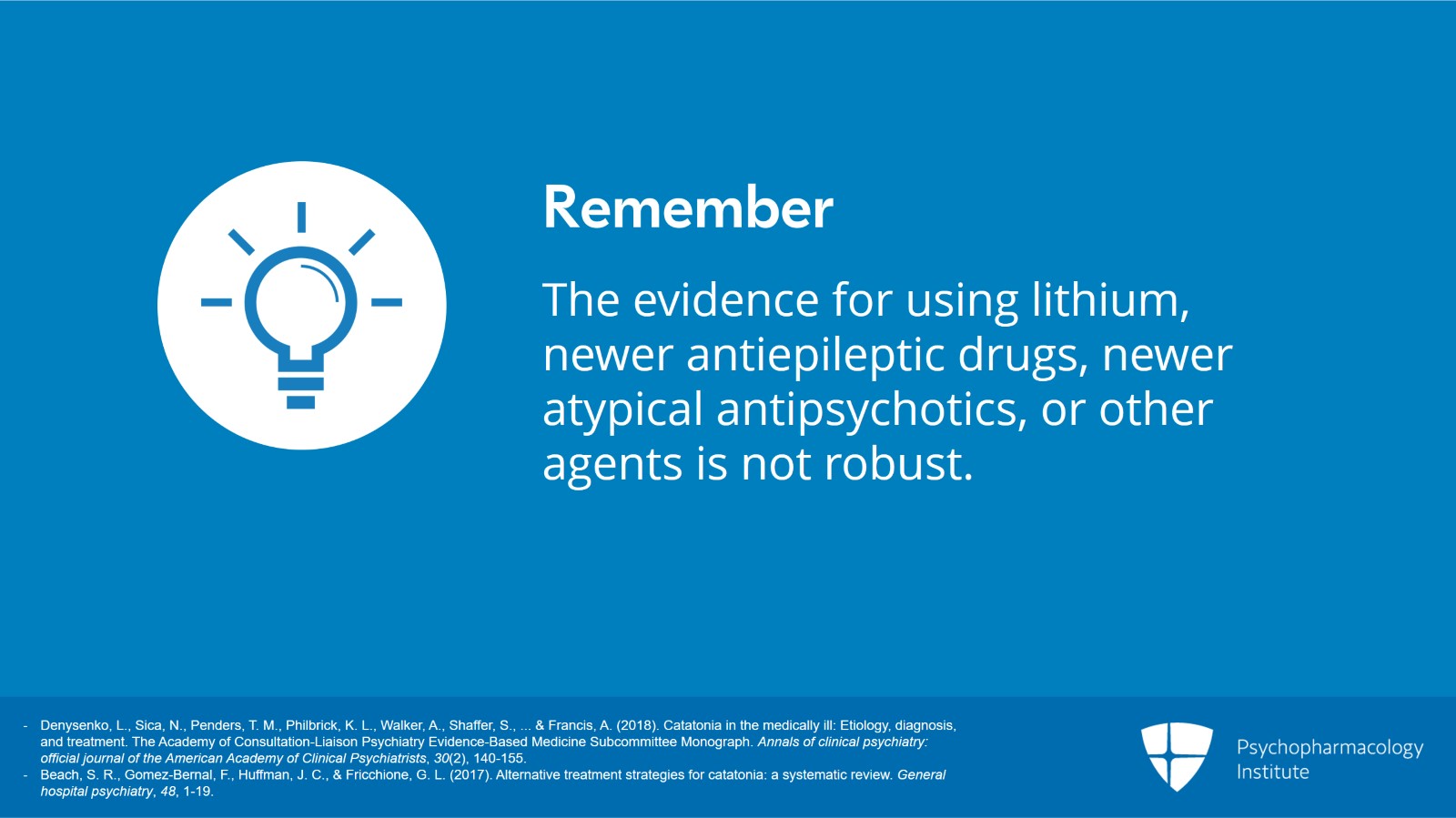
And finally, it’s important to keep in mind that the evidence is not robust for using lithium, newer antiepileptic drugs, newer atypical antipsychotics or other agents. *References*
References:
  • Denysenko, L., Sica, N., Penders, T. M., Philbrick, K. L., Walker, A., Shaffer, S., … & Francis, A. (2018). Catatonia in the medically ill: Etiology, diagnosis, and treatment. The Academy of Consultation-Liaison Psychiatry Evidence-Based Medicine Subcommittee Monograph. Annals of clinical psychiatry: official journal of the American Academy of Clinical Psychiatrists, 30(2), 140-155.
  • Beach, S. R., Gomez-Bernal, F., Huffman, J. C., & Fricchione, G. L. (2017). Alternative treatment strategies for catatonia: a systematic review. General hospital psychiatry, 48, 1-19.

Slide 14 of 16

So to summarize, if benzodiazepines are ineffective and ECT is not an option, consider an NMDA antagonist such as memantine or amantadine as the next step. Consider antiepileptic drugs and atypical antipsychotics as fourth and fifth line treatment strategies.
Free Files
Success!
Check your inbox, we sent you all the materials there.
Slide 15 of 16

If there is a strong element of psychosis, consider antipsychotics earlier in the algorithm but do not use them if malignant features are present.

Slide 16 of 16

Free Files
Success!
Check your inbox, we sent you all the materials there.
Learning Objectives:

After completing this activity, the learner will be able to:

  1. Identify the different types and possible causes of catatonia.
  2. Summarize the treatments available for catatonia in order to select the most appropriate one(s) for a specific patient.

Original Release Date: November 29, 2020

Review and Re-release Date: April 1, 2025

Expiration Date: April 1, 2028

Expert: Scott Beach, M.D.

Medical Editor: Wegdan Rashad, M.D

Relevant Financial Disclosures: 

None of the faculty, planners, and reviewers for this educational activity have relevant financial relationships to disclose during the last 24 months with ineligible companies whose primary business is producing, marketing, selling, re-selling, or distributing healthcare products used by or on patients.

Contact Information: For questions regarding the content or access to this activity, contact us at support@psychopharmacologyinstitute.com

Instructions for Participation and Credit:

Participants must complete the activity online during the valid credit period that is noted above.

Follow these steps to earn CME credit:

  1. View the required educational content provided on this course page.
  2. Complete the Post Activity Evaluation for providing the necessary feedback for continuing accreditation purposes and for the development of future activities. NOTE: Completing the Post Activity Evaluation after the quiz is required to receive the earned credit.
  3. Download your certificate.

Accreditation Statement

This activity has been planned and implemented in accordance with the accreditation requirements and policies of the Accreditation Council for Continuing Medical Education through the joint providership of Medical Academy LLC and the Psychopharmacology Institute. Medical Academy is accredited by the ACCME to provide continuing medical education for physicians.

Credit Designation Statement

Medical Academy designates this enduring activity for a maximum of 1 AMA PRA Category 1 credit(s)™. Physicians should claim only the credit commensurate with the extent of their participation in the activity.

Free Files
Success!
Check your inbox, we sent you all the materials there.
Continue in the website
Instant access modal

Become a Bronze, Silver, Gold, Bronze extended, Silver extended or Gold extended Member.

2026–27 Psychopharmacology CME Program

Unlock up to 155 CME Credits, including 40 SA CME Credits.

This site is registered on wpml.org as a development site. Switch to a production site key to remove this banner.