Slides and Transcript
Slide 2 of 15
Now, I'll review the risks for patients that come with cannabinoid use beginning with THC. There's certainly a risk of falls with THC use especially in medically ill patients. There's also the potential for a drug-drug interaction when it comes to THC and some of these drugs including warfarin, clopidogrel, some anti-epileptics, antifungals and some antibiotics. There's always a risk or the patient when it comes to THC use of unintentional overdose in children. And there should be caution when using THC in patients with a cardiovascular disease because there is a risk of myocardial infarction which I'll discuss later in this video. The common side effects of THC use include dizziness, intoxication, drowsiness and it can also induce anxiety and paranoia.
References:
- National Academies of Sciences, Engineering, and Medicine, Health and Medicine Division, Board on Population Health and Public Health Practice, & Committee on the Health Effects of Marijuana: An Evidence Review and Research Agenda. (2017). The Health Effects of Cannabis and Cannabinoids: The Current State of Evidence and Recommendations for Research. National Academies Press (US).
- Wong, S. S., & Wilens, T. E. (2017). Medical cannabinoids in children and adolescents: A systematic review. Pediatrics, 140(5).
Free Files
Download PDF and other files
Success!
Check your inbox, we sent you all the materials there.
Slide 3 of 15
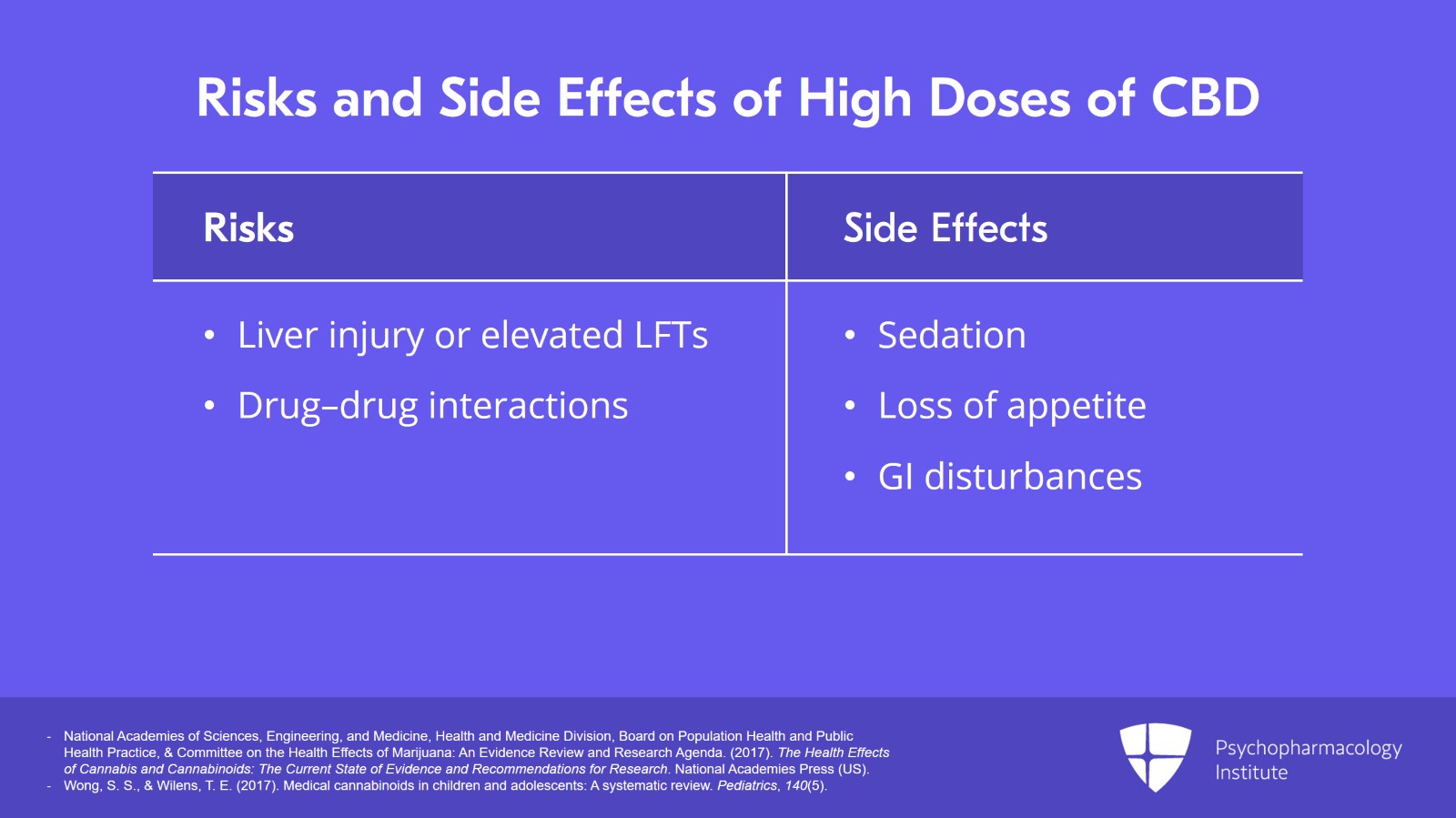
When it comes to high doses of CBD, there are fewer risks for patients. There is a potential for liver injury or elevated LFTs although this is only seen at very high doses such as 20 mg/kg which was given in the study of children with epilepsy. It's important to note that there is a potential for drug-drug interactions especially with anti-epileptics and possibly with warfarin. Other potential side effects of CBD do include sedation, loss of appetite and GI upset but this is again usually when it comes to high doses.
References:
- National Academies of Sciences, Engineering, and Medicine, Health and Medicine Division, Board on Population Health and Public Health Practice, & Committee on the Health Effects of Marijuana: An Evidence Review and Research Agenda. (2017). The Health Effects of Cannabis and Cannabinoids: The Current State of Evidence and Recommendations for Research. National Academies Press (US).
- Wong, S. S., & Wilens, T. E. (2017). Medical cannabinoids in children and adolescents: A systematic review. Pediatrics, 140(5).
Slide 4 of 15
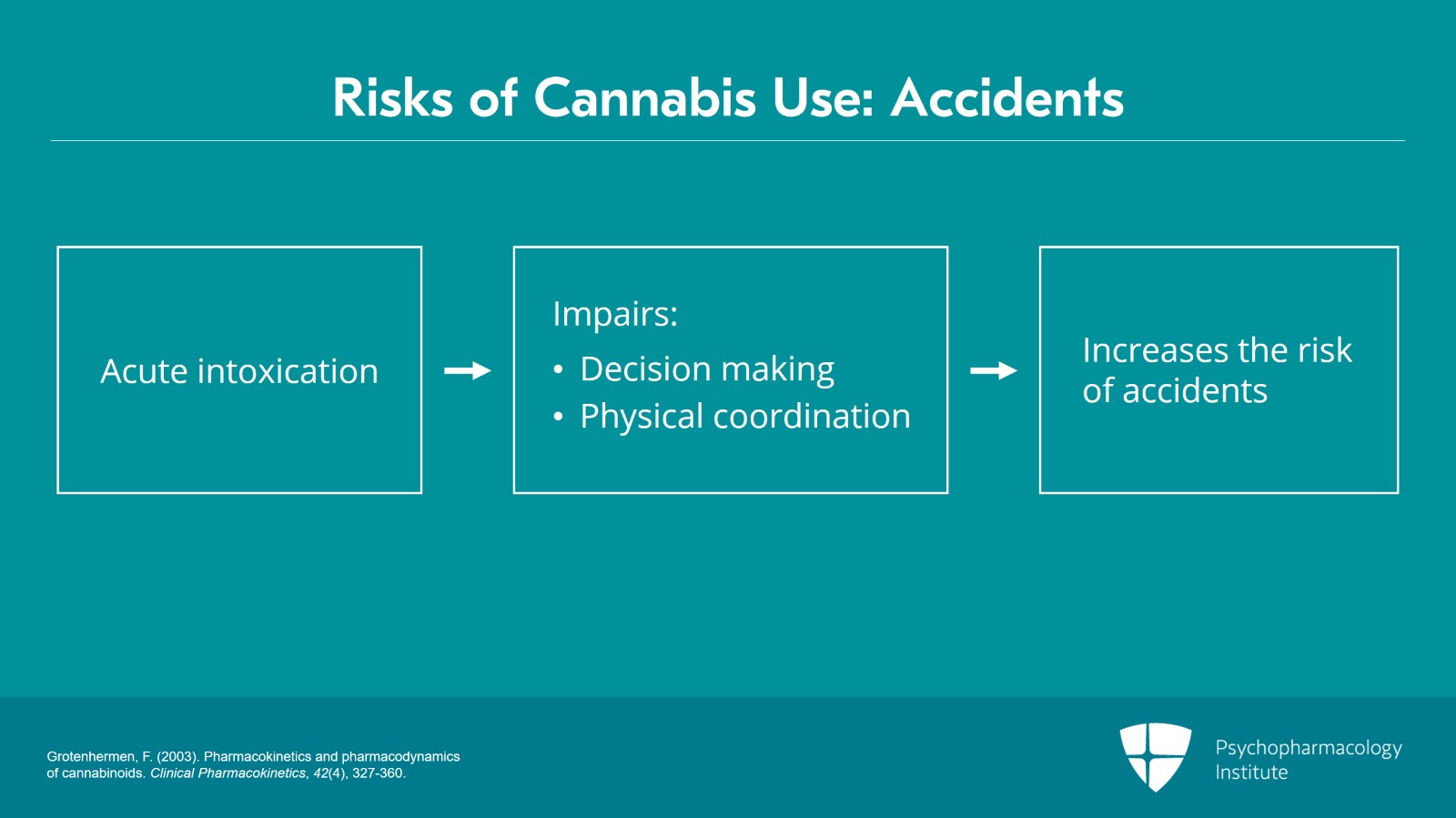
When it comes to cannabis use whether it's medical or recreational, it's important to be aware of these risks. The first risk is that of an accident. Because acute intoxication impairs decision making and physical coordination, there's an increased risk of accidents. And it's important to realize that this isn't just restricted to motor vehicle accidents. Other types of activities like swimming or biking can also be dangerous under the effects of acute intoxication.
References:
- Grotenhermen, F. (2003). Pharmacokinetics and pharmacodynamics of cannabinoids. Clinical Pharmacokinetics, 42(4), 327-360.
Free Files
Download PDF and other files
Success!
Check your inbox, we sent you all the materials there.
Slide 5 of 15
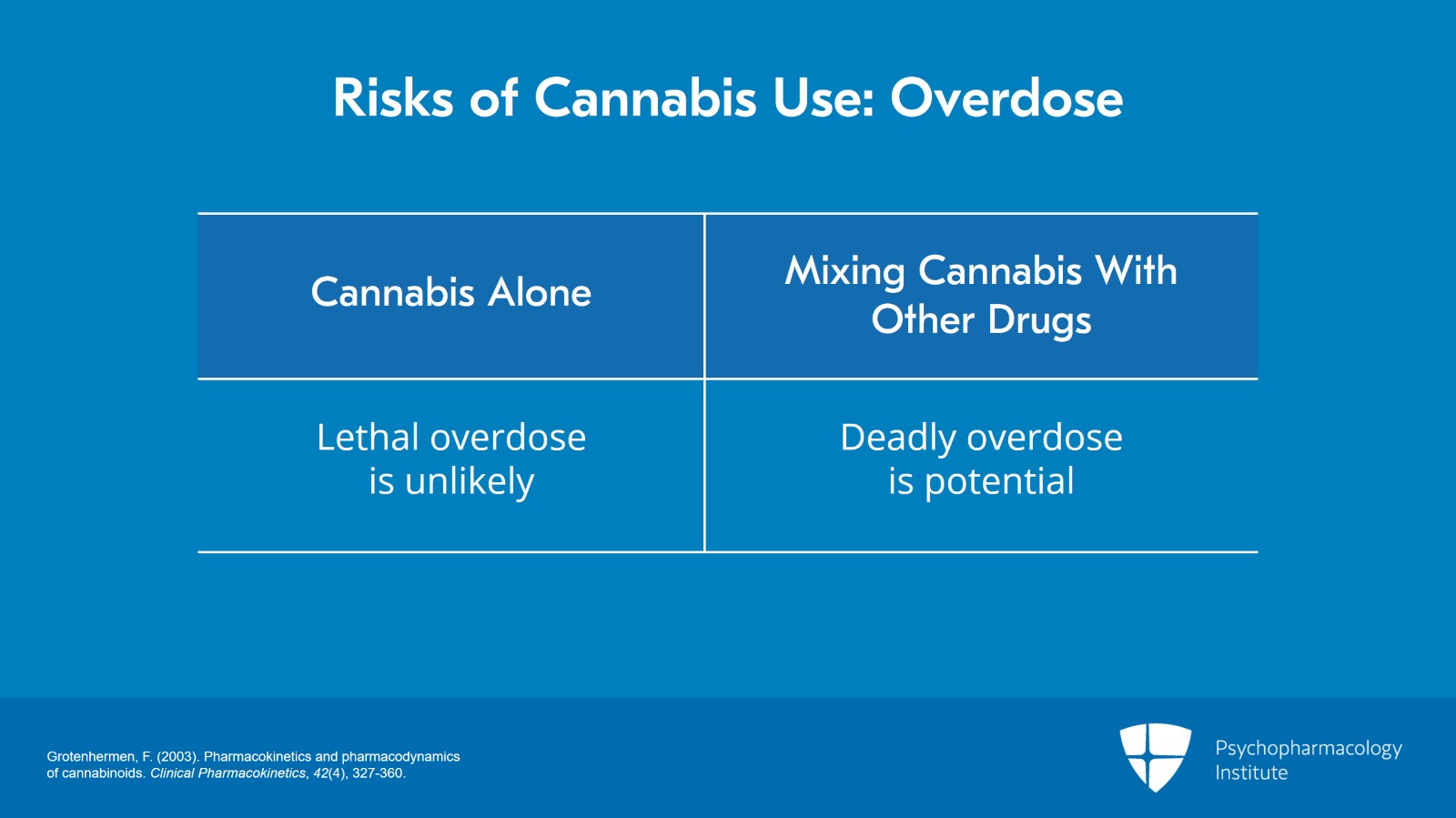
When it comes to overdose, cannabis alone is unlikely to cause a lethal overdose. However, it's important to note that mixing cannabis with other drugs does include the potential for a deadly overdose.
References:
- Grotenhermen, F. (2003). Pharmacokinetics and pharmacodynamics of cannabinoids. Clinical Pharmacokinetics, 42(4), 327-360.
Slide 6 of 15
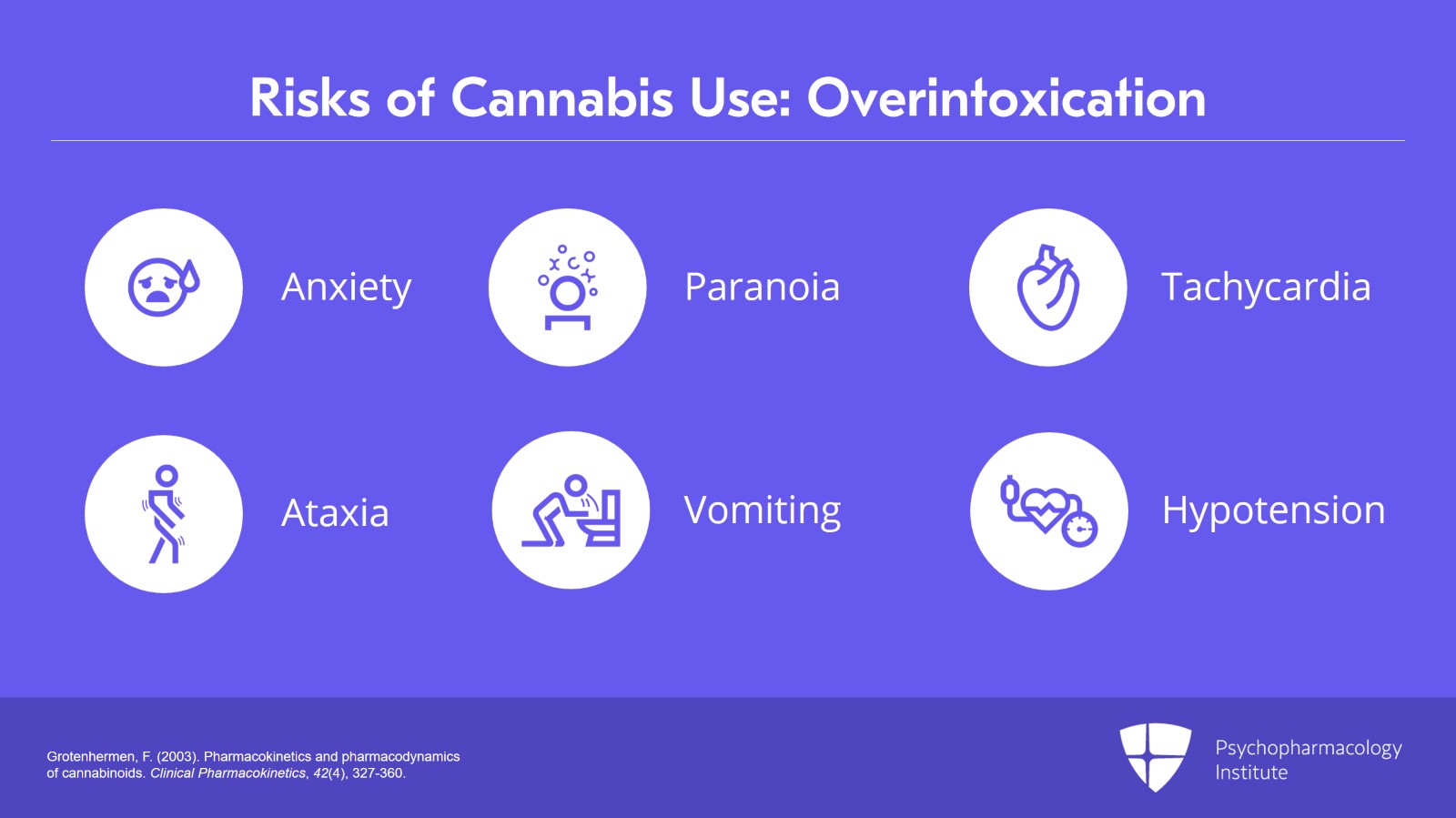
Even though cannabis doesn't normally cause an overdose, it can lead to overintoxication with symptoms like anxiety, paranoia, tachycardia, ataxia, vomiting, and hypotension.
References:
- Grotenhermen, F. (2003). Pharmacokinetics and pharmacodynamics of cannabinoids. Clinical Pharmacokinetics, 42(4), 327-360.
Free Files
Download PDF and other files
Success!
Check your inbox, we sent you all the materials there.
Slide 7 of 15
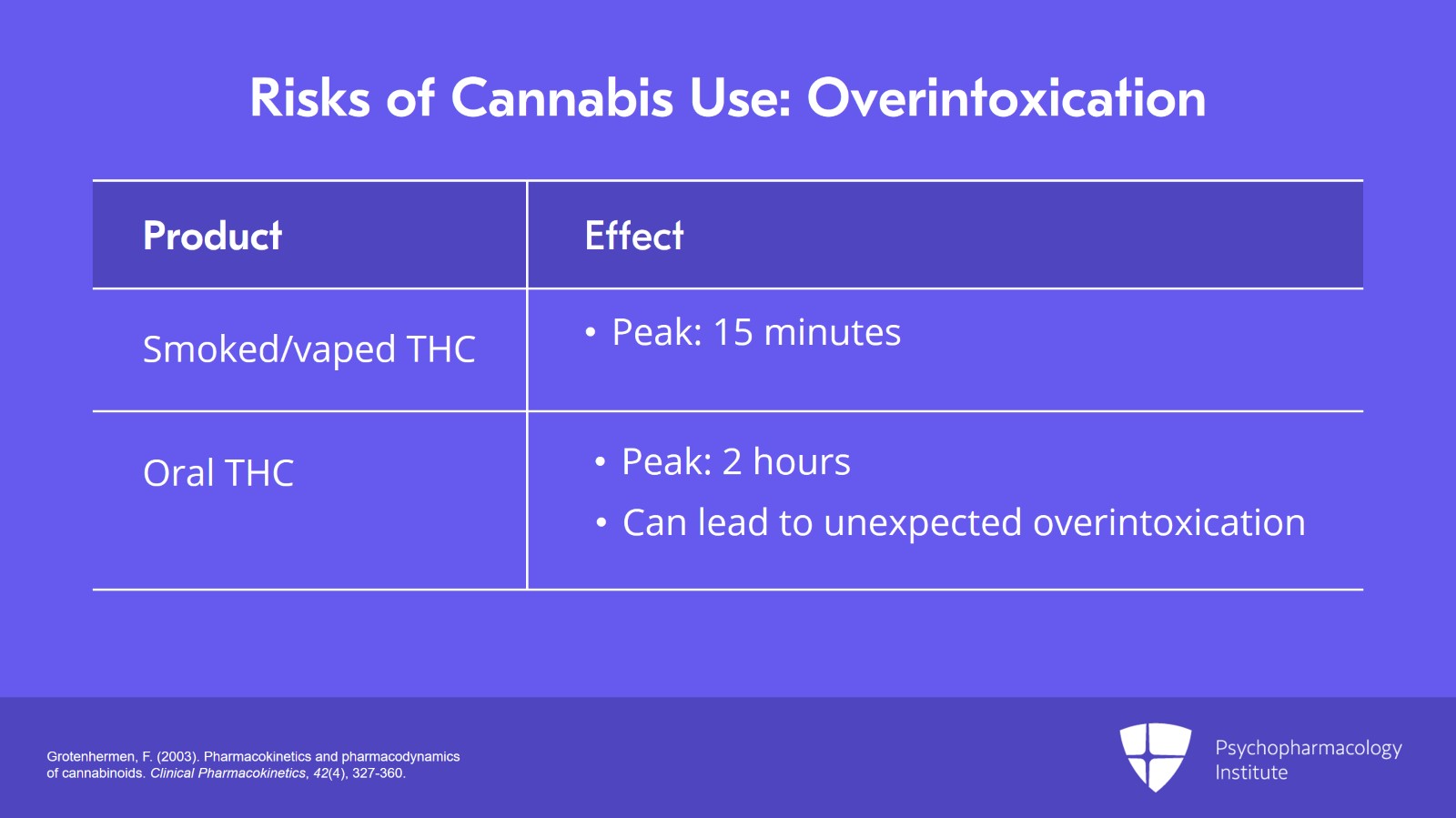
It's important to note that when THC is smoked or vaped, it has a peak effect in about 15 minutes. However, oral cannabis products don't have their peak for about two hours. This means that people often think that nothing is happening, and they keep consuming more which can lead to unexpected overintoxication hours after taking the dose.
References:
- Grotenhermen, F. (2003). Pharmacokinetics and pharmacodynamics of cannabinoids. Clinical Pharmacokinetics, 42(4), 327-360.
Slide 8 of 15
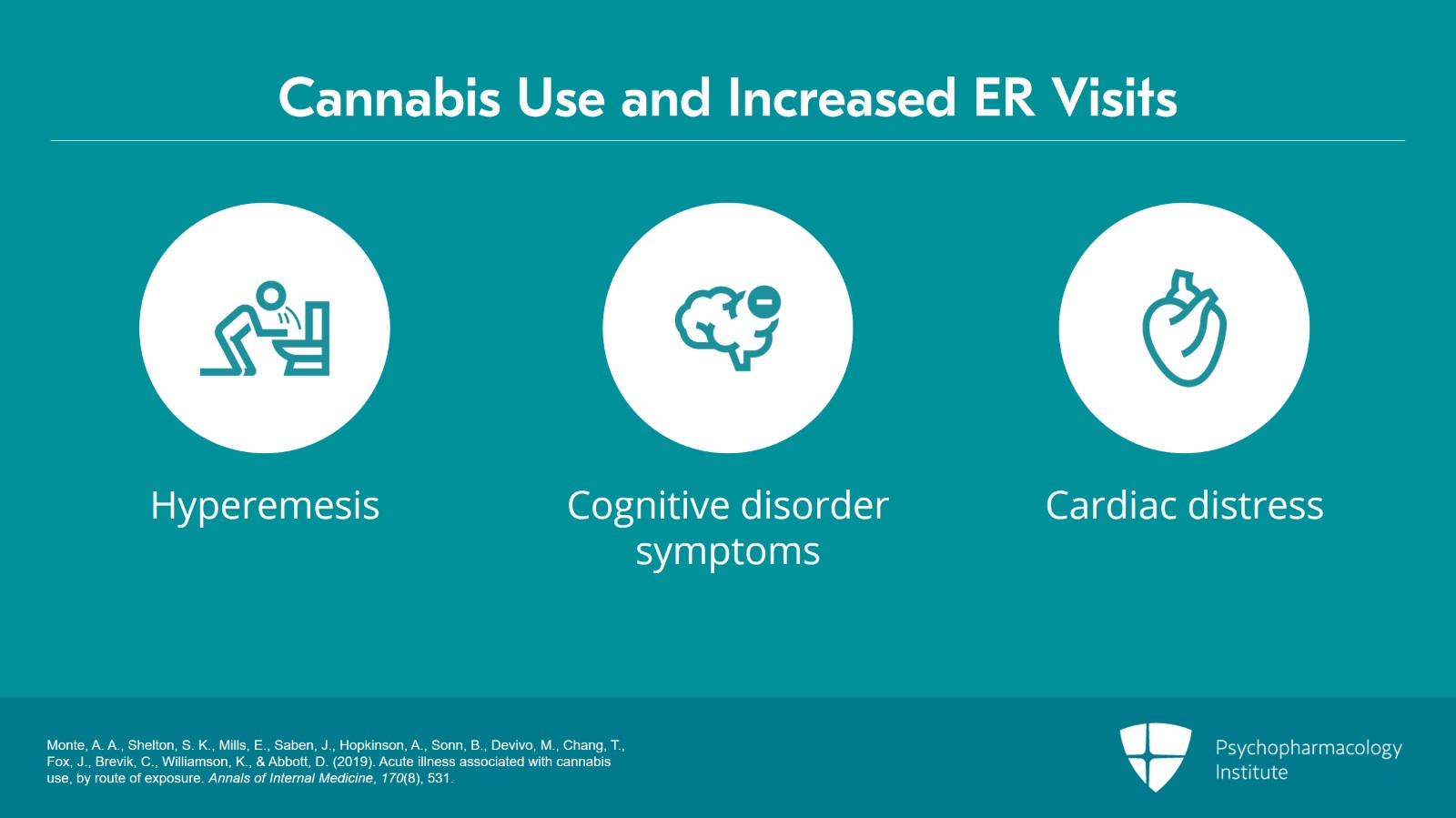
A study from Canada showed an increase in emergency department visits due to cannabis use and this study showed the reasons for those visits, 23% were for hyperemesis, 32% were for cognitive disorder symptoms and 71% of these emergency room visits were due to cardiac distress.
References:
- Monte, A. A., Shelton, S. K., Mills, E., Saben, J., Hopkinson, A., Sonn, B., Devivo, M., Chang, T., Fox, J., Brevik, C., Williamson, K., & Abbott, D. (2019). Acute illness associated with cannabis use, by route of exposure. Annals of Internal Medicine, 170(8), 531.
Free Files
Download PDF and other files
Success!
Check your inbox, we sent you all the materials there.
Slide 9 of 15
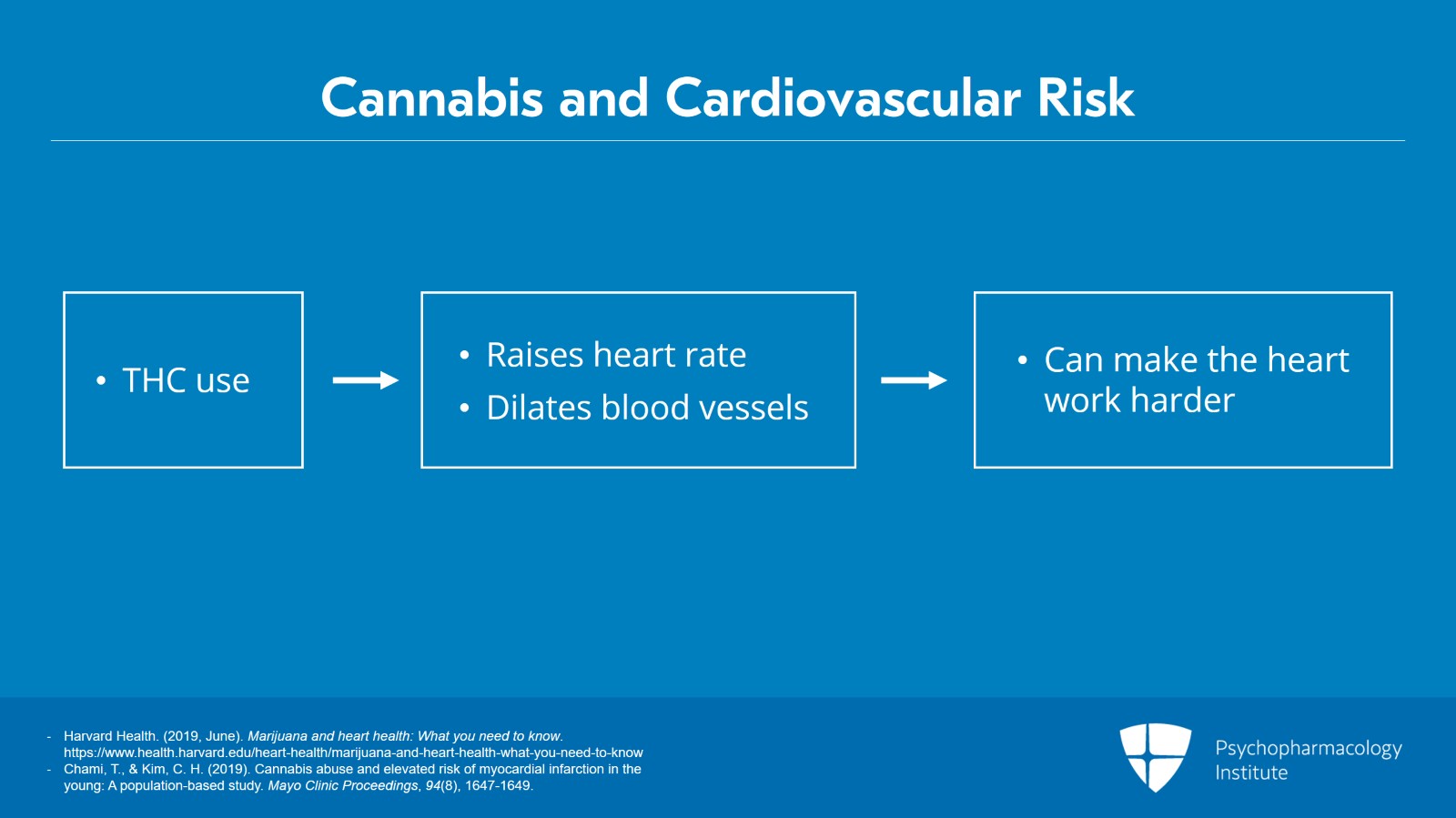
So this leads to an important topic which is cannabis and cardiovascular risk. It's known that THC raises heart rate, dilates blood vessels and these effects can make the heart need to work harder.
References:
- Harvard Health. (2019, June). Marijuana and heart health: What you need to know. https://www.health.harvard.edu/heart-health/marijuana-and-heart-health-what-you-need-to-know
- Chami, T., & Kim, C. H. (2019). Cannabis abuse and elevated risk of myocardial infarction in the young: A population-based study. Mayo Clinic Proceedings, 94(8), 1647-1649.
Slide 10 of 15
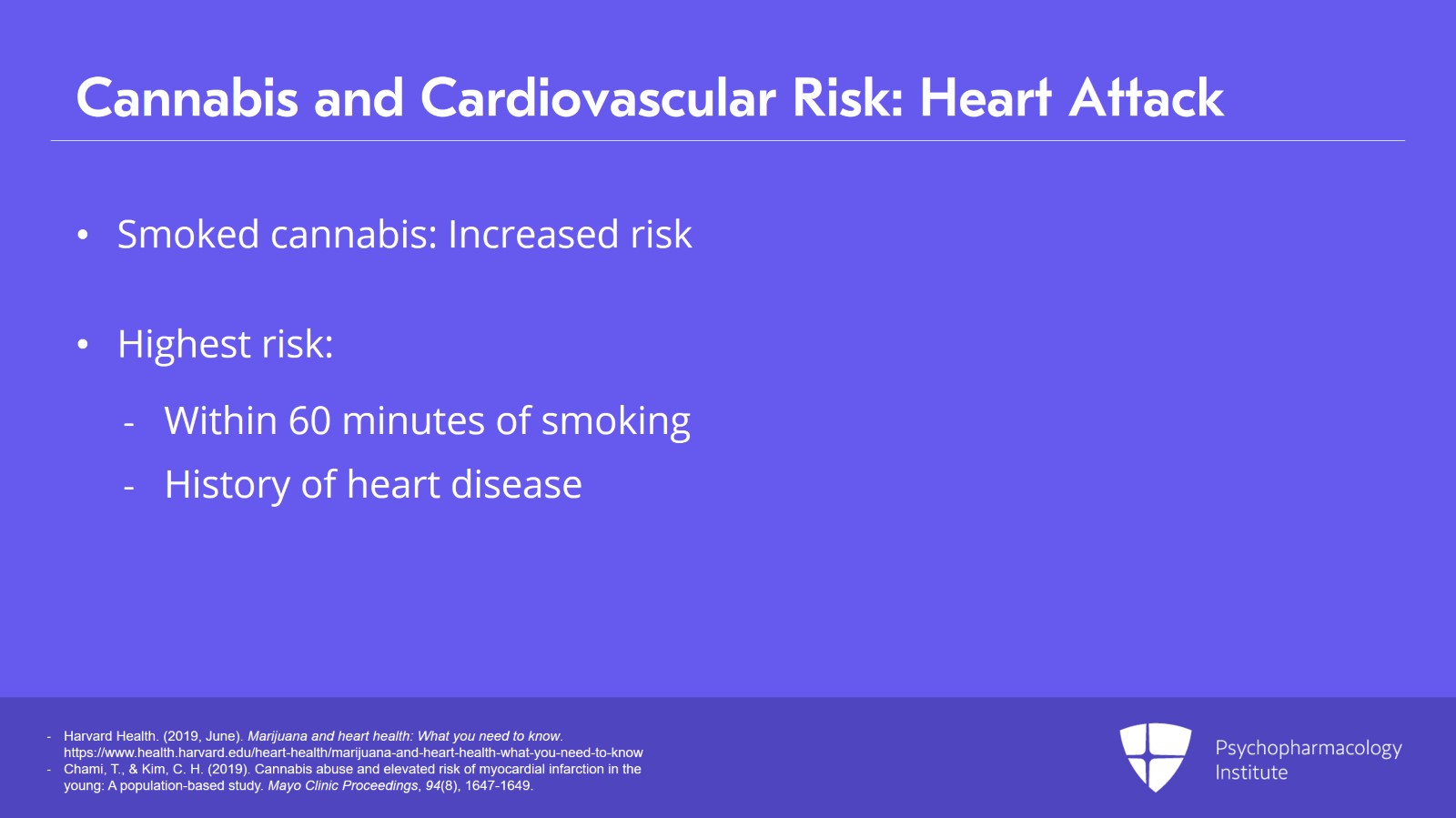
Research studies also indicate that cannabis smoking is associated with an increased risk of having a heart attack. So far, the data has focused on smoked cannabis and we don't know if this risk applies to oral THC preparations. The data shows that this risk is highest within 60 minutes of smoking cannabis. This risk is likely highest in people who have a history of heart disease. However, some studies show an increased risk of heart attack in young healthy individuals.
References:
- Harvard Health. (2019, June). Marijuana and heart health: What you need to know. https://www.health.harvard.edu/heart-health/marijuana-and-heart-health-what-you-need-to-know
- Chami, T., & Kim, C. H. (2019). Cannabis abuse and elevated risk of myocardial infarction in the young: A population-based study. Mayo Clinic Proceedings, 94(8), 1647-1649.
Free Files
Download PDF and other files
Success!
Check your inbox, we sent you all the materials there.
Slide 11 of 15
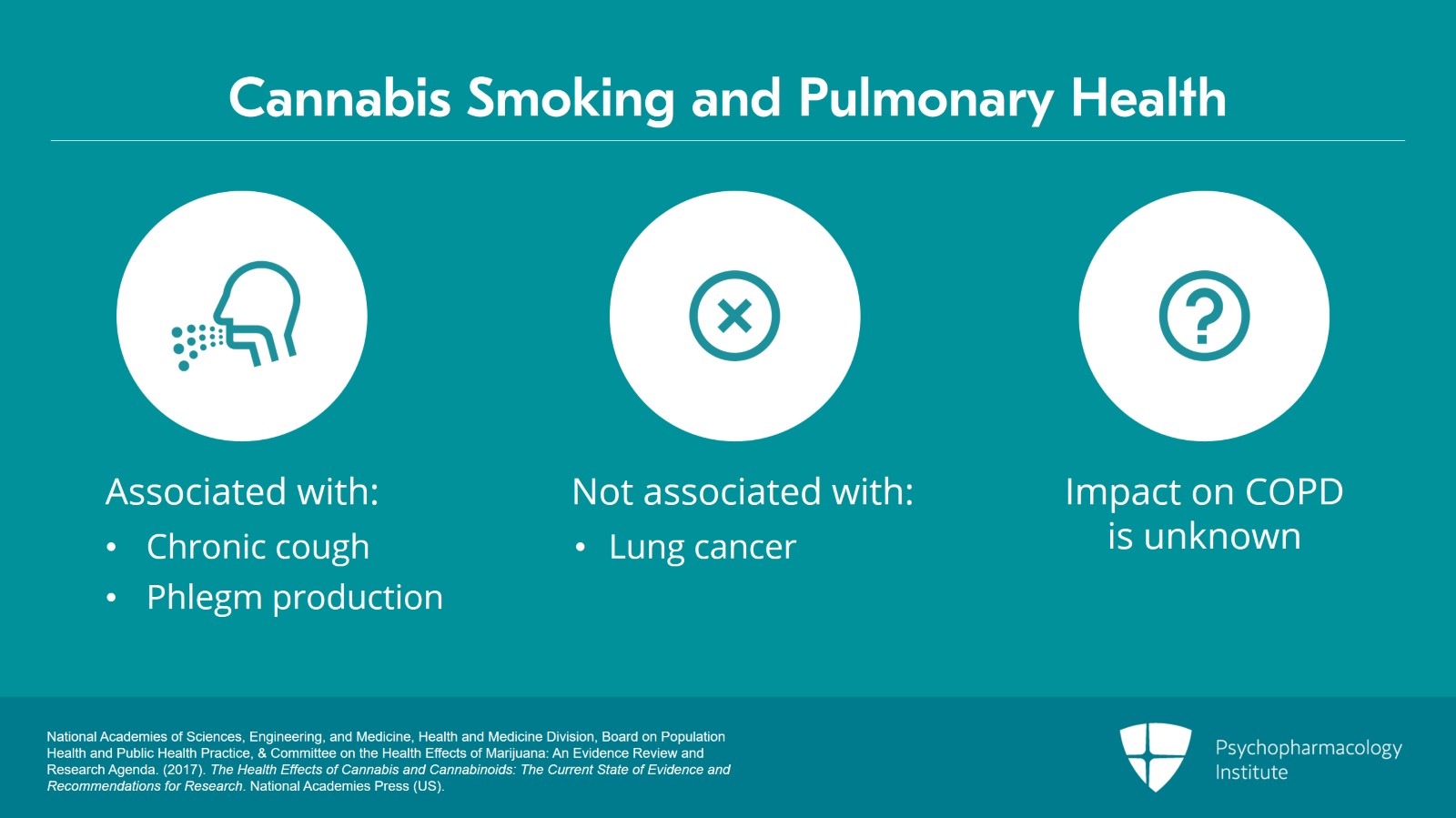
Now, I'll discuss cannabis and pulmonary health. Regular cannabis smoking is associated with chronic cough and phlegm production. These symptoms generally resolve when smoking stops. To date, the evidence suggests that cannabis is not associated with lung cancer unless cannabis is mixed with tobacco which is a common practice. And more research is needed to determine the impact of cannabis smoking on COPD.
References:
- National Academies of Sciences, Engineering, and Medicine, Health and Medicine Division, Board on Population Health and Public Health Practice, & Committee on the Health Effects of Marijuana: An Evidence Review and Research Agenda. (2017). The Health Effects of Cannabis and Cannabinoids: The Current State of Evidence and Recommendations for Research. National Academies Press (US).
Slide 12 of 15
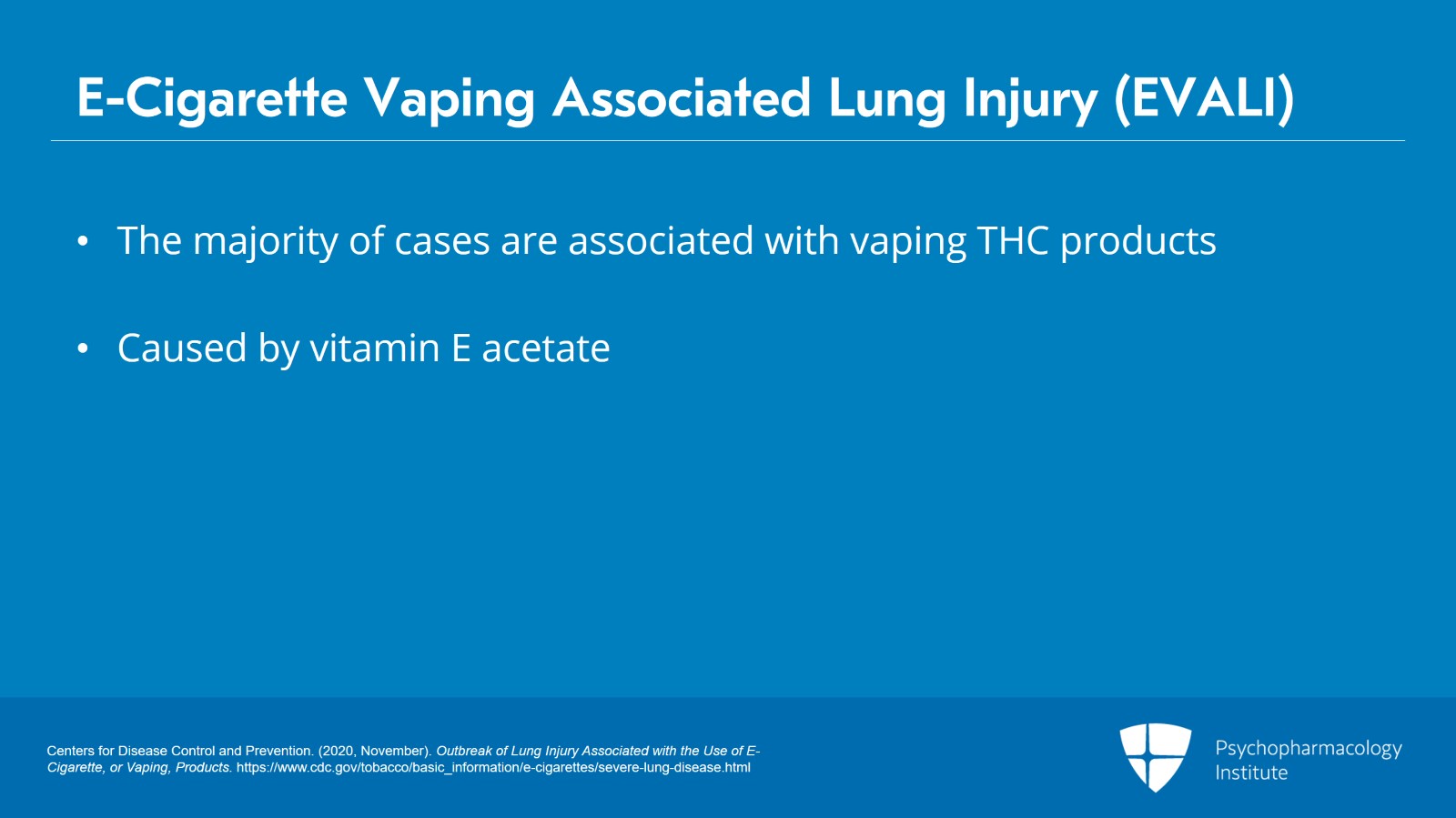
It's important to note that a severe pulmonary disease called EVALI, which stands for e-cigarette vaping associated lung injury, is associated with vaping THC. Currently, there have been almost 3,000 cases and 68 deaths. Among patients with this disorder, the majority reported vaping THC products although not all. Some patients with EVALI vaped nicotine only and 17% of patients reported vaping only CBD. These cases were reported in a wide range of patients from 14 to 75. And it's now thought that EVALI is caused by a contaminant called vitamin E acetate.
References:
- Centers for Disease Control and Prevention. (2020, November). Outbreak of Lung Injury Associated with the Use of E-Cigarette, or Vaping, Products. https://www.cdc.gov/tobacco/basic_information/e-cigarettes/severe-lung-disease.html
Free Files
Download PDF and other files
Success!
Check your inbox, we sent you all the materials there.
Slide 13 of 15
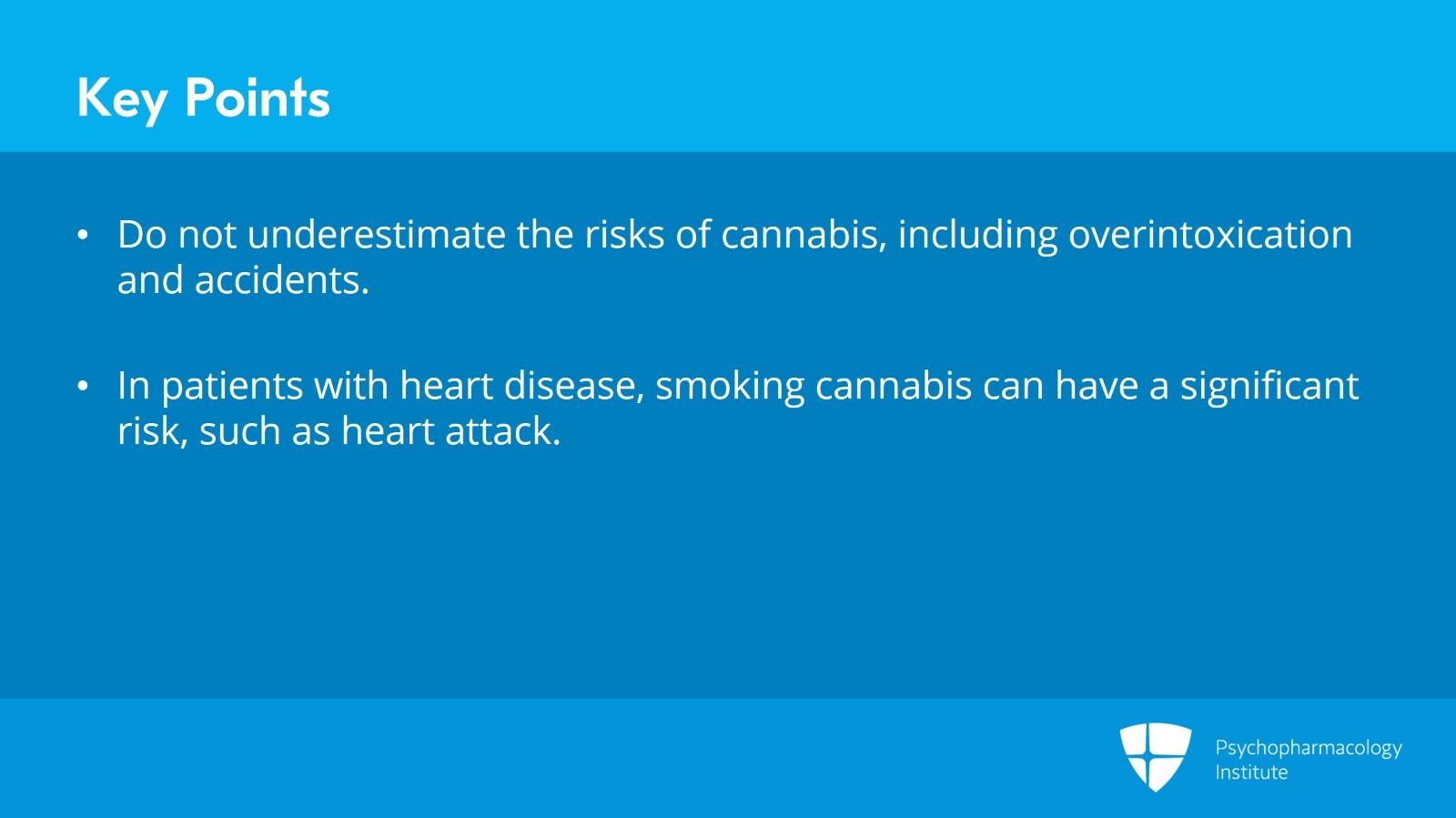
So now, I'll review the key points. It's crucial to not underestimate the risks of cannabis despite its widespread use. These risks include overintoxication and accidents. In patients with heart disease, smoking cannabis can have a significant risk. In patients with heart disease, there's also risk of heart attack especially within an hour of smoking.
Slide 14 of 15
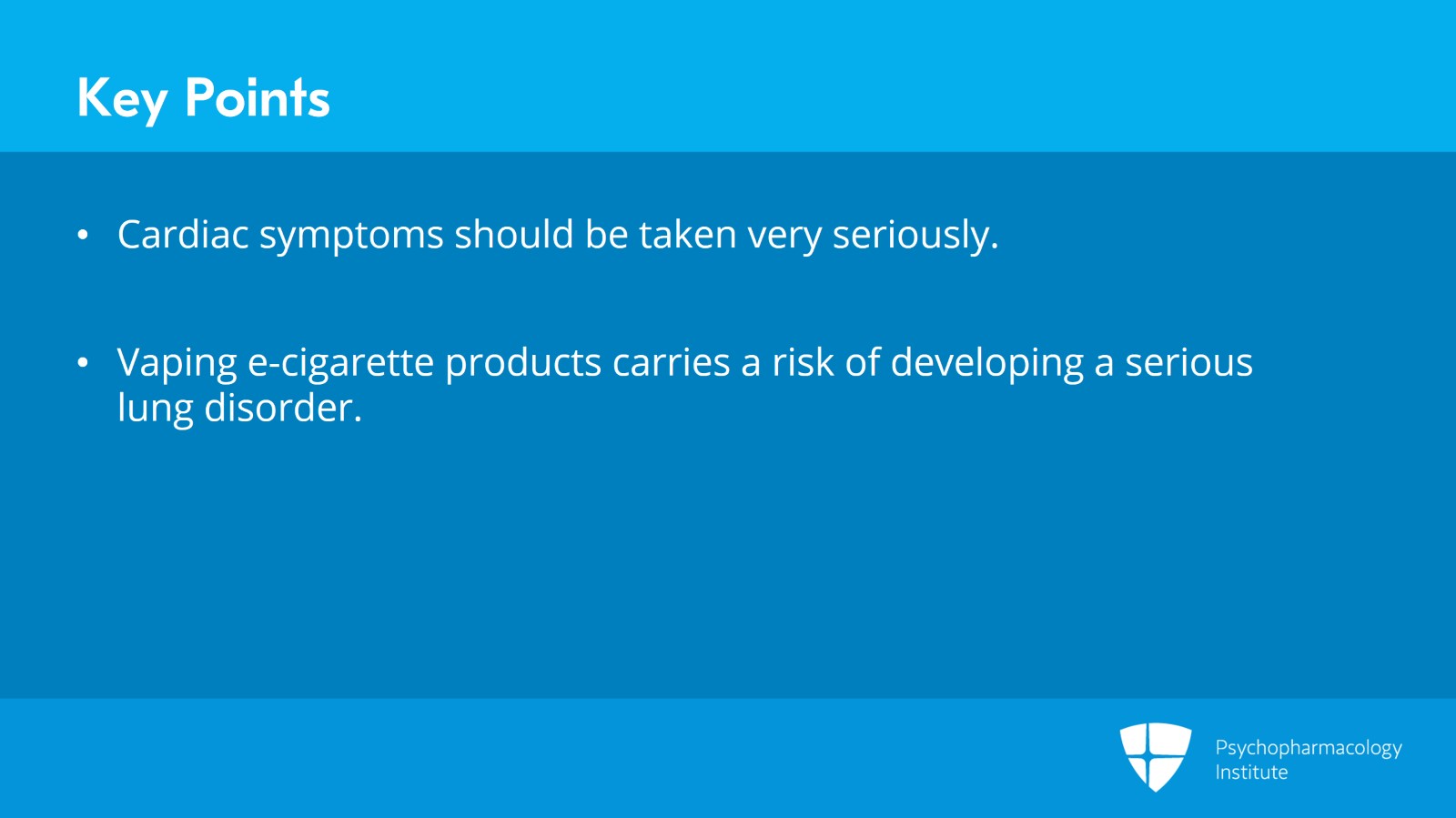
Cardiac symptoms should be taken very seriously. Vaping e-cigarette products runs the risk of developing a serious lung disorder.
Free Files
Download PDF and other files
Success!
Check your inbox, we sent you all the materials there.