Slides and Transcript
Slide 1 of 11
So let’s move on to talk about medications for the treatment of bulimia nervosa.
Slide 2 of 11
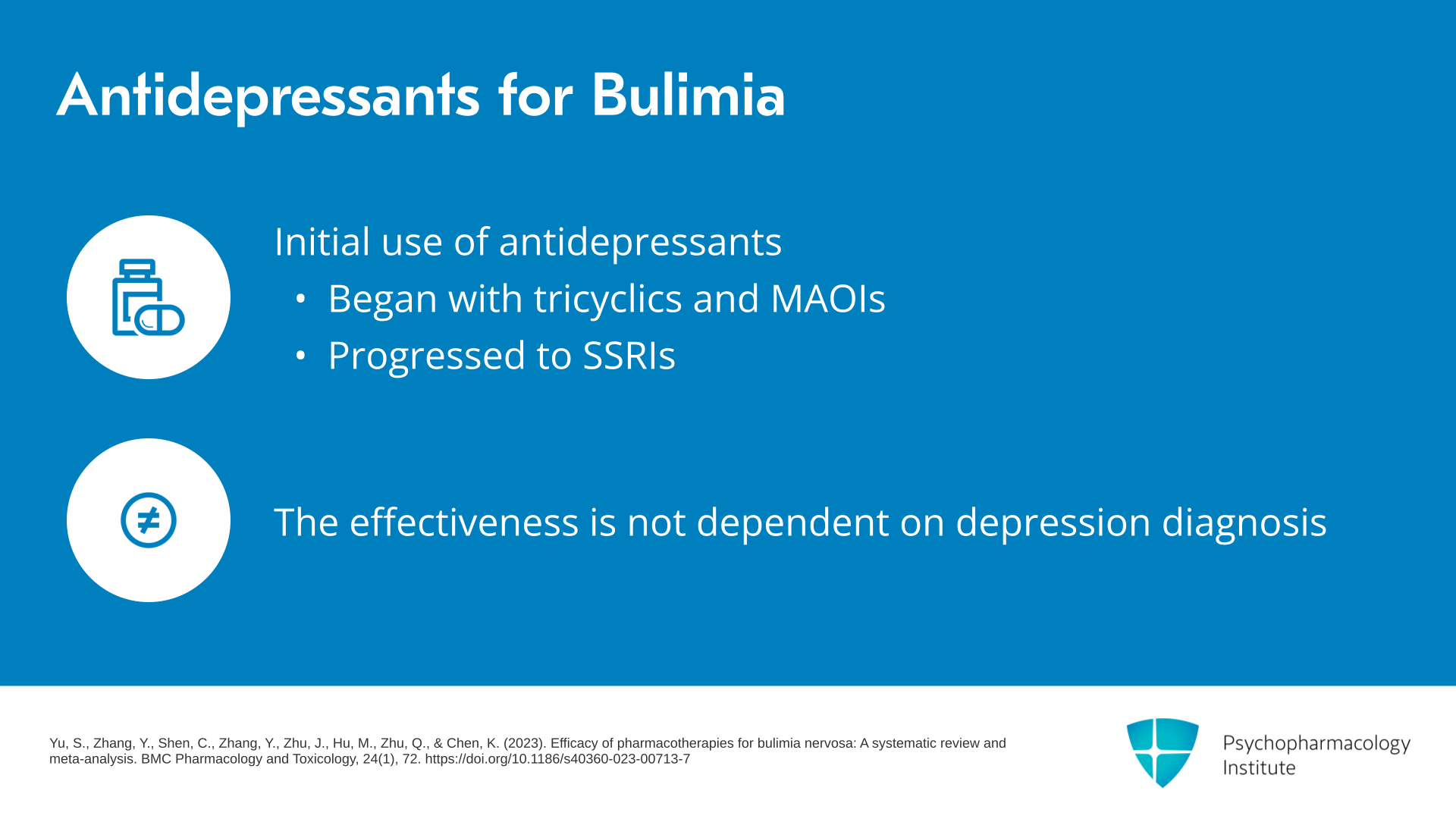
The initial work looking at medications for bulimia nervosa treatment involved the use of antidepressants. It began with the use of tricyclics and MAO inhibitors and then moved to SSRIs. The large variety of medications that are available for depression have been tried in bulimia nervosa treatment. Broadly speaking, antidepressants do tend to work in bulimia nervosa treatment. Their effect is not dependent on the presence of depression symptoms or a major depression diagnosis.
References:
- Yu, S., Zhang, Y., Shen, C., Zhang, Y., Zhu, J., Hu, M., Zhu, Q., & Chen, K. (2023). Efficacy of pharmacotherapies for bulimia nervosa: A systematic review and meta-analysis. BMC Pharmacology and Toxicology, 24(1), 72. https://doi.org/10.1186/s40360-023-00713-7
Free Files
Download PDF and other files
Success!
Check your inbox, we sent you all the materials there.
Slide 3 of 11
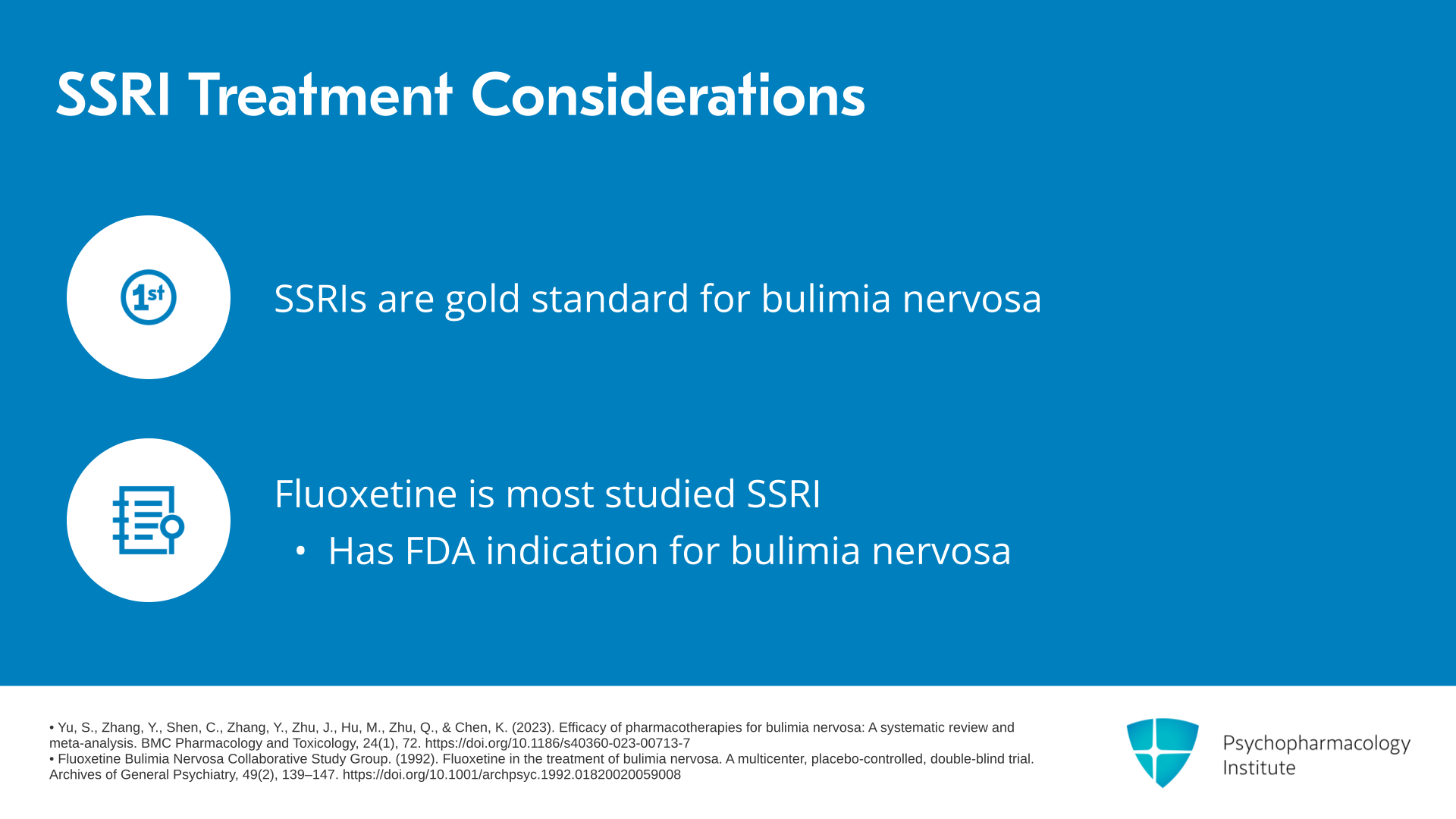
We think of the gold standard approach to medications for bulimia nervosa as being SSRIs. SSRIs are used commonly in bulimia nervosa treatment. The medicine that’s studied the most and has the largest trials is fluoxetine and in fact based on those trials fluoxetine actually has an FDA indication for treatment of those with bulimia nervosa.
References:
- Yu, S., Zhang, Y., Shen, C., Zhang, Y., Zhu, J., Hu, M., Zhu, Q., & Chen, K. (2023). Efficacy of pharmacotherapies for bulimia nervosa: A systematic review and meta-analysis. BMC Pharmacology and Toxicology, 24(1), 72. https://doi.org/10.1186/s40360-023-00713-7
- Fluoxetine Bulimia Nervosa Collaborative Study Group. (1992). Fluoxetine in the treatment of bulimia nervosa. A multicenter, placebo-controlled, double-blind trial. Archives of General Psychiatry, 49(2), 139–147. https://doi.org/10.1001/archpsyc.1992.01820020059008
Slide 4 of 11
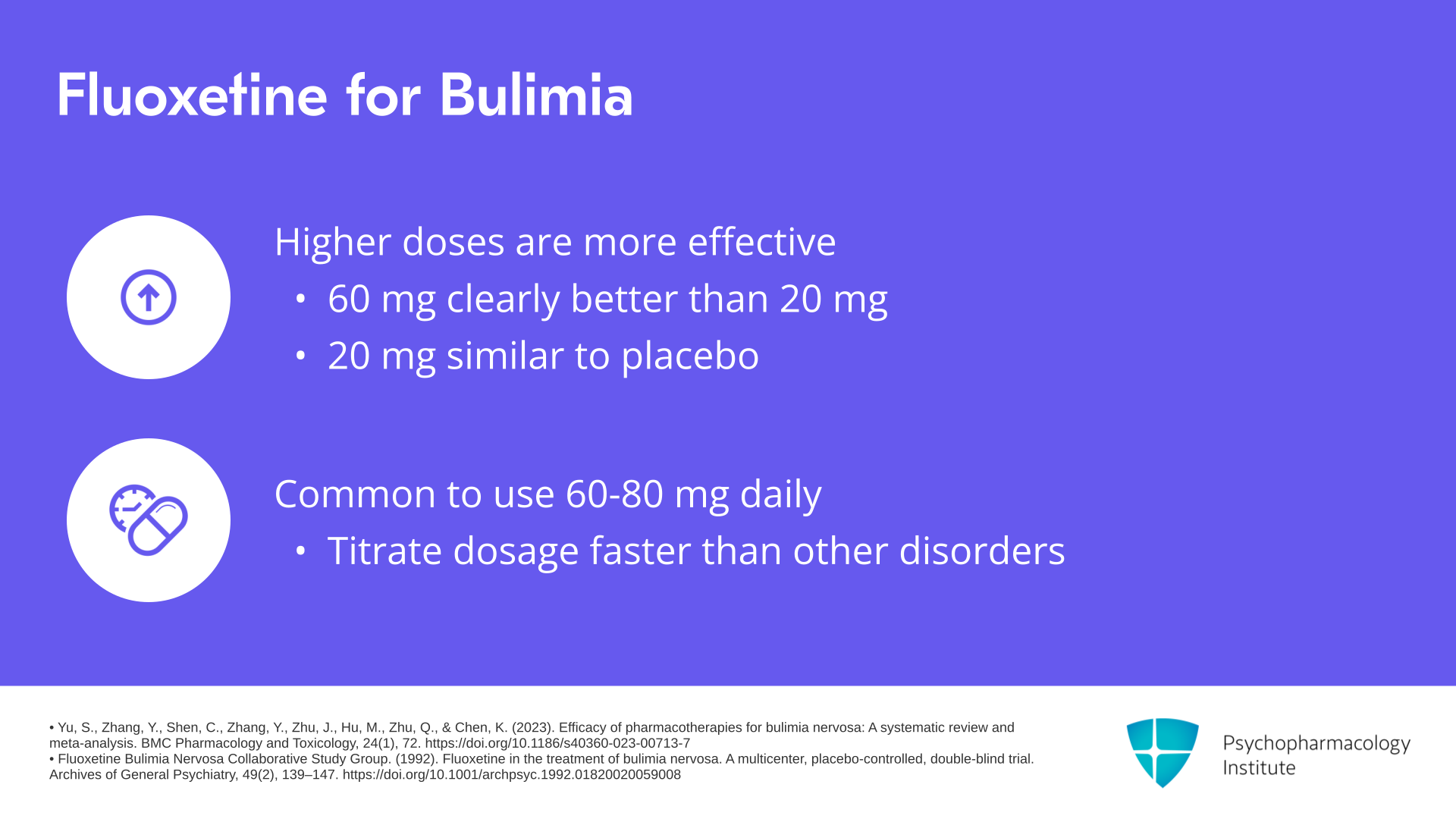
One of the large trials showed us a very critical piece of data that high doses work clearly better than lower doses. In that trial, there was a comparison of 60 mg of fluoxetine, 20 mg of fluoxetine and placebo. 60 was clearly better than 20. And the 20 wasn’t really very far off from placebo. It led to use fluoxetine for bulimia nervosa treatment above 20. And it’s very common to get to 60 or 80 mg a day. If you get someone started on the medication and they get a good response, we wouldn’t necessarily push up beyond where they get the good response. But it’s definitely a place where most of us would titrate dosage faster than we would in the treatment of mood disorders or anxiety disorders.
References:
- Yu, S., Zhang, Y., Shen, C., Zhang, Y., Zhu, J., Hu, M., Zhu, Q., & Chen, K. (2023). Efficacy of pharmacotherapies for bulimia nervosa: A systematic review and meta-analysis. BMC Pharmacology and Toxicology, 24(1), 72. https://doi.org/10.1186/s40360-023-00713-7
- Fluoxetine Bulimia Nervosa Collaborative Study Group. (1992). Fluoxetine in the treatment of bulimia nervosa. A multicenter, placebo-controlled, double-blind trial. Archives of General Psychiatry, 49(2), 139–147. https://doi.org/10.1001/archpsyc.1992.01820020059008
Free Files
Download PDF and other files
Success!
Check your inbox, we sent you all the materials there.
Slide 5 of 11
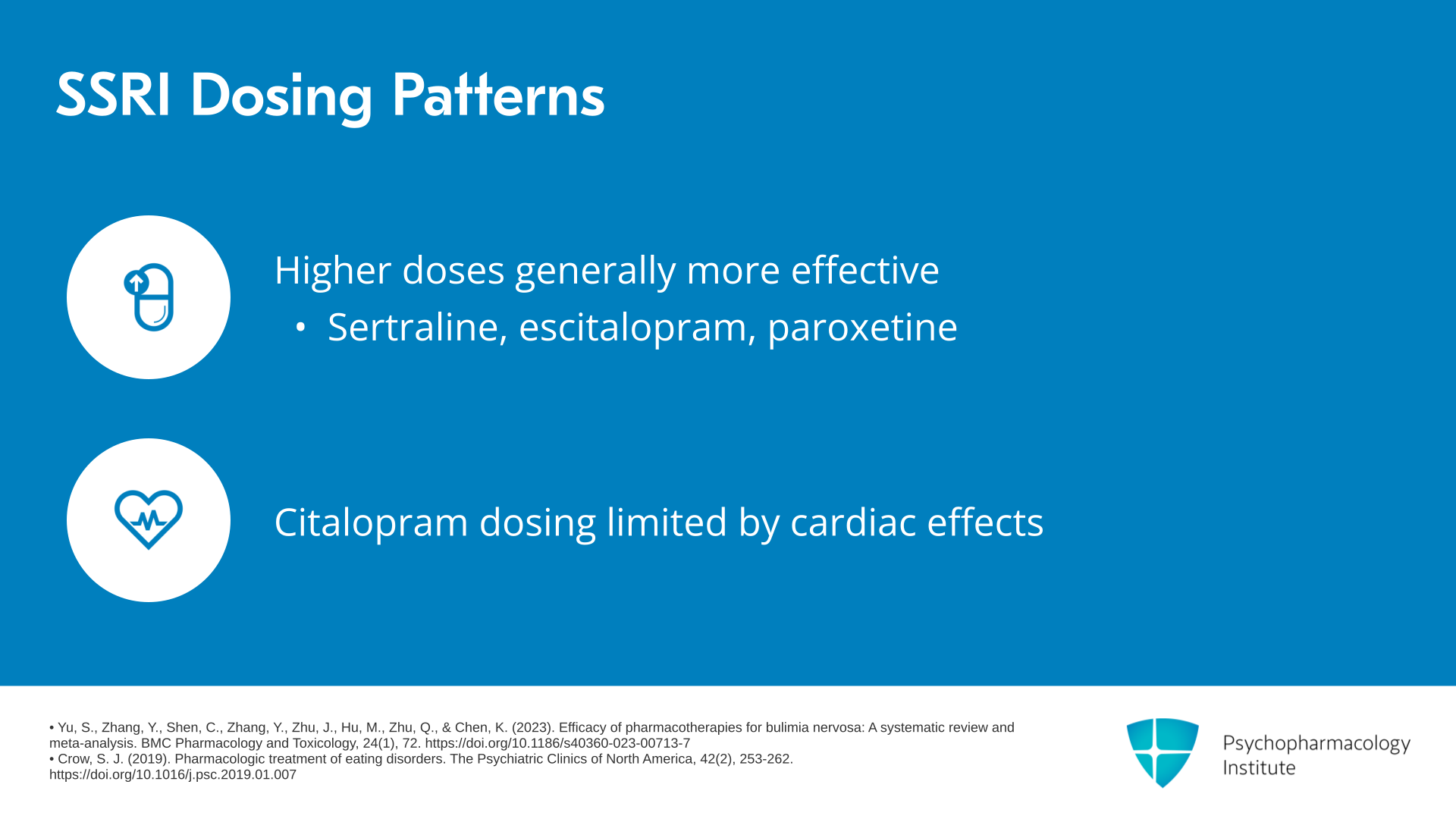
That tendency to get best results with high doses appears to generally run across the SSRIs. It seems true of sertraline, citalopram, escitalopram, paroxetine. But there are a couple of caveats that are relevant there. The first relates to concerns about cardiac conduction effects with citalopram which limited the dose that could be used and it often feels as though the dose that’s advised in the use of citalopram is probably a lower dose than it would be the most effective for many people for bulimia nervosa treatment. So as a result, that’s one that’s not used so much.
References:
- Yu, S., Zhang, Y., Shen, C., Zhang, Y., Zhu, J., Hu, M., Zhu, Q., & Chen, K. (2023). Efficacy of pharmacotherapies for bulimia nervosa: A systematic review and meta-analysis. BMC Pharmacology and Toxicology, 24(1), 72. https://doi.org/10.1186/s40360-023-00713-7
- Crow, S. J. (2019). Pharmacologic treatment of eating disorders. The Psychiatric Clinics of North America, 42(2), 253-262. https://doi.org/10.1016/j.psc.2019.01.007
Slide 6 of 11
Paroxetine also is not used so much because of a general sense that there may be a greater risk for weight gain with that than one would see with the other SSRIs. And so that really tends to aim us largely to the use of fluoxetine.
References:
- Israël, M. (2002). Should some drugs be avoided when treating bulimia nervosa? Journal of Psychiatry and Neuroscience, 27(6), 457.
Free Files
Download PDF and other files
Success!
Check your inbox, we sent you all the materials there.
Slide 7 of 11
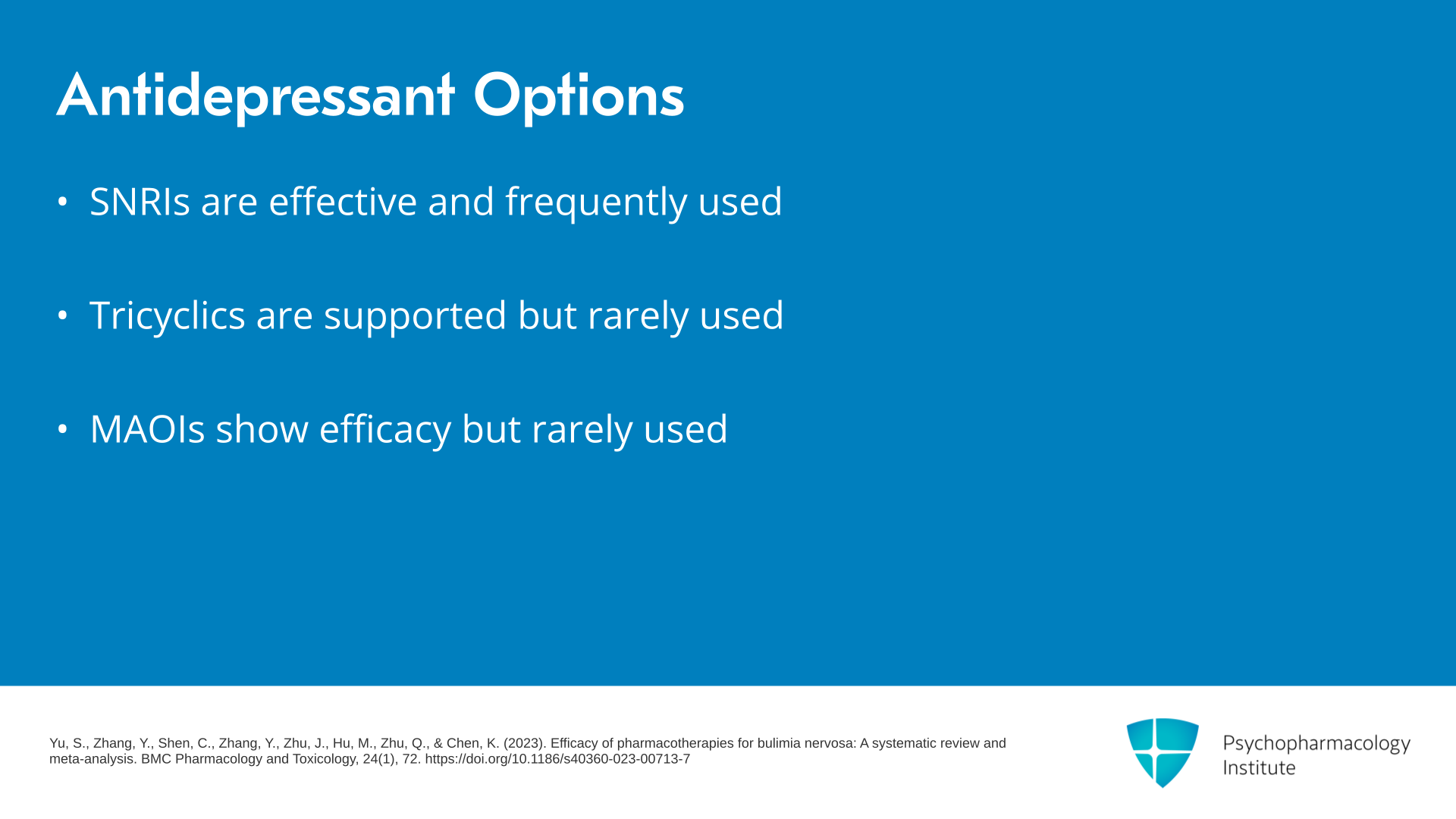
Generally, other antidepressants are also effective. The SNRIs are used frequently. Relatively higher doses are worthwhile. It is worth noting that tricyclics are well supported in the literature. They’re very rarely used generally and rarely used in the treatment of bulimia nervosa at this point. MAOI, MAO inhibitors also have shown good efficacy in trials but would be rarely used at this point.
References:
- Yu, S., Zhang, Y., Shen, C., Zhang, Y., Zhu, J., Hu, M., Zhu, Q., & Chen, K. (2023). Efficacy of pharmacotherapies for bulimia nervosa: A systematic review and meta-analysis. BMC Pharmacology and Toxicology, 24(1), 72. https://doi.org/10.1186/s40360-023-00713-7
Slide 8 of 11
Then it’s important to talk about bupropion. Bupropion was studied in the treatment of bulimia nervosa. There was a modest-sized, short-term trial. It was eight weeks. And that trial was placebo controlled and what occurred was that for these participants with bulimia nervosa, a little under 6% of them had a tonic-clonic seizure during that eight-week trial which was one of the first places that the concern about seizures risk with that medication was identified. It’s worth noting, this was a very short trial and yet there was a pretty pronounced effect. So that is a key thing to know about the treatment of bulimia nervosa with medications. It is important to avoid bupropion in that situation. In the eating disorders field we just end up using very little bupropion because of that concern.
References:
- Horne, R. L., Ferguson, J. M., Pope, H. G., Jr., Hudson, J. I., Lineberry, C. G., Ascher, J., & Cato, A. (1988). Treatment of bulimia with bupropion: a multicenter controlled trial. The Journal of Clinical Psychiatry, 49(7), 262–266.
Free Files
Download PDF and other files
Success!
Check your inbox, we sent you all the materials there.
Slide 9 of 11
I would also note that there is limited literature supporting topiramate and opiate antagonists. These are third and fourth-line choices generally. And particularly for topiramate, one of the things that we see is some degree of weight loss often which may be a desired effect in those who have binge eating disorders but it’s typically not going to be a desired effect in the treatment of bulimia nervosa. So that often leads us to avoid it.
References:
- Yu, S., Zhang, Y., Shen, C., Zhang, Y., Zhu, J., Hu, M., Zhu, Q., & Chen, K. (2023). Efficacy of pharmacotherapies for bulimia nervosa: A systematic review and meta-analysis. BMC Pharmacology and Toxicology, 24(1), 72. https://doi.org/10.1186/s40360-023-00713-7
Slide 10 of 11
So the key points for this section. First of all, that antidepressants broadly are helpful. Second, that SSRIs and particularly fluoxetine are the first choice in part because the database for fluoxetine in the literature is the strongest. That database clearly shows that high doses like 60 mg per day tend to be more effective than 20 mg and the corresponding equivalent with the other SSRIs and probably SNRIs appears to be in effect.
Free Files
Download PDF and other files
Success!
Check your inbox, we sent you all the materials there.
Slide 11 of 11
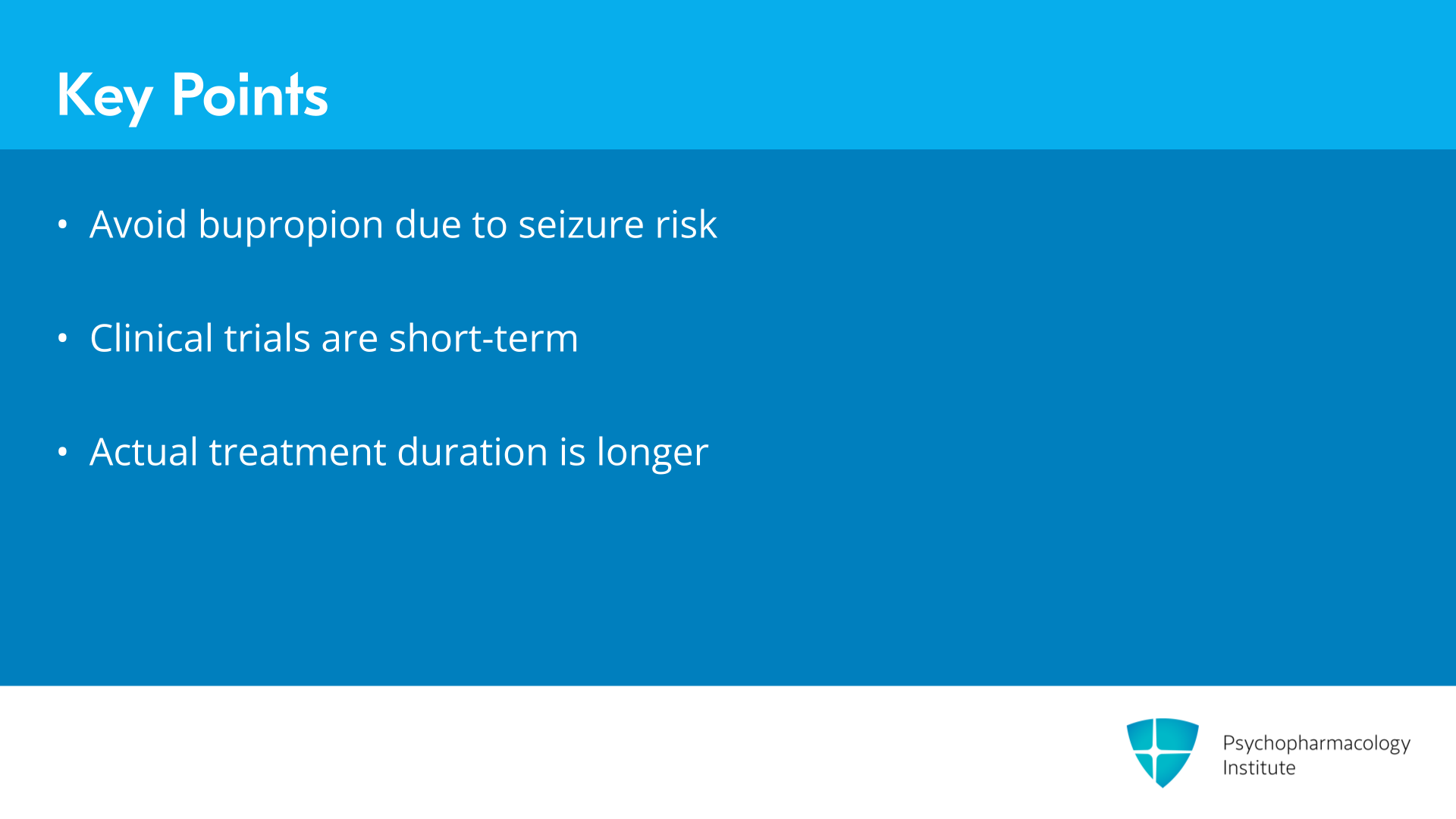
I would again stress to avoid bupropion because of seizure risk. And then finally, I would just mention briefly that the trials tend to be short-term trials often 6, 8, 10, perhaps 12 weeks but that doesn’t really reflect the clinical reality. Clinical reality in terms of how long we would prescribe these medications ideally at least in months, if not a few years.