Slides and Transcript
Slide 2 of 11
Research has shown general safety when used in medication-free patients.
However, given the potentiation that we discussed previously, caution is warranted when the patient is taking psychotropic medications.
References:
- Gerbarg, P. L., Muskin, P. R., & Brown, R. P. (2017). Complementary and integrative treatments in psychiatric practice. American Psychiatric Pub.
- Popper C. W. (2014). Single-micronutrient and broad-spectrum micronutrient approaches for treating mood disorders in youth and adults. Child and Adolescent Psychiatric Clinics of North America, 23(3), 591–672.
Free Files
Download PDF and other files
Success!
Check your inbox, we sent you all the materials there.
Slide 3 of 11
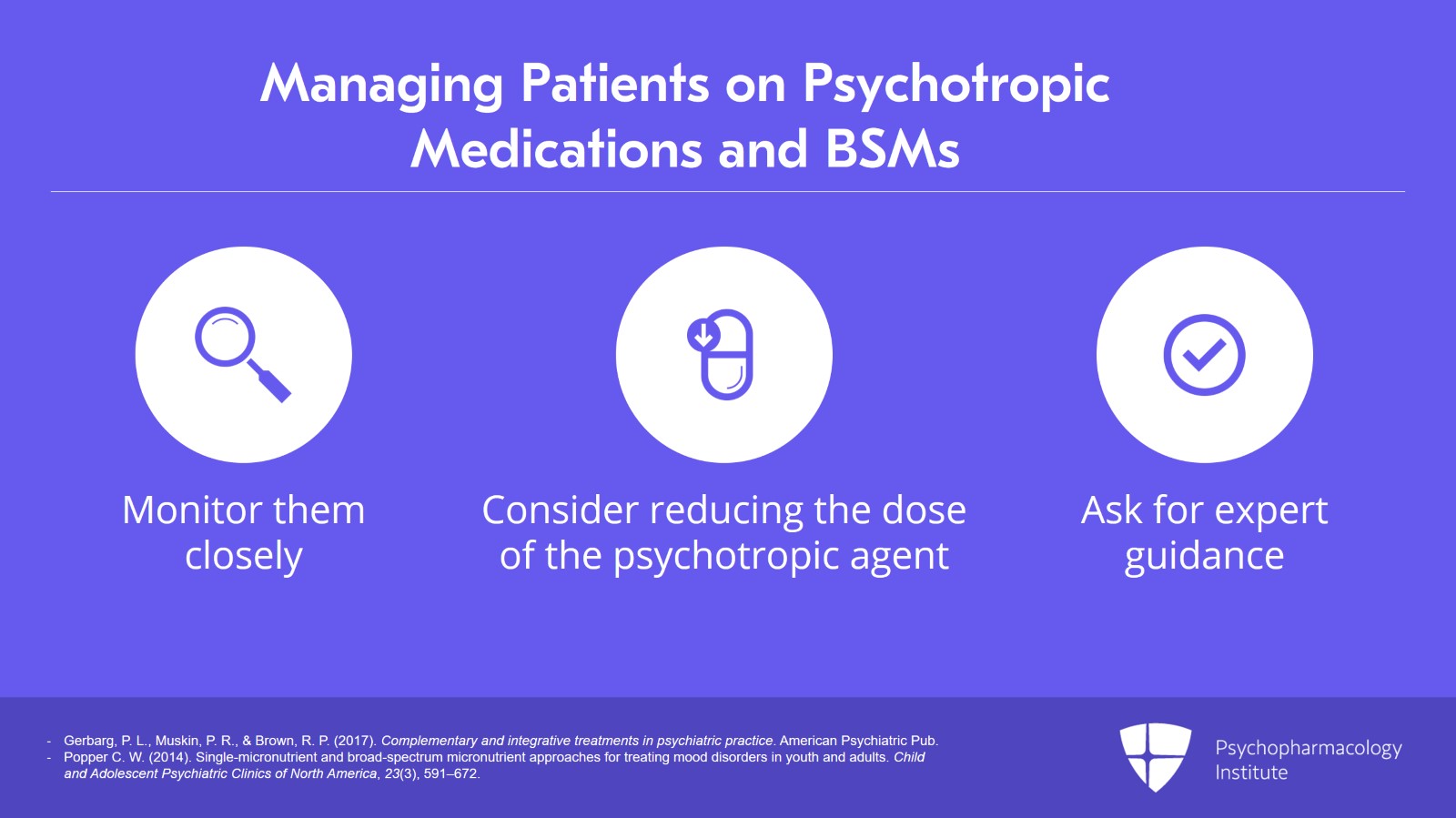
Patients should be closely monitored with full attention to the high likelihood that optimum dosing of psychotropic agents will require significant reductions and expert guidance should be consulted.
References:
- Gerbarg, P. L., Muskin, P. R., & Brown, R. P. (2017). Complementary and integrative treatments in psychiatric practice. American Psychiatric Pub.
- Popper C. W. (2014). Single-micronutrient and broad-spectrum micronutrient approaches for treating mood disorders in youth and adults. Child and Adolescent Psychiatric Clinics of North America, 23(3), 591–672.
Slide 4 of 11
There are potential micronutrient interactions with virtually any medication with CNS effects including antihistamines, medications for colds, recreational drugs, caffeine, nicotine, certain hormones like levothyroxine and glucocorticoids.
References:
- Gerbarg, P. L., Muskin, P. R., & Brown, R. P. (2017). Complementary and integrative treatments in psychiatric practice. American Psychiatric Pub.
- Popper C. W. (2014). Single-micronutrient and broad-spectrum micronutrient approaches for treating mood disorders in youth and adults. Child and Adolescent Psychiatric Clinics of North America, 23(3), 591–672.
Free Files
Download PDF and other files
Success!
Check your inbox, we sent you all the materials there.
Slide 5 of 11
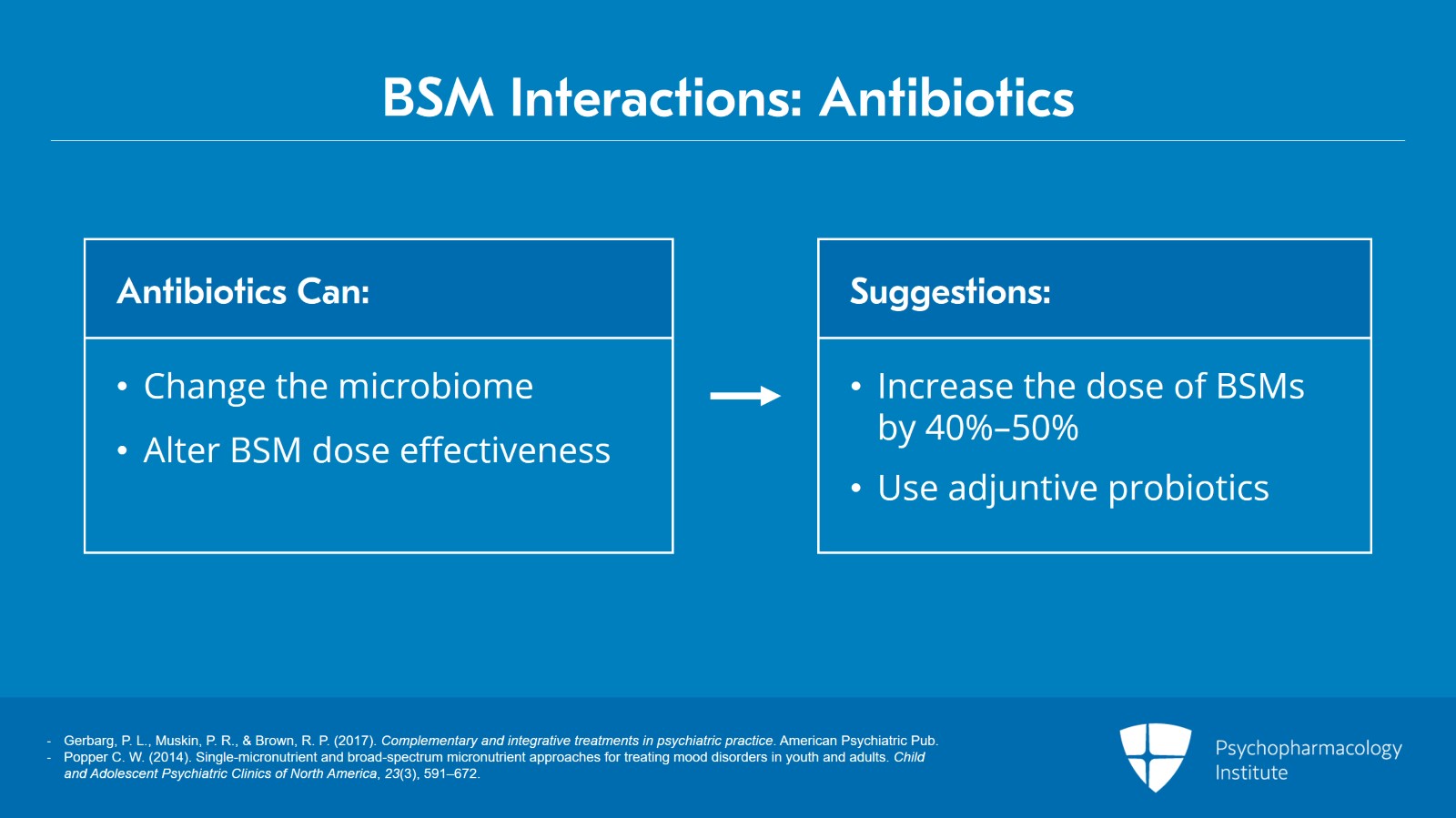
As antibiotics can change the microbiome and thereby potentially change the absorption of nutrients, micronutrient dose effectiveness may be altered after receiving antibiotics.
Authors of the chapter on broad-spectrum micronutrients in the book, Complementary and Integrative Treatments in Psychiatric Practice suggest this problem may be avoided by increasing the dose of micronutrients by 40 to 50% during antibiotic therapy plus an additional four days. Also, anecdotally, some clinicians use adjunctive probiotics for a month following the course of an antibiotic.
References:
- Gerbarg, P. L., Muskin, P. R., & Brown, R. P. (2017). Complementary and integrative treatments in psychiatric practice. American Psychiatric Pub.
- Popper C. W. (2014). Single-micronutrient and broad-spectrum micronutrient approaches for treating mood disorders in youth and adults. Child and Adolescent Psychiatric Clinics of North America, 23(3), 591–672.
Slide 6 of 11
Now, let’s discuss antacids.
Digestion is a major step in preparing food for extraction of nutrients.
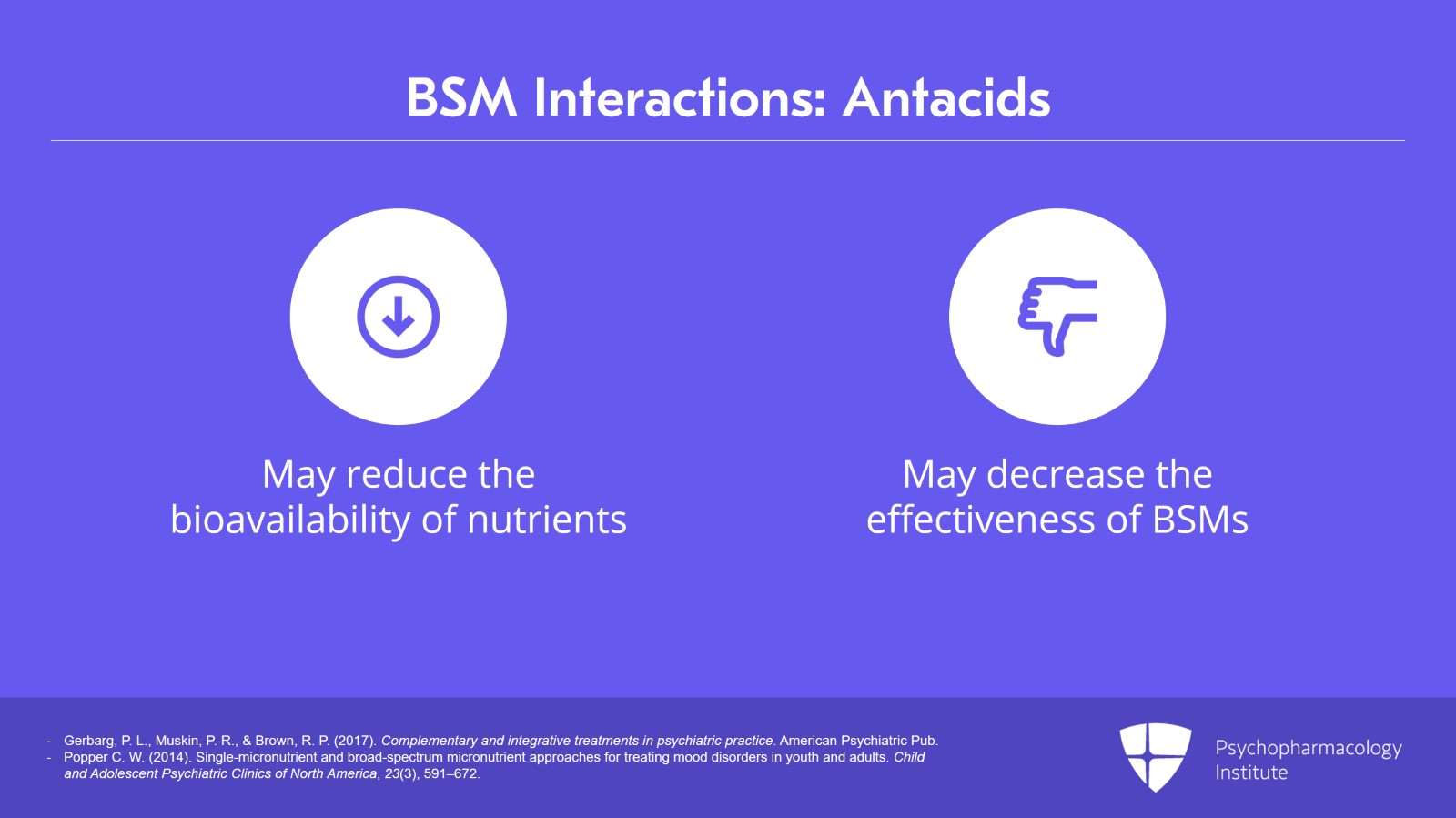
Altering this step of the digestive process can reduce the bioavailability of certain nutrients in the absorption phase.
For example, the US Food and Drug Administration is informing the public that prescription proton pump inhibitor drugs may cause low magnesium levels if taken for prolonged periods of time, in most cases, longer than a year. In approximately one-quarter of these cases reviewed, magnesium supplementation alone did not improve low serum magnesium levels and the PPI had to be discontinued.
In a similar way, antacids may decrease the effectiveness of broad-spectrum micronutrients by decreasing their ability to be absorbed.
References:
- Gerbarg, P. L., Muskin, P. R., & Brown, R. P. (2017). Complementary and integrative treatments in psychiatric practice. American Psychiatric Pub.
- Popper C. W. (2014). Single-micronutrient and broad-spectrum micronutrient approaches for treating mood disorders in youth and adults. Child and Adolescent Psychiatric Clinics of North America, 23(3), 591–672.
Free Files
Download PDF and other files
Success!
Check your inbox, we sent you all the materials there.
Slide 7 of 11
Daily Essential Nutrients contain vitamin K which promotes blood clotting function. Therefore, caution is needed when administering with patients on anticoagulant therapy.
References:
- Gerbarg, P. L., Muskin, P. R., & Brown, R. P. (2017). Complementary and integrative treatments in psychiatric practice. American Psychiatric Pub.
- Popper C. W. (2014). Single-micronutrient and broad-spectrum micronutrient approaches for treating mood disorders in youth and adults. Child and Adolescent Psychiatric Clinics of North America, 23(3), 591–672.
Slide 8 of 11
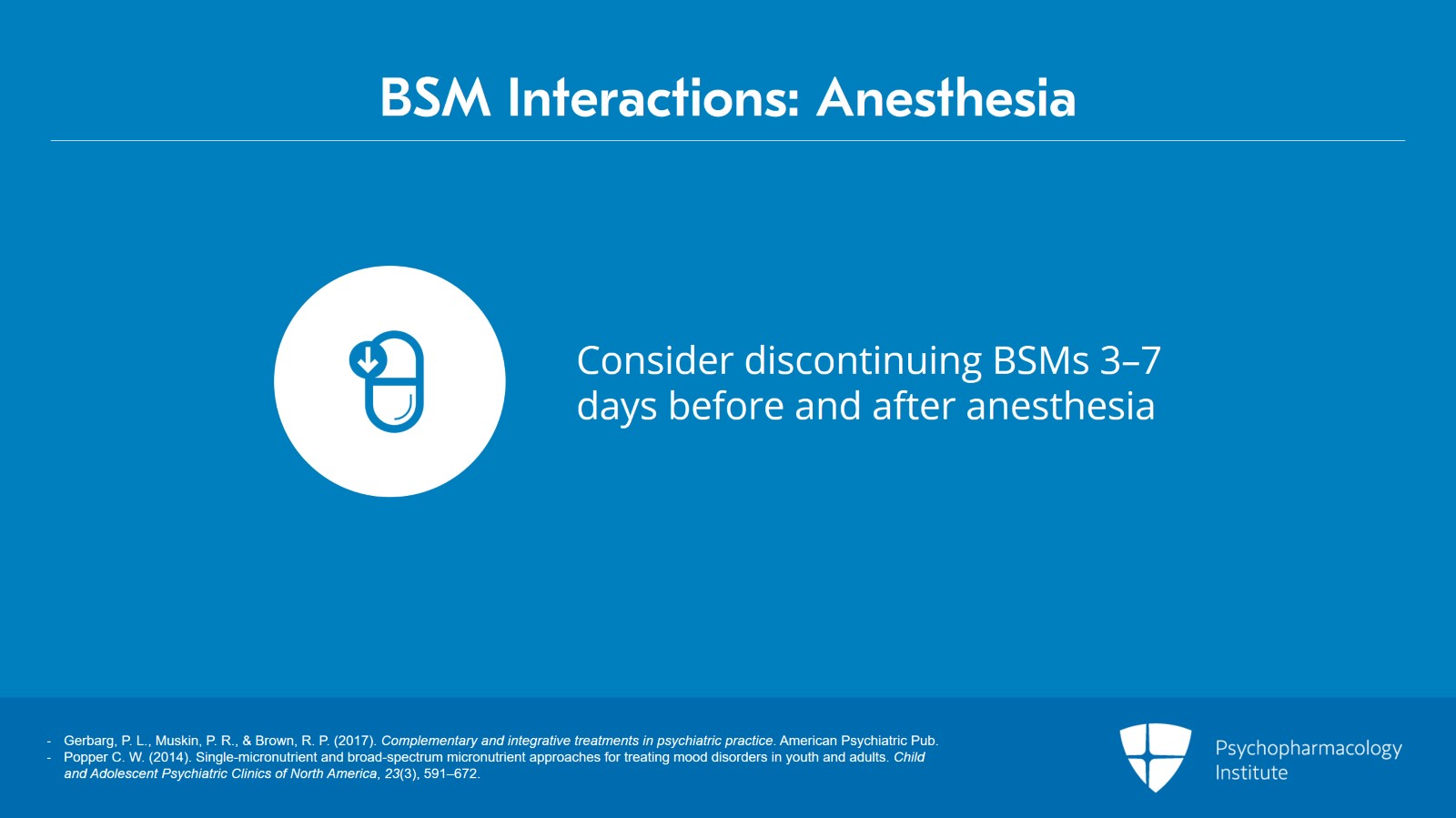
As anesthesia has psychotropic effects, broad-spectrum micronutrients may interact with anesthesia.
And out of caution, some individuals may wish to discontinue these formulas three to seven days prior and three to seven days after anesthesia based on theoretical concerns. No controlled research is available in this area.
References:
- Gerbarg, P. L., Muskin, P. R., & Brown, R. P. (2017). Complementary and integrative treatments in psychiatric practice. American Psychiatric Pub.
- Popper C. W. (2014). Single-micronutrient and broad-spectrum micronutrient approaches for treating mood disorders in youth and adults. Child and Adolescent Psychiatric Clinics of North America, 23(3), 591–672.
Free Files
Download PDF and other files
Success!
Check your inbox, we sent you all the materials there.
Slide 9 of 11
Key points:
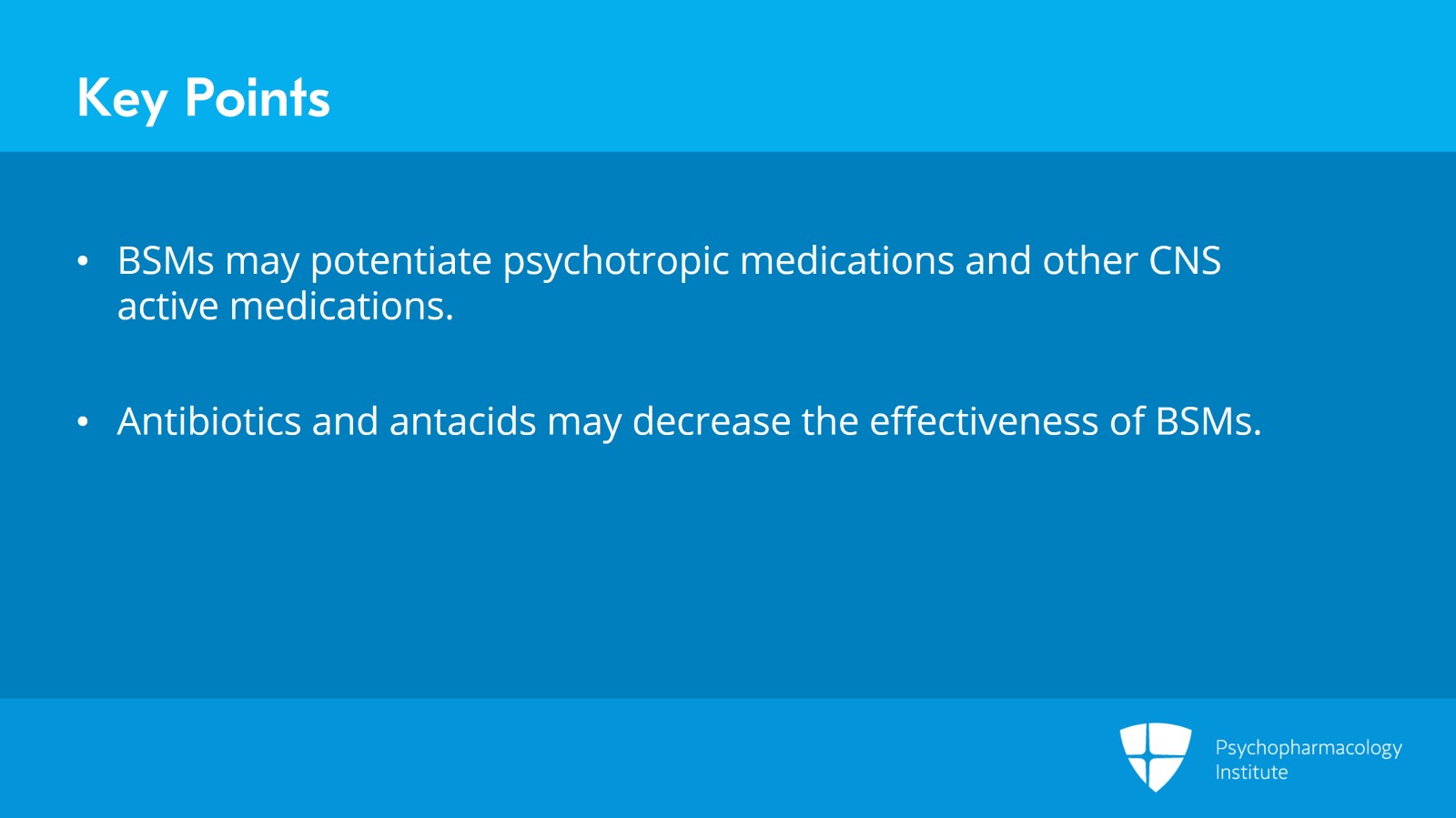
Broad-spectrum micronutrients may potentiate psychotropic medications as well as other CNS active medications such as antihistamines and thyroid medications.
Antibiotics and antacids may decrease the effectiveness of these two formulas.
Slide 10 of 11
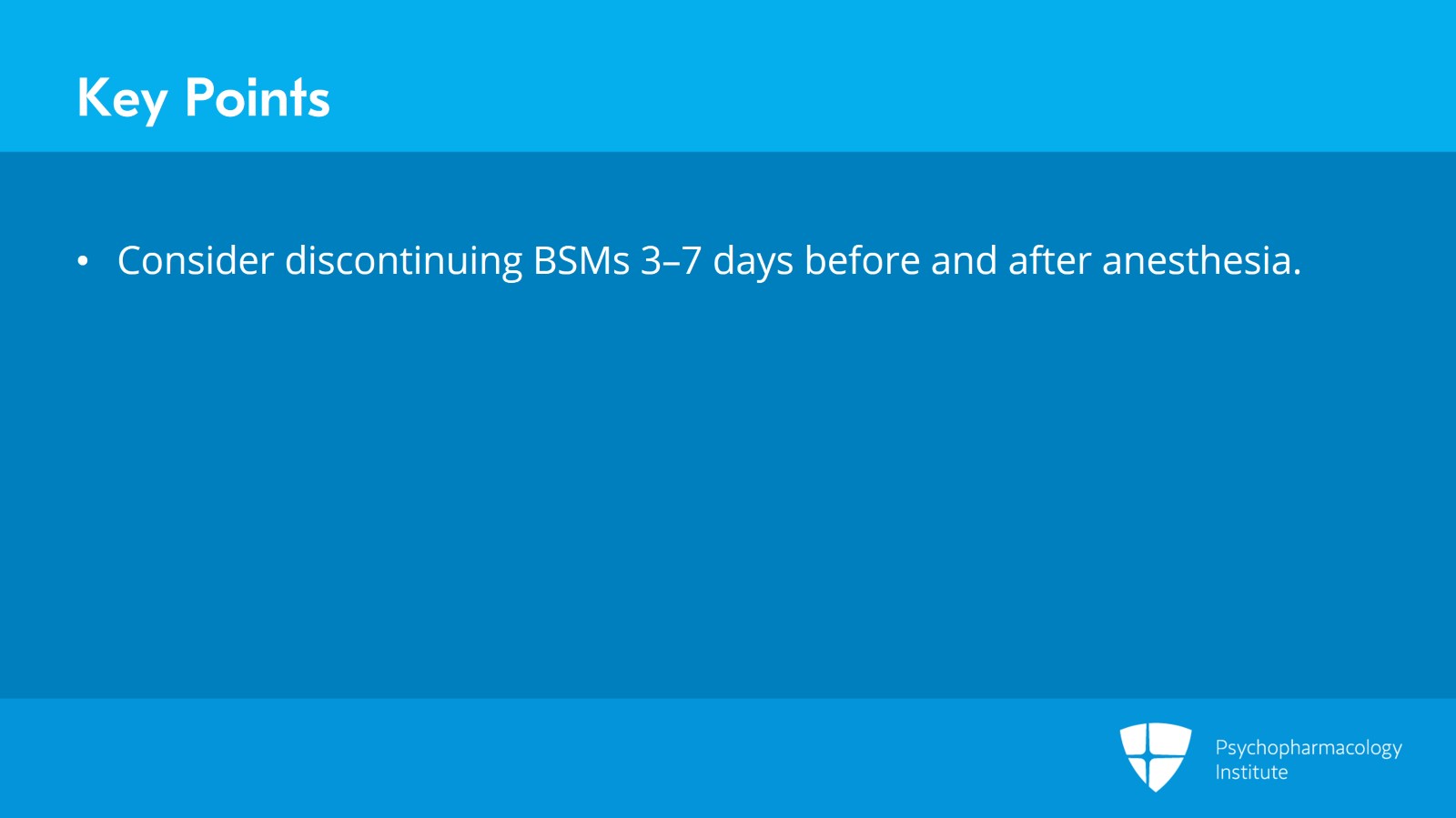
Out of caution, consideration may be made to discontinue broad-spectrum micronutrients three to seven days prior to and after anesthesia.
Free Files
Download PDF and other files
Success!
Check your inbox, we sent you all the materials there.