



Slides and Transcript
Slide 1 of 14
Next then, we should talk about the use of stimulants in BED treatment.
Slide 2 of 14
This has become relevant because work has been done in studying lisdexamfetamine as a treatment for binge eating disorder and that received FDA approval in 2015. There are both short-term and long-term studies, placebo discontinuation studies and a nice body of work that’s shown that lisdexamfetamine is clearly effective. Although it has an FDA indication, the broad range of effects that are seen tend to be relatively similar to what we’ve seen with other agents for binge eating disorder.
References:
- Hudson, J. I., McElroy, S. L., Ferreira-Cornwell, M. C., Radewonuk, J., & Gasior, M. (2017). Efficacy of Lisdexamfetamine in Adults With Moderate to Severe Binge-Eating Disorder: A Randomized Clinical Trial. JAMA Psychiatry, 74(9), 903–910. https://doi.org/10.1001/jamapsychiatry.2017.1889
Free Files
Download PDF and other files
Success!
Check your inbox, we sent you all the materials there.
Slide 3 of 14
It’s not probably the case that lisdexamfetamine is more effective but rather that it is an alternative that does have effects. It presumably has different mechanisms of action and I think that’s conceptually appealing that it could be something that would work in a different way. It’s useful for binge eating disorder. It can cause some change in weight as well.
References:
- Hudson, J. I., McElroy, S. L., Ferreira-Cornwell, M. C., Radewonuk, J., & Gasior, M. (2017). Efficacy of Lisdexamfetamine in Adults With Moderate to Severe Binge-Eating Disorder: A Randomized Clinical Trial. JAMA Psychiatry, 74(9), 903–910. https://doi.org/10.1001/jamapsychiatry.2017.1889
Slide 4 of 14
It potentially has different comorbidity benefits particularly for people with ADHD who might also have binge eating disorder. That turns out to be a common comorbidity and this may be a spot where the use of lisdexamfetamine could address both of those. On the other hand, the thing you have to worry about are dependence concerns. Another comorbidity that’s relatively common for those with eating disorders including binge eating disorder are substance use disorders. And so that has to very much impact on one’s prescribing decisions with binge eating disorder.
References:
- Hudson, J. I., McElroy, S. L., Ferreira-Cornwell, M. C., Radewonuk, J., & Gasior, M. (2017). Efficacy of Lisdexamfetamine in Adults With Moderate to Severe Binge-Eating Disorder: A Randomized Clinical Trial. JAMA Psychiatry, 74(9), 903–910. https://doi.org/10.1001/jamapsychiatry.2017.1889
- Soutullo, C. A., & Babatope, T. T. (2022). Attention deficit hyperactivity disorder and eating disorders: an overlooked comorbidity?. Anales del sistema sanitario de Navarra, 45(1), e0994. https://doi.org/10.23938/ASSN.0994
- Tapoi, C. (2022). Comorbidity of Substance Use Disorders and Eating Disorders: a major concern for mental health care professionals. European Psychiatry, 65(S1), S578. https://doi.org/10.1192/j.eurpsy.2022.1481
Free Files
Download PDF and other files
Success!
Check your inbox, we sent you all the materials there.
Slide 5 of 14
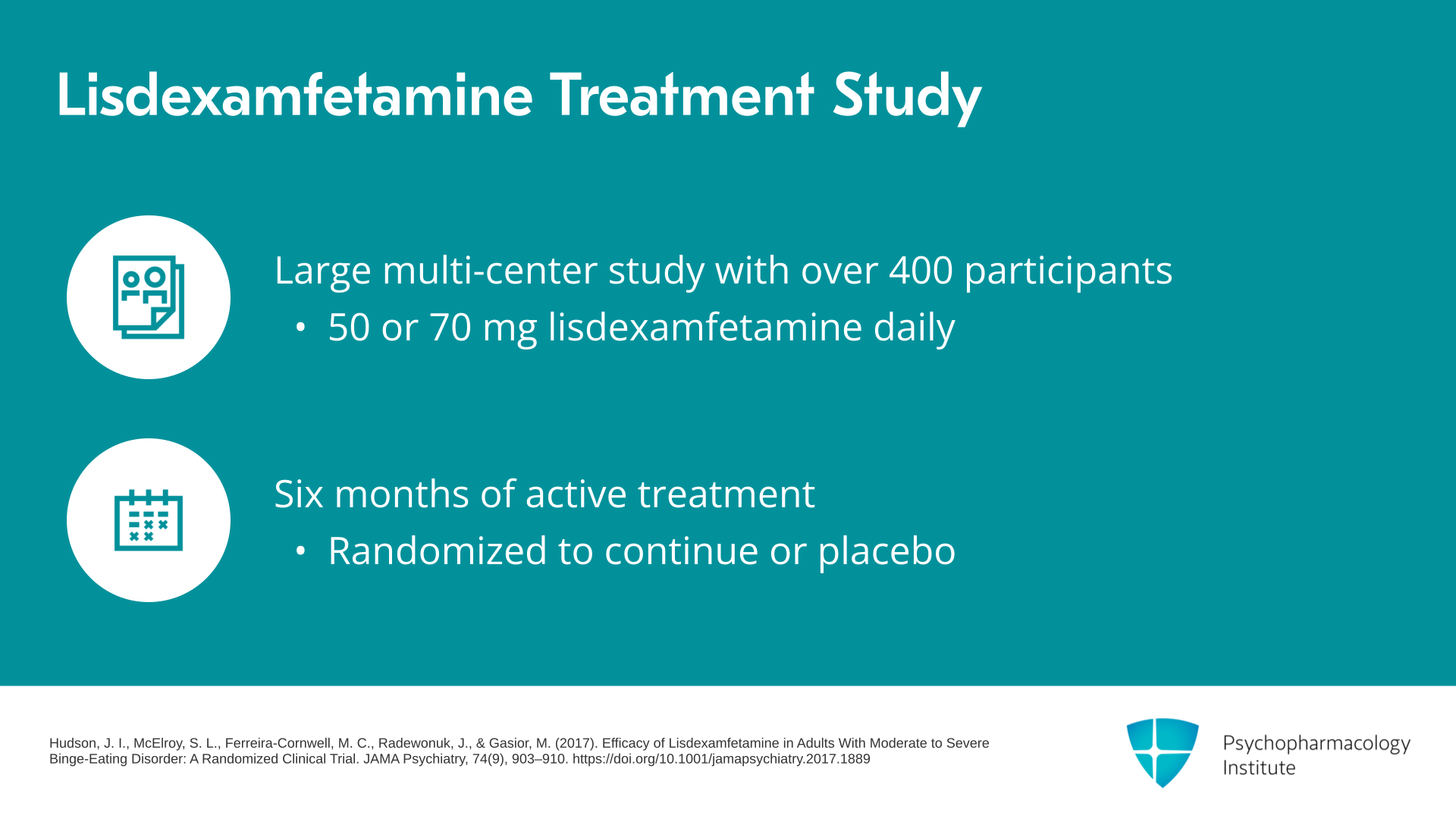
We have one particularly nice study of lisdexamfetamine that tells an important thing about duration of treatment. This is a large multi-center study that enrolled over 400 people. People were treated with 50 or 70 mg a day of lisdexamfetamine and everybody in that trial got the actual medication. And then after the first six months of treatment, they were randomized to either keep going with lisdexamfetamine or to get a matching placebo pill. So these are people that had complete cessation or marked decrease in binge eating. And so they were followed to see, did their symptoms come back or did they stay in a pretty good spot?
References:
- Hudson, J. I., McElroy, S. L., Ferreira-Cornwell, M. C., Radewonuk, J., & Gasior, M. (2017). Efficacy of Lisdexamfetamine in Adults With Moderate to Severe Binge-Eating Disorder: A Randomized Clinical Trial. JAMA Psychiatry, 74(9), 903–910. https://doi.org/10.1001/jamapsychiatry.2017.1889
Slide 6 of 14
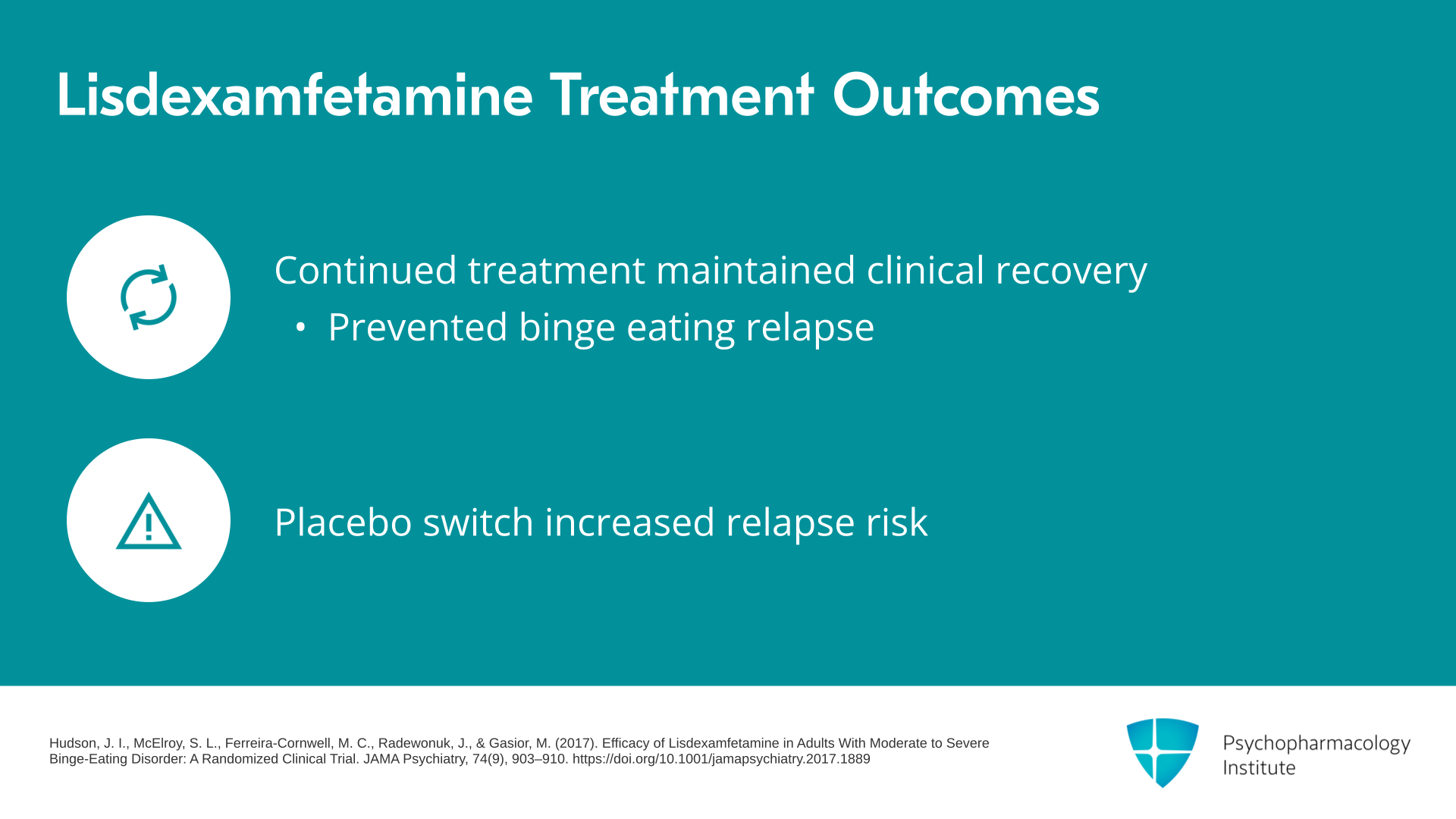
And what the study showed was that continuing lisdexamfetamine kept a great majority of people in good clinical recovery. But for those who switched to placebo, the likelihood of relapse to binge eating symptoms was pretty high. That actually occurred a lot in that sample. And that’s a very clinically useful data point because what it argues is that at least over a period of months if somebody’s benefiting from the medication and you want them to continue to get the benefit that they’ve been getting, they probably need to continue the medication.
References:
- Hudson, J. I., McElroy, S. L., Ferreira-Cornwell, M. C., Radewonuk, J., & Gasior, M. (2017). Efficacy of Lisdexamfetamine in Adults With Moderate to Severe Binge-Eating Disorder: A Randomized Clinical Trial. JAMA Psychiatry, 74(9), 903–910. https://doi.org/10.1001/jamapsychiatry.2017.1889
Free Files
Download PDF and other files
Success!
Check your inbox, we sent you all the materials there.
Slide 7 of 14
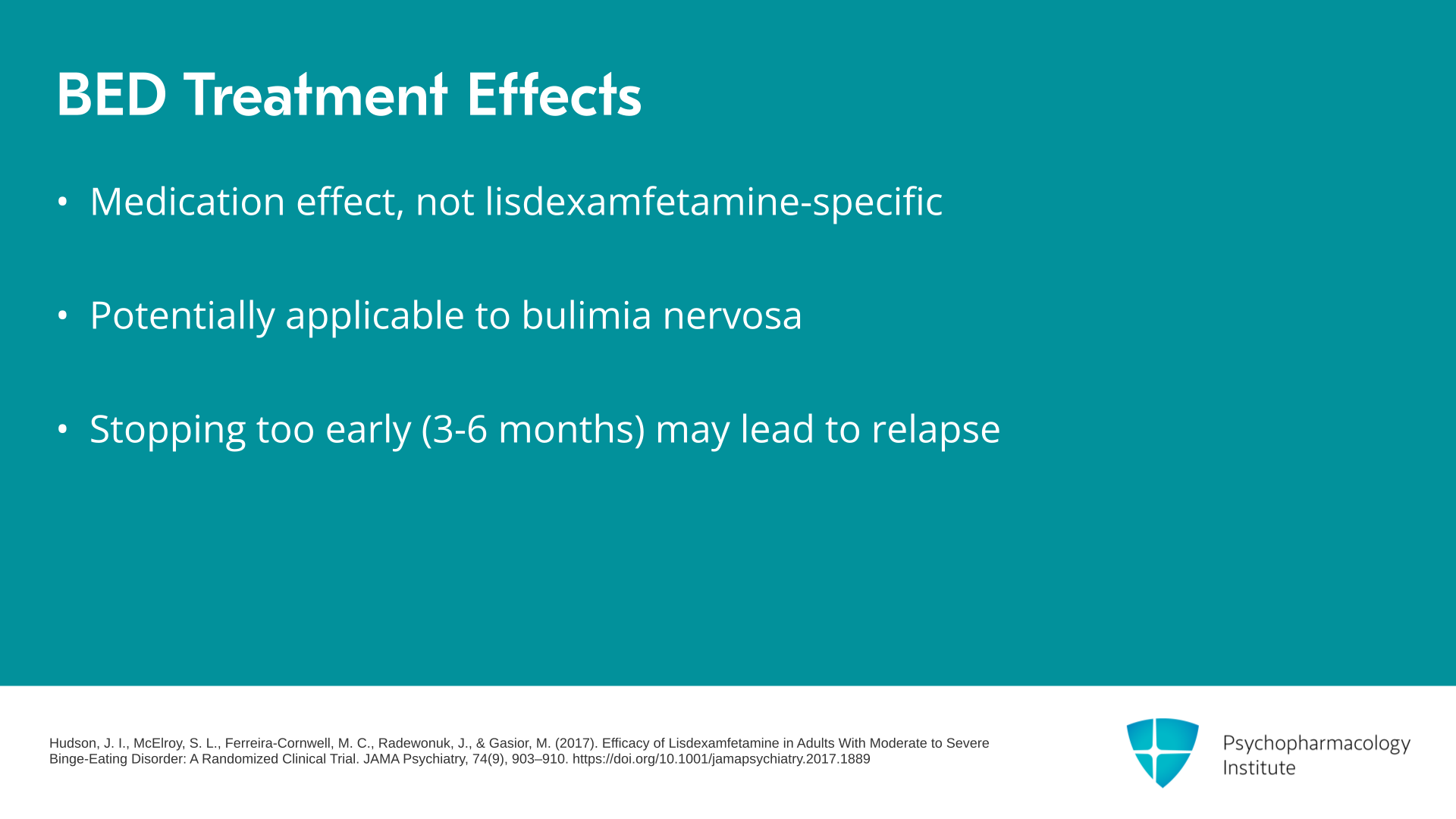
I think this is unlikely to be a lisdexamfetamine effect. I think this is a medication treatment for binge eating disorder effect. I suspect that it’s translatable to the treatment of bulimia nervosa too. That doesn’t mean lifelong treatment. And we don’t have studies that specifically answer that question. But clinical experience certainly suggests that if someone gets medication for BED and they get a good benefit from it, we have lots of people who after some period of years will stop it and go on to do very well. So it isn’t a lifetime thing but aiming for three or six months of treatment and then stopping is likely to be a pretty disappointing thing for many people.
References:
- Hudson, J. I., McElroy, S. L., Ferreira-Cornwell, M. C., Radewonuk, J., & Gasior, M. (2017). Efficacy of Lisdexamfetamine in Adults With Moderate to Severe Binge-Eating Disorder: A Randomized Clinical Trial. JAMA Psychiatry, 74(9), 903–910. https://doi.org/10.1001/jamapsychiatry.2017.1889
Slide 8 of 14
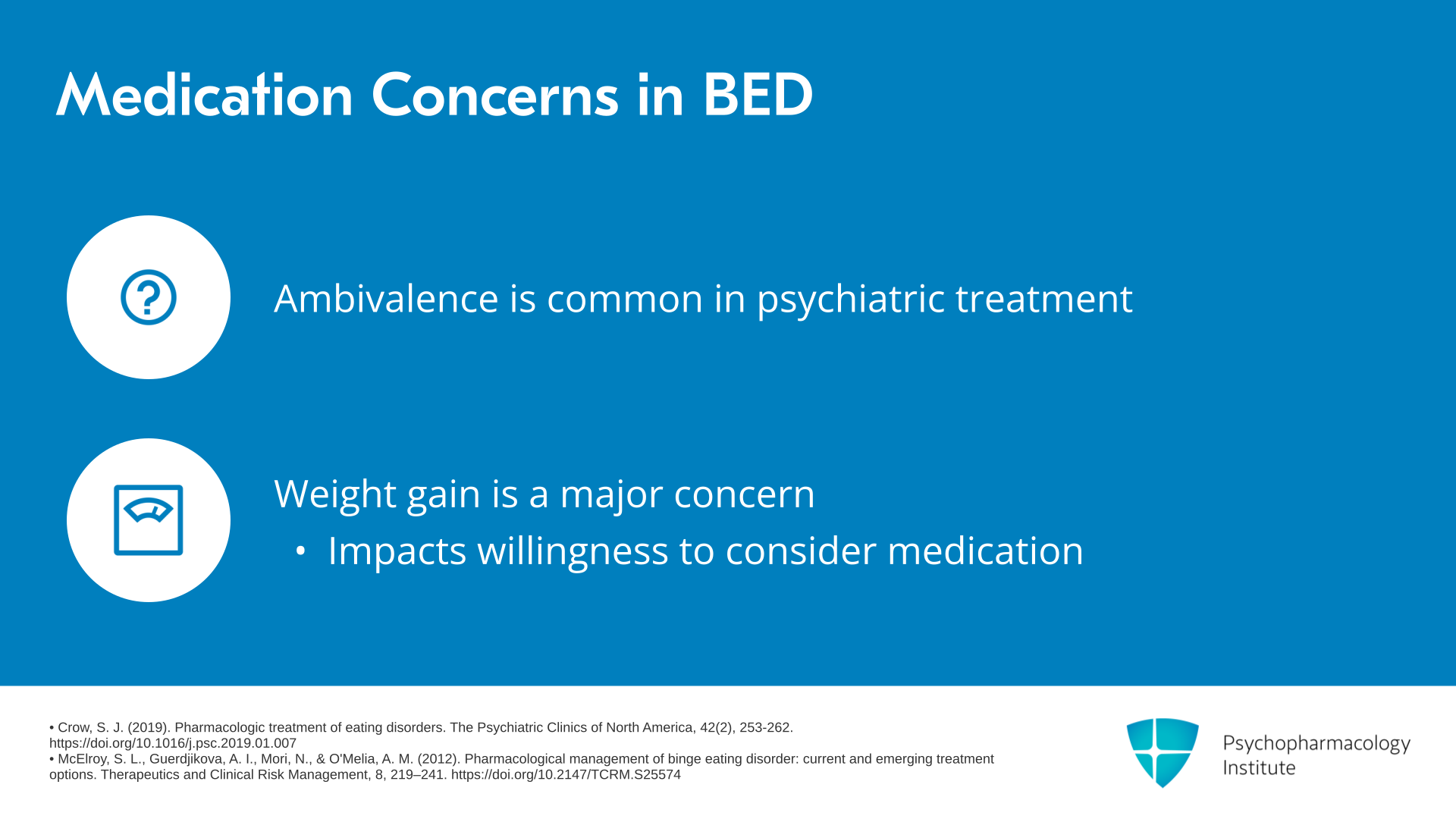
In the context of BED but really all eating disorder treatments, I want to talk briefly about ambivalence regarding medications. We encounter that a lot in psychiatric treatment. That’s at least as common in the pharmacotherapy approaches to people with eating disorders as it is in any other area of Psychiatry. We see concerns about using medications broadly. A great amount tends to be focused on weight gain. There’s broad knowledge in the general populace about the issue of weight gain and psychiatric medications and this really, really tends to impact willingness to consider medication. And there’s a general approach that I think brings a lot of benefit.
References:
- Crow, S. J. (2019). Pharmacologic treatment of eating disorders. The Psychiatric Clinics of North America, 42(2), 253-262. https://doi.org/10.1016/j.psc.2019.01.007
- McElroy, S. L., Guerdjikova, A. I., Mori, N., & O'Melia, A. M. (2012). Pharmacological management of binge eating disorder: current and emerging treatment options. Therapeutics and Clinical Risk Management, 8, 219–241. https://doi.org/10.2147/TCRM.S25574
Free Files
Download PDF and other files
Success!
Check your inbox, we sent you all the materials there.
Slide 9 of 14
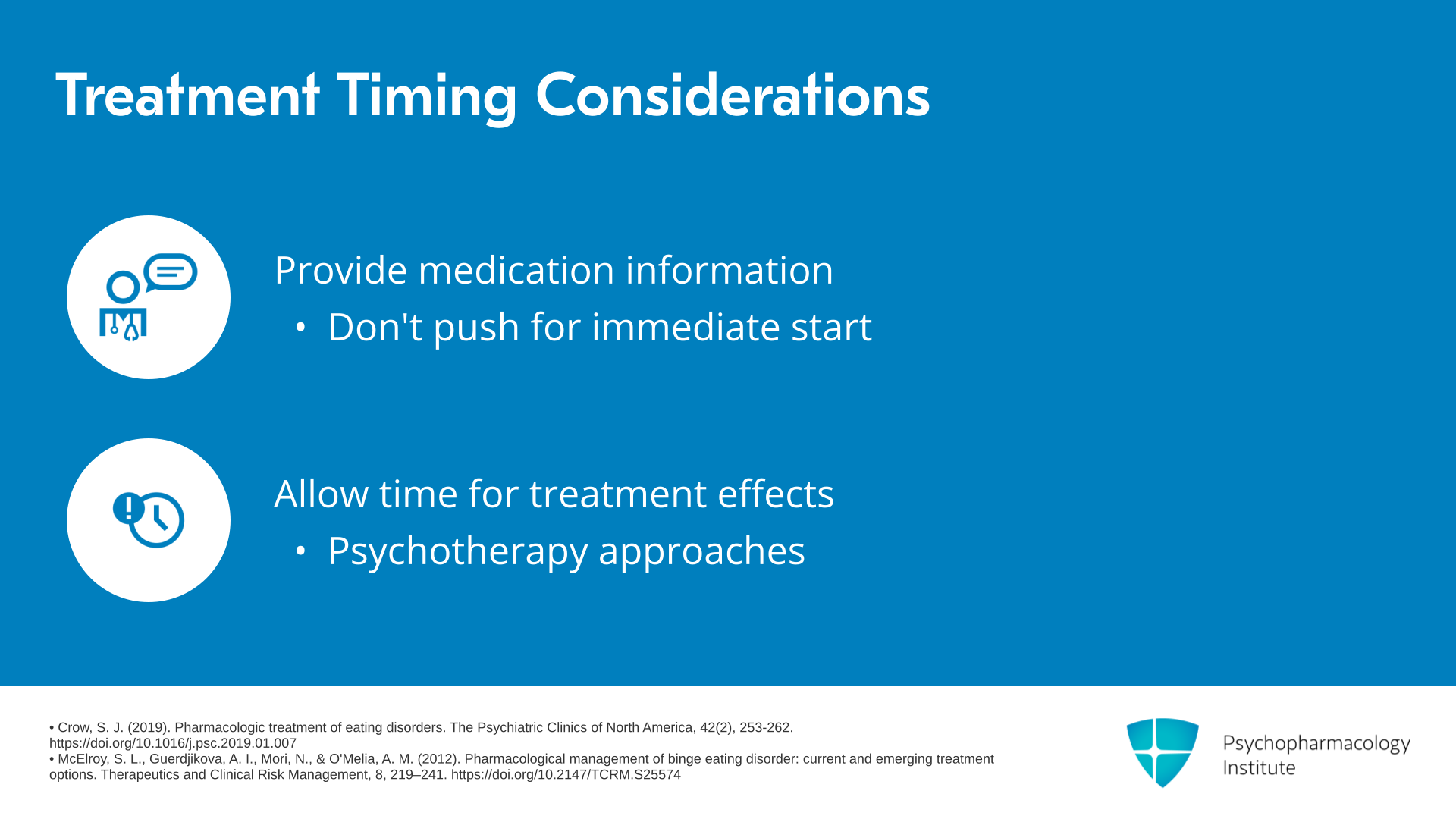
The first thing is that this is an area where it’s particularly useful to allow time, to provide information on medications but in many cases not to really consider a push for starting them right away. And that makes sense in this treatment because you may be seeing somebody at a point where they’re embarking on nutritional approaches and psychotherapy approaches and we really would expect that those may be very effective and they need some time. But I think all of us have had the experience of finding that pushing hard for starting medications can be not so successful but giving a little bit of space can really increase the likelihood of being able to do that.
References:
- Crow, S. J. (2019). Pharmacologic treatment of eating disorders. The Psychiatric Clinics of North America, 42(2), 253-262. https://doi.org/10.1016/j.psc.2019.01.007
- McElroy, S. L., Guerdjikova, A. I., Mori, N., & O'Melia, A. M. (2012). Pharmacological management of binge eating disorder: current and emerging treatment options. Therapeutics and Clinical Risk Management, 8, 219–241. https://doi.org/10.2147/TCRM.S25574
Slide 10 of 14
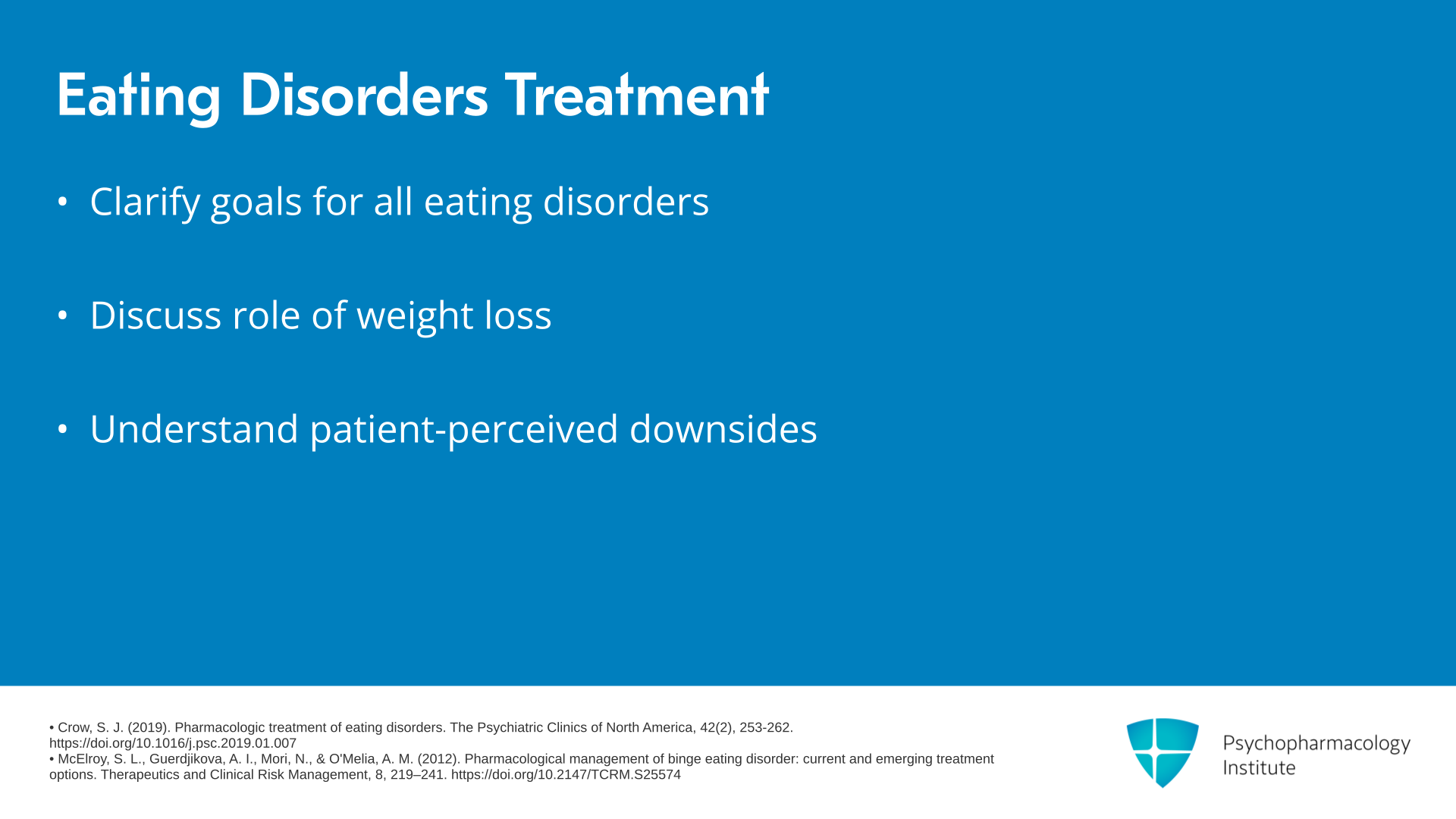
For all of the eating disorders especially BED you want to clarify treatment goals and understand what role weight loss might play in patient goals. It’s also useful to clarify in the treatment of anorexia and bulimia what your treatment goals are and in particular that your treatment goals do not involve having medications induce a bunch of weight gain. It’s critical to try to understand what the downsides are that the patient perceives. This again is going to primarily lead to discussions about weight gain.
References:
- Crow, S. J. (2019). Pharmacologic treatment of eating disorders. The Psychiatric Clinics of North America, 42(2), 253-262. https://doi.org/10.1016/j.psc.2019.01.007
- McElroy, S. L., Guerdjikova, A. I., Mori, N., & O'Melia, A. M. (2012). Pharmacological management of binge eating disorder: current and emerging treatment options. Therapeutics and Clinical Risk Management, 8, 219–241. https://doi.org/10.2147/TCRM.S25574
Free Files
Download PDF and other files
Success!
Check your inbox, we sent you all the materials there.
Slide 11 of 14
But the eating disorders treatment community, much of this treatment is done in specialized settings and in group settings and high-intensity settings and people receiving treatment talk, including talking a lot about medications and so this is going to be perhaps more impactful than in some other places.
References:
- Crow, S. J. (2019). Pharmacologic treatment of eating disorders. The Psychiatric Clinics of North America, 42(2), 253-262. https://doi.org/10.1016/j.psc.2019.01.007
- McElroy, S. L., Guerdjikova, A. I., Mori, N., & O'Melia, A. M. (2012). Pharmacological management of binge eating disorder: current and emerging treatment options. Therapeutics and Clinical Risk Management, 8, 219–241. https://doi.org/10.2147/TCRM.S25574
Slide 12 of 14
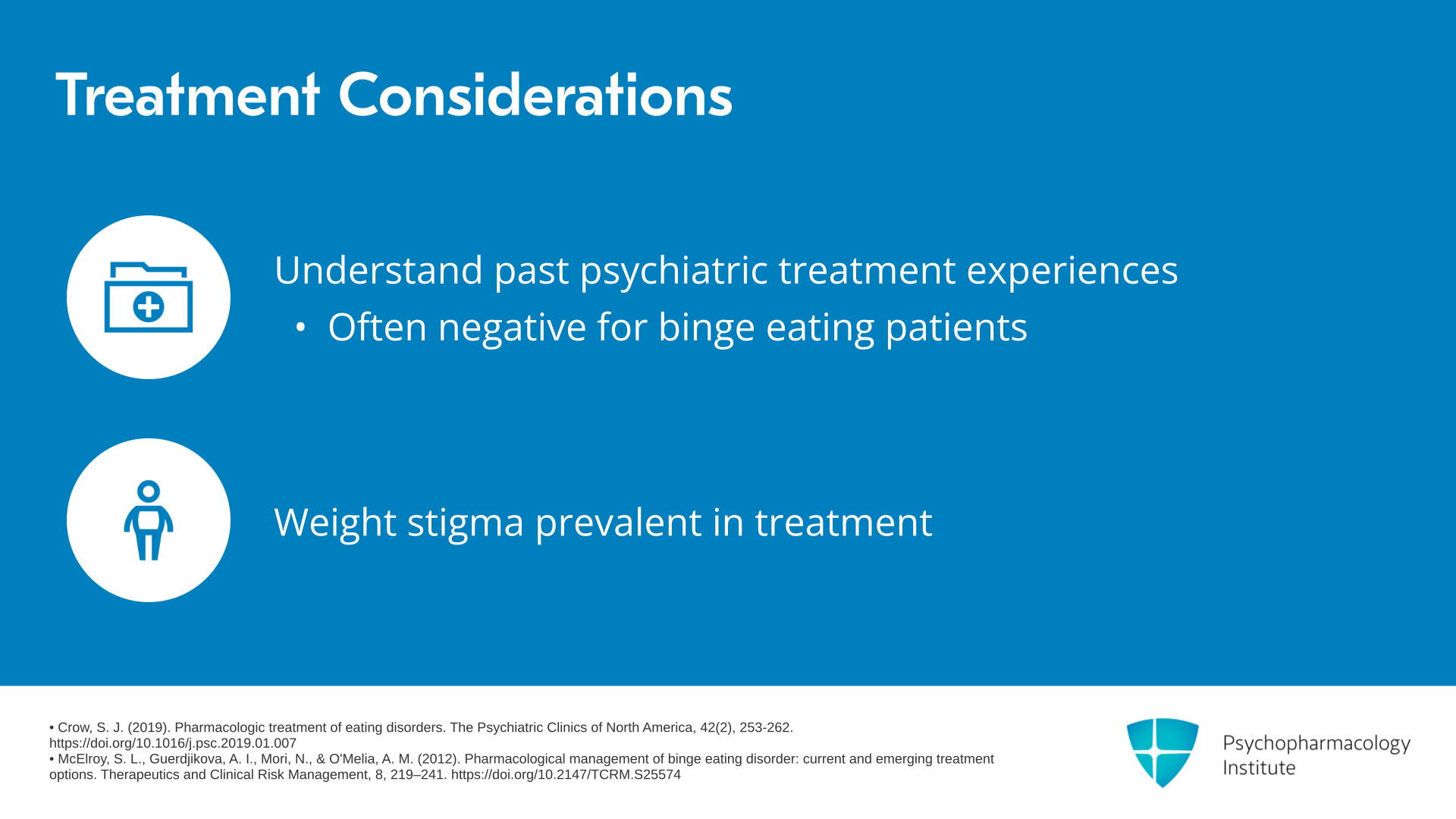
And then, learning about what the past experiences have been for people with medical treatment, with psychiatric treatment and with psychiatric medications. It’s often not been great. And for those with binge eating disorder in particular, the frequency with which they’ve experienced weight stigmatizing things happening during treatment is just extraordinary and that really has a tremendous impact on people. That I’m pretty certain occurs more in the group with binge eating than in most groups of patients that we see in the Psychiatry world and it’s critical to understand that as you try to embark on treatment.
References:
- Crow, S. J. (2019). Pharmacologic treatment of eating disorders. The Psychiatric Clinics of North America, 42(2), 253-262. https://doi.org/10.1016/j.psc.2019.01.007
- McElroy, S. L., Guerdjikova, A. I., Mori, N., & O'Melia, A. M. (2012). Pharmacological management of binge eating disorder: current and emerging treatment options. Therapeutics and Clinical Risk Management, 8, 219–241. https://doi.org/10.2147/TCRM.S25574
Free Files
Download PDF and other files
Success!
Check your inbox, we sent you all the materials there.
Slide 13 of 14
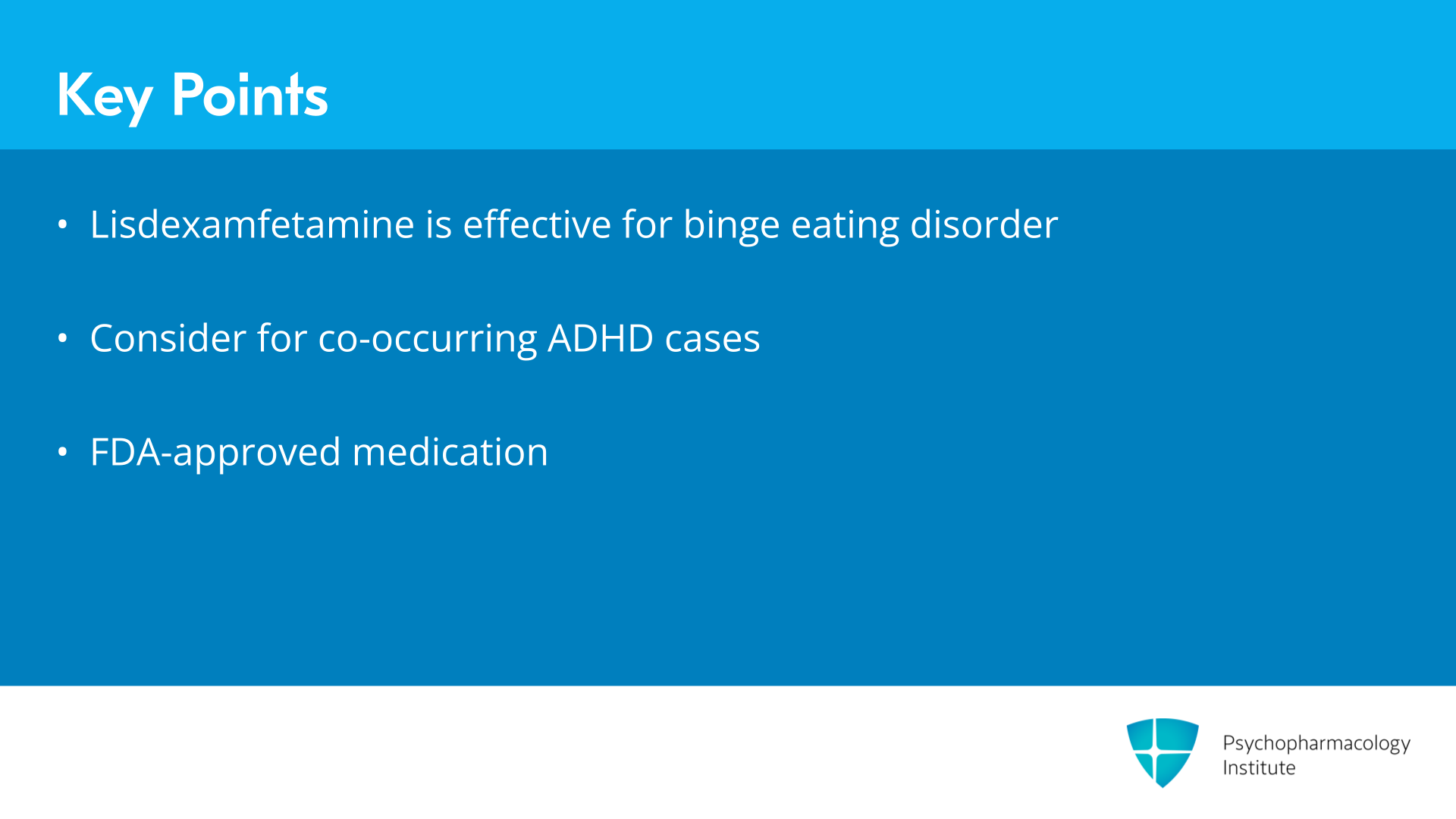
So the key points I would make in this section, first that lisdexamfetamine is clearly helpful for people with binge eating disorder. It’s not so clear that it’s more helpful than other medications but it’s a useful thing to consider particularly perhaps for those with co-occurring ADHD and without substance use concerns. And it is FDA indicated.
Slide 14 of 14
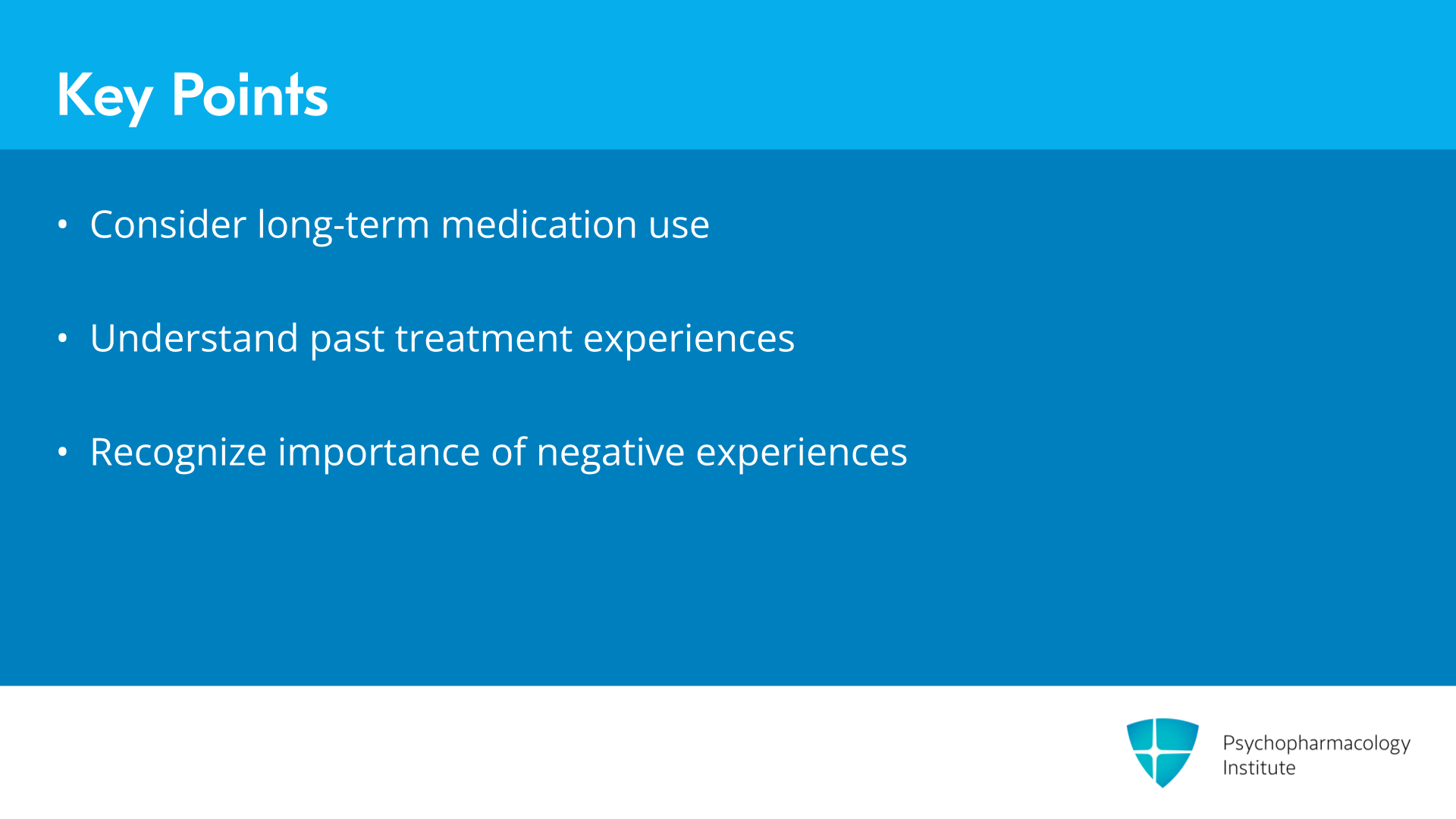
The second key point that I would stress is just the importance of really thinking about medication use in people with eating disorders including BED as a long-term process. Also, I would note the critical nature of understanding past treatment experiences but especially bad past treatment experiences in those with binge eating disorder because this is an extremely important clinical phenomenon.
Free Files
Download PDF and other files
Success!
Check your inbox, we sent you all the materials there.
