



Slides and Transcript
Slide 1 of 12
Now, let’s move on to talk about pharmacotherapy treatments for those with binge eating disorder. This is a situation that is more similar to the treatment of bulimia nervosa in that this is a spot where there is a lot of evidence for effectiveness of medication treatments.
Slide 2 of 12
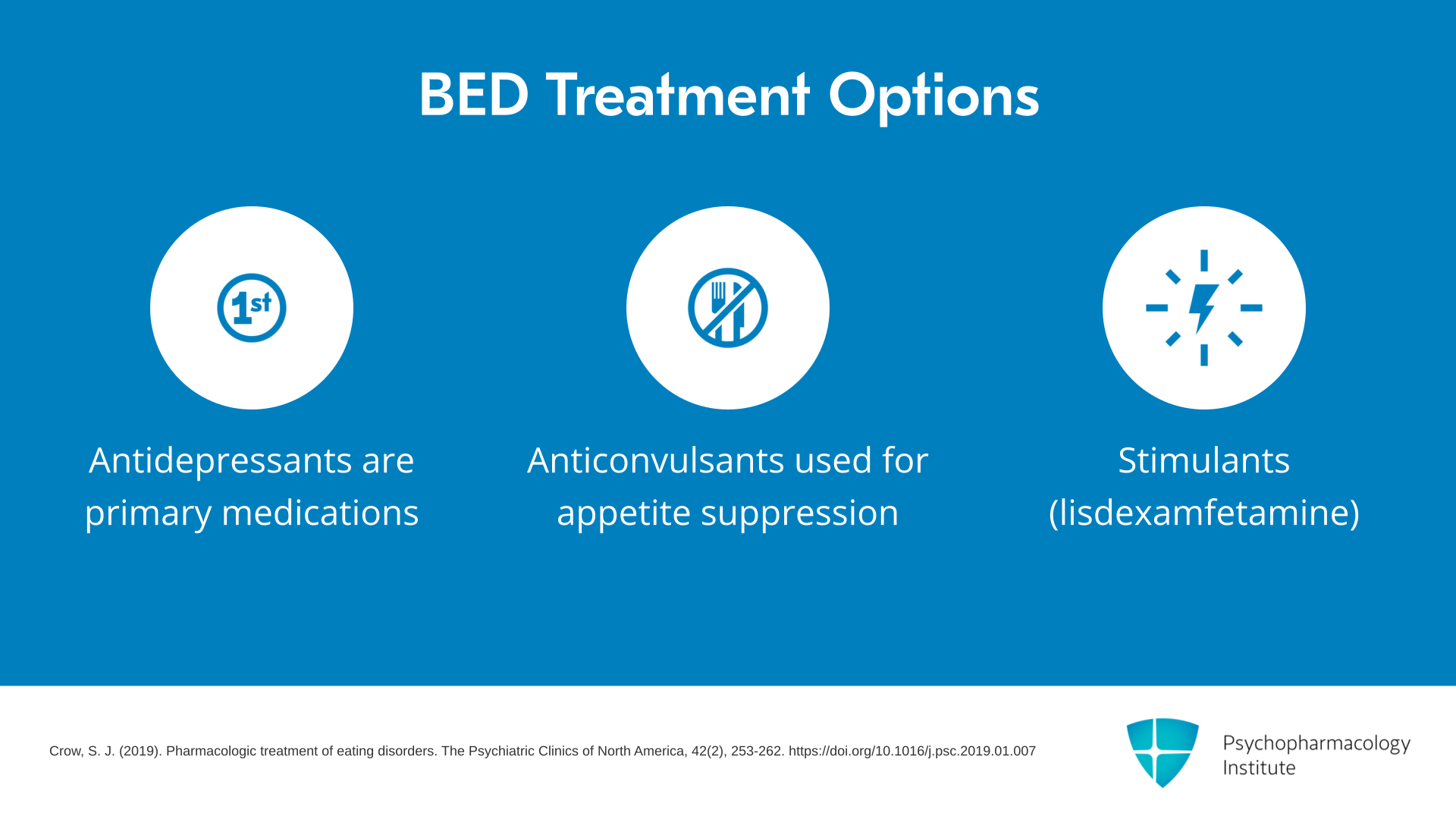
Broadly speaking, there are three groups of medications that are used clinically. The first much as in bulimia nervosa treatment are the antidepressants. The second are anticonvulsant medications, they’re used for their appetite suppressing and urge suppressing effects, not for anticonvulsant effects. There is no thought that this is a seizure disorder but rather it’s an additional effect of those meds that we seek. And then lastly, there’s some interest now in the use of stimulant medications particularly with lisdexamfetamine coming on the scene.
References:
- Crow, S. J. (2019). Pharmacologic treatment of eating disorders. The Psychiatric Clinics of North America, 42(2), 253-262. https://doi.org/10.1016/j.psc.2019.01.007
Free Files
Download PDF and other files
Success!
Check your inbox, we sent you all the materials there.
Slide 3 of 12
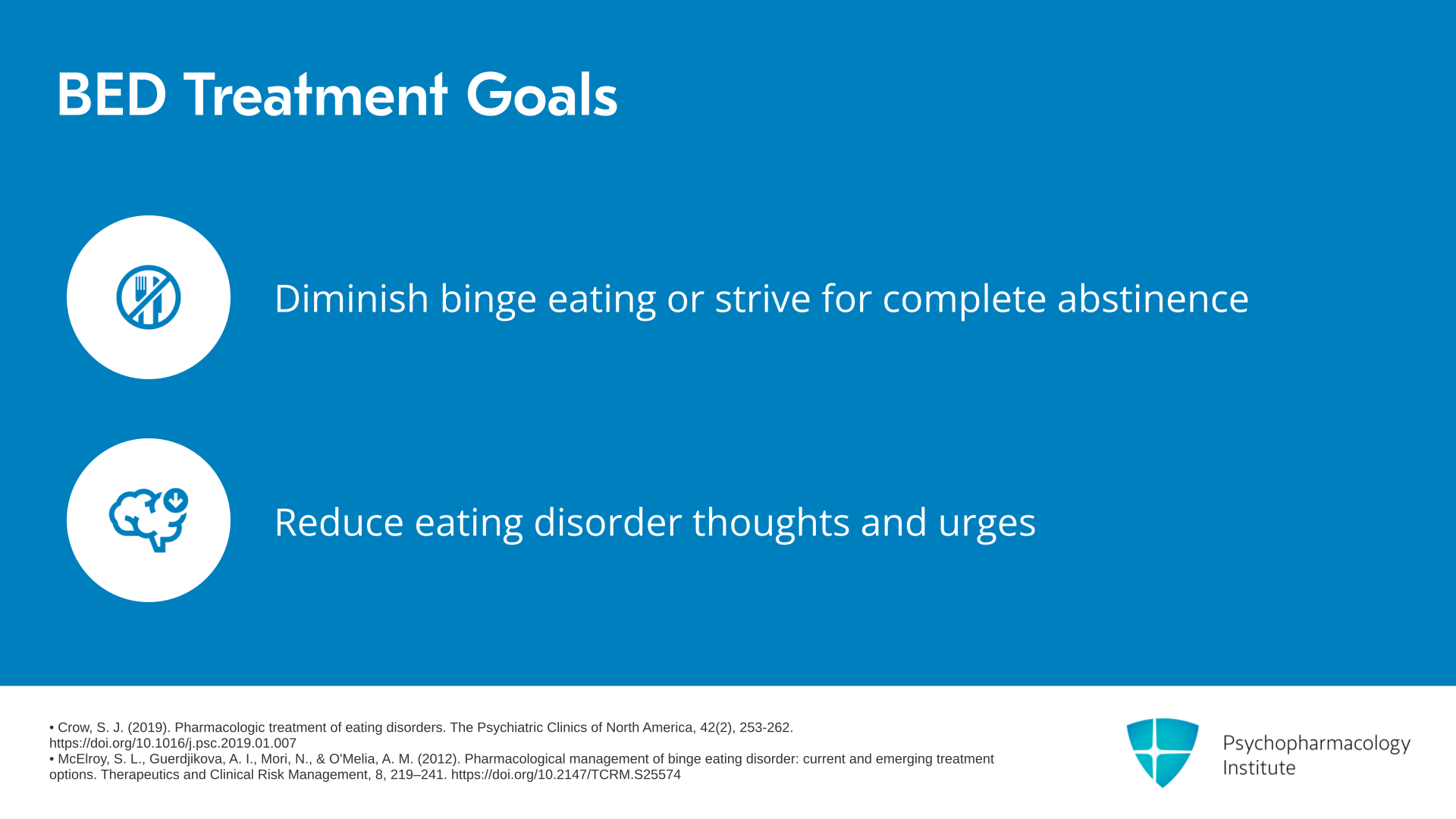
In thinking about treatment of BED with medications, it’s really critical to talk with people about the treatment goals that they have. And we typically have potentially three treatment goals for binge eating disorder. The first is to diminish binge eating or really ideally to strive for complete abstinence from binge eating. That’s the treatment goal whether you’re doing psychotherapy treatments or whether you’re doing pharmacotherapy treatments. The second is to diminish eating disorder thoughts, urges, and ruminations and that’s also true of both psychotherapy and pharmacotherapy treatments.
References:
- Crow, S. J. (2019). Pharmacologic treatment of eating disorders. The Psychiatric Clinics of North America, 42(2), 253-262. https://doi.org/10.1016/j.psc.2019.01.007
- McElroy, S. L., Guerdjikova, A. I., Mori, N., & O'Melia, A. M. (2012). Pharmacological management of binge eating disorder: current and emerging treatment options. Therapeutics and Clinical Risk Management, 8, 219–241. https://doi.org/10.2147/TCRM.S25574
Slide 4 of 12
And then the third goal is weight change. We certainly see a lot of people with binge eating disorder who wish to lose weight. We see a lot of people whose primary care physicians may be helping to manage problems with blood sugar or with lipids or with hypertension, who would also like to see their weight go down. But it’s important to clarify as you talk with patients which of these are important goals for them.
References:
- Crow, S. J. (2019). Pharmacologic treatment of eating disorders. The Psychiatric Clinics of North America, 42(2), 253-262. https://doi.org/10.1016/j.psc.2019.01.007
- McElroy, S. L., Guerdjikova, A. I., Mori, N., & O'Melia, A. M. (2012). Pharmacological management of binge eating disorder: current and emerging treatment options. Therapeutics and Clinical Risk Management, 8, 219–241. https://doi.org/10.2147/TCRM.S25574
Free Files
Download PDF and other files
Success!
Check your inbox, we sent you all the materials there.
Slide 5 of 12
There’s good evidence that when people come to treatment we tend to really want to focus on binge eating and eating disorder thoughts. But for many people seeking treatment, weight change may be the most salient goal for them. It’s critical to identify that and either be on the same page or at least understand what page they’re on prior to beginning treatment. And that’s because different medications have different amounts of effects on those different goals.
References:
- Crow, S. J. (2019). Pharmacologic treatment of eating disorders. The Psychiatric Clinics of North America, 42(2), 253-262. https://doi.org/10.1016/j.psc.2019.01.007
- McElroy, S. L., Guerdjikova, A. I., Mori, N., & O'Melia, A. M. (2012). Pharmacological management of binge eating disorder: current and emerging treatment options. Therapeutics and Clinical Risk Management, 8, 219–241. https://doi.org/10.2147/TCRM.S25574
Slide 6 of 12
So antidepressants for treatment of binge eating disorder, it’s reminiscent of what we saw with bulimia nervosa. First, the great majority of all of the antidepressants seem to work in terms of diminishing binge eating and there’s some evidence that they may cut eating disorders ruminations or urges to some extent. It’s true for SSRIs, tricyclics, SNRIs and virtually all of the newer antidepressants have had some clinical or research attention in terms of use for binge eating disorder.
References:
- Crow, S. J. (2019). Pharmacologic treatment of eating disorders. The Psychiatric Clinics of North America, 42(2), 253-262. https://doi.org/10.1016/j.psc.2019.01.007
- McElroy, S. L., Guerdjikova, A. I., Mori, N., & O'Melia, A. M. (2012). Pharmacological management of binge eating disorder: current and emerging treatment options. Therapeutics and Clinical Risk Management, 8, 219–241. https://doi.org/10.2147/TCRM.S25574
Free Files
Download PDF and other files
Success!
Check your inbox, we sent you all the materials there.
Slide 7 of 12
In their use, we do just as for treating bulimia nervosa patients, using high doses. Something like 60 mg of fluoxetine or its equivalent tends to be the standard that we aim for. Although to be fair, clinical work support that. There aren’t as much in the way of clear head-to-head dosage comparisons as we have for bulimia nervosa treatment. We see a pretty typical antidepressant side effect profile very much as you would see in other groups. We don’t really see a lot of antidepressant class-to-class variation in effects. They seem to probably be broadly similar in terms of their beneficial effects for binge eating.
References:
- McElroy, S. L., Guerdjikova, A. I., Mori, N., & O'Melia, A. M. (2012). Pharmacological management of binge eating disorder: current and emerging treatment options. Therapeutics and Clinical Risk Management, 8, 219–241. https://doi.org/10.2147/TCRM.S25574
- Arnold, L. M., McElroy, S. L., Hudson, J. I., Welge, J. A., Bennett, A. J., & Keck, P. E. (2002). A placebo-controlled, randomized trial of fluoxetine in the treatment of binge-eating disorder. The Journal of Clinical Psychiatry, 63(11), 1028-1033. https://doi.org/10.4088/jcp.v63n1113
Slide 8 of 12
One thing that’s critical though is that while these medications are helpful in the treatment of binge eating symptoms, there doesn’t appear to be much impact on weight and that is where it becomes critical to make sure that you have clarity with what patient’s goals are. Because if you think that the focus is binge eating and the patient thinks that the main focus is changing weight, then you may have a very different assessment of whether treatment has worked or not when all is said and done. So you want to clarify that going in.
References:
- McElroy, S. L., Guerdjikova, A. I., Mori, N., & O'Melia, A. M. (2012). Pharmacological management of binge eating disorder: current and emerging treatment options. Therapeutics and Clinical Risk Management, 8, 219–241. https://doi.org/10.2147/TCRM.S25574
Free Files
Download PDF and other files
Success!
Check your inbox, we sent you all the materials there.
Slide 9 of 12
That leads us to anticonvulsant medications for those with binge eating disorder and this has been topiramate and zonisamide used in an off-label way. These are clearly helpful for binge eating, where there is some evidence of change in weight and that may be as particularly true for treatment with topiramate.
References:
- Crow, S. J. (2019). Pharmacologic treatment of eating disorders. The Psychiatric Clinics of North America, 42(2), 253-262. https://doi.org/10.1016/j.psc.2019.01.007
- McElroy, S. L., Arnold, L. M., Shapira, N. A., Keck, P. E., Jr., Rosenthal, N. R., Karim, M. R., Kamin, M., & Hudson, J. I. (2003). Topiramate in the treatment of binge eating disorder associated with obesity: A randomized, placebo-controlled trial. The American Journal of Psychiatry, 160(2), 255–261. https://doi.org/10.1176/appi.ajp.160.2.255
Slide 10 of 12
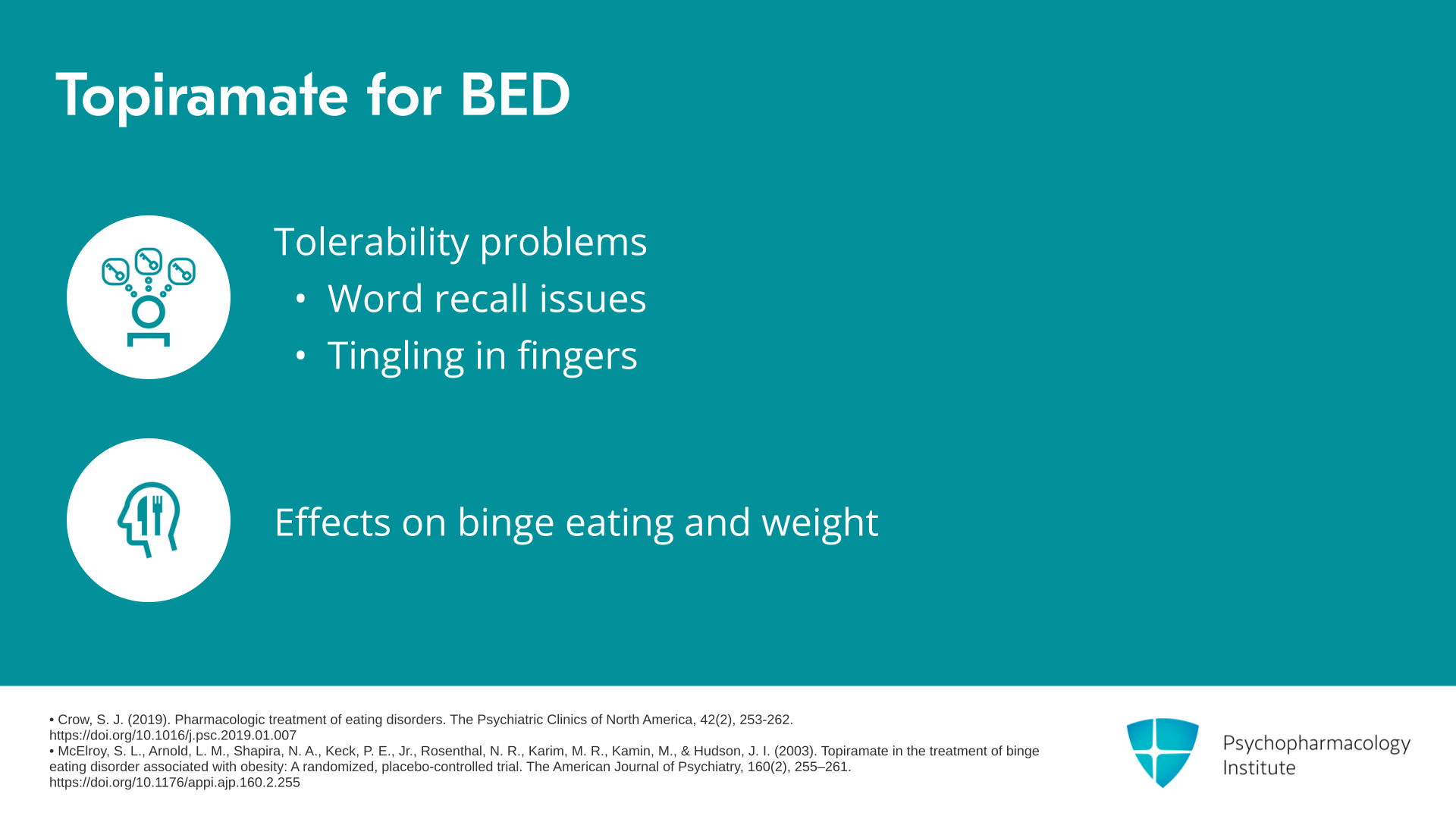
On the other hand, there are issues with tolerability with topiramate use in general, where it tends to have word recall issues and can cause tingling or numbness in fingers and so forth. And those are very much an issue in their use in binge eating disorder. They tend to be somewhat treatment limiting not infrequently but they do provide effects on binge eating and on weight.
References:
- Crow, S. J. (2019). Pharmacologic treatment of eating disorders. The Psychiatric Clinics of North America, 42(2), 253-262. https://doi.org/10.1016/j.psc.2019.01.007
- McElroy, S. L., Arnold, L. M., Shapira, N. A., Keck, P. E., Jr., Rosenthal, N. R., Karim, M. R., Kamin, M., & Hudson, J. I. (2003). Topiramate in the treatment of binge eating disorder associated with obesity: A randomized, placebo-controlled trial. The American Journal of Psychiatry, 160(2), 255–261. https://doi.org/10.1176/appi.ajp.160.2.255
Free Files
Download PDF and other files
Success!
Check your inbox, we sent you all the materials there.
Slide 11 of 12
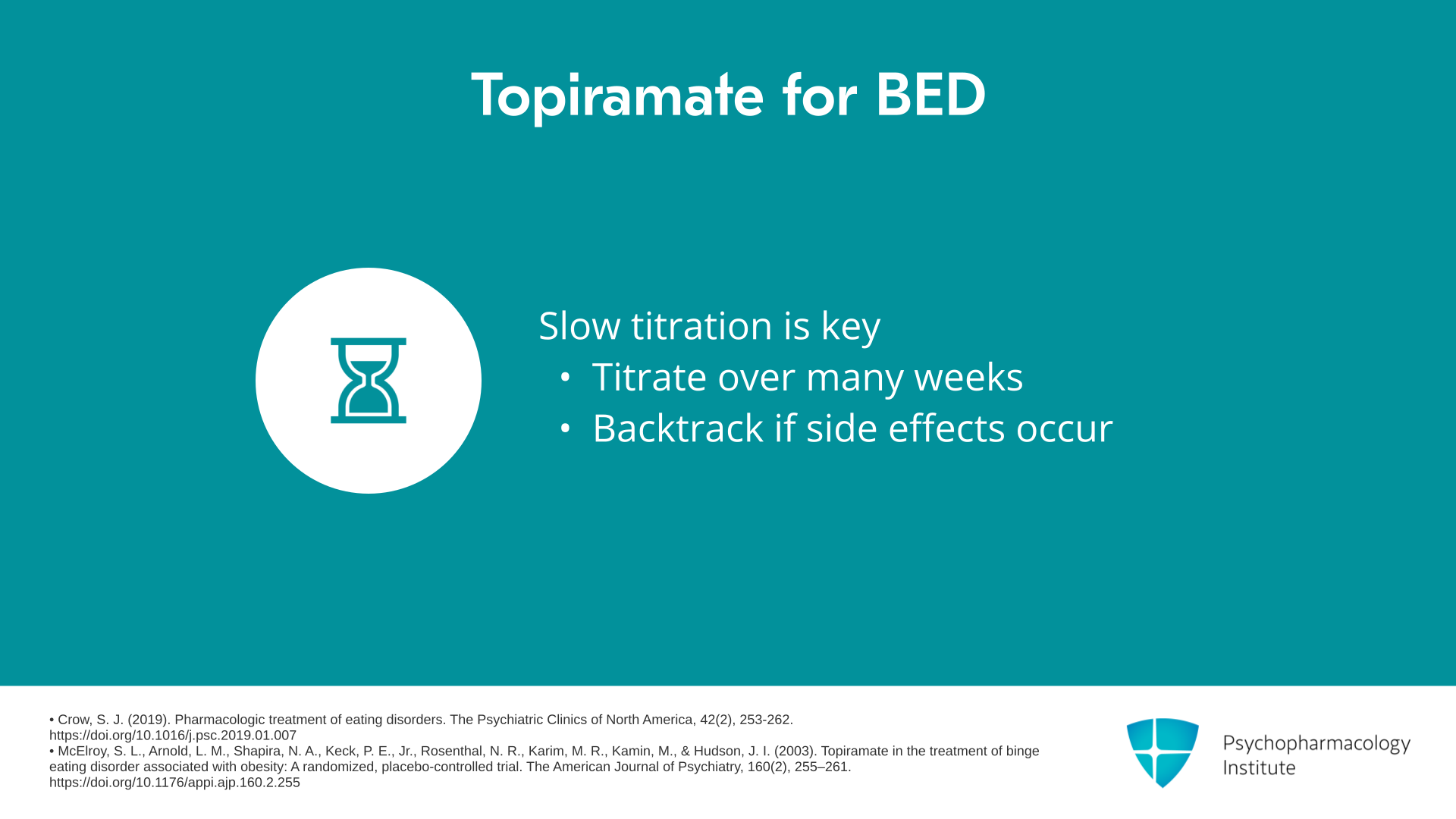
The key to using topiramate successfully seems to be a very, very slow titration. Topiramate in other uses of course is titrated relatively quickly, the obvious example being trying to get seizure control. If the goal is seizure control, moving quickly to get to an effective dose seems pretty reasonable. But for those with binge eating disorder, it’s often slow titration over many weeks and perhaps backtracking if some side effects start to occur and then trying to titrate again. That tends to aid tolerability and make it more useful for more people.
References:
- Crow, S. J. (2019). Pharmacologic treatment of eating disorders. The Psychiatric Clinics of North America, 42(2), 253-262. https://doi.org/10.1016/j.psc.2019.01.007
- McElroy, S. L., Arnold, L. M., Shapira, N. A., Keck, P. E., Jr., Rosenthal, N. R., Karim, M. R., Kamin, M., & Hudson, J. I. (2003). Topiramate in the treatment of binge eating disorder associated with obesity: A randomized, placebo-controlled trial. The American Journal of Psychiatry, 160(2), 255–261. https://doi.org/10.1176/appi.ajp.160.2.255
Slide 12 of 12
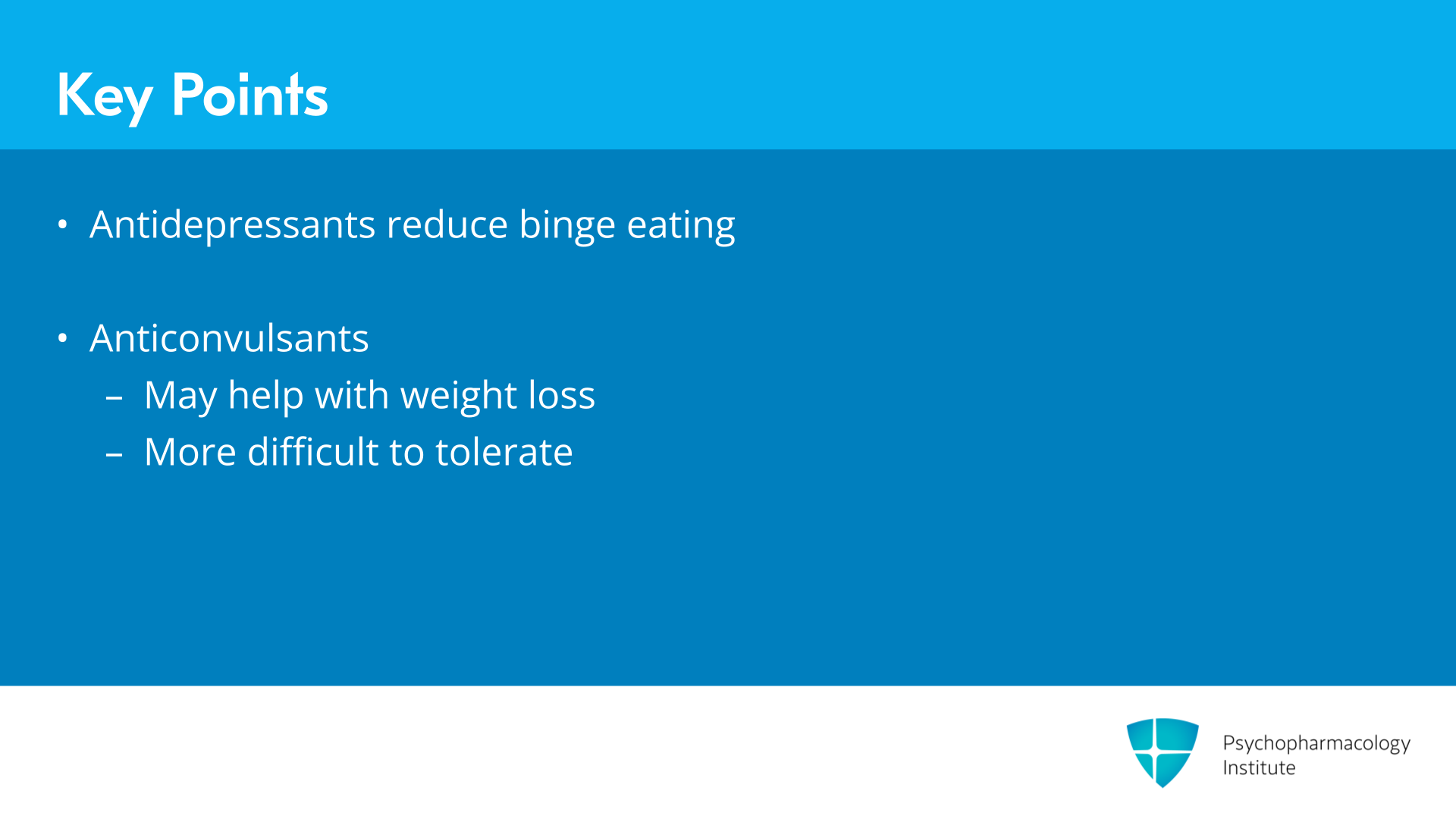
So to summarize key points here, just as in bulimia nervosa treatment, there are a wide variety of medications that are beneficial in BED treatment. The wide variety of antidepressants can bring benefit. They do not bring benefit in terms of weight gain generally though it’s primarily in binge eating targets. The anticonvulsants – topiramate and zonisamide – appear to provide some benefit for binge eating and probably some benefit in terms of weight loss though they’re clearly more difficult to tolerate for people.
Free Files
Download PDF and other files
Success!
Check your inbox, we sent you all the materials there.
