
Slides and Transcript
Slide 1 of 17
So in this video, I will focus even further on benzodiazepine use disorder.
Slide 2 of 17
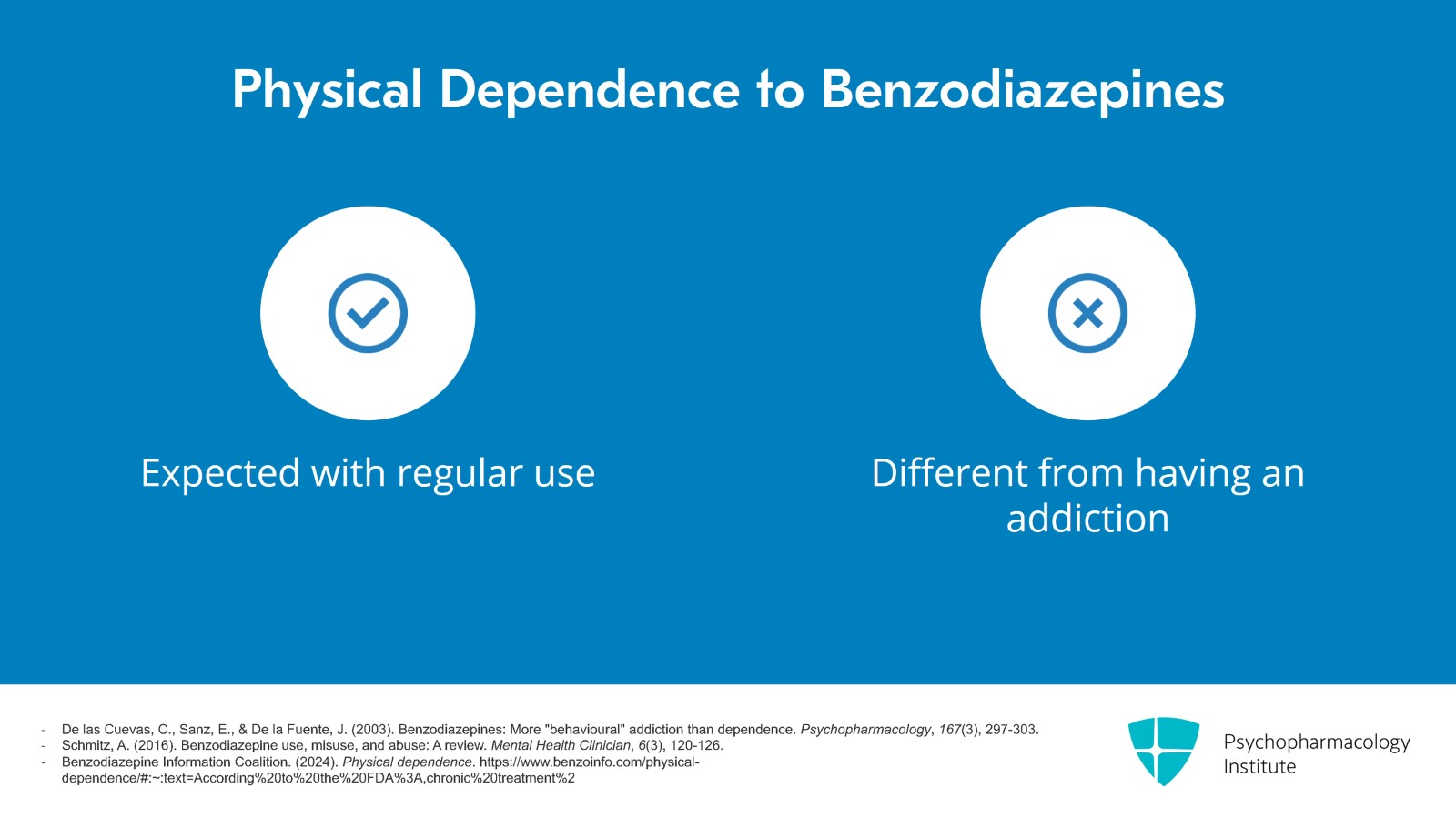
As I touched on earlier, while physical dependence, comprised of tolerance and withdrawal, is expected with regular prescription use, in and of itself, having physical dependence to benzodiazepines does not qualify as having a use disorder or an addiction.
References:
- De las Cuevas, C., Sanz, E., & De la Fuente, J. (2003). Benzodiazepines: More "behavioural" addiction than dependence. Psychopharmacology, 167(3), 297-303.
- Schmitz, A. (2016). Benzodiazepine use, misuse, and abuse: A review. Mental Health Clinician, 6(3), 120-126.
- Benzodiazepine Information Coalition. (2024). Physical dependence. https://www.benzoinfo.com/physical-dependence/#:~:text=According%20to%20the%20FDA%3A,chronic%20treatment%2
Free Files
Download PDF and other files
Success!
Check your inbox, we sent you all the materials there.
Slide 3 of 17
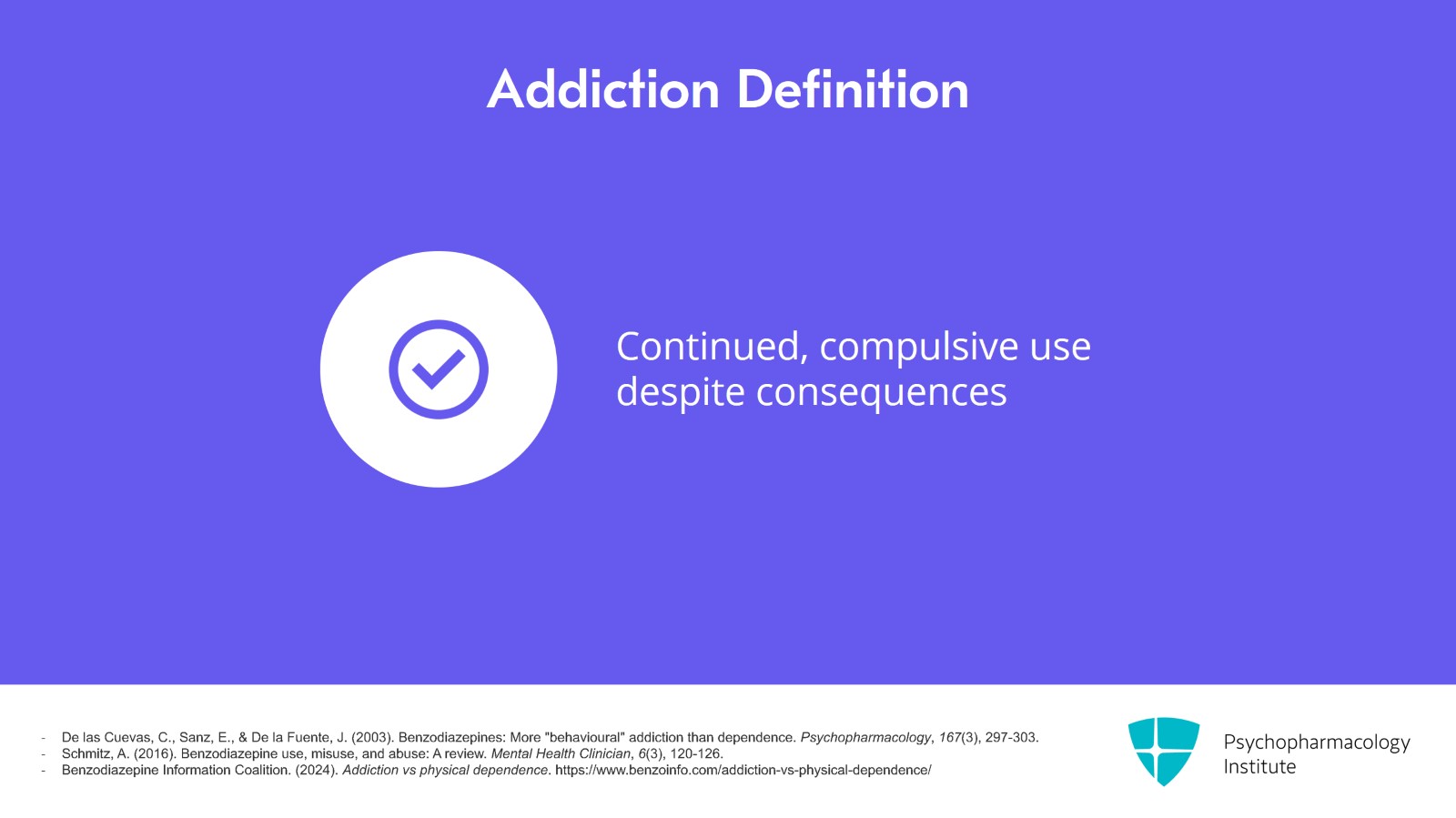
You can summarize the definition of addiction or a use disorder as continued compulsive use despite consequences.
References:
- De las Cuevas, C., Sanz, E., & De la Fuente, J. (2003). Benzodiazepines: More "behavioural" addiction than dependence. Psychopharmacology, 167(3), 297-303.
- Schmitz, A. (2016). Benzodiazepine use, misuse, and abuse: A review. Mental Health Clinician, 6(3), 120-126.
- Benzodiazepine Information Coalition. (2024). Addiction vs physical dependence. https://www.benzoinfo.com/addiction-vs-physical-dependence/
Slide 4 of 17
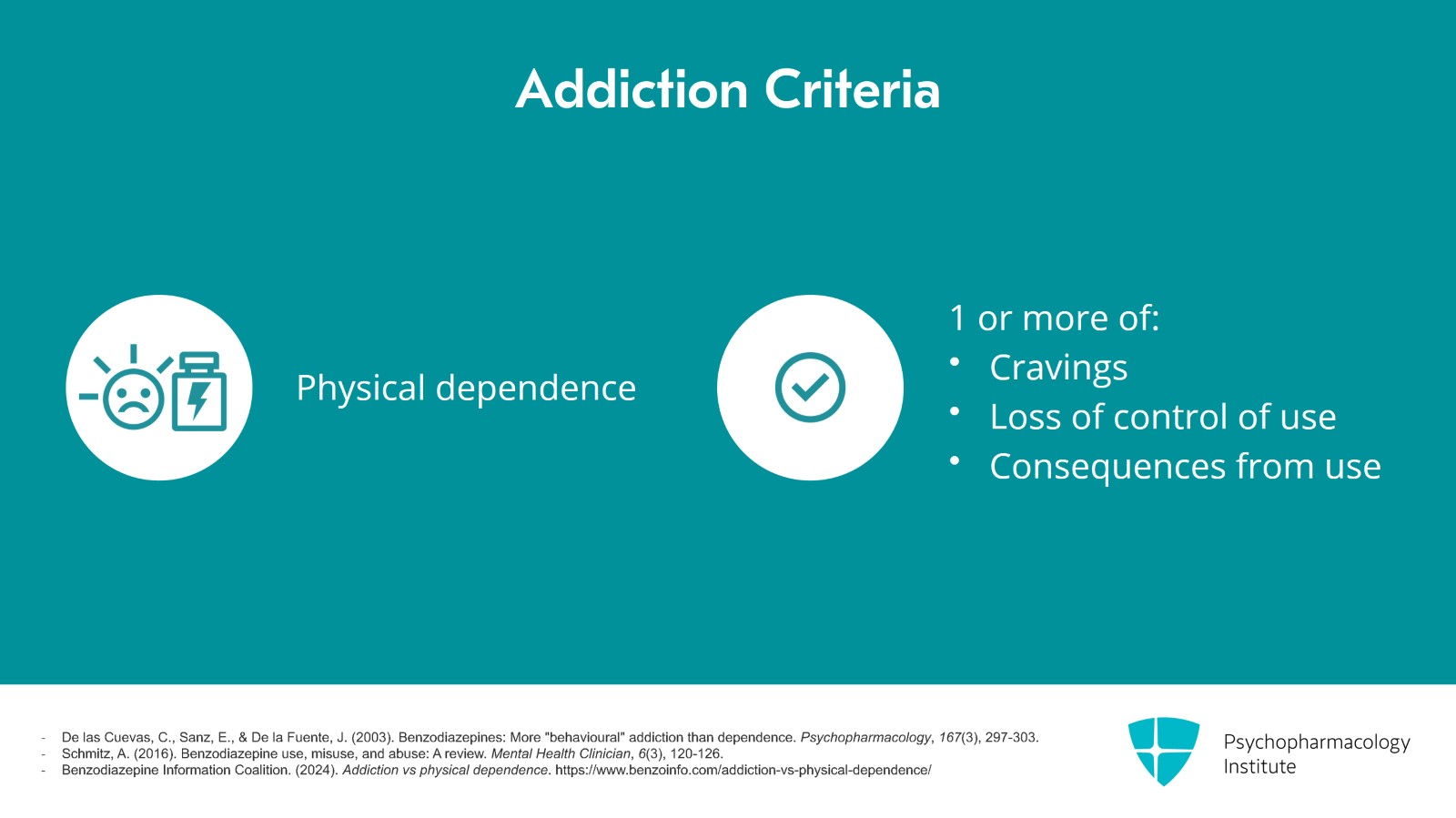
If you want to break this down into the different categories of the criteria for a use disorder, while there are the physical dependence criteria of tolerance and withdrawal, it must also impact one or more of the other criteria which can be categorized as the three C's – so cravings which is the strong urge or desire to use, loss of control of use, consequences from substance use include social consequences, so impacting relationships; occupational, impacting work; recreational as well as having negative impacts on one's psychological or physical health.
References:
- De las Cuevas, C., Sanz, E., & De la Fuente, J. (2003). Benzodiazepines: More "behavioural" addiction than dependence. Psychopharmacology, 167(3), 297-303.
- Schmitz, A. (2016). Benzodiazepine use, misuse, and abuse: A review. Mental Health Clinician, 6(3), 120-126.
- Benzodiazepine Information Coalition. (2024). Addiction vs physical dependence. https://www.benzoinfo.com/addiction-vs-physical-dependence/
Free Files
Download PDF and other files
Success!
Check your inbox, we sent you all the materials there.
Slide 5 of 17
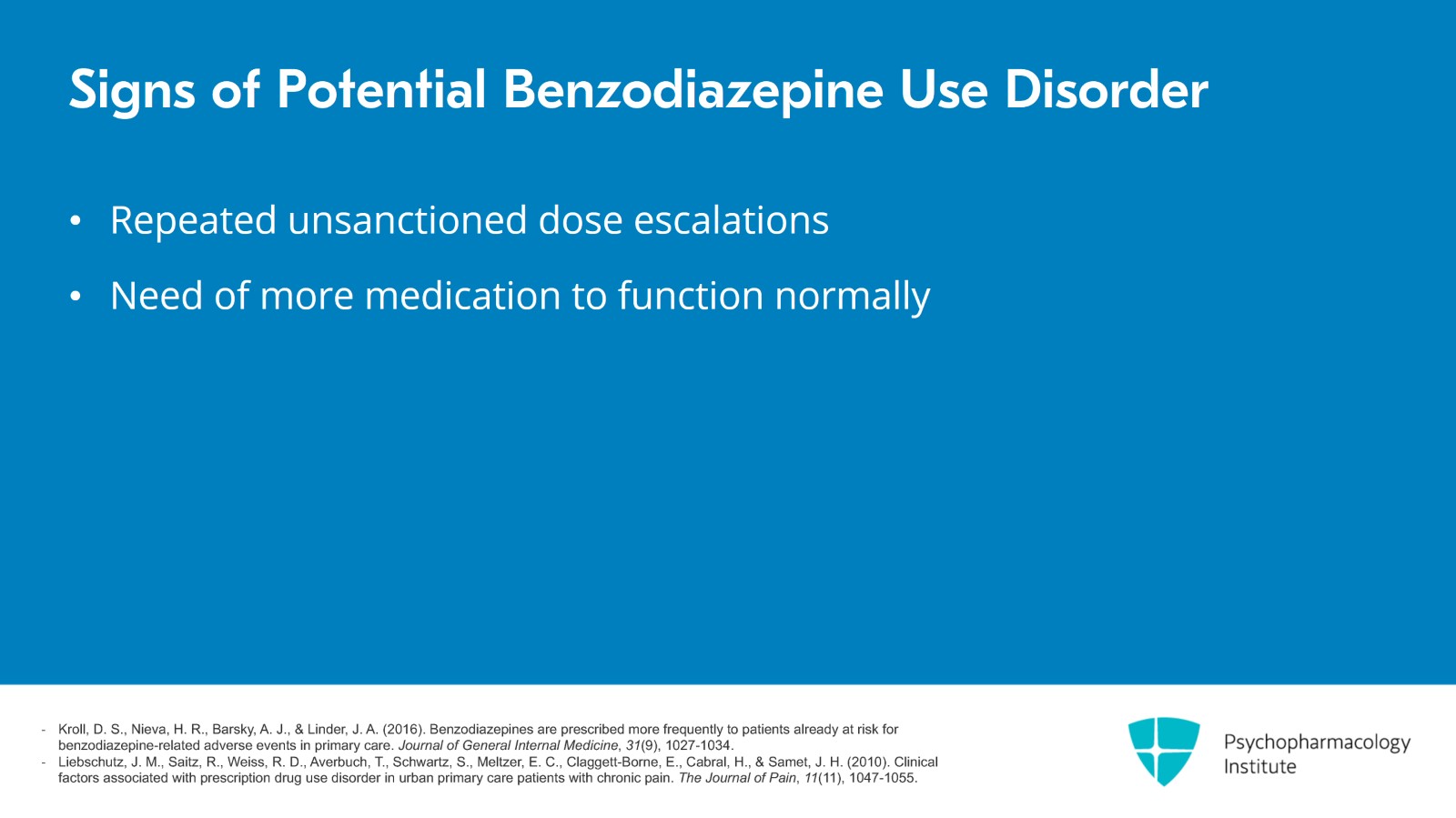
When prescribing patients benzodiazepines, some things that may be a possible sign of a developing use disorder would be repeated unsanctioned dose escalations. So I'd say if this happens once and you discuss with a patient your concerns about their changing their dose without a discussion, that does not mean that it's a use disorder. However, if there is a pattern of frequent dose escalations that someone perceives they need more and more of the medication to function normally especially beyond amounts that you feel comfortable prescribing, that could be a sign of a developing use disorder.
References:
- Kroll, D. S., Nieva, H. R., Barsky, A. J., & Linder, J. A. (2016). Benzodiazepines are prescribed more frequently to patients already at risk for benzodiazepine-related adverse events in primary care. Journal of General Internal Medicine, 31(9), 1027-1034.
- Liebschutz, J. M., Saitz, R., Weiss, R. D., Averbuch, T., Schwartz, S., Meltzer, E. C., Claggett-Borne, E., Cabral, H., & Samet, J. H. (2010). Clinical factors associated with prescription drug use disorder in urban primary care patients with chronic pain. The Journal of Pain, 11(11), 1047-1055.
Slide 6 of 17
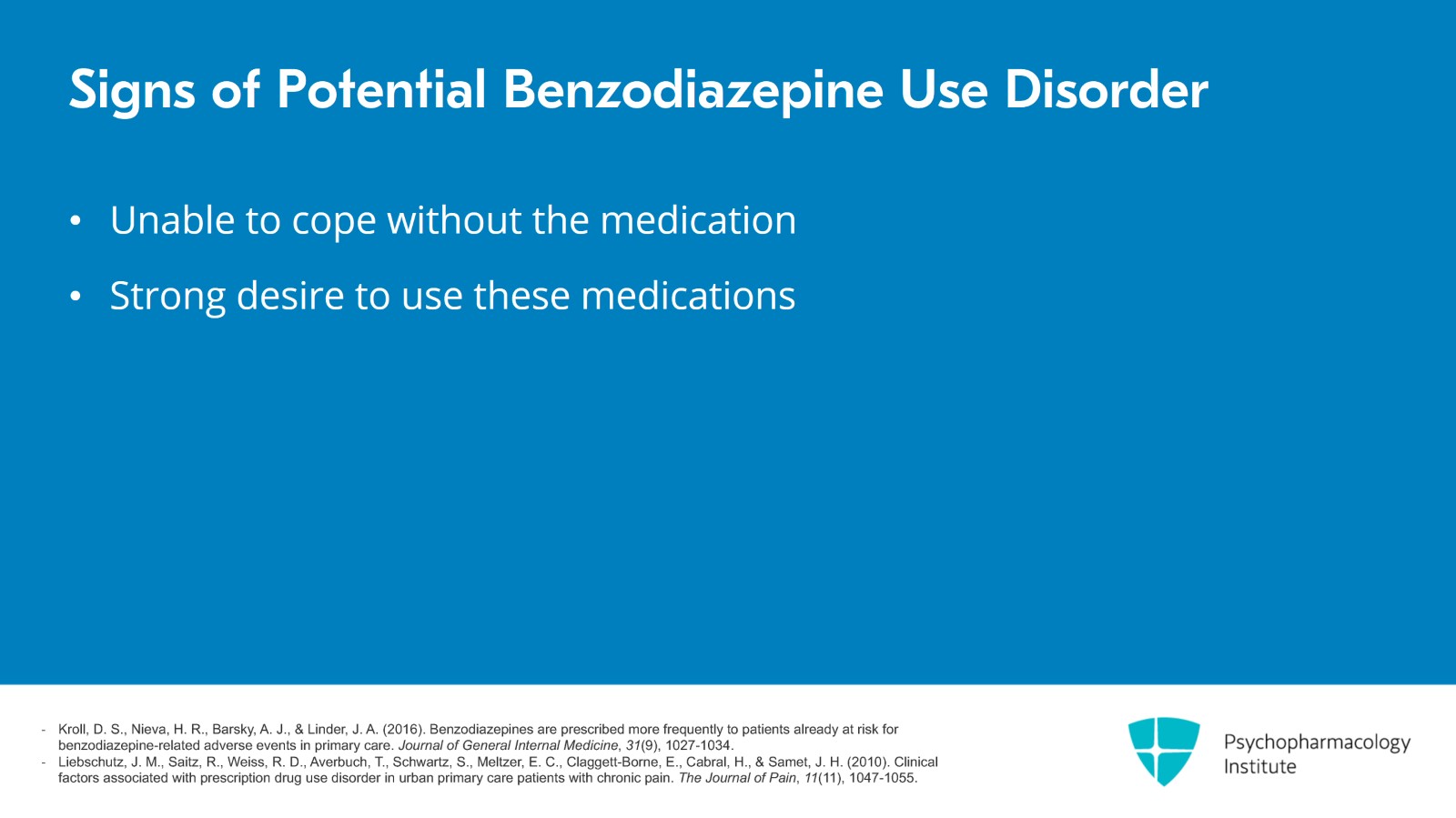
If a patient gets to the point that they really feel they cannot cope at all without the medication but really in a sense of and I need more of it or I run out early or there's this other loss of control because certainly that we have patients that have been given these medications because they're in a state where they cannot currently function without some additional pharmacotherapy and psychotherapy support. Additionally, if patients describe having a strong desire or urge to use these medications and again, especially if this urge drives them to do so in a way that is not as prescribed, they're running out early, they're getting prescriptions from multiple prescribers, those would all be concerning that someone is moving into the misuse and potential use disorder criteria.
References:
- Kroll, D. S., Nieva, H. R., Barsky, A. J., & Linder, J. A. (2016). Benzodiazepines are prescribed more frequently to patients already at risk for benzodiazepine-related adverse events in primary care. Journal of General Internal Medicine, 31(9), 1027-1034.
- Liebschutz, J. M., Saitz, R., Weiss, R. D., Averbuch, T., Schwartz, S., Meltzer, E. C., Claggett-Borne, E., Cabral, H., & Samet, J. H. (2010). Clinical factors associated with prescription drug use disorder in urban primary care patients with chronic pain. The Journal of Pain, 11(11), 1047-1055.
Free Files
Download PDF and other files
Success!
Check your inbox, we sent you all the materials there.
Slide 7 of 17
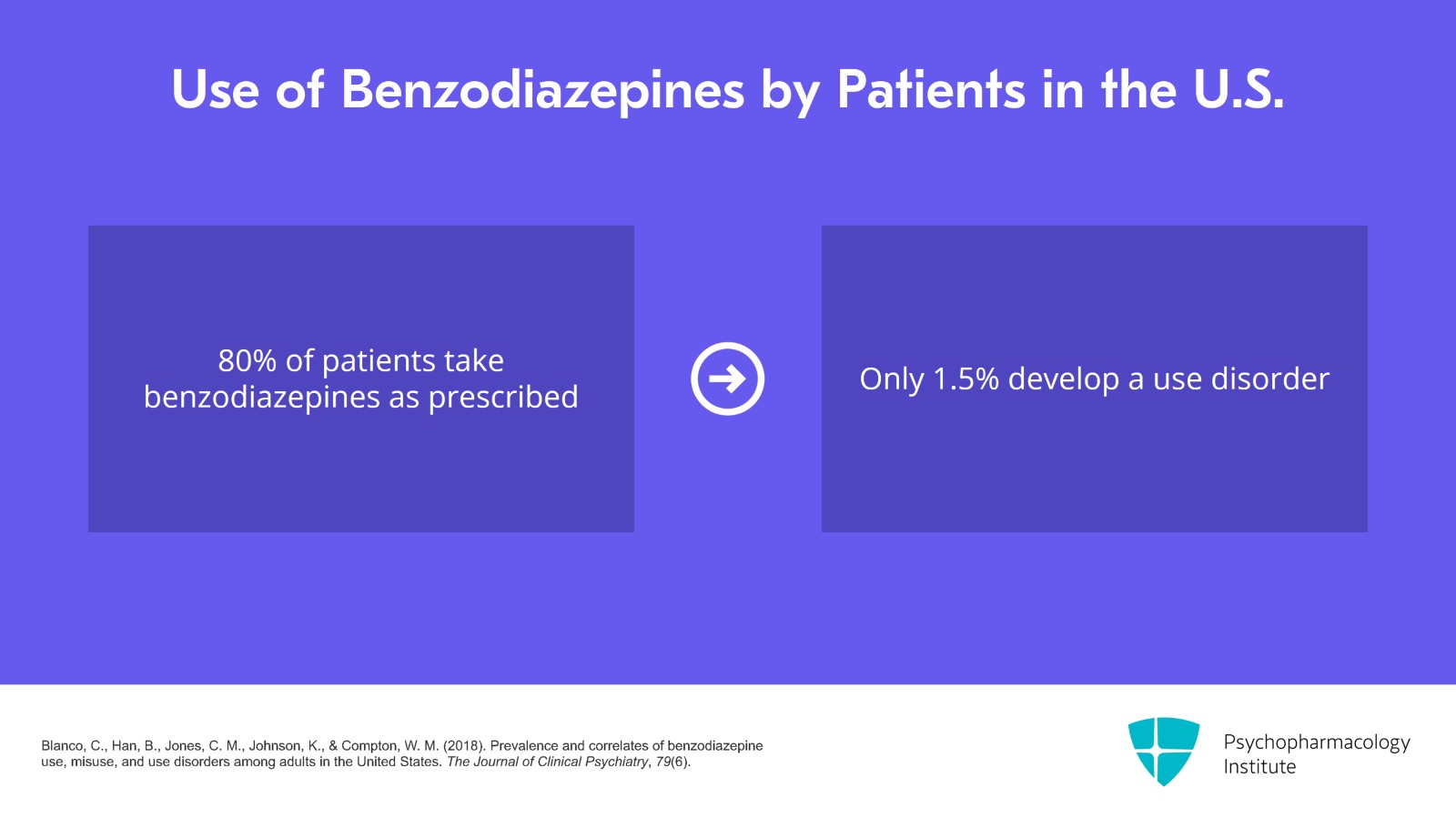
However, when we look at the prevalence of benzodiazepine use in the US, I think it's really important to convey that the vast majority of our patients are taking these medications as prescribed. So over 80% of patients take benzodiazepines as prescribed and it's only 1.5% of benzodiazepine users that have a possible use disorder or addiction. So it's actually a very small percentage of patients prescribed these medicines that develop a use disorder.
References:
- Blanco, C., Han, B., Jones, C. M., Johnson, K., & Compton, W. M. (2018). Prevalence and correlates of benzodiazepine use, misuse, and use disorders among adults in the United States. The Journal of Clinical Psychiatry, 79(6).
- Maust, D. T., Lin, L. A., & Blow, F. C. (2019). Benzodiazepine use and misuse among adults in the United States. Psychiatric Services, 70(2), 97-106.
Slide 8 of 17
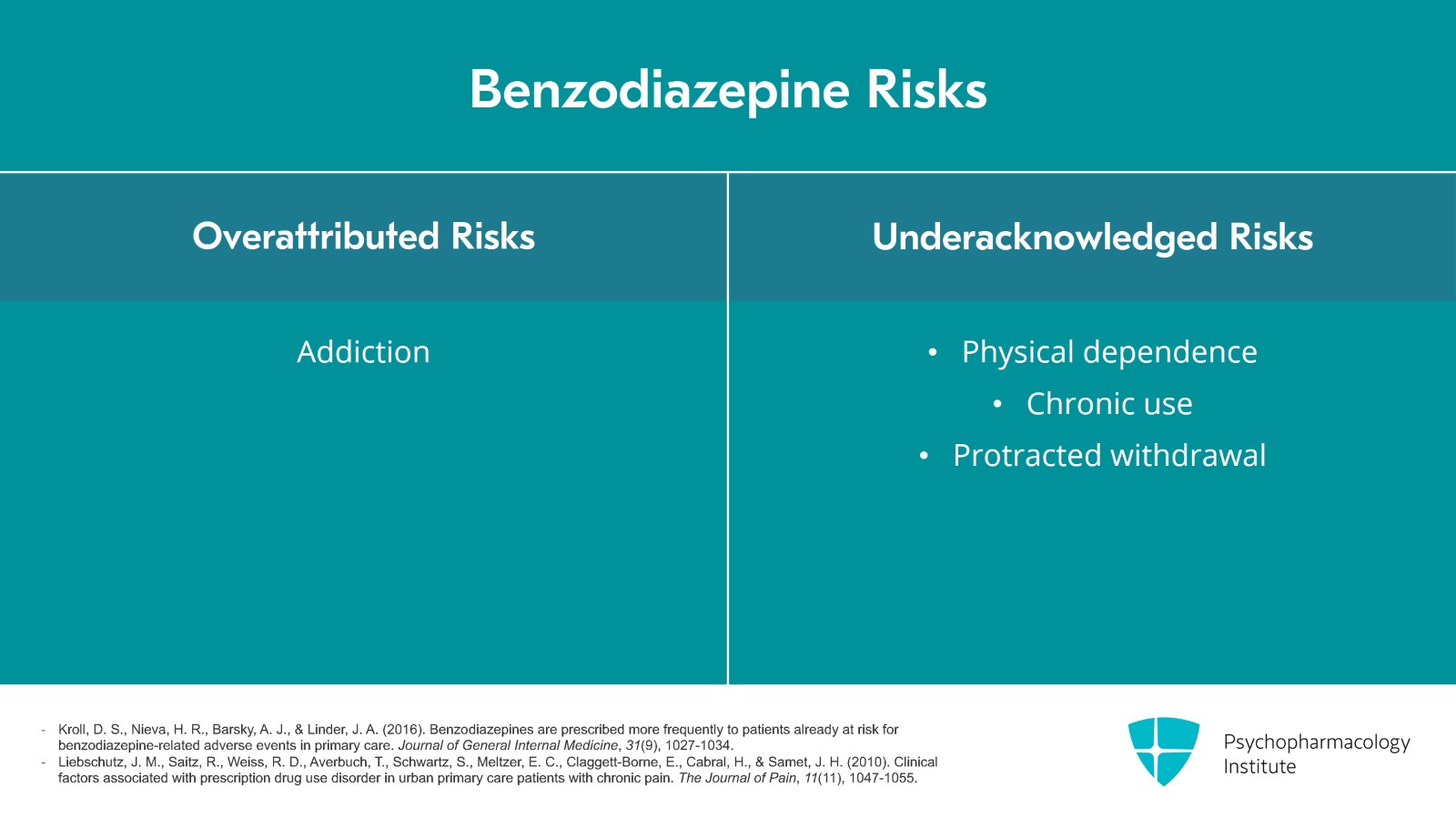
So I think we have overattributed the risk of addiction to these medications and underacknowledged the prevalence of physical dependence and chronic use and subsequent risk of protracted withdrawal in many of our patients.
References:
- Kroll, D. S., Nieva, H. R., Barsky, A. J., & Linder, J. A. (2016). Benzodiazepines are prescribed more frequently to patients already at risk for benzodiazepine-related adverse events in primary care. Journal of General Internal Medicine, 31(9), 1027-1034.
- Liebschutz, J. M., Saitz, R., Weiss, R. D., Averbuch, T., Schwartz, S., Meltzer, E. C., Claggett-Borne, E., Cabral, H., & Samet, J. H. (2010). Clinical factors associated with prescription drug use disorder in urban primary care patients with chronic pain. The Journal of Pain, 11(11), 1047-1055.
Free Files
Download PDF and other files
Success!
Check your inbox, we sent you all the materials there.
Slide 9 of 17
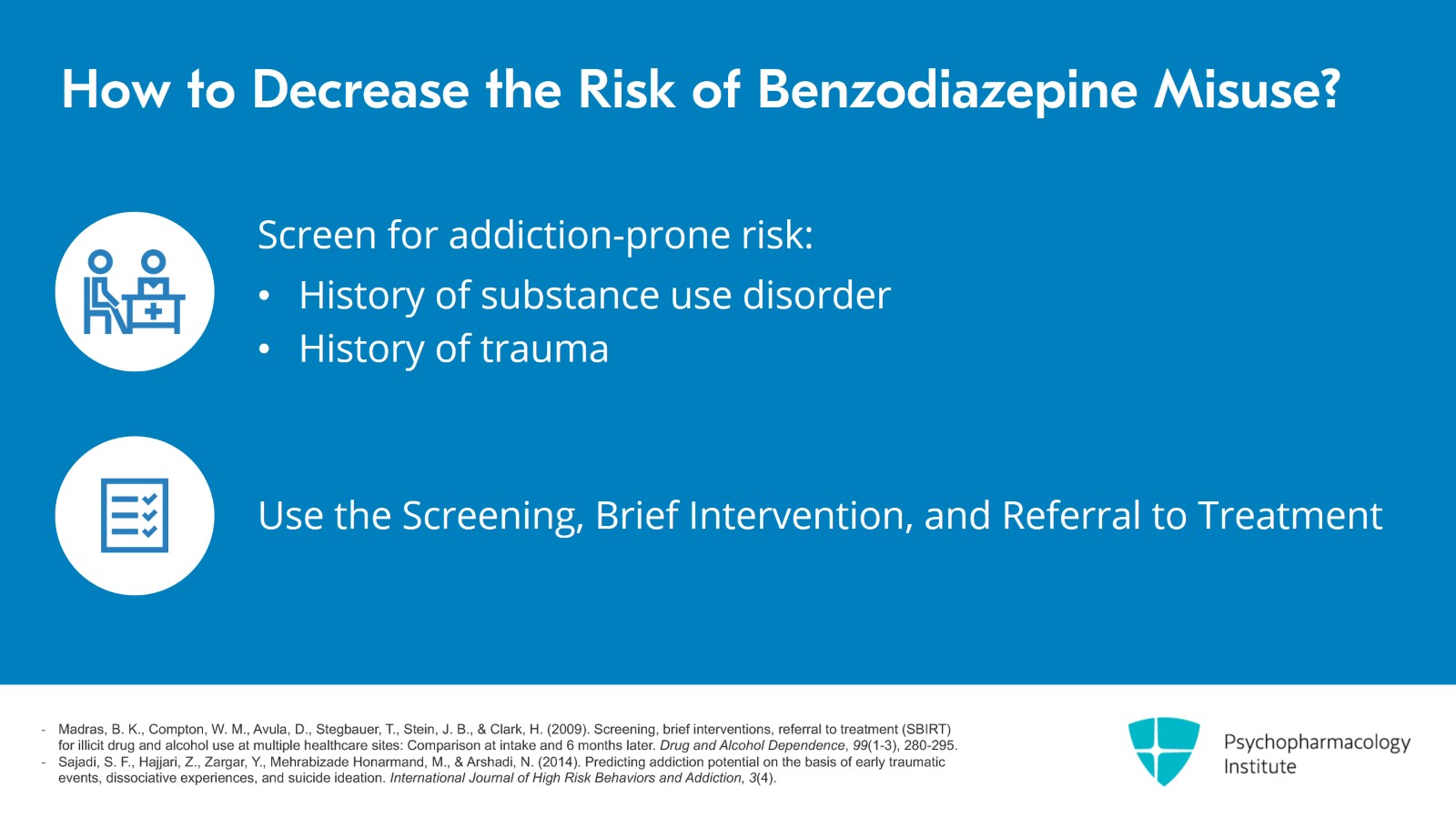
When we are thinking about how to decrease the risk of misuse or addiction to these medications, you can do so by screening for addiction-prone substances. You can do this in your history taking when asking about an individual's personal and family history of substance use disorders. We also know that a personal history of trauma increases the risk for substance misuse and addiction. You can utilize the screening portion of Screening, Brief Intervention, and Referral to Treatment to help identify and address current addiction-prone substance use.
References:
- Madras, B. K., Compton, W. M., Avula, D., Stegbauer, T., Stein, J. B., & Clark, H. (2009). Screening, brief interventions, referral to treatment (SBIRT) for illicit drug and alcohol use at multiple healthcare sites: Comparison at intake and 6 months later. Drug and Alcohol Dependence, 99(1-3), 280-295.
- Sajadi, S. F., Hajjari, Z., Zargar, Y., Mehrabizade Honarmand, M., & Arshadi, N. (2014). Predicting addiction potential on the basis of early traumatic events, dissociative experiences, and suicide ideation. International Journal of High Risk Behaviors and Addiction, 3(4).
Slide 10 of 17
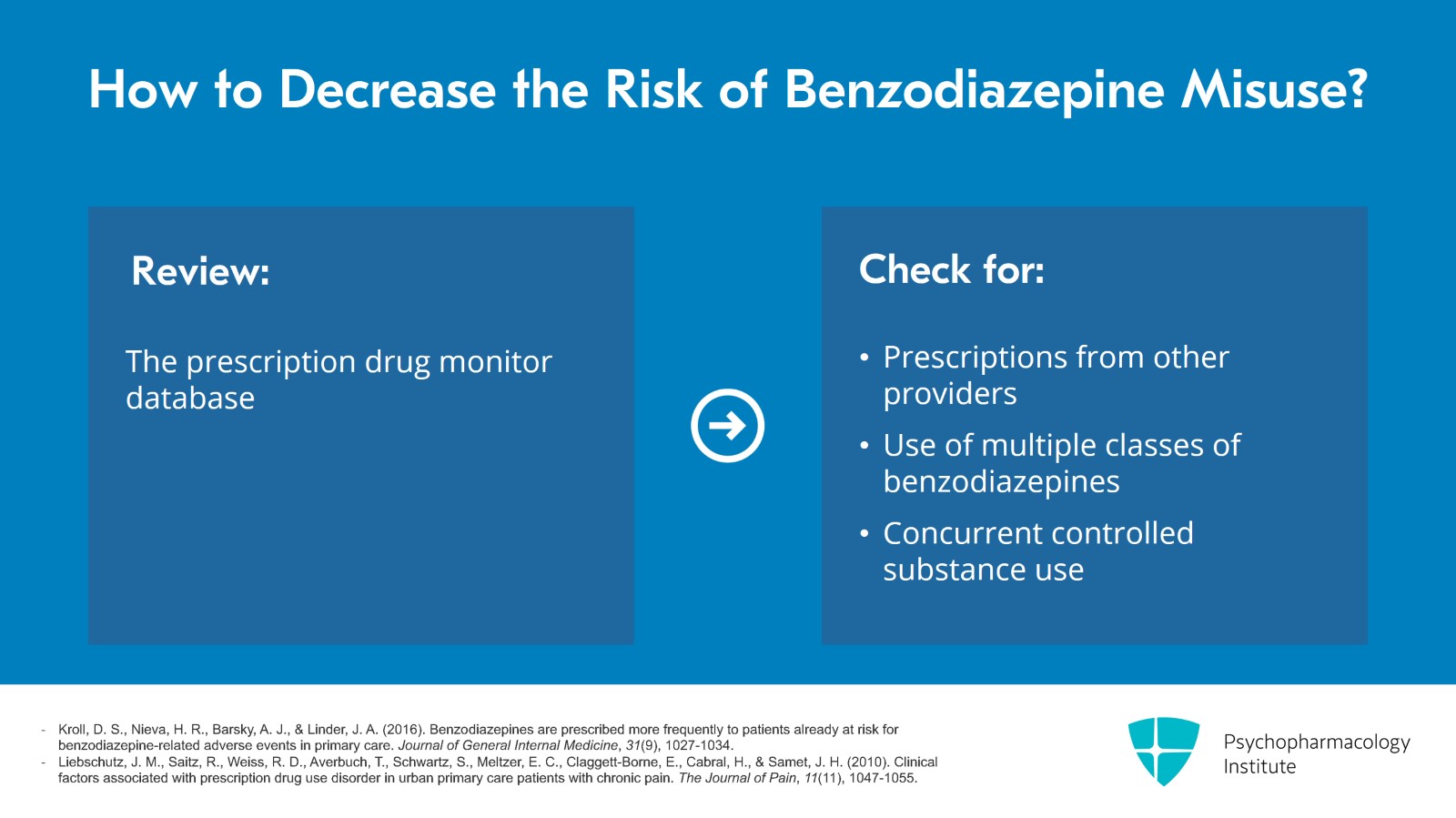
I encourage everyone to routinely review the prescription drug monitor database available to them before they prescribe these medications and on refills. This is important both to understand pattern of prescriptions whether they have gotten prescriptions from other providers, if they're on more than one medication in this class, what other controlled substance they are on, if they are also prescribed an opioid or intermittently prescribed an opioid that you have advised them of the risk of overdose and prescribed them naloxone. So I think this is a really, really important step to implement in prescribing these medications.
References:
- Kroll, D. S., Nieva, H. R., Barsky, A. J., & Linder, J. A. (2016). Benzodiazepines are prescribed more frequently to patients already at risk for benzodiazepine-related adverse events in primary care. Journal of General Internal Medicine, 31(9), 1027-1034.
- Liebschutz, J. M., Saitz, R., Weiss, R. D., Averbuch, T., Schwartz, S., Meltzer, E. C., Claggett-Borne, E., Cabral, H., & Samet, J. H. (2010). Clinical factors associated with prescription drug use disorder in urban primary care patients with chronic pain. The Journal of Pain, 11(11), 1047-1055.
Free Files
Download PDF and other files
Success!
Check your inbox, we sent you all the materials there.
Slide 11 of 17
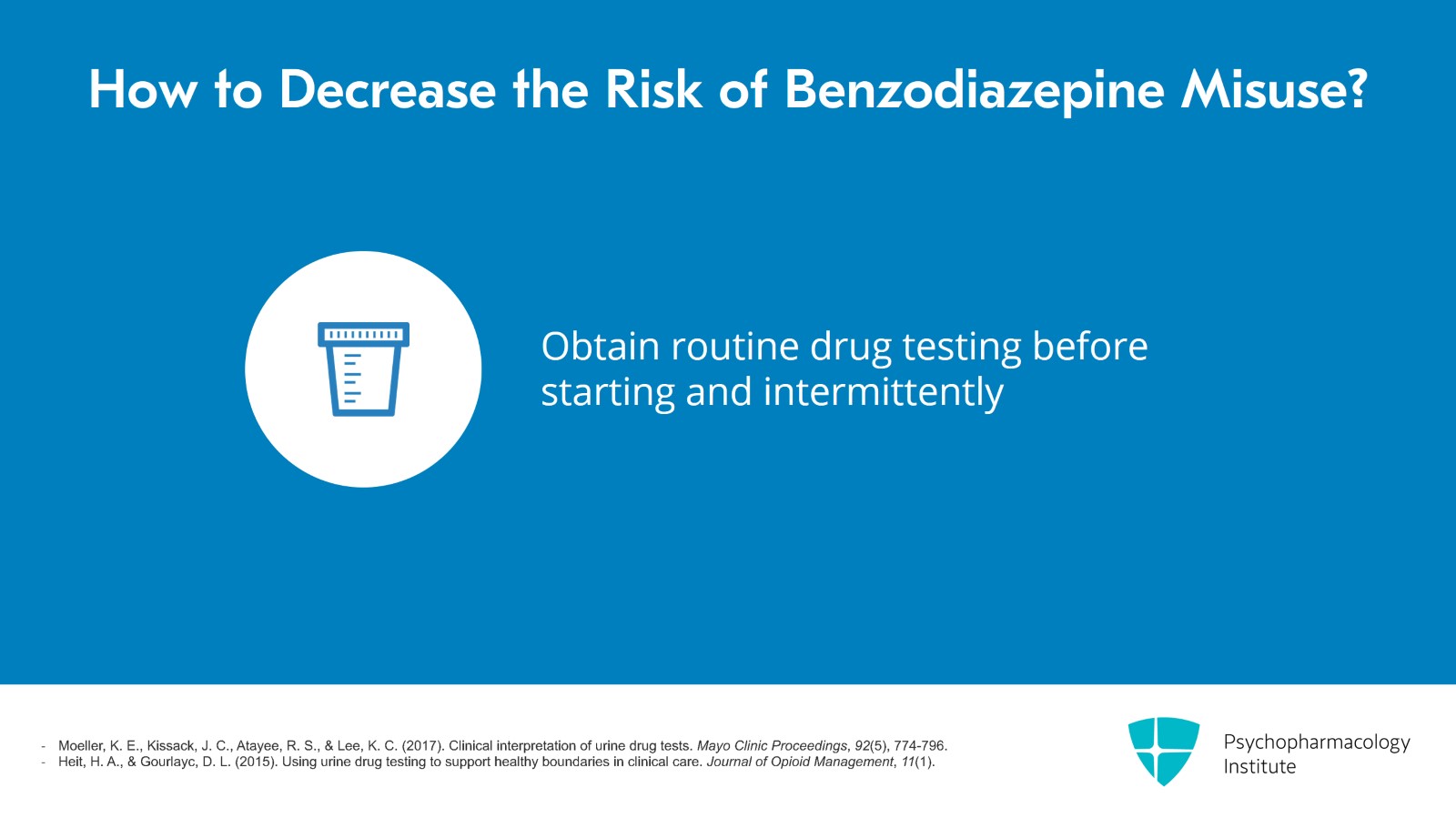
It is also recommended that as is possible within your site of practice to obtain routine drug testing before starting and then intermittently with these patients that are prescribed benzodiazepines. I realize depending on your site of practice this may or may not be possible and I think if it can be implemented as a routine thing that is done for anyone prescribed these, it actually just adds to us having more information about the potential risks our patients are exposed to with other prescription medications and substances that they may be using.
References:
- Moeller, K. E., Kissack, J. C., Atayee, R. S., & Lee, K. C. (2017). Clinical interpretation of urine drug tests. Mayo Clinic Proceedings, 92(5), 774-796.
- Heit, H. A., & Gourlayc, D. L. (2015). Using urine drug testing to support healthy boundaries in clinical care. Journal of Opioid Management, 11(1).
Slide 12 of 17
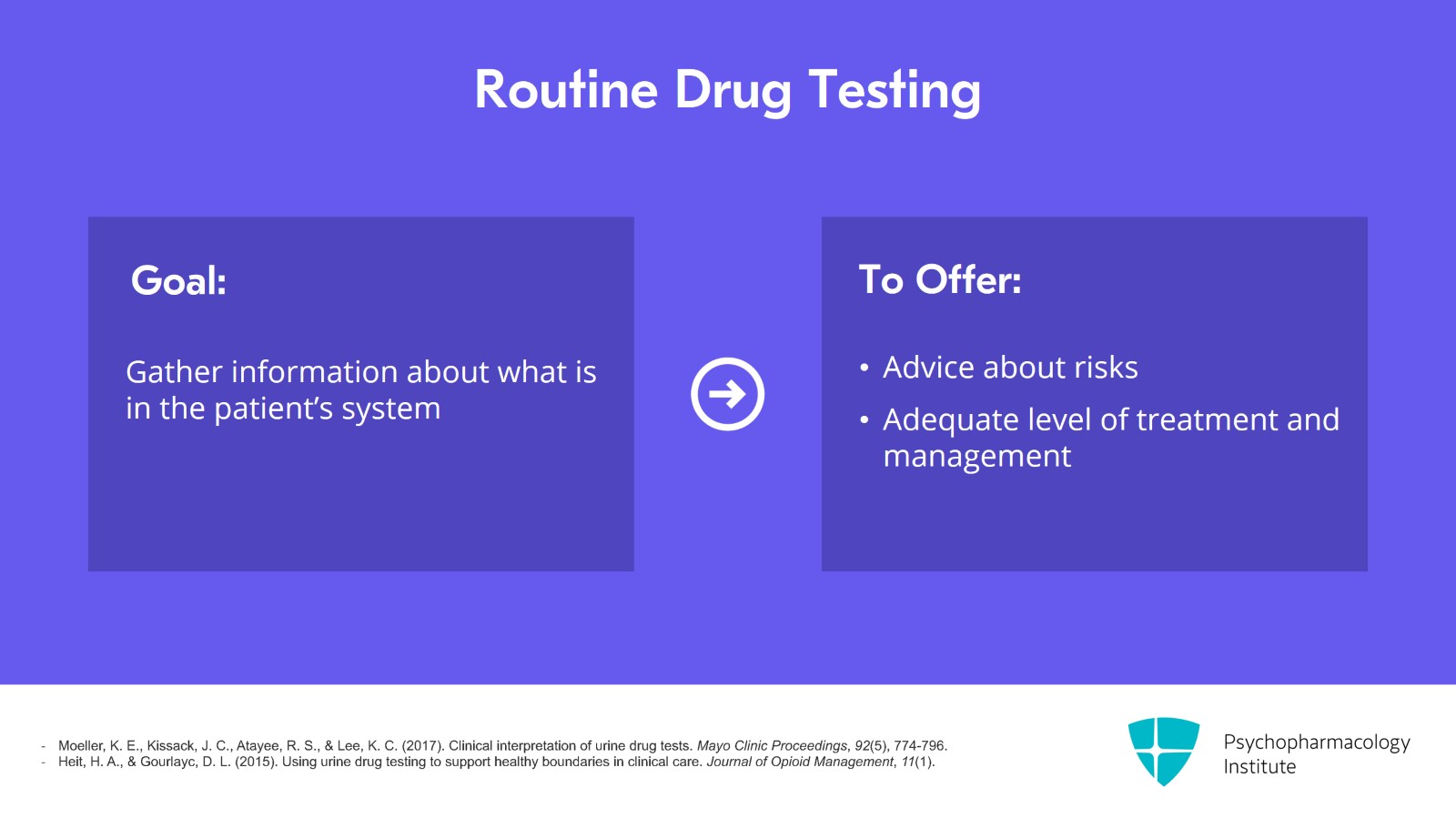
I always tell patients the point is not to catch them but the point is to make sure we have as much information as possible about what is in their system so that we know how to advise them about the risks, that we also are aware if the current severity of their use disorder if that's what we're finding evidence as is provided an adequate level of treatment and management.
References:
- Moeller, K. E., Kissack, J. C., Atayee, R. S., & Lee, K. C. (2017). Clinical interpretation of urine drug tests. Mayo Clinic Proceedings, 92(5), 774-796.
- Heit, H. A., & Gourlayc, D. L. (2015). Using urine drug testing to support healthy boundaries in clinical care. Journal of Opioid Management, 11(1).
Free Files
Download PDF and other files
Success!
Check your inbox, we sent you all the materials there.
Slide 13 of 17
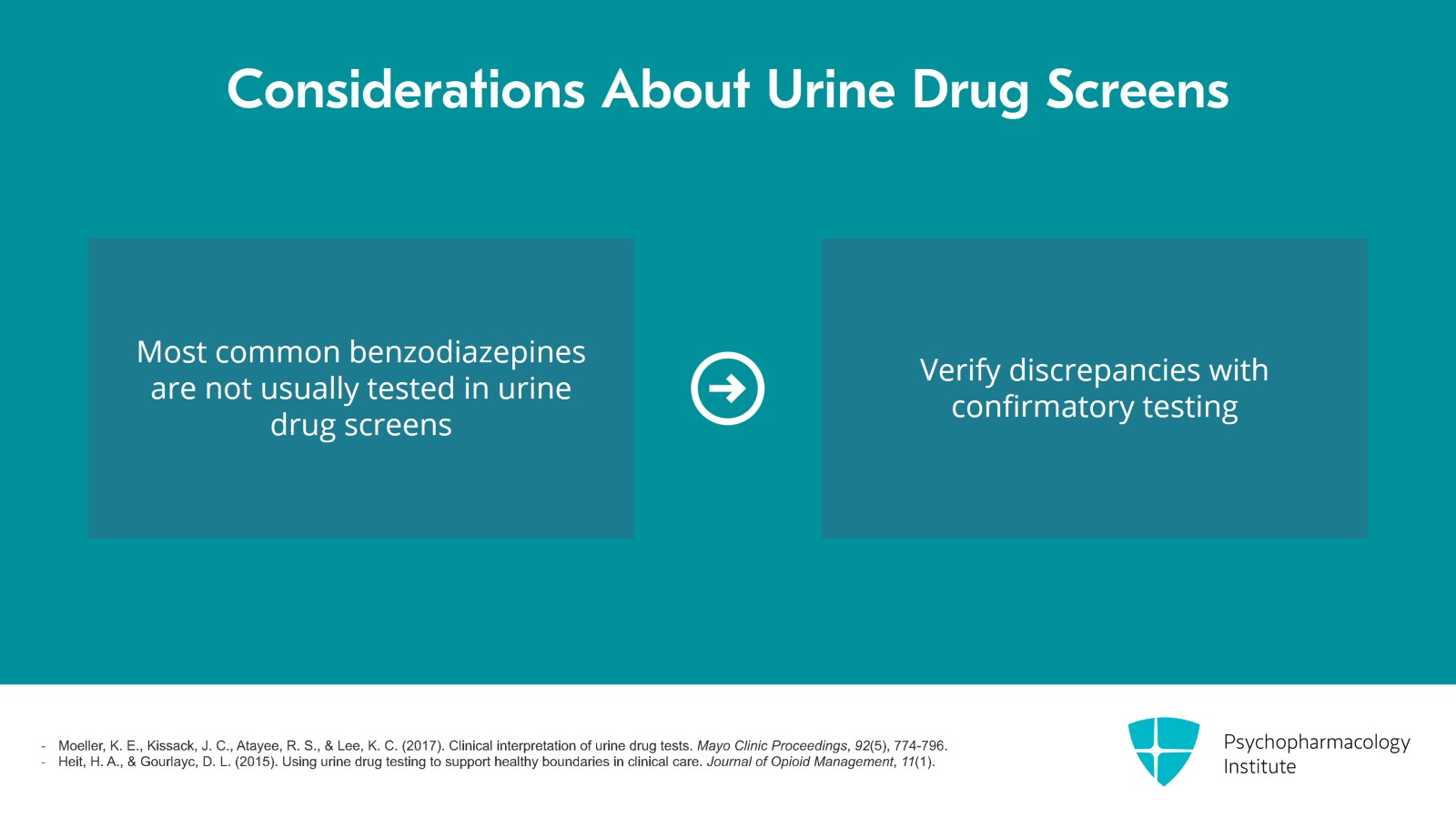
I do think it's extremely important that everyone realize that the usual or most commonly prescribed benzodiazepines – so alprazolam, lorazepam, clonazepam – are not commonly tested for on the outpatient urine drug screen. So if you have an unexpected result on the urine drug screen, it may just be that it's not picking those up because that's not what the screen is intended to pick up. So I would not change your clinical practice based on the results of a urine drug screen. If what you are seeing and what the patient saying do not match up, I would make sure that you have a way to get confirmatory testing.
References:
- Moeller, K. E., Kissack, J. C., Atayee, R. S., & Lee, K. C. (2017). Clinical interpretation of urine drug tests. Mayo Clinic Proceedings, 92(5), 774-796.
- Heit, H. A., & Gourlayc, D. L. (2015). Using urine drug testing to support healthy boundaries in clinical care. Journal of Opioid Management, 11(1).
Slide 14 of 17
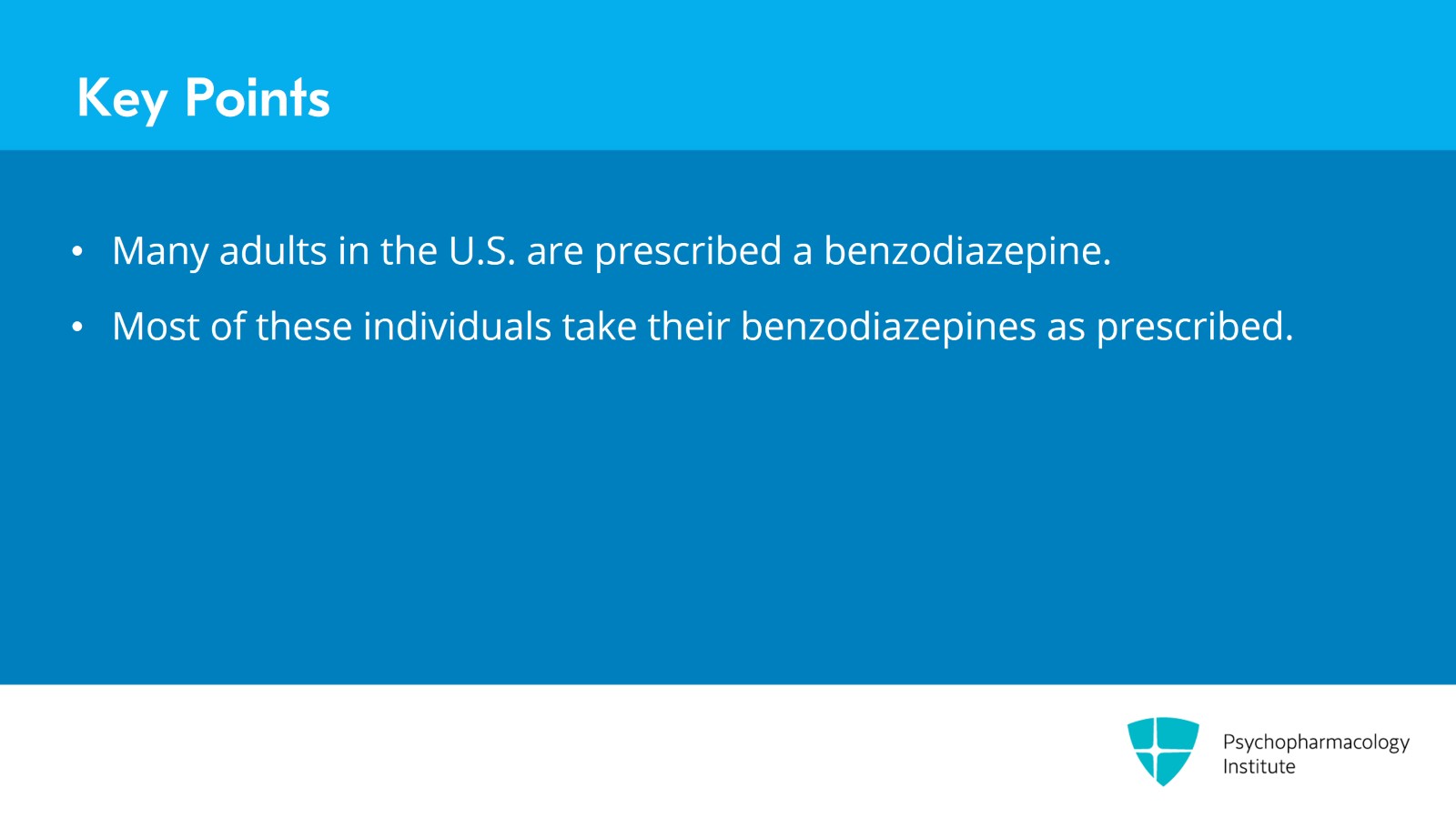
So to summarize the key points for this video, many adults in the US are prescribed a benzodiazepine. And the majority of these individuals take their benzodiazepine prescribed, so over 80% take their benzodiazepine as prescribed.
Free Files
Download PDF and other files
Success!
Check your inbox, we sent you all the materials there.
Slide 15 of 17
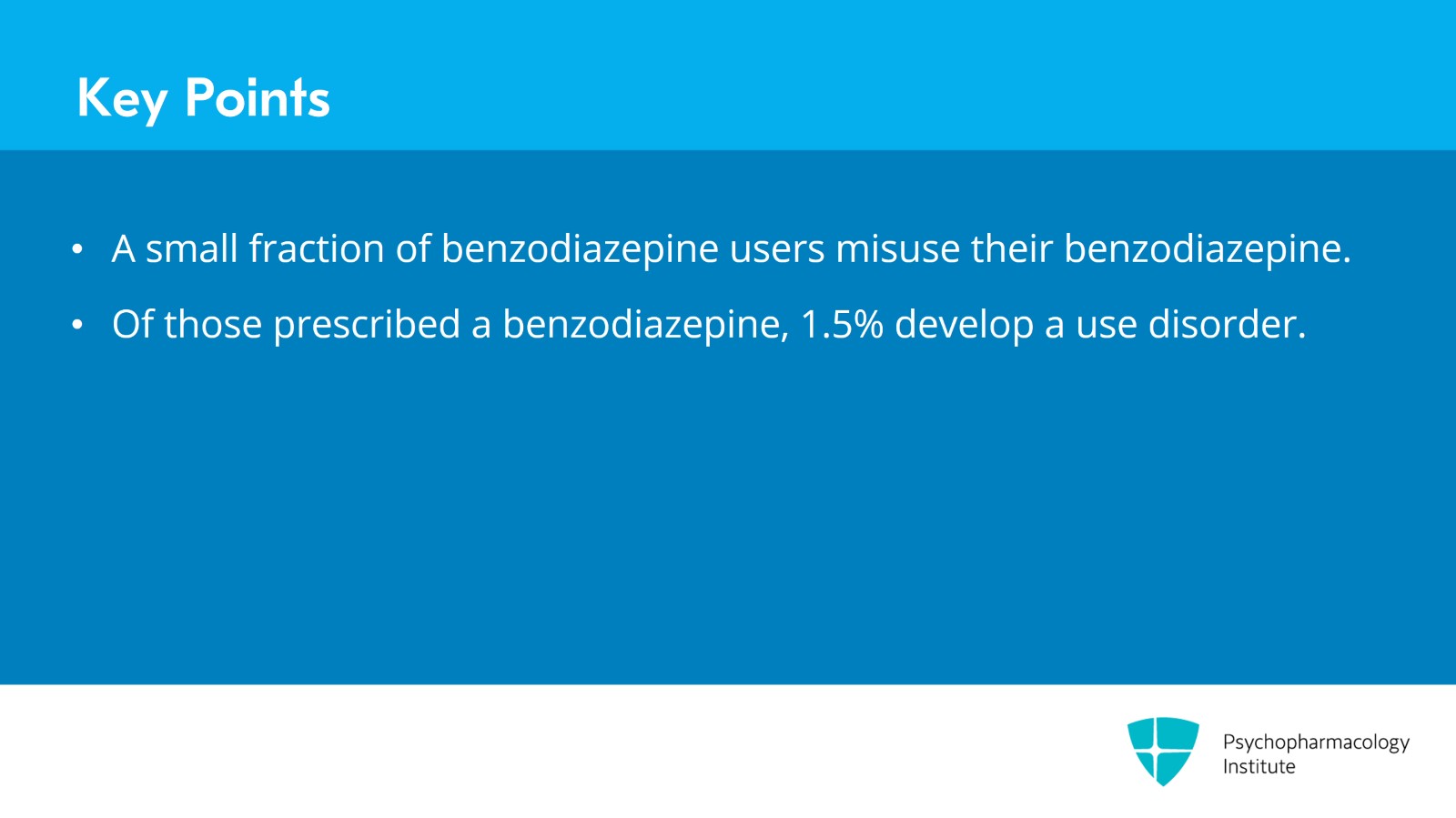
A very small fraction of benzodiazepine users misuse their benzodiazepine. So of those prescribed a benzodiazepine, 1.5% develop a use disorder which is 0.2% of the US population.
Slide 16 of 17
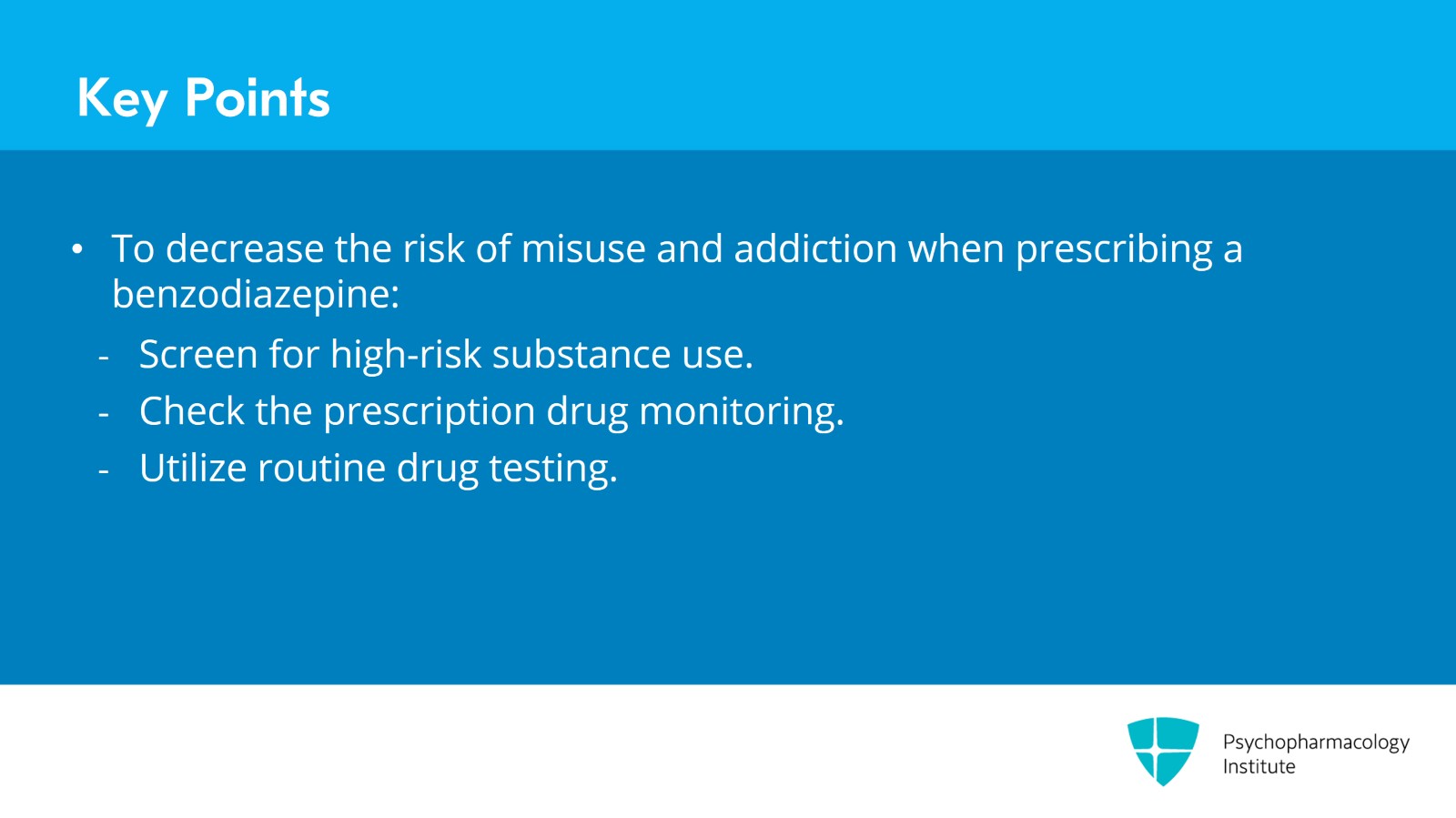
We can take steps to decrease the risk of misuse and addiction when prescribing a benzodiazepine including screening for high-risk substance use, checking the prescription drug monitoring and utilizing routine drug testing.
Free Files
Download PDF and other files
Success!
Check your inbox, we sent you all the materials there.
Slide 17 of 17