Close Banner
Free Section  - Video Lectures

02. Benzodiazepine Deprescription: Indications, Benefits, and Risks

Published on June 1, 2024 Certification expiration date: June 1, 2027

Alexis Ritvo, M.D., M.P.H.

Addiction Psychiatry Fellowship Program director and assistant professor - University of Colorado School of Medicine

Key Points

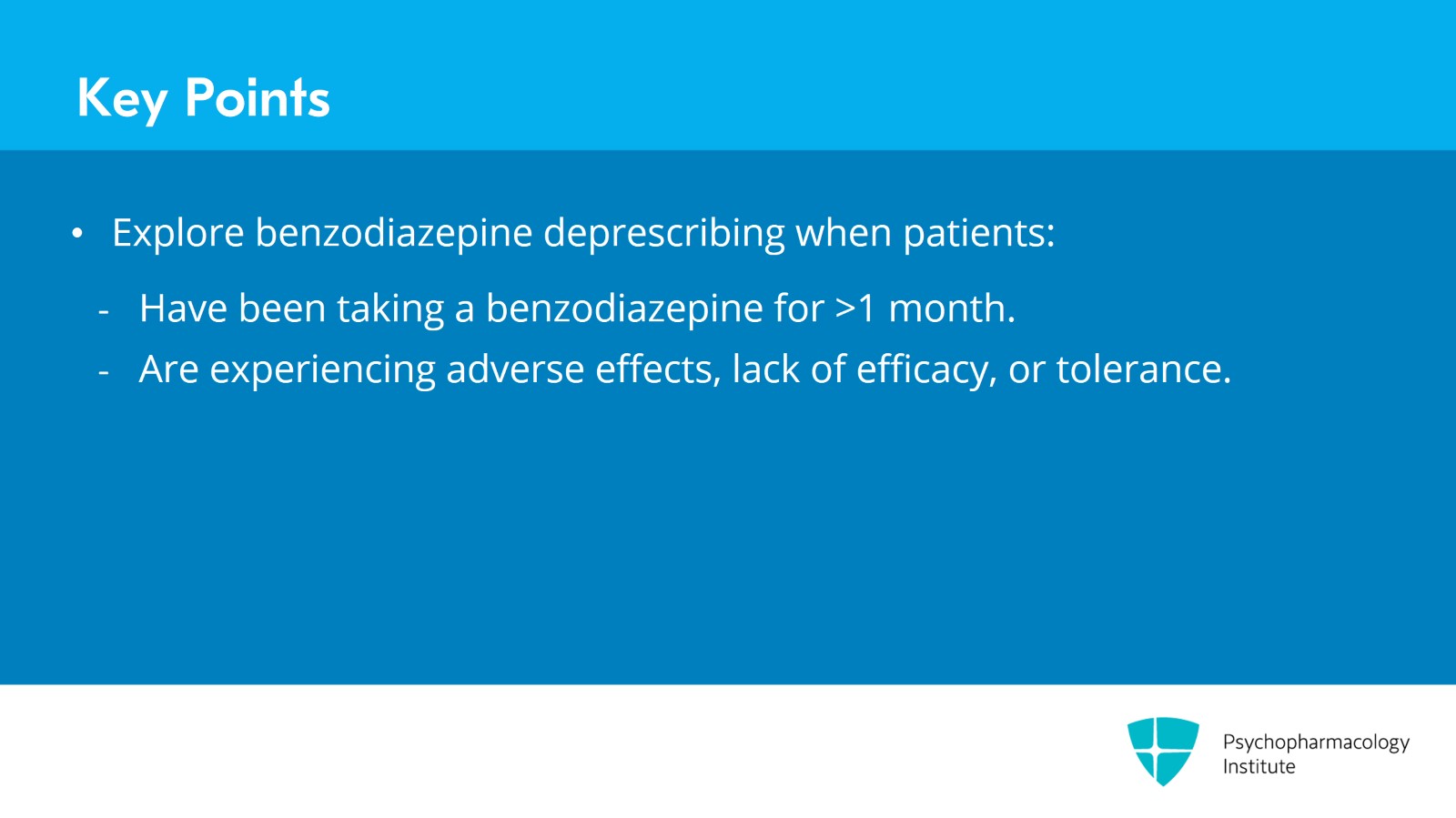
  • Explore benzodiazepine deprescribing when patients:
    -Have been taking a benzodiazepine for >1 month. 
    -Are experiencing adverse effects, lack of efficacy, or tolerance. 
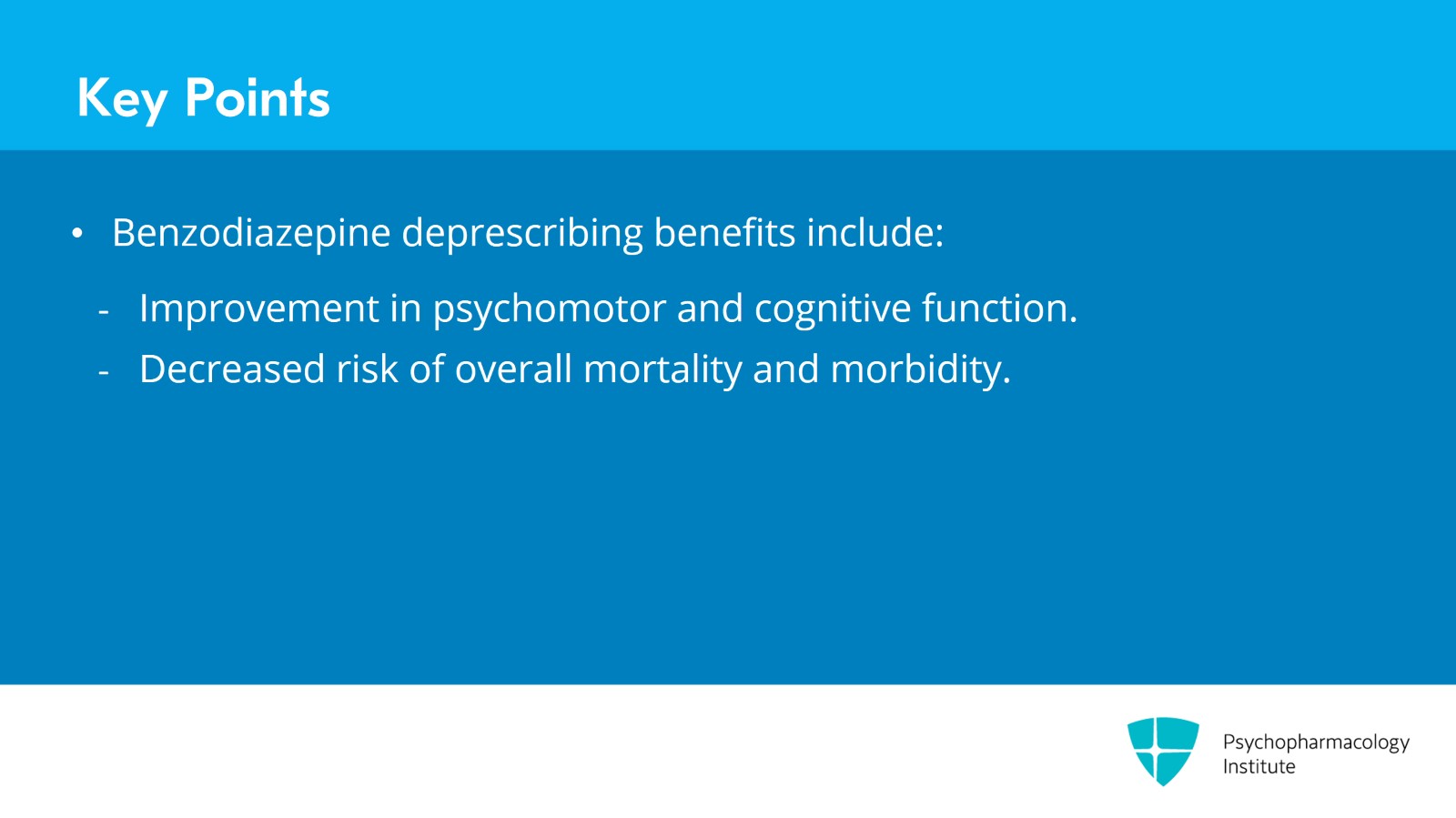
  • Benzodiazepine deprescribing benefits include:
    -Improvement in psychomotor and cognitive function.
    -Decreased risk of overall mortality and morbidity.
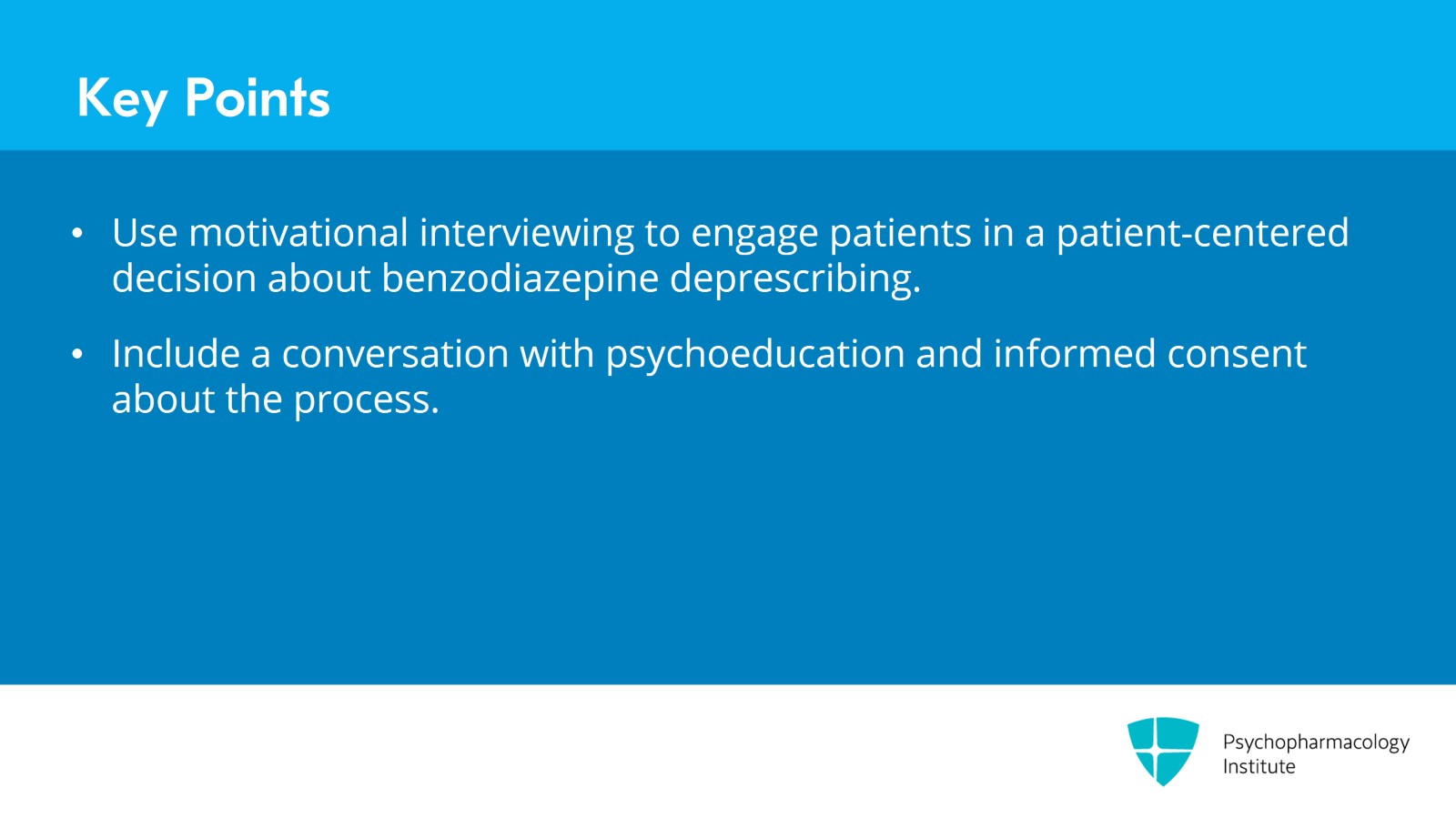
  • Use motivational interviewing to engage patients in a patient-centered decision about benzodiazepine deprescribing. 
  • Include a conversation with psychoeducation and informed consent about the process. 

Free Downloads for Offline Access

  • Free Download Presentation File (PPTX)
  • Free Download Video (MP4)
  • Free Download Audio File (MP3)

Slides and Transcript
Slide 1 of 19

In this second section, I will be talking about the overall indications, benefits, and risks for benzodiazepine deprescription.

Slide 2 of 19

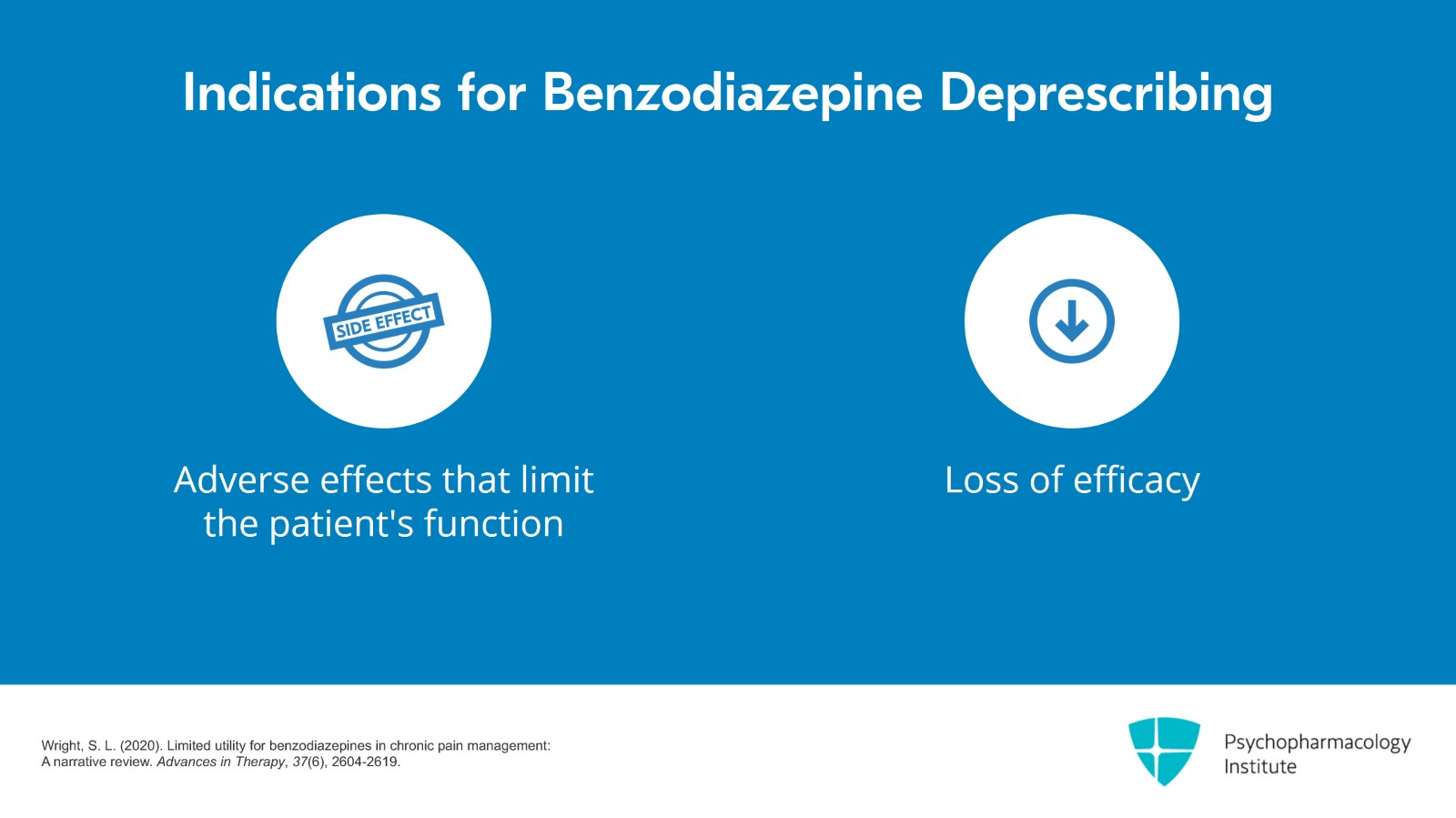
The initial indications to consider engaging the patient in a conversation about deprescribing or tapering their prescription benzodiazepine include experiencing adverse effects from the benzodiazepine that are limiting the patient's function, this includes things like cognitive impairment, falls or respiratory compromise; if patients are experiencing a loss of efficacy of the medication for the indication it was initially prescribed, that'd be a reason to discuss beginning to taper.
References:
  • Wright, S. L. (2020). Limited utility for benzodiazepines in chronic pain management: A narrative review. Advances in Therapy, 37(6), 2604-2619.
Free Files
Success!
Check your inbox, we sent you all the materials there.
Slide 3 of 19

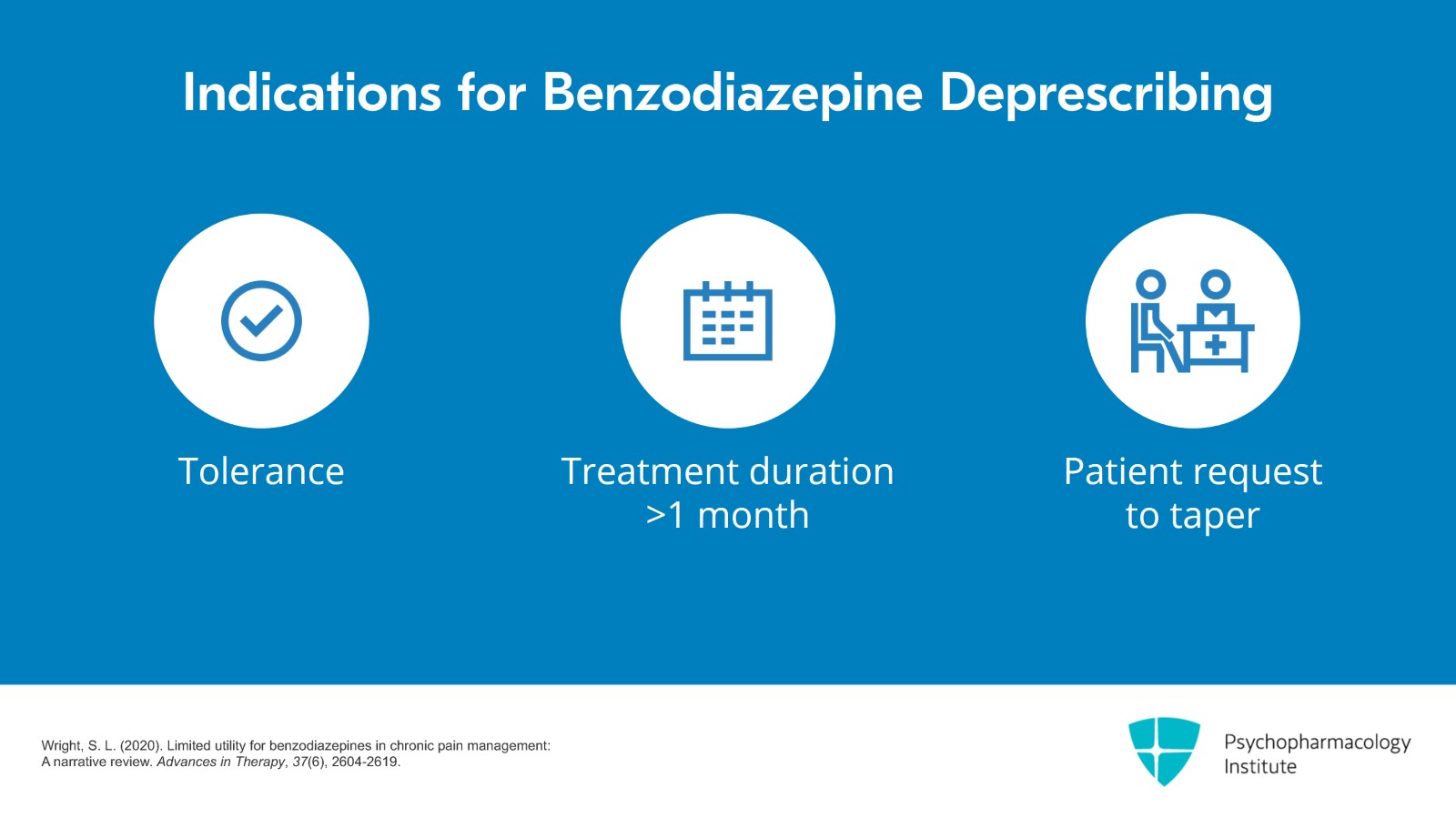
If they're experiencing tolerance of the medication such that the same dose is no longer having the same effect or they find that they would need to raise their dose to get the same effect they previously got from a lower dose; if they have been taking the medication beyond a month; and if a patient requests to engage in a taper of their medication.
References:
  • Wright, S. L. (2020). Limited utility for benzodiazepines in chronic pain management: A narrative review. Advances in Therapy, 37(6), 2604-2619.

Slide 4 of 19

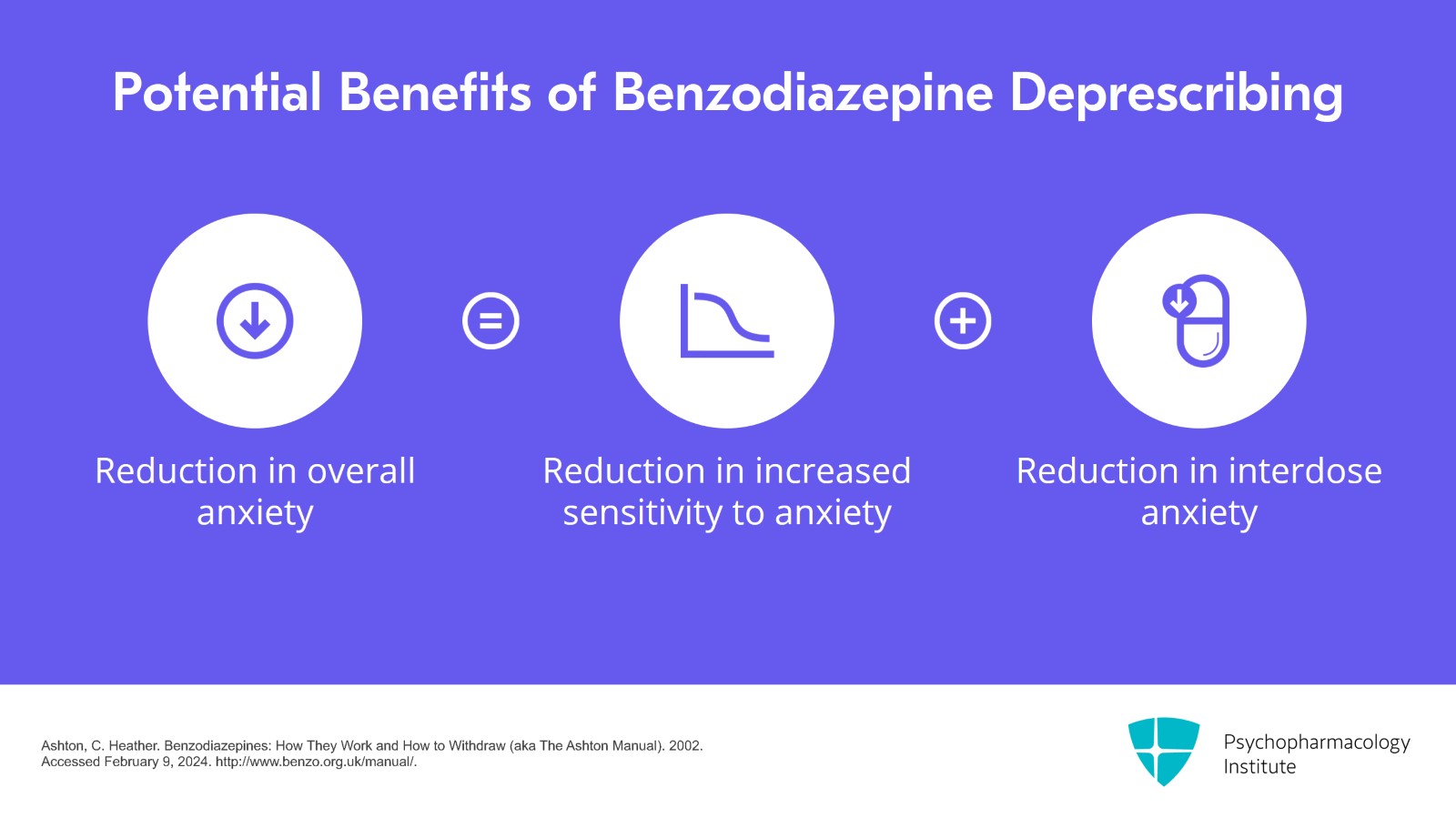
The potential benefits of deprescribing a benzodiazepine can actually be to reduce overall anxiety. This is thought that for some patients they actually end up with kind of an increased sensitivity to anxiety similar to what we see with opioids and increased sensitivity to pain with long-term use. Additionally, if patients are experiencing withdrawal between their doses of a benzodiazepine, they can experience increased anxiety between their doses and actually feel some reduced anxiety when they are tapered down or off the medication and no longer experiencing that interdose withdrawal.
References:
  • Ashton, C. Heather. Benzodiazepines: How They Work and How to Withdraw (aka The Ashton Manual). 2002. Accessed February 9, 2024. http://www.benzo.org.uk/manual/.
Free Files
Success!
Check your inbox, we sent you all the materials there.
Slide 5 of 19

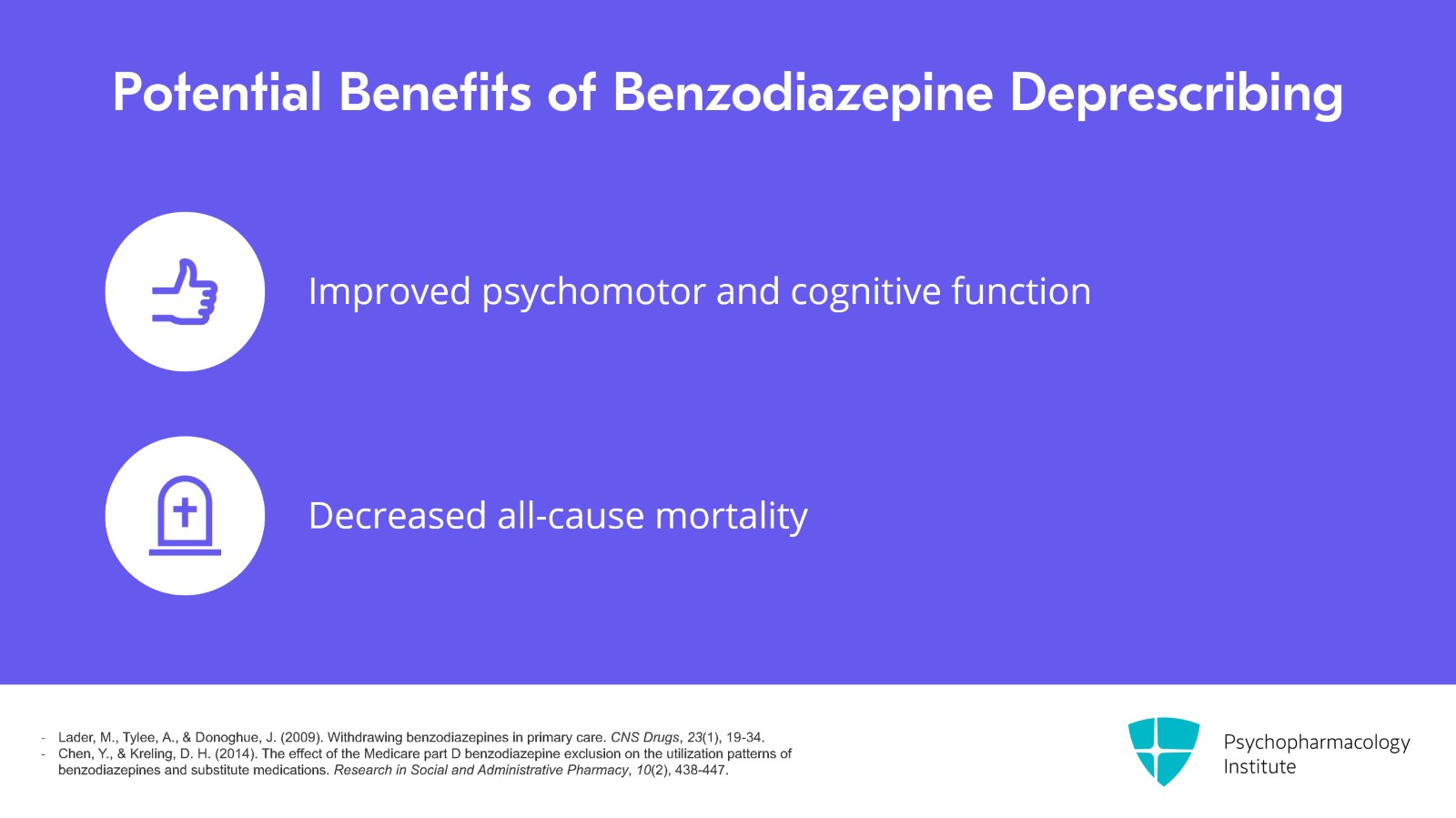
Another big benefit is improved psychomotor and cognitive function. I'd say this is one of the biggest motivators I find for many of my patients especially as they get older that gets their interest in decreasing their prescription benzodiazepine use is in order to improve their mobility, decrease their risk of falls, and improve their cognitive function. The other benefit of course is that it overall helps decrease all-cause mortality from these medications and including the risk of unintentional overdose when these medications are combined with other central nervous system depressants especially opioids or alcohol.
References:
  • Lader, M., Tylee, A., & Donoghue, J. (2009). Withdrawing benzodiazepines in primary care. CNS Drugs, 23(1), 19-34.
  • Chen, Y., & Kreling, D. H. (2014). The effect of the Medicare part D benzodiazepine exclusion on the utilization patterns of benzodiazepines and substitute medications. Research in Social and Administrative Pharmacy, 10(2), 438-447.

Slide 6 of 19

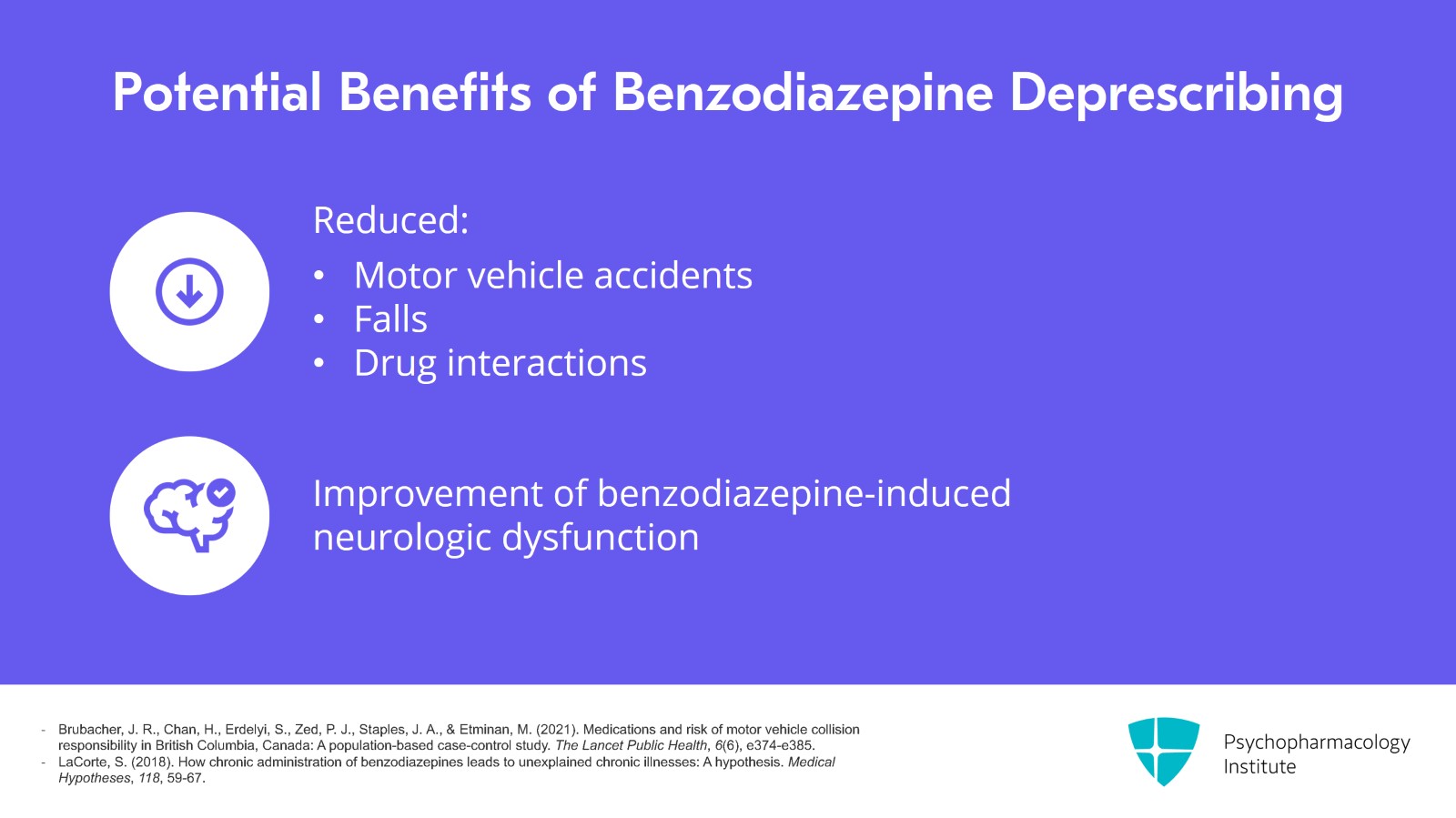
We also see fewer motor vehicle accidents, falls and drug interactions when we're able to decrease the use of benzodiazepines. Finally, a potential benefit is that some individuals experience benzodiazepine-induced neurologic dysfunction, also previously referred to as a post-acute withdrawal or protracted withdrawal syndrome and can develop and experience a myriad of symptoms that lack an alternative neurophysiologic explanation that often improve with discontinuation. We'll talk more about that in a subsequent section.
References:
  • Brubacher, J. R., Chan, H., Erdelyi, S., Zed, P. J., Staples, J. A., & Etminan, M. (2021). Medications and risk of motor vehicle collision responsibility in British Columbia, Canada: A population-based case-control study. The Lancet Public Health, 6(6), e374-e385.
  • LaCorte, S. (2018). How chronic administration of benzodiazepines leads to unexplained chronic illnesses: A hypothesis. Medical Hypotheses, 118, 59-67.
Free Files
Success!
Check your inbox, we sent you all the materials there.
Slide 7 of 19

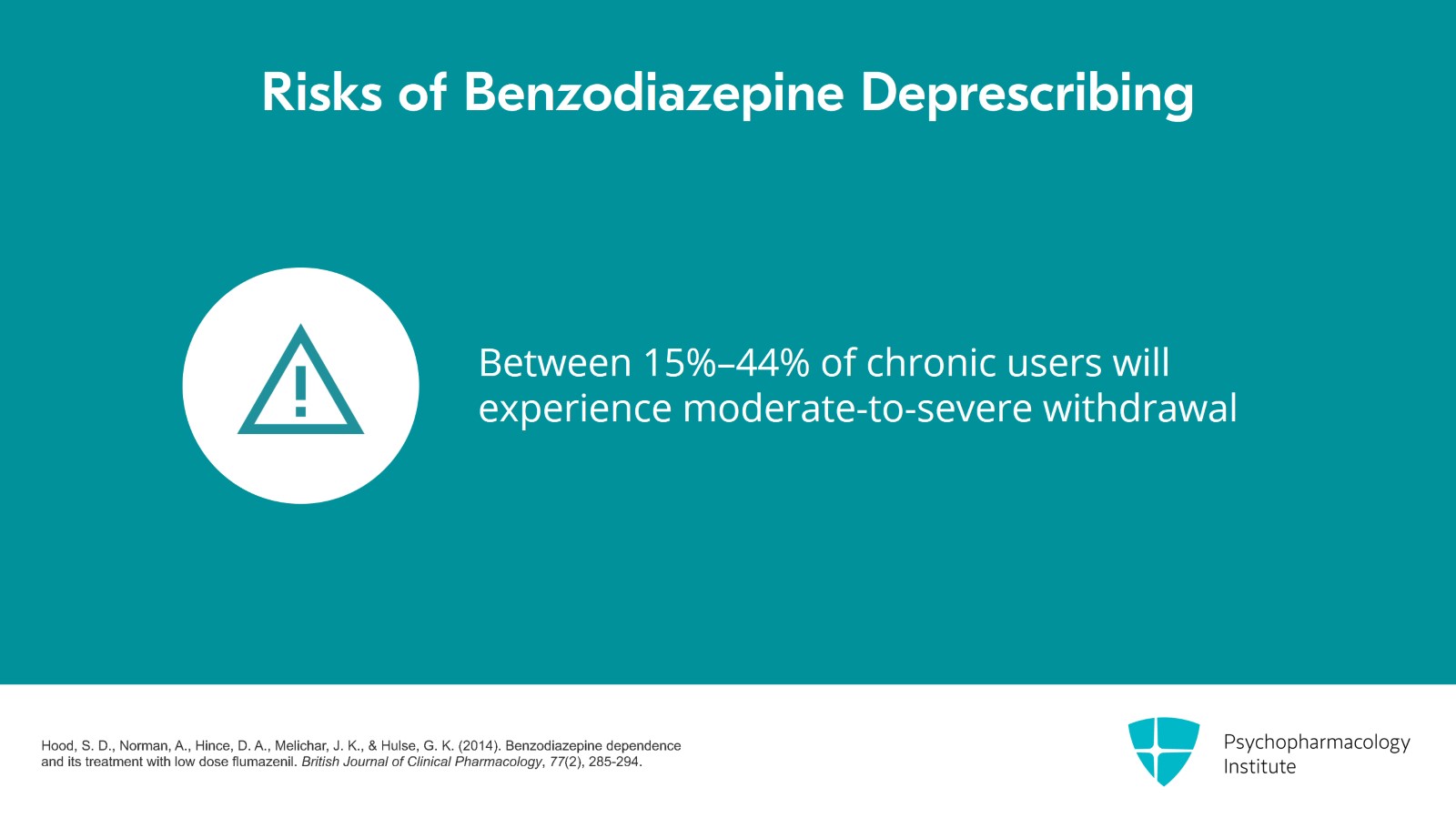
As far as the risks that come with deprescribing benzodiazepines, there is a wide range of estimates depending on what symptoms you identify as being part of benzodiazepine withdrawal but studies have found that anywhere between 15% and 44% of chronic benzodiazepine users will experience moderate to severe withdrawal upon discontinuation.
References:
  • Hood, S. D., Norman, A., Hince, D. A., Melichar, J. K., & Hulse, G. K. (2014). Benzodiazepine dependence and its treatment with low dose flumazenil. British Journal of Clinical Pharmacology, 77(2), 285-294.

Slide 8 of 19

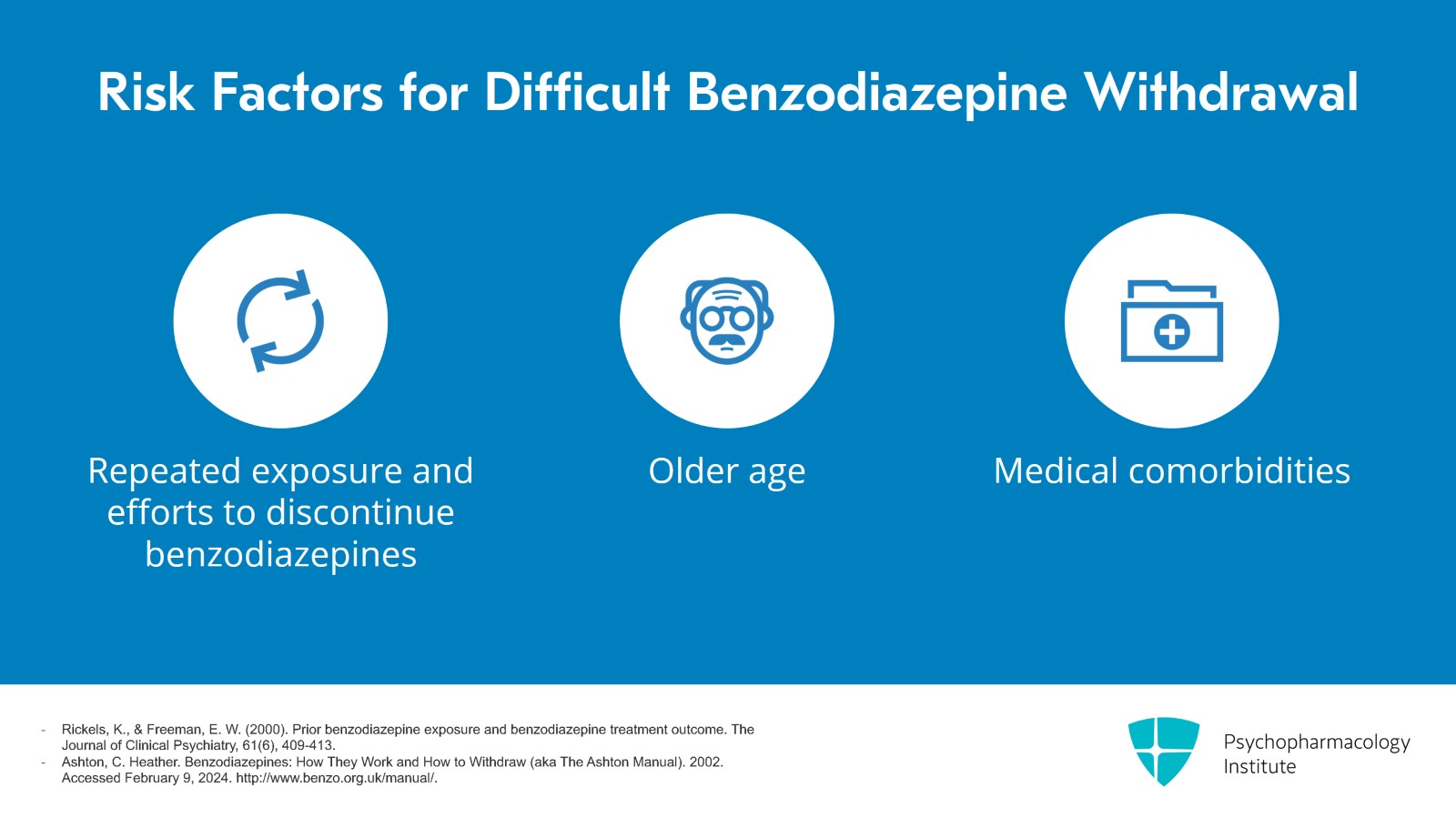
Some of the factors that we believe increase the difficulty of withdrawal is that individuals that have either had repeated exposure to benzodiazepines and repeated efforts to taper or discontinue may experience a central sensitization, also referred to as a kindling. Additionally, folks that are older and have more medical comorbidities while they both would benefit from decreasing their dose or getting off of benzodiazepines, it also is a risk factor for a more complicated discontinuation.  
References:
  • Rickels, K., & Freeman, E. W. (2000). Prior benzodiazepine exposure and benzodiazepine treatment outcome. The Journal of Clinical Psychiatry, 61(6), 409-413.
  • Ashton, C. Heather. Benzodiazepines: How They Work and How to Withdraw (aka The Ashton Manual). 2002. Accessed February 9, 2024. http://www.benzo.org.uk/manual/.
Free Files
Success!
Check your inbox, we sent you all the materials there.
Slide 9 of 19

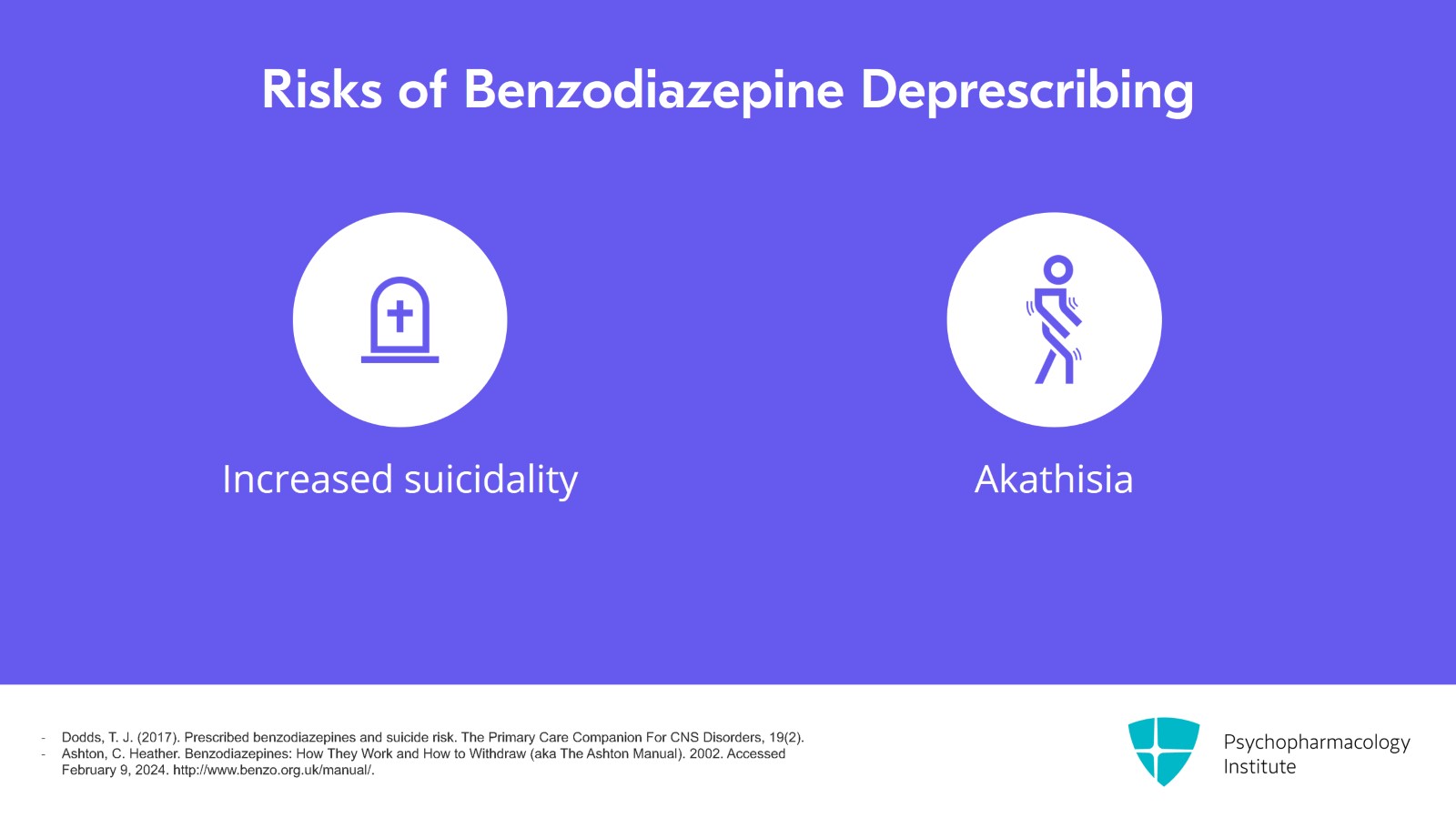
Other severe outcomes from both taking benzodiazepines but also tapering them is suicidality. Some patients become very dysphoric, demoralized about their physical dependence to these medications as well as the symptoms they may experience while trying to come off of them and do at times become suicidal. Akathisia is a really debilitating side effect of the benzodiazepine's withdrawal for some individuals and can lead to a fair amount of disability.
References:
  • Dodds, T. J. (2017). Prescribed benzodiazepines and suicide risk. The Primary Care Companion For CNS Disorders, 19(2).
  • Ashton, C. Heather. Benzodiazepines: How They Work and How to Withdraw (aka The Ashton Manual). 2002. Accessed February 9, 2024. http://www.benzo.org.uk/manual/.

Slide 10 of 19

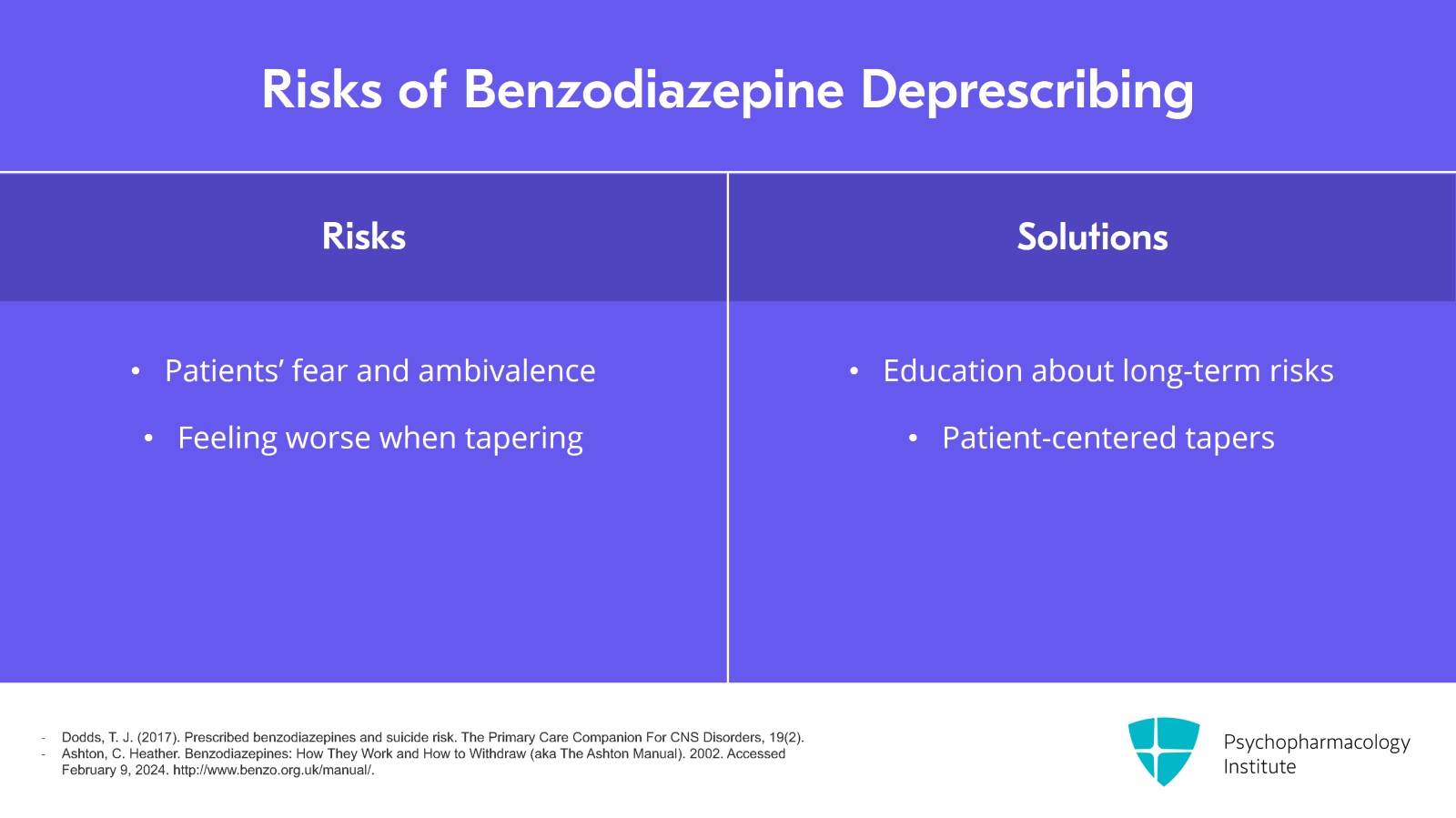
And another risk is just the overall fear and ambivalence that patients have about no longer being on a benzodiazepine for whatever the indication was prescribed for and that while they may be interested in considering a taper because they know there are things about their continued use they don't like they're also afraid that they may feel even worse coming down or off of the benzodiazepine. However, I would like to instill some hope that overall educating our patients about the long-term risks of benzodiazepines for many individuals and offering approaches to patient-centered tapers can go a very long way.
References:
  • Dodds, T. J. (2017). Prescribed benzodiazepines and suicide risk. The Primary Care Companion For CNS Disorders, 19(2).
  • Ashton, C. Heather. Benzodiazepines: How They Work and How to Withdraw (aka The Ashton Manual). 2002. Accessed February 9, 2024. http://www.benzo.org.uk/manual/.
Free Files
Success!
Check your inbox, we sent you all the materials there.
Slide 11 of 19

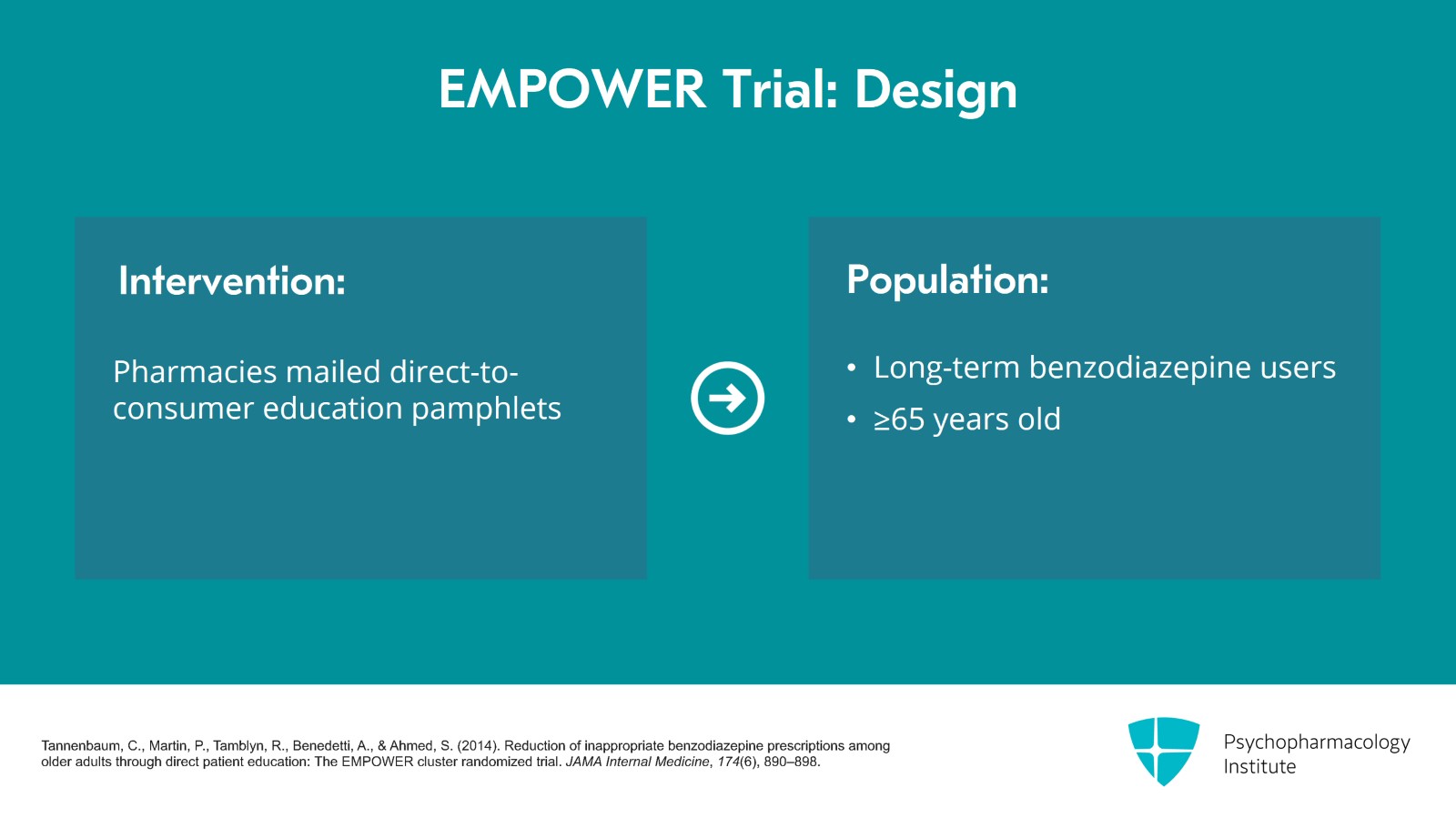
So a group out of Canada did a study called the EMPOWER trial where pharmacies mailed direct-to-consumer education pamphlets to those that were long-term benzodiazepine users who had been on the medications for months or years, who were over 65 years of age and therefore it was contraindicated that they continue on these medications.
References:
  • Tannenbaum, C., Martin, P., Tamblyn, R., Benedetti, A., & Ahmed, S. (2014). Reduction of inappropriate benzodiazepine prescriptions among older adults through direct patient education: The EMPOWER cluster randomized trial. JAMA Internal Medicine, 174(6), 890–898.

Slide 12 of 19

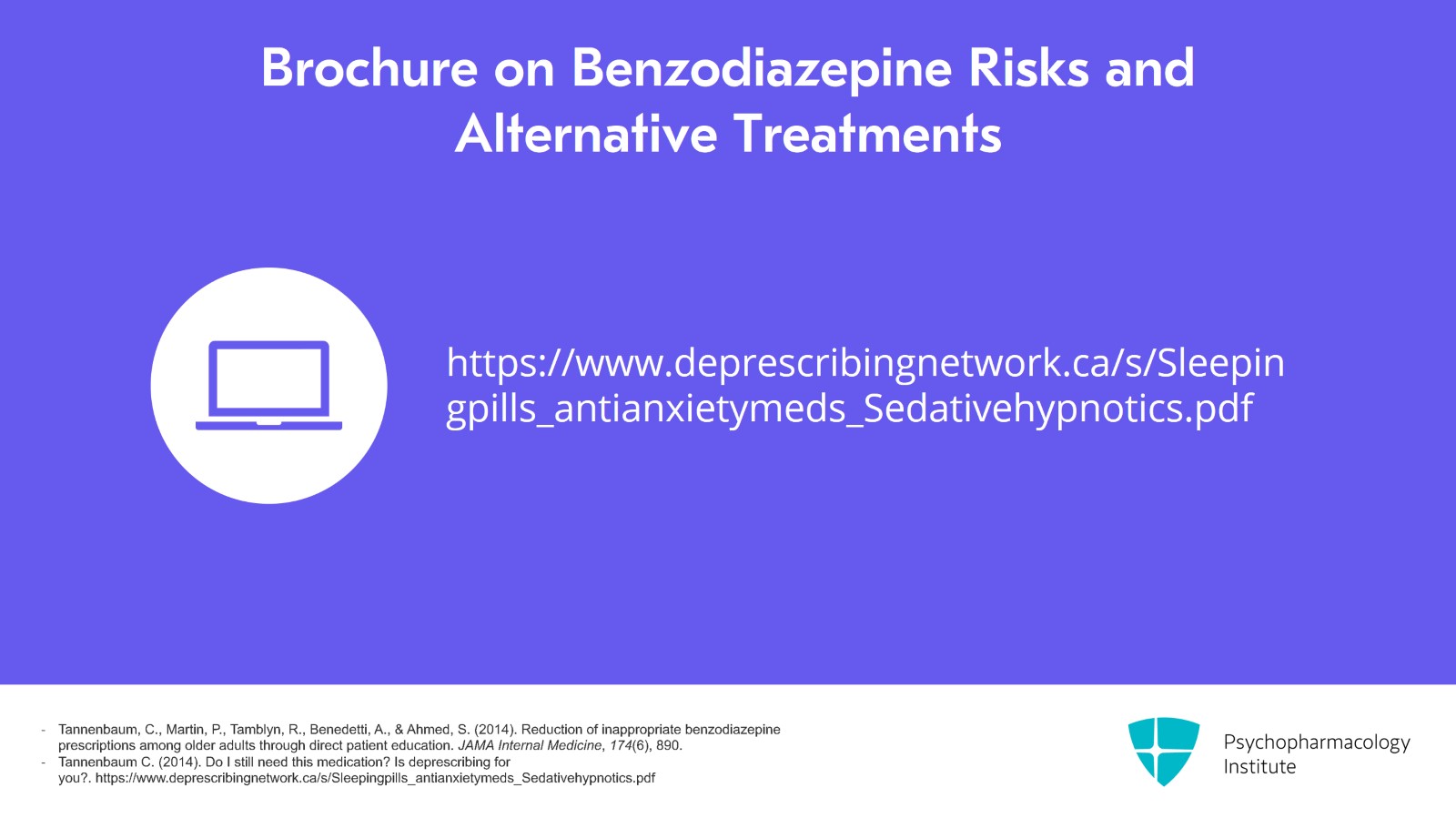
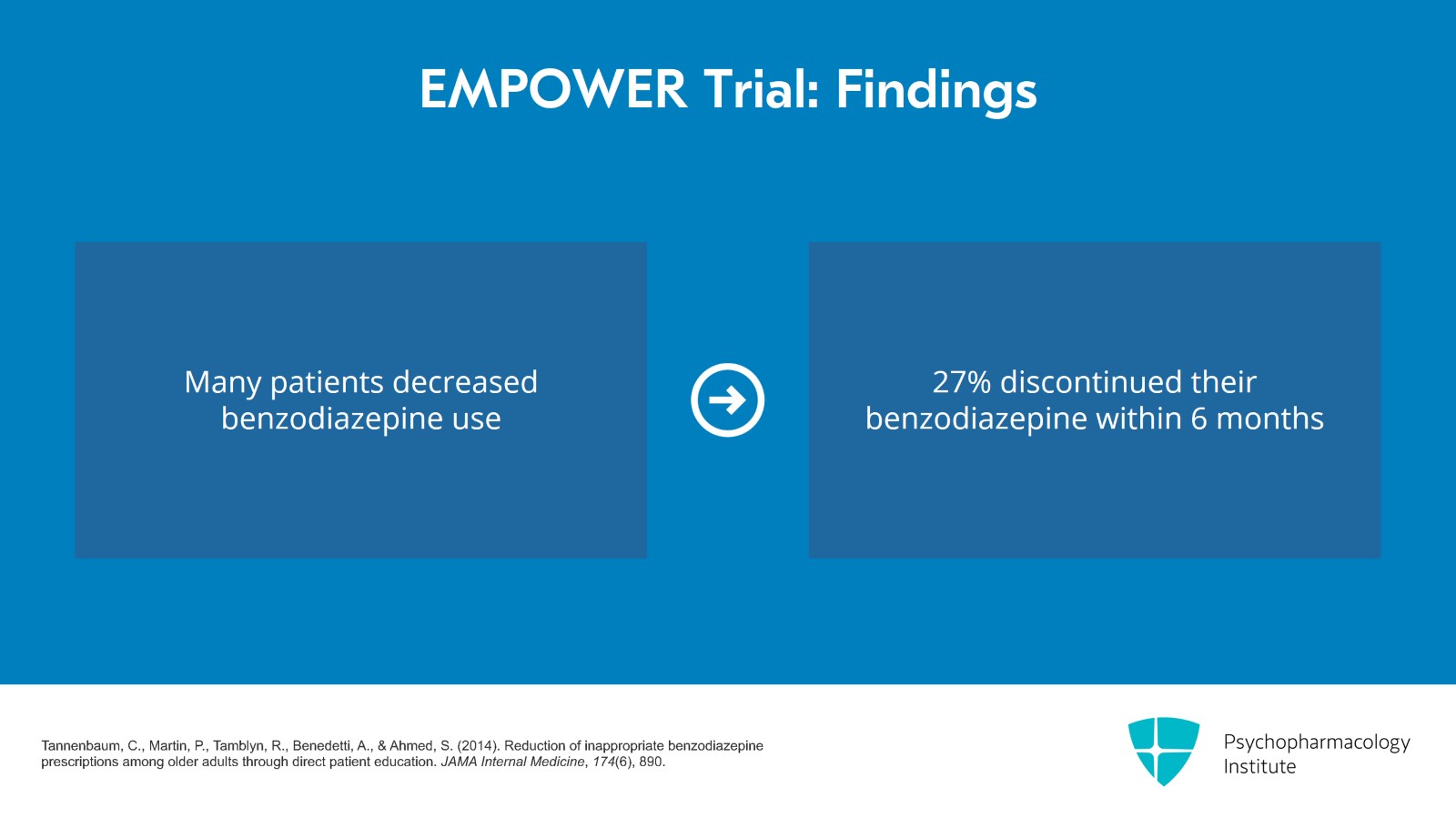
And they found that just receiving this eight-page brochure about the risks of benzodiazepine, about successful stories of individuals tapering off of them and alternate treatments that many patients chose to engage in decreasing their use. So those that received this brochure, 27% of them discontinued their benzodiazepine within a six-month follow-up as compared to only 5% of the control group.
References:
  • Tannenbaum, C., Martin, P., Tamblyn, R., Benedetti, A., & Ahmed, S. (2014). Reduction of inappropriate benzodiazepine prescriptions among older adults through direct patient education. JAMA Internal Medicine, 174(6), 890.
Free Files
Success!
Check your inbox, we sent you all the materials there.
Slide 13 of 19

You can actually access this brochure for free at the following link. I will say for many the sample taper protocol they provide can be too rapid especially if they're more predisposed or start to experience some of the protracted withdrawal symptoms. So that's just an important thing to keep in mind. I tend to give this pamphlet to patients and actually just exclude the sample protocol and rather engage with them in a discussion about how to approach coming up with initial steps to taper.
References:
  • Tannenbaum, C., Martin, P., Tamblyn, R., Benedetti, A., & Ahmed, S. (2014). Reduction of inappropriate benzodiazepine prescriptions among older adults through direct patient education. JAMA Internal Medicine, 174(6), 890.
  • Tannenbaum C. (2014). Do I still need this medication? Is deprescribing for you?. https://www.deprescribingnetwork.ca/s/Sleepingpills_antianxietymeds_Sedativehypnotics.pdf

Slide 14 of 19

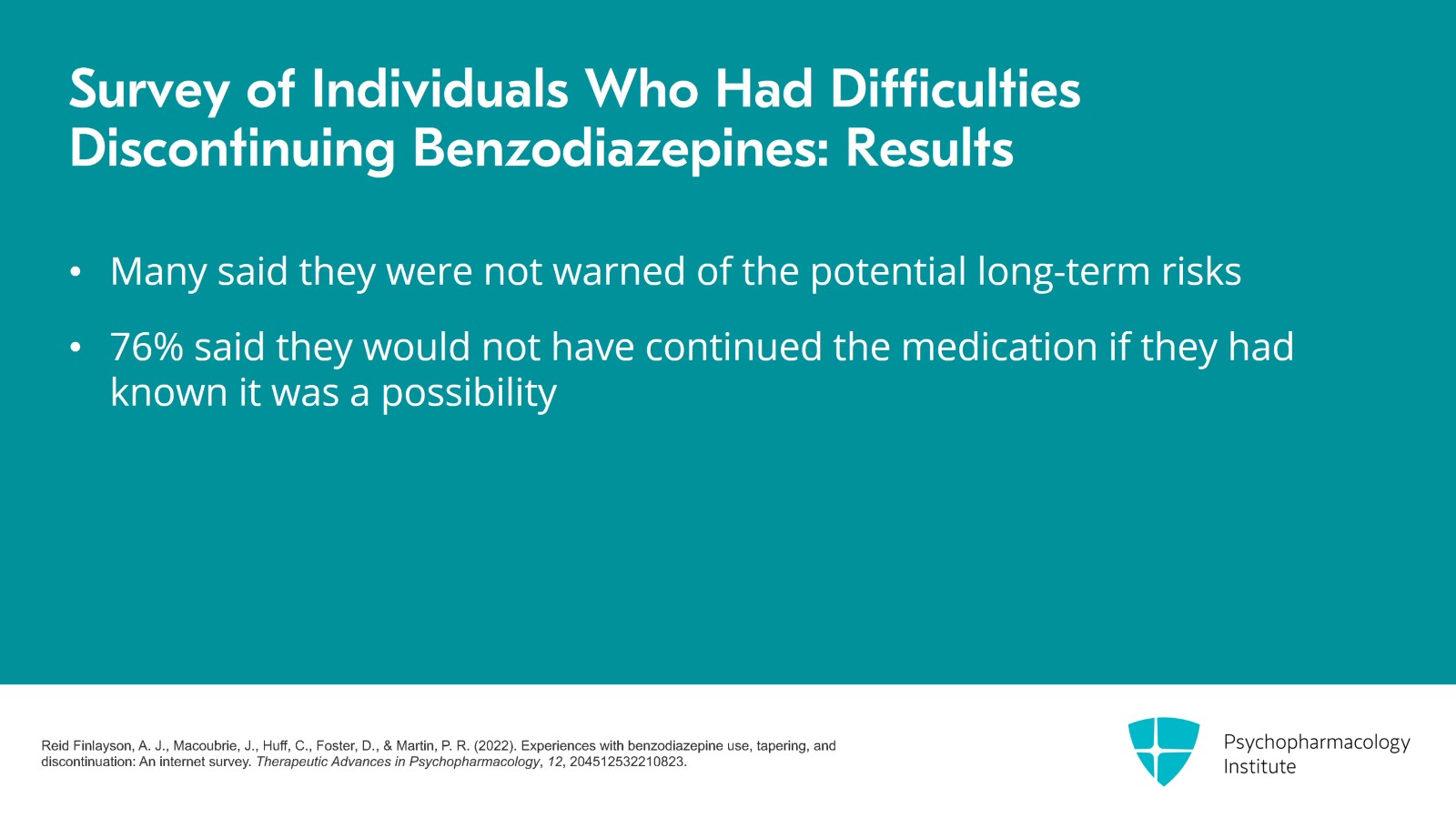
I mentioned that we had done a survey of individuals that have been prescribed benzodiazepines long term and had difficulty coming off and would just like to point out that the results in that is that many patients felt like they weren't warned about the potential long-term risks of these medications and that they've only been studied in shorter-term use and may be difficult to withdraw from after being taken for more than a month. And a resounding 76% of individuals said they would definitely have not continued on this medication long term if they'd known that was a possibility.
References:
  • Reid Finlayson, A. J., Macoubrie, J., Huff, C., Foster, D., & Martin, P. R. (2022). Experiences with benzodiazepine use, tapering, and discontinuation: An internet survey. Therapeutic Advances in Psychopharmacology, 12, 204512532210823.
Free Files
Success!
Check your inbox, we sent you all the materials there.
Slide 15 of 19

So I'd just like to remind everyone that we should be doing informed consent with our patients when we start these medications and also when we engage them in a discussion about tapering them and potentially discontinuing them. There are examples of some very detailed informed consents on the Benzodiazepine Information Coalition website. It might be more detailed than you want or have the time to engage some patients with but I think it is a good example of the myriad of things that had been documented with long-term use of benzodiazepines and I would encourage everyone to come up with their own informed consent that they engage patients in and document.
References:
  • Colorado Consortium for Prescription Drug Abuse Prevention, Benzodiazepine Information Coalition, Benzodiazepine Action Work Group, & Easing Anxiety, E. A. (2022, January). Benzodiazepine Deprescribing Guidance. Colorado Consortium for Prescription Drug Abuse Prevention. https://corxconsortium.org/wp-content/uploads/Benzo-Deprescribing.pdf

Slide 16 of 19

So to review the key points of this section, it's important to explore benzodiazepine deprescribing with a patient whenever they've been taking a benzodiazepine regularly for more than a month and/or when they are experiencing any adverse effects or lack of efficacy or tolerance to these medications.
Free Files
Success!
Check your inbox, we sent you all the materials there.
Slide 17 of 19

We know that benzodiazepine deprescribing benefits include improvement in psychomotor and cognitive function as well as decreased risk of overall mortality and morbidity related to these medications.

Slide 18 of 19

And if I haven't hammered it home enough times already, again, you really want to be utilizing that motivational interviewing approach to engage your patient in a patient-centered decision about deprescribing a benzodiazepine and this should include a conversation with psychoeducation and informed consent about the process.
Free Files
Success!
Check your inbox, we sent you all the materials there.
Slide 19 of 19

Learning Objectives:

After completing this activity, the learner will be able to:

  1. Perform motivational interviewing techniques for effective benzodiazepine deprescribing.
  2. Develop individualized benzodiazepine tapering strategies tailored to patient needs.
  3. Recognize and manage benzodiazepine withdrawal symptoms.

Original Release Date: June 1, 2024

Expiration Date: June 1, 2027

Expert: Alexis Ritvo, M.D.

Medical Editor: Paz Badía, M.D. 

Relevant Financial Disclosures: 

None of the faculty, planners, and reviewers for this educational activity have relevant financial relationships to disclose during the last 24 months with ineligible companies whose primary business is producing, marketing, selling, re-selling, or distributing healthcare products used by or on patients.

Contact Information: For questions regarding the content or access to this activity, contact us at support@psychopharmacologyinstitute.com

Instructions for Participation and Credit:

Participants must complete the activity online during the valid credit period that is noted above.

Follow these steps to earn CME credit:

  1. View the required educational content provided on this course page.

  2. Complete the Post Activity Evaluation for providing the necessary feedback for continuing accreditation purposes and for the development of future activities. NOTE: Completing the Post Activity Evaluation after the quiz is required to receive the earned credit.

  3. Download your certificate.

Accreditation Statement

This activity has been planned and implemented in accordance with the accreditation requirements and policies of the Accreditation Council for Continuing Medical Education through the joint providership of Medical Academy LLC and the Psychopharmacology Institute. Medical Academy is accredited by the ACCME to provide continuing medical education for physicians.

Credit Designation Statement

Medical Academy designates this enduring activity for a maximum of 1.25 AMA PRA Category 1 credit(s)™. Physicians should claim only the credit commensurate with the extent of their participation in the activity.

Free Files
Success!
Check your inbox, we sent you all the materials there.
Continue in the website
Instant access modal

Become a Bronze, Silver, Gold, Bronze extended, Silver extended or Gold extended Member.

2025–26 Psychopharmacology CME Program

Unlock up to 155 CME Credits, including 40 SA CME Credits.