Close Banner
Section Free  - Video Lectures

06. Augmenting With SGAs After Unsatisfactory Response to Lithium in Bipolar Mania

Published on July 1, 2024 Certification expiration date: July 1, 2027

David Osser, M.D.

Associate Professor of Psychiatry - Harvard Medical School

Key Points

  • If there is no response to lithium, add an SGA for the management of acute, classic mania.
  • Consider quetiapine first and then risperidone and olanzapine.
  • Olanzapine is less recommended due to its side effects. 
  • Risperidone is preferred over olanzapine. 

Free Downloads for Offline Access

  • Free Download Presentation File (PPTX)
  • Free Download Video (MP4)
  • Free Download Audio File (MP3)

Slides and Transcript

Slide 1 of 12

This is video 6 of the Algorithm for the Psychopharmacology of Acute Mania.

Slide 2 of 12

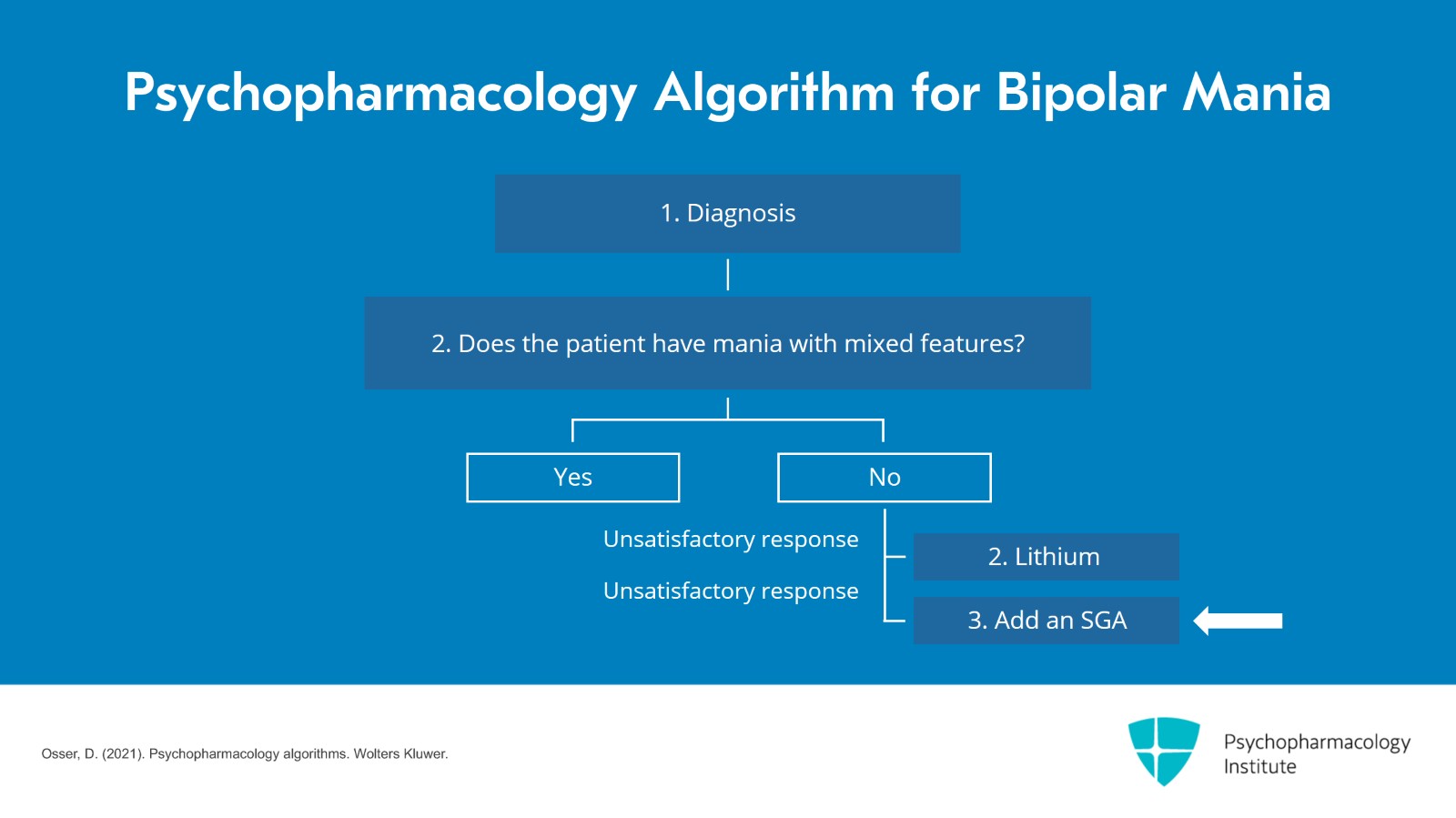
We are midway through the part of the algorithm that discusses acute treatment of classic mania. And we discussed the initial treatment choices in the last video. So in this video, we discuss what to do after unsatisfactory response to the first recommended treatment which is lithium. So we think the add-on should be with a second-generation antipsychotic.
References:
  • Osser, D. (2021). Psychopharmacology algorithms. Wolters Kluwer.
Free Files
Success!
Check your inbox, we sent you all the materials there.

Slide 3 of 12

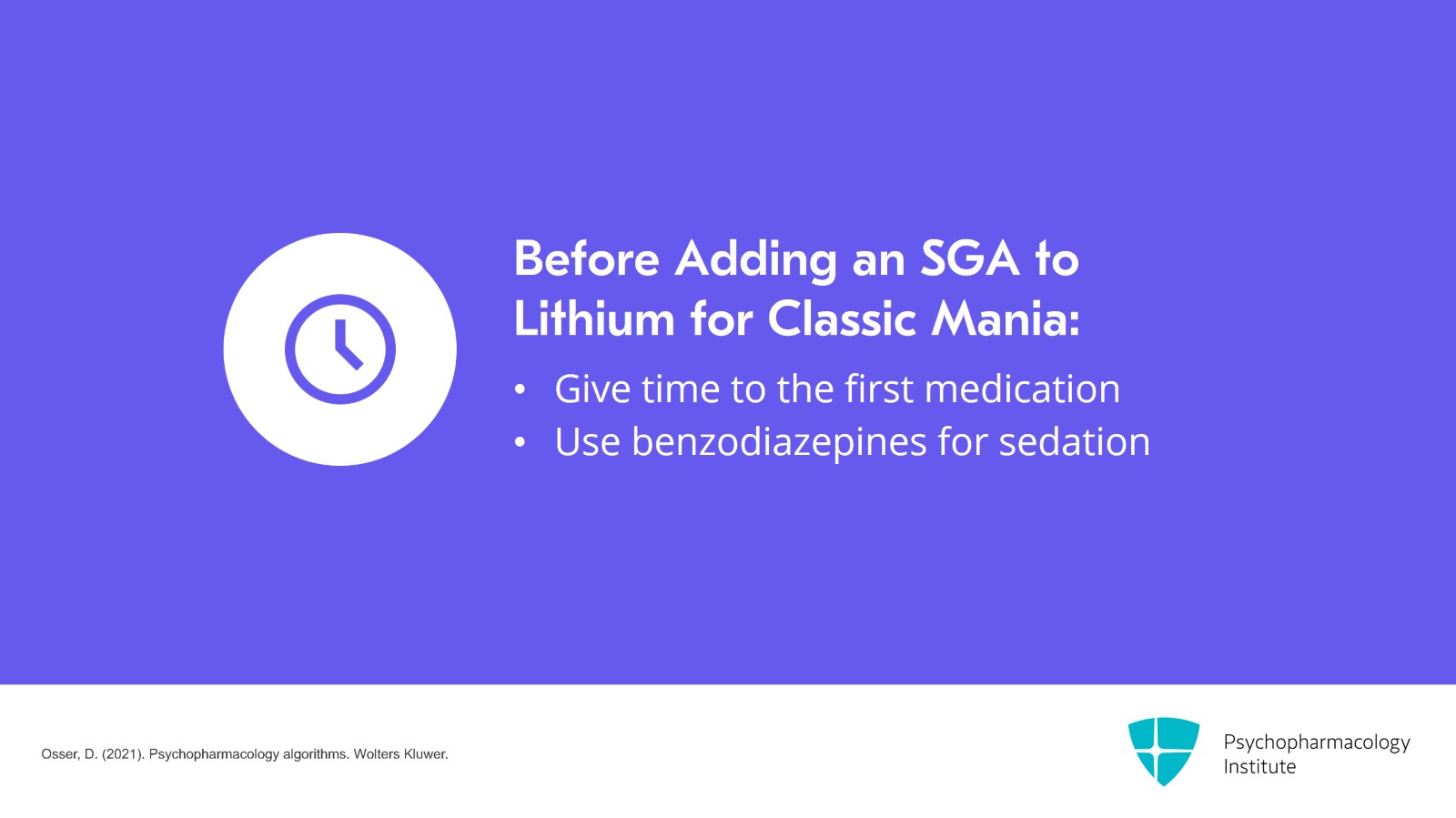
This addition could be done quickly though giving the first medication more time and using benzodiazepines for sedation is recommended as we discussed in detail in the video on treating mixed mania.
References:
  • Osser, D. (2021). Psychopharmacology algorithms. Wolters Kluwer.

Slide 4 of 12

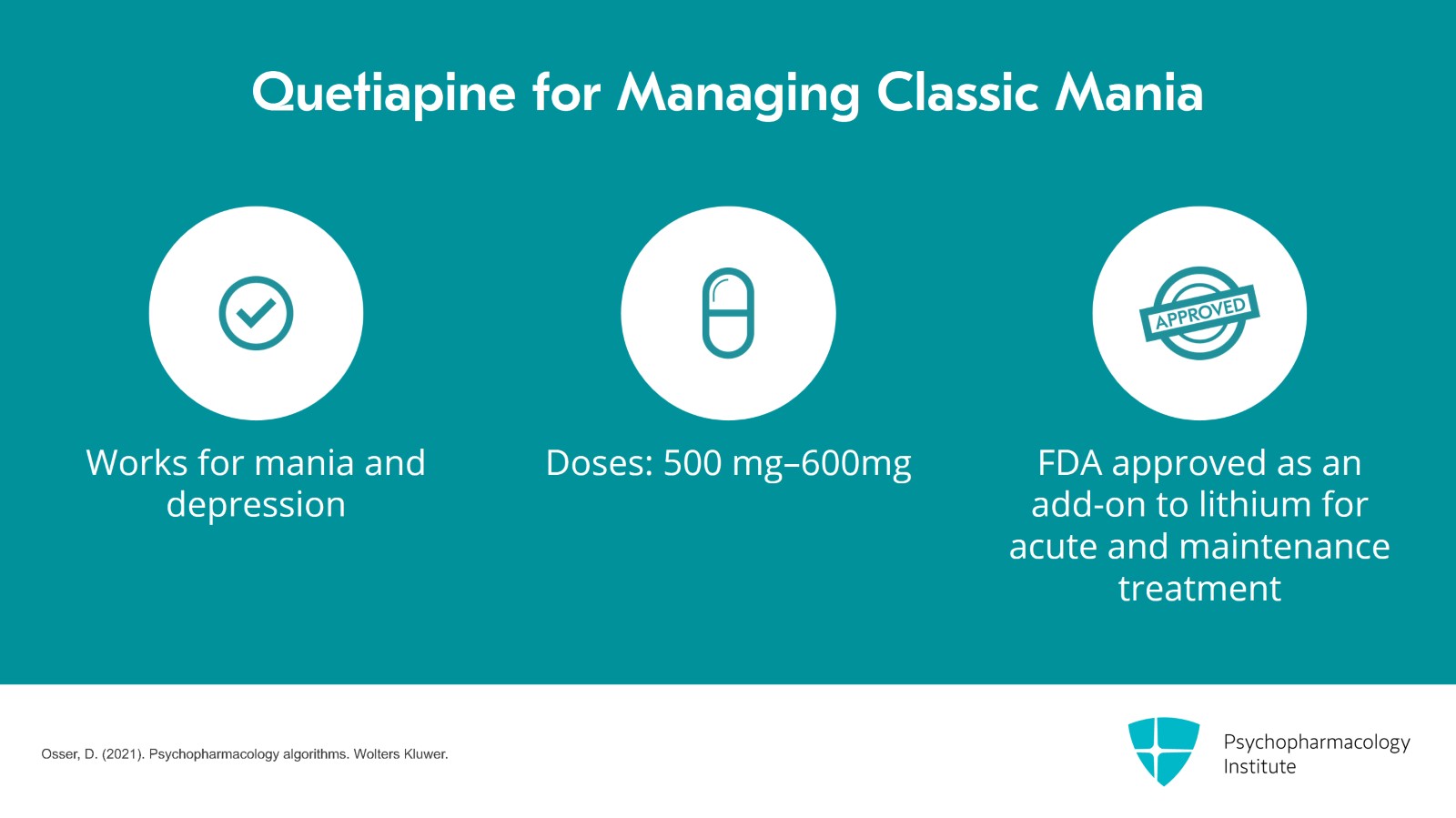
Anyway, as noted though, quetiapine comes closest to lithium as a full mood stabilizer that works for mania and depression. The doses are 500 to 600 for mania. It's an FDA-approved add-on to lithium both acutely and for maintenance. It's gotten an FDA approval. So it's the odds on best evidenced add-on to your lithium.
References:
  • Osser, D. (2021). Psychopharmacology algorithms. Wolters Kluwer.
Free Files
Success!
Check your inbox, we sent you all the materials there.

Slide 5 of 12

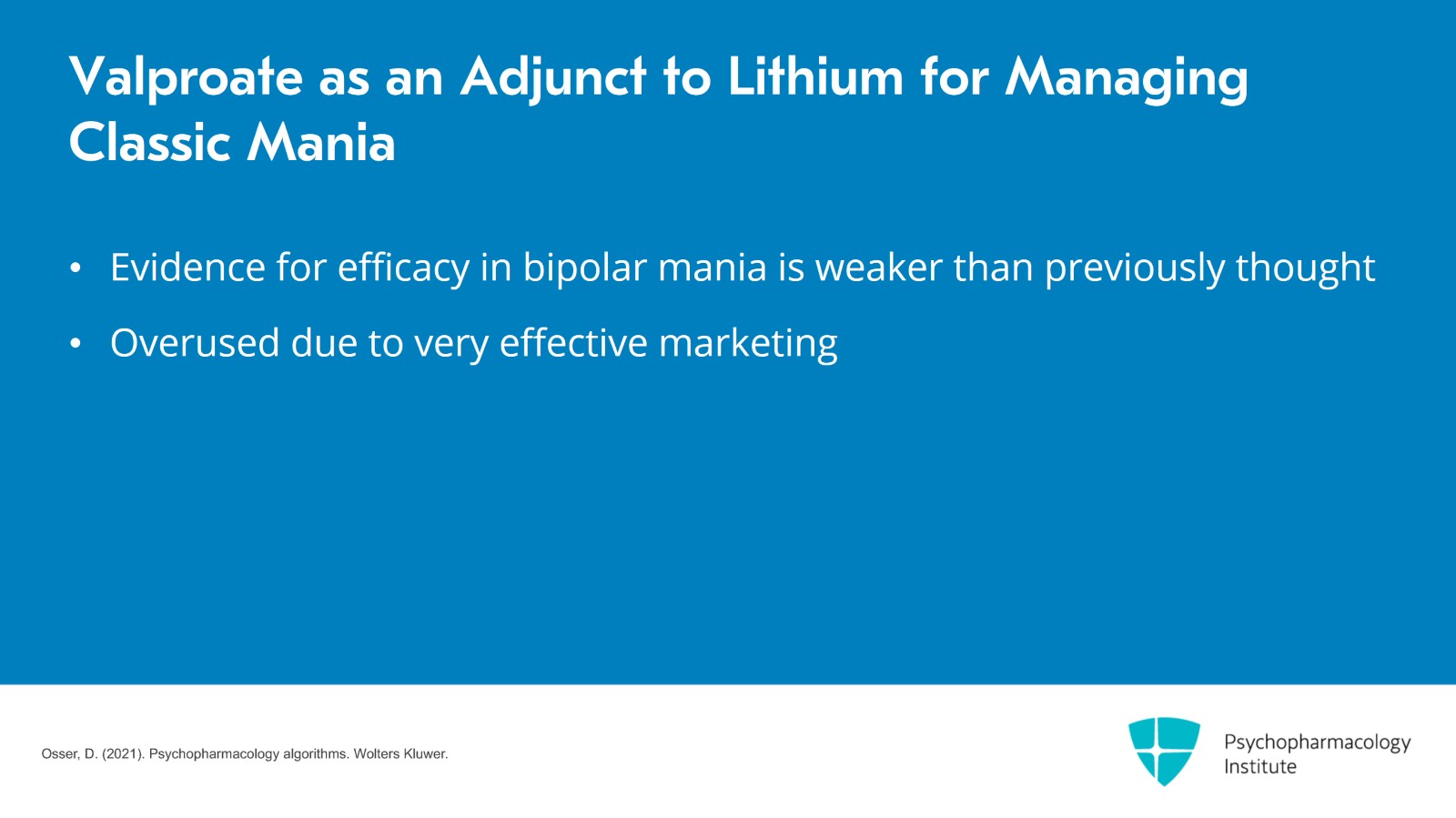
Now, you may wonder, what about adding adding valproate? The evidence that valproate is effective in bipolar mania is weaker than many assume and has been previously assumed and it's been overused we think in part due to very effective marketing by the drug company starting in 1994 when they did their first quite positive study and that got ingrained into the brains of a whole generation of psychiatrists who then taught that to the next generation.
References:
  • Osser, D. (2021). Psychopharmacology algorithms. Wolters Kluwer.

Slide 6 of 12

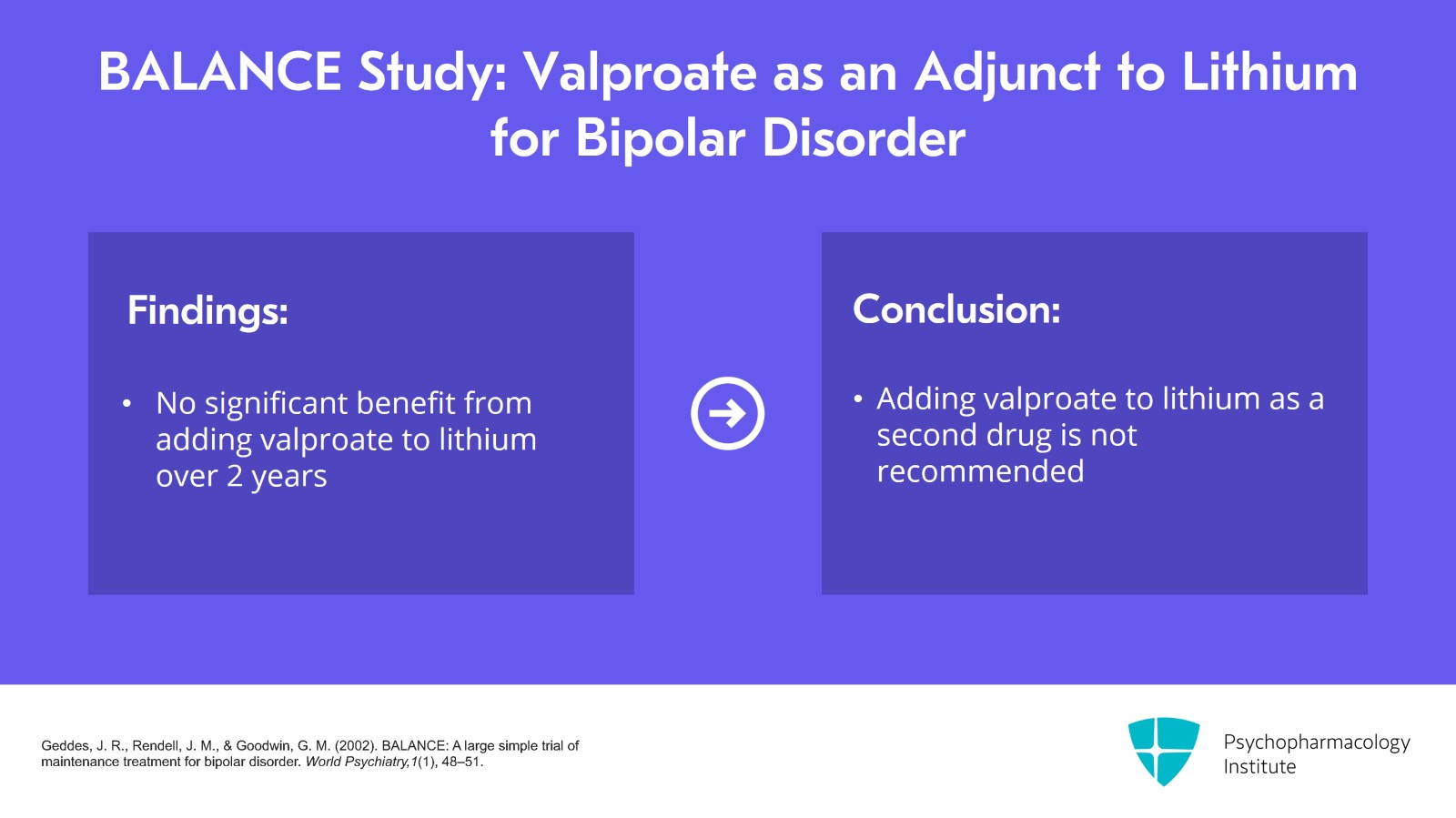
But there was a game-changing BALANCE study among other studies that evaluated the long-term effect of adding lithium to valproate. And there was very little, no clinically significant additional benefit from adding valproate to lithium over a two-year period in the BALANCE study. And that's why we do not recommend adding valproate as your second drug to your lithium for acute classic mania.
References:
  • Geddes, J. R., Rendell, J. M., & Goodwin, G. M. (2002). BALANCE: A large simple trial of maintenance treatment for bipolar disorder. World Psychiatry,1(1), 48–51.
Free Files
Success!
Check your inbox, we sent you all the materials there.

Slide 7 of 12

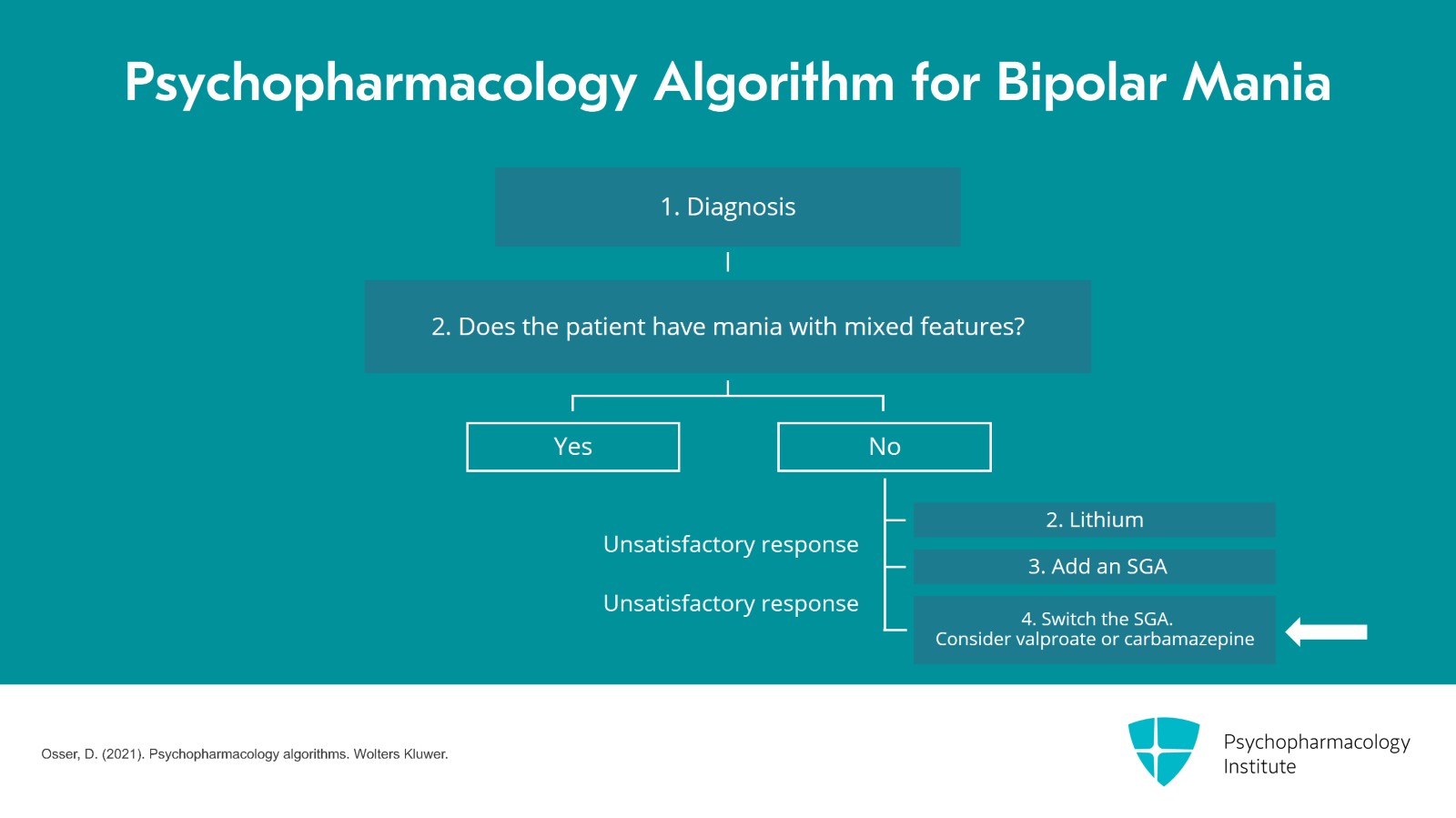
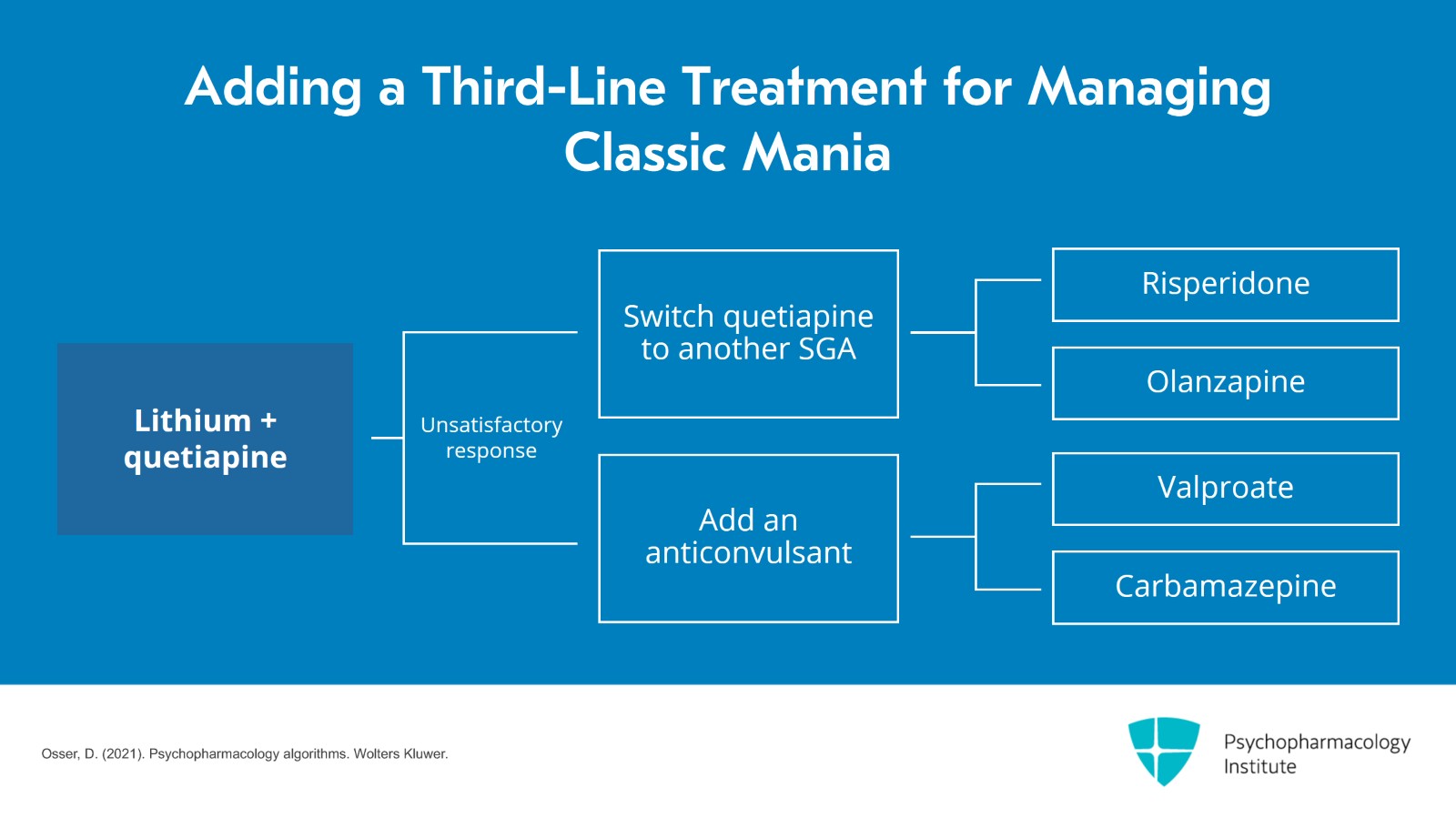
So what if you have added the quetiapine or other antimanic agent and you still have an unsatisfactory response? What's the third-line treatment for acute classic mania? Well, as the arrow indicates as you can see if you can visualize our slides, since the two agents with the broadest spectrum of activity have failed, lithium and quetiapine, we now give more consideration to options with efficacy more limited to acute mania and that is the other SGAs like risperidone and olanzapine and we prefer those two.
References:
  • Osser, D. (2021). Psychopharmacology algorithms. Wolters Kluwer.

Slide 8 of 12

And we would suggest switching the quetiapine to one of these at this point to not have two antipsychotics on board at the same time. Add your risperidone or add your olanzapine instead of your quetiapine. But we also now offer you the option of adding the anticonvulsants – valproate or carbamazepine – at this point. They're third line as we said earlier. We've demoted them to the third choice in this situation. They may have efficacy.
References:
  • Osser, D. (2021). Psychopharmacology algorithms. Wolters Kluwer.
Free Files
Success!
Check your inbox, we sent you all the materials there.

Slide 9 of 12

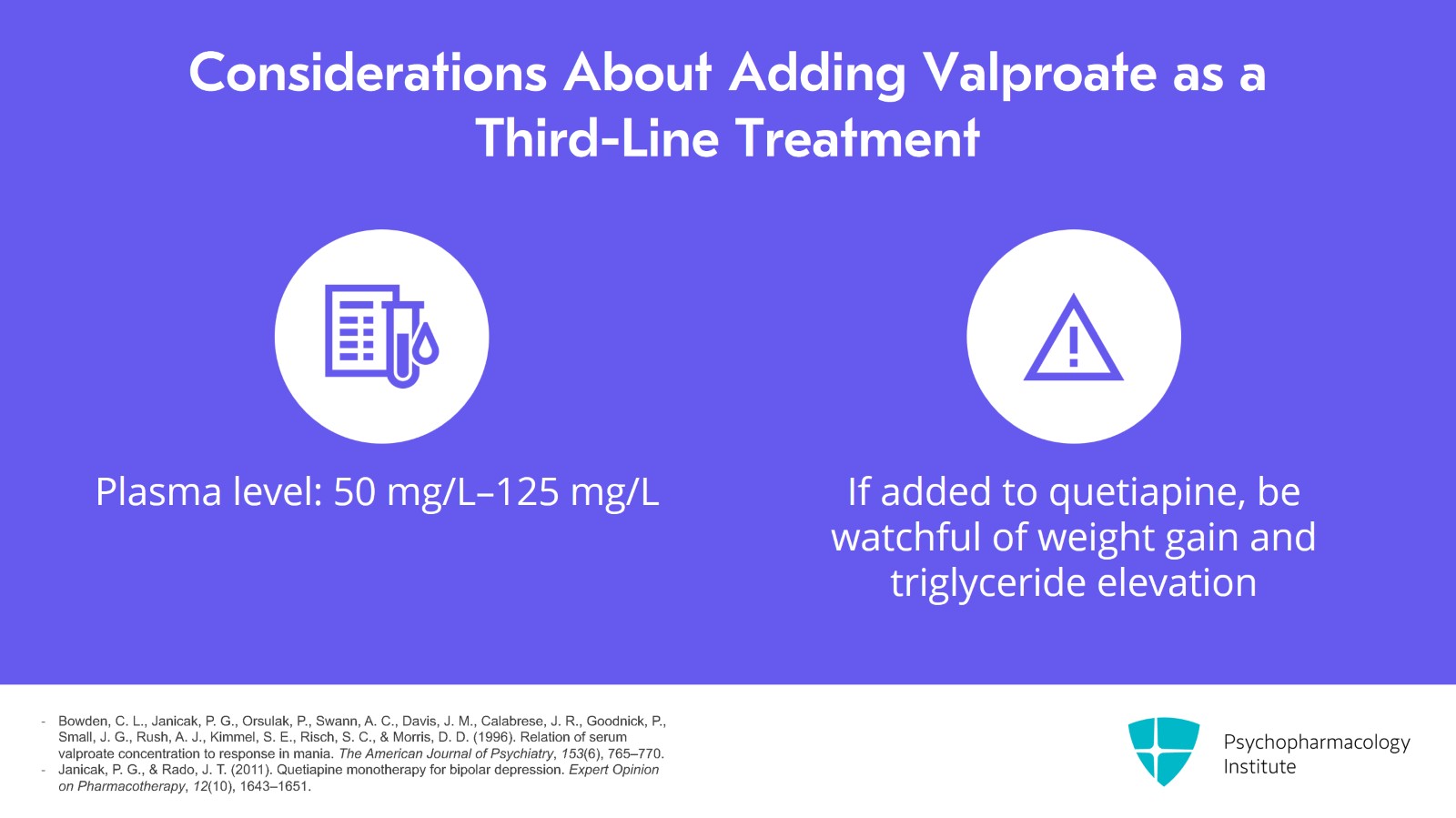
And you could even add valproate here as I said. And if you do, the plasma level suggested is 50 to 125 though no studies have found that level to actually be the therapeutic level for mania. Now, if you do add it to quetiapine, watch for the risk of adding weight gain and triglyceride elevation as in particular had been noted which causes insulin resistance.
References:
  • Bowden, C. L., Janicak, P. G., Orsulak, P., Swann, A. C., Davis, J. M., Calabrese, J. R., Goodnick, P., Small, J. G., Rush, A. J., Kimmel, S. E., Risch, S. C., & Morris, D. D. (1996). Relation of serum valproate concentration to response in mania. The American Journal of Psychiatry, 153(6), 765–770.
  • Janicak, P. G., & Rado, J. T. (2011). Quetiapine monotherapy for bipolar depression. Expert Opinion on Pharmacotherapy, 12(10), 1643–1651.

Slide 10 of 12

So in conclusion now, the key points of video 6, we recommend adding a second medication to your initial lithium for the management of acute classic mania and we would choose an SGA. And the SGA we would choose would be quetiapine first and then two others with strong acute effectiveness that could be tried are risperidone and olanzapine.
Free Files
Success!
Check your inbox, we sent you all the materials there.

Slide 11 of 12

We don't recommend olanzapine due to its side effects. We prefer risperidone over it.

Slide 12 of 12

Free Files
Success!
Check your inbox, we sent you all the materials there.

Learning Objectives:

After completing this activity, the learner will be able to:

  1. Apply an evidence-based psychopharmacology algorithm to effectively treat bipolar mania.
  2. Identify the appropriate circumstances for the use of each medication in the treatment of bipolar mania.
  3. Evaluate the effectiveness of various medication combinations in the management of bipolar mania.

Original Release Date: July 1, 2024

Expiration Date: July 1, 2027

Expert: David Osser, M.D.

Medical Editor: Paz Badía, M.D. 

Relevant Financial Disclosures: 

None of the faculty, planners, and reviewers for this educational activity have relevant financial relationships to disclose during the last 24 months with ineligible companies whose primary business is producing, marketing, selling, re-selling, or distributing healthcare products used by or on patients.

Contact Information: For questions regarding the content or access to this activity, contact us at support@psychopharmacologyinstitute.com

Instructions for Participation and Credit:

Participants must complete the activity online during the valid credit period that is noted above.

Follow these steps to earn CME credit:

  1. View the required educational content provided on this course page.

  2. Complete the Post Activity Evaluation for providing the necessary feedback for continuing accreditation purposes and for the development of future activities. NOTE: Completing the Post Activity Evaluation after the quiz is required to receive the earned credit.

  3. Download your certificate.

Accreditation Statement

This activity has been planned and implemented in accordance with the accreditation requirements and policies of the Accreditation Council for Continuing Medical Education through the joint providership of Medical Academy LLC and the Psychopharmacology Institute. Medical Academy is accredited by the ACCME to provide continuing medical education for physicians.

Credit Designation Statement

Medical Academy designates this enduring activity for a maximum of 1.25 AMA PRA Category 1 credit(s)™. Physicians should claim only the credit commensurate with the extent of their participation in the activity.


Free Files
Success!
Check your inbox, we sent you all the materials there.
Continue in the website
Instant access modal

Become a Bronze, Silver, Gold, Bronze extended, Silver extended or Gold extended Member.

2025–26 Psychopharmacology CME Program

Unlock up to 155 CME Credits, including 40 SA CME Credits.