Close Banner
Section Free  - Video Lectures

04. Assessing the Potential Side Effects of TMS

Published on April 1, 2024 Certification expiration date: April 1, 2027

Simon Kung, M.D.

Associate Professor of Psychiatry - Mayo Clinic

Key Points

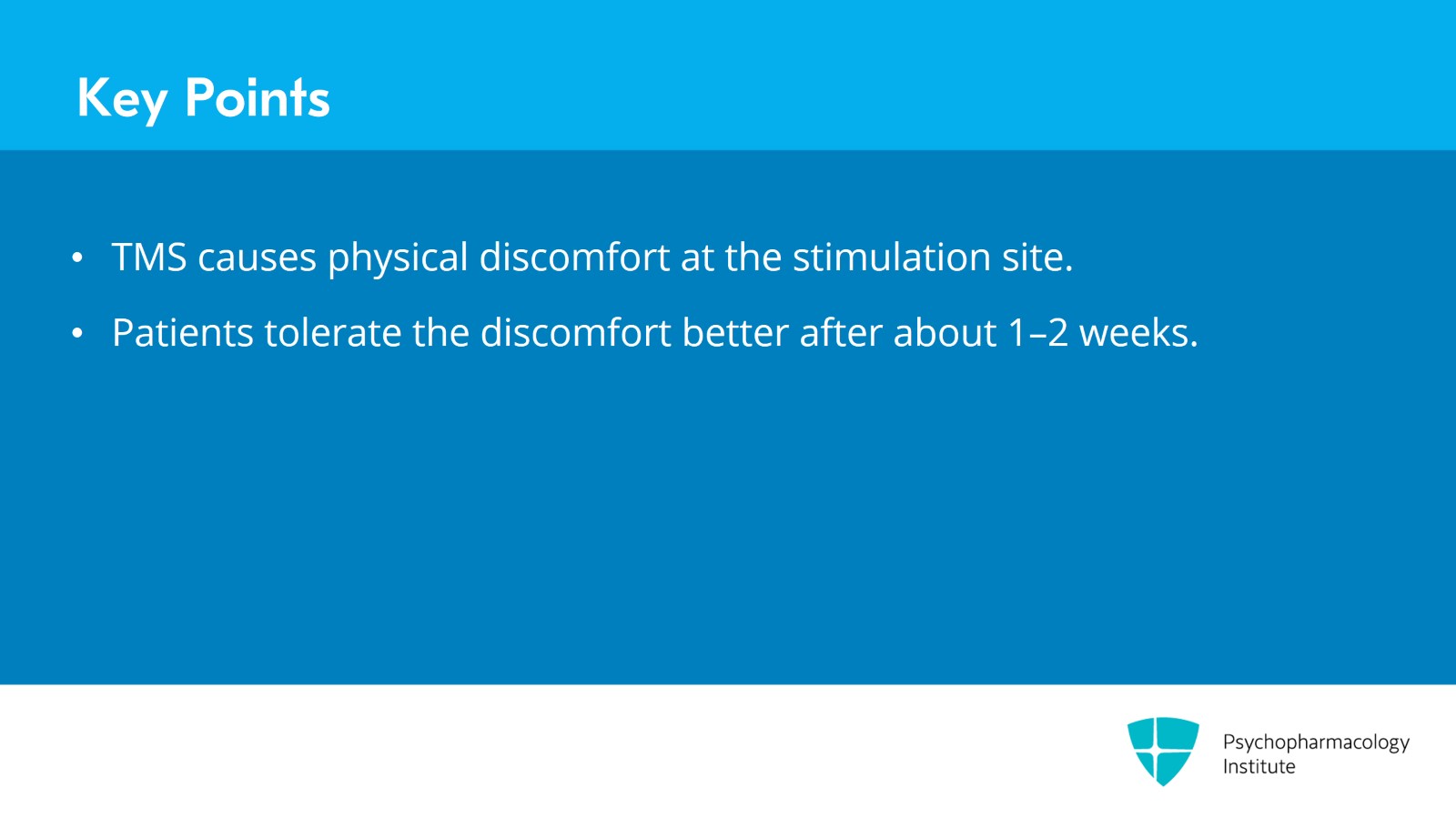
  • TMS causes physical discomfort at the stimulation site.
  • Patients tolerate the discomfort better after about 1–2 weeks.
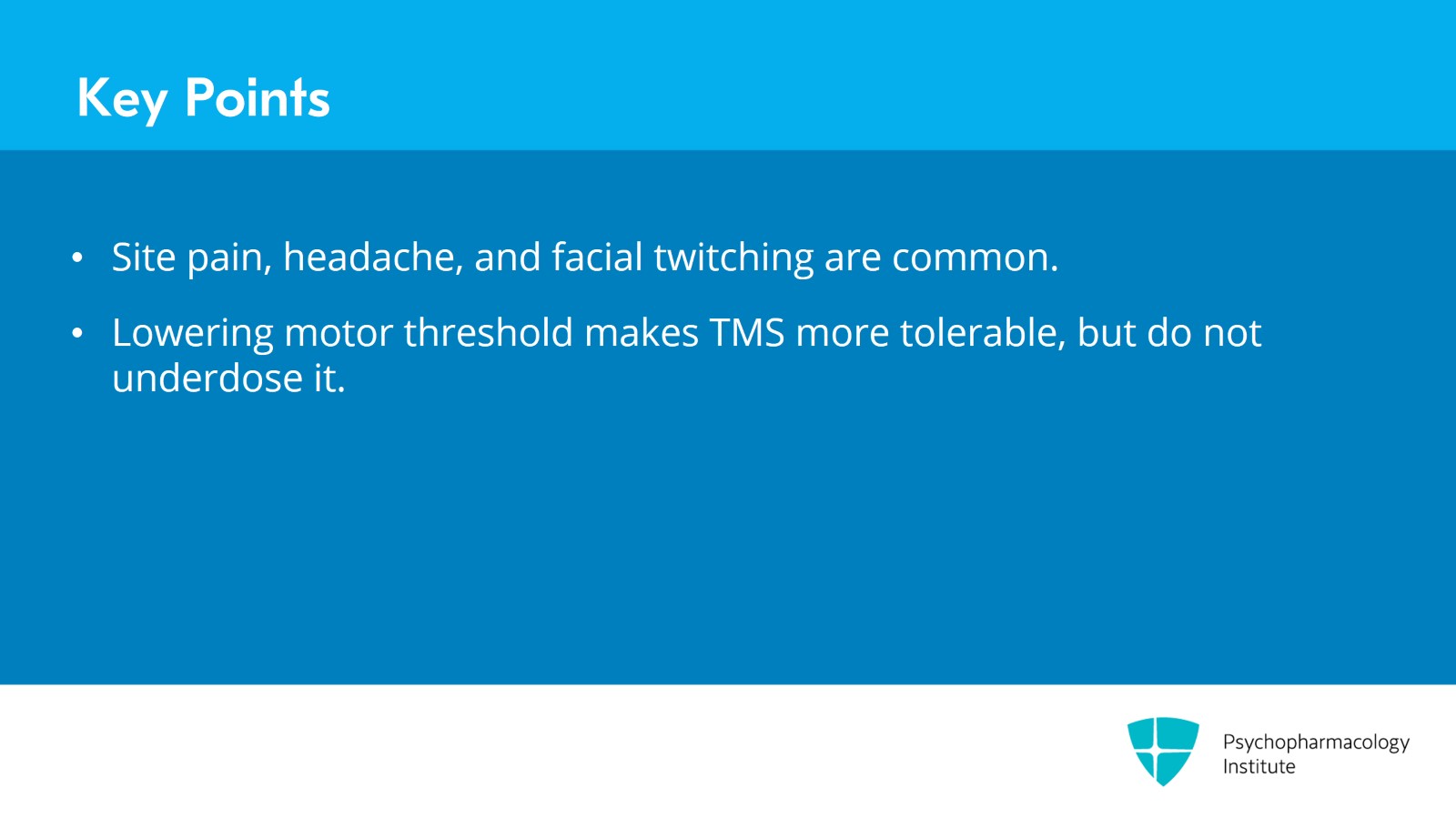
  • Site pain, headache, and facial twitching are common.
  • Lowering motor threshold makes TMS more tolerable, but do not underdose it.

Free Downloads for Offline Access

  • Free Download Presentation File (PPTX)
  • Free Download Video (MP4)
  • Free Download Audio File (MP3)

Slides and Transcript
Slide 1 of 14

Let's look at side effects of TMS.

Slide 2 of 14

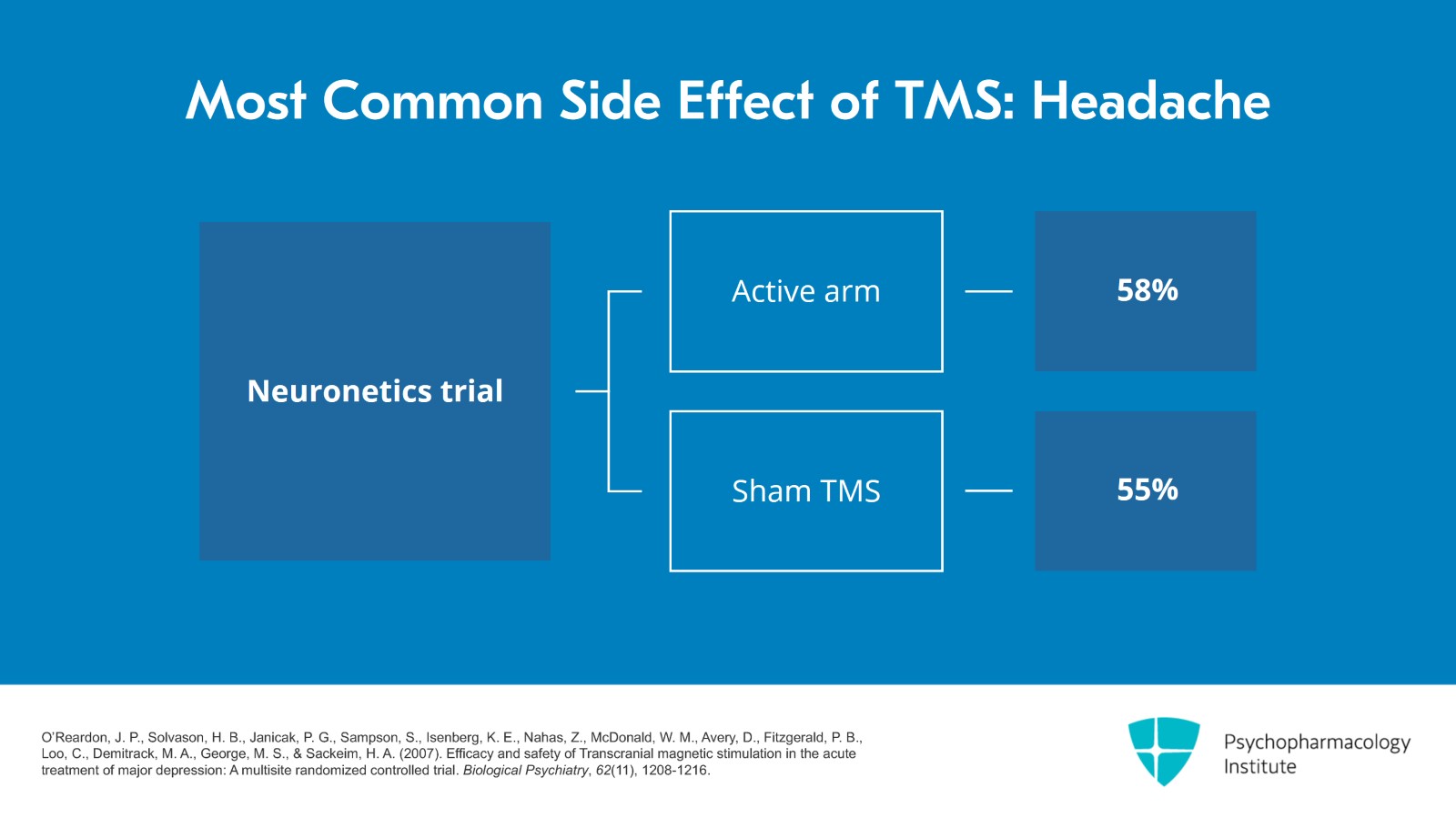
For the first industry-sponsored randomized trial, the Neuronetics trial, the most common side effect was headache. Fifty-eight percent of patients in the active arm had a headache but 55% who had sham also had headache. So headache is very common regardless of whether you're getting active treatment or sham.
References:
  • O’Reardon, J. P., Solvason, H. B., Janicak, P. G., Sampson, S., Isenberg, K. E., Nahas, Z., McDonald, W. M., Avery, D., Fitzgerald, P. B., Loo, C., Demitrack, M. A., George, M. S., & Sackeim, H. A. (2007). Efficacy and safety of Transcranial magnetic stimulation in the acute treatment of major depression: A multisite randomized controlled trial. Biological Psychiatry, 62(11), 1208-1216.
Free Files
Success!
Check your inbox, we sent you all the materials there.
Slide 3 of 14

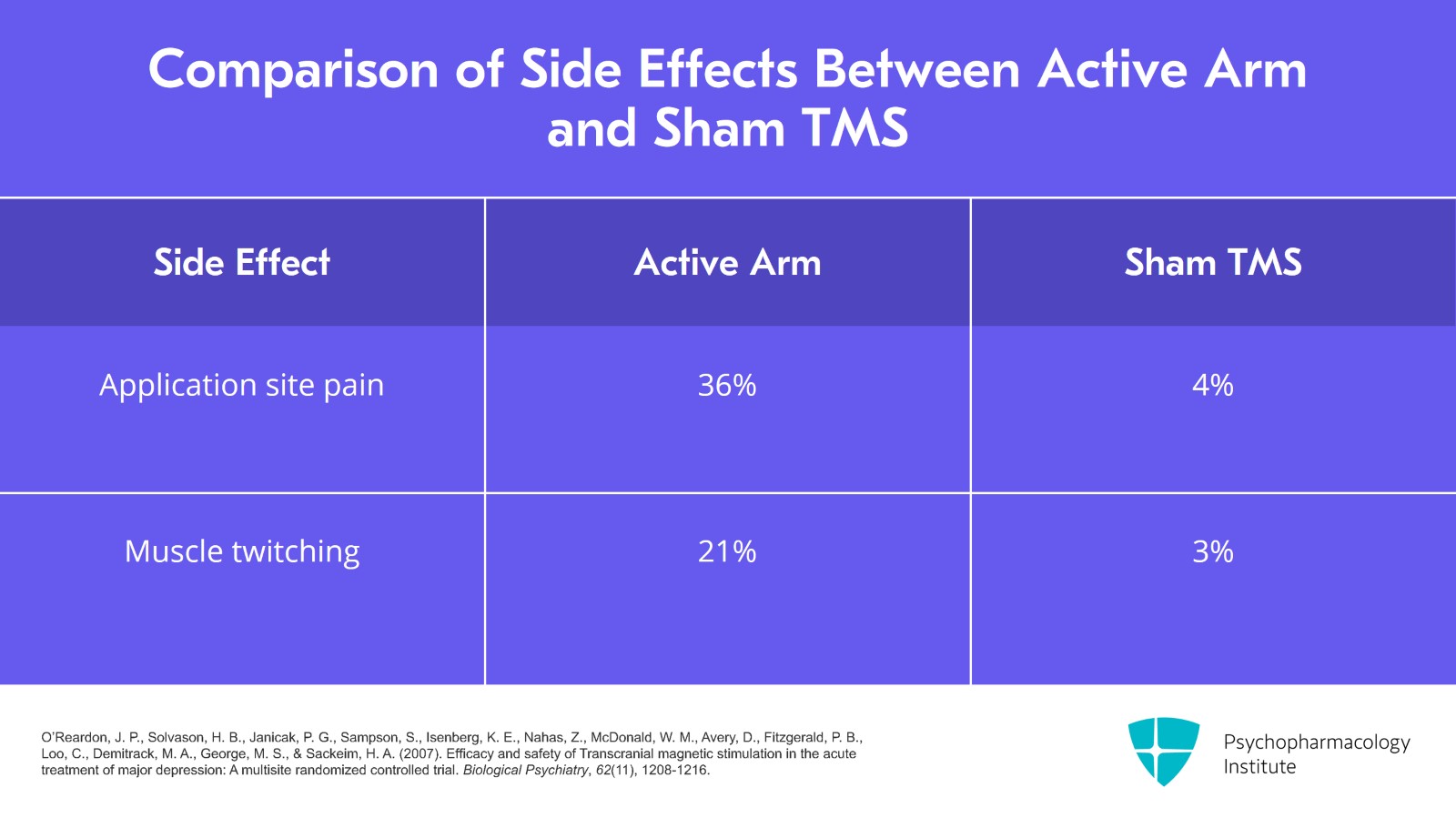
When we look at the adverse effects which are at least twice reported as sham, the top two are application site pain and muscle twitching. For application site pain, it was 36% in the active arm and 4% in the sham. This is the pain that's felt when the magnet is activated and there's a physical sensation that something is hitting the head. For muscle twitching when the stimulation is occurring, you'll see the muscle around the eyes twitch and sometimes there's facial muscle twitching or jaw movements. Muscle twitching was 21% in the active treatment arm compared to 3% for sham. It took patients about two weeks to get used to the pain and discomfort of TMS.
References:
  • O’Reardon, J. P., Solvason, H. B., Janicak, P. G., Sampson, S., Isenberg, K. E., Nahas, Z., McDonald, W. M., Avery, D., Fitzgerald, P. B., Loo, C., Demitrack, M. A., George, M. S., & Sackeim, H. A. (2007). Efficacy and safety of Transcranial magnetic stimulation in the acute treatment of major depression: A multisite randomized controlled trial. Biological Psychiatry, 62(11), 1208-1216.

Slide 4 of 14

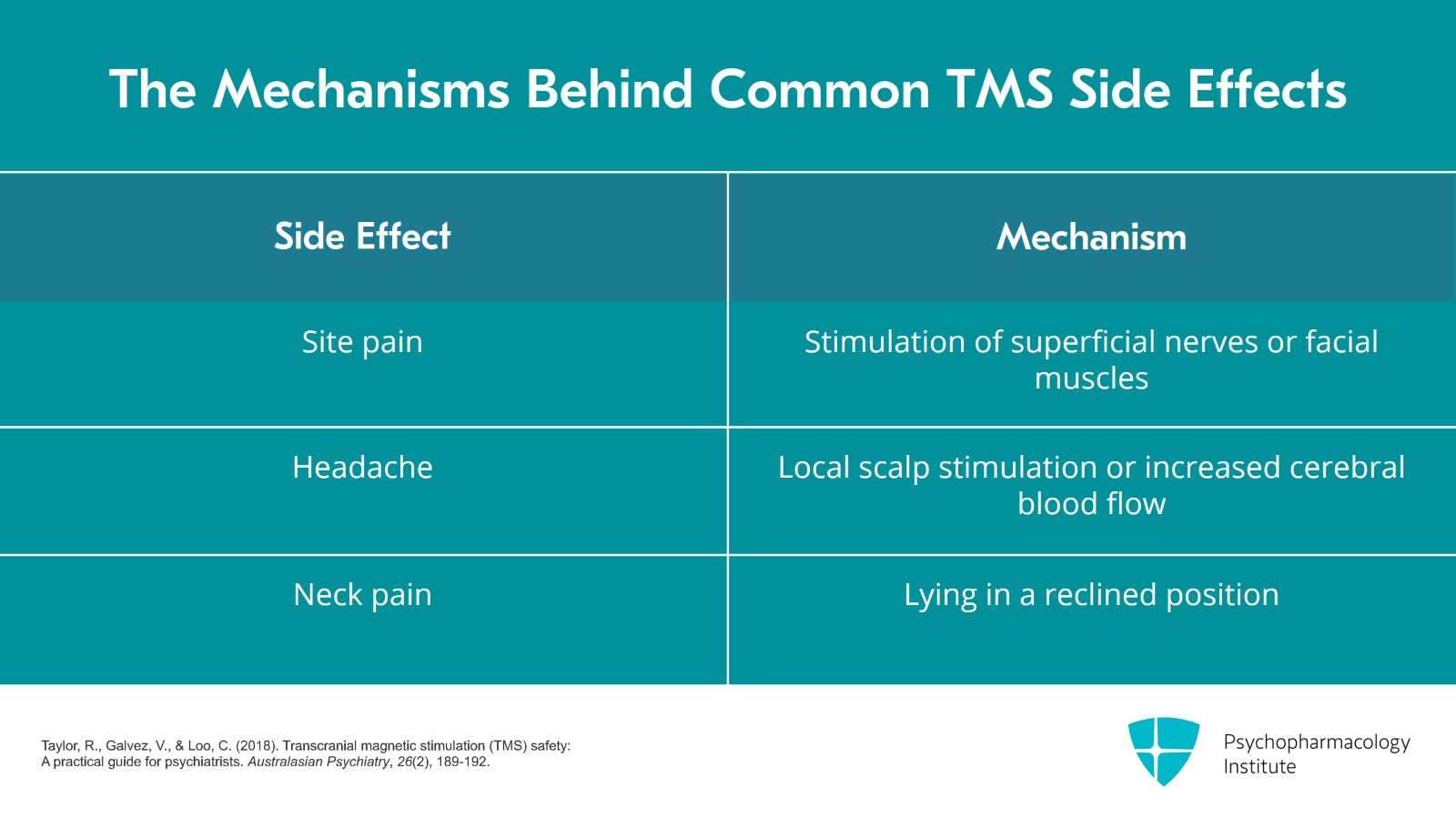
There's a 2018 review of TMS which looked at the common side effects. Site pain is the most common side effect and was thought to be due to stimulation of superficial nerves or facial muscles. The headache was thought to be due to some of the local scalp stimulation or increased cerebral blood flow. With the 37-minute stimulations, the neck pain was probably because the person was lying in a reclined position for that duration. With the newer intermittent theta burst stimulation time of 3-1/2 minutes, neck pain is not a concern.
References:
  • Taylor, R., Galvez, V., & Loo, C. (2018). Transcranial magnetic stimulation (TMS) safety: A practical guide for psychiatrists. Australasian Psychiatry, 26(2), 189-192.
Free Files
Success!
Check your inbox, we sent you all the materials there.
Slide 5 of 14

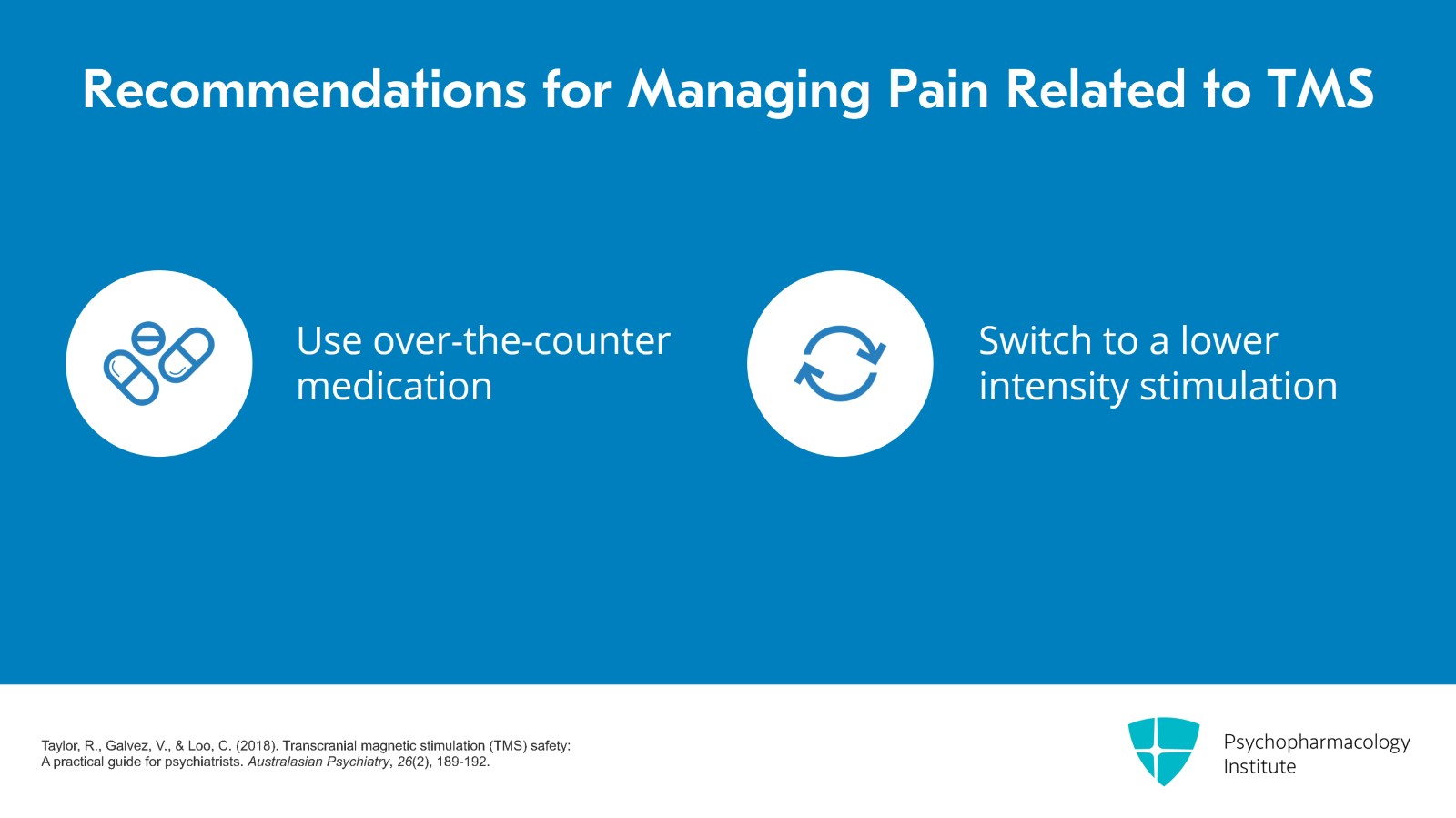
Less than 2% of clinical trial patients stopped because of pain. So the usual recommendation is to use over-the-counter analgesics or switch to a lower intensity stimulation if there's more pain.
References:
  • Taylor, R., Galvez, V., & Loo, C. (2018). Transcranial magnetic stimulation (TMS) safety: A practical guide for psychiatrists. Australasian Psychiatry, 26(2), 189-192.

Slide 6 of 14

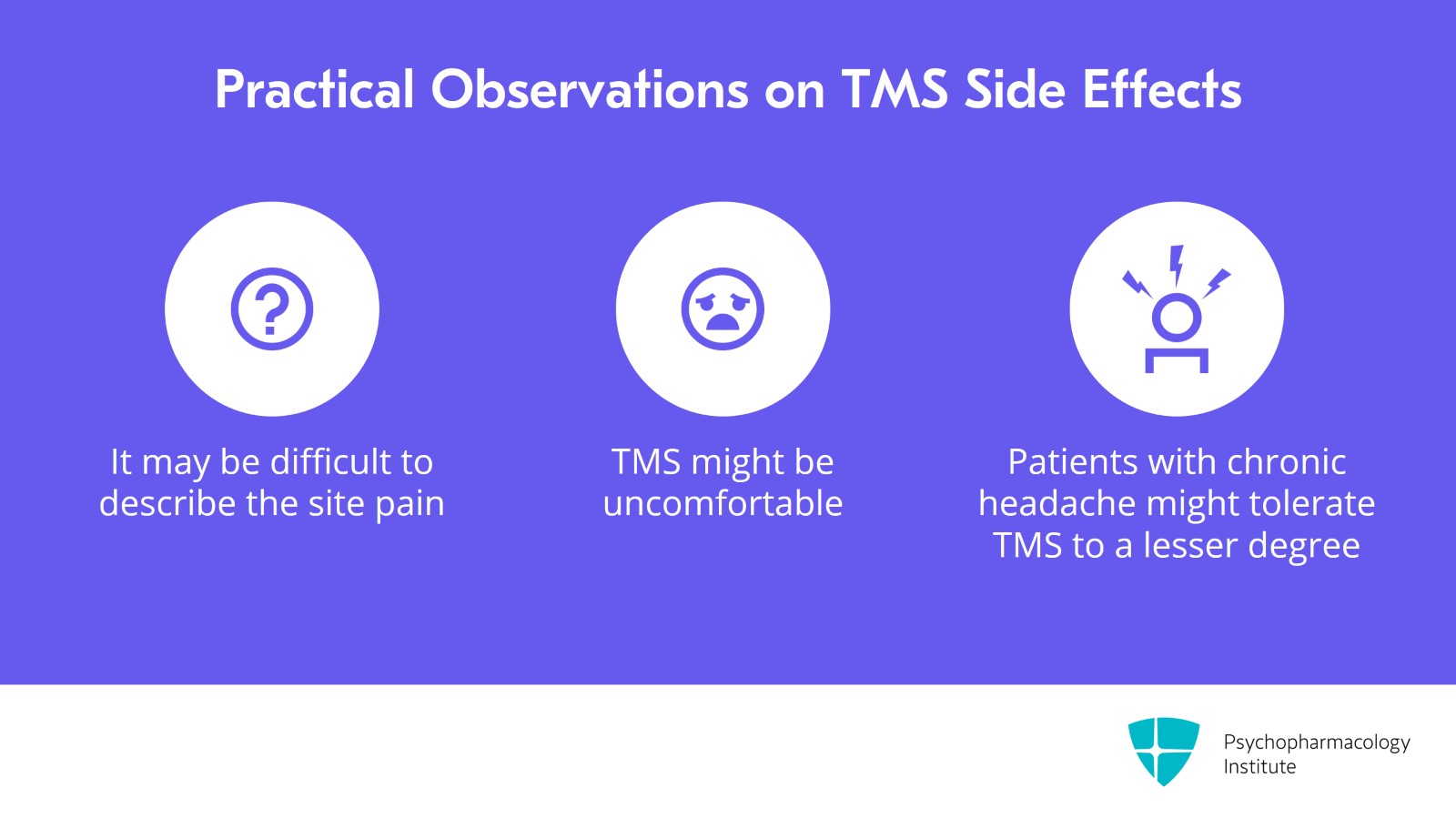
A few practical observations. So patients have a hard time describing the site pain and TMS is uncomfortable when it's stimulating. Patients who have a history of chronic headaches or migraines might have a harder time tolerating TMS.
Free Files
Success!
Check your inbox, we sent you all the materials there.
Slide 7 of 14

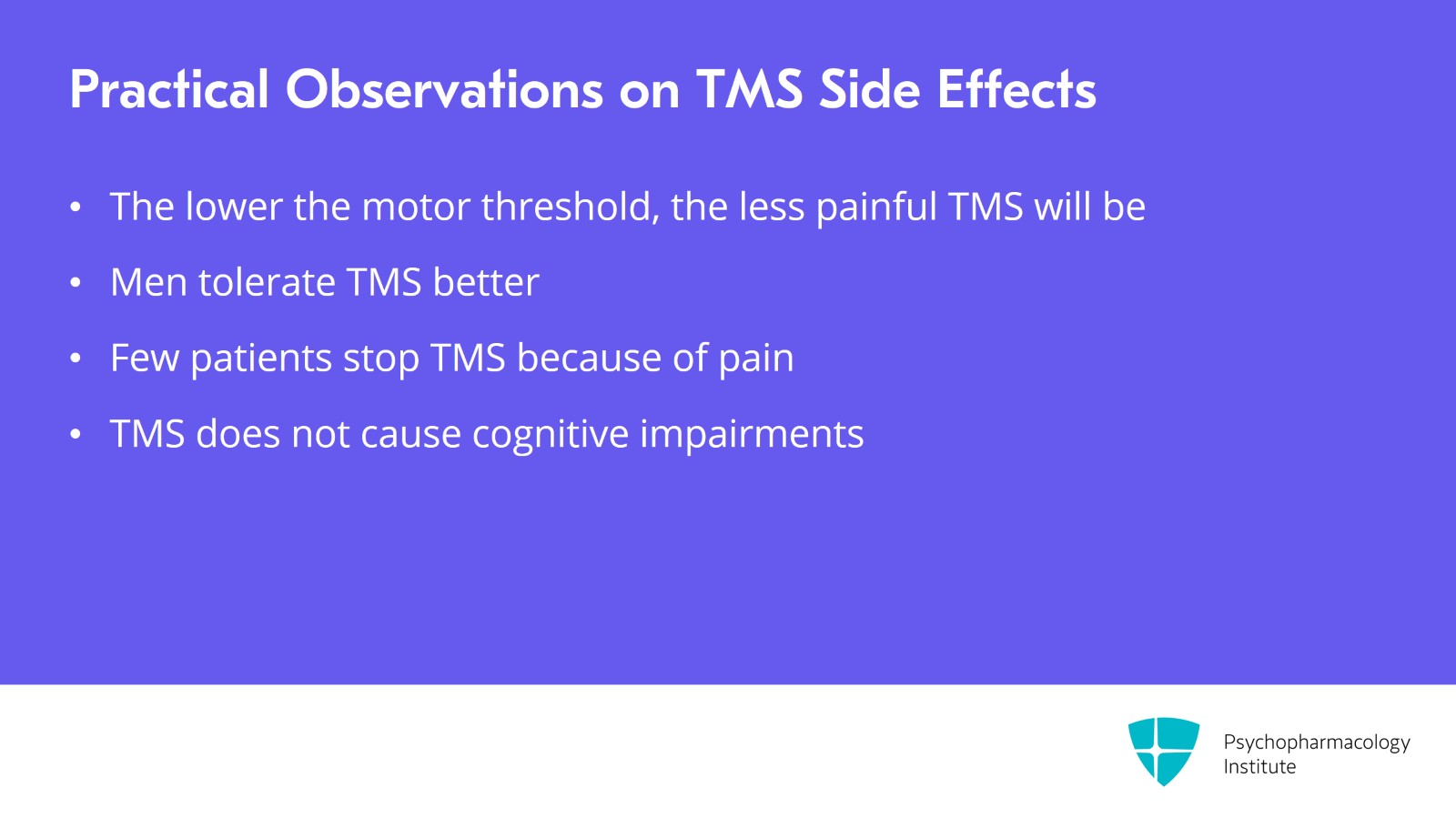
The lower the motor threshold, the less painful the treatments will be. Men seem to have lower motor thresholds and tend to tolerate TMS better than women. Finding a lower motor threshold or treating a lower motor threshold makes TMS more tolerable. Very few patients stop TMS because of pain and there are no cognitive impairments with TMS.

Slide 8 of 14

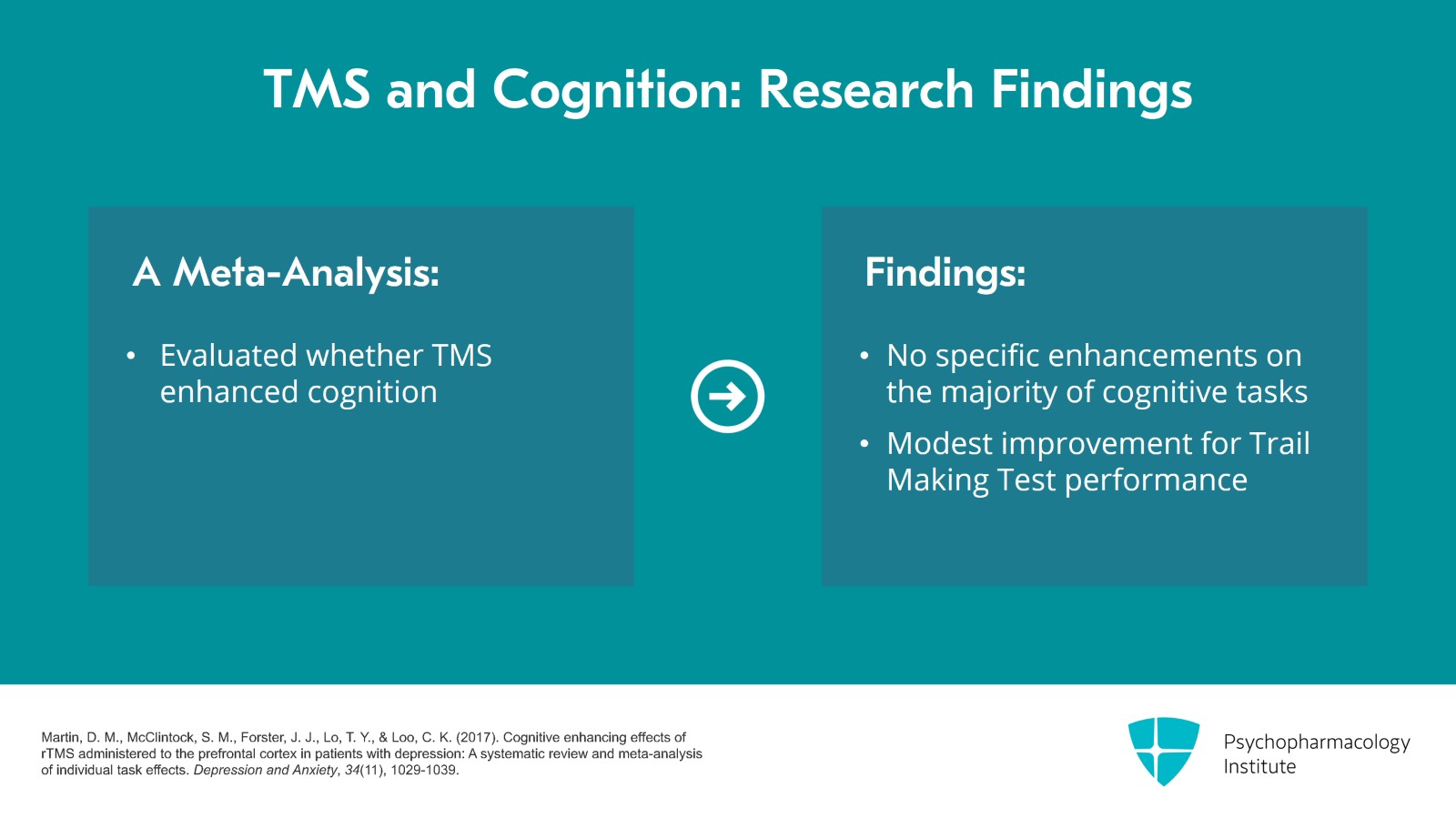
There's no evidence of TMS worsening cognition. In fact, there's been a lot of interest in whether TMS might help with cognition. There is a 2017 meta-analysis of 18 studies for cognitive enhancement. Overall, they didn't find any specific enhancements on the majority of cognitive tasks. There was some modest improvement for trail making test performance. One of the limitations noted by the reviews was that the interview for the post-testing was not consistent.
References:
  • Martin, D. M., McClintock, S. M., Forster, J. J., Lo, T. Y., & Loo, C. K. (2017). Cognitive enhancing effects of rTMS administered to the prefrontal cortex in patients with depression: A systematic review and meta-analysis of individual task effects. Depression and Anxiety, 34(11), 1029-1039.
Free Files
Success!
Check your inbox, we sent you all the materials there.
Slide 9 of 14

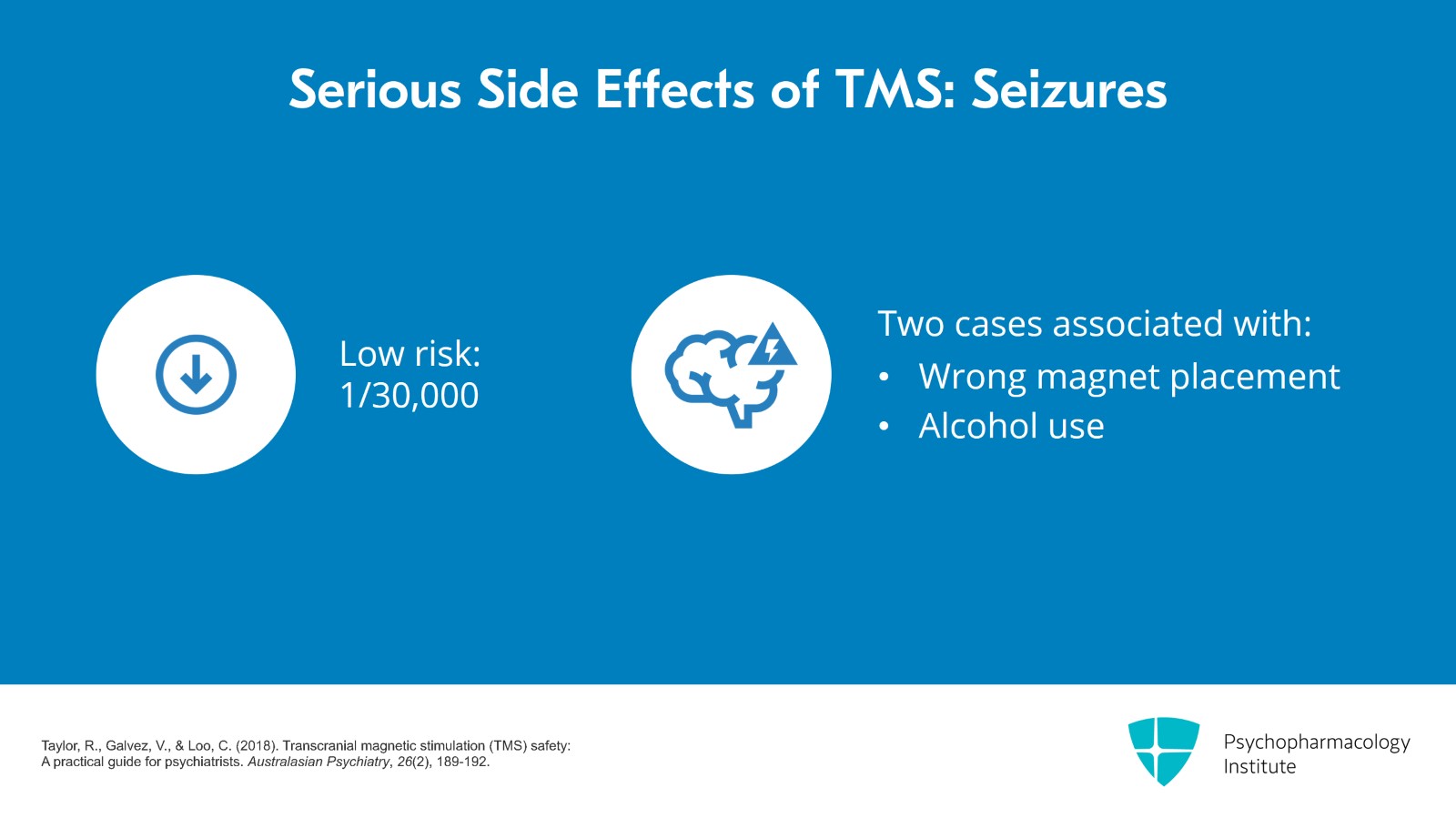
In terms of serious side effects, there's always worry about seizures. In practice, it's a very low risk, reported to be one in 30,000 treatments. Of the early reports of seizures, one of the cases was the magnet was placed in the wrong location and another case was related to a lot of alcohol use the night before.
References:
  • Taylor, R., Galvez, V., & Loo, C. (2018). Transcranial magnetic stimulation (TMS) safety: A practical guide for psychiatrists. Australasian Psychiatry, 26(2), 189-192.

Slide 10 of 14

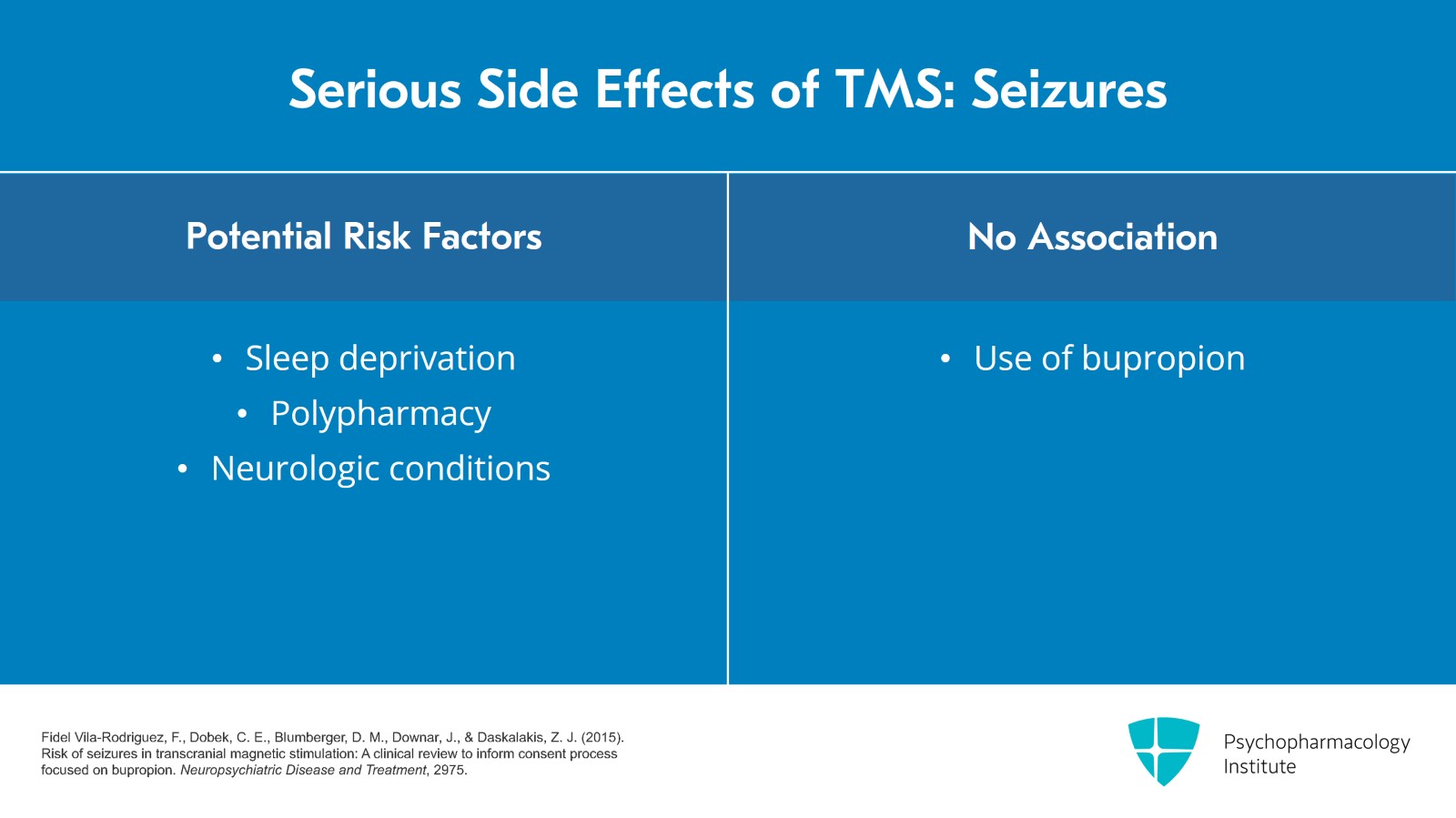
A systematic review from 1980 to June 2015 found only 25 reports of seizures during TMS and potential risk factors were sleep deprivation, polypharmacy, and neurologic conditions. One rTMS-induced seizure reported from the FDA was in a sleep-deprived patient concurrently taking bupropion, sertraline, and amphetamine. None of these seizures were in patients who were taking bupropion.
References:
  • Fidel Vila-Rodriguez, F., Dobek, C. E., Blumberger, D. M., Downar, J., & Daskalakis, Z. J. (2015). Risk of seizures in transcranial magnetic stimulation: A clinical review to inform consent process focused on bupropion. Neuropsychiatric Disease and Treatment, 2975.
Free Files
Success!
Check your inbox, we sent you all the materials there.
Slide 11 of 14

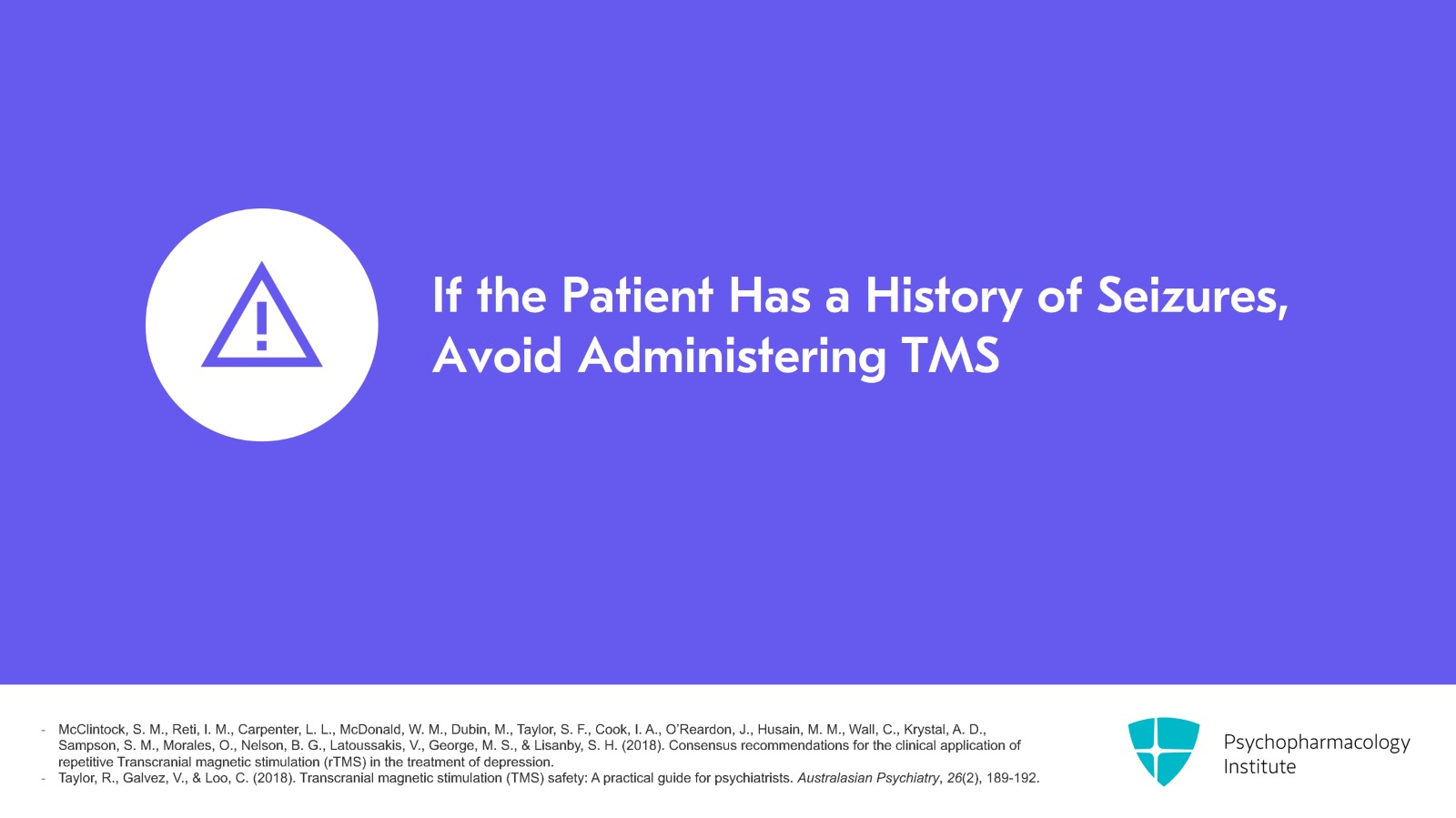
Certainly, if the patient has a history of seizures, it's not recommended to do TMS.
References:
  • McClintock, S. M., Reti, I. M., Carpenter, L. L., McDonald, W. M., Dubin, M., Taylor, S. F., Cook, I. A., O’Reardon, J., Husain, M. M., Wall, C., Krystal, A. D., Sampson, S. M., Morales, O., Nelson, B. G., Latoussakis, V., George, M. S., & Lisanby, S. H. (2018). Consensus recommendations for the clinical application of repetitive Transcranial magnetic stimulation (rTMS) in the treatment of depression.
  • Taylor, R., Galvez, V., & Loo, C. (2018). Transcranial magnetic stimulation (TMS) safety: A practical guide for psychiatrists. Australasian Psychiatry, 26(2), 189-192.

Slide 12 of 14

Key points. TMS causes physical discomfort at the stimulation site. Patients tolerate the discomfort better about after one or two weeks of treatment.
Free Files
Success!
Check your inbox, we sent you all the materials there.
Slide 13 of 14

Site pain, headache, and facial twitching are common. Lowering motor threshold makes TMS more tolerable but we don't want to underdose.

Slide 14 of 14

Free Files
Success!
Check your inbox, we sent you all the materials there.
Learning Objectives:

After completing this activity, the learner will be able to:

  1. Understand the fundamental principles and clinical indications of TMS.
  2. Identify patients who would greatly benefit from TMS treatment.
  3. Develop a comprehensive understanding of insurance companies' criteria for providing coverage for TMS treatment.

Original Release Date: April 1, 2024

Expiration Date: April 1, 2027

Expert: Simon Kung, M.D.

Medical Editor: Andrea Quintas, M.D. 

Relevant Financial Disclosures: 

None of the faculty, planners, and reviewers for this educational activity have relevant financial relationships to disclose during the last 24 months with ineligible companies whose primary business is producing, marketing, selling, re-selling, or distributing healthcare products used by or on patients.

Contact Information: For questions regarding the content or access to this activity, contact us at support@psychopharmacologyinstitute.com

Instructions for Participation and Credit:

Participants must complete the activity online during the valid credit period that is noted above.

Follow these steps to earn CME credit:

  1. View the required educational content provided on this course page.

  2. Complete the Post Activity Evaluation for providing the necessary feedback for continuing accreditation purposes and for the development of future activities. NOTE: Completing the Post Activity Evaluation after the quiz is required to receive the earned credit.

  3. Download your certificate.

Accreditation Statement

This activity has been planned and implemented in accordance with the accreditation requirements and policies of the Accreditation Council for Continuing Medical Education through the joint providership of Medical Academy LLC and the Psychopharmacology Institute. Medical Academy is accredited by the ACCME to provide continuing medical education for physicians.

Credit Designation Statement

Medical Academy designates this enduring activity for a maximum of 1.0 AMA PRA Category 1 credit(s)™. Physicians should claim only the credit commensurate with the extent of their participation in the activity.

Free Files
Success!
Check your inbox, we sent you all the materials there.
Continue in the website
Instant access modal

Become a Bronze, Silver, Gold, Bronze extended, Silver extended or Gold extended Member.

2025–26 Psychopharmacology CME Program

Unlock up to 155 CME Credits, including 40 SA CME Credits.