Close Banner
Section Free  - Video Lectures

03. Assessing Perimenopausal Depression in Clinical Practice

Published on April 1, 2020 Expired on April 1, 2024

Vivien K. Burt, M.D., Ph.D.

Professor Emeritus of Psychiatry - UCLA

Key Points

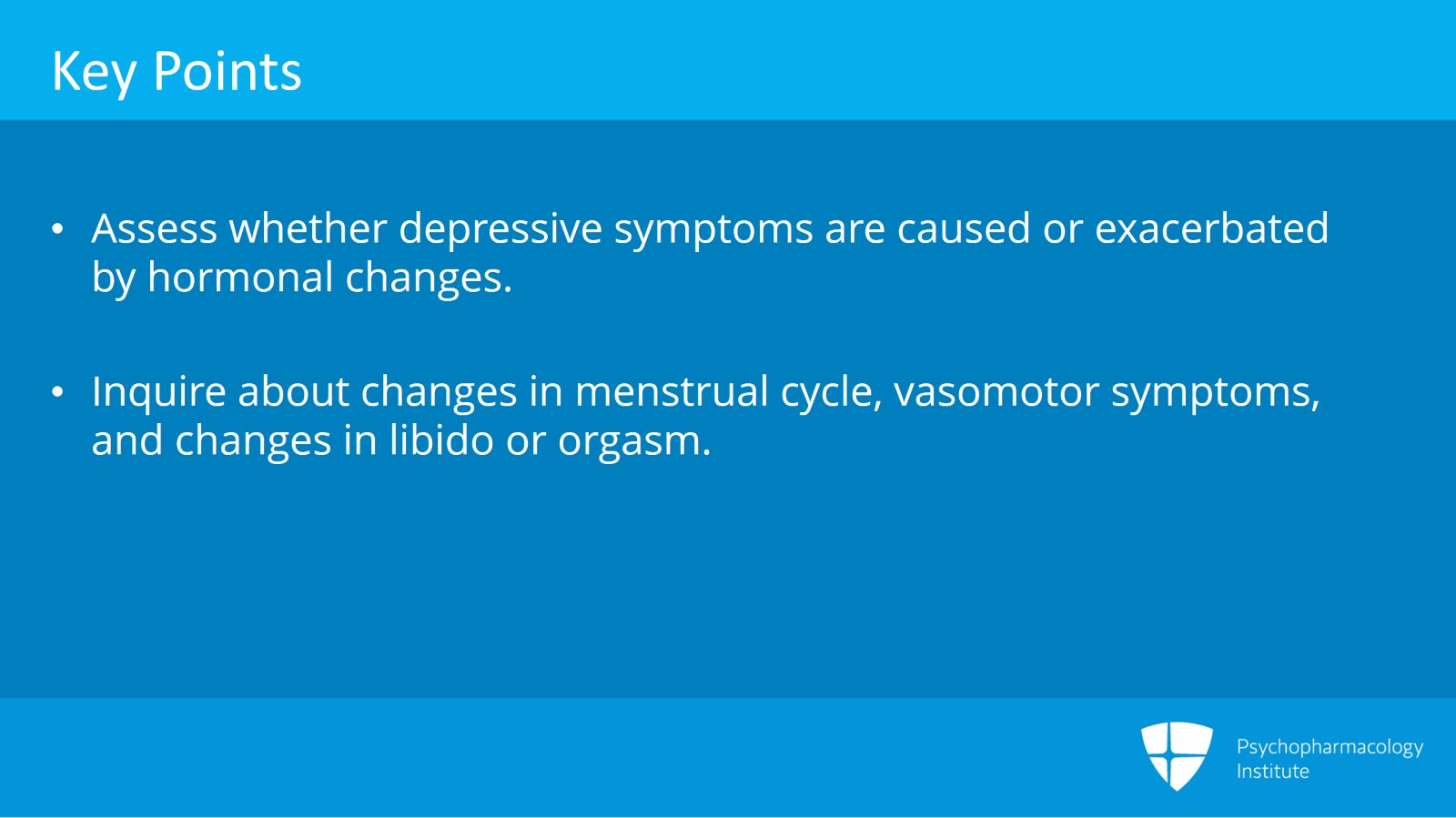
  • Assess whether depressive symptoms are caused or exacerbated by hormonal changes.
  • Inquire about changes in menstrual cycle, vasomotor symptoms, and changes in libido or orgasm.

Free Downloads for Offline Access

  • Free Download Audio File (MP3)
  • Free Download Video (MP4)
  • Free Download Presentation File (PPTX)

Slides and Transcript

Slide 1 of 7

Slide 2 of 7

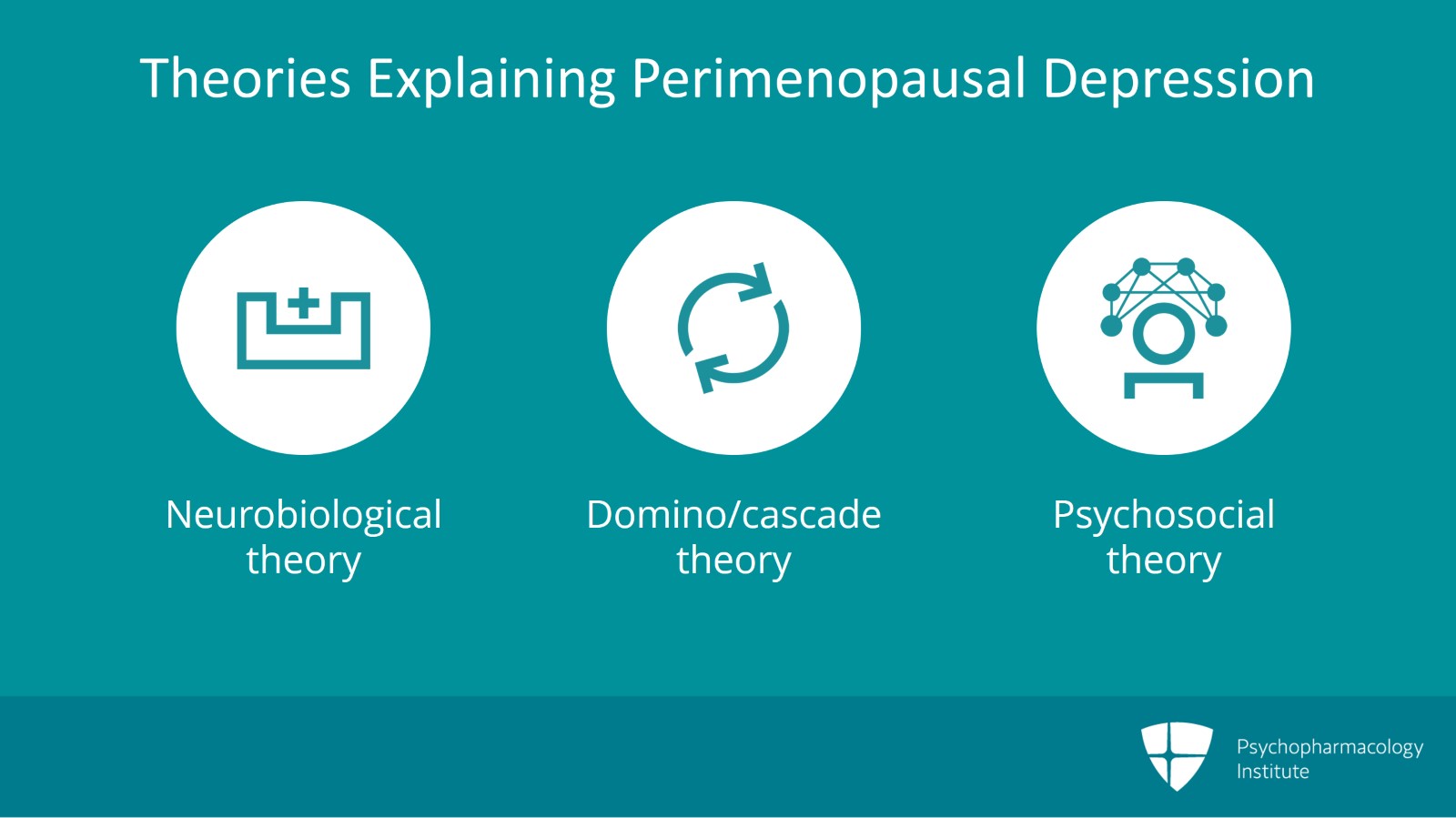
Now, there are three theories that have been suggested to explain perimenopausal depression. One of them has been called the neurobiologic theory, secondly the domino or cascade theory, and finally the psychosocial or social circumstances theory.
Free Files
Success!
Check your inbox, we sent you all the materials there.

Slide 3 of 7

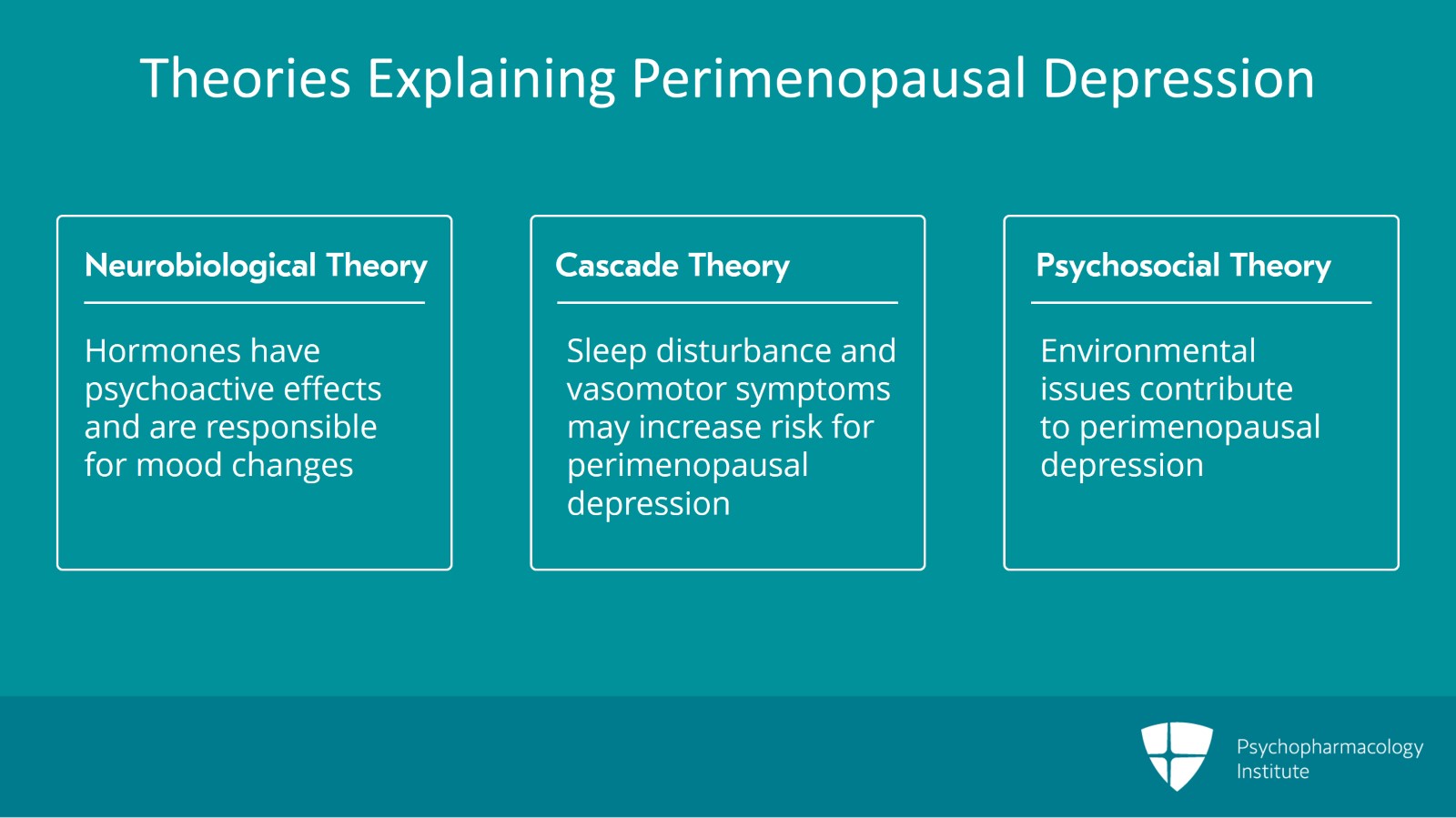
Essentially, the neurobiologic theory postulates that hormones, probably estrogen, which are psychoactive substrates in the brain among their other functions are responsible for perimenopausal mood shifts. The domino or cascade theory suggests that hormonal changes in particular changes in estrogen cause uncomfortable vasomotor symptoms which cause in turn sleep disturbances which then cause by ripple effect depressive symptoms.   And finally, the psychosocial or social circumstances theory suggests that environmental stressors which are so common in the middle years, things like difficulties with children as they grow older, marital issues especially as spouses retire and women are often still in mid-career or the onset of health issues either chronic or new onset, all of these may contribute to perimenopausal depression.

Slide 4 of 7

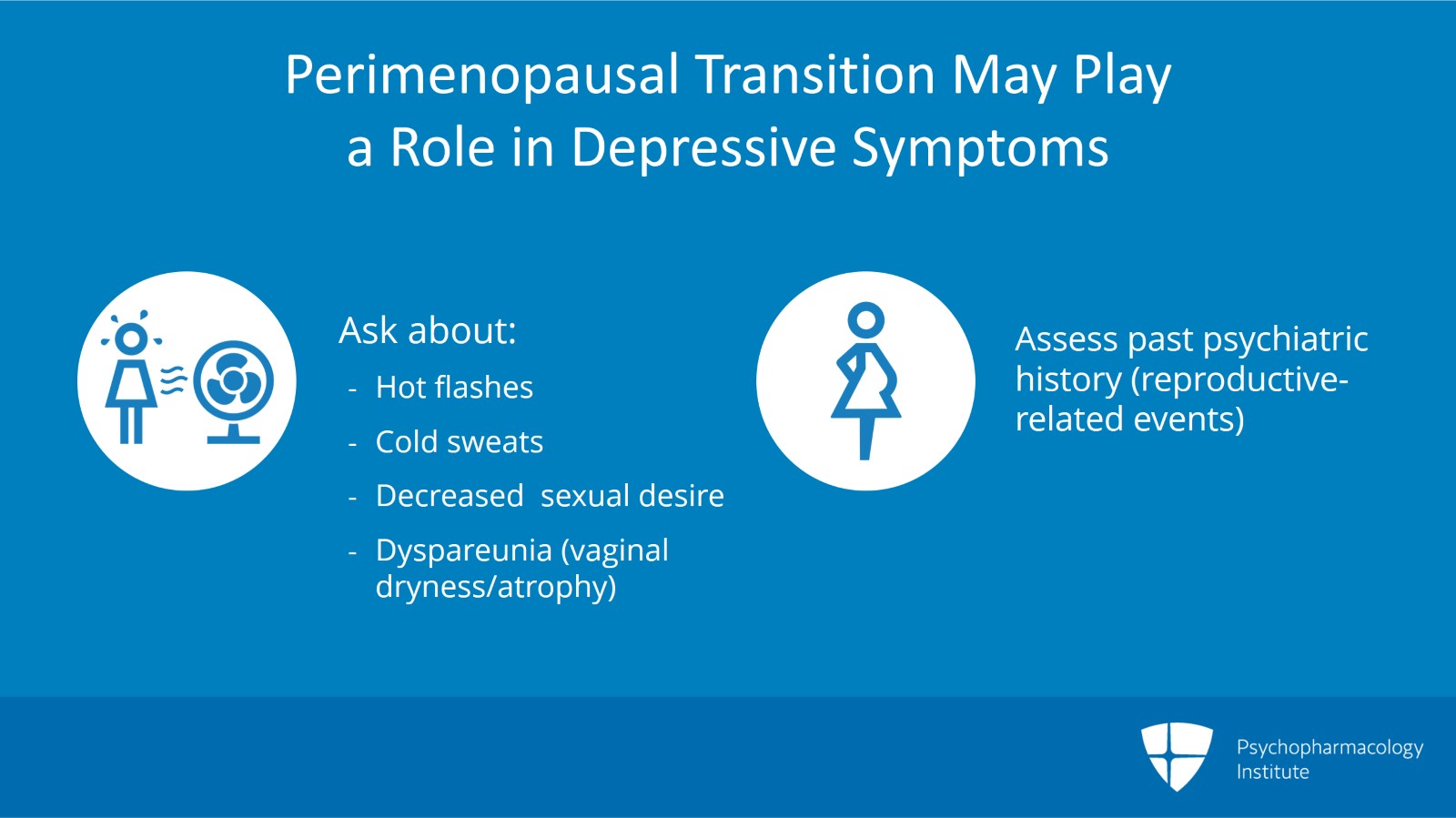
So moving on, when assessing depression in middle-aged women, it's absolutely essential to address the possibility that the perimenopausal transition may play a role in depressive symptoms. And of course, there are treatment implications to that assessment. A comprehensive evaluation in these women, inquiring about somatic changes like hot flashes, cold sweats, interrupted sleep, decreased sexual desire which is often related to dyspareunia which is often due to vaginal dryness and atrophy. It's also important to elicit past psychiatric history including reproductive-related events such as postpartum depression or premenstrual depression.
Free Files
Success!
Check your inbox, we sent you all the materials there.

Slide 5 of 7

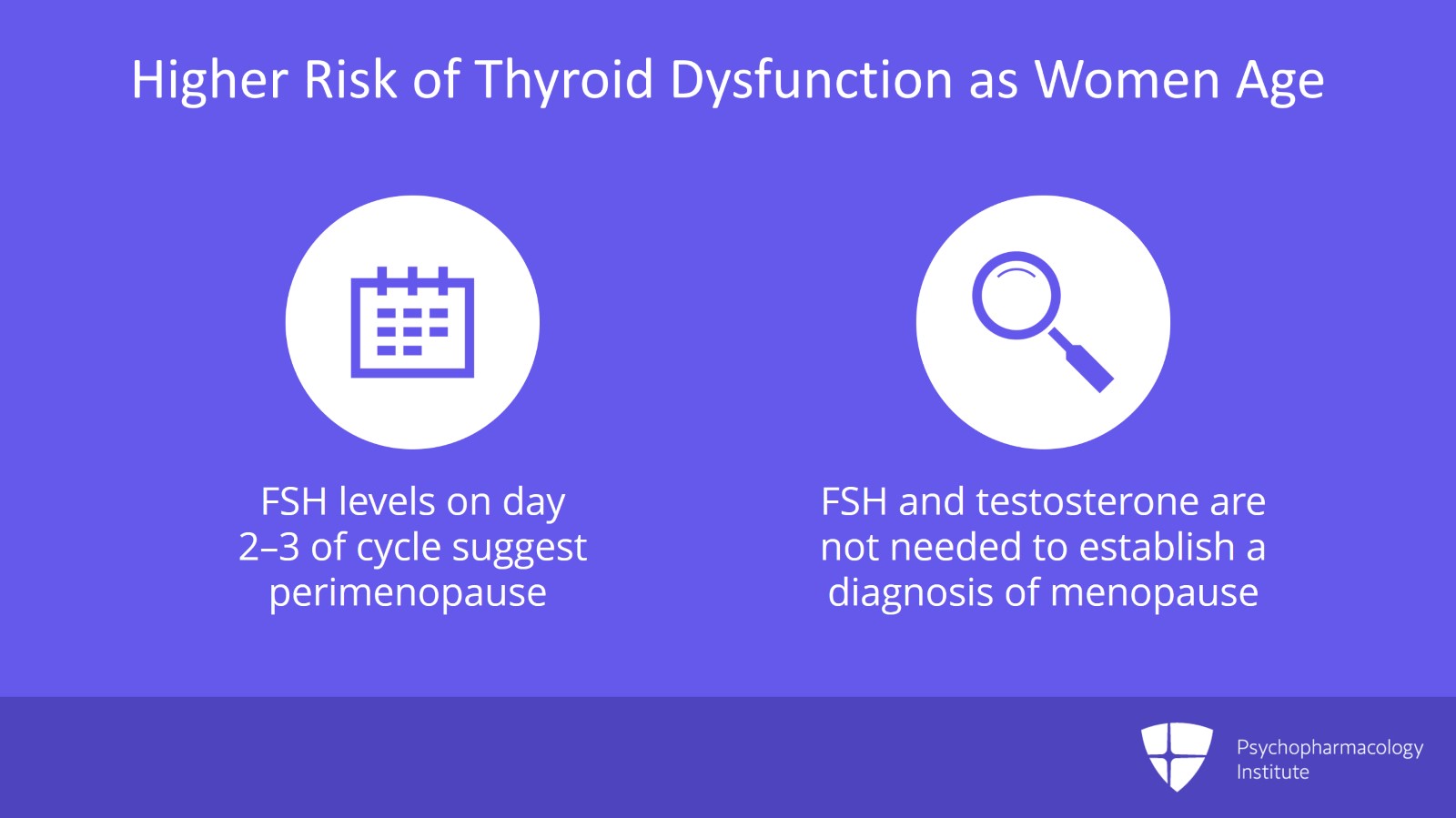
It's important to get TSH because we know that as women get older they're at increasing risk for thyroid dysfunction which certainly contributes to depression in women at this age. And although an FSH level on day 2 to 3 of the menstrual cycle as I mentioned suggests perimenopause in women aged 45 to 55 who are experiencing vasomotor symptoms and alterations in their menstrual cycle, FSH levels are not needed to establish a diagnosis of perimenopause. Testosterone has also been found to not be helpful to clinch the perimenopausal diagnosis. 

Slide 6 of 7

Therefore, what are our key points to ensure a comprehensive psychiatric evaluation in middle-aged women? Well, because middle-aged women present with depression, it's important to assess whether depressive symptoms may be caused by or exacerbated by underlying hormonal changes of the menopausal transition. The middle-aged woman who presents with depression should always therefore be asked about changes in her menstrual cycle, hot flashes, sleep disturbances and whether or not she is sexually active and any changes in libido or orgasm that she might be experiencing.
Free Files
Success!
Check your inbox, we sent you all the materials there.

Slide 7 of 7

Learning Objectives:

After completing this activity, the learner will be able to:

  1. Identify and assess perimenopausal depression to recommend the most suitable treatment.
  2. Summarize the treatment options for perimenopausal depression and prescribe them accordingly.

Original Release Date: April 1, 2020

Review Date: March 1, 2024

Expiration Date: April 1, 2024

Relevant Financial Disclosures: 

Vivien K. Burt declares the following interests:

- Sage Pharmaceuticals:  speaker training/presentations

- Sage Pharmaceuticals:  stockholder

- Merck:  stockholder

- Johnson & johnson:  stockholder

- Sage Pharmaceuticals:  speaking

- Acadia Pharmaceuticals:  advisory committee

- Johnson and Johnson:  stock holder

- Merck:  stockholder

All of the relevant financial relationships listed above have been mitigated by Medical Academy and the Psychopharmacology Institute.

Contact Information: For questions regarding the content or access to this activity, contact us at support@psychopharmacologyinstitute.com

Instructions for Participation and Credit:

Participants must complete the activity online during the valid credit period that is noted above.

Follow these steps to earn CME credit:

  1. View the required educational content provided on this course page.

  2. Complete the Post Activity Evaluation for providing the necessary feedback for continuing accreditation purposes and for the development of future activities. NOTE: Completing the Post Activity Evaluation after the quiz is required to receive the earned credit.

  3. Download your certificate.

Free Files
Success!
Check your inbox, we sent you all the materials there.
Continue in the website
Instant access modal

Become a Bronze, Silver, Gold, Bronze extended, Silver extended or Gold extended Member.

2025–26 Psychopharmacology CME Program

Unlock up to 155 CME Credits, including 40 SA CME Credits.