Close Banner
Section Free  - Video Lectures

10. Assessing and Treating Jane

Published on February 1, 2022 Expired on April 1, 2025

David R. Rosenberg, M.D.

Chair of the Department of Psychiatry & Behavioral Neuroscience - Wayne State University School of Medicine

Key Points

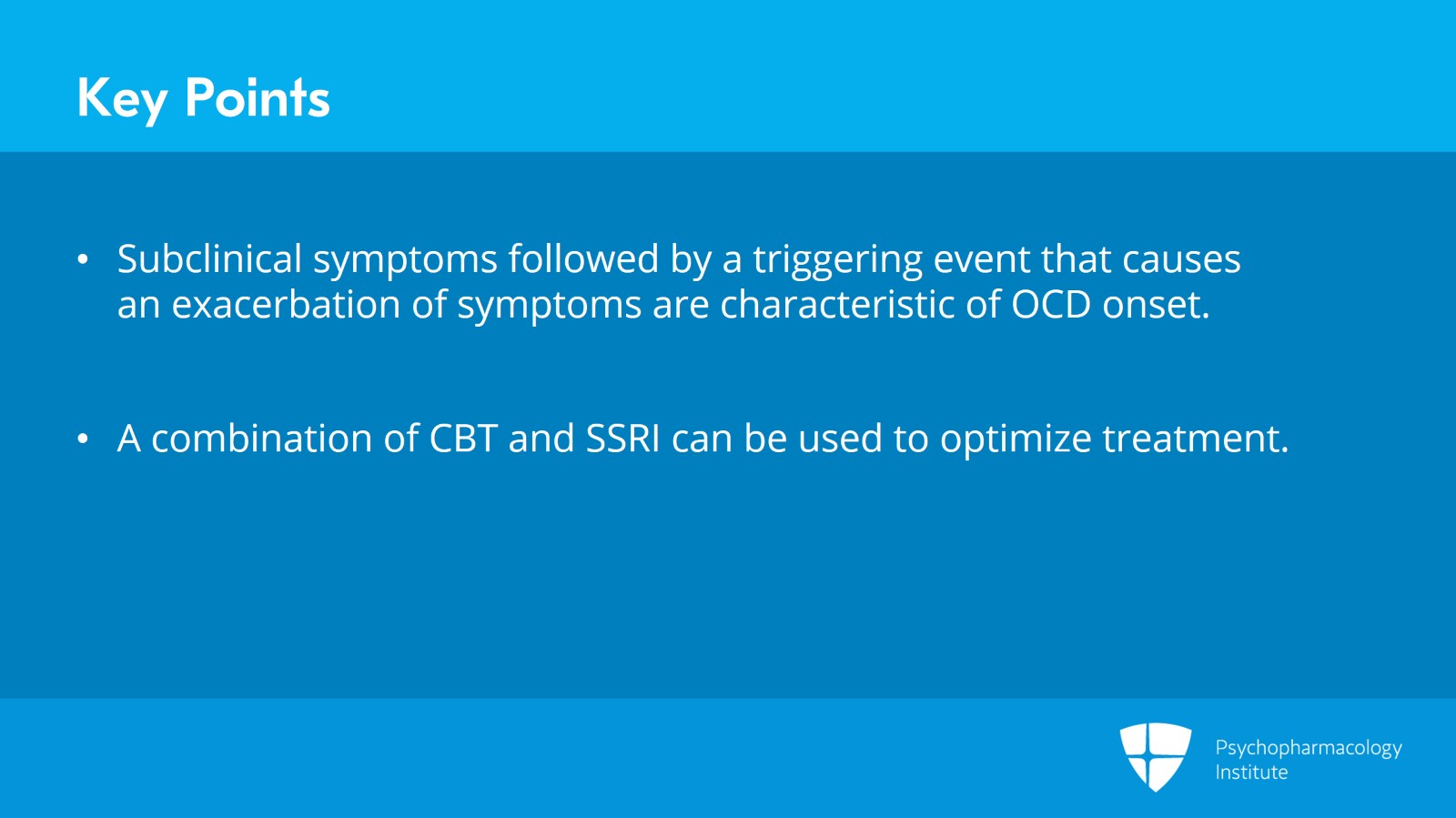
  • Subclinical symptoms followed by a triggering event that causes an exacerbation of symptoms are characteristic of OCD onset.
  • A combination of CBT and SSRI can be used to optimize treatment.
  • The use of optimal doses can lead to a dramatic decrease in symptom severity and symptom remission.

Free Downloads for Offline Access

  • Free Download Presentation File (PPTX)
  • Free Download Video (MP4)
  • Free Download Audio File (MP3)

Slides and Transcript

Slide 1 of 10

Let’s turn to video 10, Assessing and Treating Jane.

Slide 2 of 10

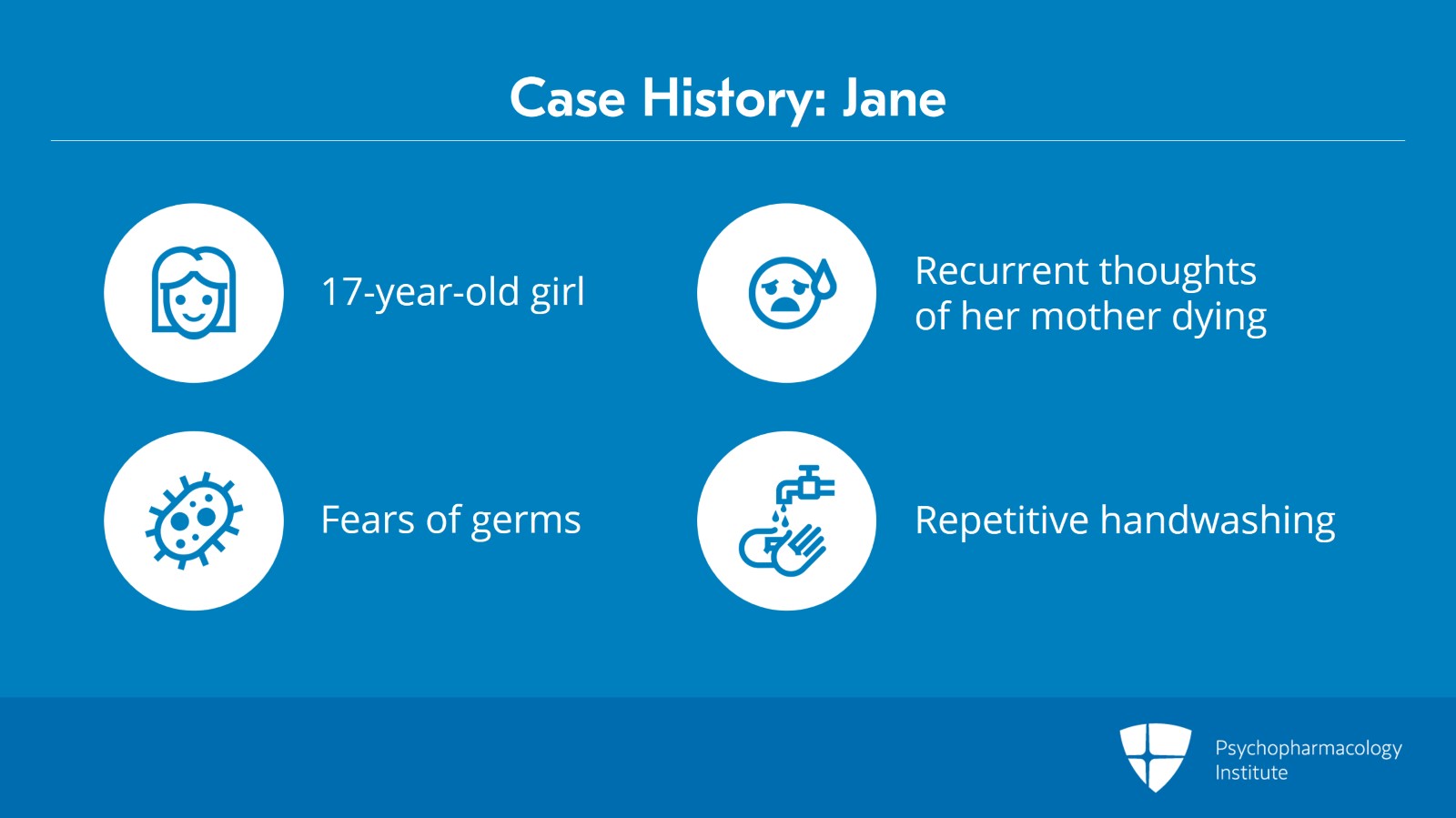
This is a case history. Jane, not her real name, is a 17-year-old girl who first presented to our program for evaluation with a chief complaint of recurrent thoughts and fears of her mother dying as well as fears of germs and dying herself. She exhibited repetitive handwashing and needed to touch things over and over.
Free Files
Success!
Check your inbox, we sent you all the materials there.

Slide 3 of 10

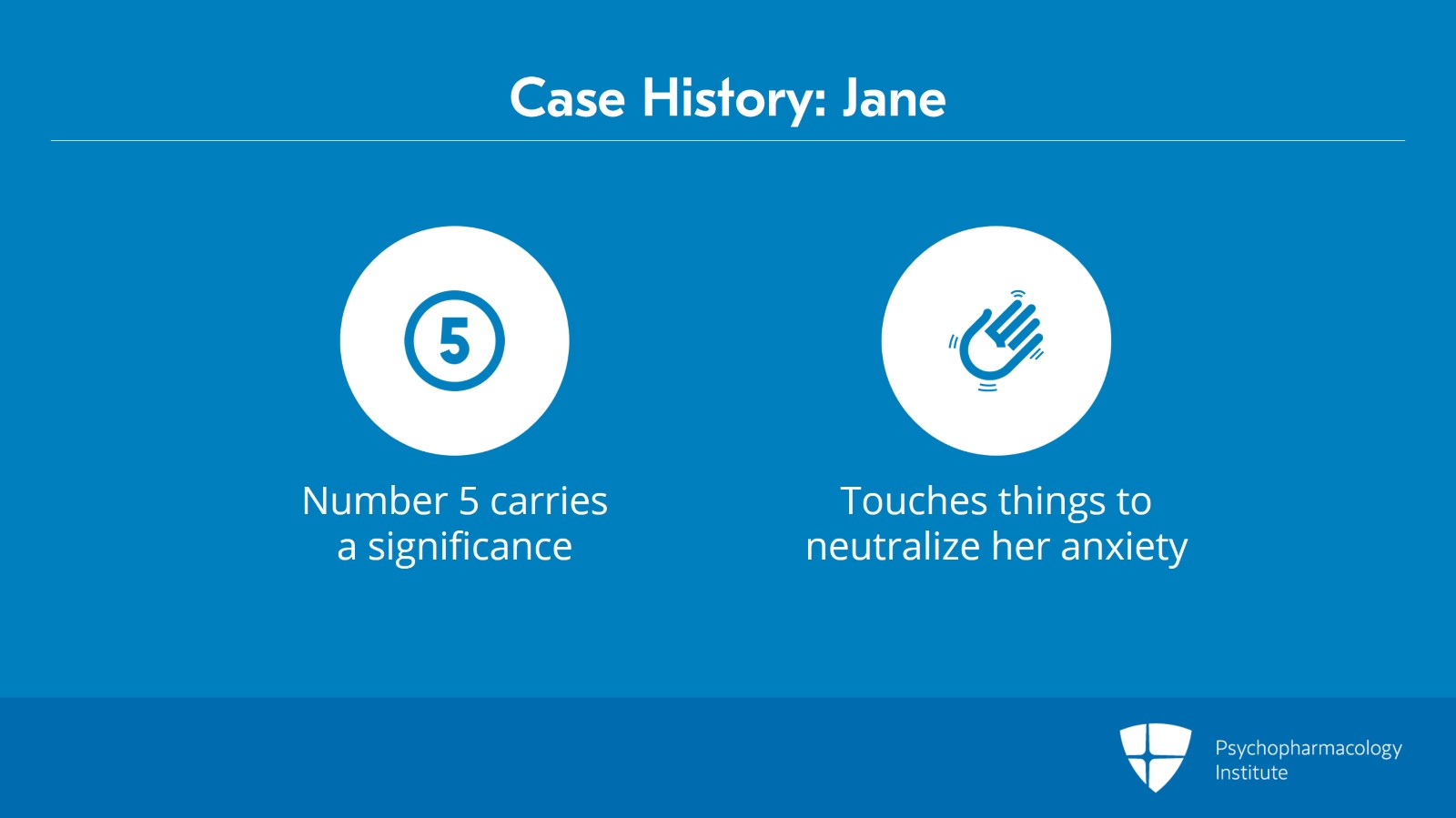
The number 5 also carried special significance. She routinely touched things five times to neutralize her anxiety and the unpleasant feelings.

Slide 4 of 10

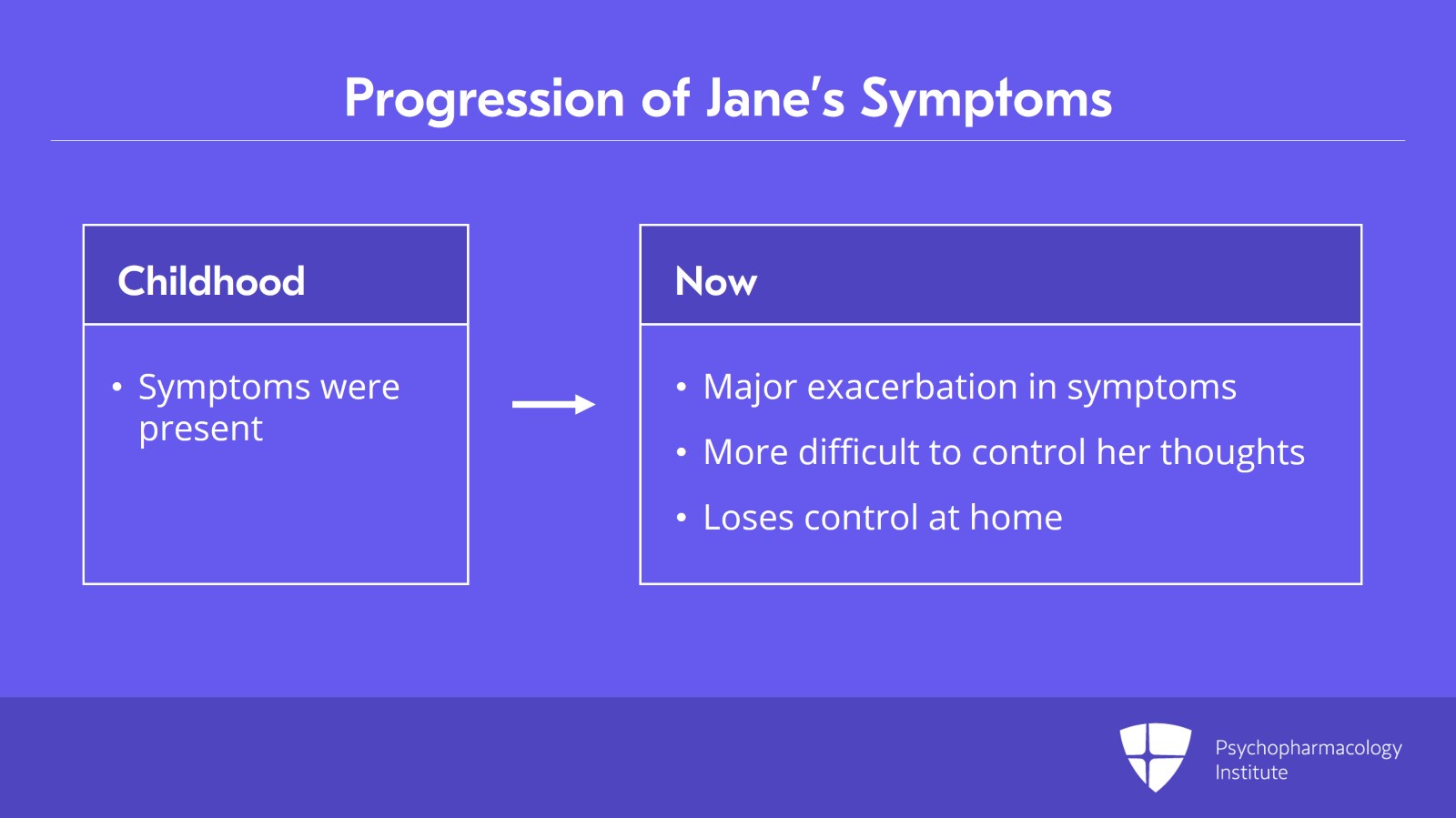
Although these symptoms had been present since early childhood and had been expressed daily for a long time, there was a major exacerbation in her symptoms after she was told by a dental hygienist that she would die if she did not floss her teeth properly because of her history of mitral valve prolapse and the possibility of bacteria getting into her bloodstream. While Jane was able to maintain some control of these thoughts at school, this was becoming more and more difficult, and she would often totally lose control while at home.
Free Files
Success!
Check your inbox, we sent you all the materials there.

Slide 5 of 10

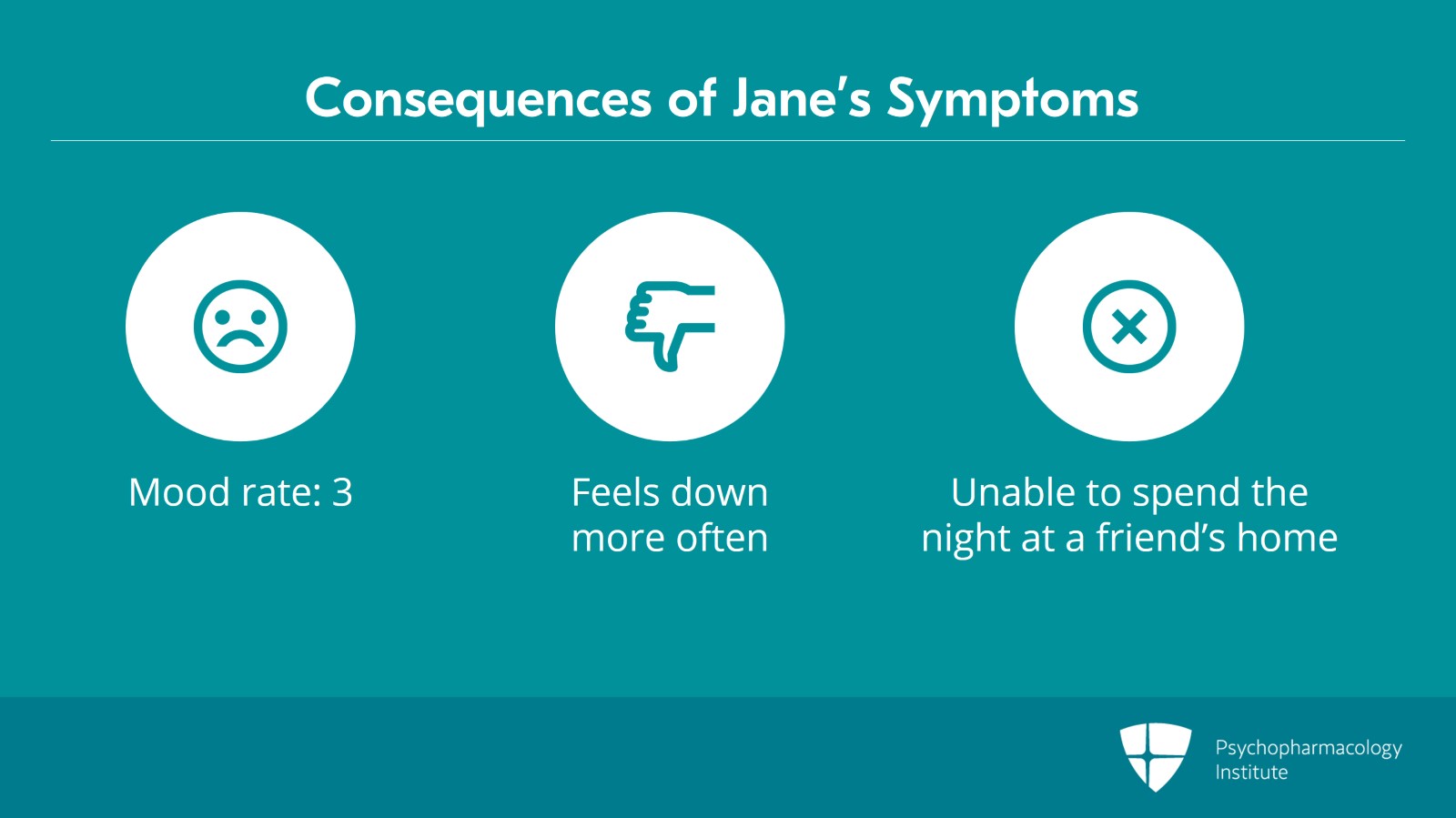
Because of the severity of these symptoms, she rated her mood as a 3 on a scale of 1 to 10 with 1 being worst and 10 being best. She admitted to feeling down more often than not although she denied suicidal ideation. She denied problems with sleep. There was no loss of interest in activities, of hobbies and her appetite remained good. She enjoyed school and her grades had remained good. Although Jane was able to maintain stable friendships, she was unable to spend the night at a friend’s home because her worries increased dramatically when she was away from home at night.

Slide 6 of 10

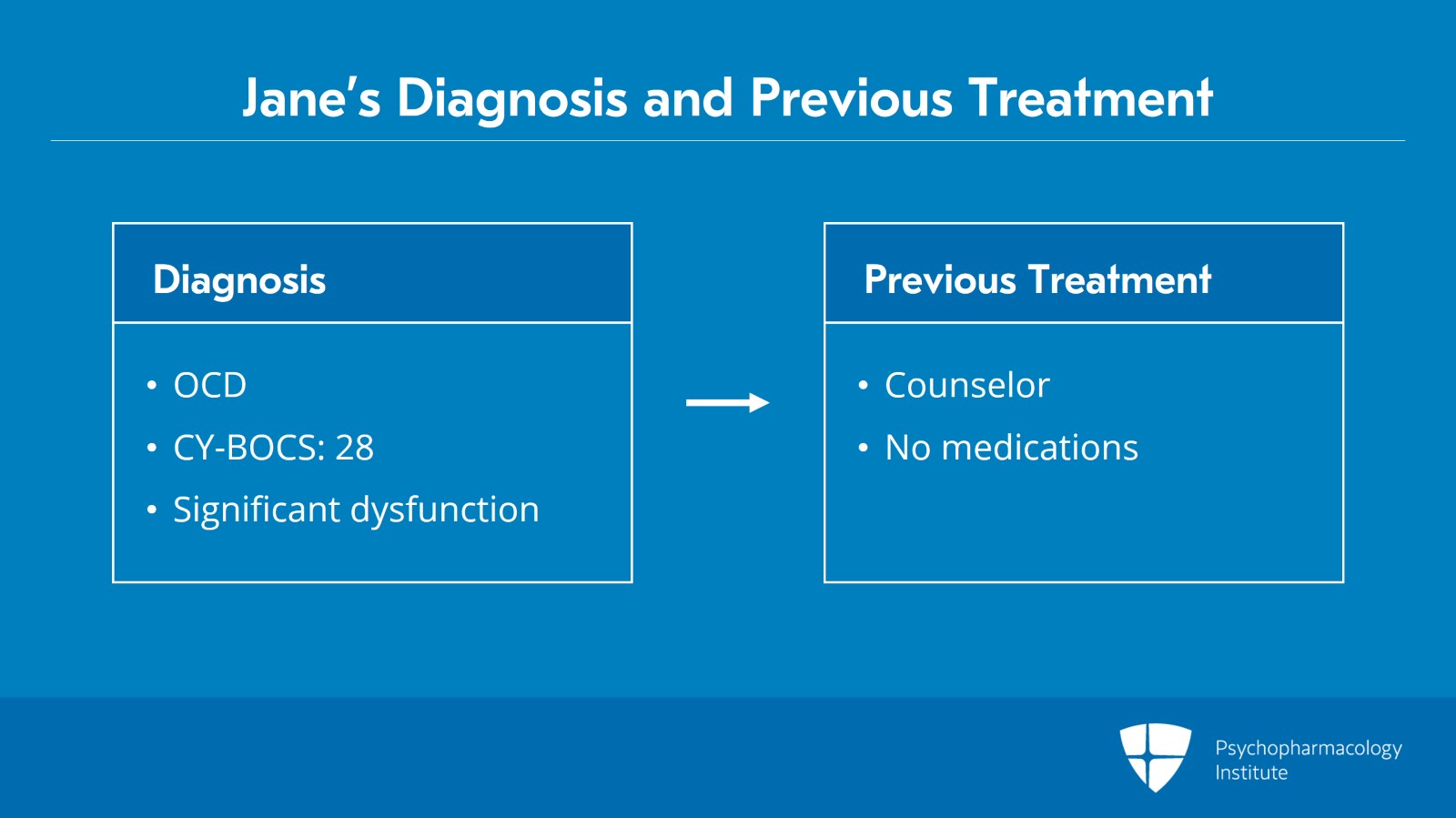
She was diagnosed with obsessive-compulsive disorder. The Children’s Yale-Brown Obsessive-Compulsive Disorder Scale, CY-BOCS rating was 28. The scale ranges from 0 to 40 with scores over 12 being considered clinically significant and scores of 20 and above representing significant dysfunction. Jane had seen a counselor previously but had received no medication for her symptoms. This had not resulted in relief of her symptoms. 6
Free Files
Success!
Check your inbox, we sent you all the materials there.

Slide 7 of 10

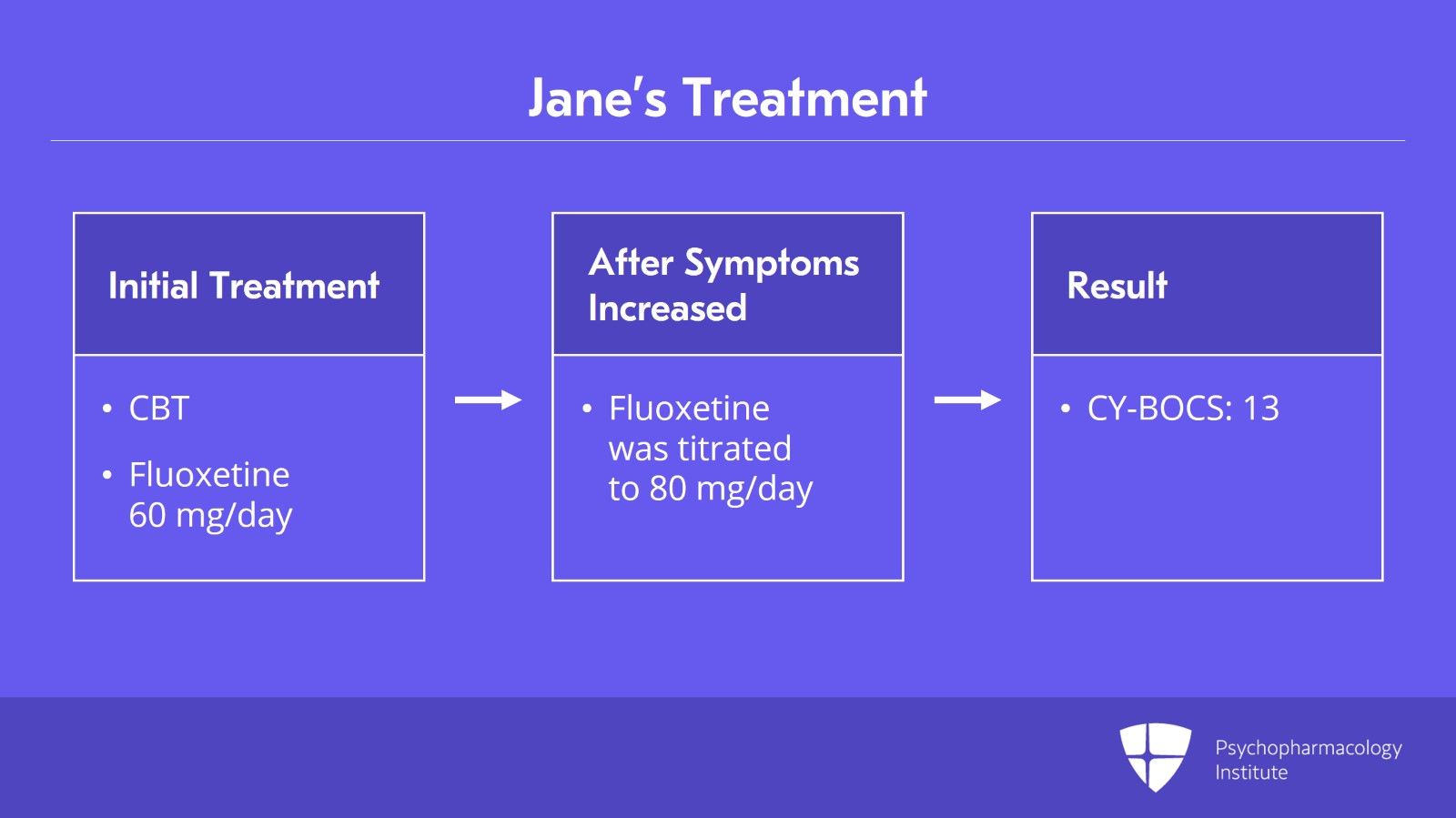
A combination of CBT and fluoxetine started at 10 mg per day and gradually titrated to 60 mg per day was implemented. After a recent increase in symptoms and failure of CBT booster sessions to adequately reduce her OCD symptoms, her fluoxetine dose was gradually titrated to 80 mg per day which resulted in her most recent CY-BOCS score of 13.

Slide 8 of 10

Key points. The course of illness described above where subclinical symptoms are followed by triggering event which causes an exacerbation of symptoms is characteristic of the onset of many OCD cases. Combination of CBT and SSRI treatment was optimized using a titration approach over the course of seven weeks.
Free Files
Success!
Check your inbox, we sent you all the materials there.

Slide 9 of 10

She reached an optimal dose that led to a dramatic decrease in symptom severity and symptom remission.   After relapse in her OCD symptoms and after failure of CBT booster sessions to ameliorate her symptoms, her SSRI dose was again gradually titrated to an optimal level that led to remission of her OCD symptoms.

Slide 10 of 10

Free Files
Success!
Check your inbox, we sent you all the materials there.

Learning Objectives:

After completing this activity, the learner will be able to:

  1. Assess and recognize unique features of obsessive-compulsive disorder in children and adolescents.
  2. Differentiate pediatric OCD from other common diagnoses in children and adolescents.
  3. Identify the recommended treatments for pediatric OCD and prescribe them accordingly.

Original Release Date: 02/01/2022

Review and Re-release Date: 03/01/2024

Expiration Date: 04/01/2025

Expert: David Rosenberg, M.D.

Relevant Financial Disclosures:

None of the faculty, planners, and reviewers for this educational activity have relevant financial relationship(s) to disclose during the last 24 months with ineligible companies whose primary business is producing, marketing, selling, re-selling, or distributing healthcare products used by or on patients.

Contact Information: For questions regarding the content or access to this activity, contact us at support@psychopharmacologyinstitute.com

Instructions for Participation and Credit:

Participants must complete the activity online during the valid credit period that is noted above.

Follow these steps to earn CME credit:

  1. View the required educational content provided on this course page.
  2. Complete the Post Activity Evaluation for providing the necessary feedback for continuing accreditation purposes and for the development of future activities. NOTE: Completing the Post Activity Evaluation after the quiz is required to receive the earned credit.
  3. Download your certificate.

Accreditation Statement

This activity has been planned and implemented in accordance with the accreditation requirements and policies of the Accreditation Council for Continuing Medical Education through the joint providership of Medical Academy LLC and the Psychopharmacology Institute. Medical Academy is accredited by the ACCME to provide continuing medical education for physicians.

Credit Designation Statement

Medical Academy designates this enduring activity for a maximum of 1.00 AMA PRA Category 1 credit(s). Physicians should claim only the credit commensurate with the extent of their participation in the activity.


Free Files
Success!
Check your inbox, we sent you all the materials there.
Continue in the website
Instant access modal

Become a Bronze, Silver, Gold, Bronze extended, Silver extended or Gold extended Member.

2025–26 Psychopharmacology CME Program

Unlock up to 155 CME Credits, including 40 SA CME Credits.