Close Banner
Free Section  - Video Lectures

04. Antidepressants for Perimenopausal Depression

Published on October 1, 2025 Certification expiration date: October 1, 2028

Katie Unverferth, M.D.

Assistant Clinical Professor of Psychiatry - U.C.L.A.

Key Points

  • Use prior antidepressant response to guide treatment choices for perimenopausal depression.
  • Efficacy for perimenopausal depression is considered a class effect of SSRIs and SNRIs.
  • Target co-occurring sleep issues and vasomotor symptoms when treating perimenopausal depression.

Free Downloads for Offline Access

  • Free Download Audio File (MP3)
  • Free Download Video (MP4)
  • Free Download PDF File

Slides and Transcript

Slide 1 of 8

Antidepressants for Perimenopausal Depression.

Slide 2 of 8

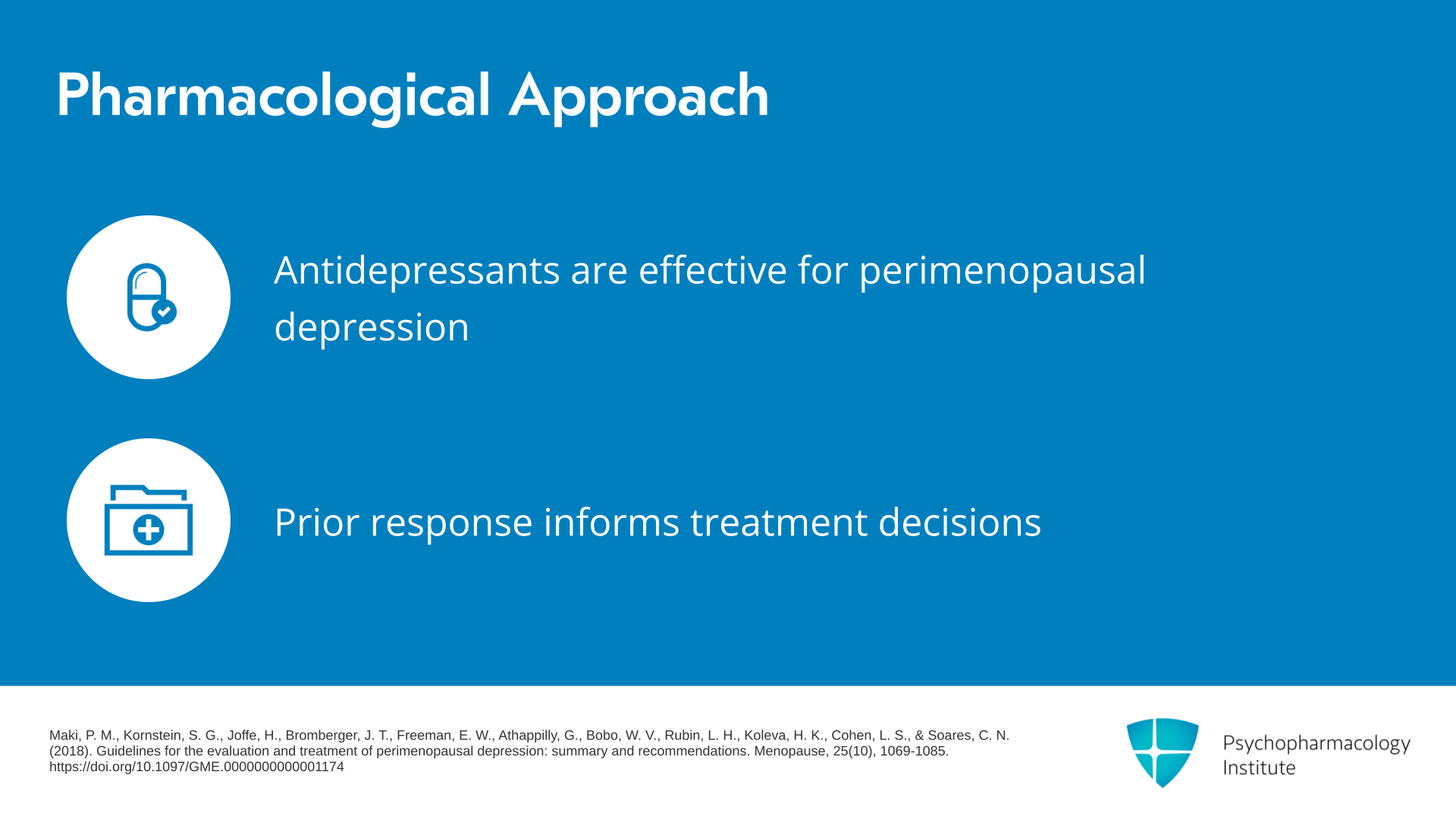
So now, we’re going to focus on medication treatments for perimenopausal depression. In general, antidepressants are considered effective for perimenopausal depression. What you want to do is you want to use prior response to inform treatment. So any medication which has had a positive antidepressant effect in the past you could use again.
References:
  • Maki, P. M., Kornstein, S. G., Joffe, H., Bromberger, J. T., Freeman, E. W., Athappilly, G., Bobo, W. V., Rubin, L. H., Koleva, H. K., Cohen, L. S., & Soares, C. N. (2018). Guidelines for the evaluation and treatment of perimenopausal depression: summary and recommendations. Menopause, 25(10), 1069-1085. https://doi.org/10.1097/GME.0000000000001174
Free Files
Success!
Check your inbox, we sent you all the materials there.

Slide 3 of 8

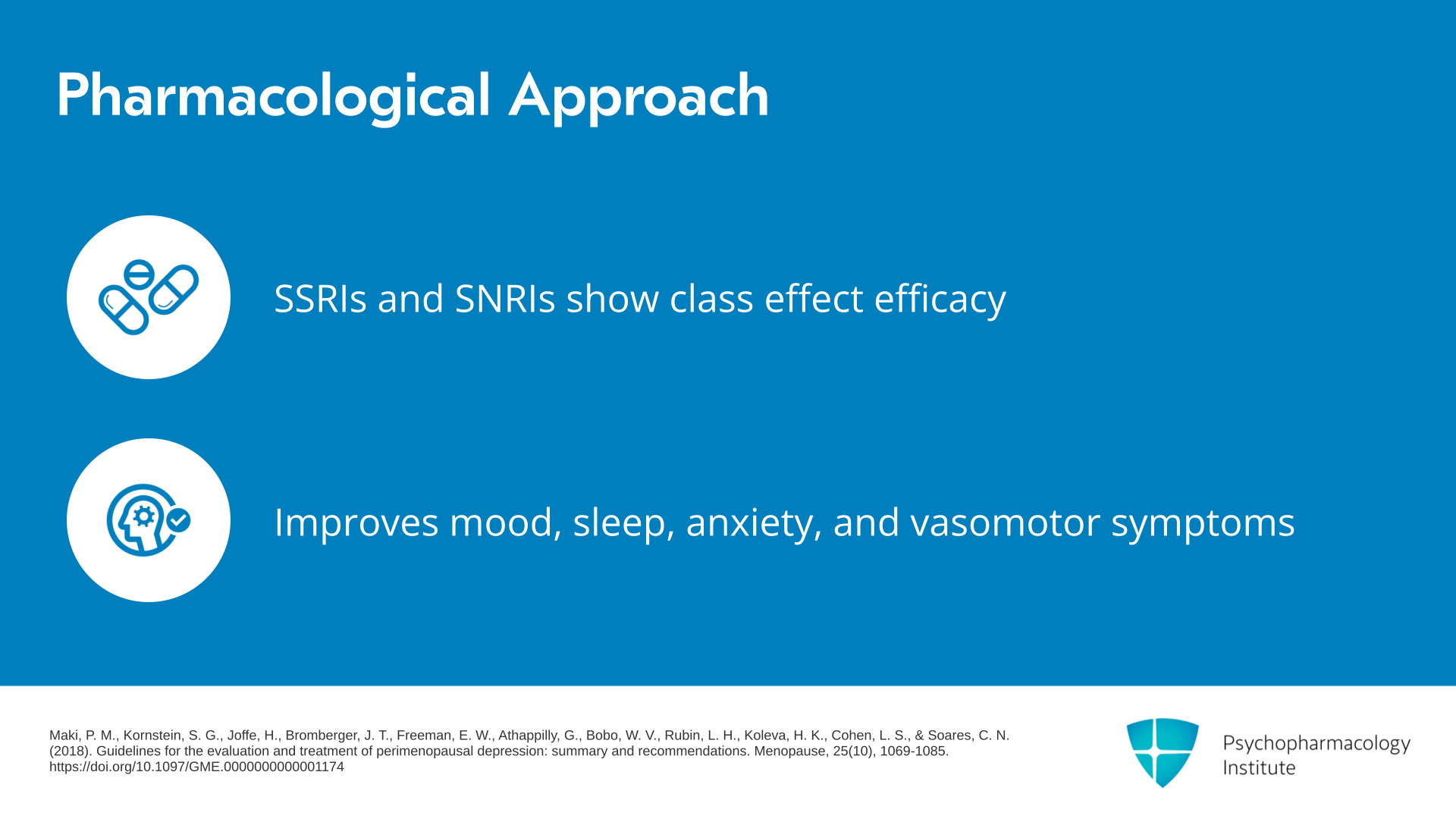
The efficacy for perimenopausal depression with antidepressants is considered to be a class effect of SSRIs and SNRIs. Most evidence does come from small open-label trials. The SSRIs which have evidence are citalopram, paroxetine, and vortioxetine. SNRIs that have evidence are venlafaxine, duloxetine and desvenlafaxine. Mirtazapine also has some evidence. All of these medications have demonstrated evidence for having a positive effect on mood as well as sleep, anxiety and vasomotor symptoms.
References:
  • Maki, P. M., Kornstein, S. G., Joffe, H., Bromberger, J. T., Freeman, E. W., Athappilly, G., Bobo, W. V., Rubin, L. H., Koleva, H. K., Cohen, L. S., & Soares, C. N. (2018). Guidelines for the evaluation and treatment of perimenopausal depression: summary and recommendations. Menopause, 25(10), 1069-1085. https://doi.org/10.1097/GME.0000000000001174

Slide 4 of 8

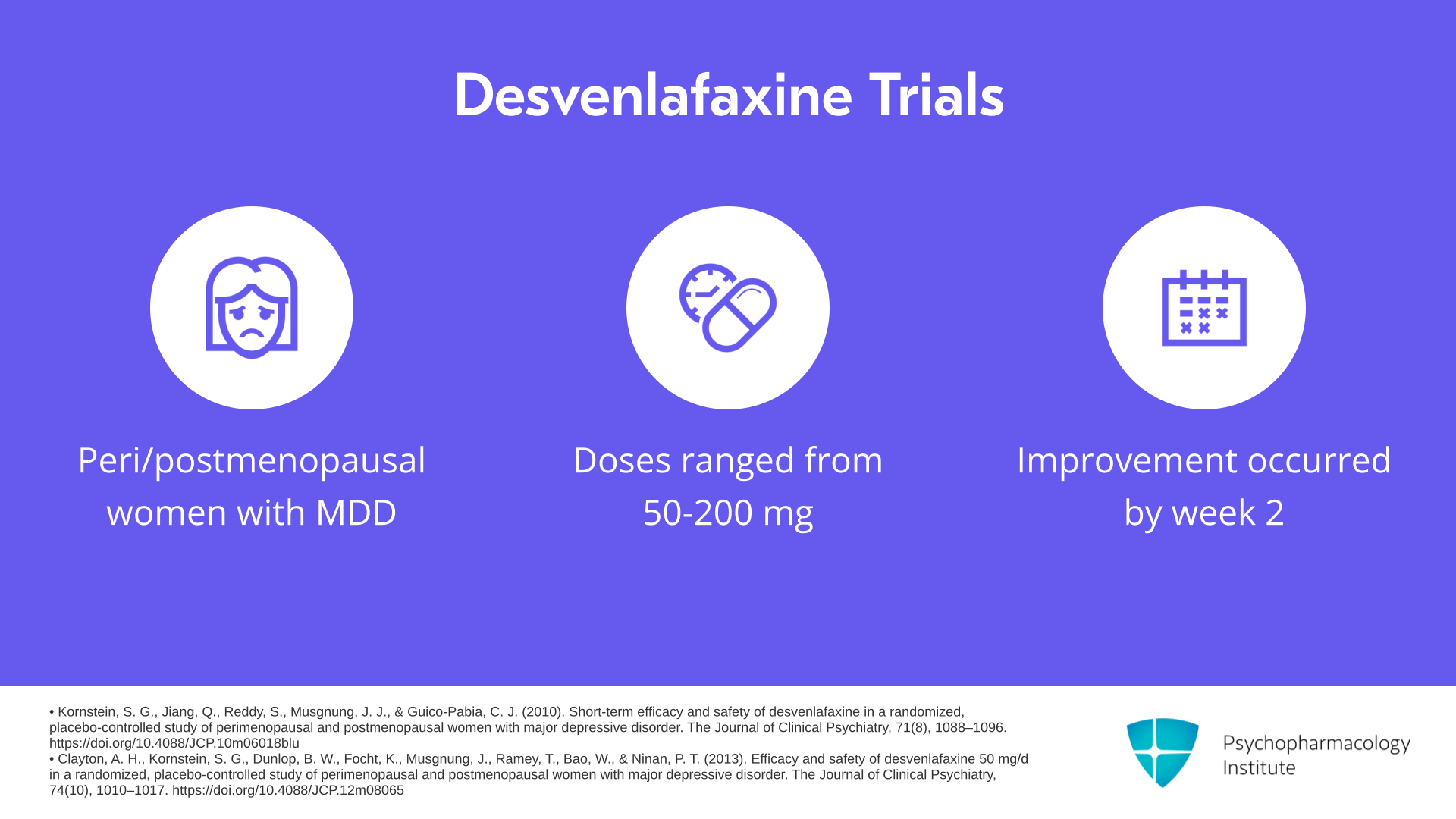
Two placebo-controlled trials of desvenlafaxine in peri- and postmenopausal women with major depressive disorder, at doses of 50 and 100 to 200 mg daily, demonstrated improvement in depressive symptoms as early as week 2. This suggests that perhaps antidepressants will work fairly quickly in perimenopausal depression at least from this placebo-controlled trials.
References:
  • Kornstein, S. G., Jiang, Q., Reddy, S., Musgnung, J. J., & Guico-Pabia, C. J. (2010). Short-term efficacy and safety of desvenlafaxine in a randomized, placebo-controlled study of perimenopausal and postmenopausal women with major depressive disorder. The Journal of Clinical Psychiatry, 71(8), 1088–1096. https://doi.org/10.4088/JCP.10m06018blu
  • Clayton, A. H., Kornstein, S. G., Dunlop, B. W., Focht, K., Musgnung, J., Ramey, T., Bao, W., & Ninan, P. T. (2013). Efficacy and safety of desvenlafaxine 50 mg/d in a randomized, placebo-controlled study of perimenopausal and postmenopausal women with major depressive disorder. The Journal of Clinical Psychiatry, 74(10), 1010–1017. https://doi.org/10.4088/JCP.12m08065
Free Files
Success!
Check your inbox, we sent you all the materials there.

Slide 5 of 8

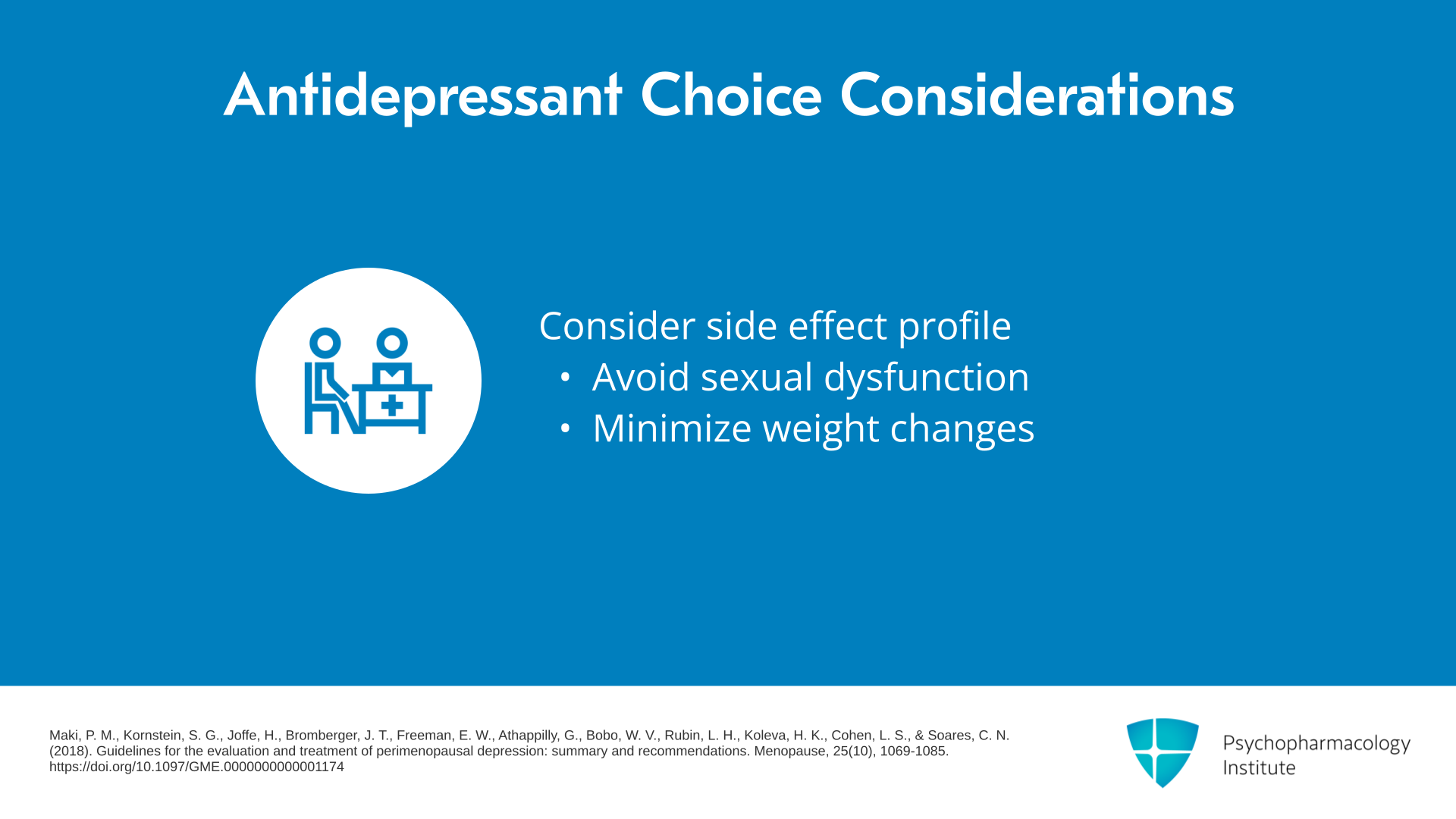
When using antidepressants for perimenopausal depression, it’s important to also consider the side effect profile. We know that sexual dysfunction and weight changes can be associated with perimenopause, so you would like to use medications that have less of this.
References:
  • Maki, P. M., Kornstein, S. G., Joffe, H., Bromberger, J. T., Freeman, E. W., Athappilly, G., Bobo, W. V., Rubin, L. H., Koleva, H. K., Cohen, L. S., & Soares, C. N. (2018). Guidelines for the evaluation and treatment of perimenopausal depression: summary and recommendations. Menopause, 25(10), 1069-1085. https://doi.org/10.1097/GME.0000000000001174

Slide 6 of 8

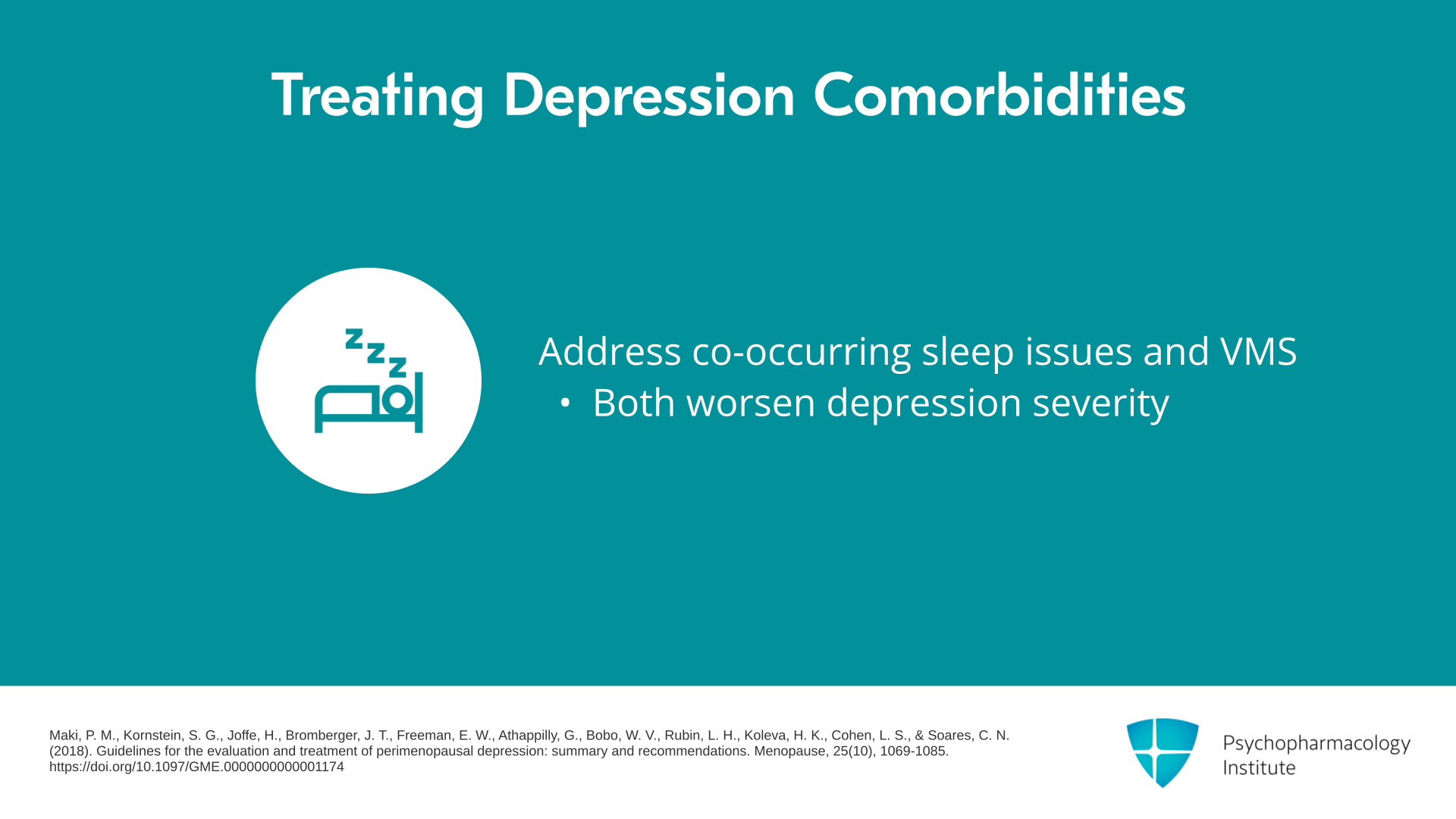
It’s also important to consider treating co-occurring sleep issues and vasomotor symptoms, because we know that sleep issues and vasomotor symptoms can both affect the severity of the depression, and also lead to depression themselves.
References:
  • Maki, P. M., Kornstein, S. G., Joffe, H., Bromberger, J. T., Freeman, E. W., Athappilly, G., Bobo, W. V., Rubin, L. H., Koleva, H. K., Cohen, L. S., & Soares, C. N. (2018). Guidelines for the evaluation and treatment of perimenopausal depression: summary and recommendations. Menopause, 25(10), 1069-1085. https://doi.org/10.1097/GME.0000000000001174
Free Files
Success!
Check your inbox, we sent you all the materials there.

Slide 7 of 8

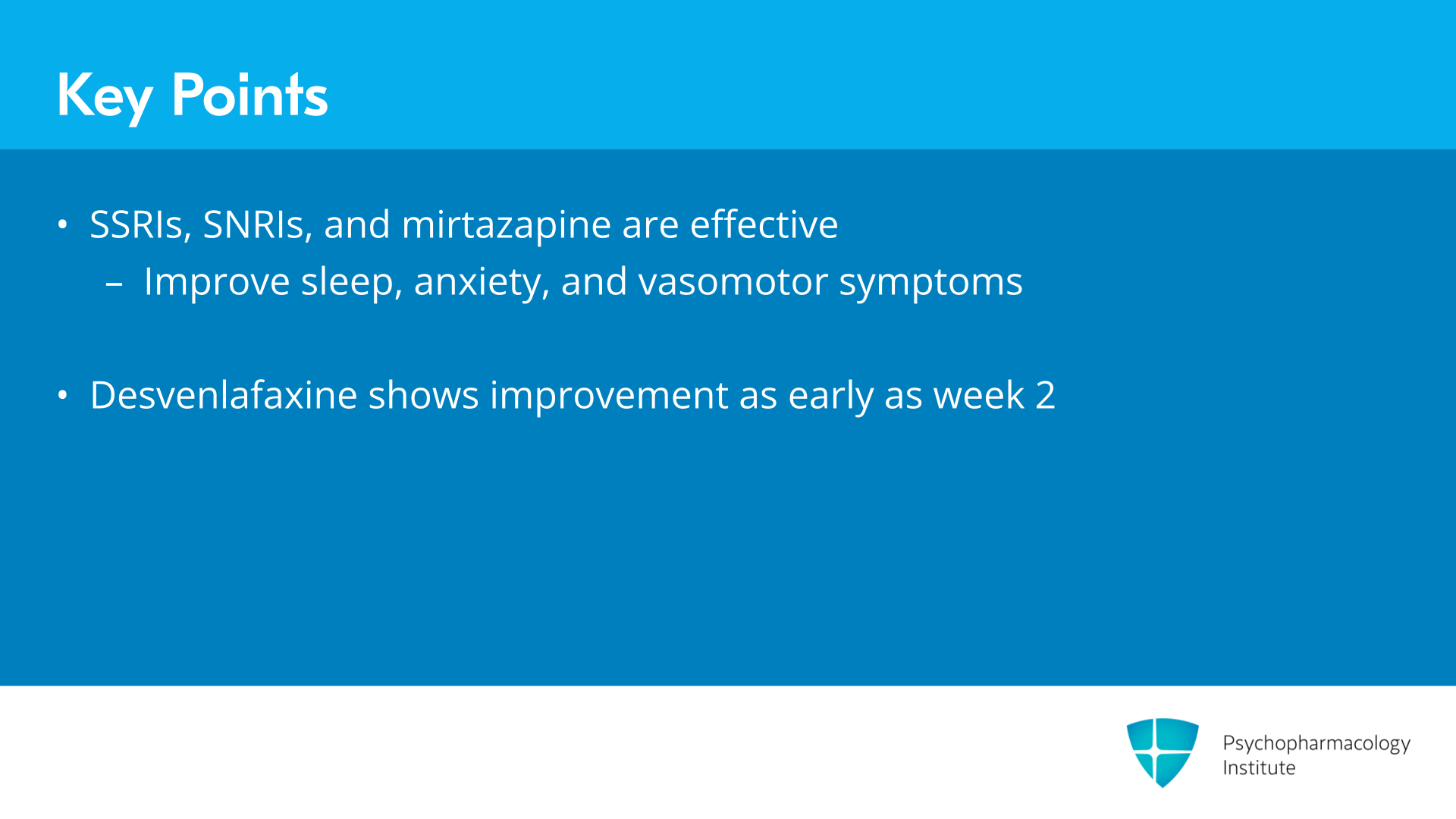
So the key points from this section: SSRIs, SNRIs and mirtazapine are effective for perimenopausal depression, with benefits also seen in sleep, anxiety, and vasomotor symptoms. Desvenlafaxine has strong placebo-controlled data showing improvement in depressive symptoms as early as week 2 in both perimenopausal and postmenopausal women.

Slide 8 of 8

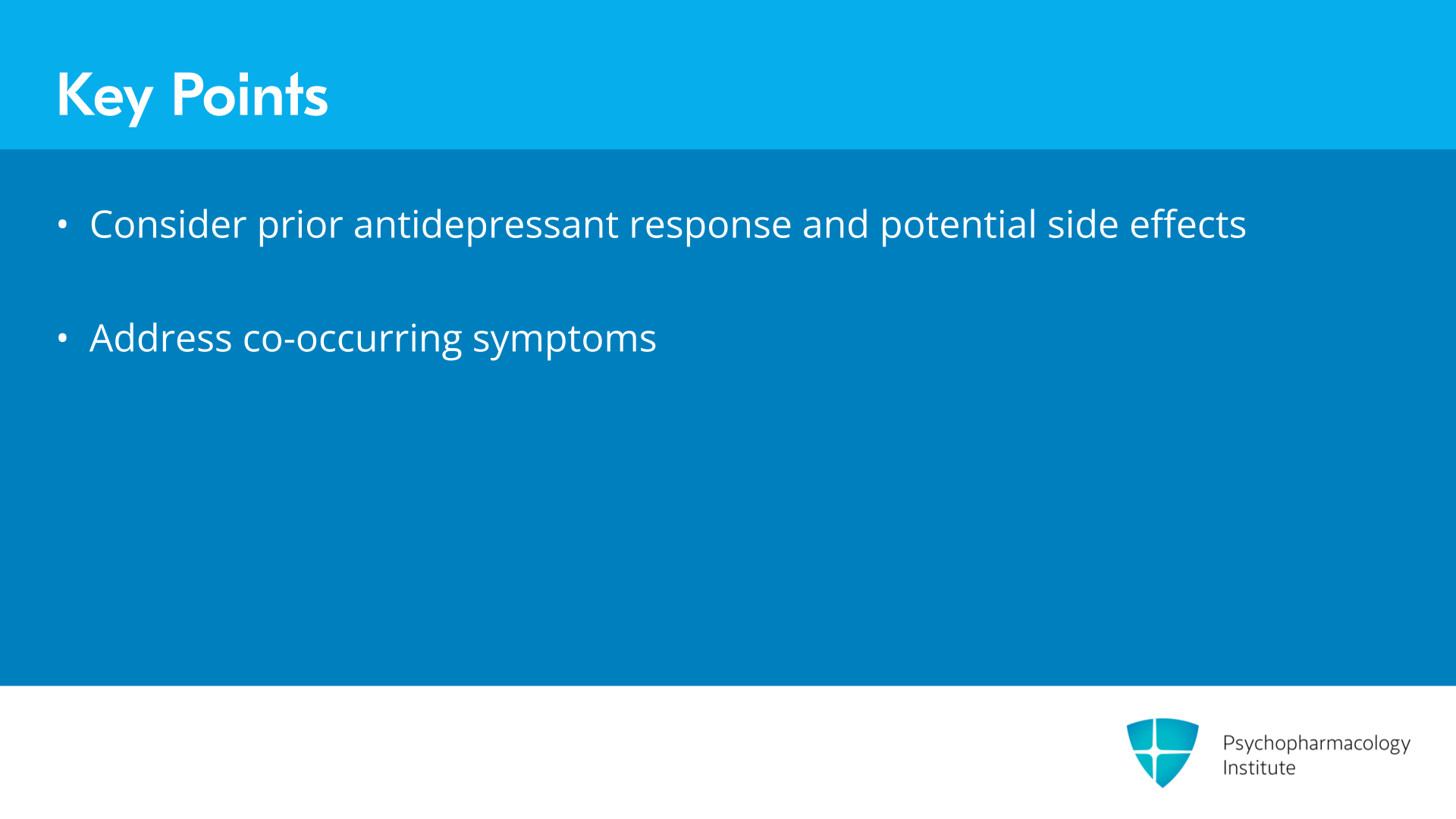
Treatment decisions for perimenopausal depression should consider prior response to antidepressants and potential side effects, and should address co-occurring symptoms such as insomnia and vasomotor symptoms.
Free Files
Success!
Check your inbox, we sent you all the materials there.

Learning Objectives:

After completing this activity, the learner will be able to:

  1. Recognize the clinical manifestations of perimenopause, including vasomotor symptoms, mood changes, and cognitive complaints, and differentiate perimenopausal depression from other depressive disorders.
  2. Identify risk factors for perimenopausal depression and anxiety, including prior history of hormone-sensitive mood disorders (PMDD, postpartum depression), vasomotor symptoms, psychosocial stressors, and psychological factors.
  3. Select appropriate pharmacologic interventions for perimenopausal mood and vasomotor symptoms.

Original Release Date: October 1, 2025

Expiration Date: October 1, 2028

Expert: Katie Unverferth, M.D.

Medical Editor: Tomás Abudarham, M.D.

Relevant Financial Disclosures: 

Katie Unverferth declares the following interests:

– Biogen/Sage: Consultant and Speakers Bureau
All the relevant financial relationships listed above have been mitigated by Medical Academy and the Psychopharmacology Institute.

None of the other faculty, planners, and reviewers for this educational activity has relevant financial relationships to disclose during the last 24 months with ineligible companies whose primary business is producing, marketing, selling, re-selling, or distributing healthcare products used by or on patients.

Contact Information: For questions regarding the content or access to this activity, contact us at support@psychopharmacologyinstitute.com

Instructions for Participation and Credit:

Participants must complete the activity online during the valid credit period that is noted above.

Follow these steps to earn CME credit:

  1. View the required educational content provided on this course page.
  2. Complete the Post Activity Evaluation for providing the necessary feedback for continuing accreditation purposes and for the development of future activities. NOTE: Completing the Post Activity Evaluation after the quiz is required to receive the earned credit.
  3. Download your certificate.

Accreditation Statement

This activity has been planned and implemented in accordance with the accreditation requirements and policies of the Accreditation Council for Continuing Medical Education through the joint providership of Medical Academy LLC and the Psychopharmacology Institute. Medical Academy is accredited by the ACCME to provide continuing medical education for physicians.

Credit Designation Statement

Medical Academy designates this enduring activity for a maximum of 0.75 AMA PRA Category 1 credit(s)™. Physicians should claim only the credit commensurate with the extent of their participation in the activity.

Artificial Intelligence (AI) Use DisclosureArtificial intelligence (AI) tools may have been used in limited stages of developing this activity (e.g., drafting or language refinement). The specific tool, version, and date of use are documented internally.AI does not determine clinical recommendations. All content is reviewed, verified, and approved by the listed faculty and medical editors, and reflects independent human clinical judgment consistent with ACCME Standards for Integrity and Independence in Accredited Continuing Education.


Free Files
Success!
Check your inbox, we sent you all the materials there.
Continue in the website
Instant access modal

Become a Bronze, Silver, Gold, Bronze extended, Silver extended or Gold extended Member.

2025–26 Psychopharmacology CME Program

Unlock up to 155 CME Credits, including 40 SA CME Credits.