Close Banner
Section Free  - Video Lectures

07. An Overview of Standard Treatment vs CAM for ADHD

Published on January 1, 2023 Certification expiration date: January 1, 2026

Amelia Villagomez, M.D.

Assistant Professor of Psychiatry - University of Arizona

Key Points

  • In the United States, 9.4% of children have been diagnosed with ADHD.
  • Although many children respond to standard treatments, one-third remain symptomatic.
  • Parents often inquire and try alternative treatments for ADHD.
  • Increasing evidence supports the use of BSMs for the treatment of ADHD.

Free Downloads for Offline Access

  • Free Download Presentation File (PPTX)
  • Free Download Video (MP4)
  • Free Download Audio File (MP3)

Slides and Transcript

Slide 1 of 11

There are several studies of broad-spectrum micronutrients for the treatment of ADHD which we’re about to discuss.

Slide 2 of 11

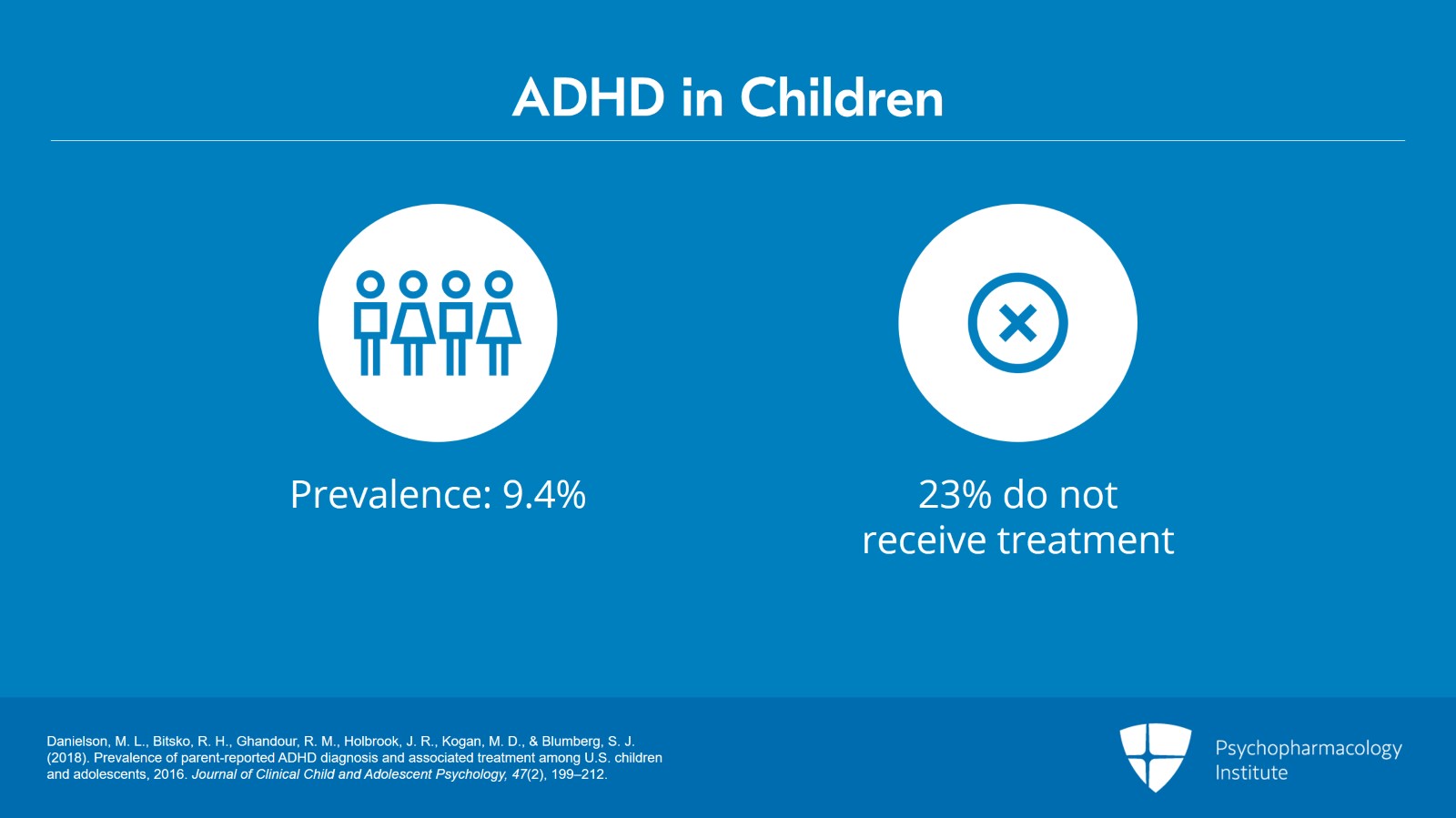
But before we do that, let’s review conventional treatment for ADHD. 9.4 percent of children in the US have been diagnosed with ADHD. As we know, standard treatments include stimulant medication and behavioral therapy. At least 23% of children receive neither treatment unfortunately.
References:
  • Danielson, M. L., Bitsko, R. H., Ghandour, R. M., Holbrook, J. R., Kogan, M. D., & Blumberg, S. J. (2018). Prevalence of parent-reported ADHD diagnosis and associated treatment among U.S. children and adolescents, 2016. Journal of Clinical Child and Adolescent Psychology, 47(2), 199–212.
Free Files
Success!
Check your inbox, we sent you all the materials there.

Slide 3 of 11

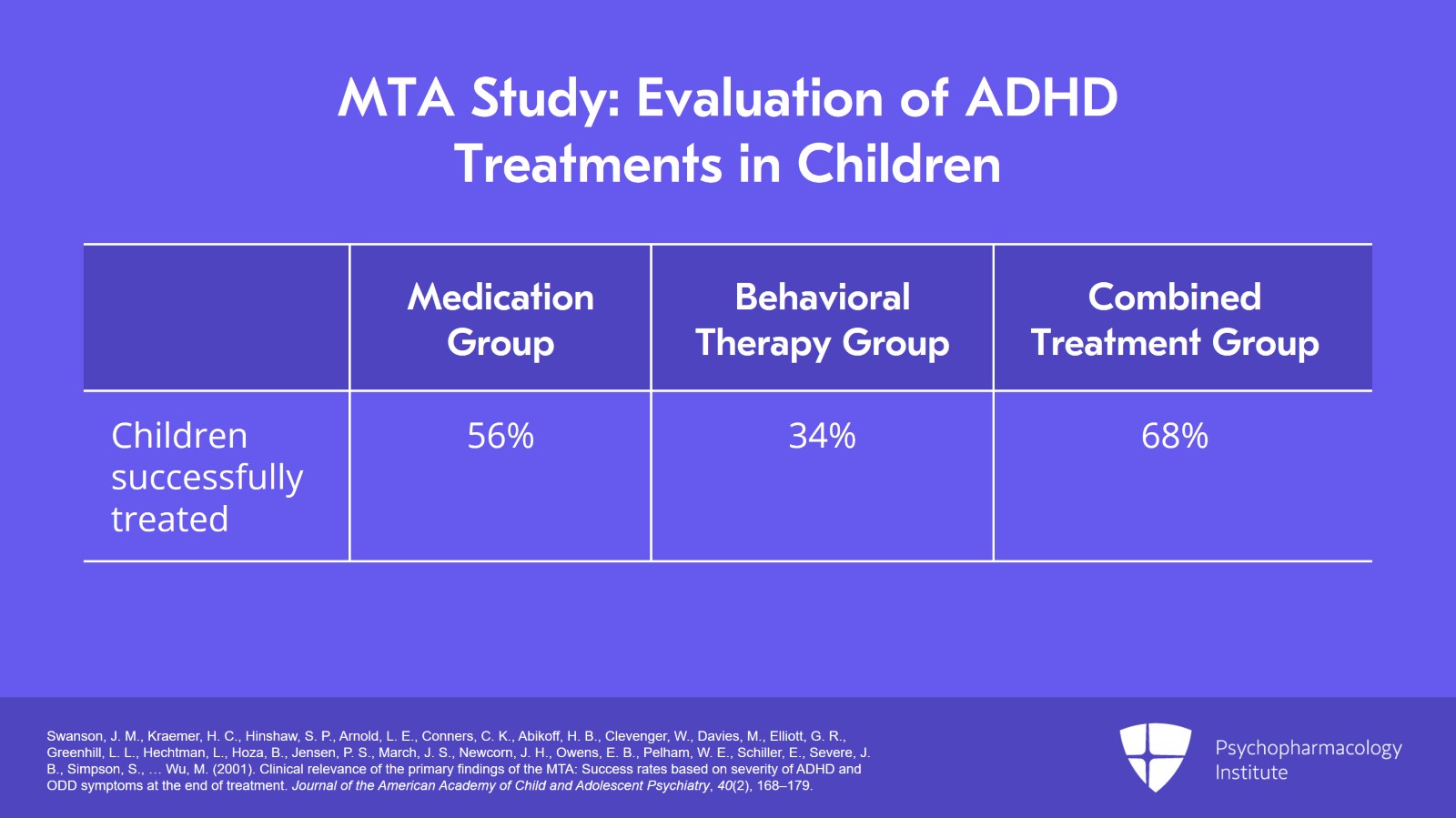
The MTA or Multimodal Treatment of ADHD study was a multisite study of nearly 600 children designed to evaluate the leading treatments for ADHD. Participants were randomly assigned to one of four treatment modes. In the MTA study, the percent of children who met the study definition of successfully treated were as follows: 56% in the medication management group, 34% in the behavioral therapy group, and 68% in the combined group.
References:
  • Swanson, J. M., Kraemer, H. C., Hinshaw, S. P., Arnold, L. E., Conners, C. K., Abikoff, H. B., Clevenger, W., Davies, M., Elliott, G. R., Greenhill, L. L., Hechtman, L., Hoza, B., Jensen, P. S., March, J. S., Newcorn, J. H., Owens, E. B., Pelham, W. E., Schiller, E., Severe, J. B., Simpson, S., … Wu, M. (2001). Clinical relevance of the primary findings of the MTA: Success rates based on severity of ADHD and ODD symptoms at the end of treatment. Journal of the American Academy of Child and Adolescent Psychiatry, 40(2), 168–179.

Slide 4 of 11

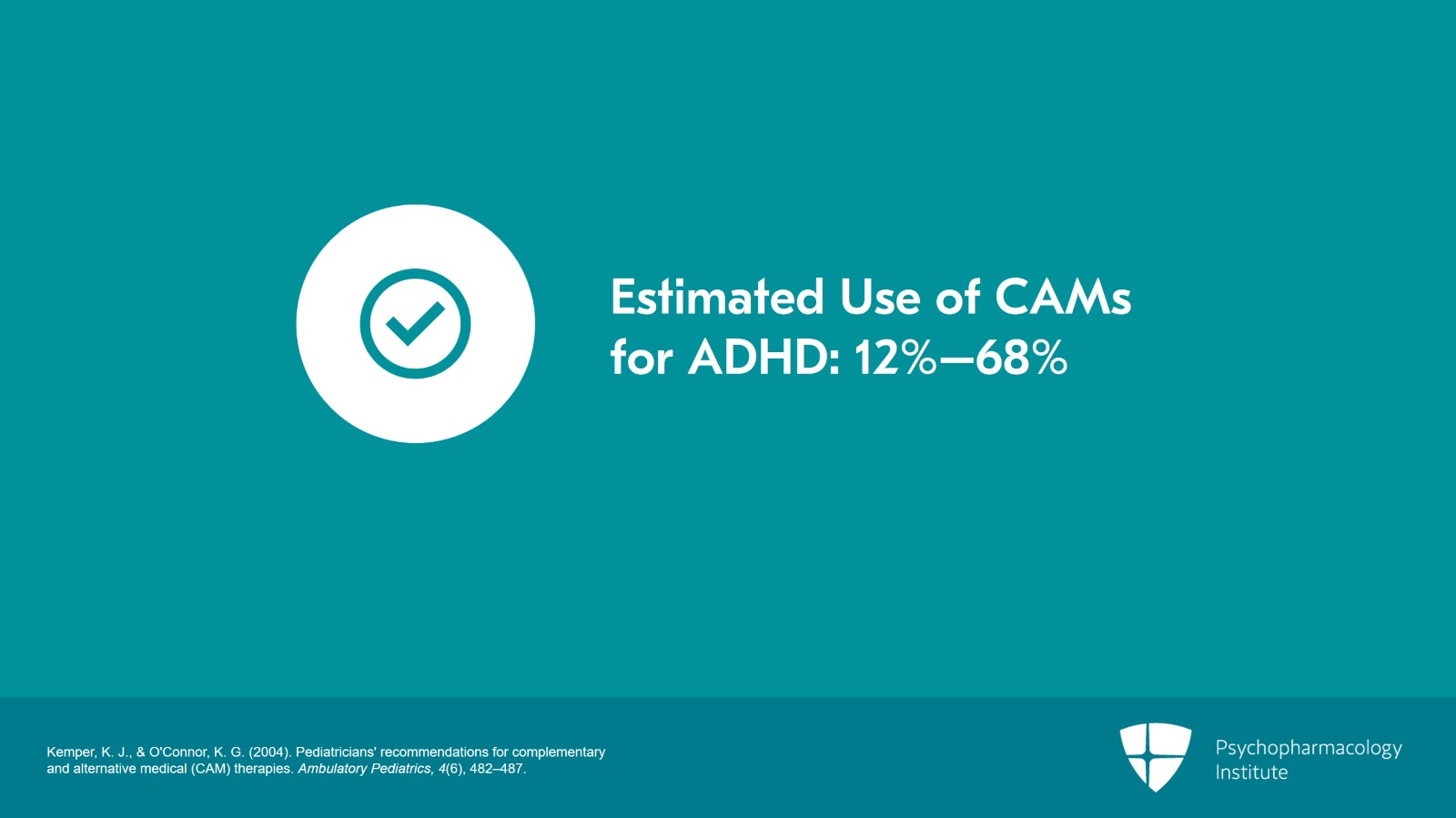
Now, some families prefer to use non-standard treatments. The estimated use of complementary and alternative therapies to treat ADHD symptoms by families is between 12% to 68% depending on the study.
References:
  • Kemper, K. J., & O'Connor, K. G. (2004). Pediatricians' recommendations for complementary and alternative medical (CAM) therapies. Ambulatory Pediatrics, 4(6), 482–487.
Free Files
Success!
Check your inbox, we sent you all the materials there.

Slide 5 of 11

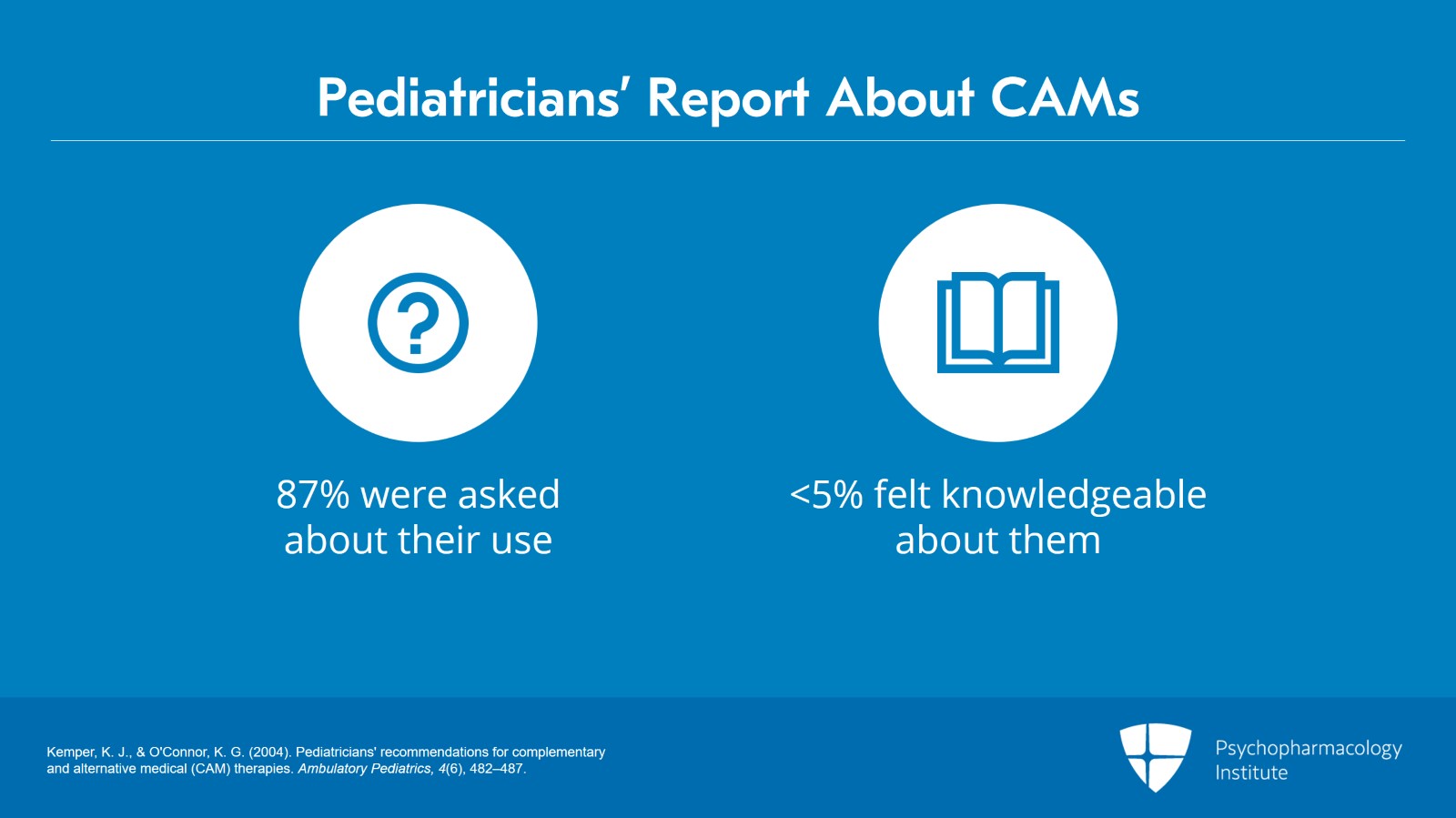
And when surveyed, about 87% of pediatricians reported they had been asked about complementary and alternative medicine by a patient or parent in the prior three months. However, fewer than 5% of pediatricians reported that they felt very knowledgeable about complementary and alternative therapies.
References:
  • Kemper, K. J., & O'Connor, K. G. (2004). Pediatricians' recommendations for complementary and alternative medical (CAM) therapies. Ambulatory Pediatrics, 4(6), 482–487.

Slide 6 of 11

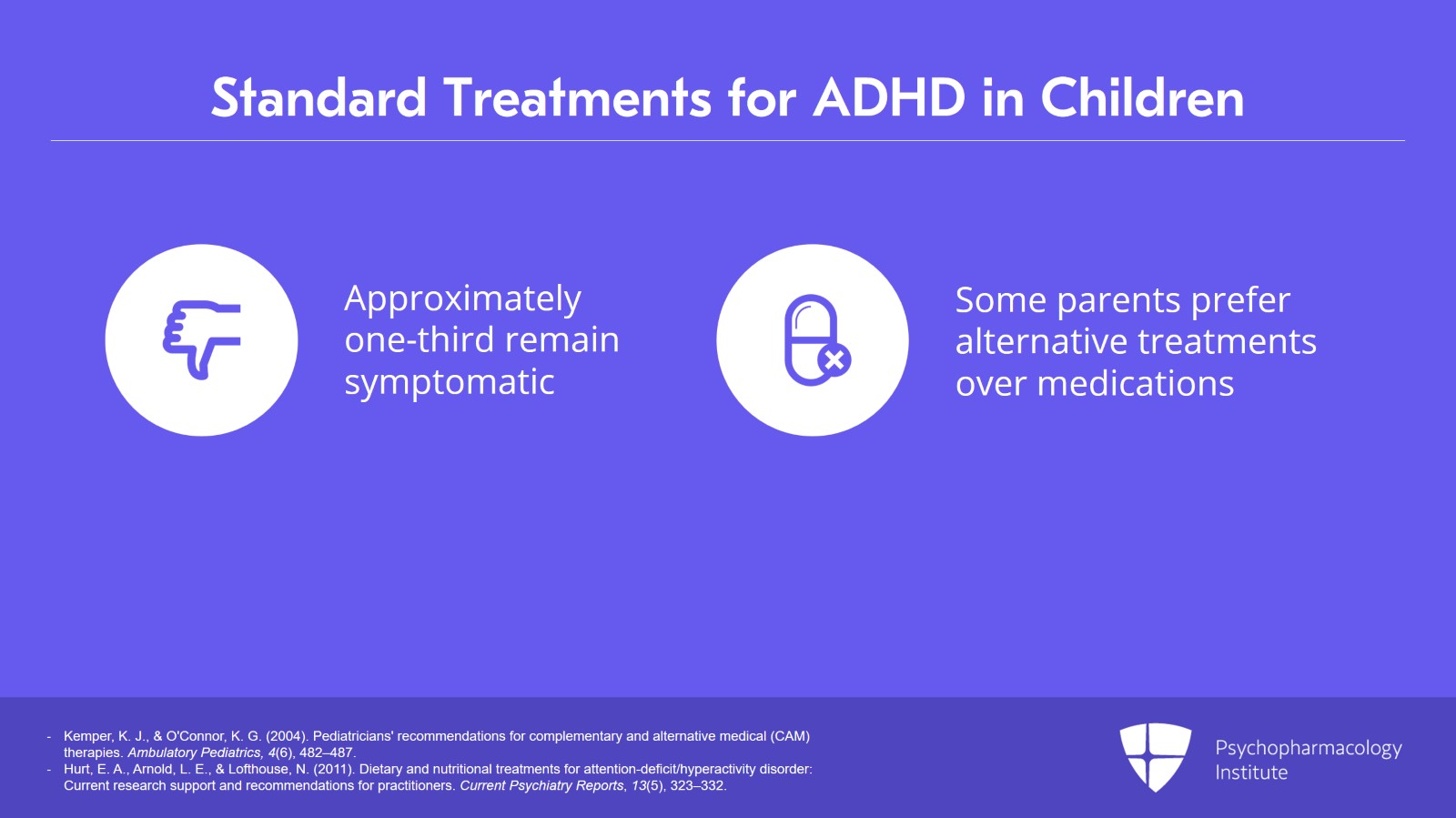
Although many children respond to the standard treatments of stimulants and behavioral therapy, approximately 1/3 are still symptomatic even after these treatments. The other concern that I’m sure you’ve seen is that there are some people who would rather not use medications at all. Additionally, parents often inquire and try alternative treatments for ADHD Many would invest a great deal of money in supplements and therapies without really any evidence for efficacy.
References:
  • Kemper, K. J., & O'Connor, K. G. (2004). Pediatricians' recommendations for complementary and alternative medical (CAM) therapies. Ambulatory Pediatrics, 4(6), 482–487.
  • Hurt, E. A., Arnold, L. E., & Lofthouse, N. (2011). Dietary and nutritional treatments for attention-deficit/hyperactivity disorder: Current research support and recommendations for practitioners. Current Psychiatry Reports, 13(5), 323–332.
Free Files
Success!
Check your inbox, we sent you all the materials there.

Slide 7 of 11

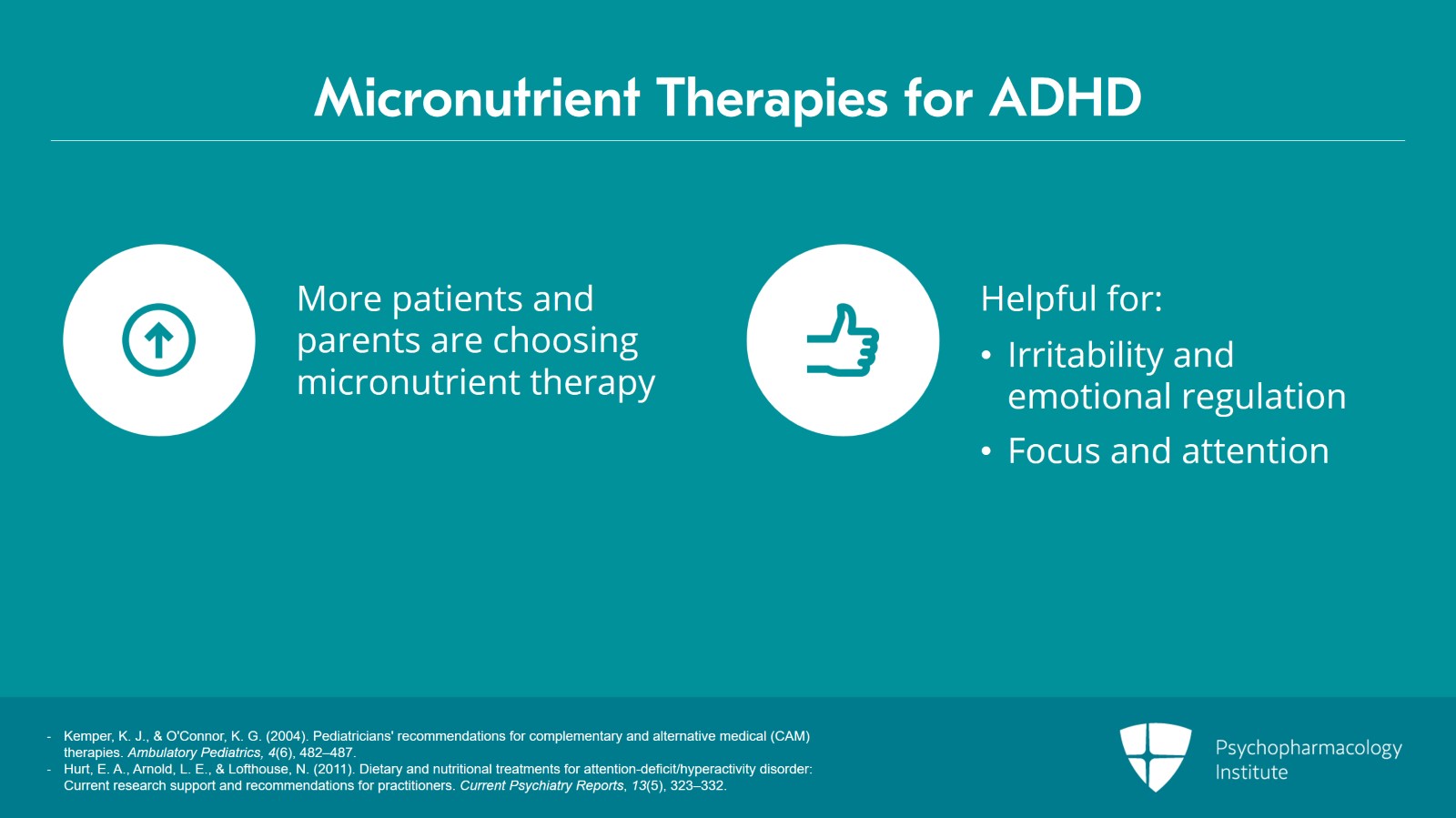
For this reason, I became really interested in trying to better serve these children and families. It has been with great interest that I’ve followed the literature on micronutrients over the past decade. And my practice, as the research base has become stronger; more patients and parents have elected to try micronutrient therapy as monotherapy or in combination with stimulants. I found in clinical practice that micronutrients are extremely helpful for managing symptoms of irritability and emotional regulation and help some with focus and attention.
References:
  • Kemper, K. J., & O'Connor, K. G. (2004). Pediatricians' recommendations for complementary and alternative medical (CAM) therapies. Ambulatory Pediatrics, 4(6), 482–487.
  • Hurt, E. A., Arnold, L. E., & Lofthouse, N. (2011). Dietary and nutritional treatments for attention-deficit/hyperactivity disorder: Current research support and recommendations for practitioners. Current Psychiatry Reports, 13(5), 323–332.

Slide 8 of 11

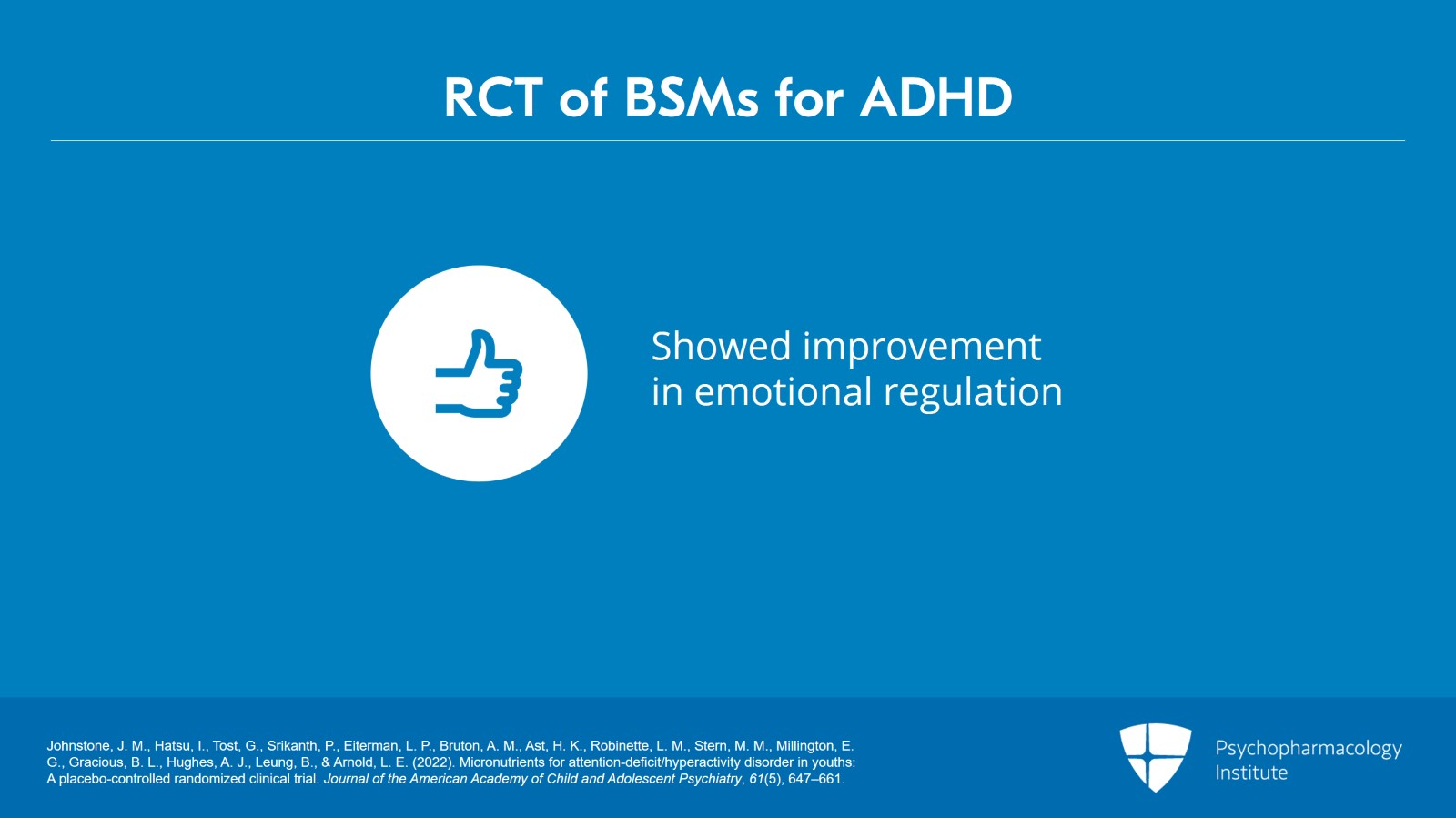
In May of 2022, the prestigious Journal of the American Academy of Child and Adolescent Psychiatry published the second randomized controlled trial of broad-spectrum micronutrients for the treatment of ADHD showing improvement in emotional regulation for those with ADHD. This combination of things has inspired this talk in which we’ll now cover the evidence for broad-spectrum micronutrients and in part two how to use them in clinical practice.
References:
  • Johnstone, J. M., Hatsu, I., Tost, G., Srikanth, P., Eiterman, L. P., Bruton, A. M., Ast, H. K., Robinette, L. M., Stern, M. M., Millington, E. G., Gracious, B. L., Hughes, A. J., Leung, B., & Arnold, L. E. (2022). Micronutrients for attention-deficit/hyperactivity disorder in youths: A placebo-controlled randomized clinical trial. Journal of the American Academy of Child and Adolescent Psychiatry, 61(5), 647–661.
Free Files
Success!
Check your inbox, we sent you all the materials there.

Slide 9 of 11

Key points. 9.4% of children in the U.S. have been diagnosed with ADHD. Although many children respond to the standard treatments of stimulants and behavioral therapy, approximately 1/3 are still symptomatic even after these treatments.

Slide 10 of 11

Parents often inquire and try alternative treatments for ADHD, many of which are costly and not evidence based. There is increasing evidence that supports the use of broad-spectrum micronutrients for the treatment of ADHD.
Free Files
Success!
Check your inbox, we sent you all the materials there.

Slide 11 of 11

Learning Objectives:

After completing this activity, the learner will be able to:

  1. Describe the connection between dietary patterns and mental health.
  2. Discuss the available evidence about using BSMs for mental health conditions.
  3. Recognize patients who can benefit from BSM supplementation.

Original Release Date: January 1, 2023

Review and Re-release Date: March 1, 2024

Expiration Date: January 1, 2026

Expert: Amelia Villagomez, M.D.

Medical Editor: Paz Badía, M.D.

Relevant Financial Disclosures: 

None of the faculty, planners, and reviewers for this educational activity have relevant financial relationships to disclose during the last 24 months with ineligible companies whose primary business is producing, marketing, selling, re-selling, or distributing healthcare products used by or on patients.

Contact Information: For questions regarding the content or access to this activity, contact us at support@psychopharmacologyinstitute.com

Instructions for Participation and Credit:

Participants must complete the activity online during the valid credit period that is noted above.

Follow these steps to earn CME credit:

  1. View the required educational content provided on this course page.

  2. Complete the Post Activity Evaluation for providing the necessary feedback for continuing accreditation purposes and for the development of future activities. NOTE: Completing the Post Activity Evaluation after the quiz is required to receive the earned credit.

  3. Download your certificate.

Accreditation Statement

This activity has been planned and implemented in accordance with the accreditation requirements and policies of the Accreditation Council for Continuing Medical Education through the joint providership of Medical Academy LLC and the Psychopharmacology Institute. Medical Academy is accredited by the ACCME to provide continuing medical education for physicians.

Credit Designation Statement

Medical Academy designates this enduring activity for a maximum of 0.75 AMA PRA Category 1 credit(s)™. Physicians should claim only the credit commensurate with the extent of their participation in the activity.


Free Files
Success!
Check your inbox, we sent you all the materials there.
Continue in the website
Instant access modal

Become a Bronze, Silver, Gold, Bronze extended, Silver extended or Gold extended Member.

2025–26 Psychopharmacology CME Program

Unlock up to 155 CME Credits, including 40 SA CME Credits.