Close Banner
Free Section  - Video Lectures

07. Administration of N-Acetylcysteine and S-Adenosylmethionine in Children and Adolescents

Published on October 1, 2022 Certification expiration date: October 1, 2028

David R. Rosenberg, M.D.

Chair of the Department of Psychiatry & Behavioral Neuroscience - Wayne State University School of Medicine

Key Points

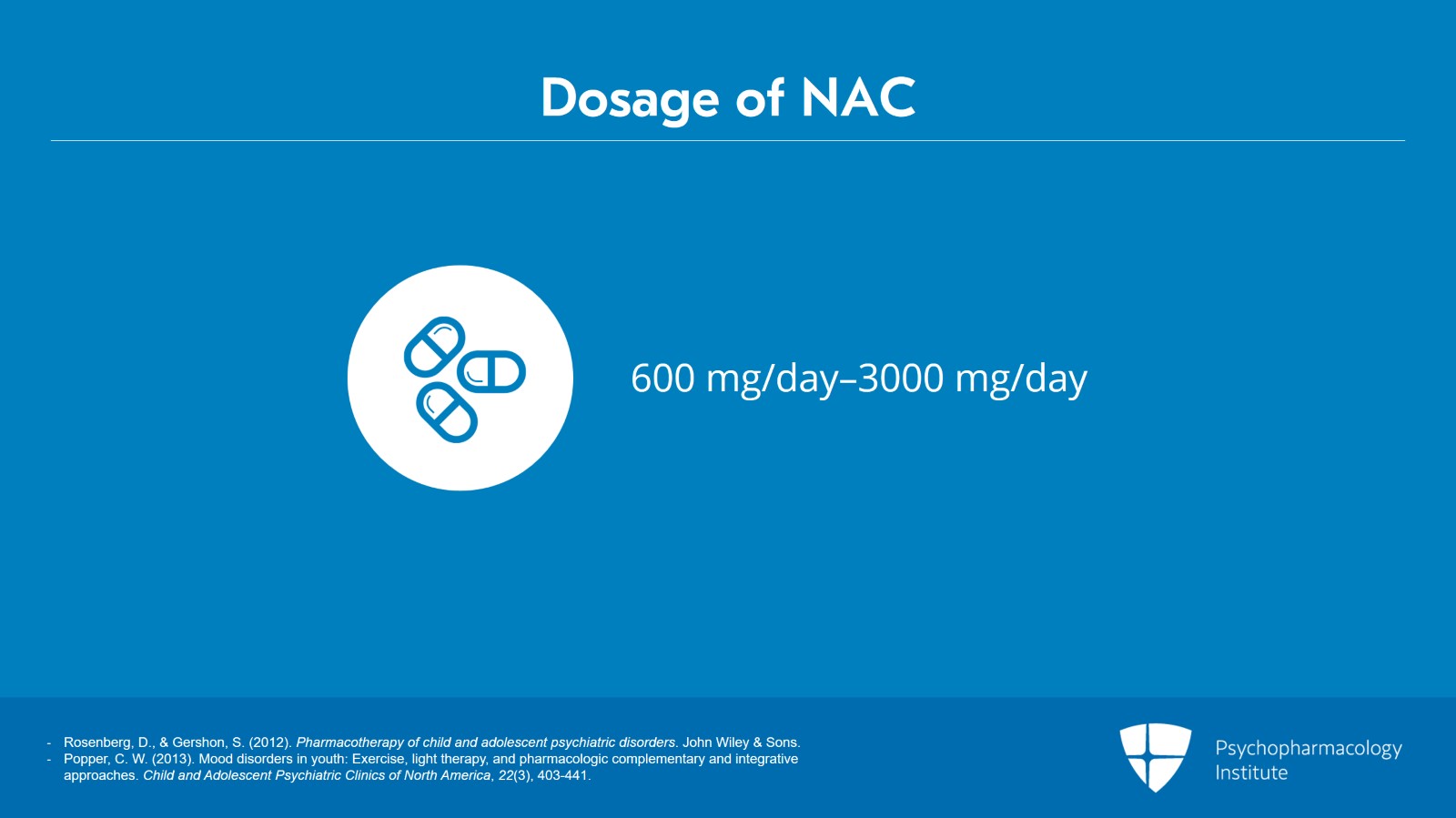
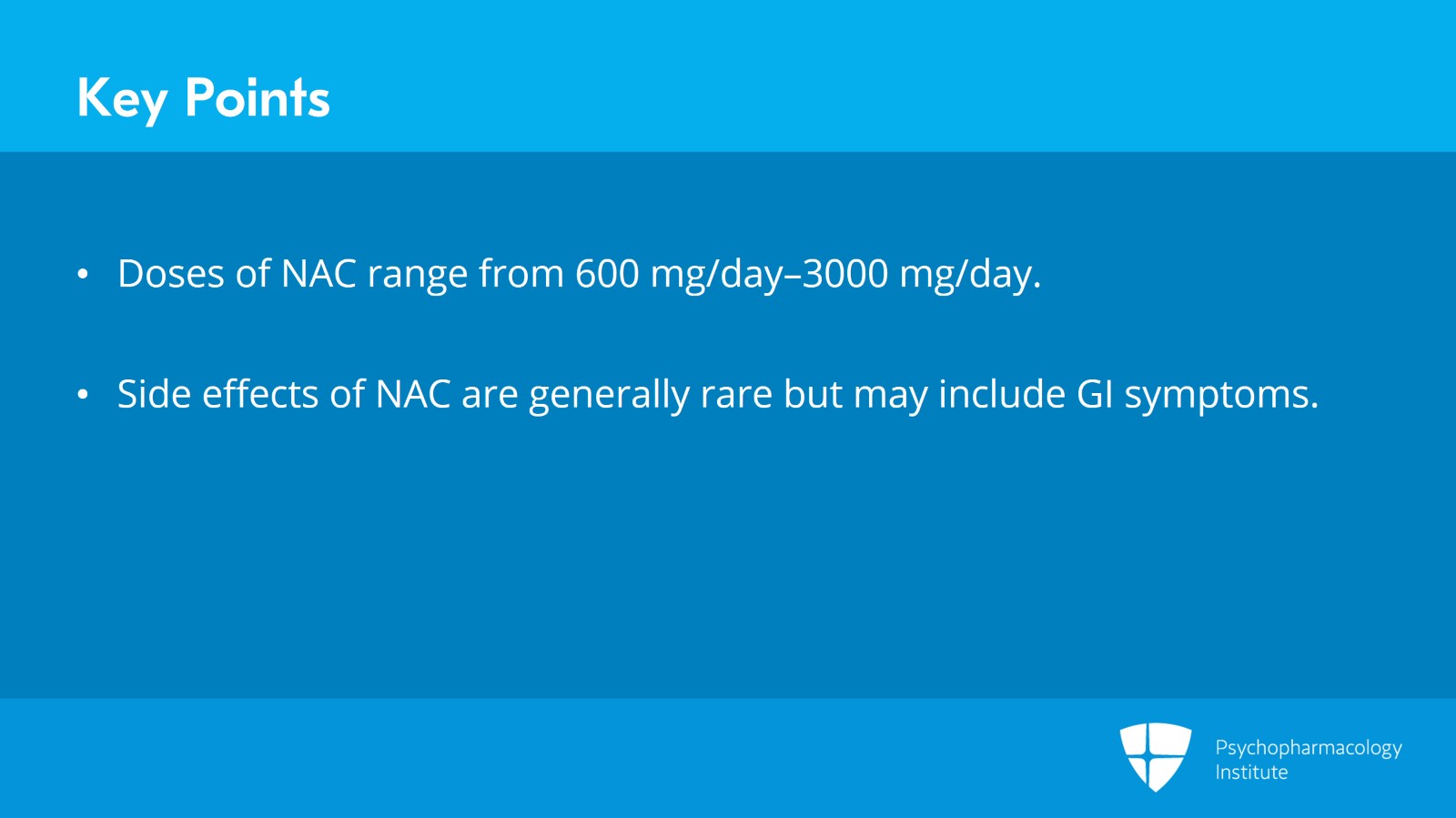
  • Doses of NAC range from 600 mg/day–3000 mg/day.
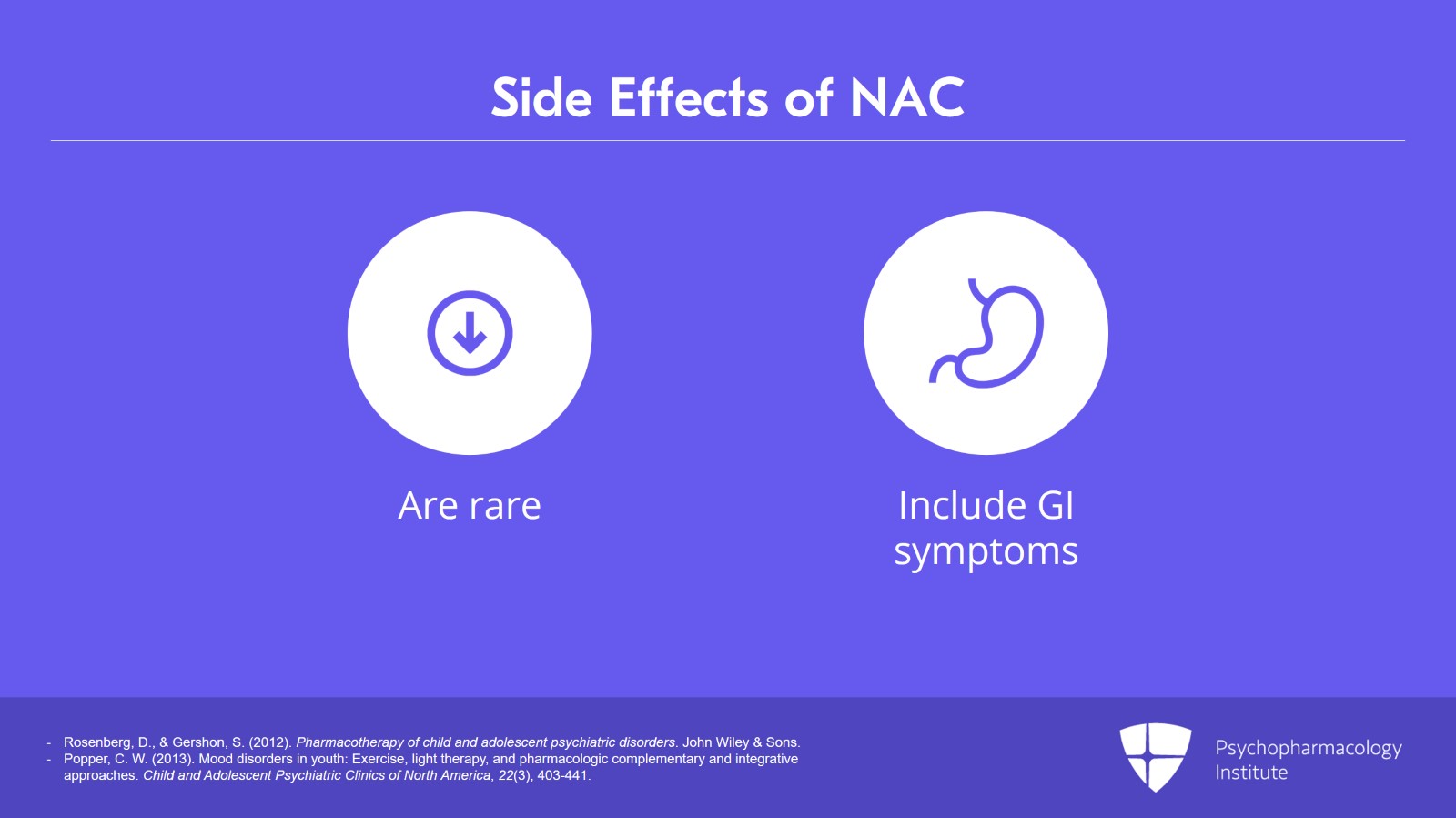
  • Side effects of NAC are generally rare but may include GI symptoms.
  • Side effects of SAMe are typically minimal.
  • Monitor for side effects associated with the psychostimulant and antidepressant properties of SAMe.

Free Downloads for Offline Access

  • Free Download Presentation File (PPTX)
  • Free Download Video (MP4)
  • Free Download Audio File (MP3)

Slides and Transcript

Slide 1 of 10

Let's turn to video seven, administration of NAC and SAMe in children and adolescents.

Slide 2 of 10

Dosage for NAC. There's no standardized dosing regimen that's been established for NAC but doses typically range between 600 mg to 3000 mg per day in current studies.
References:
  • Rosenberg, D., & Gershon, S. (2012). Pharmacotherapy of child and adolescent psychiatric disorders. John Wiley & Sons.
  • Popper, C. W. (2013). Mood disorders in youth: Exercise, light therapy, and pharmacologic complementary and integrative approaches. Child and Adolescent Psychiatric Clinics of North America, 22(3), 403-441.
Free Files
Success!
Check your inbox, we sent you all the materials there.

Slide 3 of 10

The side effects for NAC. Reported side effects of NAC are generally rare but can include GI symptoms such as nausea, vomiting, diarrhea, and constipation. Less common side effects include rashes, fatigue, nervousness, fever, headaches, sedation, and hypotension.
References:
  • Rosenberg, D., & Gershon, S. (2012). Pharmacotherapy of child and adolescent psychiatric disorders. John Wiley & Sons.
  • Popper, C. W. (2013). Mood disorders in youth: Exercise, light therapy, and pharmacologic complementary and integrative approaches. Child and Adolescent Psychiatric Clinics of North America, 22(3), 403-441.

Slide 4 of 10

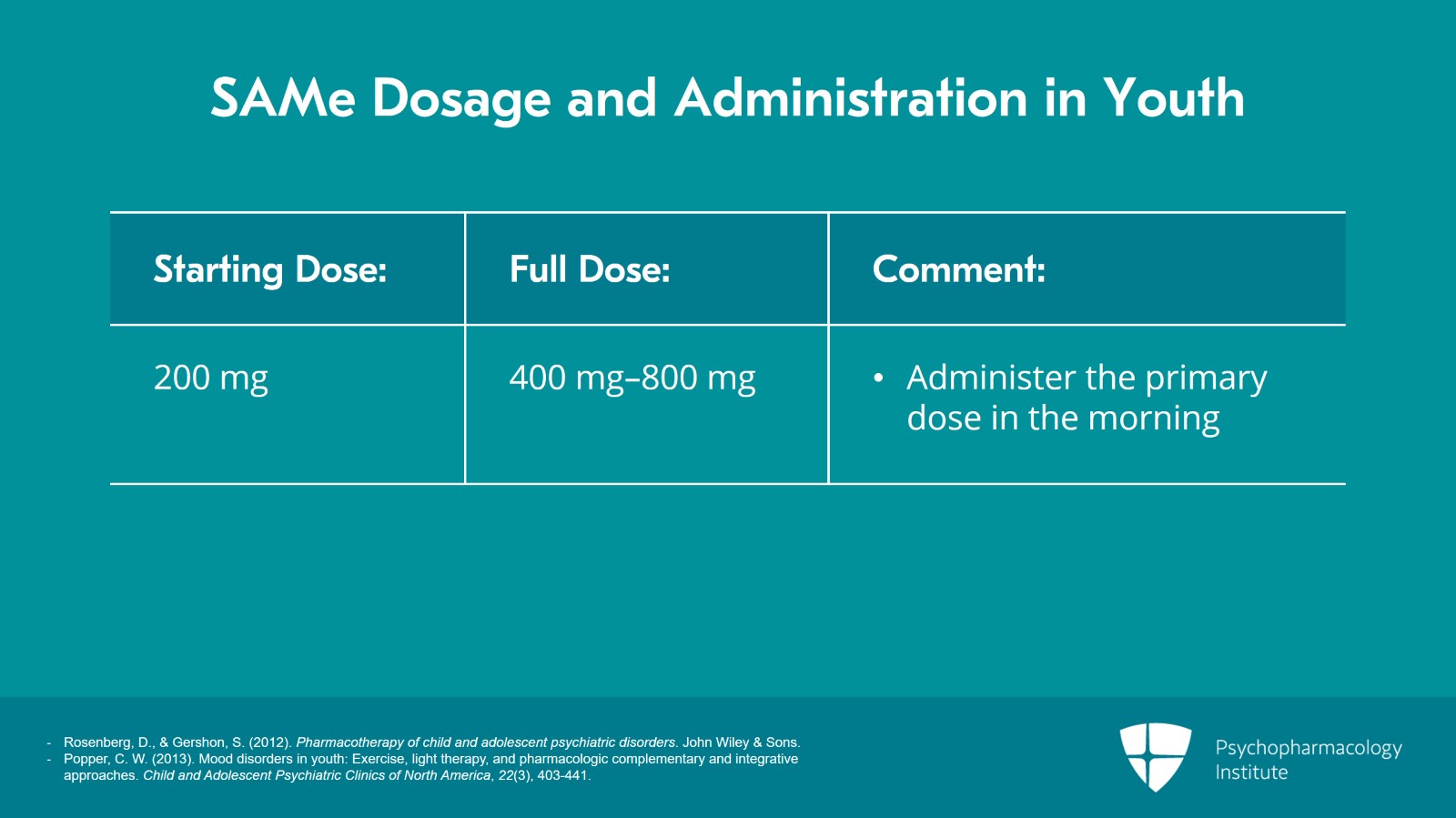
For SAMe dosage and administration, standard dosages for SAMe have not been established in youth. Evidence from current studies supports initiating treatment using a starting dose of 200 mg with additional 200 mg increases every five to 10 days. A typical full dose in children can range anywhere between 400 and 800 mg. This compares with 400 to 1600 mg in adults although higher doses can be used if tolerated. Maximal dose is often limited by an increase in anxiety. Similar to psychostimulants, the primary dose is administered in the morning but additional doses can be added during the day.
References:
  • Rosenberg, D., & Gershon, S. (2012). Pharmacotherapy of child and adolescent psychiatric disorders. John Wiley & Sons.
  • Popper, C. W. (2013). Mood disorders in youth: Exercise, light therapy, and pharmacologic complementary and integrative approaches. Child and Adolescent Psychiatric Clinics of North America, 22(3), 403-441.
Free Files
Success!
Check your inbox, we sent you all the materials there.

Slide 5 of 10

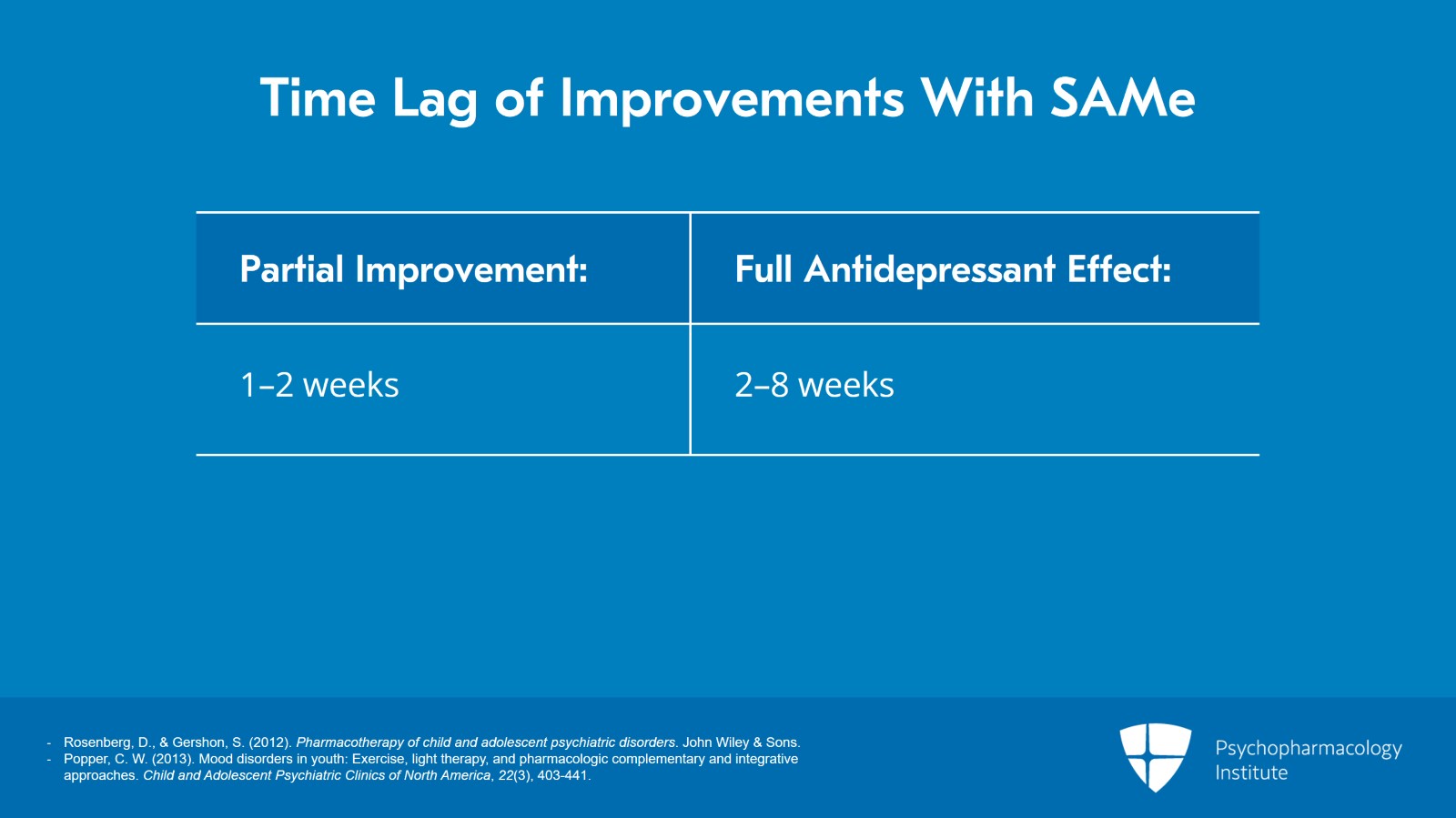
Some partial improvement may appear in one to two weeks, but the usual time lag is anywhere between two to eight weeks for the full antidepressant effect.
References:
  • Rosenberg, D., & Gershon, S. (2012). Pharmacotherapy of child and adolescent psychiatric disorders. John Wiley & Sons.
  • Popper, C. W. (2013). Mood disorders in youth: Exercise, light therapy, and pharmacologic complementary and integrative approaches. Child and Adolescent Psychiatric Clinics of North America, 22(3), 403-441.

Slide 6 of 10

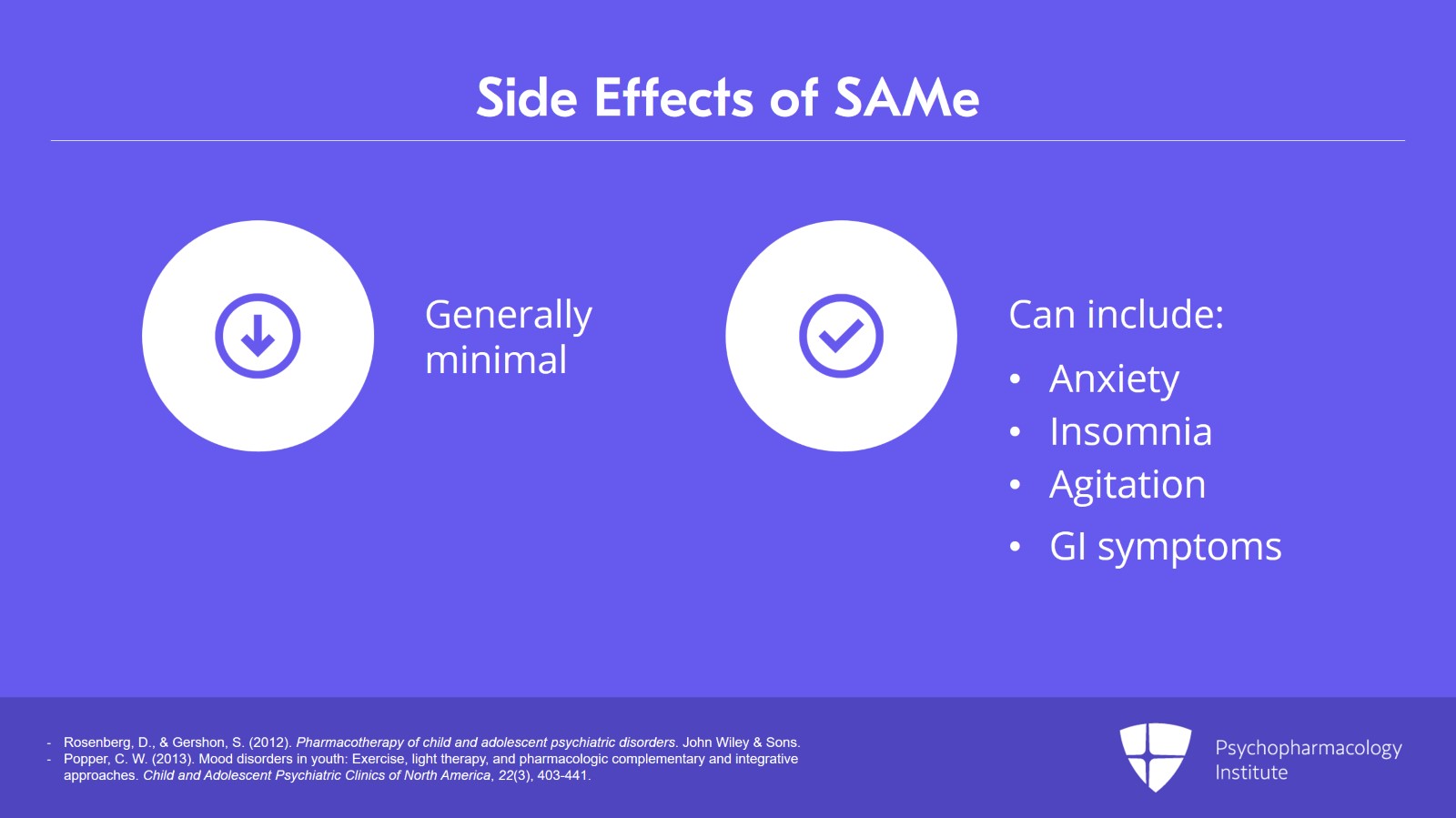
Side effects of S-adenosyl methionine. SAMe is a naturally occurring substance and thus reported side effects are generally minimal. Reported side effects of SAMe can include the following: Anxiety, insomnia, agitation, GI symptoms such as dyspepsia, anorexia, nausea or vomiting, diarrhea, constipation, and flatulence. Anxiety symptoms do appear to increase in many youths especially in those with previous anxiety symptoms.
References:
  • Rosenberg, D., & Gershon, S. (2012). Pharmacotherapy of child and adolescent psychiatric disorders. John Wiley & Sons.
  • Popper, C. W. (2013). Mood disorders in youth: Exercise, light therapy, and pharmacologic complementary and integrative approaches. Child and Adolescent Psychiatric Clinics of North America, 22(3), 403-441.
Free Files
Success!
Check your inbox, we sent you all the materials there.

Slide 7 of 10

SAMe does not appear to induce mania more readily than any other antidepressants. Nevertheless, routine monitoring precautions are advisable and clinicians need to monitor for side effects associated with the psychostimulant and tricyclic antidepressant properties of SAMe including mania and possible rare serotonin syndrome.
References:
  • Rosenberg, D., & Gershon, S. (2012). Pharmacotherapy of child and adolescent psychiatric disorders. John Wiley & Sons.
  • Popper, C. W. (2013). Mood disorders in youth: Exercise, light therapy, and pharmacologic complementary and integrative approaches. Child and Adolescent Psychiatric Clinics of North America, 22(3), 403-441.

Slide 8 of 10

Key take-home points here are no standard dosing regimen has been established for NAC or SAMe. Doses of NAC have generally ranged anywhere between 600 to up to 3000 mg per day in current studies. Reported side effects of NAC are generally rare but may include GI symptoms such as nausea, vomiting, diarrhea, and constipation. 
Free Files
Success!
Check your inbox, we sent you all the materials there.

Slide 9 of 10

SAMe is a naturally occurring substance and thus reported side effects are also typically minimal.  However, clinicians need to monitor for side effects associated with the psychostimulant and tricyclic antidepressant properties of SAMe.

Slide 10 of 10

Free Files
Success!
Check your inbox, we sent you all the materials there.

Learning Objectives:

After completing this activity, the learner will be able to:

  1. Discuss the available evidence of the use of CAMs in children and adolescents.
  2. Recognize potential indications of CAMs in pediatric patients with mental health conditions.
  3. Identify pediatric patients who can benefit from CAMs and utilize them accordingly.

Original Release Date: October 1, 2022

Review and Re-release Date: October 1, 2025

Expiration Date: October 1, 2028

Expert: David Rosenberg, M.D.

Medical Editor: Paz Badía, M.D.

Relevant Financial Disclosures: 

None of the faculty, planners, and reviewers for this educational activity have relevant financial relationships to disclose during the last 24 months with ineligible companies whose primary business is producing, marketing, selling, re-selling, or distributing healthcare products used by or on patients.

Contact Information: For questions regarding the content or access to this activity, contact us at support@psychopharmacologyinstitute.com

Instructions for Participation and Credit:

Participants must complete the activity online during the valid credit period that is noted above.

Follow these steps to earn CME credit:

  1. View the required educational content provided on this course page.
  2. Complete the Post Activity Evaluation for providing the necessary feedback for continuing accreditation purposes and for the development of future activities. NOTE: Completing the Post Activity Evaluation after the quiz is required to receive the earned credit.
  3. Download your certificate.

Accreditation Statement

This activity has been planned and implemented in accordance with the accreditation requirements and policies of the Accreditation Council for Continuing Medical Education through the joint providership of Medical Academy LLC and the Psychopharmacology Institute. Medical Academy is accredited by the ACCME to provide continuing medical education for physicians.

Credit Designation Statement

Medical Academy designates this enduring activity for a maximum of 1.25 AMA PRA Category 1 credit(s)™. Physicians should claim only the credit commensurate with the extent of their participation in the activity.


Free Files
Success!
Check your inbox, we sent you all the materials there.
Continue in the website
Instant access modal

Become a Bronze, Silver, Gold, Bronze extended, Silver extended or Gold extended Member.

2025–26 Psychopharmacology CME Program

Unlock up to 155 CME Credits, including 40 SA CME Credits.