Close Banner
Free Section  - Video Lectures

08. Additional Clinical Tips for Treating Schizophrenia In Children and Adolescents

Published on May 1, 2022 Expired on May 1, 2025

David R. Rosenberg, M.D.

Chair of the Department of Psychiatry & Behavioral Neuroscience - Wayne State University School of Medicine

Key Points

  • Selection of antipsychotics is based on FDA approval, side effects, patient and family preferences, clinician familiarity, and cost.
  • When starting treatment with antipsychotics, patients should be started on the lowest possible dose.
  • The dose should be gradually increased to the minimal therapeutic dose.
  • A trial of an antipsychotic should be at the maximum tolerable doses for at least 6–8 weeks.
  • If the patient is compliant and there is no adequate therapeutic response, consider a different antipsychotic.
  • Treatment with clozapine is indicated after 2 or more failed trials.

Free Downloads for Offline Access

  • Free Download Audio File (MP3)
  • Free Download Video (MP4)
  • Free Download Presentation File (PPTX)

Slides and Transcript
Slide 1 of 14

Turning to video 8, additional clinical tips for treating schizophrenia in children and adolescents.

Slide 2 of 14

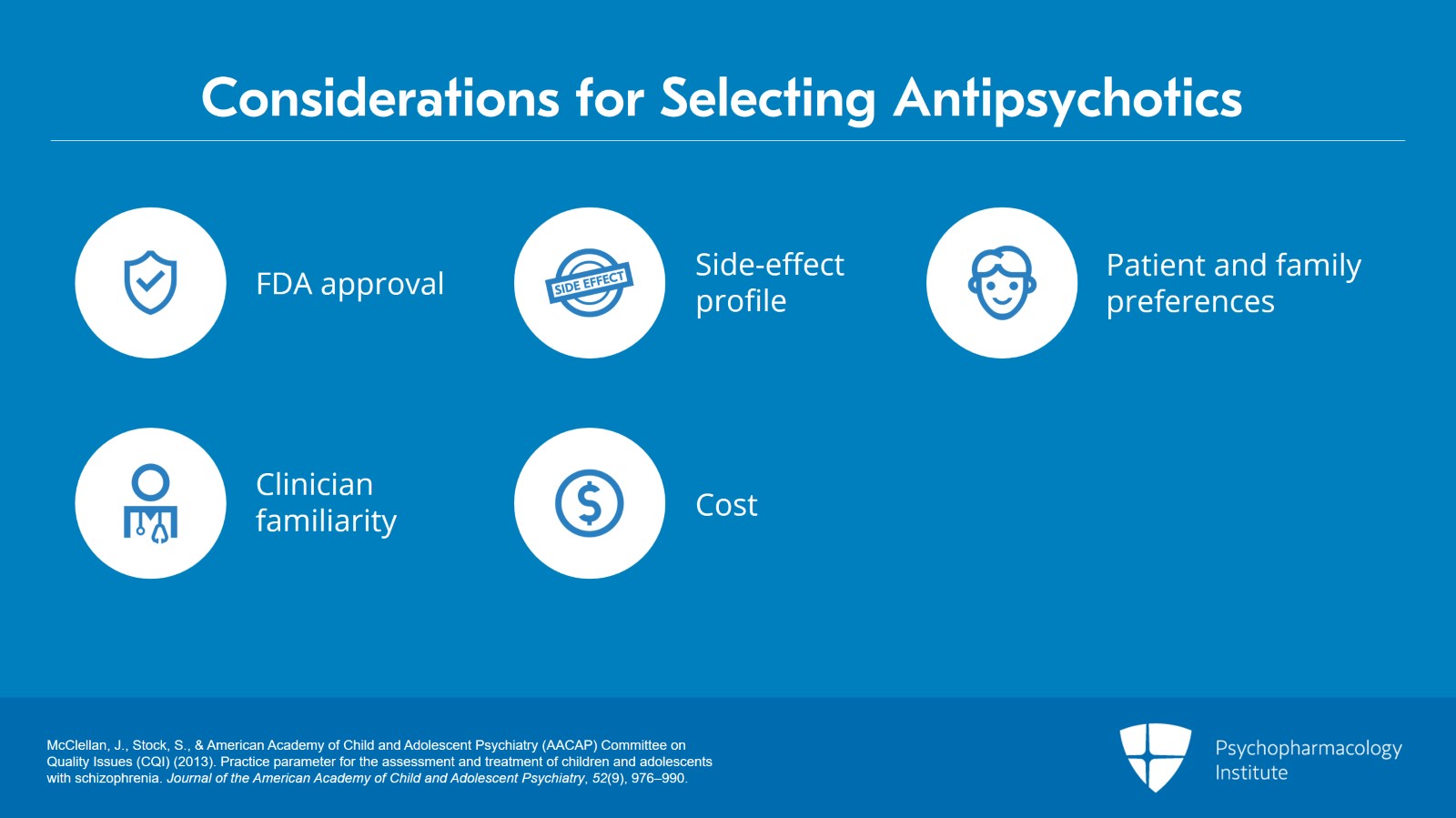
Selection of antipsychotic agents for initial treatment is typically based on FDA-approval status, side-effect profile, patient and family preferences, clinician familiarity, and cost.
References:
  • McClellan, J., Stock, S., & American Academy of Child and Adolescent Psychiatry (AACAP) Committee on Quality Issues (CQI) (2013). Practice parameter for the assessment and treatment of children and adolescents with schizophrenia. Journal of the American Academy of Child and Adolescent Psychiatry, 52(9), 976–990.
Free Files
Success!
Check your inbox, we sent you all the materials there.
Slide 3 of 14

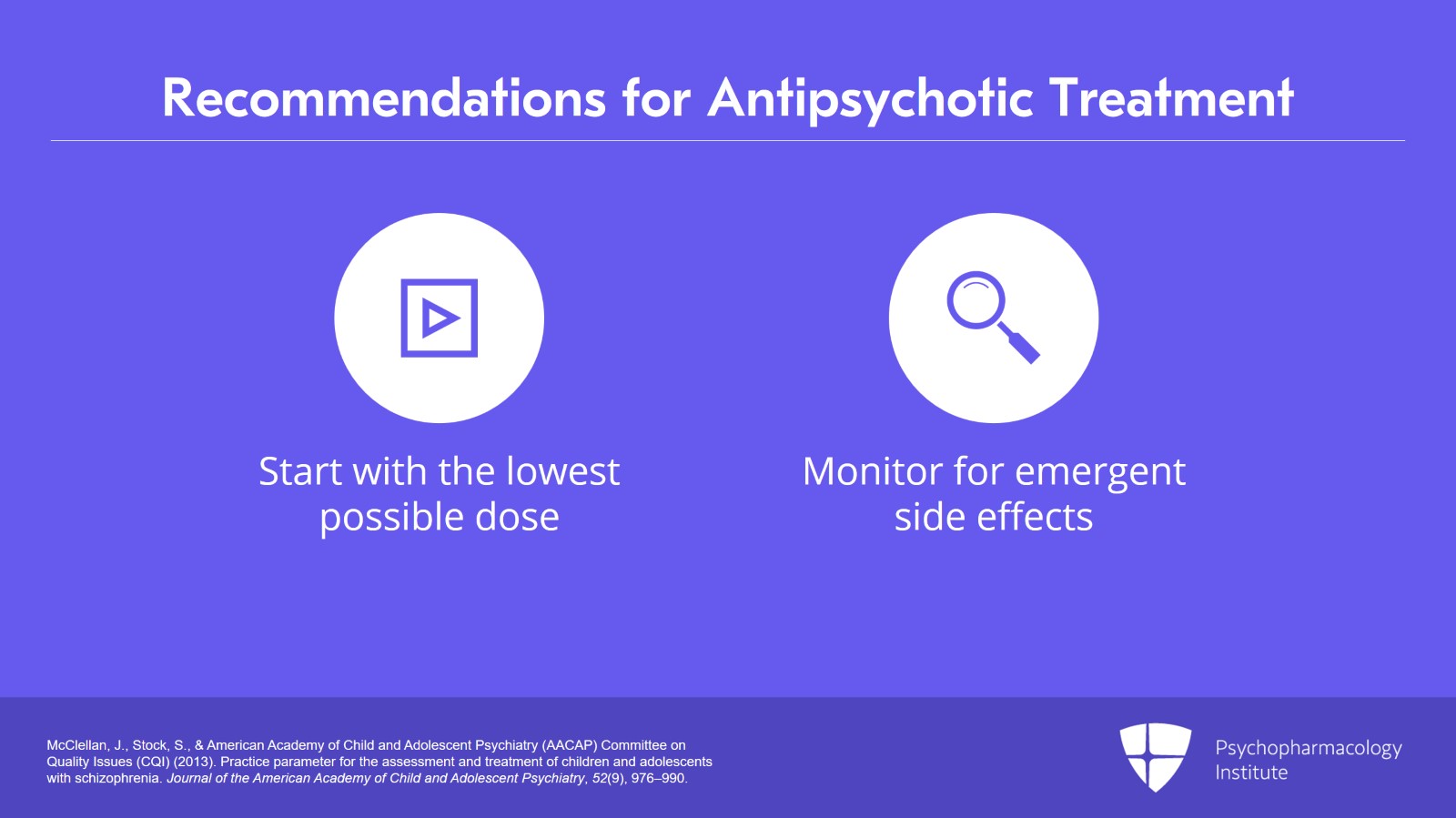
In general, when starting treatment with antipsychotic medication, patients should be started on the lowest possible dose and be closely monitored for emergent side effects.
References:
  • McClellan, J., Stock, S., & American Academy of Child and Adolescent Psychiatry (AACAP) Committee on Quality Issues (CQI) (2013). Practice parameter for the assessment and treatment of children and adolescents with schizophrenia. Journal of the American Academy of Child and Adolescent Psychiatry, 52(9), 976–990.

Slide 4 of 14

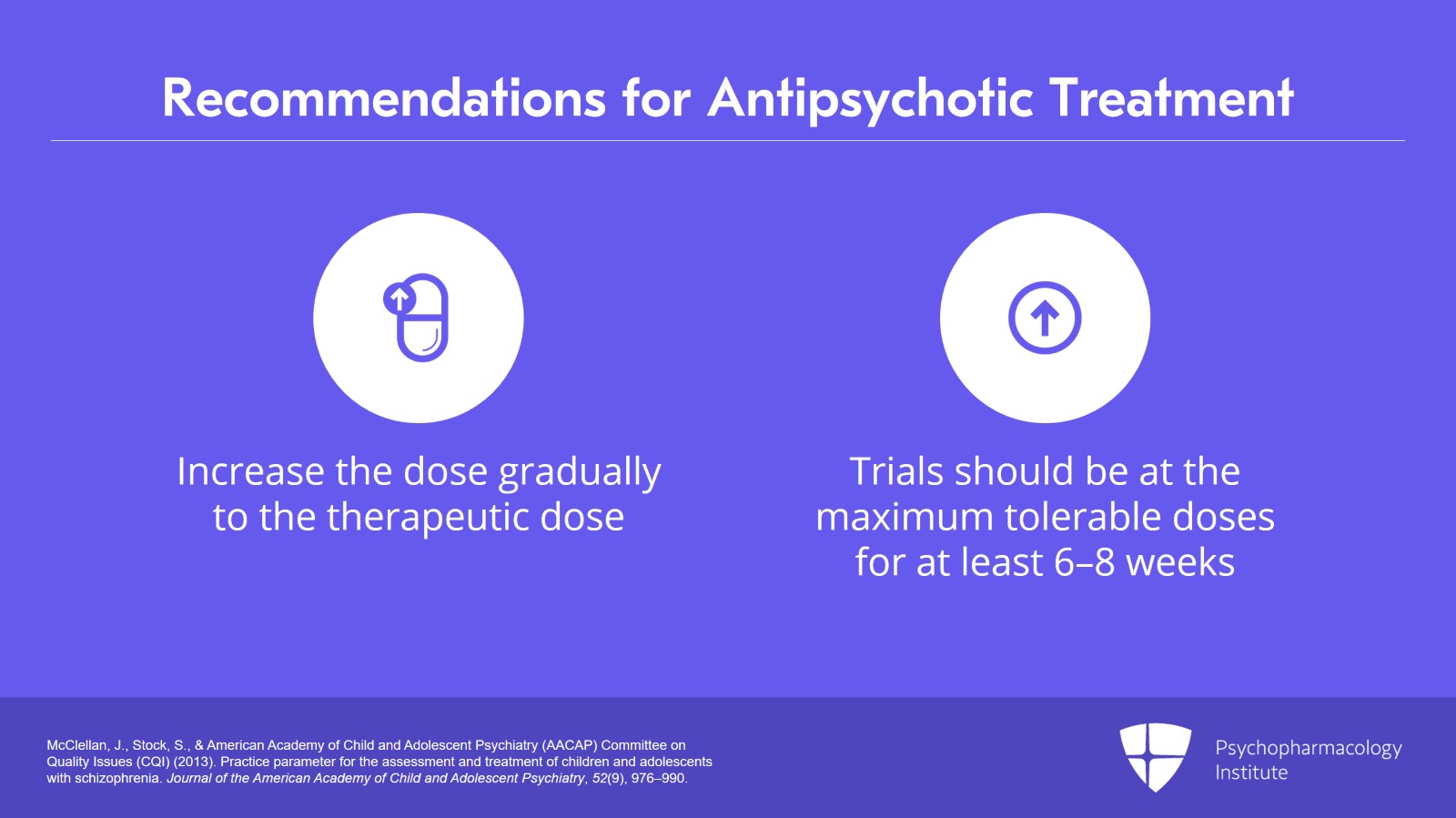
Dosage needs to be gradually increased to the effective therapeutic dose that's the lowest that takes care of the symptoms without side effects. Please, please start low and go slow.    Trials of antipsychotic medication should be used at maximum tolerable therapeutic doses for at least six to eight weeks.
References:
  • McClellan, J., Stock, S., & American Academy of Child and Adolescent Psychiatry (AACAP) Committee on Quality Issues (CQI) (2013). Practice parameter for the assessment and treatment of children and adolescents with schizophrenia. Journal of the American Academy of Child and Adolescent Psychiatry, 52(9), 976–990.
Free Files
Success!
Check your inbox, we sent you all the materials there.
Slide 5 of 14

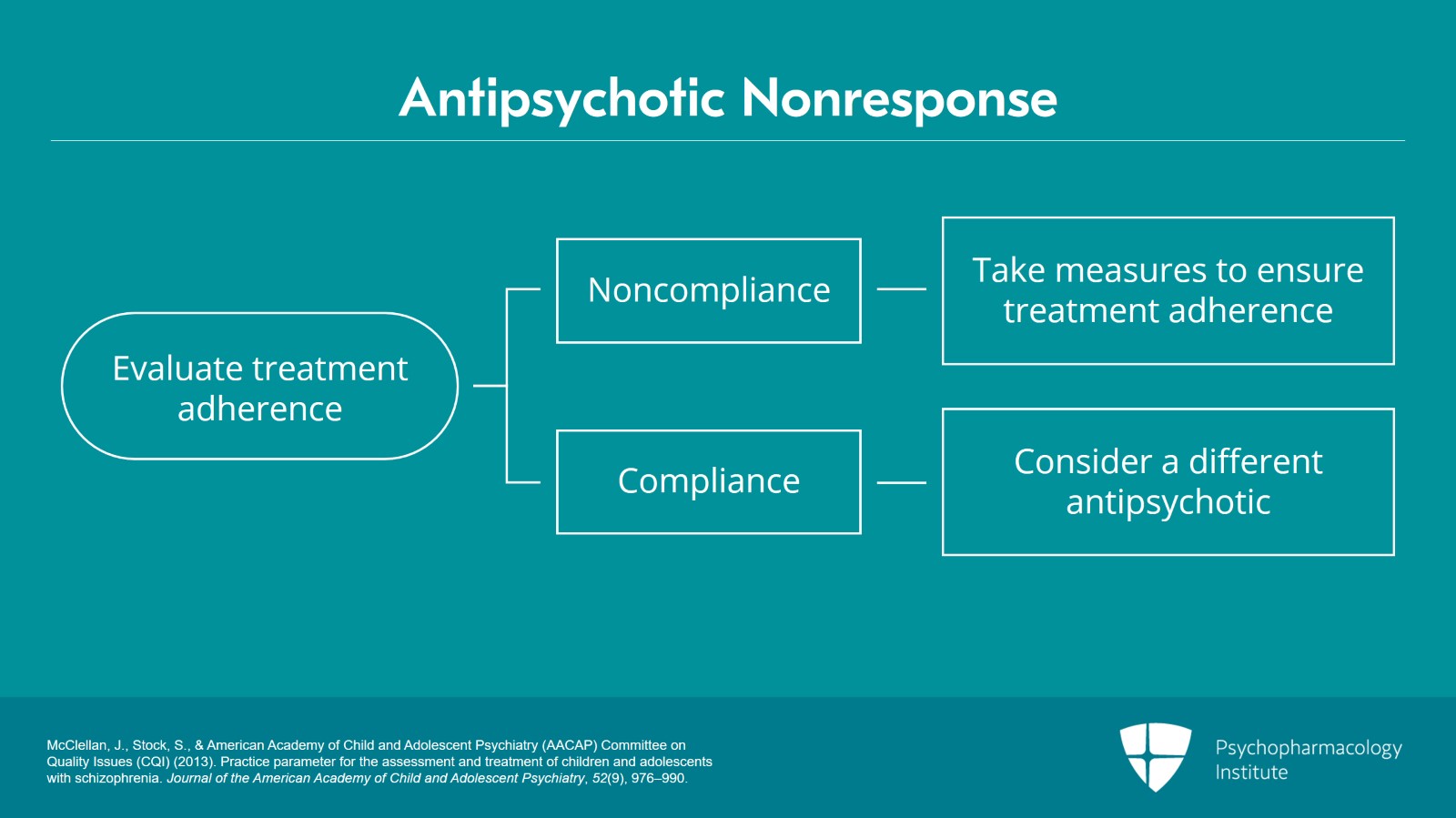
If a patient fails to respond to a particular antipsychotic medication, you need to evaluate treatment adherence, compliance with the medication before you change the medication. And if noncompliance, nonadherence is the cause of nonresponse or contributing to the nonresponse, then appropriate measures must be taken to ensure there is treatment adherence with the medication. If the patient is compliant and there is still no adequate therapeutic response, a different antipsychotic should be considered.
References:
  • McClellan, J., Stock, S., & American Academy of Child and Adolescent Psychiatry (AACAP) Committee on Quality Issues (CQI) (2013). Practice parameter for the assessment and treatment of children and adolescents with schizophrenia. Journal of the American Academy of Child and Adolescent Psychiatry, 52(9), 976–990.

Slide 6 of 14

Treatment with clozapine is indicated after two or more failed trials of first-line antipsychotics. Trials with clozapine should be used at the maximal tolerable dose for at least three to six months.
References:
  • McClellan, J., Stock, S., & American Academy of Child and Adolescent Psychiatry (AACAP) Committee on Quality Issues (CQI) (2013). Practice parameter for the assessment and treatment of children and adolescents with schizophrenia. Journal of the American Academy of Child and Adolescent Psychiatry, 52(9), 976–990.
Free Files
Success!
Check your inbox, we sent you all the materials there.
Slide 7 of 14

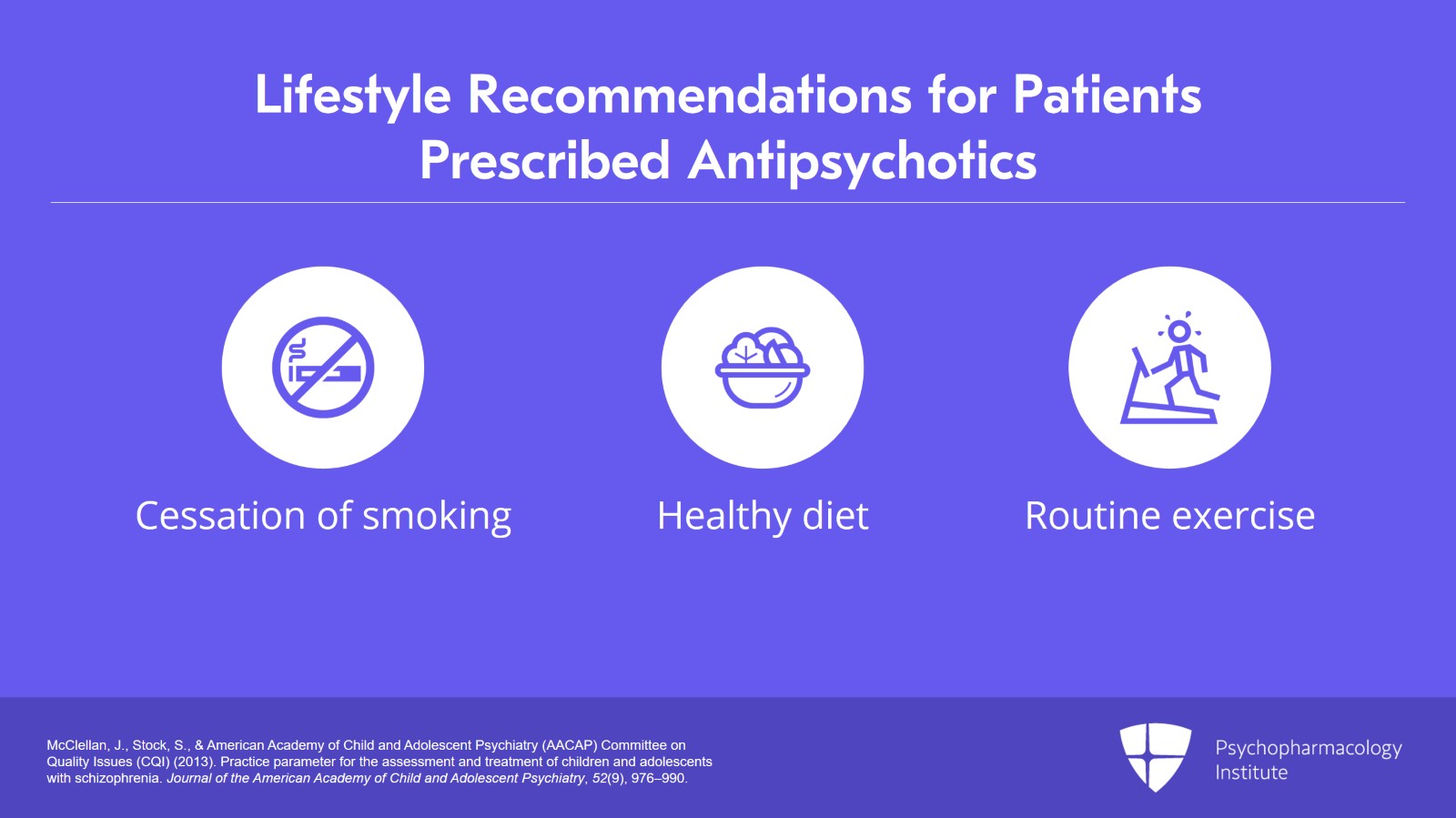
All patients prescribed antipsychotic agents should be advised of the importance of a healthy lifestyle including cessation of smoking, healthy diet, and routine exercise.
References:
  • McClellan, J., Stock, S., & American Academy of Child and Adolescent Psychiatry (AACAP) Committee on Quality Issues (CQI) (2013). Practice parameter for the assessment and treatment of children and adolescents with schizophrenia. Journal of the American Academy of Child and Adolescent Psychiatry, 52(9), 976–990.

Slide 8 of 14

If significant weight gain or evidence of metabolic syndrome, obesity, hypertension, dyslipidemia and insulin resistance, consider switching to a different antipsychotic with lower metabolic risk or adding an agent that targets metabolic problems such as metformin. The onset of any clinically significant abnormalities such as hypercholesterolemia should be targeted for specific treatment and may require referral for specialty care.
References:
  • McClellan, J., Stock, S., & American Academy of Child and Adolescent Psychiatry (AACAP) Committee on Quality Issues (CQI) (2013). Practice parameter for the assessment and treatment of children and adolescents with schizophrenia. Journal of the American Academy of Child and Adolescent Psychiatry, 52(9), 976–990.
Free Files
Success!
Check your inbox, we sent you all the materials there.
Slide 9 of 14

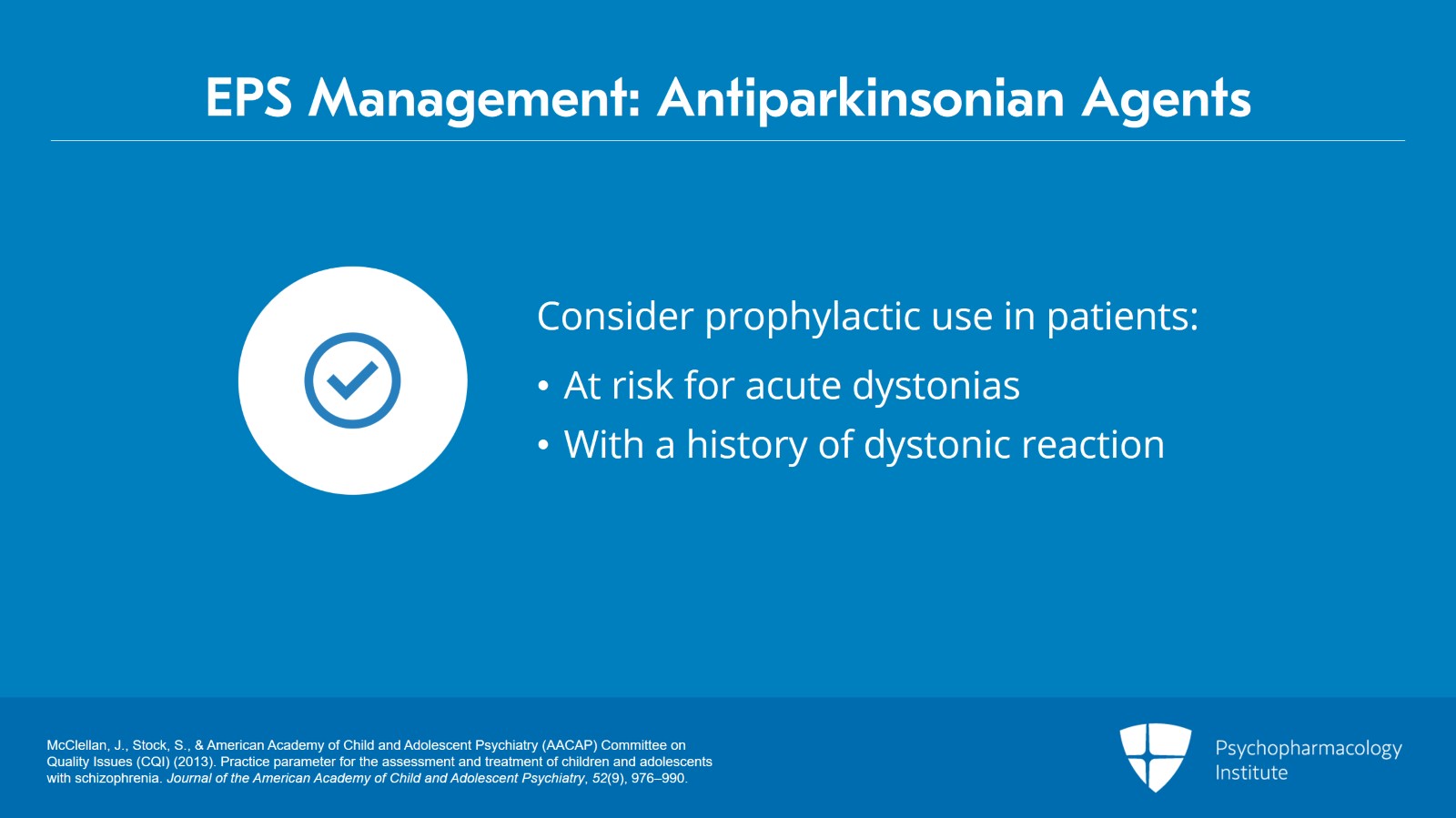
Extrapyramidal side effects may occur with traditional or atypical agents. Use of prophylactic antiparkinsonian agents may be considered to avoid acute extrapyramidal side effects especially in those at risk for acute dystonias or with a history of dystonic reaction.
References:
  • McClellan, J., Stock, S., & American Academy of Child and Adolescent Psychiatry (AACAP) Committee on Quality Issues (CQI) (2013). Practice parameter for the assessment and treatment of children and adolescents with schizophrenia. Journal of the American Academy of Child and Adolescent Psychiatry, 52(9), 976–990.

Slide 10 of 14

The need for antiparkinsonian agent should be reevaluated after the acute phase of treatment or if doses are lowered because many patients do not need them during long-term therapy.
References:
  • McClellan, J., Stock, S., & American Academy of Child and Adolescent Psychiatry (AACAP) Committee on Quality Issues (CQI) (2013). Practice parameter for the assessment and treatment of children and adolescents with schizophrenia. Journal of the American Academy of Child and Adolescent Psychiatry, 52(9), 976–990.
Free Files
Success!
Check your inbox, we sent you all the materials there.
Slide 11 of 14

Key take-home points. The selection of which antipsychotic agents to use for initial treatment is typically based on FDA approval status, side effect profile, patient and family preferences, clinician familiarity and cost.  In general, when starting treatment with an antipsychotic, patients should be started on the lowest possible dose.

Slide 12 of 14

The dosage should be gradually increased to the minimal effective therapeutic dose.  A trial of an antipsychotic medication should be used at the maximum tolerable therapeutic doses for at least six to eight weeks.
Free Files
Success!
Check your inbox, we sent you all the materials there.
Slide 13 of 14

If the patient is compliant and there is still no adequate therapeutic response, a different antipsychotic should be considered. Treatment with clozapine is indicated after two or more failed trials of first-line antipsychotics. 

Slide 14 of 14

Free Files
Success!
Check your inbox, we sent you all the materials there.
Learning Objectives:

After completing this activity, the learner will be able to:

  1. Recognize and assess unique features of childhood- and early-onset schizophrenia.
  2. Perform a throughout evaluation of psychotic symptoms in children and adolescents.
  3. Identify the recommended treatments for youth with schizophrenia and prescribe them accordingly.

Original Release Date: May 1, 2022

Review and Re-release Date: March 1, 2024

Expiration Date: May 1, 2025

Expert: David Rosenberg, M.D.

Medical Editor: Paz Badía, M.D.

Relevant Financial Disclosures: 

None of the faculty, planners, and reviewers for this educational activity have relevant financial relationships to disclose during the last 24 months with ineligible companies whose primary business is producing, marketing, selling, re-selling, or distributing healthcare products used by or on patients.

Contact Information: For questions regarding the content or access to this activity, contact us at support@psychopharmacologyinstitute.com

Instructions for Participation and Credit:

Participants must complete the activity online during the valid credit period that is noted above.

Follow these steps to earn CME credit:

  1. View the required educational content provided on this course page.

  2. Complete the Post Activity Evaluation for providing the necessary feedback for continuing accreditation purposes and for the development of future activities. NOTE: Completing the Post Activity Evaluation after the quiz is required to receive the earned credit.

  3. Download your certificate.

Accreditation Statement

This activity has been planned and implemented in accordance with the accreditation requirements and policies of the Accreditation Council for Continuing Medical Education through the joint providership of Medical Academy LLC and the Psychopharmacology Institute. Medical Academy is accredited by the ACCME to provide continuing medical education for physicians.

Credit Designation Statement

Medical Academy designates this enduring activity for a maximum of 1.50  AMA PRA Category 1 credit(s)™. Physicians should claim only the credit commensurate with the extent of their participation in the activity.

Free Files
Success!
Check your inbox, we sent you all the materials there.
Continue in the website
Instant access modal

Become a Bronze, Silver, Gold, Bronze extended, Silver extended or Gold extended Member.

2025–26 Psychopharmacology CME Program

Unlock up to 155 CME Credits, including 40 SA CME Credits.