Close Banner
Section Free  - Video Lectures

08. A Clinical Case and Exclusive Videos On RBD and RLS

Published on December 1, 2022 Certification expiration date: December 1, 2028

Carlos H. Schenck, M.D.

Professor & Senior Staff Psychiatrist at the Hennepin County Medical Center (HCMC) - University of Minnesota

Key Points

  • RBD behaviors are often aggressive and violent.
  • RBD involves dream-enacting behaviors with a full range of behaviors.
  • Loss of REM atonia and polysomnography are required for diagnosing RBD.

Free Downloads for Offline Access

  • Free Download Presentation File (PPTX)
  • Free Download Video (MP4)
  • Free Download Audio File (MP3)

Slides and Transcript

Slide 1 of 13

I do want to share the story of our index case.

Slide 2 of 13

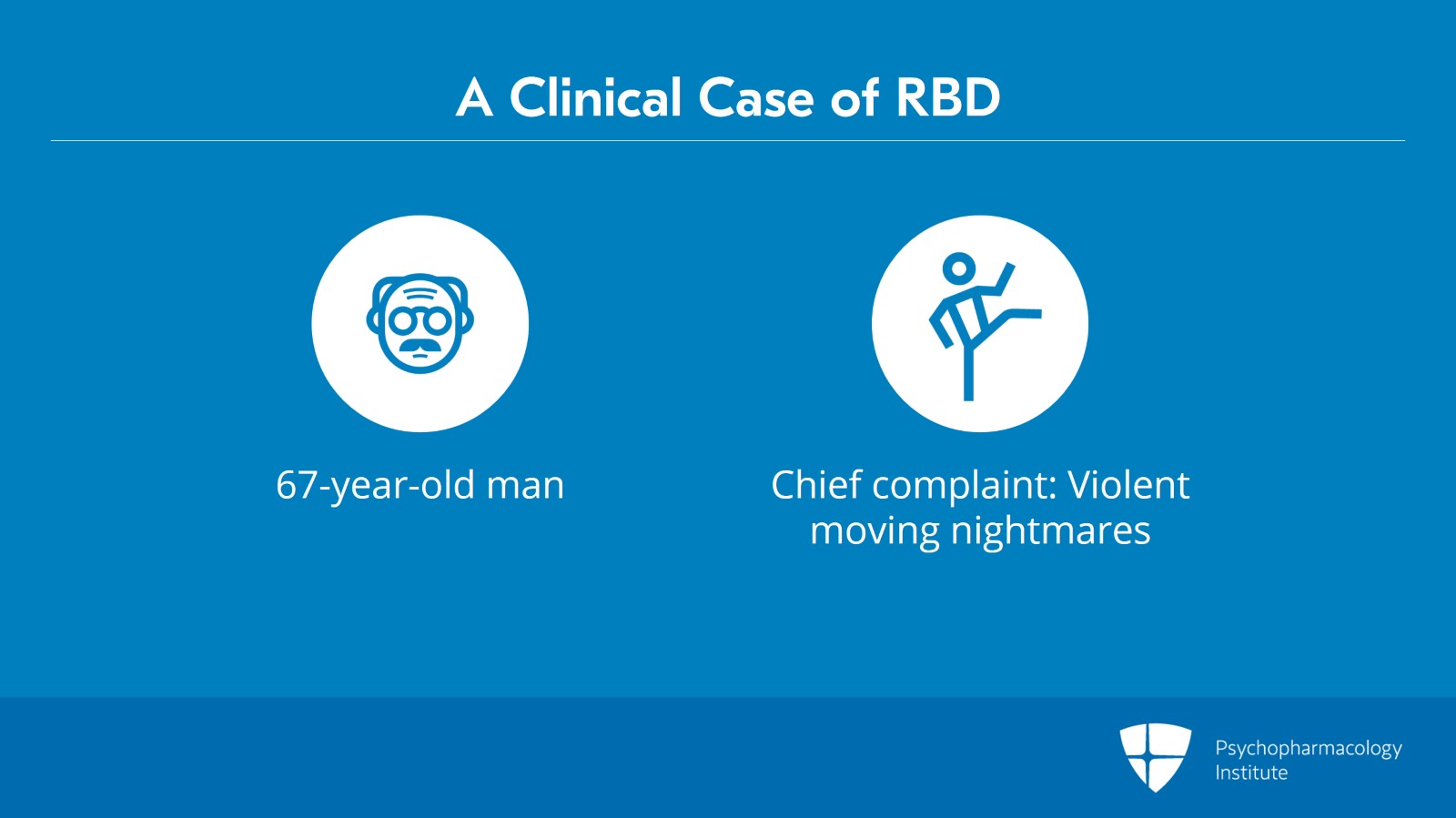
A 67-year-old married man presented to me on my first day of practicing Sleep Medicine on September 11, 1982 and he had the very beautifully worded chief complaint of "violent moving nightmares" which indeed he had.
Free Files
Success!
Check your inbox, we sent you all the materials there.

Slide 3 of 13

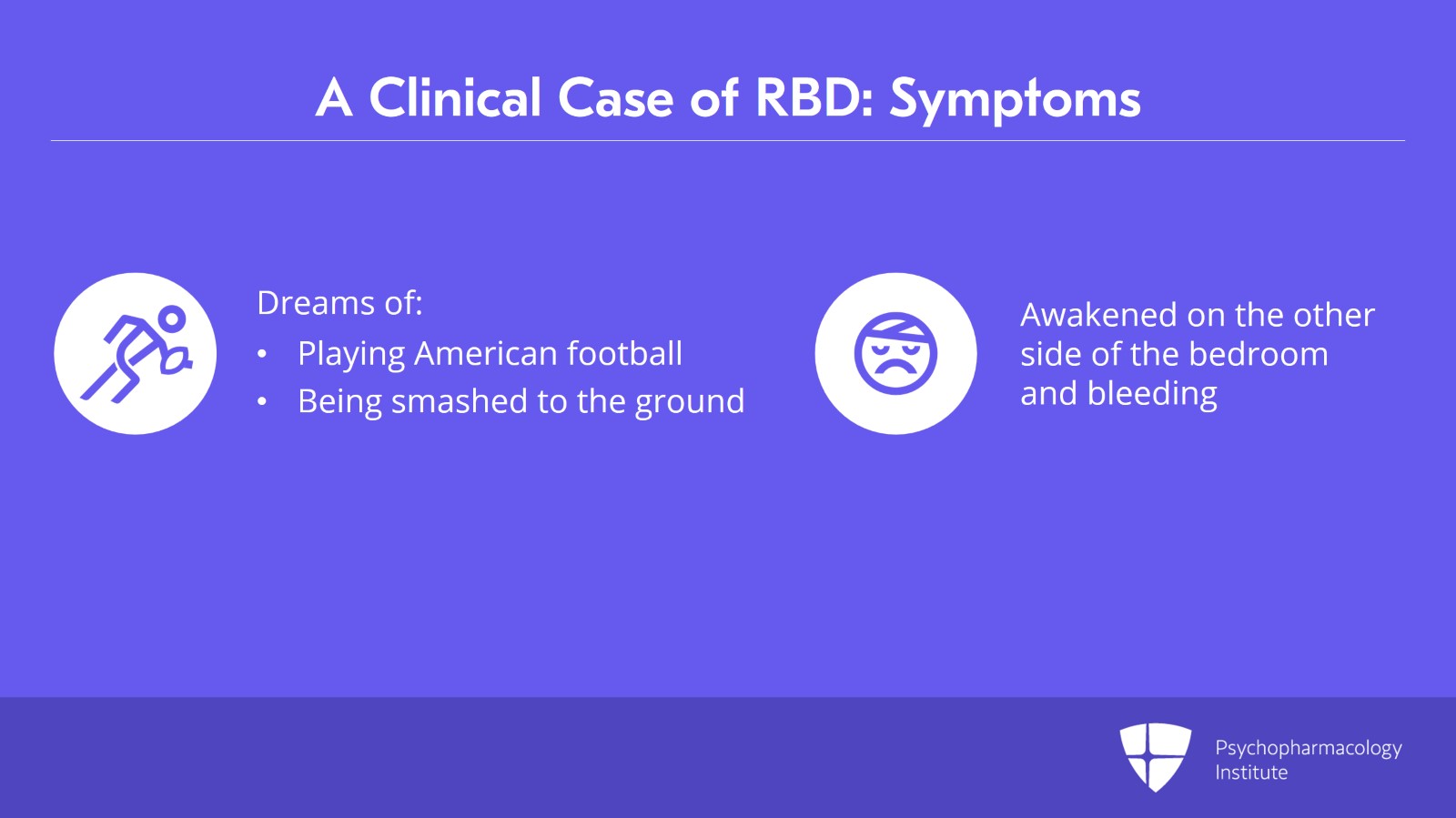
The most consequential episode that prompted clinical referral to our sleep center involved a dream in which he was playing American football. He was the running back carrying the ball across the line of scrimmage and he ran smack into a 280-pound defensive tackle who smashed him to the ground. My patient then awakened and he was startled to find himself not on the football field but rather on the other side of the bedroom from his bed after having run into a dresser. He had gashed his forehead and was bleeding.

Slide 4 of 13

He then saw his physician who found no medical basis to this nocturnal problem and then a psychiatrist evaluated him and found no psychiatric basis for this unusual behavior during sleep. He was finally referred to our sleep center, the Minnesota Regional Sleep Disorders Center, and five nights after I interviewed this pleasant man, he was studied in our sleep lab.
Free Files
Success!
Check your inbox, we sent you all the materials there.

Slide 5 of 13

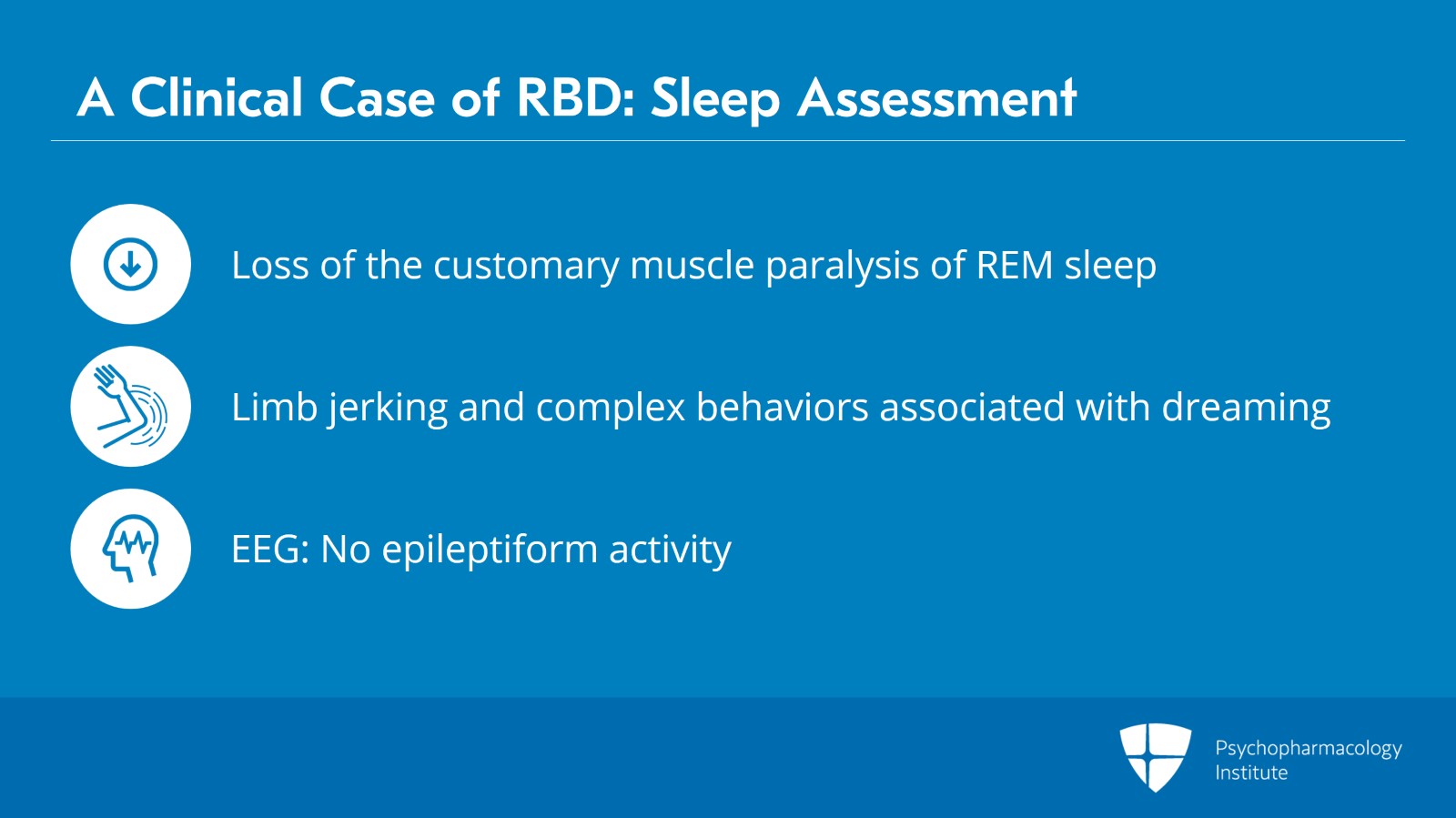
And he was documented to have the loss of the customary muscle paralysis of REM sleep with prominent limb jerking and a range of complex behaviors during REM sleep often associated with dreaming. His sleep EEG showed no epileptiform activity. And that was the key differential diagnosis because sleep-related epilepsy can present with a variety of unusual behaviors including violent behaviors.

Slide 6 of 13

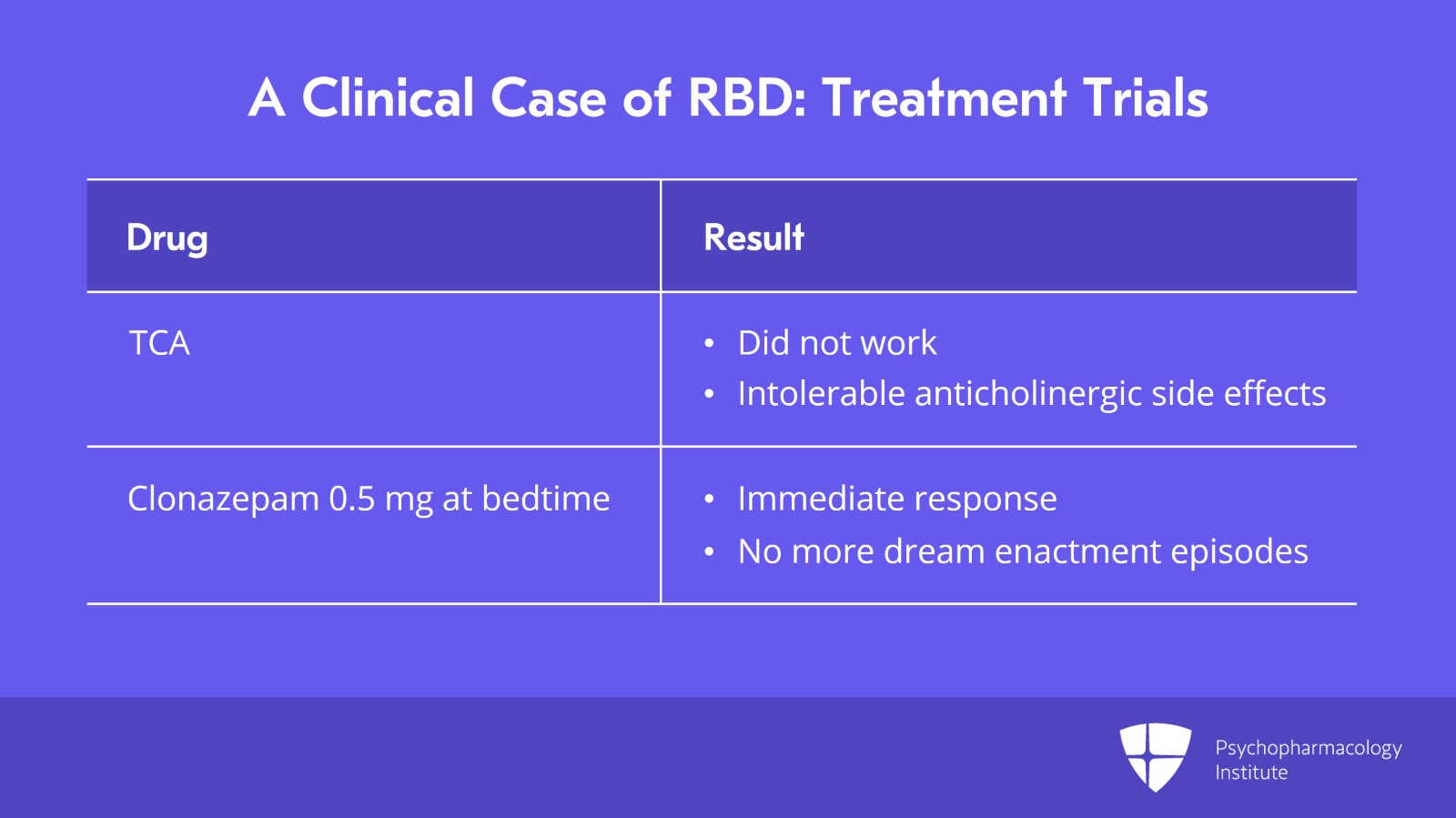
So for treatment, I initially prescribed a tricyclic antidepressant to hopefully achieve REM sleep suppression and thereby reduce RBD episodes and that was great logic which did not work.   He could not tolerate the anticholinergic side effects of the tricyclic antidepressant. So I then prescribed clonazepam since he also had periodic limb movements throughout sleep. At that time, that was called nocturnal myoclonus in the neurology literature. And in that same neurology literature, nocturnal myoclonus was effectively treated with clonazepam. And lo and behold, immediately he responded to 0.5 mg at bedtime in terms of controlling his RBD episodes as verified by his wife. He also had no more dream enactment episodes.
Free Files
Success!
Check your inbox, we sent you all the materials there.

Slide 7 of 13

So it appears that clonazepam not only controls the abnormal behaviors of RBD but also the abnormal dreams of RBD which has prompted a lot of interesting research on the dream generator for RBD episodes besides the behavior generator for RBD episodes. So what was fascinating was that the clonazepam suppressed the overactive, aggressive and violent RBD dreams and not just the RBD behaviors.
References:
  • Schenck, C. H. (1990). Polysomnographic, neurologic, psychiatric and clinical outcome report on 70 consecutive cases with REM sleep behavior disorder (RSBD): Sustained clonazepam efficacy in 89.5% of 57 treated patients. Cleveland Clinic Journal of Medicine, 57, 9-23.

Slide 8 of 13

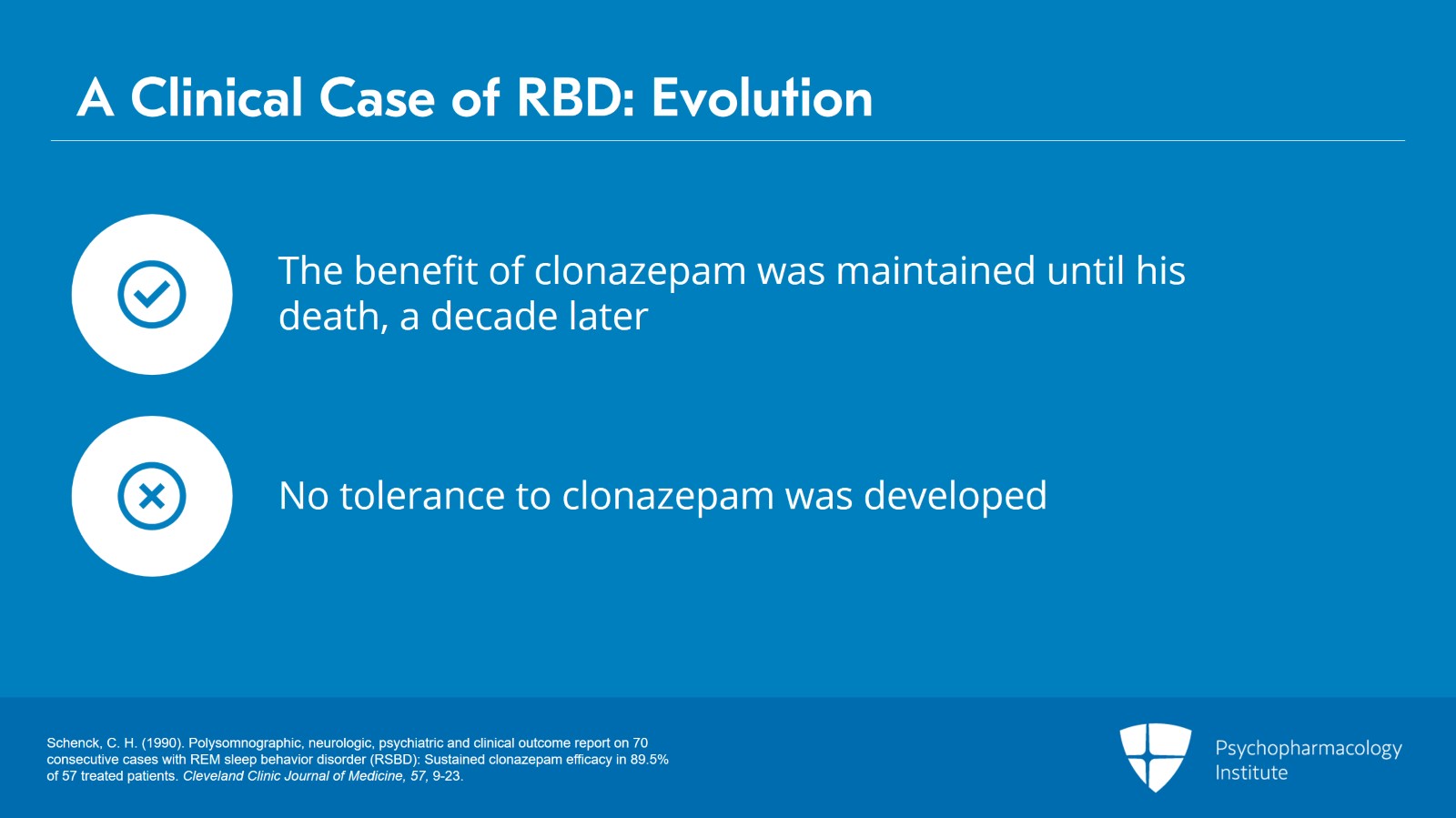
This clonazepam benefit was maintained nightly for over a decade until his death from prostate cancer. So there was no tolerance effect. This is typical for virtually all RBD patients. The immediate first night benefit is sustained over decades of treatment.
References:
  • Schenck, C. H. (1990). Polysomnographic, neurologic, psychiatric and clinical outcome report on 70 consecutive cases with REM sleep behavior disorder (RSBD): Sustained clonazepam efficacy in 89.5% of 57 treated patients. Cleveland Clinic Journal of Medicine, 57, 9-23.
Free Files
Success!
Check your inbox, we sent you all the materials there.

Slide 9 of 13

You will now see the 1990 video rapid eye movement sleep behavior disorder that I put together after several years of identifying and then following a number of our initial patients. These men are acting out their dreams in the sleep lab during REM sleep.
References:
  • Mahowald, M. W., Bundlie, S. R., Hurwitz, T. D., & Schenck, C. H. (1990). Sleep violence—forensic science implications: Polygraphic and video documentation. Journal of Forensic Science, 35(2), 413-432.

Slide 10 of 13

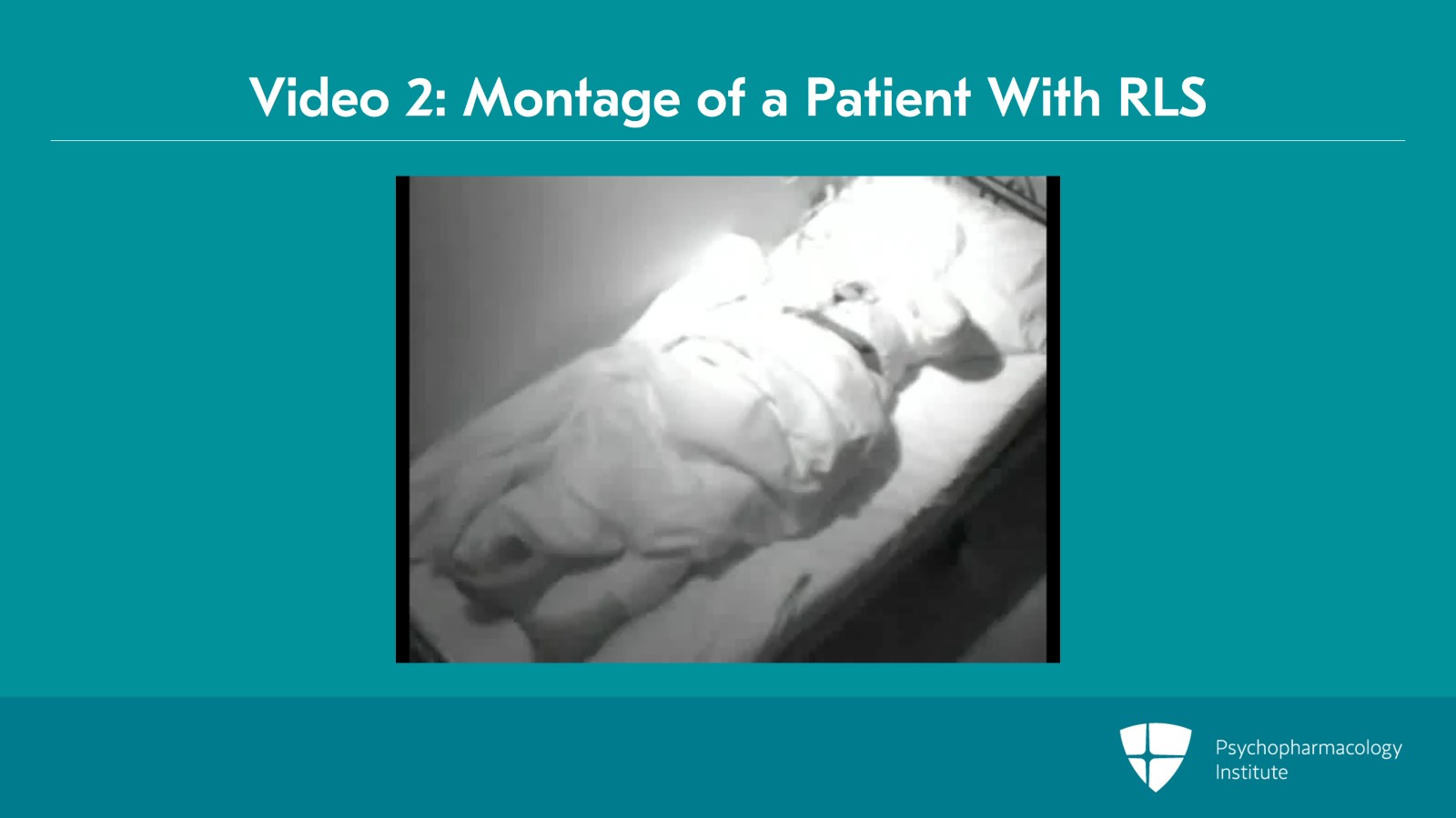
Now, I want to make some comments concerning the second video on restless legs syndrome. You can see that these are severe cases and you can see RLS can be incompatible with falling asleep. In fact, for severe cases, I call it restless sleepwalking or non-sleep walking because these patients are really not asleep, are very drowsy but because of that irresistible urge to move the limbs they cannot lie in bed and fall asleep and sustain any measure of sleep. But I think you can now realize when someone talks about I can't go to sleep, my legs are restless, they jump around, they're painful. The pain component is a very important part of RLS for many patients, not just the irresistible urge to move the legs but the fact that there's pain in the legs, pain in the feet, and only moving around can alleviate the distress, the physical distress, rubbing your legs, just moving, walking, standing in place. What you're seeing in the video can be a very terrible distressing condition.
Free Files
Success!
Check your inbox, we sent you all the materials there.

Slide 11 of 13

It's really actually painful to watch these people, what happens to them with the severe restless leg syndrome. It is not a trivial problem. I know a lot of people over the years have made jokes about restless leg syndrome. And in fact, there's an official name now to deal with the, the jokes about RLS, is called the Willis-Ekbom syndrome because these are the initial physicians who identified RLS but it's still called mainly RLS, not the Willis-Ekbom syndrome.
References:
  • Stevens, M. S. (2015). Restless legs syndrome/Willis-Ekbom disease morbidity: Burden, quality of life, cardiovascular aspects, and sleep. Sleep Medicine Clinics, 10(3), 369-373.

Slide 12 of 13

So the key point is that RBD behaviors are often aggressive and violent. RBD typically involves dream-enacting behaviors with a full range of behaviors being displayed. Loss of REM atonia and objective finding from polysomnography is required to diagnose RBD.
Free Files
Success!
Check your inbox, we sent you all the materials there.

Slide 13 of 13

Learning Objectives:

After completing this activity, the learner will be able to:

  1. Determine the potential etiologies of parasomnias and understand the burden they cause.
  2. Screen patients for RBD through a validated single-item questionnaire.
  3. Recommend the correct treatment option in simple and intricate clinical cases.

Original Release Date: December 1, 2022

Review and Re-release Date: December 1, 2025

Expiration Date: December 1, 2028

Expert: Carlos Schenck, M.D.

Medical Editor: Paz Badía, M.D.

Relevant Financial Disclosures: 

Carlos H. Schenck, MD declares the following interests:

– Eisai, Inc.:  One time lecture on REM sleep behavior disorder, without any product being promoted.

All of the relevant financial relationships listed above have been mitigated by Medical Academy and the Psychopharmacology Institute.

Contact Information: For questions regarding the content or access to this activity, contact us at support@psychopharmacologyinstitute.com

Instructions for Participation and Credit:

Participants must complete the activity online during the valid credit period that is noted above.

Follow these steps to earn CME credit:

  1. View the required educational content provided on this course page.
  2. Complete the Post Activity Evaluation for providing the necessary feedback for continuing accreditation purposes and for the development of future activities. NOTE: Completing the Post Activity Evaluation after the quiz is required to receive the earned credit.
  3. Download your certificate.

Accreditation Statement

This activity has been planned and implemented in accordance with the accreditation requirements and policies of the Accreditation Council for Continuing Medical Education through the joint providership of Medical Academy LLC and the Psychopharmacology Institute. Medical Academy is accredited by the ACCME to provide continuing medical education for physicians.

Credit Designation Statement

Medical Academy designates this enduring activity for a maximum of 0.75 AMA PRA Category 1 credit(s)™. Physicians should claim only the credit commensurate with the extent of their participation in the activity.


Free Files
Success!
Check your inbox, we sent you all the materials there.
Continue in the website
Instant access modal

Become a Bronze, Silver, Gold, Bronze extended, Silver extended or Gold extended Member.

2025–26 Psychopharmacology CME Program

Unlock up to 155 CME Credits, including 40 SA CME Credits.