



Transcript
In this section, we’ll discuss cannabinoid pharmacology, cannabinoid receptors and endogenous ligands and synthetic cannabinoids, what they are and their effects.
Cannabinoid pharmacology

Modern cannabinoid research stems from elucidation of the structure of THC by Raphael Mechoulam and colleagues in the 1960s.
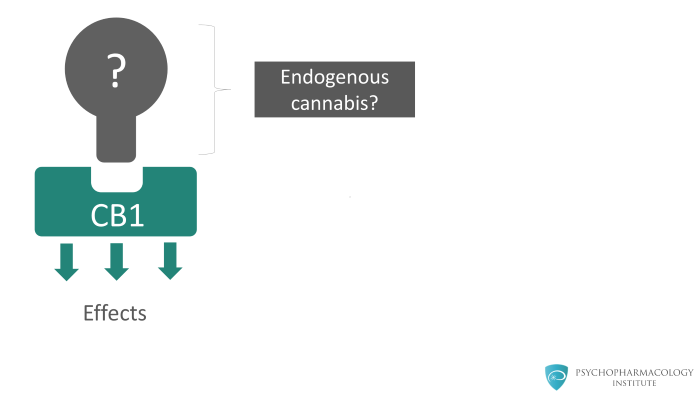
By the early 1990s, the molecular biology of cannabis was worked out. There were receptors on neurons, termed CB1 receptors. This is where THC was producing its effects. If a receptor for a drug like THC exists in the body, there are likely to be natural cannabis molecules as well. These were soon discovered.
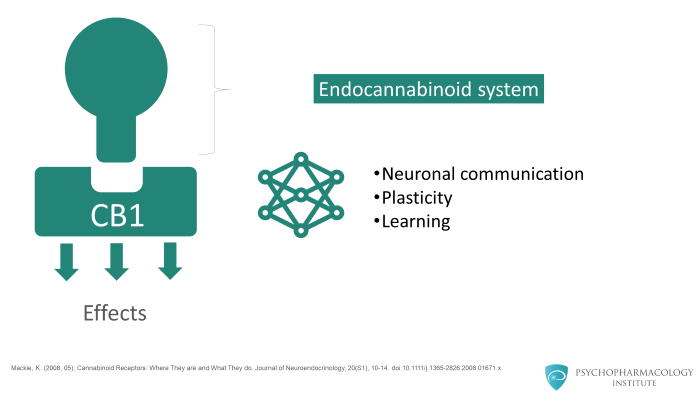
The brain has a natural cannabinoid system, or endocannabinoid system. Since then, it has become clear that the endocannabinoid system is involved in neuronal communication, plasticity and learning in neuronal networks.
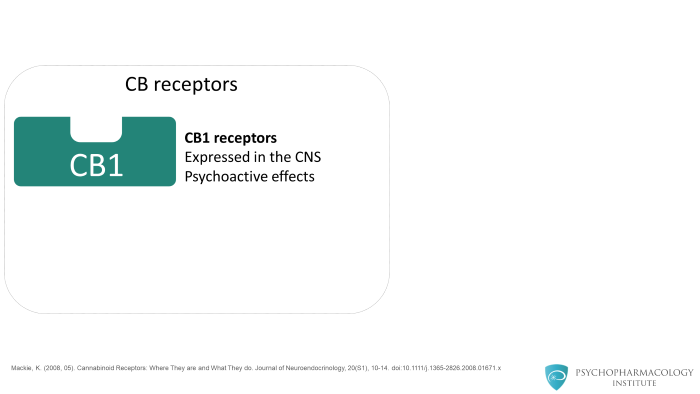
Cannabinoid CB1 receptors are expressed mainly in the CNS and mediate many of the psychoactive effects of cannabinoids.
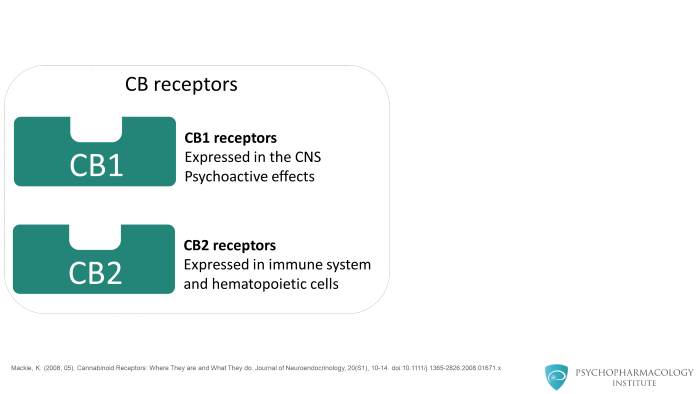
There is another receptor, the CB2 receptor, which is expressed mainly in the immune system and in blood cells.
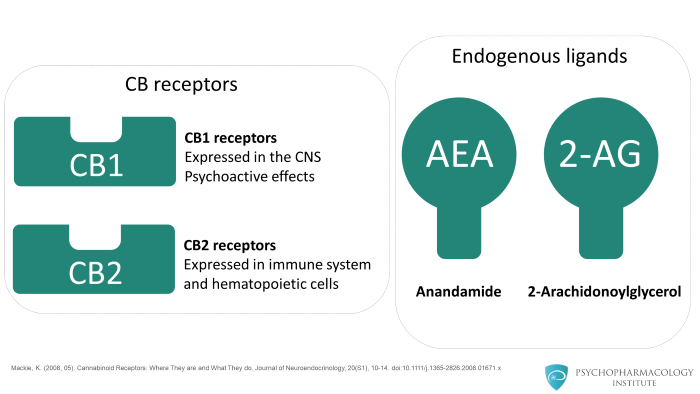
The best known endogenous cannabinoid receptor ligands are anandamides and 2‐arachidonoylglycerol (2‐AG).
The exogenous cannabinoid agonists, such as THC do not recreate the fine-grained effects of the endogenous cannabinoids. The spatial and time profile of endogenous cannabinoid signaling is tightly controlled.

In contrast, THC administered exogenously floods the system indiscriminately. Network functions such as information processing and memory are disrupted by exogenous CB1 agonists such as THC. Adverse effects on network dynamics underlie the psychological effects of cannabinoids.
Synthetic cannabinoids (SCs)
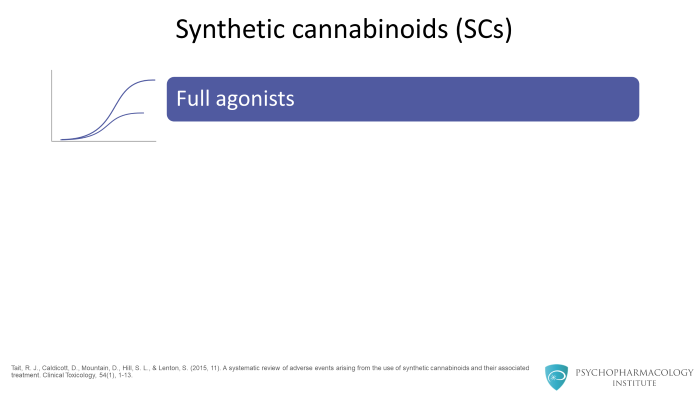
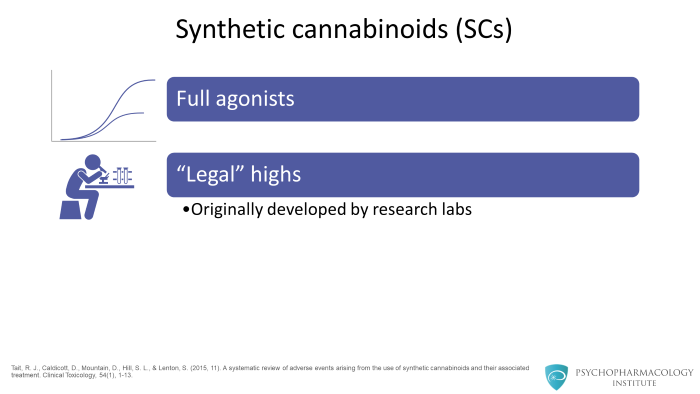
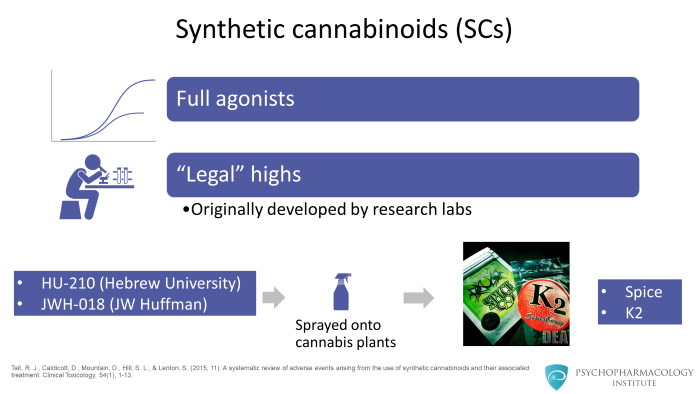
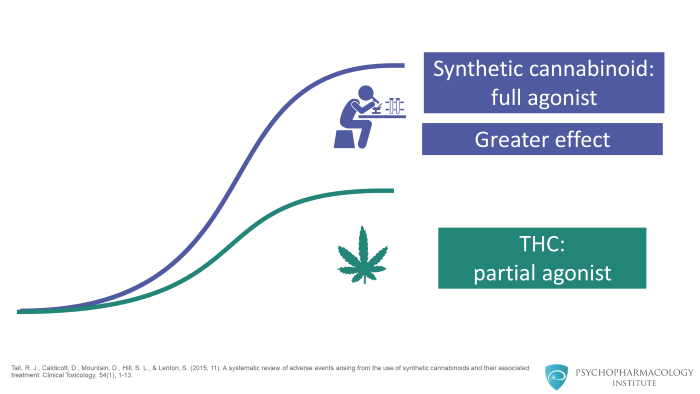
From a pharmacological standpoint, synthetic cannabinoids are full agonists at the cannabinoid receptor, whereas THC is a partial agonist.
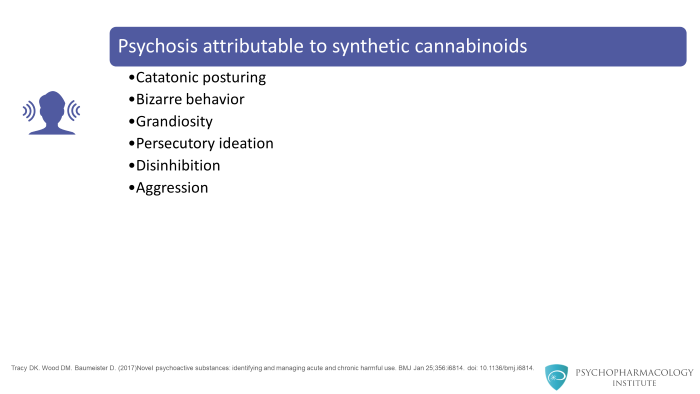
In London, we are now beginning to see more and more cases of psychosis attributable to synthetic cannabinoids. Catatonic posturing, bizarre behavior, grandiosity, persecutory ideation, disinhibition and aggression are common elements of synthetic cannabinoid toxicity.
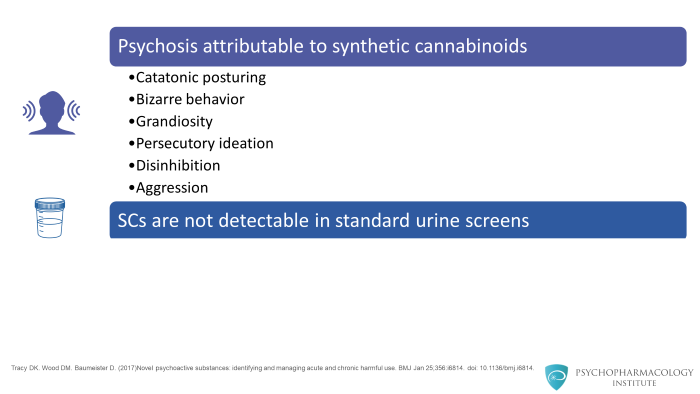
Furthermore, the synthetic cannabinoids are not detected in standard urine drug screens.

Tachycardia, palpitations and chest pain can be associated features pointing to the correct diagnosis.
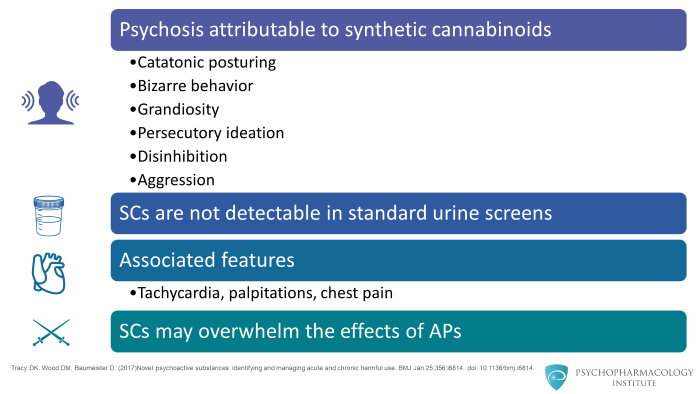
One worry is that the synthetic cannabinoids may be so powerful as to overwhelm the stabilizing properties of
, even in injectable form. Quite often, the only solution is to admit patients to the hospital to allow respite from such potent cannabinoids.
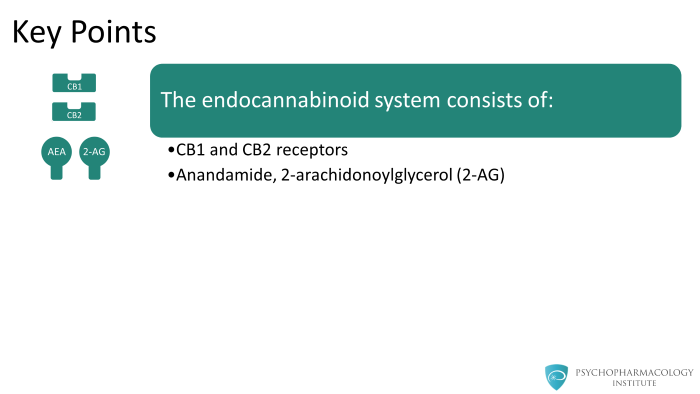
The endocannabinoid system consists of receptors (CB1 and CB2 receptors), endogenous ligands (anandamide and 2‐arachidonoylglycerol).
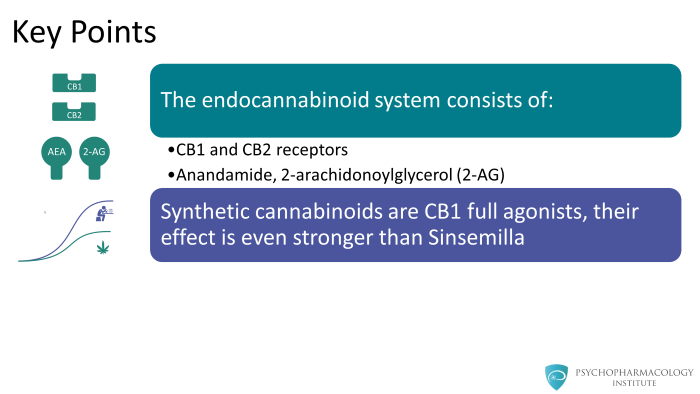
Synthetic cannabinoids are full agonists at the CB1 receptor. Their effect is even stronger than sinsemilla.
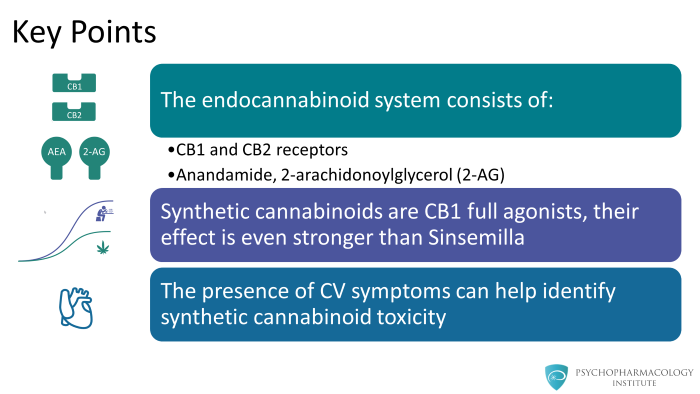
The presence of cardiovascular symptoms can help identify synthetic cannabinoid toxicity.
References
- Mackie, K. (2008, 05). Cannabinoid Receptors: Where They are and What They do . Journal of Neuroendocrinology, 20(S1), 10-14. doi:10.1111/j.1365-2826.2008.01671.x
- Tait, R. J., Caldicott, D., Mountain, D., Hill, S. L., & Lenton, S. (2015, 11). A systematic review of adverse events arising from the use of synthetic cannabinoids and their associated treatment . Clinical Toxicology, 54(1), 1-13.
- Tracy DK. Wood DM. Baumeister D. (2017) Novel psychoactive substances: identifying and managing acute and chronic harmful use . BMJ Jan 25;356:i6814. doi: 10.1136/bmj.i6814.
