Close Banner
Free Section  - Video Lectures

08. Perimenopausal Anxiety: Pharmacologic Management

Published on October 1, 2025 Certification expiration date: October 1, 2028

Katie Unverferth, M.D.

Assistant Clinical Professor of Psychiatry - U.C.L.A.

Key Points

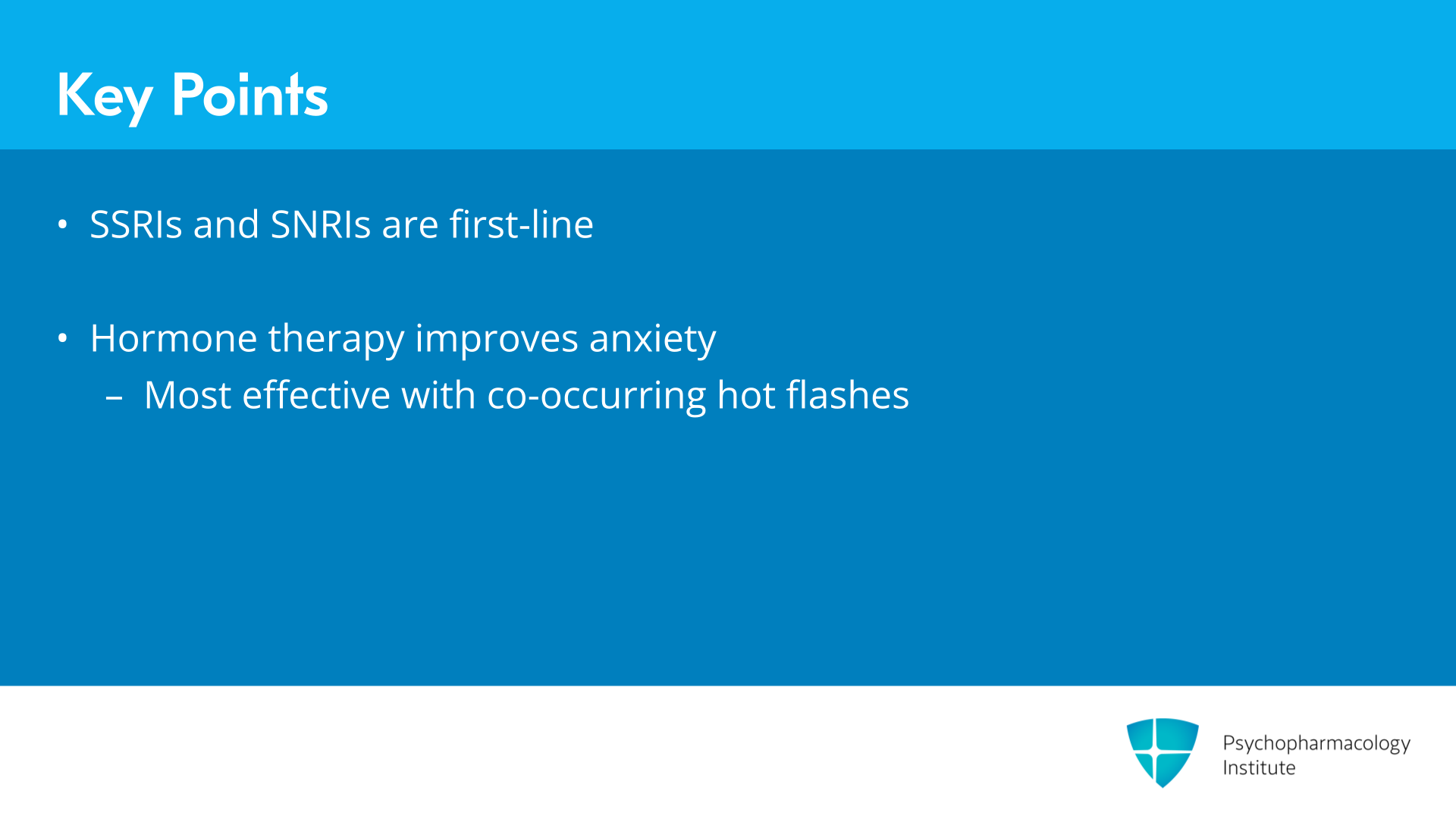
  • SSRIs and SNRIs remain first-line treatments for anxiety during perimenopause, with or without psychotherapy.
  • Consider hormone therapy when anxiety symptoms coincide with other menopausal symptoms and no contraindications exist.
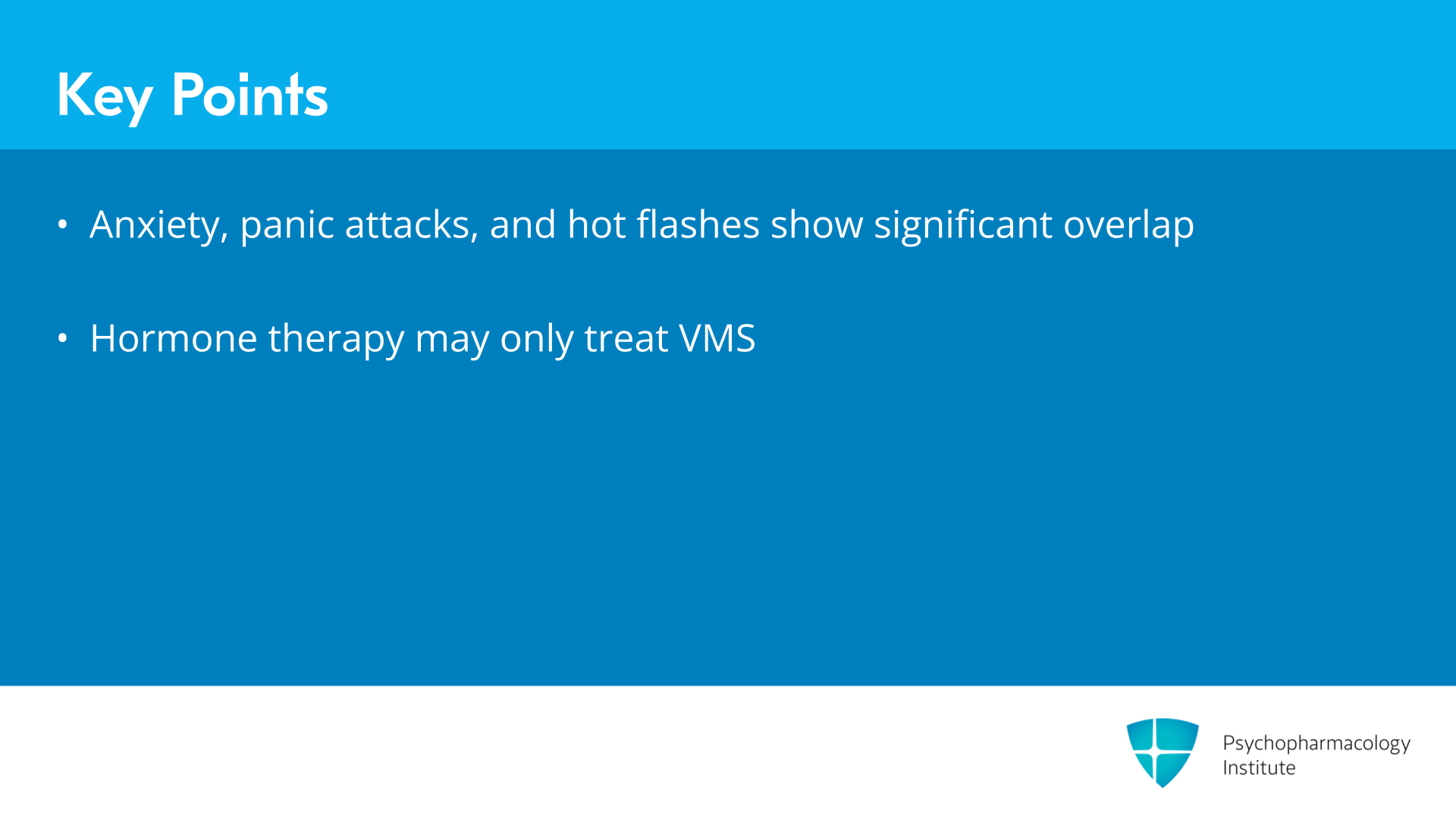
  • Differentiate between panic attacks and hot flashes due to their significant symptom overlap.

Free Downloads for Offline Access

  • Free Download PDF File
  • Free Download Audio File (MP3)
  • Free Download Video (MP4)

Slides and Transcript

Slide 1 of 10

Pharmacologic Management of Anxiety in Perimenopause.

Slide 2 of 10

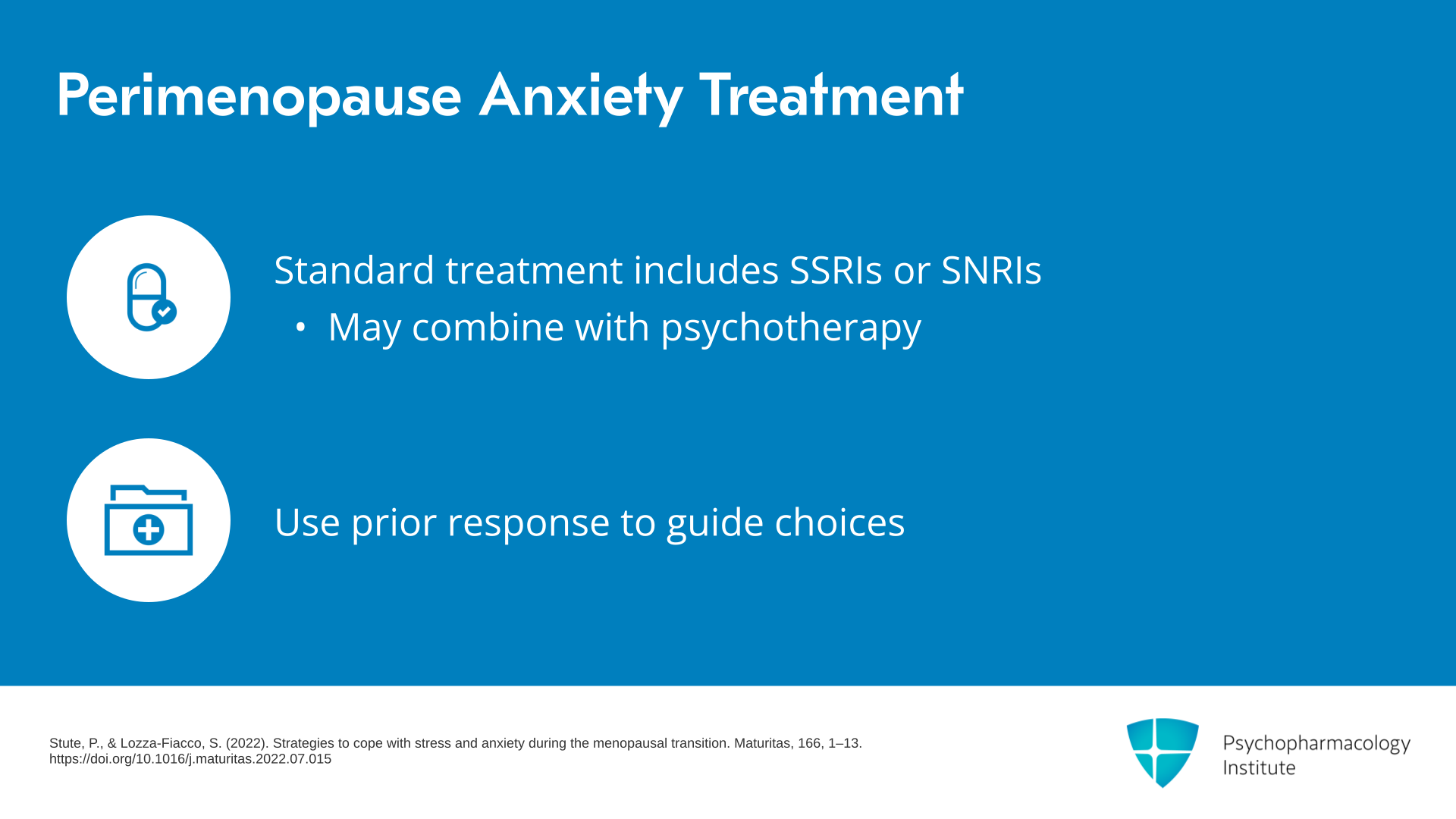
The standard treatment for anxiety in perimenopause remains an SSRI or SNRI with or without psychotherapy. Just as for depression in perimenopause, cognitive behavioral therapy and other evidence-based therapies are used to treat anxiety that arises during perimenopause. Like other times in a woman’s life, you want to use prior response to guide treatment choice. So if someone has had a positive effect to an antidepressant, you would consider using that again.
References:
  • Stute, P., & Lozza-Fiacco, S. (2022). Strategies to cope with stress and anxiety during the menopausal transition. Maturitas, 166, 1–13. https://doi.org/10.1016/j.maturitas.2022.07.015
Free Files
Success!
Check your inbox, we sent you all the materials there.

Slide 3 of 10

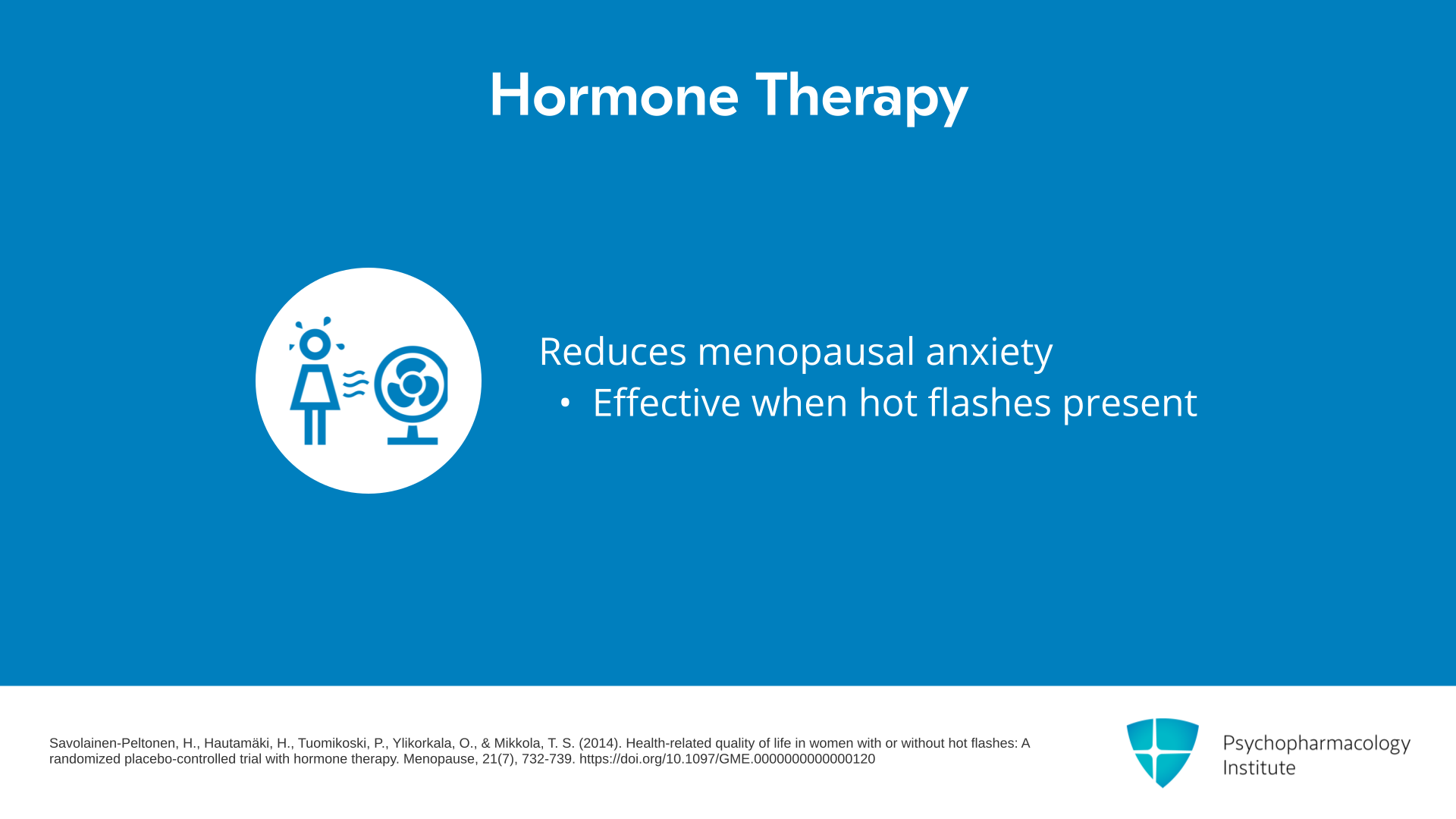
Menopausal hormone therapy has a beneficial effect on anxiety but one study suggested that improvement in anxiety with menopausal hormone therapy was only seen in women with co-occurring hot flashes.
References:
  • Savolainen-Peltonen, H., Hautamäki, H., Tuomikoski, P., Ylikorkala, O., & Mikkola, T. S. (2014). Health-related quality of life in women with or without hot flashes: A randomized placebo-controlled trial with hormone therapy. Menopause, 21(7), 732-739. https://doi.org/10.1097/GME.0000000000000120

Slide 4 of 10

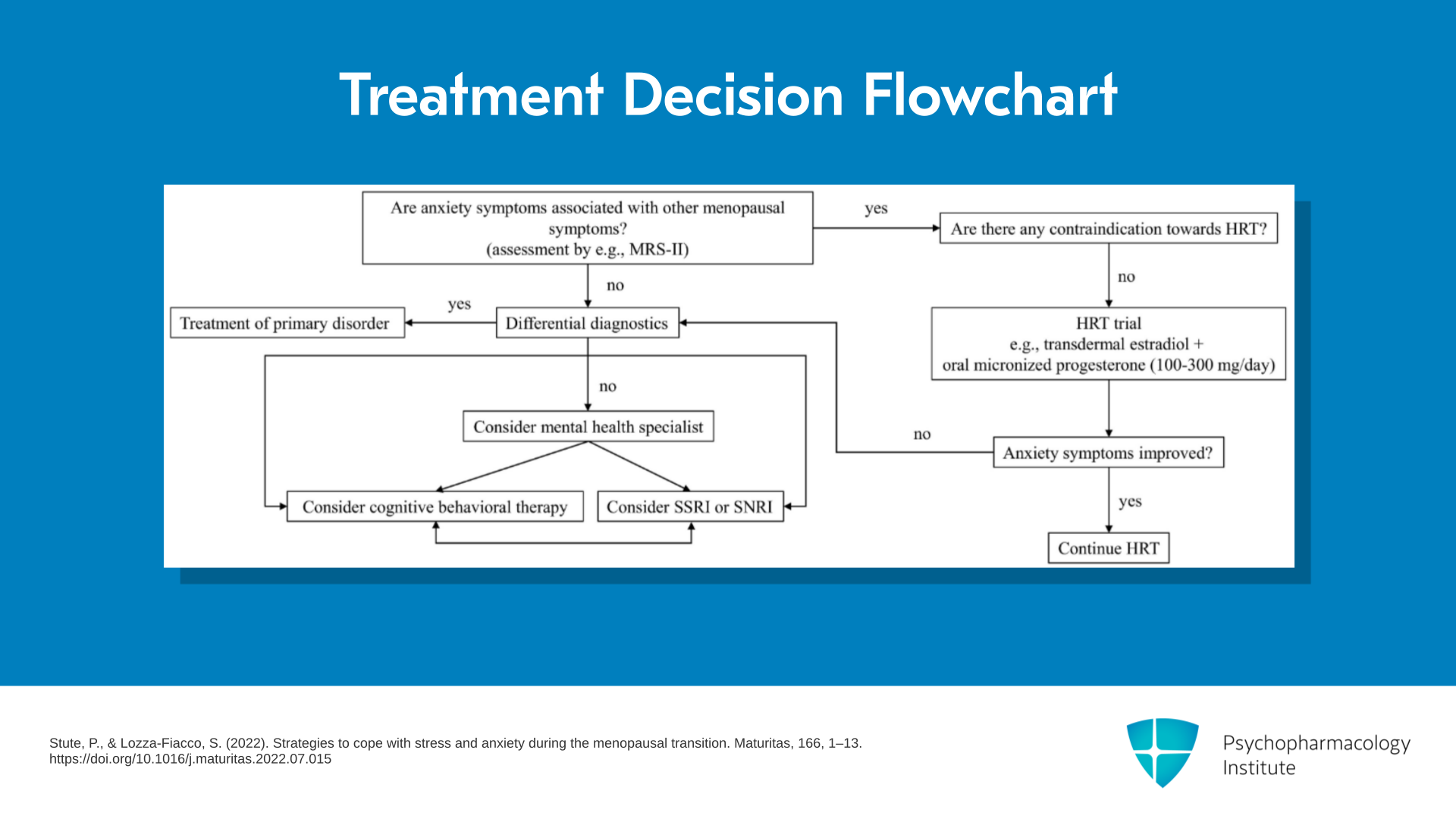
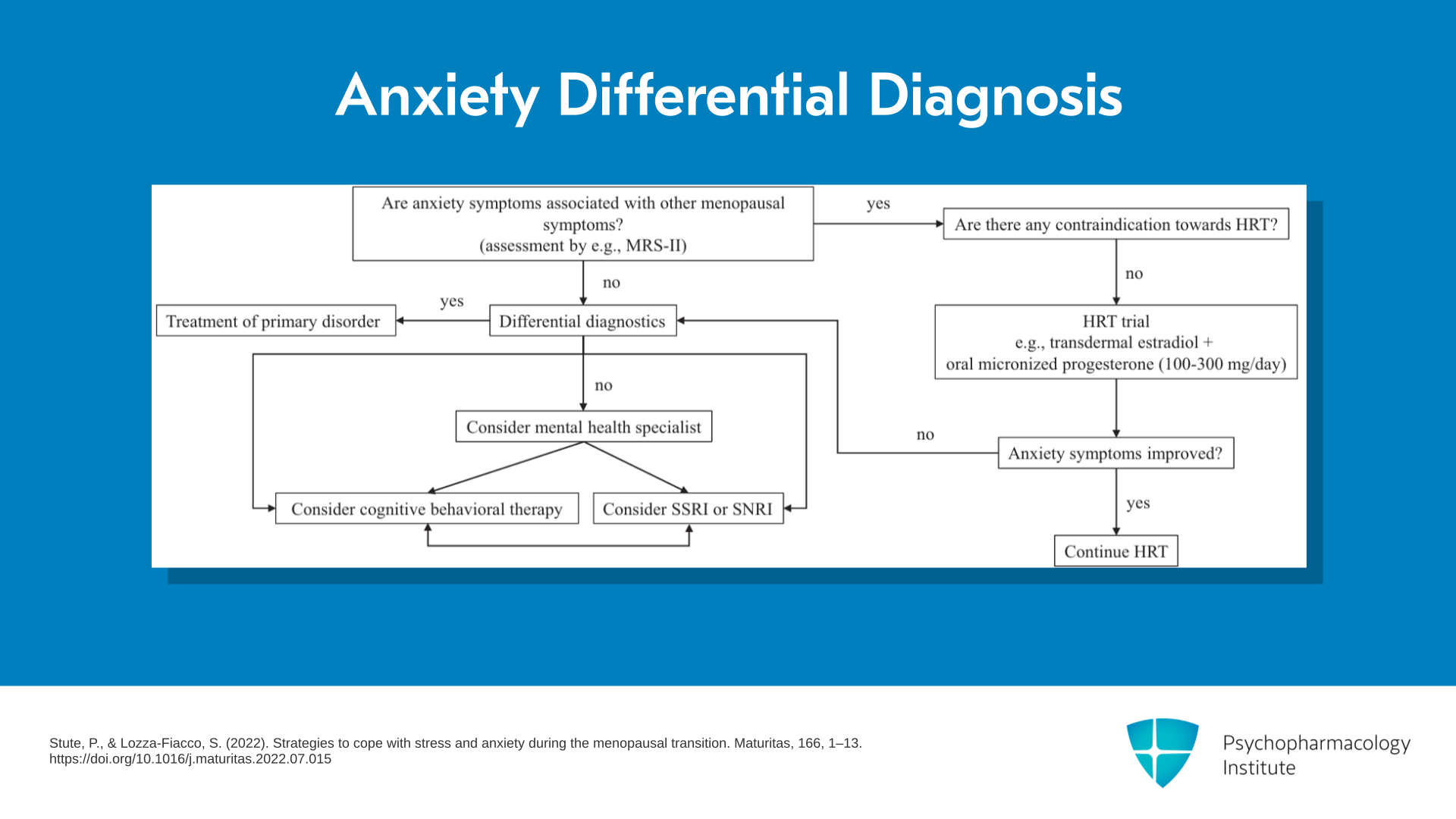
This is a very helpful flowchart to decide how to treat anxiety that arises during perimenopause. So the first question to ask yourself is, are anxiety symptoms associated with other menopausal symptoms? If they are, you want to know, are there any contraindications towards hormone replacement therapy or menopausal hormone therapy? If there aren’t, you can consider a hormone replacement therapy trial. That would typically include transdermal estradiol and oral micronized progesterone. We use oral micronized progesterone because it is metabolized into allopregnanolone versus a synthetic progesterone which does not metabolize to allopregnanolone.
References:
  • Stute, P., & Lozza-Fiacco, S. (2022). Strategies to cope with stress and anxiety during the menopausal transition. Maturitas, 166, 1–13. https://doi.org/10.1016/j.maturitas.2022.07.015
Free Files
Success!
Check your inbox, we sent you all the materials there.

Slide 5 of 10

If the anxiety symptoms are improved on the hormone replacement therapy trial, you would consider hormone replacement therapy.
References:
  • Stute, P., & Lozza-Fiacco, S. (2022). Strategies to cope with stress and anxiety during the menopausal transition. Maturitas, 166, 1–13. https://doi.org/10.1016/j.maturitas.2022.07.015

Slide 6 of 10

Let’s go back to the beginning. So again, are anxiety symptoms associated with other menopausal symptoms? If they aren’t, then it’s really important to assess the differential diagnosis.
References:
  • Stute, P., & Lozza-Fiacco, S. (2022). Strategies to cope with stress and anxiety during the menopausal transition. Maturitas, 166, 1–13. https://doi.org/10.1016/j.maturitas.2022.07.015
Free Files
Success!
Check your inbox, we sent you all the materials there.

Slide 7 of 10

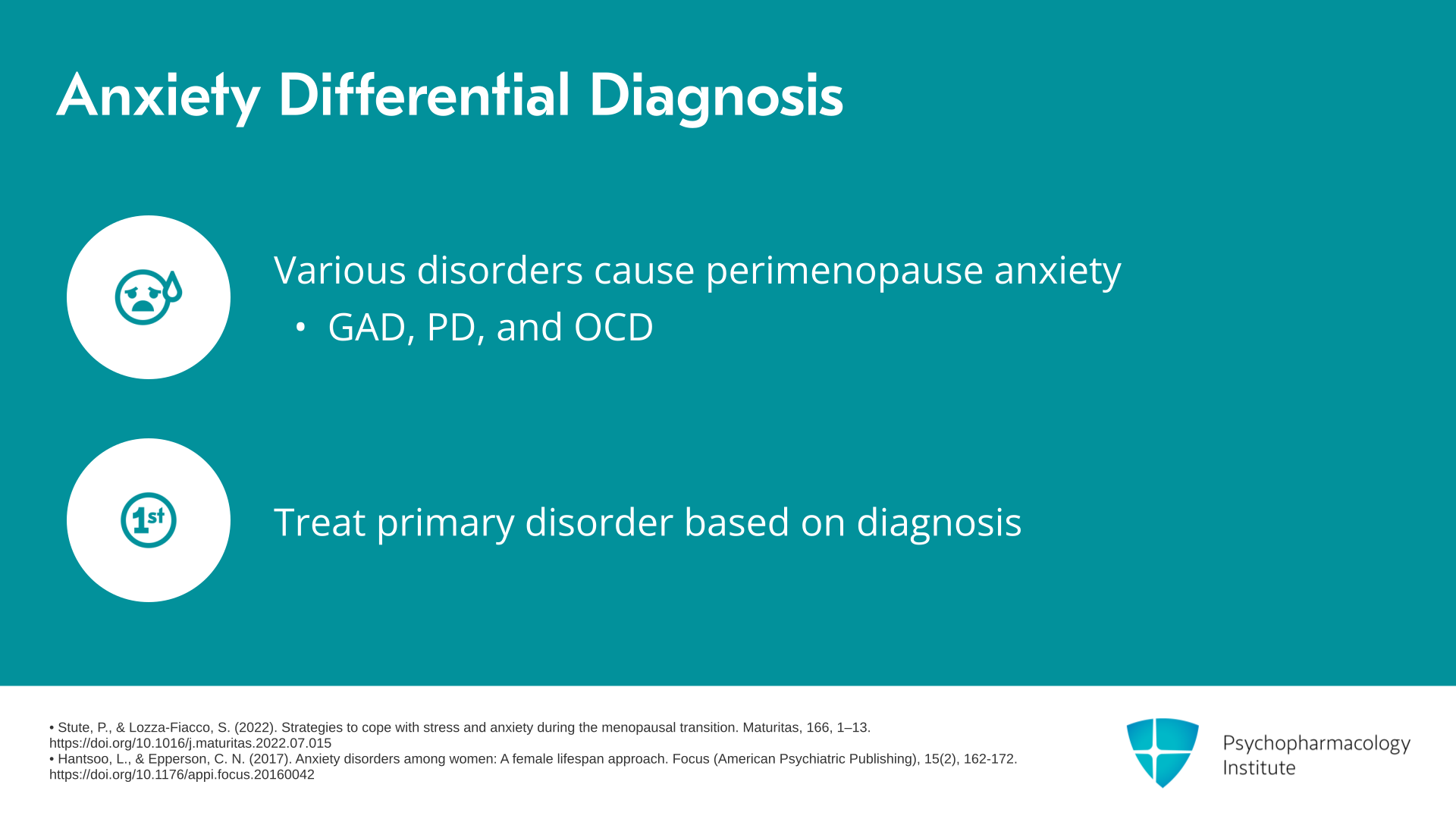
We know that there are very many different mental health disorders that can cause anxiety in perimenopause. You would want to look at generalized anxiety disorder, panic disorder, obsessive-compulsive disorder or other diagnoses. With panic disorder there is significant overlap between panic attacks and hot flashes. Depending on what the differential diagnosis tells, you would want to treat the primary disorder if there is one.
References:
  • Stute, P., & Lozza-Fiacco, S. (2022). Strategies to cope with stress and anxiety during the menopausal transition. Maturitas, 166, 1–13. https://doi.org/10.1016/j.maturitas.2022.07.015
  • Hantsoo, L., & Epperson, C. N. (2017). Anxiety disorders among women: A female lifespan approach. Focus (American Psychiatric Publishing), 15(2), 162-172. https://doi.org/10.1176/appi.focus.20160042

Slide 8 of 10

If there’s no clear differential diagnosis, you would want to consult a mental health specialist and consider SSRI or SNRI or cognitive behavioral therapy.
References:
  • Stute, P., & Lozza-Fiacco, S. (2022). Strategies to cope with stress and anxiety during the menopausal transition. Maturitas, 166, 1–13. https://doi.org/10.1016/j.maturitas.2022.07.015
Free Files
Success!
Check your inbox, we sent you all the materials there.

Slide 9 of 10

Key points: You want to use prior treatment to guide a medication choice for perimenopausal anxiety. SSRIs and SNRIs are both first line. Menopausal hormone therapy has been shown to improve perimenopausal anxiety but one study showed that anxiety only improved in women who had co-occurring hot flashes.

Slide 10 of 10

Why this is important is because there is much overlap between anxiety, panic attacks and hot flashes. So it’s possible that menopausal hormone therapy really only treats the vasomotor symptoms, and might not have a direct effect on perimenopausal anxiety.
Free Files
Success!
Check your inbox, we sent you all the materials there.

Learning Objectives:

After completing this activity, the learner will be able to:

  1. Recognize the clinical manifestations of perimenopause, including vasomotor symptoms, mood changes, and cognitive complaints, and differentiate perimenopausal depression from other depressive disorders.
  2. Identify risk factors for perimenopausal depression and anxiety, including prior history of hormone-sensitive mood disorders (PMDD, postpartum depression), vasomotor symptoms, psychosocial stressors, and psychological factors.
  3. Select appropriate pharmacologic interventions for perimenopausal mood and vasomotor symptoms.

Original Release Date: October 1, 2025

Expiration Date: October 1, 2028

Expert: Katie Unverferth, M.D.

Medical Editor: Tomás Abudarham, M.D.

Relevant Financial Disclosures: 

Katie Unverferth declares the following interests:

– Biogen/Sage: Consultant and Speakers Bureau
All the relevant financial relationships listed above have been mitigated by Medical Academy and the Psychopharmacology Institute.

None of the other faculty, planners, and reviewers for this educational activity has relevant financial relationships to disclose during the last 24 months with ineligible companies whose primary business is producing, marketing, selling, re-selling, or distributing healthcare products used by or on patients.

Contact Information: For questions regarding the content or access to this activity, contact us at support@psychopharmacologyinstitute.com

Instructions for Participation and Credit:

Participants must complete the activity online during the valid credit period that is noted above.

Follow these steps to earn CME credit:

  1. View the required educational content provided on this course page.
  2. Complete the Post Activity Evaluation for providing the necessary feedback for continuing accreditation purposes and for the development of future activities. NOTE: Completing the Post Activity Evaluation after the quiz is required to receive the earned credit.
  3. Download your certificate.

Accreditation Statement

This activity has been planned and implemented in accordance with the accreditation requirements and policies of the Accreditation Council for Continuing Medical Education through the joint providership of Medical Academy LLC and the Psychopharmacology Institute. Medical Academy is accredited by the ACCME to provide continuing medical education for physicians.

Credit Designation Statement

Medical Academy designates this enduring activity for a maximum of 0.75 AMA PRA Category 1 credit(s)™. Physicians should claim only the credit commensurate with the extent of their participation in the activity.

Artificial Intelligence (AI) Use DisclosureArtificial intelligence (AI) tools may have been used in limited stages of developing this activity (e.g., drafting or language refinement). The specific tool, version, and date of use are documented internally.AI does not determine clinical recommendations. All content is reviewed, verified, and approved by the listed faculty and medical editors, and reflects independent human clinical judgment consistent with ACCME Standards for Integrity and Independence in Accredited Continuing Education.


Free Files
Success!
Check your inbox, we sent you all the materials there.
Continue in the website
Instant access modal

Become a Bronze, Silver, Gold, Bronze extended, Silver extended or Gold extended Member.

2025–26 Psychopharmacology CME Program

Unlock up to 155 CME Credits, including 40 SA CME Credits.