



Slides and Transcript
Slide 1 of 26
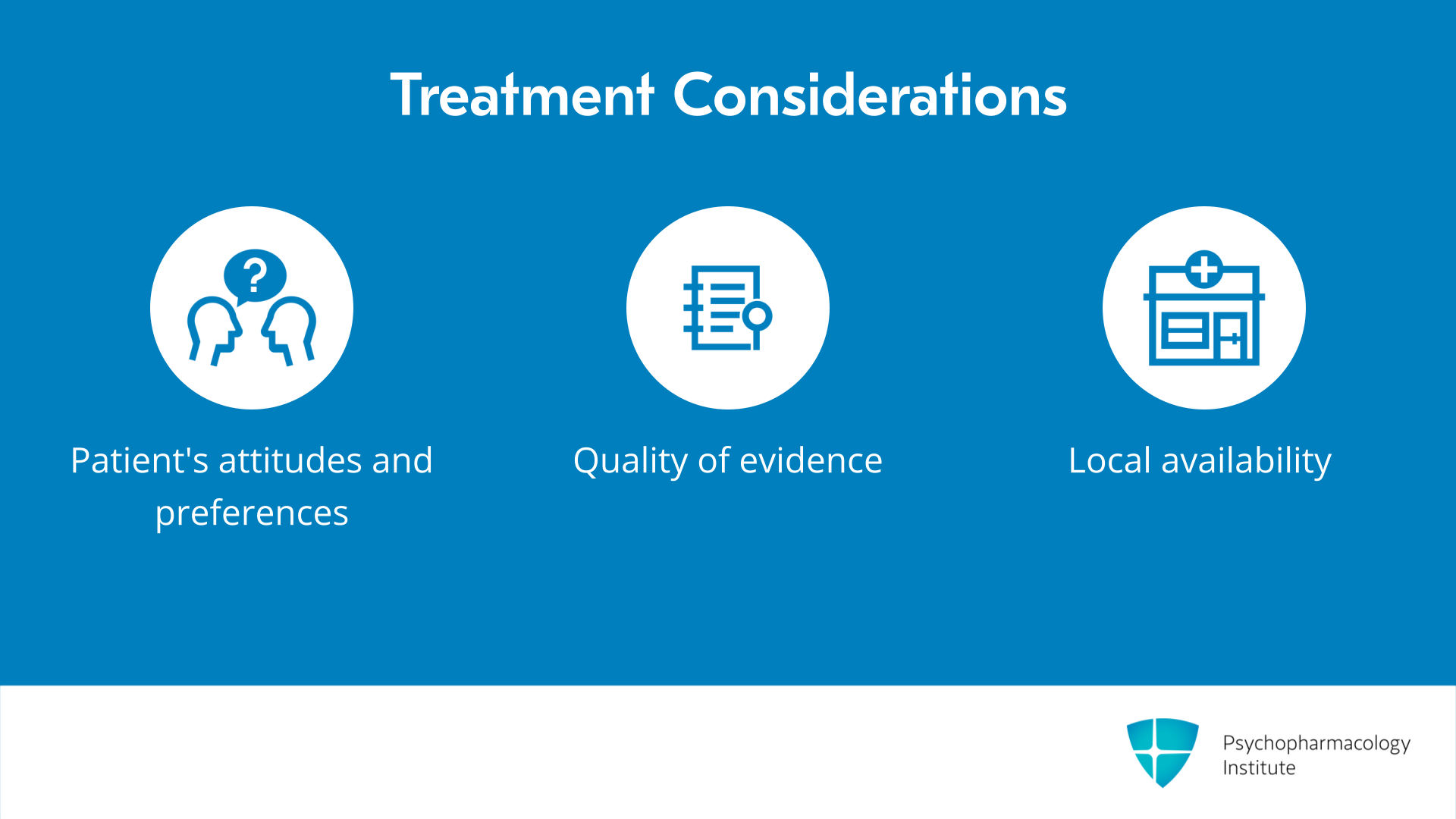
We’re ready now to discuss strategies for selecting the initial treatment for depression and we considered this from a very broad perspective. How do you select the initial treatment?

Slide 2 of 26
We should ask what are the patient’s attitudes and preferences regarding treatment and we want to make sure that the patient’s attitudes and preferences are based on knowing what these treatments actually entail. We will then consider more as clinicians what is the quality of the evidence and in our particular area in where we live, what is the availability of these treatments. There may be some very good treatments that are first line but if they’re not available it’s not even worth mentioning in any extended way in the discussion with the patient.
Free Files
Download PDF and other files
Success!
Check your inbox, we sent you all the materials there.
Slide 3 of 26
It’s really important to consider two things – the risk from delay in treatment initiation and also it’s important to consider the severity of the depression. If it’s more severe, you may need to act with more stronger treatments or combination treatments.
References:
- Lam, R. W., Kennedy, S. H., Adams, C., Bahji, A., Beaulieu, S., Bhat, V., Blier, P., Blumberger, D. M., Brietzke, E., Chakrabarty, T., Do, A., Frey, B. N., Giacobbe, P., Gratzer, D., Grigoriadis, S., Habert, J., Husain, M. I., Ismail, Z., McGirr, A., … Milev, R. V. (2024). Canadian Network for Mood and Anxiety Treatments (CANMAT) 2023 Update on Clinical Guidelines for Management of Major Depressive Disorder in Adults: Réseau canadien pour les traitements de l'humeur et de l'anxiété (CANMAT) 2023 : Mise à jour des lignes directrices cliniques pour la prise en charge du trouble dépressif majeur chez les adultes. The Canadian Journal of Psychiatry, 69(9), 641-687. https://doi.org/10.1177/07067437241245384

Slide 4 of 26
The people of most concern are those who have severe depression and are at high risk for consequences of this. In this situation, we need to start treatment immediately and nothing is off the table. Yes, psychotherapy may be good. Yes, medications may be good. But it may even be necessary to consider hospitalization or electroconvulsive therapy, ECT.
References:
- Lam, R. W., Kennedy, S. H., Adams, C., Bahji, A., Beaulieu, S., Bhat, V., Blier, P., Blumberger, D. M., Brietzke, E., Chakrabarty, T., Do, A., Frey, B. N., Giacobbe, P., Gratzer, D., Grigoriadis, S., Habert, J., Husain, M. I., Ismail, Z., McGirr, A., … Milev, R. V. (2024). Canadian Network for Mood and Anxiety Treatments (CANMAT) 2023 Update on Clinical Guidelines for Management of Major Depressive Disorder in Adults: Réseau canadien pour les traitements de l'humeur et de l'anxiété (CANMAT) 2023 : Mise à jour des lignes directrices cliniques pour la prise en charge du trouble dépressif majeur chez les adultes. The Canadian Journal of Psychiatry, 69(9), 641-687. https://doi.org/10.1177/07067437241245384
Free Files
Download PDF and other files
Success!
Check your inbox, we sent you all the materials there.
Slide 5 of 26
What about for mild to moderate depression which the person is at lower risk for coming to harm? There is a reasonable debate between do we start with psychological treatment and medications? Do we start with psychotherapy alone? Do we start with medications alone? And here, this is where the patient’s preference and the availability and the cost of the various treatments could be considered.
References:
- Lam, R. W., Kennedy, S. H., Adams, C., Bahji, A., Beaulieu, S., Bhat, V., Blier, P., Blumberger, D. M., Brietzke, E., Chakrabarty, T., Do, A., Frey, B. N., Giacobbe, P., Gratzer, D., Grigoriadis, S., Habert, J., Husain, M. I., Ismail, Z., McGirr, A., … Milev, R. V. (2024). Canadian Network for Mood and Anxiety Treatments (CANMAT) 2023 Update on Clinical Guidelines for Management of Major Depressive Disorder in Adults: Réseau canadien pour les traitements de l'humeur et de l'anxiété (CANMAT) 2023 : Mise à jour des lignes directrices cliniques pour la prise en charge du trouble dépressif majeur chez les adultes. The Canadian Journal of Psychiatry, 69(9), 641-687. https://doi.org/10.1177/07067437241245384
Slide 6 of 26
Finally, there is a special circumstance and one would think of this as severe depression but it’s important to highlight it as a different category and that is psychotic depression. Here, the evidence is very clear. Pharmacotherapy is essential. You need an antidepressant and an antipsychotic or you hospitalize the patient and you proceed with electroconvulsive therapy.
References:
- Lam, R. W., Kennedy, S. H., Adams, C., Bahji, A., Beaulieu, S., Bhat, V., Blier, P., Blumberger, D. M., Brietzke, E., Chakrabarty, T., Do, A., Frey, B. N., Giacobbe, P., Gratzer, D., Grigoriadis, S., Habert, J., Husain, M. I., Ismail, Z., McGirr, A., … Milev, R. V. (2024). Canadian Network for Mood and Anxiety Treatments (CANMAT) 2023 Update on Clinical Guidelines for Management of Major Depressive Disorder in Adults: Réseau canadien pour les traitements de l'humeur et de l'anxiété (CANMAT) 2023 : Mise à jour des lignes directrices cliniques pour la prise en charge du trouble dépressif majeur chez les adultes. The Canadian Journal of Psychiatry, 69(9), 641-687. https://doi.org/10.1177/07067437241245384

Free Files
Download PDF and other files
Success!
Check your inbox, we sent you all the materials there.
Slide 7 of 26
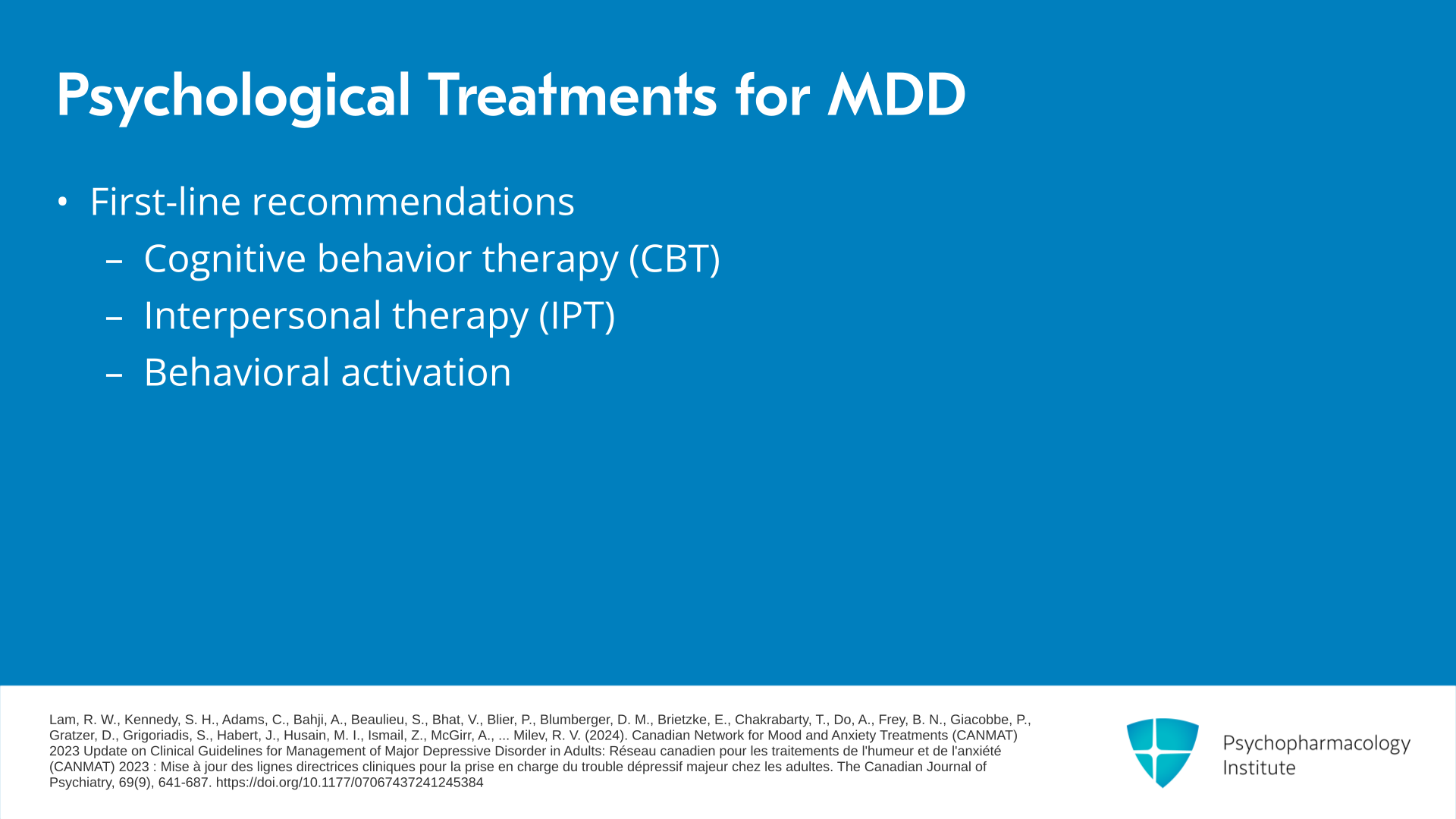
Let’s move now to CANMAT recommendations for psychological treatments for MDD. A first-line recommendation means that there is a meta-analysis with narrow confidence intervals. We’re very confident is valid saying that this treatment works. The three treatments that we recommend are cognitive behavior therapy or CBT, interpersonal therapy or IPT and behavioral activation.
References:
- Lam, R. W., Kennedy, S. H., Adams, C., Bahji, A., Beaulieu, S., Bhat, V., Blier, P., Blumberger, D. M., Brietzke, E., Chakrabarty, T., Do, A., Frey, B. N., Giacobbe, P., Gratzer, D., Grigoriadis, S., Habert, J., Husain, M. I., Ismail, Z., McGirr, A., … Milev, R. V. (2024). Canadian Network for Mood and Anxiety Treatments (CANMAT) 2023 Update on Clinical Guidelines for Management of Major Depressive Disorder in Adults: Réseau canadien pour les traitements de l'humeur et de l'anxiété (CANMAT) 2023 : Mise à jour des lignes directrices cliniques pour la prise en charge du trouble dépressif majeur chez les adultes. The Canadian Journal of Psychiatry, 69(9), 641-687. https://doi.org/10.1177/07067437241245384
Slide 8 of 26
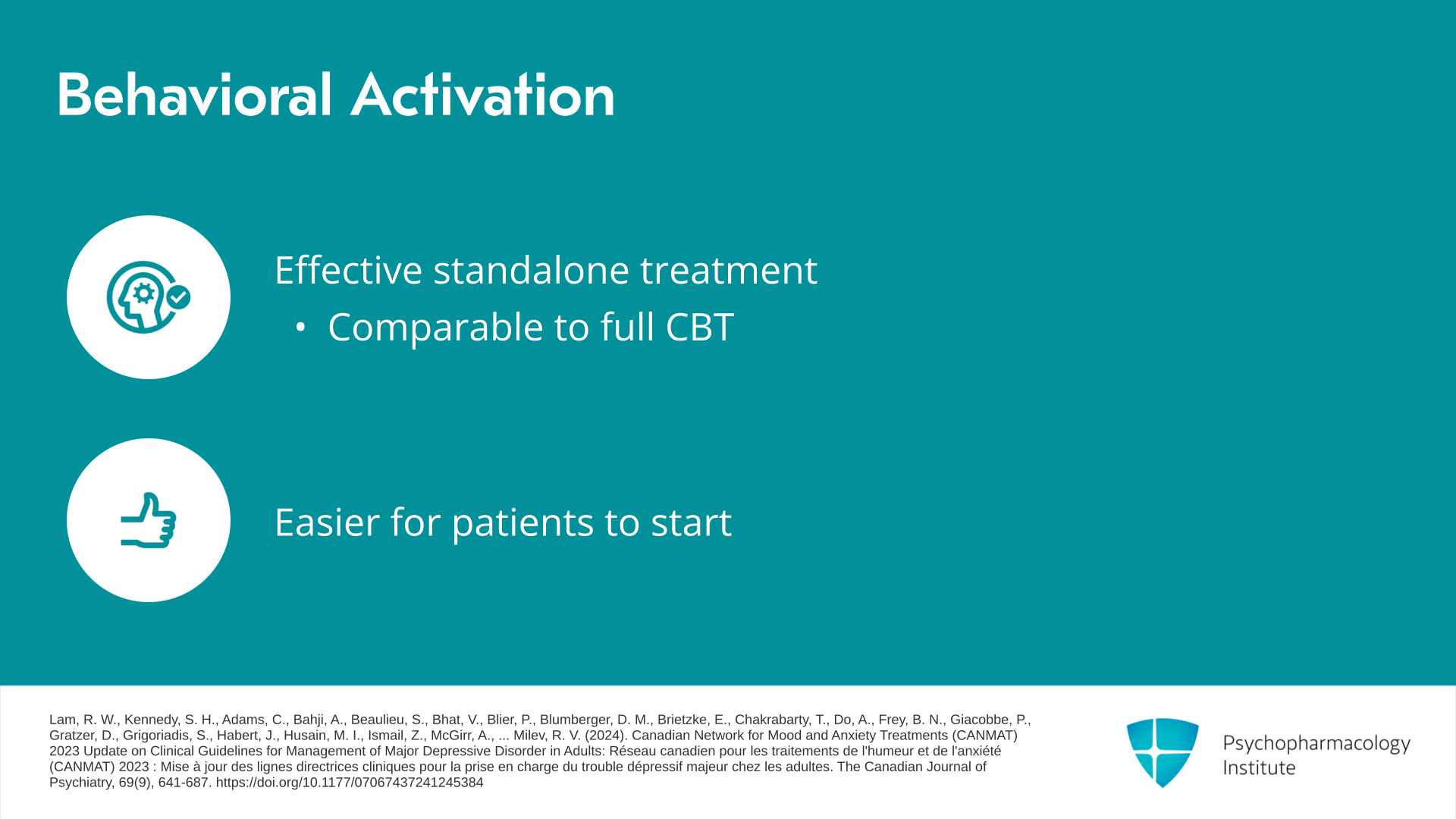
The behavioral activation, people think of that as just a minor component, the B part of CBT but actually behavioral activation has its own manuals and is tested even against full CBT and does as well and perhaps a little bit better. So it is worth learning more about behavioral activation as a strategy. It also is true that behavioral activation is often easier for patients to start with compared to the cognitive aspects of CBT.
References:
- Lam, R. W., Kennedy, S. H., Adams, C., Bahji, A., Beaulieu, S., Bhat, V., Blier, P., Blumberger, D. M., Brietzke, E., Chakrabarty, T., Do, A., Frey, B. N., Giacobbe, P., Gratzer, D., Grigoriadis, S., Habert, J., Husain, M. I., Ismail, Z., McGirr, A., … Milev, R. V. (2024). Canadian Network for Mood and Anxiety Treatments (CANMAT) 2023 Update on Clinical Guidelines for Management of Major Depressive Disorder in Adults: Réseau canadien pour les traitements de l'humeur et de l'anxiété (CANMAT) 2023 : Mise à jour des lignes directrices cliniques pour la prise en charge du trouble dépressif majeur chez les adultes. The Canadian Journal of Psychiatry, 69(9), 641-687. https://doi.org/10.1177/07067437241245384
Free Files
Download PDF and other files
Success!
Check your inbox, we sent you all the materials there.
Slide 9 of 26
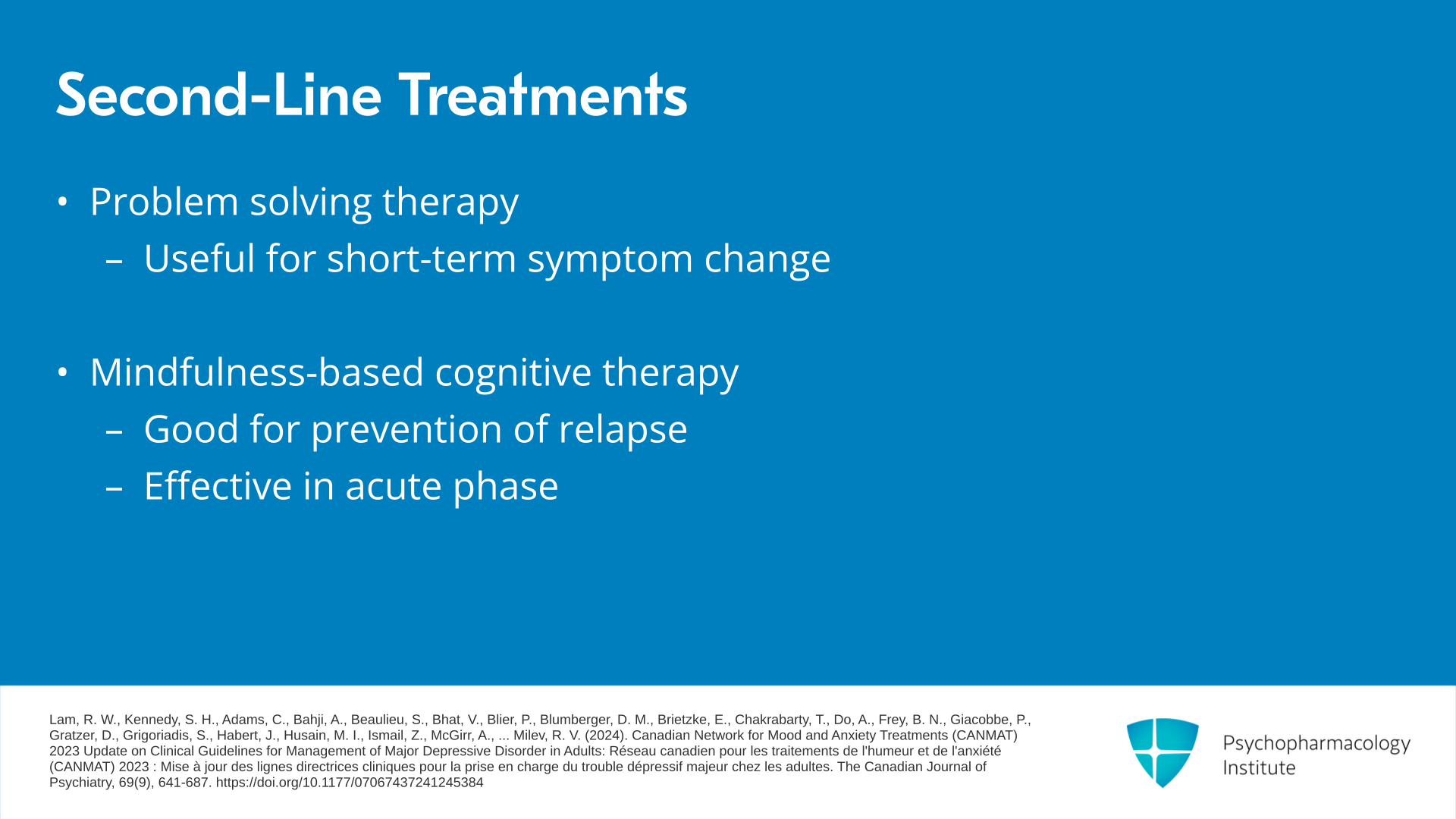
The second-line treatments. Problem solving therapy is really helpful and effective and particularly useful for short-term symptom change. The mindfulness-based cognitive therapy is one that previously was very good for prevention of relapse but now there is evidence that it’s also good in the acute phase.
References:
- Lam, R. W., Kennedy, S. H., Adams, C., Bahji, A., Beaulieu, S., Bhat, V., Blier, P., Blumberger, D. M., Brietzke, E., Chakrabarty, T., Do, A., Frey, B. N., Giacobbe, P., Gratzer, D., Grigoriadis, S., Habert, J., Husain, M. I., Ismail, Z., McGirr, A., … Milev, R. V. (2024). Canadian Network for Mood and Anxiety Treatments (CANMAT) 2023 Update on Clinical Guidelines for Management of Major Depressive Disorder in Adults: Réseau canadien pour les traitements de l'humeur et de l'anxiété (CANMAT) 2023 : Mise à jour des lignes directrices cliniques pour la prise en charge du trouble dépressif majeur chez les adultes. The Canadian Journal of Psychiatry, 69(9), 641-687. https://doi.org/10.1177/07067437241245384
Slide 10 of 26
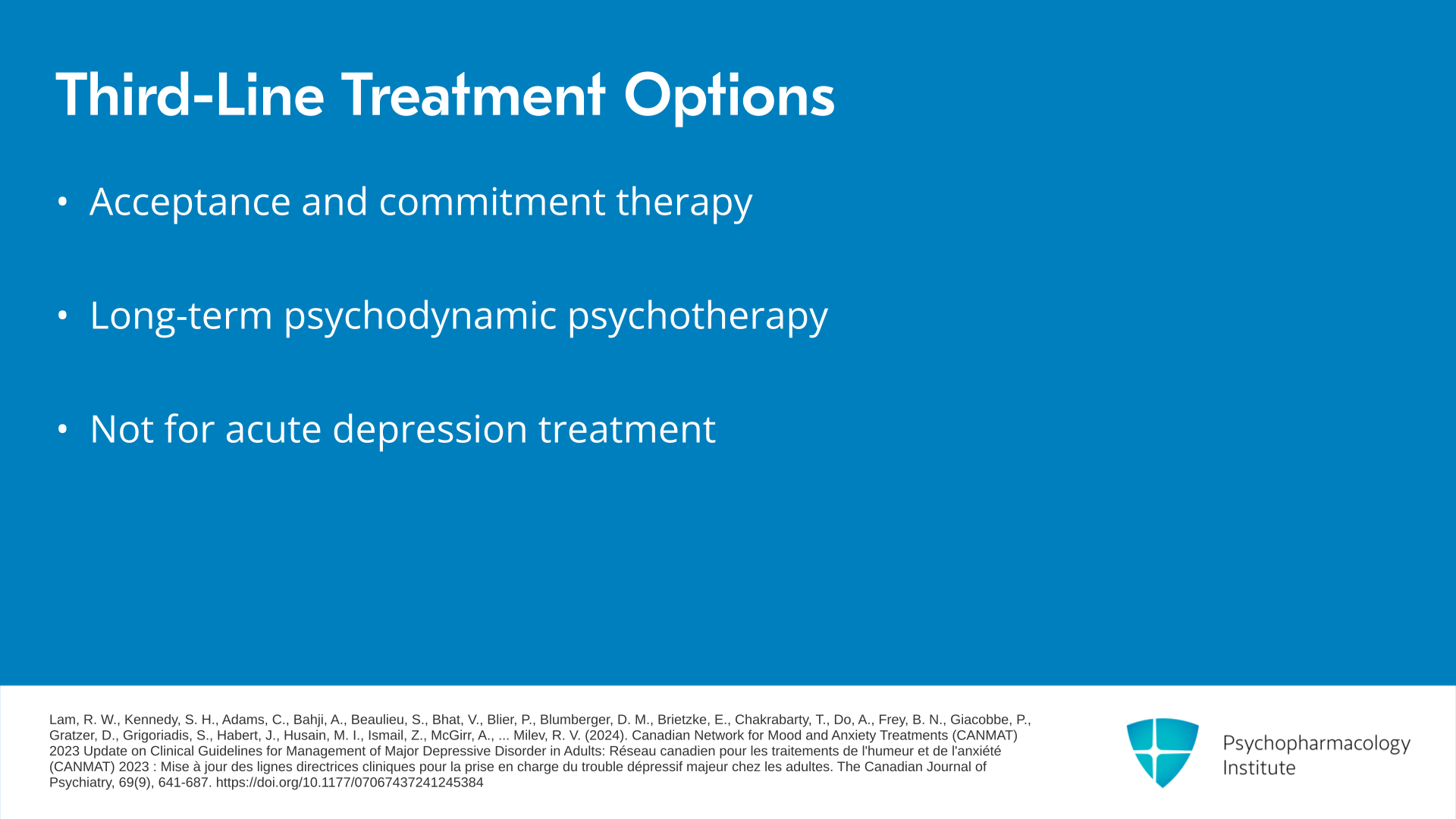
And then there are third-line treatments. Acceptance and commitment therapy is a third-line treatment and also long-term psychodynamic psychotherapy is a third-line treatment. It’s not that appropriate for acute treatment of depression. Now that we know what the various psychotherapies are we can start to think about other treatments.
References:
- Lam, R. W., Kennedy, S. H., Adams, C., Bahji, A., Beaulieu, S., Bhat, V., Blier, P., Blumberger, D. M., Brietzke, E., Chakrabarty, T., Do, A., Frey, B. N., Giacobbe, P., Gratzer, D., Grigoriadis, S., Habert, J., Husain, M. I., Ismail, Z., McGirr, A., … Milev, R. V. (2024). Canadian Network for Mood and Anxiety Treatments (CANMAT) 2023 Update on Clinical Guidelines for Management of Major Depressive Disorder in Adults: Réseau canadien pour les traitements de l'humeur et de l'anxiété (CANMAT) 2023 : Mise à jour des lignes directrices cliniques pour la prise en charge du trouble dépressif majeur chez les adultes. The Canadian Journal of Psychiatry, 69(9), 641-687. https://doi.org/10.1177/07067437241245384
Free Files
Download PDF and other files
Success!
Check your inbox, we sent you all the materials there.
Slide 11 of 26
Now, how do you select the initial treatment, we go over a series of questions where we talk about evidence and shared decision making and psychotherapy. What factors are important to selecting an initial antidepressant? What other alternative treatments are effective? How do you combine psychotherapy and pharmacotherapy? What about pharmacogenetic testing and what is the validity of that? And what about biomarkers?
References:
- Lam, R. W., Kennedy, S. H., Adams, C., Bahji, A., Beaulieu, S., Bhat, V., Blier, P., Blumberger, D. M., Brietzke, E., Chakrabarty, T., Do, A., Frey, B. N., Giacobbe, P., Gratzer, D., Grigoriadis, S., Habert, J., Husain, M. I., Ismail, Z., McGirr, A., … Milev, R. V. (2024). Canadian Network for Mood and Anxiety Treatments (CANMAT) 2023 Update on Clinical Guidelines for Management of Major Depressive Disorder in Adults: Réseau canadien pour les traitements de l'humeur et de l'anxiété (CANMAT) 2023 : Mise à jour des lignes directrices cliniques pour la prise en charge du trouble dépressif majeur chez les adultes. The Canadian Journal of Psychiatry, 69(9), 641-687. https://doi.org/10.1177/07067437241245384
Slide 12 of 26
How are we going to make a choice when there are so many potential choices? In fact, there are 16 antidepressants in the first-line recommendation list alone. How are we going to choose between them? We would use two additional pieces of information. One is, is there some difference in efficacy? And the second of course is tolerability.
References:
- Lam, R. W., Kennedy, S. H., Adams, C., Bahji, A., Beaulieu, S., Bhat, V., Blier, P., Blumberger, D. M., Brietzke, E., Chakrabarty, T., Do, A., Frey, B. N., Giacobbe, P., Gratzer, D., Grigoriadis, S., Habert, J., Husain, M. I., Ismail, Z., McGirr, A., … Milev, R. V. (2024). Canadian Network for Mood and Anxiety Treatments (CANMAT) 2023 Update on Clinical Guidelines for Management of Major Depressive Disorder in Adults: Réseau canadien pour les traitements de l'humeur et de l'anxiété (CANMAT) 2023 : Mise à jour des lignes directrices cliniques pour la prise en charge du trouble dépressif majeur chez les adultes. The Canadian Journal of Psychiatry, 69(9), 641-687. https://doi.org/10.1177/07067437241245384
Free Files
Download PDF and other files
Success!
Check your inbox, we sent you all the materials there.
Slide 13 of 26
For a clue on efficacy, we have particularly emphasized a major meta-analysis that was published actually in 2018 which evaluated 21 antidepressants. And what they found was that on the balance of efficacy and tolerabilities there were three antidepressants that had a slight edge – agomelatine, escitalopram and vortioxetine. Now, the fact that these three have a slight edge has to be balanced with the patient’s own individual experience.
References:
- Lam, R. W., Kennedy, S. H., Adams, C., Bahji, A., Beaulieu, S., Bhat, V., Blier, P., Blumberger, D. M., Brietzke, E., Chakrabarty, T., Do, A., Frey, B. N., Giacobbe, P., Gratzer, D., Grigoriadis, S., Habert, J., Husain, M. I., Ismail, Z., McGirr, A., … Milev, R. V. (2024). Canadian Network for Mood and Anxiety Treatments (CANMAT) 2023 Update on Clinical Guidelines for Management of Major Depressive Disorder in Adults: Réseau canadien pour les traitements de l'humeur et de l'anxiété (CANMAT) 2023 : Mise à jour des lignes directrices cliniques pour la prise en charge du trouble dépressif majeur chez les adultes. The Canadian Journal of Psychiatry, 69(9), 641-687. https://doi.org/10.1177/07067437241245384

Slide 14 of 26
So what does the patient want? What is available for that patient in that country? What is any previous experience like of that patient with that particular medication? Obviously, if they’ve responded well to a particular antidepressant in the past and that was tapered and discontinued and now they’ve had a relapse, it makes sense to consider strongly resuming an antidepressant that worked previously.
References:
- Lam, R. W., Kennedy, S. H., Adams, C., Bahji, A., Beaulieu, S., Bhat, V., Blier, P., Blumberger, D. M., Brietzke, E., Chakrabarty, T., Do, A., Frey, B. N., Giacobbe, P., Gratzer, D., Grigoriadis, S., Habert, J., Husain, M. I., Ismail, Z., McGirr, A., … Milev, R. V. (2024). Canadian Network for Mood and Anxiety Treatments (CANMAT) 2023 Update on Clinical Guidelines for Management of Major Depressive Disorder in Adults: Réseau canadien pour les traitements de l'humeur et de l'anxiété (CANMAT) 2023 : Mise à jour des lignes directrices cliniques pour la prise en charge du trouble dépressif majeur chez les adultes. The Canadian Journal of Psychiatry, 69(9), 641-687. https://doi.org/10.1177/07067437241245384

Free Files
Download PDF and other files
Success!
Check your inbox, we sent you all the materials there.
Slide 15 of 26
But in general in picking the initial antidepressant, select one from the first-line treatments, select one that might be a little bit more tolerable and have a dialogue with the patient about what they’ve heard, what they are willing to try. You should have tried at least three first-line antidepressants from the first-line table before you start dabbling in second- or third-line treatments. The main exception to that would be if someone had previously had a second-line antidepressant and it worked very well for them in the past, you might go directly to that one.
References:
- Lam, R. W., Kennedy, S. H., Adams, C., Bahji, A., Beaulieu, S., Bhat, V., Blier, P., Blumberger, D. M., Brietzke, E., Chakrabarty, T., Do, A., Frey, B. N., Giacobbe, P., Gratzer, D., Grigoriadis, S., Habert, J., Husain, M. I., Ismail, Z., McGirr, A., … Milev, R. V. (2024). Canadian Network for Mood and Anxiety Treatments (CANMAT) 2023 Update on Clinical Guidelines for Management of Major Depressive Disorder in Adults: Réseau canadien pour les traitements de l'humeur et de l'anxiété (CANMAT) 2023 : Mise à jour des lignes directrices cliniques pour la prise en charge du trouble dépressif majeur chez les adultes. The Canadian Journal of Psychiatry, 69(9), 641-687. https://doi.org/10.1177/07067437241245384

Slide 16 of 26
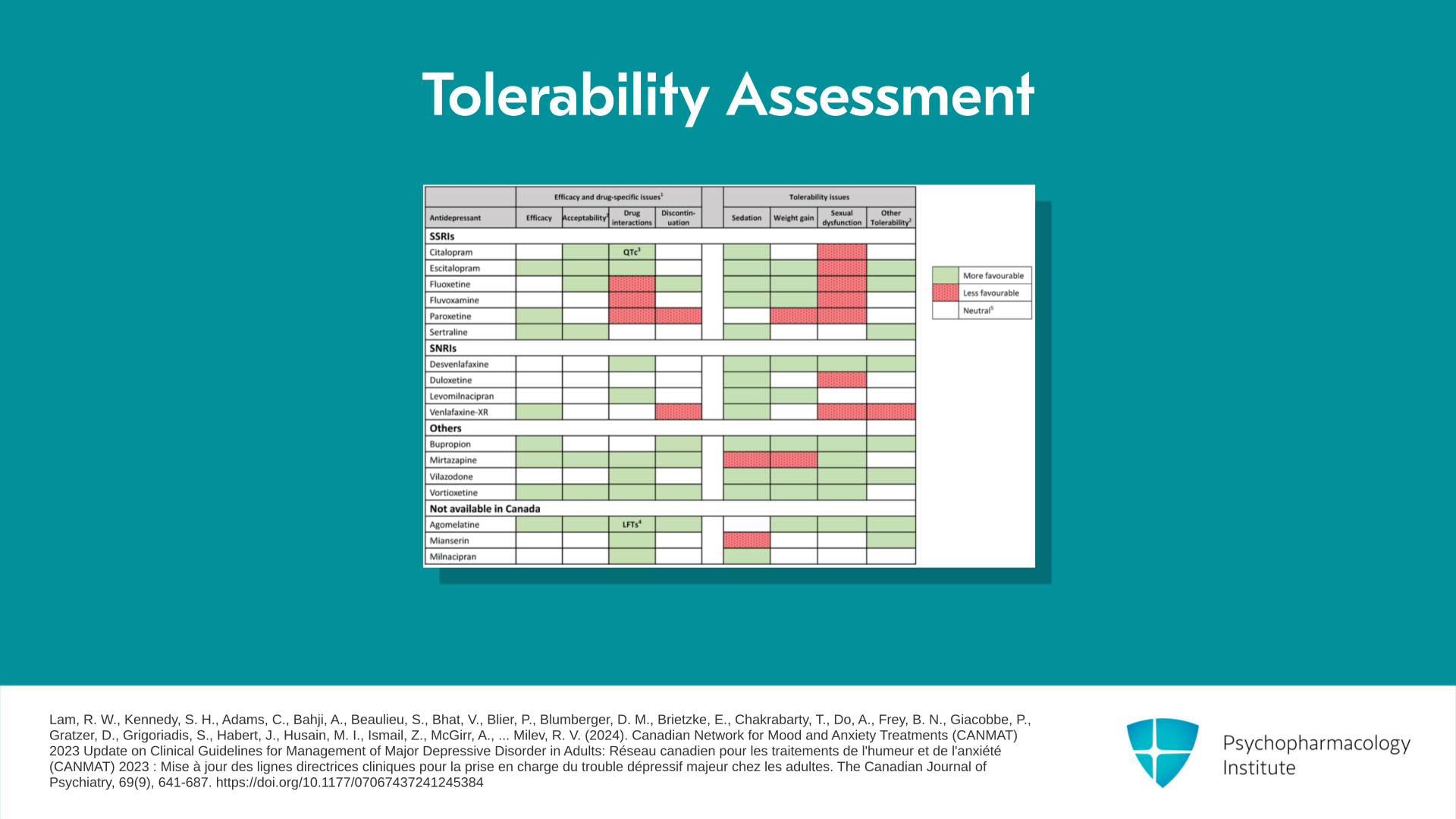
How are we going to know what is tolerable? Well, we’ve tried to capture that in a table that is partially based on evidence but is really based primarily on consensus comparative ratings. And what we’ve done is a table that has three categories of ratings – green which means this particular agent is better, that is has less problems on this particular side effect; red where we’ve called it less favorable, so this agent probably has more problems with this side effect; and what is not shown here but we imply is white which means that it’s between green and red, so we don’t have any strong view that this particular agent is either good or bad regarding that particular side effect.
References:
- Lam, R. W., Kennedy, S. H., Adams, C., Bahji, A., Beaulieu, S., Bhat, V., Blier, P., Blumberger, D. M., Brietzke, E., Chakrabarty, T., Do, A., Frey, B. N., Giacobbe, P., Gratzer, D., Grigoriadis, S., Habert, J., Husain, M. I., Ismail, Z., McGirr, A., … Milev, R. V. (2024). Canadian Network for Mood and Anxiety Treatments (CANMAT) 2023 Update on Clinical Guidelines for Management of Major Depressive Disorder in Adults: Réseau canadien pour les traitements de l'humeur et de l'anxiété (CANMAT) 2023 : Mise à jour des lignes directrices cliniques pour la prise en charge du trouble dépressif majeur chez les adultes. The Canadian Journal of Psychiatry, 69(9), 641-687. https://doi.org/10.1177/07067437241245384
Free Files
Download PDF and other files
Success!
Check your inbox, we sent you all the materials there.
Slide 17 of 26
How would you use a table like this? You would use it by asking the patient, is there a dealbreaker? Is there one side effect that you really don’t want to deal with? They say weight gain or sexual side effects. What you could do is you look at this table and say, well in that case, I’m going to definitely avoid the red ones and I’ll probably pick the green ones and that can narrow the choice of medicines to suggest.
References:
- Lam, R. W., Kennedy, S. H., Adams, C., Bahji, A., Beaulieu, S., Bhat, V., Blier, P., Blumberger, D. M., Brietzke, E., Chakrabarty, T., Do, A., Frey, B. N., Giacobbe, P., Gratzer, D., Grigoriadis, S., Habert, J., Husain, M. I., Ismail, Z., McGirr, A., … Milev, R. V. (2024). Canadian Network for Mood and Anxiety Treatments (CANMAT) 2023 Update on Clinical Guidelines for Management of Major Depressive Disorder in Adults: Réseau canadien pour les traitements de l'humeur et de l'anxiété (CANMAT) 2023 : Mise à jour des lignes directrices cliniques pour la prise en charge du trouble dépressif majeur chez les adultes. The Canadian Journal of Psychiatry, 69(9), 641-687. https://doi.org/10.1177/07067437241245384

Slide 18 of 26
The decision of what antidepressant to use is determined by many factors. The past medication history is also critical and there are other practical concerns. Are they on a lot of other medicines? And how well does this antidepressant do in terms of drug interactions? What is the cost? What is the coverage for this? The patient, do they have a preference?
References:
- Lam, R. W., Kennedy, S. H., Adams, C., Bahji, A., Beaulieu, S., Bhat, V., Blier, P., Blumberger, D. M., Brietzke, E., Chakrabarty, T., Do, A., Frey, B. N., Giacobbe, P., Gratzer, D., Grigoriadis, S., Habert, J., Husain, M. I., Ismail, Z., McGirr, A., … Milev, R. V. (2024). Canadian Network for Mood and Anxiety Treatments (CANMAT) 2023 Update on Clinical Guidelines for Management of Major Depressive Disorder in Adults: Réseau canadien pour les traitements de l'humeur et de l'anxiété (CANMAT) 2023 : Mise à jour des lignes directrices cliniques pour la prise en charge du trouble dépressif majeur chez les adultes. The Canadian Journal of Psychiatry, 69(9), 641-687. https://doi.org/10.1177/07067437241245384

Free Files
Download PDF and other files
Success!
Check your inbox, we sent you all the materials there.
Slide 19 of 26
We’ve tried to operationalize this in a flow chart. We ask a very simple question – are they on other medications? If they are, well then we’re going to have to think about drug-drug interactions. Then comes the all-important question – is there a dealbreaker? Is there a side effect that the patient really wants to avoid? If that’s the case, yes, then look at the table and look at the ones that are more favorable for that particular side effect. Then you can compare the efficacy of the ones that are nice for that side effect and then on that basis go ahead and choose your first antidepressant. Ideally of course, it is a first-line antidepressant that you’re beginning with.
References:
- Lam, R. W., Kennedy, S. H., Adams, C., Bahji, A., Beaulieu, S., Bhat, V., Blier, P., Blumberger, D. M., Brietzke, E., Chakrabarty, T., Do, A., Frey, B. N., Giacobbe, P., Gratzer, D., Grigoriadis, S., Habert, J., Husain, M. I., Ismail, Z., McGirr, A., … Milev, R. V. (2024). Canadian Network for Mood and Anxiety Treatments (CANMAT) 2023 Update on Clinical Guidelines for Management of Major Depressive Disorder in Adults: Réseau canadien pour les traitements de l'humeur et de l'anxiété (CANMAT) 2023 : Mise à jour des lignes directrices cliniques pour la prise en charge du trouble dépressif majeur chez les adultes. The Canadian Journal of Psychiatry, 69(9), 641-687. https://doi.org/10.1177/07067437241245384

Slide 20 of 26
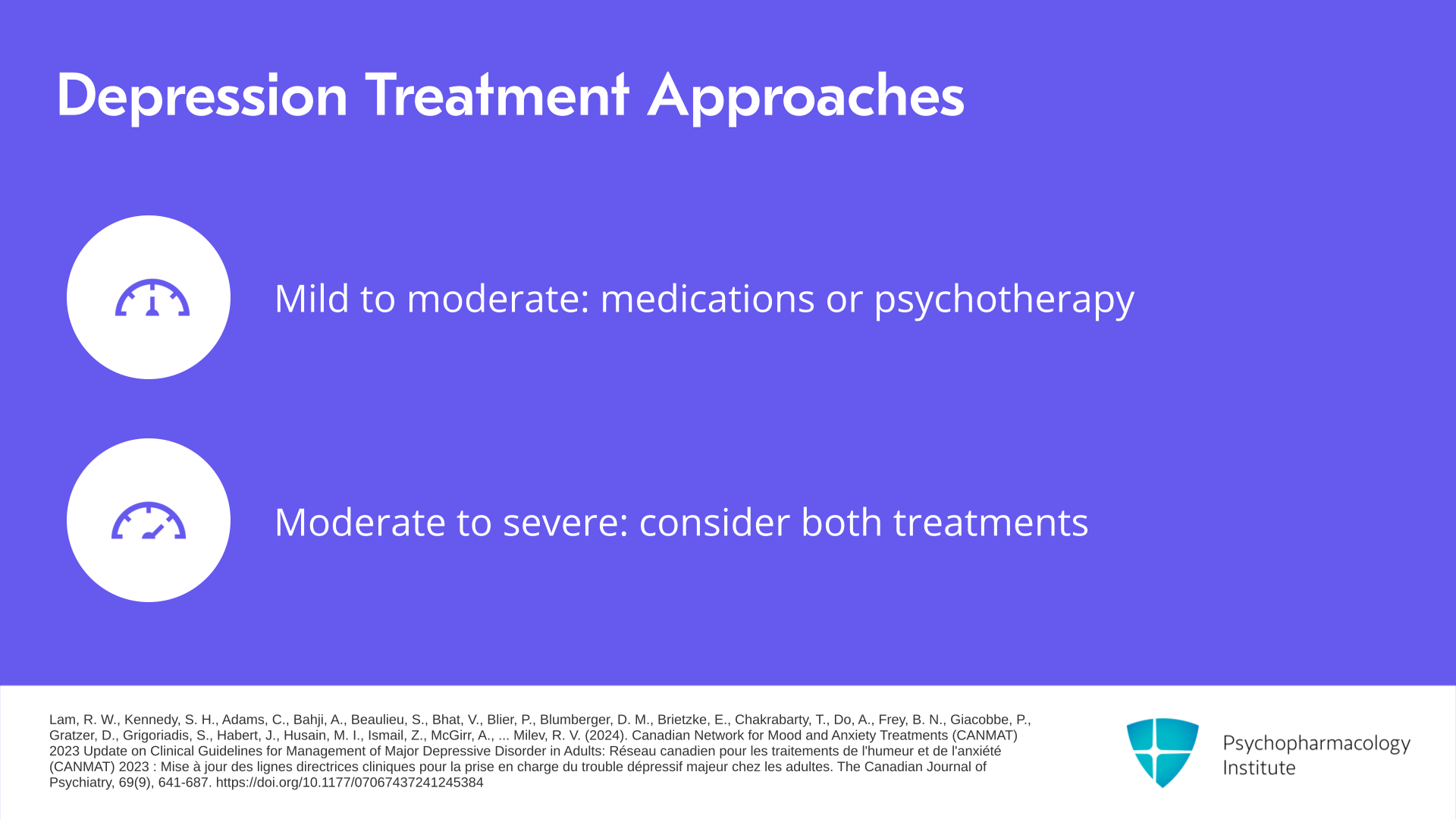
When should pharmacotherapy and psychotherapy be combined? Well, if the depression is mild to moderate, either medications or psychotherapy will work. CANMAT believes that if the depression is mild and the patient wants psychotherapy, that’s good. Start with that. When the depression is moderate to severe, then we really should be talking about both potential treatments.
References:
- Lam, R. W., Kennedy, S. H., Adams, C., Bahji, A., Beaulieu, S., Bhat, V., Blier, P., Blumberger, D. M., Brietzke, E., Chakrabarty, T., Do, A., Frey, B. N., Giacobbe, P., Gratzer, D., Grigoriadis, S., Habert, J., Husain, M. I., Ismail, Z., McGirr, A., … Milev, R. V. (2024). Canadian Network for Mood and Anxiety Treatments (CANMAT) 2023 Update on Clinical Guidelines for Management of Major Depressive Disorder in Adults: Réseau canadien pour les traitements de l'humeur et de l'anxiété (CANMAT) 2023 : Mise à jour des lignes directrices cliniques pour la prise en charge du trouble dépressif majeur chez les adultes. The Canadian Journal of Psychiatry, 69(9), 641-687. https://doi.org/10.1177/07067437241245384
Free Files
Download PDF and other files
Success!
Check your inbox, we sent you all the materials there.
Slide 21 of 26
When it’s severe, it’s particularly relevant to combine treatment. The pharmacotherapy will be the pre-eminent one and the psychotherapy likely will be focused on things like behavioral activation which are easier to do than things like cognitive therapy. You can indicate that while psychotherapy is a great treatment, antidepressants often are quicker and can provide some symptom relief which will then enable the psychotherapy to be more possible and more easy for the patient to actually engage in. So there is a logic to starting with the medications and adding the psychotherapy if both treatments are needed.
References:
- Lam, R. W., Kennedy, S. H., Adams, C., Bahji, A., Beaulieu, S., Bhat, V., Blier, P., Blumberger, D. M., Brietzke, E., Chakrabarty, T., Do, A., Frey, B. N., Giacobbe, P., Gratzer, D., Grigoriadis, S., Habert, J., Husain, M. I., Ismail, Z., McGirr, A., … Milev, R. V. (2024). Canadian Network for Mood and Anxiety Treatments (CANMAT) 2023 Update on Clinical Guidelines for Management of Major Depressive Disorder in Adults: Réseau canadien pour les traitements de l'humeur et de l'anxiété (CANMAT) 2023 : Mise à jour des lignes directrices cliniques pour la prise en charge du trouble dépressif majeur chez les adultes. The Canadian Journal of Psychiatry, 69(9), 641-687. https://doi.org/10.1177/07067437241245384

Slide 22 of 26
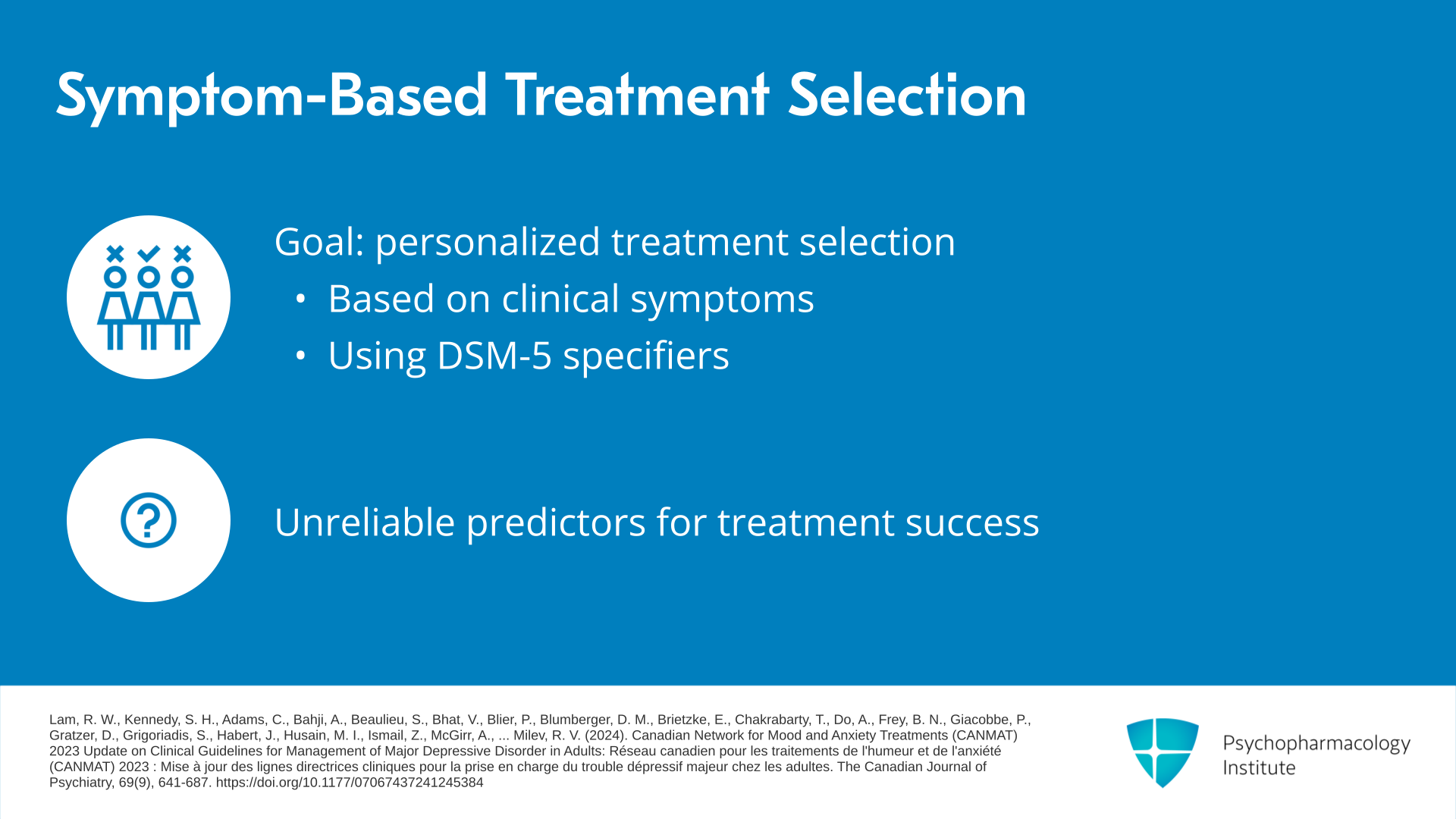
One of the most important hopes in Psychiatry is that we can match a treatment to a patient based on some key clinical symptoms or specifiers. And DSM-5 tries to identify specifiers and symptom dimensions to help us understand the nuances of which antidepressant to choose. Although there are sporadic reports that a particular medication is better with a particular symptom profile or a DSM-5 specifier, in general these have not proven to be reliable predictors of what will work and that applies both to psychotherapy and medication.
References:
- Lam, R. W., Kennedy, S. H., Adams, C., Bahji, A., Beaulieu, S., Bhat, V., Blier, P., Blumberger, D. M., Brietzke, E., Chakrabarty, T., Do, A., Frey, B. N., Giacobbe, P., Gratzer, D., Grigoriadis, S., Habert, J., Husain, M. I., Ismail, Z., McGirr, A., … Milev, R. V. (2024). Canadian Network for Mood and Anxiety Treatments (CANMAT) 2023 Update on Clinical Guidelines for Management of Major Depressive Disorder in Adults: Réseau canadien pour les traitements de l'humeur et de l'anxiété (CANMAT) 2023 : Mise à jour des lignes directrices cliniques pour la prise en charge du trouble dépressif majeur chez les adultes. The Canadian Journal of Psychiatry, 69(9), 641-687. https://doi.org/10.1177/07067437241245384
Free Files
Download PDF and other files
Success!
Check your inbox, we sent you all the materials there.
Slide 23 of 26
We can use the acute actual symptom profile to help us. For instance, if the patient has a lot of anxiety, you could add antianxiety treatments, either medications or psychotherapy or mindfulness, to target that. If there is a seasonal variation to the depression, one would think early about using light therapy as an augmentation of an antidepressant as well. The only exception to this rule is when there are psychotic symptoms present. Those must have an antipsychotic medication included as part of the treatment package.
References:
- Lam, R. W., Kennedy, S. H., Adams, C., Bahji, A., Beaulieu, S., Bhat, V., Blier, P., Blumberger, D. M., Brietzke, E., Chakrabarty, T., Do, A., Frey, B. N., Giacobbe, P., Gratzer, D., Grigoriadis, S., Habert, J., Husain, M. I., Ismail, Z., McGirr, A., … Milev, R. V. (2024). Canadian Network for Mood and Anxiety Treatments (CANMAT) 2023 Update on Clinical Guidelines for Management of Major Depressive Disorder in Adults: Réseau canadien pour les traitements de l'humeur et de l'anxiété (CANMAT) 2023 : Mise à jour des lignes directrices cliniques pour la prise en charge du trouble dépressif majeur chez les adultes. The Canadian Journal of Psychiatry, 69(9), 641-687. https://doi.org/10.1177/07067437241245384

Slide 24 of 26
A key aspect of symptoms is anhedonia. It’s a core symptom of depression and so targeting that, asking about that is useful to know how the patient is doing.
References:
- Lam, R. W., Kennedy, S. H., Adams, C., Bahji, A., Beaulieu, S., Bhat, V., Blier, P., Blumberger, D. M., Brietzke, E., Chakrabarty, T., Do, A., Frey, B. N., Giacobbe, P., Gratzer, D., Grigoriadis, S., Habert, J., Husain, M. I., Ismail, Z., McGirr, A., … Milev, R. V. (2024). Canadian Network for Mood and Anxiety Treatments (CANMAT) 2023 Update on Clinical Guidelines for Management of Major Depressive Disorder in Adults: Réseau canadien pour les traitements de l'humeur et de l'anxiété (CANMAT) 2023 : Mise à jour des lignes directrices cliniques pour la prise en charge du trouble dépressif majeur chez les adultes. The Canadian Journal of Psychiatry, 69(9), 641-687. https://doi.org/10.1177/07067437241245384

Free Files
Download PDF and other files
Success!
Check your inbox, we sent you all the materials there.
Slide 25 of 26
Are antidepressants associated with an increased risk of suicide? Suicide risk is not increased by antidepressants in adults over 25. In most patients, therefore, suicide risk is not increased. Under 25 years, it may be. It’s not a strong and reliable association but there is some evidence. So you could warn the patient that there may be a slight tendency that a few people start thinking about death or suicide more when they first start an antidepressant and you should go over what they should do if that happens.
References:
- Lam, R. W., Kennedy, S. H., Adams, C., Bahji, A., Beaulieu, S., Bhat, V., Blier, P., Blumberger, D. M., Brietzke, E., Chakrabarty, T., Do, A., Frey, B. N., Giacobbe, P., Gratzer, D., Grigoriadis, S., Habert, J., Husain, M. I., Ismail, Z., McGirr, A., … Milev, R. V. (2024). Canadian Network for Mood and Anxiety Treatments (CANMAT) 2023 Update on Clinical Guidelines for Management of Major Depressive Disorder in Adults: Réseau canadien pour les traitements de l'humeur et de l'anxiété (CANMAT) 2023 : Mise à jour des lignes directrices cliniques pour la prise en charge du trouble dépressif majeur chez les adultes. The Canadian Journal of Psychiatry, 69(9), 641-687. https://doi.org/10.1177/07067437241245384

Slide 26 of 26
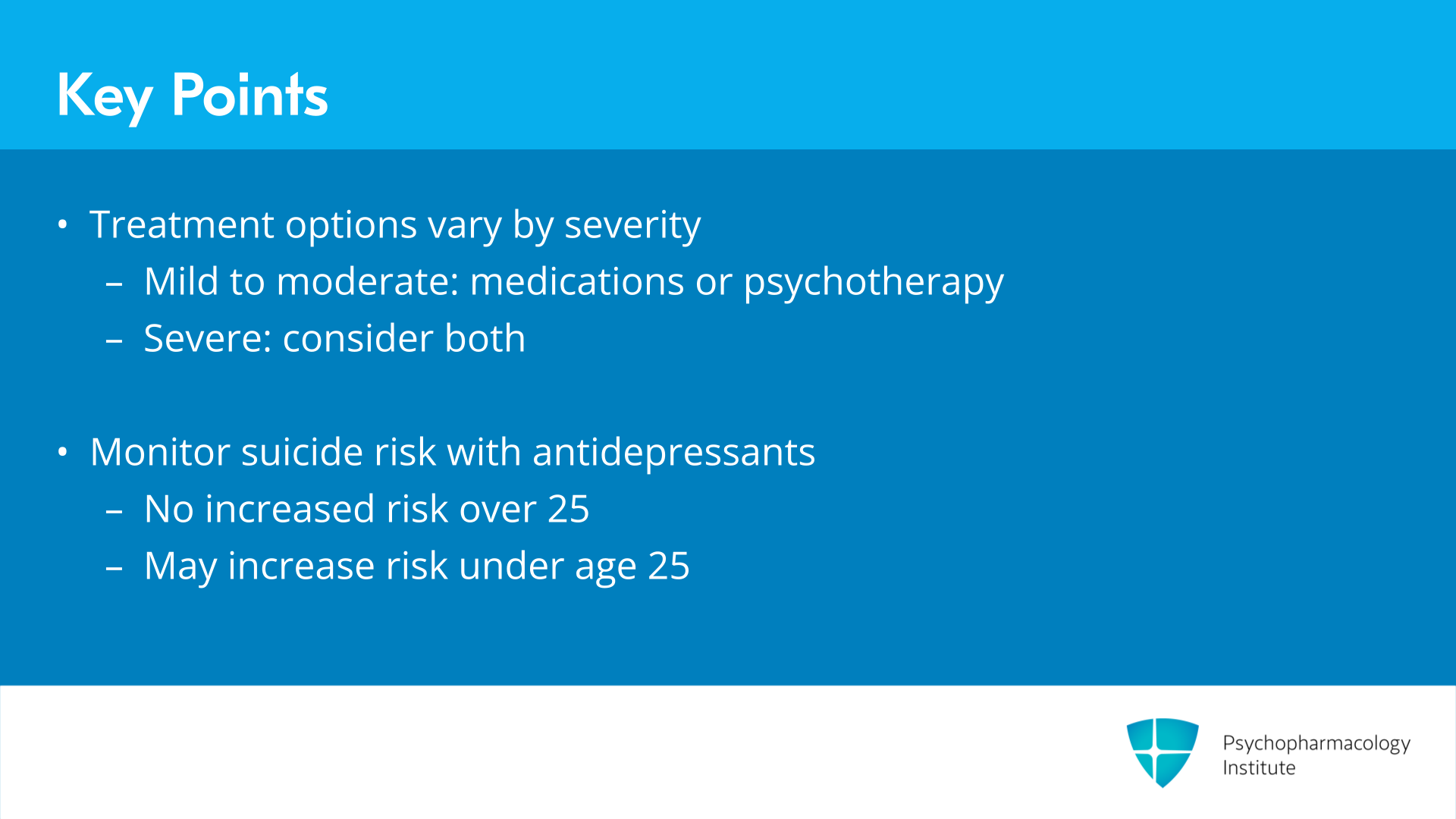
In summary, our key points from this selection are, when the depression is mild to moderate, you can think of either medications or psychotherapy and work with the patient and let them decide what should be the initial treatment and what should be the sequential approach to the depression. However, when the depression is severe, consider using both. And remember suicide risk is not increased by antidepressants in adults over 25 but under the age of 25 it may be, so warn the patient.
Free Files
Download PDF and other files
Success!
Check your inbox, we sent you all the materials there.
