Close Banner
Section Free  - Video Lectures

06. BSMs and Drug Interactions

Published on August 1, 2023 Certification expiration date: August 1, 2026

Amelia Villagomez, M.D.

Assistant Professor of Psychiatry - University of Arizona

Key Points

  • BSMs may potentiate psychotropic medications and other CNS active medications.
  • Antibiotics and antacids may decrease the effectiveness of BSMs.
  • Consider discontinuing BSMs 3–7 days before and after anesthesia.

Free Downloads for Offline Access

  • Free Download Presentation File (PPTX)
  • Free Download Audio File (MP3)
  • Free Download Video (MP4)

Slides and Transcript

Slide 1 of 11

Potential micronutrient interactions.

Slide 2 of 11

Research has shown general safety when used in medication-free patients. However, given the potentiation that we discussed previously, caution is warranted when the patient is taking psychotropic medications.
References:
  • Gerbarg, P. L., Muskin, P. R., & Brown, R. P. (2017). Complementary and integrative treatments in psychiatric practice. American Psychiatric Pub.
  • Popper C. W. (2014). Single-micronutrient and broad-spectrum micronutrient approaches for treating mood disorders in youth and adults. Child and Adolescent Psychiatric Clinics of North America, 23(3), 591–672.
Free Files
Success!
Check your inbox, we sent you all the materials there.

Slide 3 of 11

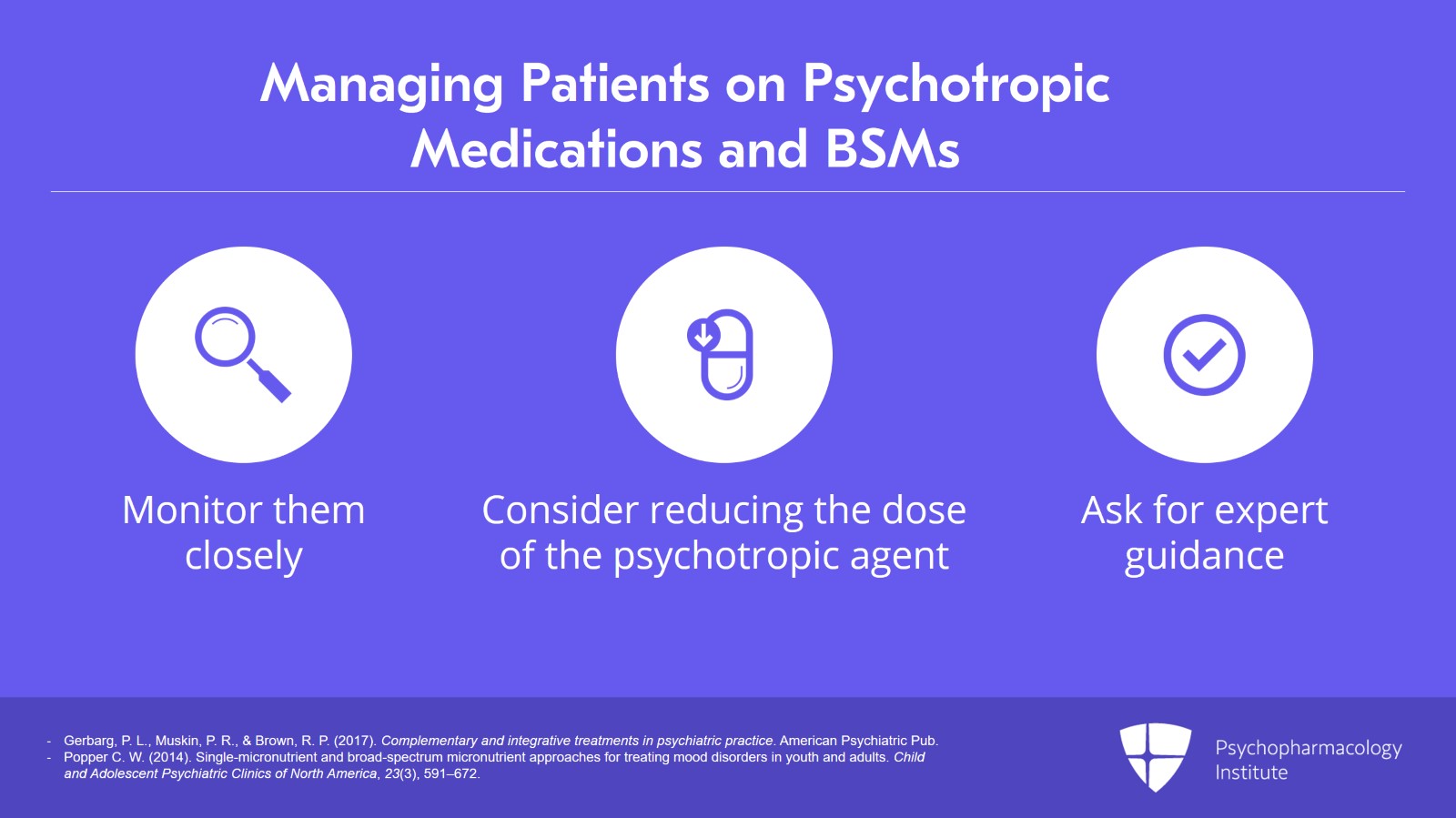
Patients should be closely monitored with full attention to the high likelihood that optimum dosing of psychotropic agents will require significant reductions and expert guidance should be consulted.
References:
  • Gerbarg, P. L., Muskin, P. R., & Brown, R. P. (2017). Complementary and integrative treatments in psychiatric practice. American Psychiatric Pub.
  • Popper C. W. (2014). Single-micronutrient and broad-spectrum micronutrient approaches for treating mood disorders in youth and adults. Child and Adolescent Psychiatric Clinics of North America, 23(3), 591–672.

Slide 4 of 11

There are potential micronutrient interactions with virtually any medication with CNS effects including antihistamines, medications for colds, recreational drugs, caffeine, nicotine, certain hormones like levothyroxine and glucocorticoids.  
References:
  • Gerbarg, P. L., Muskin, P. R., & Brown, R. P. (2017). Complementary and integrative treatments in psychiatric practice. American Psychiatric Pub.
  • Popper C. W. (2014). Single-micronutrient and broad-spectrum micronutrient approaches for treating mood disorders in youth and adults. Child and Adolescent Psychiatric Clinics of North America, 23(3), 591–672.
Free Files
Success!
Check your inbox, we sent you all the materials there.

Slide 5 of 11

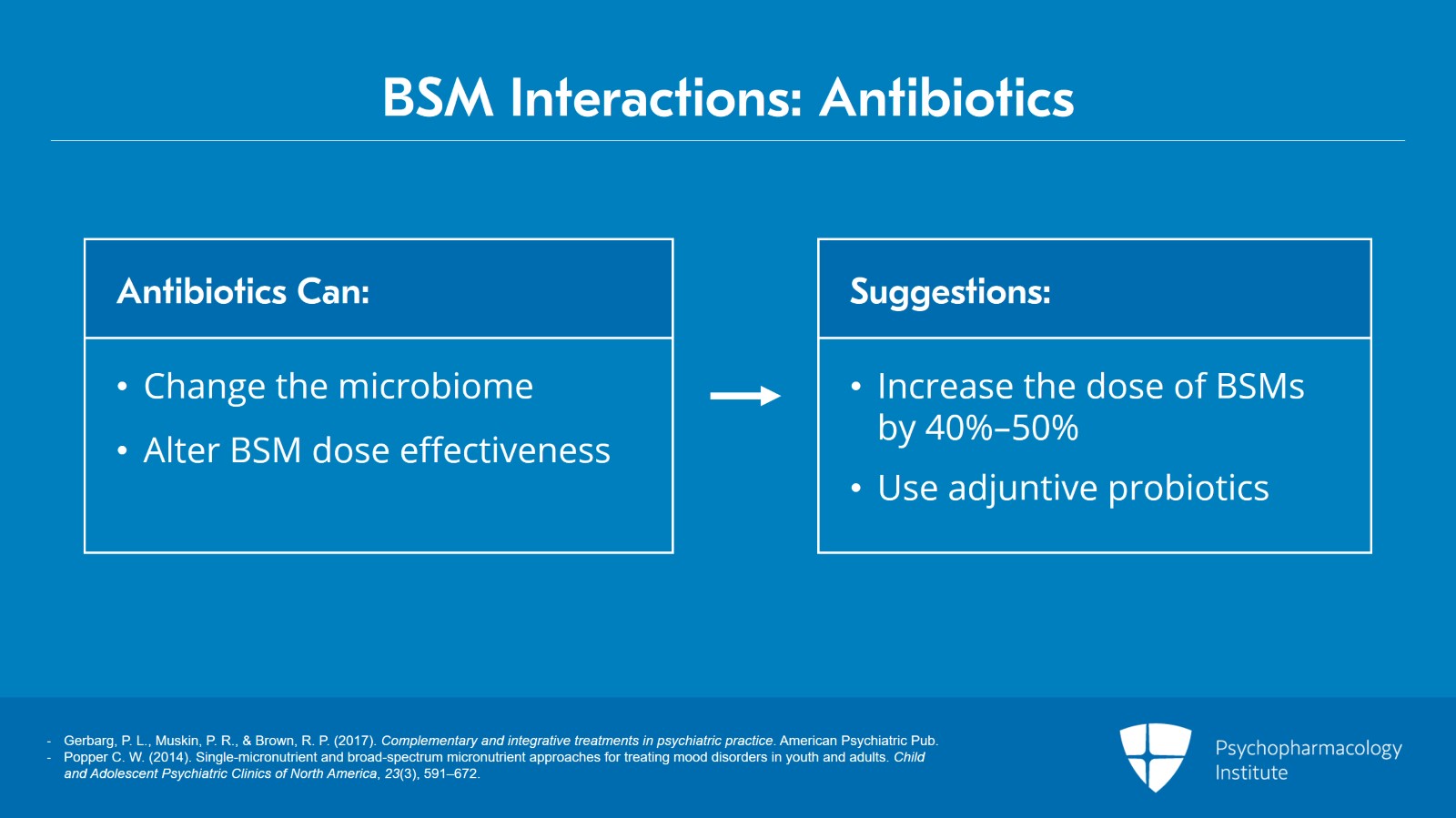
As antibiotics can change the microbiome and thereby potentially change the absorption of nutrients, micronutrient dose effectiveness may be altered after receiving antibiotics. Authors of the chapter on broad-spectrum micronutrients in the book, Complementary and Integrative Treatments in Psychiatric Practice suggest this problem may be avoided by increasing the dose of micronutrients by 40 to 50% during antibiotic therapy plus an additional four days. Also, anecdotally, some clinicians use adjunctive probiotics for a month following the course of an antibiotic.
References:
  • Gerbarg, P. L., Muskin, P. R., & Brown, R. P. (2017). Complementary and integrative treatments in psychiatric practice. American Psychiatric Pub.
  • Popper C. W. (2014). Single-micronutrient and broad-spectrum micronutrient approaches for treating mood disorders in youth and adults. Child and Adolescent Psychiatric Clinics of North America, 23(3), 591–672.

Slide 6 of 11

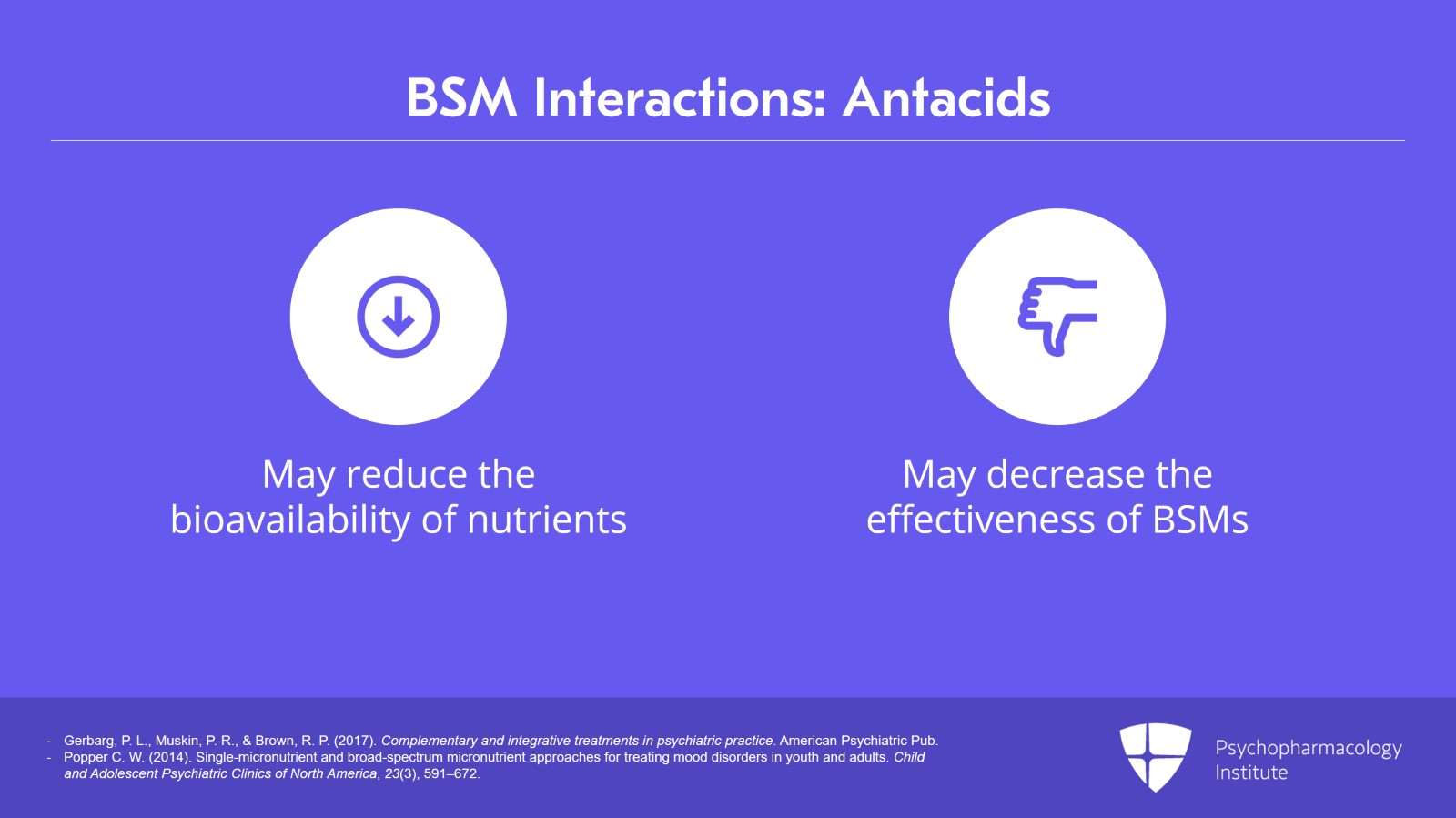
Now, let’s discuss antacids. Digestion is a major step in preparing food for extraction of nutrients. Altering this step of the digestive process can reduce the bioavailability of certain nutrients in the absorption phase. For example, the US Food and Drug Administration is informing the public that prescription proton pump inhibitor drugs may cause low magnesium levels if taken for prolonged periods of time, in most cases, longer than a year. In approximately one-quarter of these cases reviewed, magnesium supplementation alone did not improve low serum magnesium levels and the PPI had to be discontinued. In a similar way, antacids may decrease the effectiveness of broad-spectrum micronutrients by decreasing their ability to be absorbed.
References:
  • Gerbarg, P. L., Muskin, P. R., & Brown, R. P. (2017). Complementary and integrative treatments in psychiatric practice. American Psychiatric Pub.
  • Popper C. W. (2014). Single-micronutrient and broad-spectrum micronutrient approaches for treating mood disorders in youth and adults. Child and Adolescent Psychiatric Clinics of North America, 23(3), 591–672.
Free Files
Success!
Check your inbox, we sent you all the materials there.

Slide 7 of 11

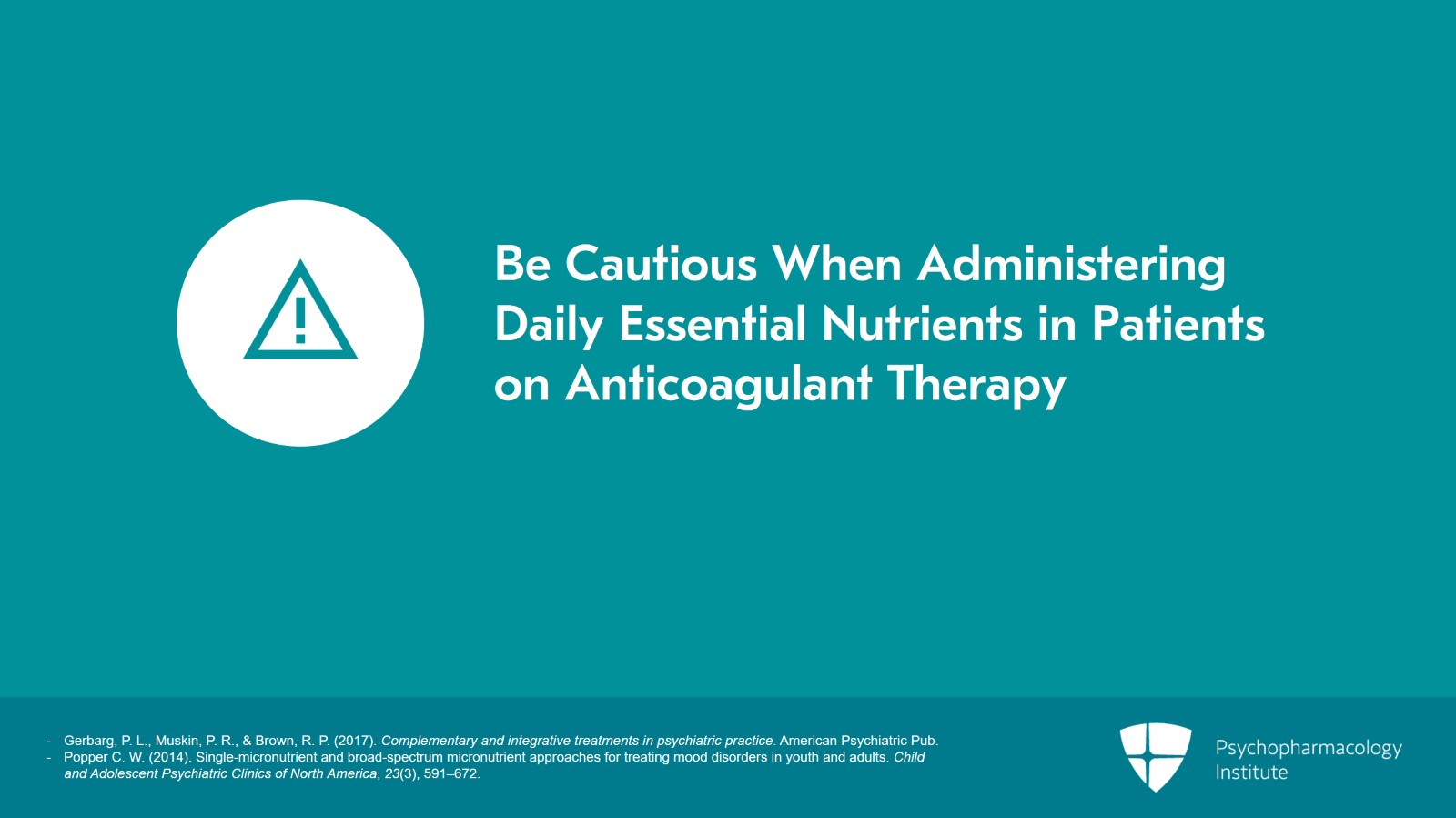
Daily Essential Nutrients contain vitamin K which promotes blood clotting function. Therefore, caution is needed when administering with patients on anticoagulant therapy.
References:
  • Gerbarg, P. L., Muskin, P. R., & Brown, R. P. (2017). Complementary and integrative treatments in psychiatric practice. American Psychiatric Pub.
  • Popper C. W. (2014). Single-micronutrient and broad-spectrum micronutrient approaches for treating mood disorders in youth and adults. Child and Adolescent Psychiatric Clinics of North America, 23(3), 591–672.

Slide 8 of 11

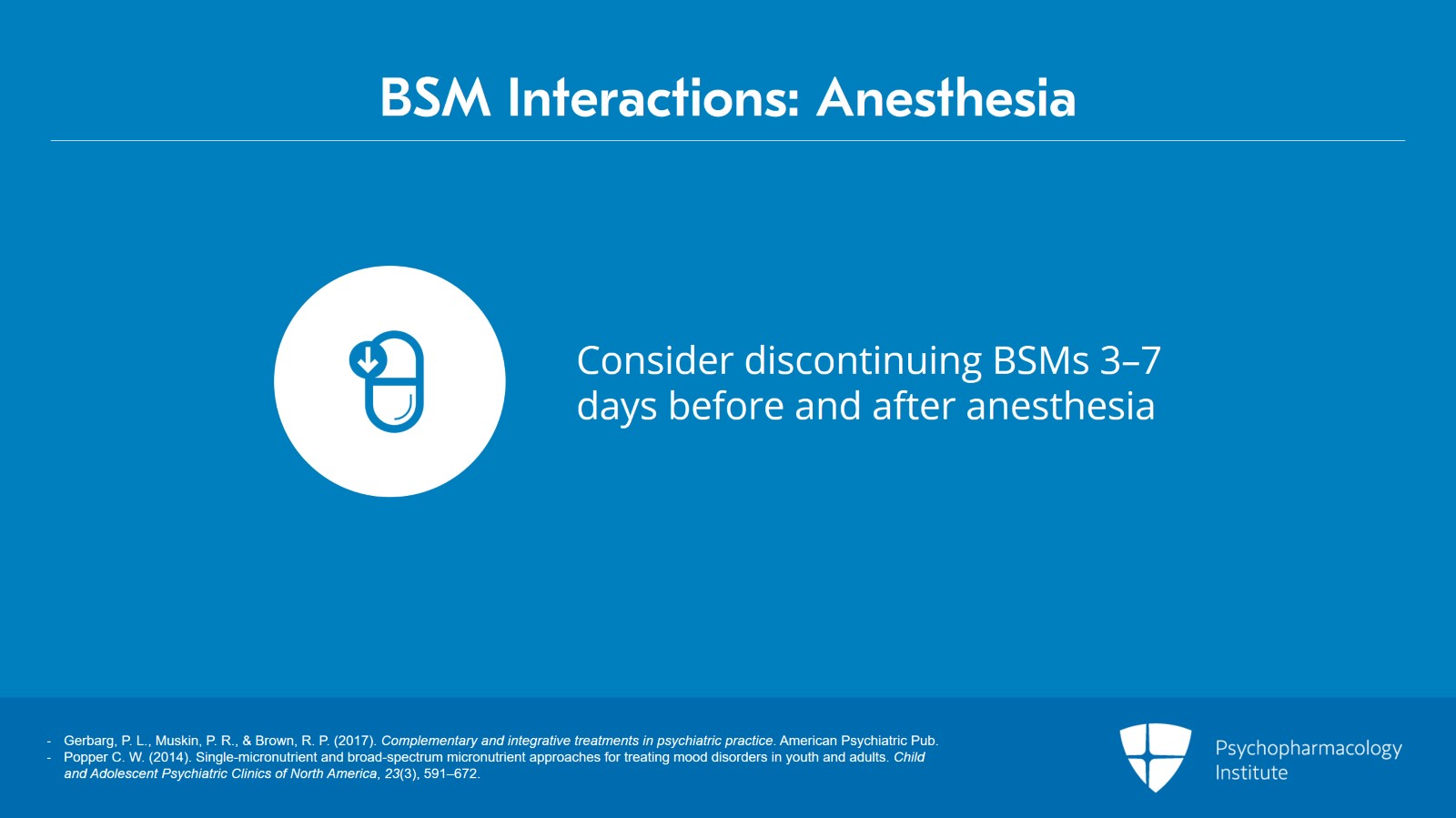
As anesthesia has psychotropic effects, broad-spectrum micronutrients may interact with anesthesia. And out of caution, some individuals may wish to discontinue these formulas three to seven days prior and three to seven days after anesthesia based on theoretical concerns. No controlled research is available in this area.
References:
  • Gerbarg, P. L., Muskin, P. R., & Brown, R. P. (2017). Complementary and integrative treatments in psychiatric practice. American Psychiatric Pub.
  • Popper C. W. (2014). Single-micronutrient and broad-spectrum micronutrient approaches for treating mood disorders in youth and adults. Child and Adolescent Psychiatric Clinics of North America, 23(3), 591–672.
Free Files
Success!
Check your inbox, we sent you all the materials there.

Slide 9 of 11

Key points: Broad-spectrum micronutrients may potentiate psychotropic medications as well as other CNS active medications such as antihistamines and thyroid medications. Antibiotics and antacids may decrease the effectiveness of these two formulas.

Slide 10 of 11

Out of caution, consideration may be made to discontinue broad-spectrum micronutrients three to seven days prior to and after anesthesia.
Free Files
Success!
Check your inbox, we sent you all the materials there.

Slide 11 of 11

Learning Objectives:

After completing this activity, the learner will be able to:

  1. Describe and proficiently utilize the procedure for the clinical implementation of BSMs.
  2. Discuss with patients about the risks and benefits of BSM utilization.
  3. Identify and comprehend the patient profiles that may benefit substantially from BSM supplementation.

Original Release Date: August 1, 2023

Review and Re-release Date: March 1, 2024

Expiration Date: August 1, 2026

Expert: Amelia Villagomez, M.D.

Medical Editor: Paz Badía, M.D.

Relevant Financial Disclosures: 

None of the faculty, planners, and reviewers for this educational activity have relevant financial relationships to disclose during the last 24 months with ineligible companies whose primary business is producing, marketing, selling, re-selling, or distributing healthcare products used by or on patients.

Contact Information: For questions regarding the content or access to this activity, contact us at support@psychopharmacologyinstitute.com

Instructions for Participation and Credit:

Participants must complete the activity online during the valid credit period that is noted above.

Follow these steps to earn CME credit:

  1. View the required educational content provided on this course page.

  2. Complete the Post Activity Evaluation for providing the necessary feedback for continuing accreditation purposes and for the development of future activities. NOTE: Completing the Post Activity Evaluation after the quiz is required to receive the earned credit.

  3. Download your certificate.

Accreditation Statement

This activity has been planned and implemented in accordance with the accreditation requirements and policies of the Accreditation Council for Continuing Medical Education through the joint providership of Medical Academy LLC and the Psychopharmacology Institute. Medical Academy is accredited by the ACCME to provide continuing medical education for physicians.

Credit Designation Statement

Medical Academy designates this enduring activity for a maximum of 0.75 AMA PRA Category 1 credit(s)™. Physicians should claim only the credit commensurate with the extent of their participation in the activity.


Free Files
Success!
Check your inbox, we sent you all the materials there.
Continue in the website
Instant access modal

Become a Bronze, Silver, Gold, Bronze extended, Silver extended or Gold extended Member.

2025–26 Psychopharmacology CME Program

Unlock up to 155 CME Credits, including 40 SA CME Credits.