Slides and Transcript
Slide 2 of 25
Other psychiatric conditions are frequently associated with tic disorders. Between 80% to 90% of patients with tic disorders have one or more comorbid psychiatric disorders.
References:
- Ueda, K., & Black, K. J. (2021). A comprehensive review of tic disorders in children. Journal of Clinical Medicine, 10(11), 2479.
Free Files
Download PDF and other files
Success!
Check your inbox, we sent you all the materials there.
Slide 3 of 25
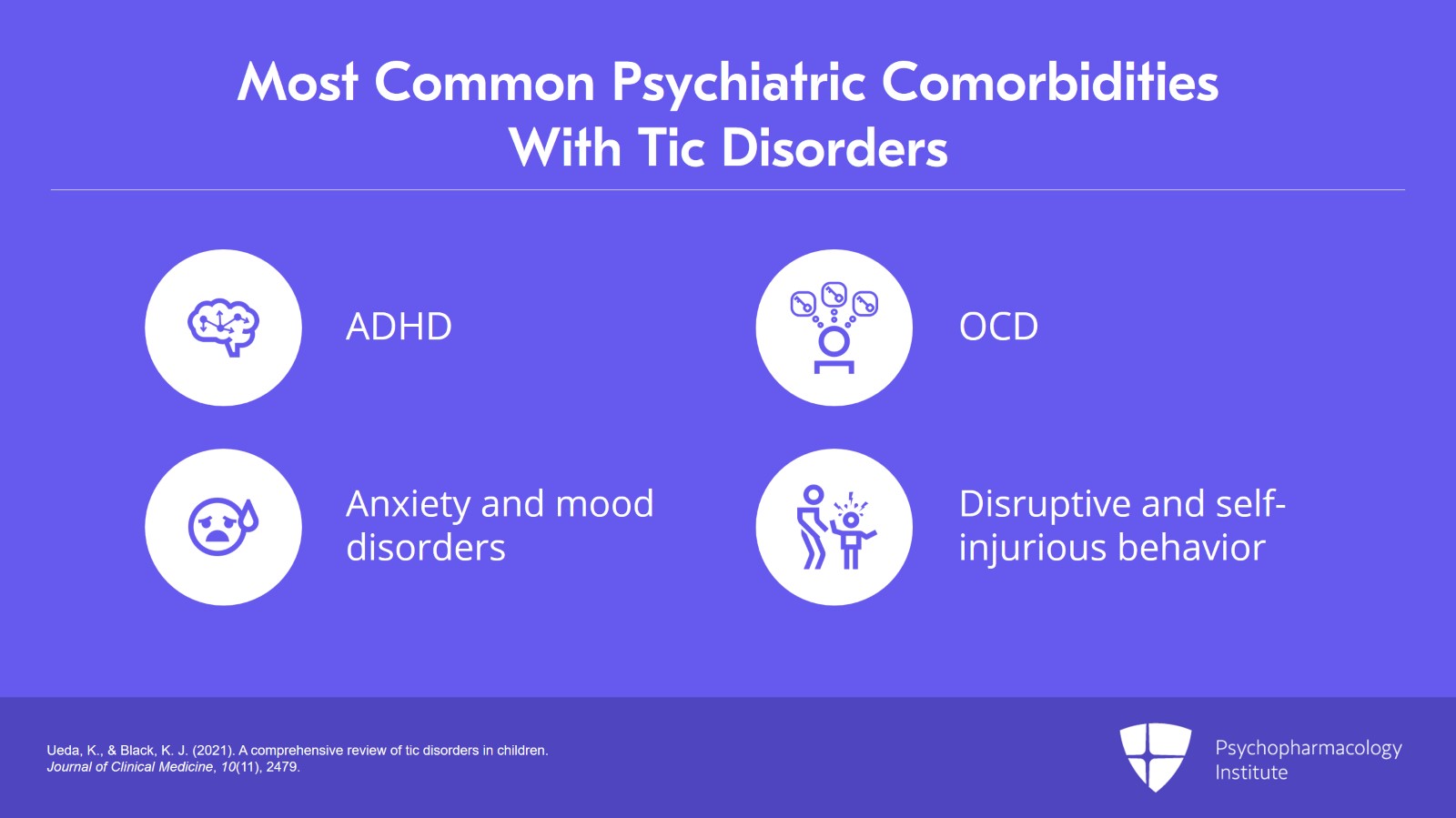
The most common psychiatric comorbidities include ADHD and obsessive-compulsive disorder as well as anxiety and mood disorders and disruptive and self-injurious behavior.
References:
- Ueda, K., & Black, K. J. (2021). A comprehensive review of tic disorders in children. Journal of Clinical Medicine, 10(11), 2479.
Slide 4 of 25
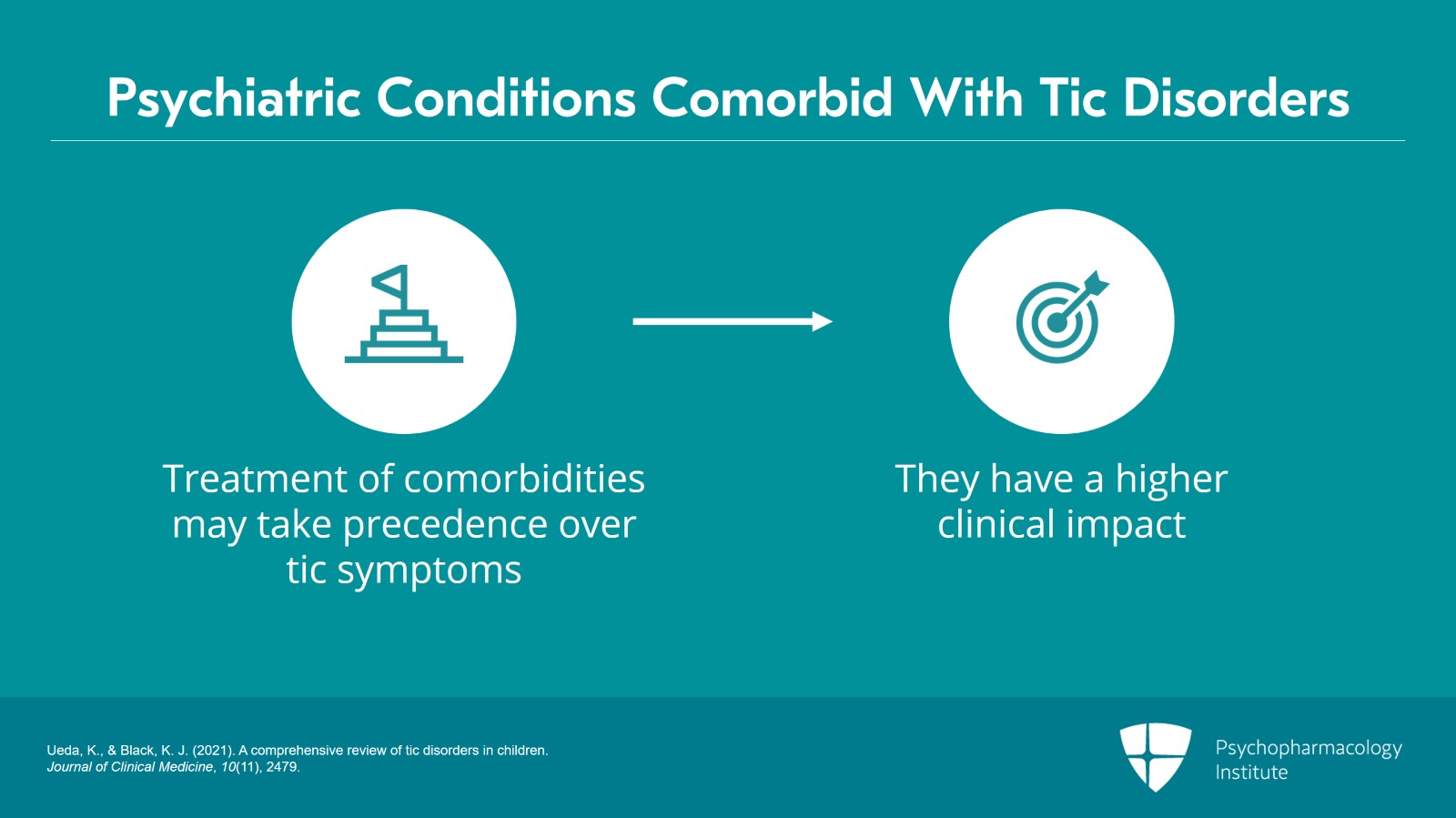
In many patients, treatment of comorbid psychiatric conditions may actually take precedence over tic symptoms as the functional impairment caused by comorbid disorders may have a more significant clinical impact on the overall quality of life.
References:
- Ueda, K., & Black, K. J. (2021). A comprehensive review of tic disorders in children. Journal of Clinical Medicine, 10(11), 2479.
Free Files
Download PDF and other files
Success!
Check your inbox, we sent you all the materials there.
Slide 5 of 25
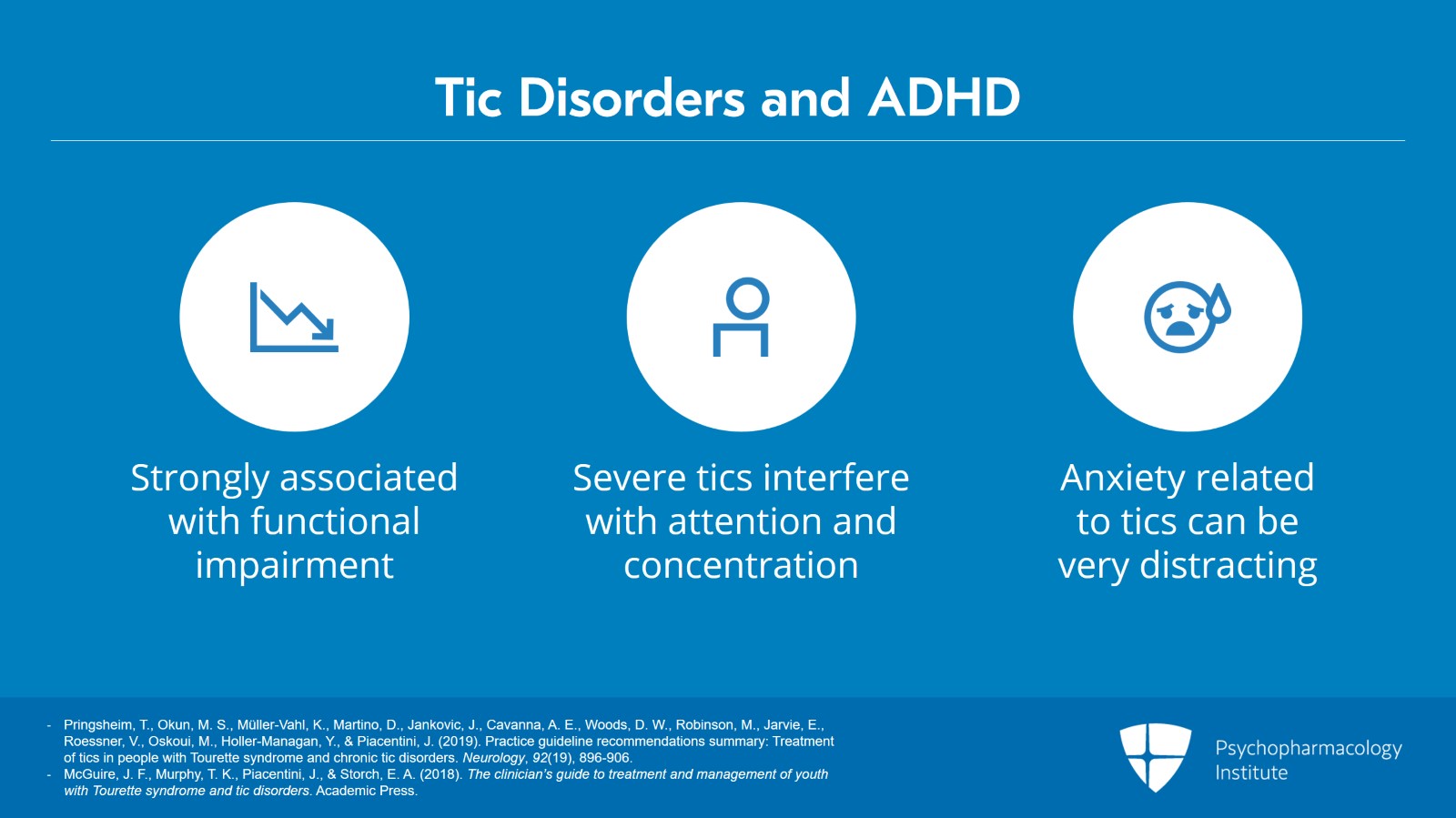
Tic disorders and ADHD.
This is a very common comorbidity and it’s especially noteworthy that it can be more strongly associated with functional impairment.
Severe tics can interfere with attention and concentration while anxiety related to tics and premonitory urges can be very distracting and may also present as fidgetiness commonly seen in ADHD.
References:
- Pringsheim, T., Okun, M. S., Müller-Vahl, K., Martino, D., Jankovic, J., Cavanna, A. E., Woods, D. W., Robinson, M., Jarvie, E., Roessner, V., Oskoui, M., Holler-Managan, Y., & Piacentini, J. (2019). Practice guideline recommendations summary: Treatment of tics in people with Tourette syndrome and chronic tic disorders. Neurology, 92(19), 896-906.
- McGuire, J. F., Murphy, T. K., Piacentini, J., & Storch, E. A. (2018). The clinician’s guide to treatment and management of youth with Tourette syndrome and tic disorders. Academic Press.
Slide 6 of 25
Comorbid ADHD is likely to attenuate overall decreases in tic symptom severity. That being said, behavior therapy is still very beneficial for youth with ADHD and tics and it’s something we’ll discuss in more detail soon.
References:
- Pringsheim, T., Okun, M. S., Müller-Vahl, K., Martino, D., Jankovic, J., Cavanna, A. E., Woods, D. W., Robinson, M., Jarvie, E., Roessner, V., Oskoui, M., Holler-Managan, Y., & Piacentini, J. (2019). Practice guideline recommendations summary: Treatment of tics in people with Tourette syndrome and chronic tic disorders. Neurology, 92(19), 896-906.
- McGuire, J. F., Murphy, T. K., Piacentini, J., & Storch, E. A. (2018). The clinician’s guide to treatment and management of youth with Tourette syndrome and tic disorders. Academic Press.
Free Files
Download PDF and other files
Success!
Check your inbox, we sent you all the materials there.
Slide 7 of 25
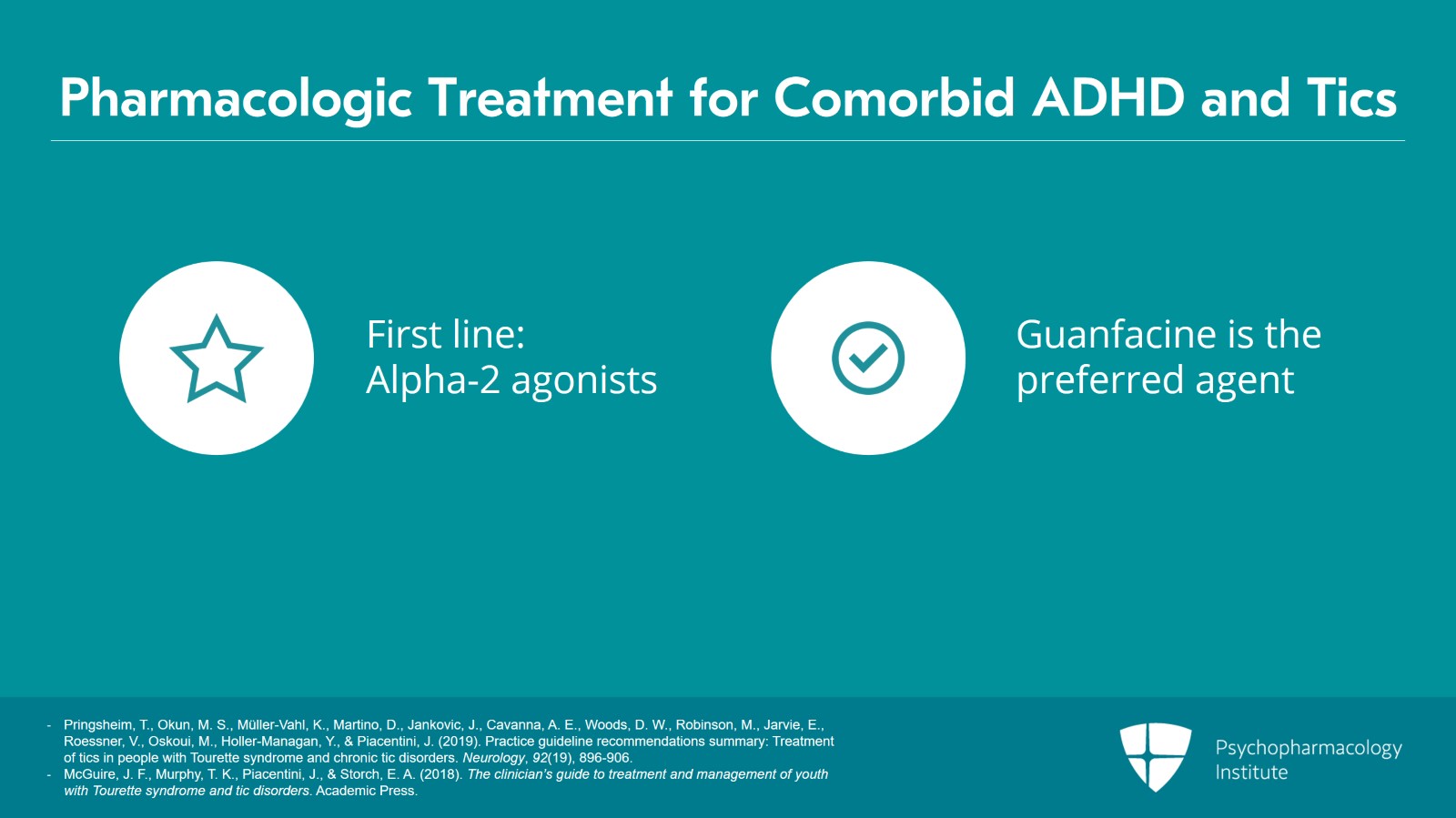
The alpha-2 agonists, clonidine and guanfacine, are recommended as first-line pharmacological treatment for combined ADHD and tics.
Guanfacine is generally preferred since it causes less sedation than clonidine and it’s not associated with rebound hypertension following medication withdrawal as clonidine is.
References:
- Pringsheim, T., Okun, M. S., Müller-Vahl, K., Martino, D., Jankovic, J., Cavanna, A. E., Woods, D. W., Robinson, M., Jarvie, E., Roessner, V., Oskoui, M., Holler-Managan, Y., & Piacentini, J. (2019). Practice guideline recommendations summary: Treatment of tics in people with Tourette syndrome and chronic tic disorders. Neurology, 92(19), 896-906.
- McGuire, J. F., Murphy, T. K., Piacentini, J., & Storch, E. A. (2018). The clinician’s guide to treatment and management of youth with Tourette syndrome and tic disorders. Academic Press.
Slide 8 of 25
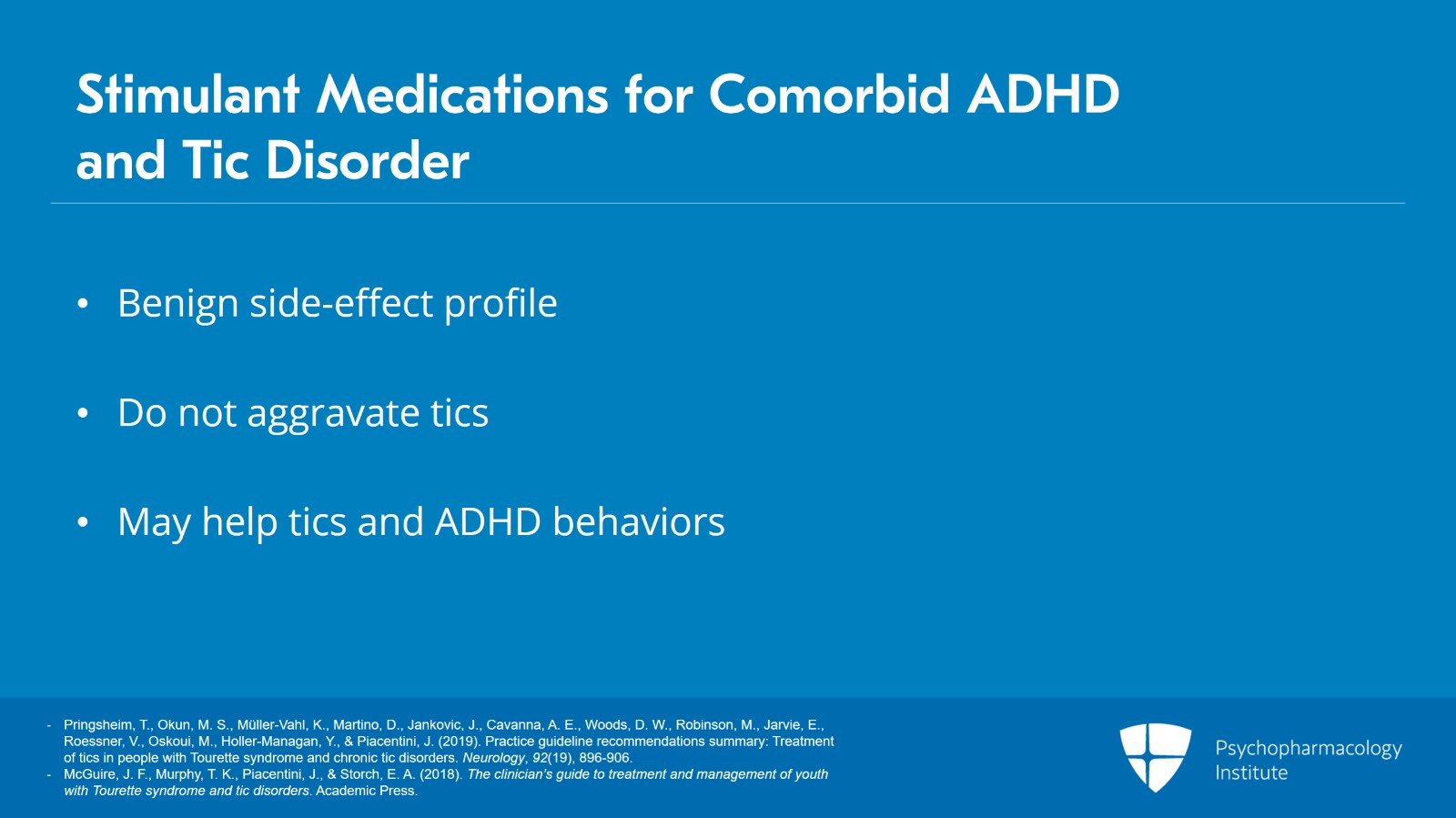
That being said, as we’ve discussed before, the stimulant medications are so powerfully effective in ADHD, overall have such a benign side effect profile for most patients, and more recent data suggest that this does not aggravate tics and may help both tics and ADHD behaviors.
So this is an important area to consider, that the alpha-2 agonists can be very much indicated in this population but don’t rule out the stimulants.
References:
- Pringsheim, T., Okun, M. S., Müller-Vahl, K., Martino, D., Jankovic, J., Cavanna, A. E., Woods, D. W., Robinson, M., Jarvie, E., Roessner, V., Oskoui, M., Holler-Managan, Y., & Piacentini, J. (2019). Practice guideline recommendations summary: Treatment of tics in people with Tourette syndrome and chronic tic disorders. Neurology, 92(19), 896-906.
- McGuire, J. F., Murphy, T. K., Piacentini, J., & Storch, E. A. (2018). The clinician’s guide to treatment and management of youth with Tourette syndrome and tic disorders. Academic Press.
Free Files
Download PDF and other files
Success!
Check your inbox, we sent you all the materials there.
Slide 9 of 25
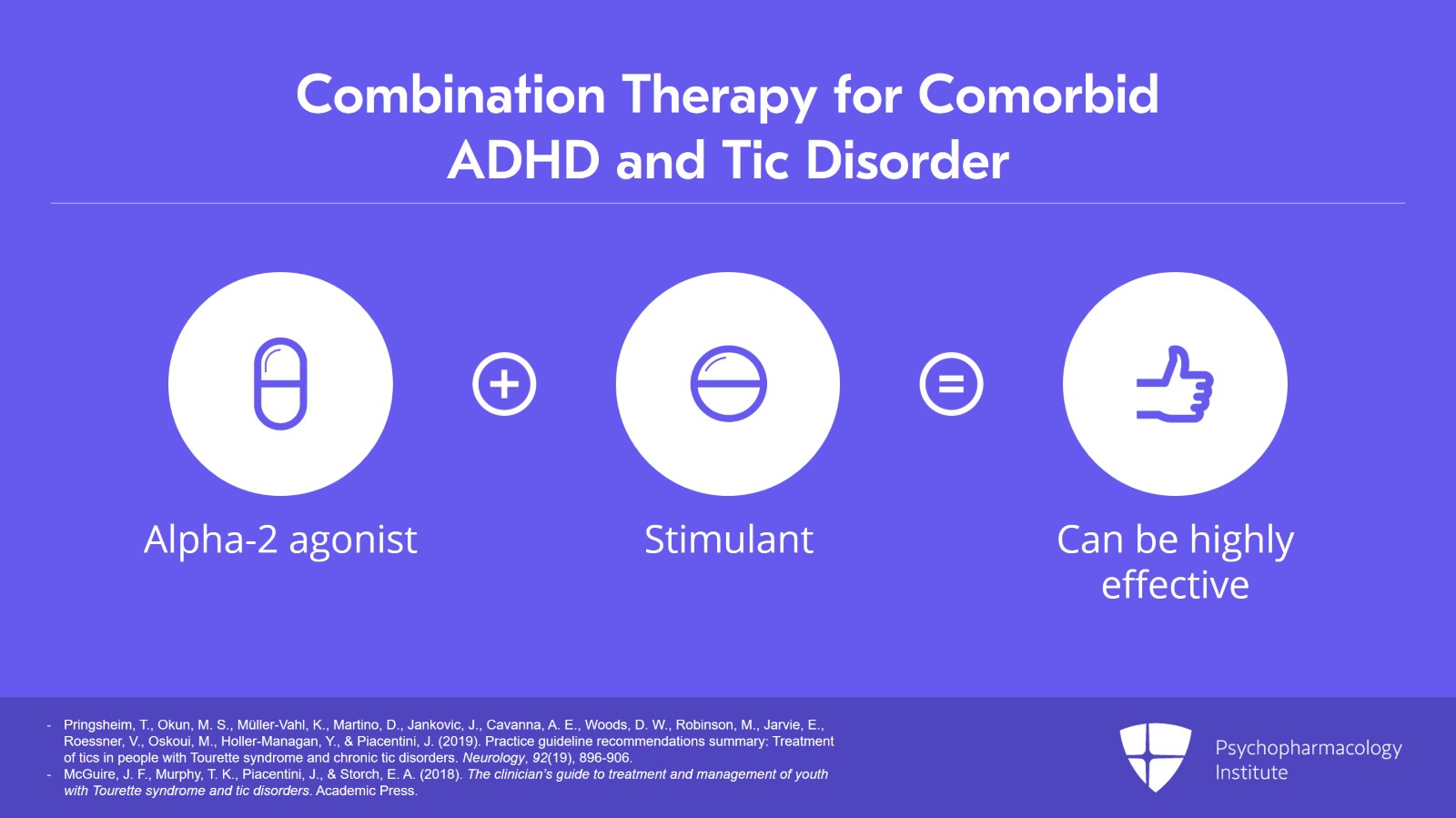
And sometimes, the combination of an alpha-2 agonist with a stimulant can be highly effective for treating comorbid ADHD in tics.
References:
- Pringsheim, T., Okun, M. S., Müller-Vahl, K., Martino, D., Jankovic, J., Cavanna, A. E., Woods, D. W., Robinson, M., Jarvie, E., Roessner, V., Oskoui, M., Holler-Managan, Y., & Piacentini, J. (2019). Practice guideline recommendations summary: Treatment of tics in people with Tourette syndrome and chronic tic disorders. Neurology, 92(19), 896-906.
- McGuire, J. F., Murphy, T. K., Piacentini, J., & Storch, E. A. (2018). The clinician’s guide to treatment and management of youth with Tourette syndrome and tic disorders. Academic Press.
Slide 10 of 25
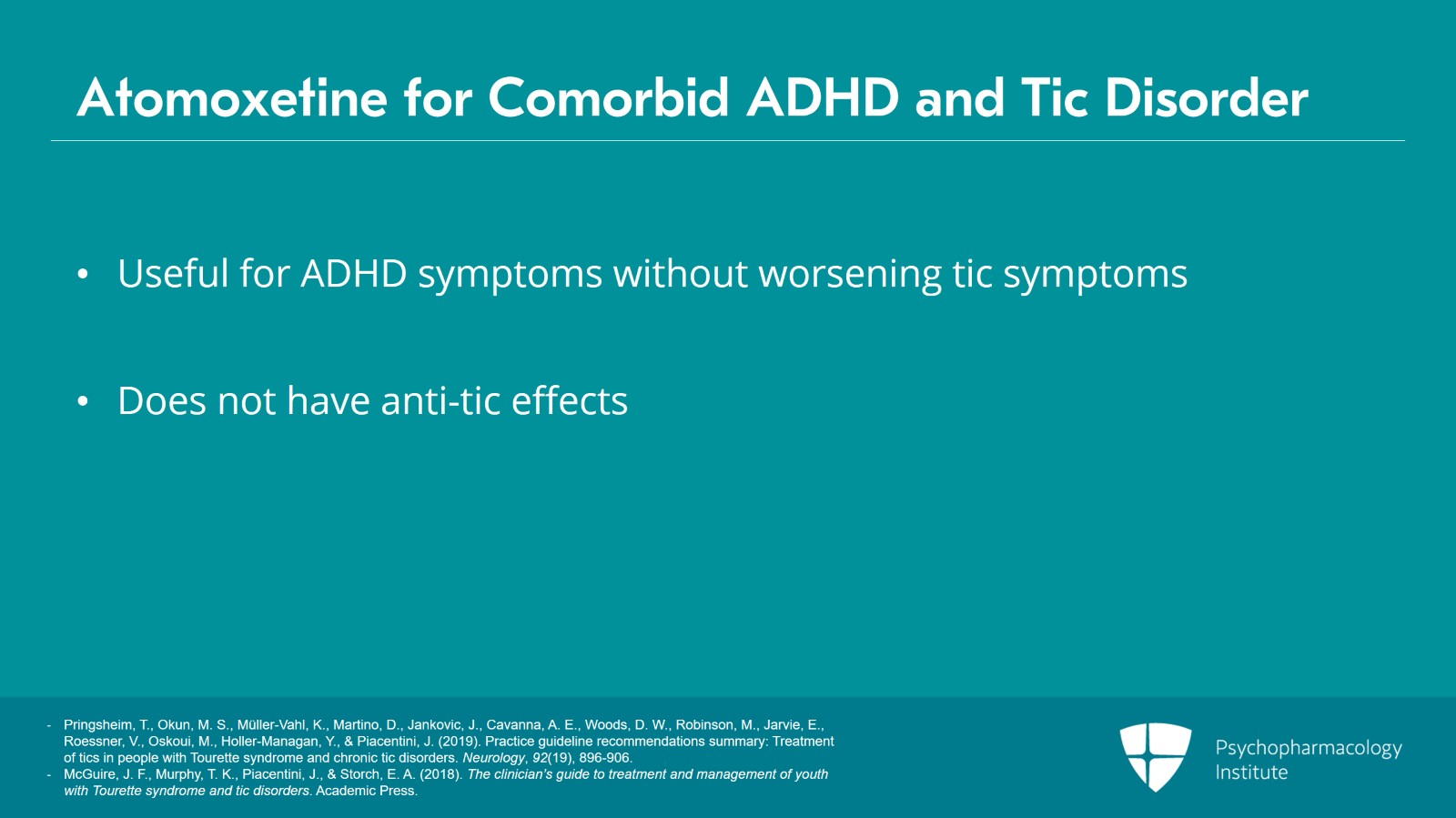
Atomoxetine is another effective nonstimulant that has been identified as a useful treatment to reduce ADHD symptoms without worsening tic symptoms.
However, this medication does not appear to have any anti-tic effects, that is it’s not going to decrease tics but it doesn’t appear to increase tic symptoms.
References:
- Pringsheim, T., Okun, M. S., Müller-Vahl, K., Martino, D., Jankovic, J., Cavanna, A. E., Woods, D. W., Robinson, M., Jarvie, E., Roessner, V., Oskoui, M., Holler-Managan, Y., & Piacentini, J. (2019). Practice guideline recommendations summary: Treatment of tics in people with Tourette syndrome and chronic tic disorders. Neurology, 92(19), 896-906.
- McGuire, J. F., Murphy, T. K., Piacentini, J., & Storch, E. A. (2018). The clinician’s guide to treatment and management of youth with Tourette syndrome and tic disorders. Academic Press.
Free Files
Download PDF and other files
Success!
Check your inbox, we sent you all the materials there.
Slide 11 of 25
Tic disorders and obsessive-compulsive disorder.
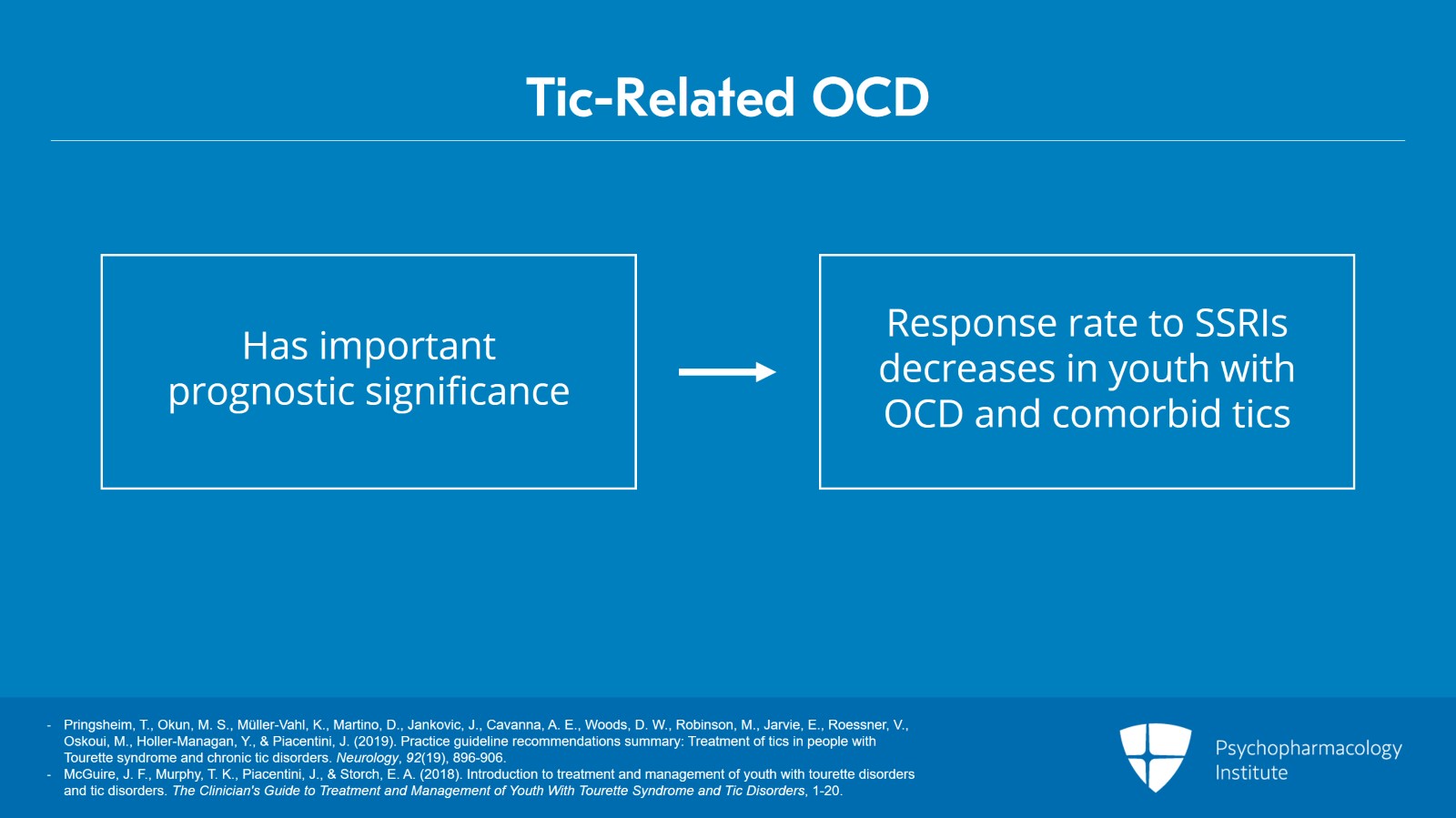
This is referred to as tic-related obsessive-compulsive disorder and has important prognostic significance since there is a decreased response rate to SSRIs which has been noted in youth with OCD and comorbid tic disorders.
So children and adolescents who have OCD alone have a much better response to SSRIs alone than do patients with comorbid tics.
References:
- Pringsheim, T., Okun, M. S., Müller-Vahl, K., Martino, D., Jankovic, J., Cavanna, A. E., Woods, D. W., Robinson, M., Jarvie, E., Roessner, V., Oskoui, M., Holler-Managan, Y., & Piacentini, J. (2019). Practice guideline recommendations summary: Treatment of tics in people with Tourette syndrome and chronic tic disorders. Neurology, 92(19), 896-906.
- McGuire, J. F., Murphy, T. K., Piacentini, J., & Storch, E. A. (2018). Introduction to treatment and management of youth with tourette disorders and tic disorders. The Clinician's Guide to Treatment and Management of Youth With Tourette Syndrome and Tic Disorders, 1-20.
Slide 12 of 25
The CBT (cognitive behavioral therapy) is considered first-line treatment of OCD in individuals with tic disorders.
References:
- Pringsheim, T., Okun, M. S., Müller-Vahl, K., Martino, D., Jankovic, J., Cavanna, A. E., Woods, D. W., Robinson, M., Jarvie, E., Roessner, V., Oskoui, M., Holler-Managan, Y., & Piacentini, J. (2019). Practice guideline recommendations summary: Treatment of tics in people with Tourette syndrome and chronic tic disorders. Neurology, 92(19), 896-906.
- McGuire, J. F., Murphy, T. K., Piacentini, J., & Storch, E. A. (2018). The clinician’s guide to treatment and management of youth with Tourette syndrome and tic disorders. Academic Press.
Free Files
Download PDF and other files
Success!
Check your inbox, we sent you all the materials there.
Slide 13 of 25
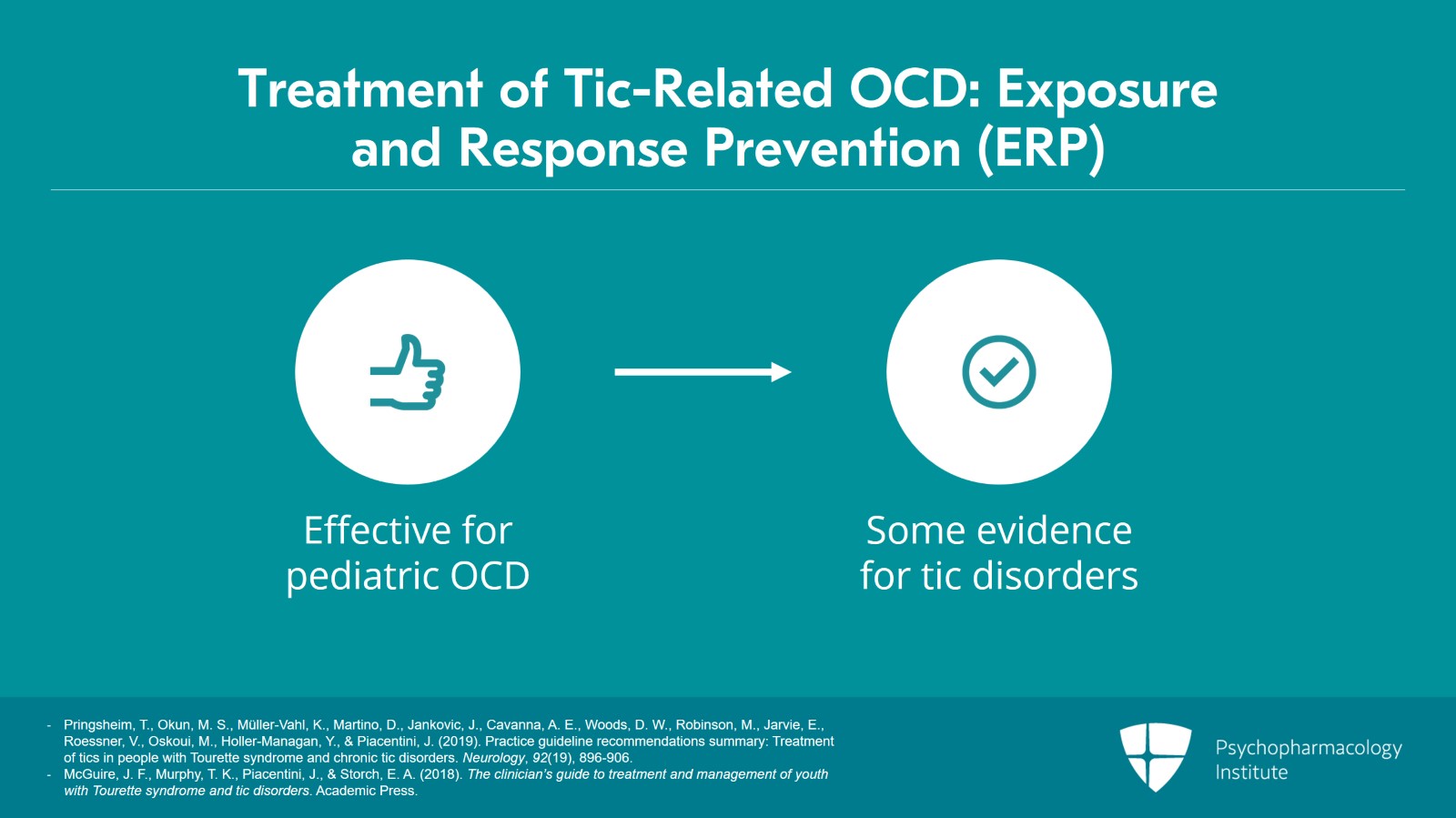
Exposure and response prevention is another effective intervention for treating pediatric OCD and which has some preliminary evidence to support its use for tic disorders as well.
References:
- Pringsheim, T., Okun, M. S., Müller-Vahl, K., Martino, D., Jankovic, J., Cavanna, A. E., Woods, D. W., Robinson, M., Jarvie, E., Roessner, V., Oskoui, M., Holler-Managan, Y., & Piacentini, J. (2019). Practice guideline recommendations summary: Treatment of tics in people with Tourette syndrome and chronic tic disorders. Neurology, 92(19), 896-906.
- McGuire, J. F., Murphy, T. K., Piacentini, J., & Storch, E. A. (2018). The clinician’s guide to treatment and management of youth with Tourette syndrome and tic disorders. Academic Press.
Slide 14 of 25
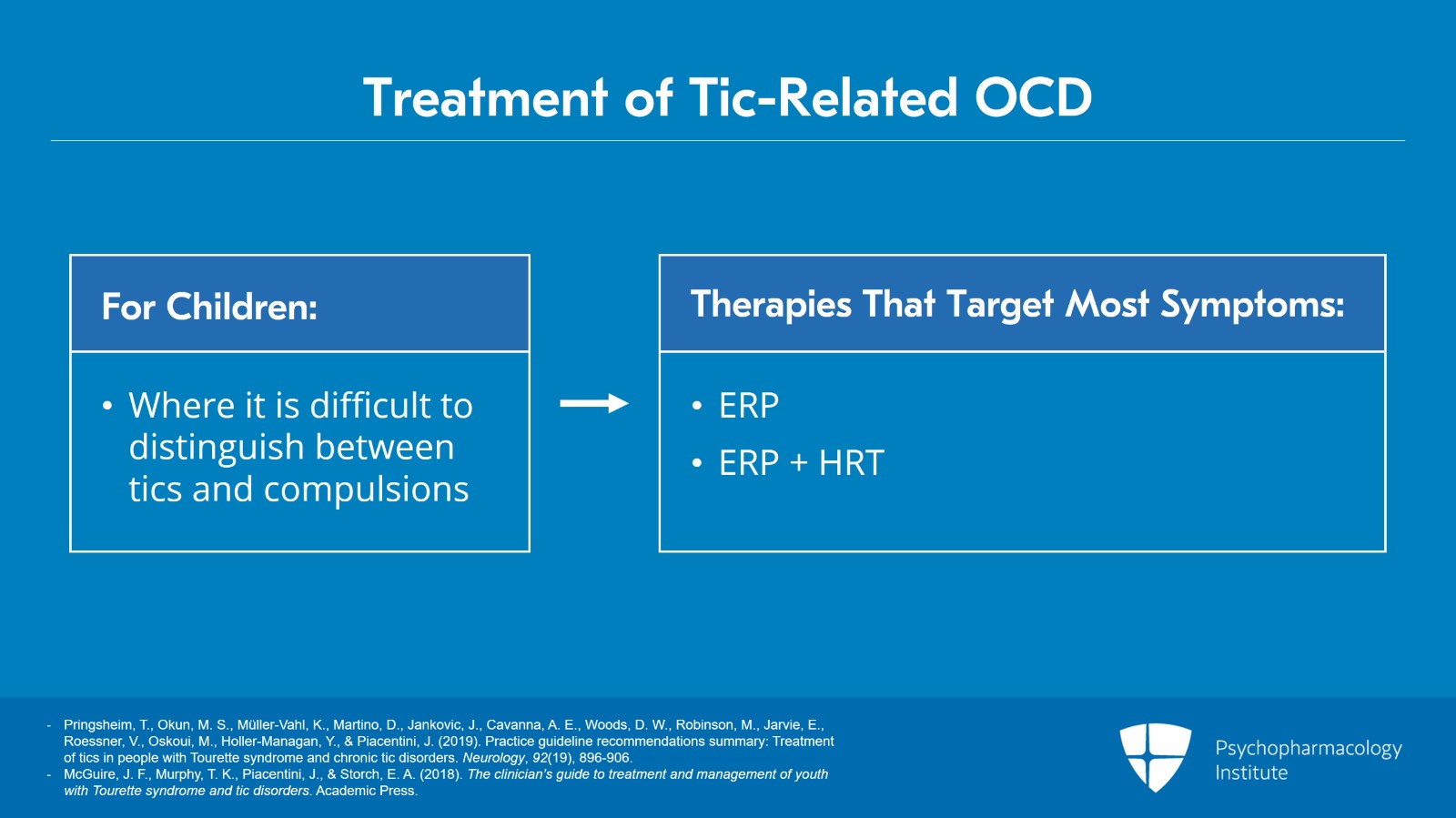
For children with OCD and tic disorder or where it’s difficult to distinguish between tics and compulsions, ERP or a combination of exposure and response prevention plus habit reversal therapy may target the greatest number of symptoms.
References:
- Pringsheim, T., Okun, M. S., Müller-Vahl, K., Martino, D., Jankovic, J., Cavanna, A. E., Woods, D. W., Robinson, M., Jarvie, E., Roessner, V., Oskoui, M., Holler-Managan, Y., & Piacentini, J. (2019). Practice guideline recommendations summary: Treatment of tics in people with Tourette syndrome and chronic tic disorders. Neurology, 92(19), 896-906.
- McGuire, J. F., Murphy, T. K., Piacentini, J., & Storch, E. A. (2018). The clinician’s guide to treatment and management of youth with Tourette syndrome and tic disorders. Academic Press.
Free Files
Download PDF and other files
Success!
Check your inbox, we sent you all the materials there.
Slide 15 of 25
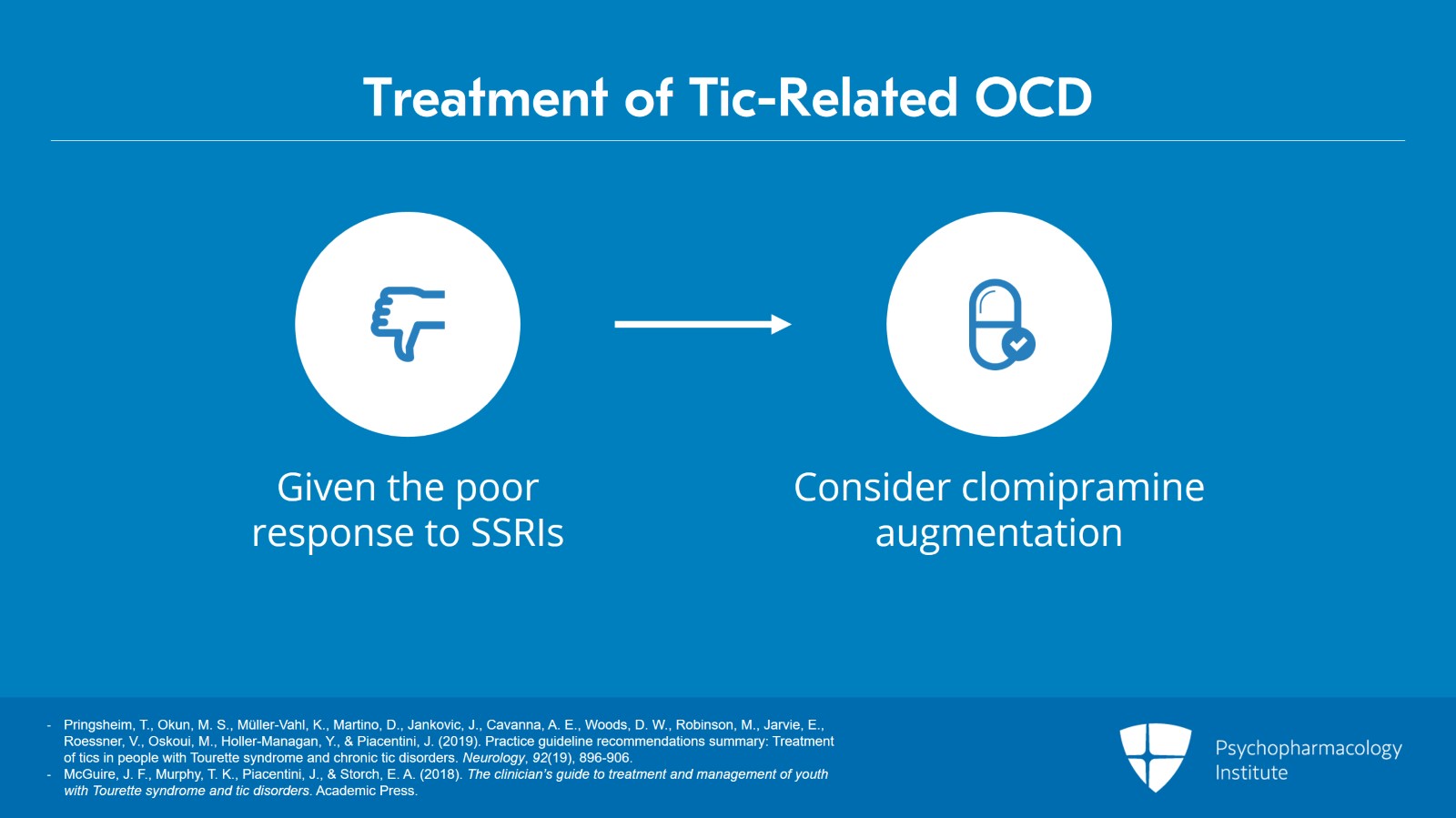
And given the poor response to SSRIs, clinicians may need to consider clomipramine augmentation for obsessive-compulsive disorder treatment.
Clomipramine has demonstrated superior efficacy for OCD symptoms over SSRIs but it is associated with a much less favorable adverse effect profile.
References:
- Pringsheim, T., Okun, M. S., Müller-Vahl, K., Martino, D., Jankovic, J., Cavanna, A. E., Woods, D. W., Robinson, M., Jarvie, E., Roessner, V., Oskoui, M., Holler-Managan, Y., & Piacentini, J. (2019). Practice guideline recommendations summary: Treatment of tics in people with Tourette syndrome and chronic tic disorders. Neurology, 92(19), 896-906.
- McGuire, J. F., Murphy, T. K., Piacentini, J., & Storch, E. A. (2018). The clinician’s guide to treatment and management of youth with Tourette syndrome and tic disorders. Academic Press.
Slide 16 of 25
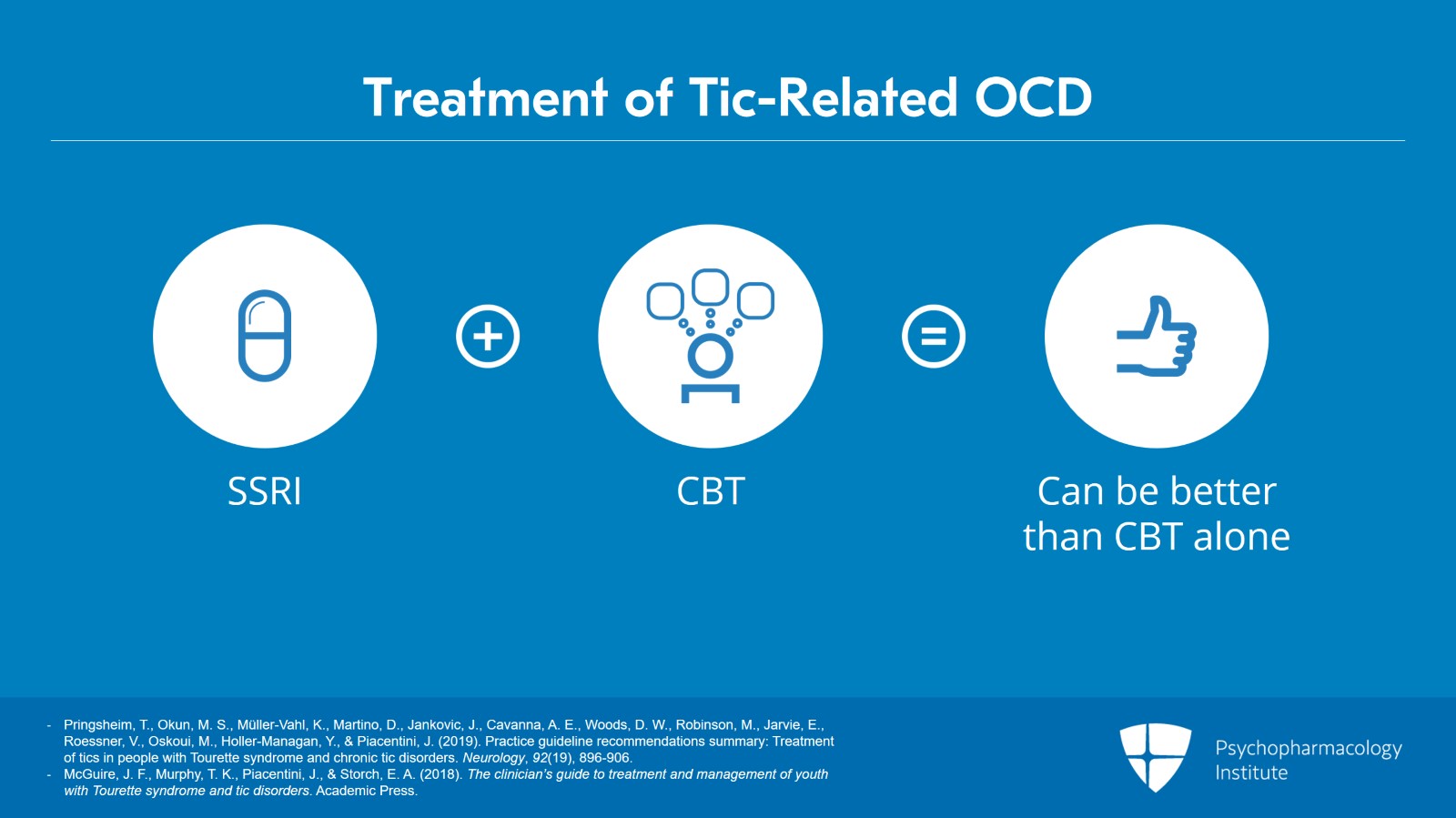
And there are also exciting data that suggest then when the SSRI is combined with cognitive behavioral therapy that can be even better than cognitive behavioral therapy alone in tic-related obsessive-compulsive disorder.
So there may be a role for SSRIs in tic-related OCD. But that role does not seem to be as a solo agent but combined with cognitive behavioral therapy and nonmedication treatment. That really is the treatment of choice.
References:
- Pringsheim, T., Okun, M. S., Müller-Vahl, K., Martino, D., Jankovic, J., Cavanna, A. E., Woods, D. W., Robinson, M., Jarvie, E., Roessner, V., Oskoui, M., Holler-Managan, Y., & Piacentini, J. (2019). Practice guideline recommendations summary: Treatment of tics in people with Tourette syndrome and chronic tic disorders. Neurology, 92(19), 896-906.
- McGuire, J. F., Murphy, T. K., Piacentini, J., & Storch, E. A. (2018). The clinician’s guide to treatment and management of youth with Tourette syndrome and tic disorders. Academic Press.
Free Files
Download PDF and other files
Success!
Check your inbox, we sent you all the materials there.
Slide 17 of 25
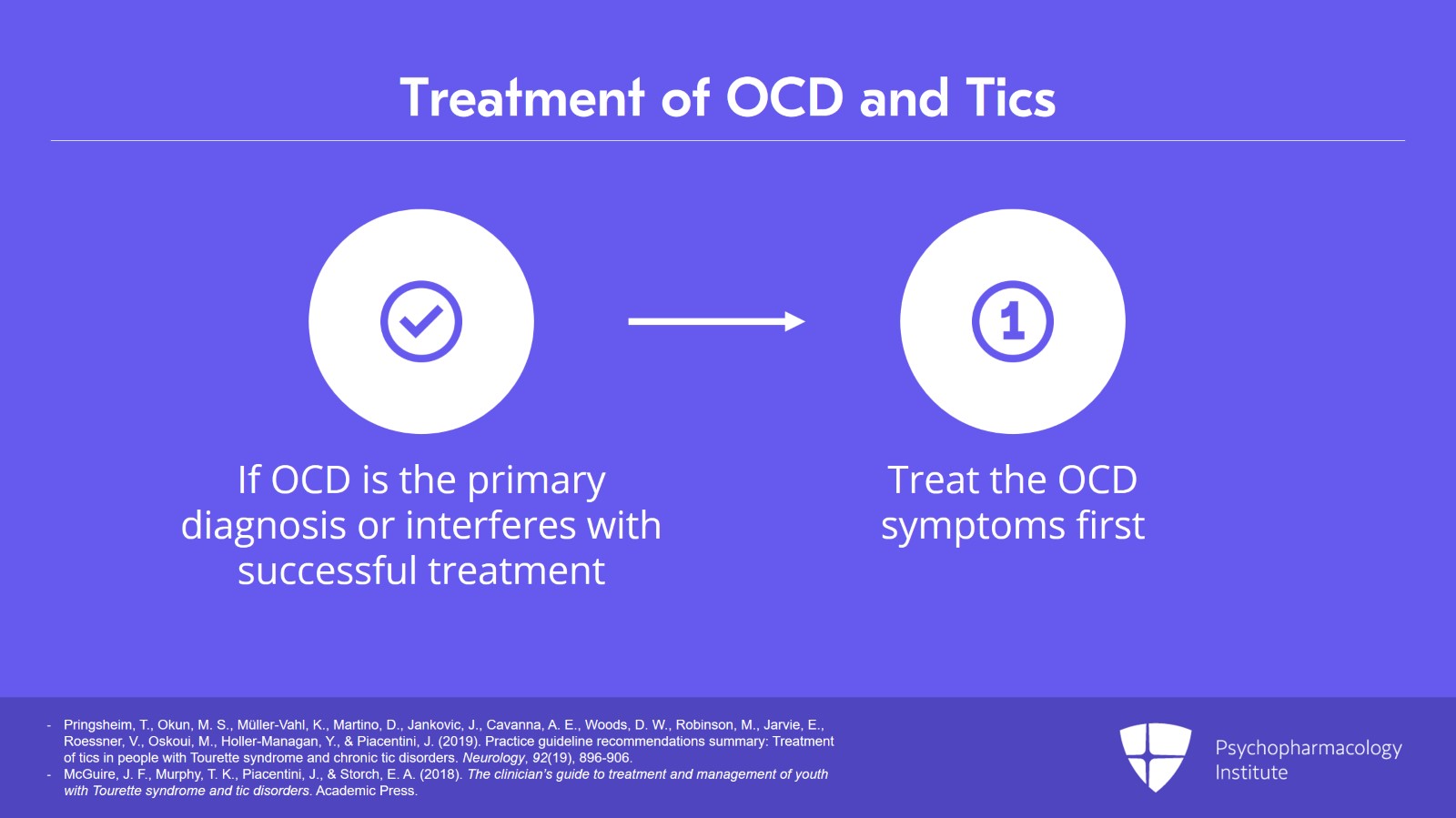
And if OCD is considered as the primary diagnosis or interfering with successful treatment, that is unwilling to engage in competing responses due to associated obsessional content, treatment of OCD symptoms prior to engaging in further treatment for tics can also be an appropriate way to go.
References:
- Pringsheim, T., Okun, M. S., Müller-Vahl, K., Martino, D., Jankovic, J., Cavanna, A. E., Woods, D. W., Robinson, M., Jarvie, E., Roessner, V., Oskoui, M., Holler-Managan, Y., & Piacentini, J. (2019). Practice guideline recommendations summary: Treatment of tics in people with Tourette syndrome and chronic tic disorders. Neurology, 92(19), 896-906.
- McGuire, J. F., Murphy, T. K., Piacentini, J., & Storch, E. A. (2018). The clinician’s guide to treatment and management of youth with Tourette syndrome and tic disorders. Academic Press.
Slide 18 of 25
Tic disorders and anxiety or depression.
Many youth with tic disorders have co-occurring mood and non-OCD anxiety disorders.
References:
- McGuire, J. F., Murphy, T. K., Piacentini, J., & Storch, E. A. (2018). The clinician’s guide to treatment and management of youth with Tourette syndrome and tic disorders. Academic Press.
Free Files
Download PDF and other files
Success!
Check your inbox, we sent you all the materials there.
Slide 19 of 25
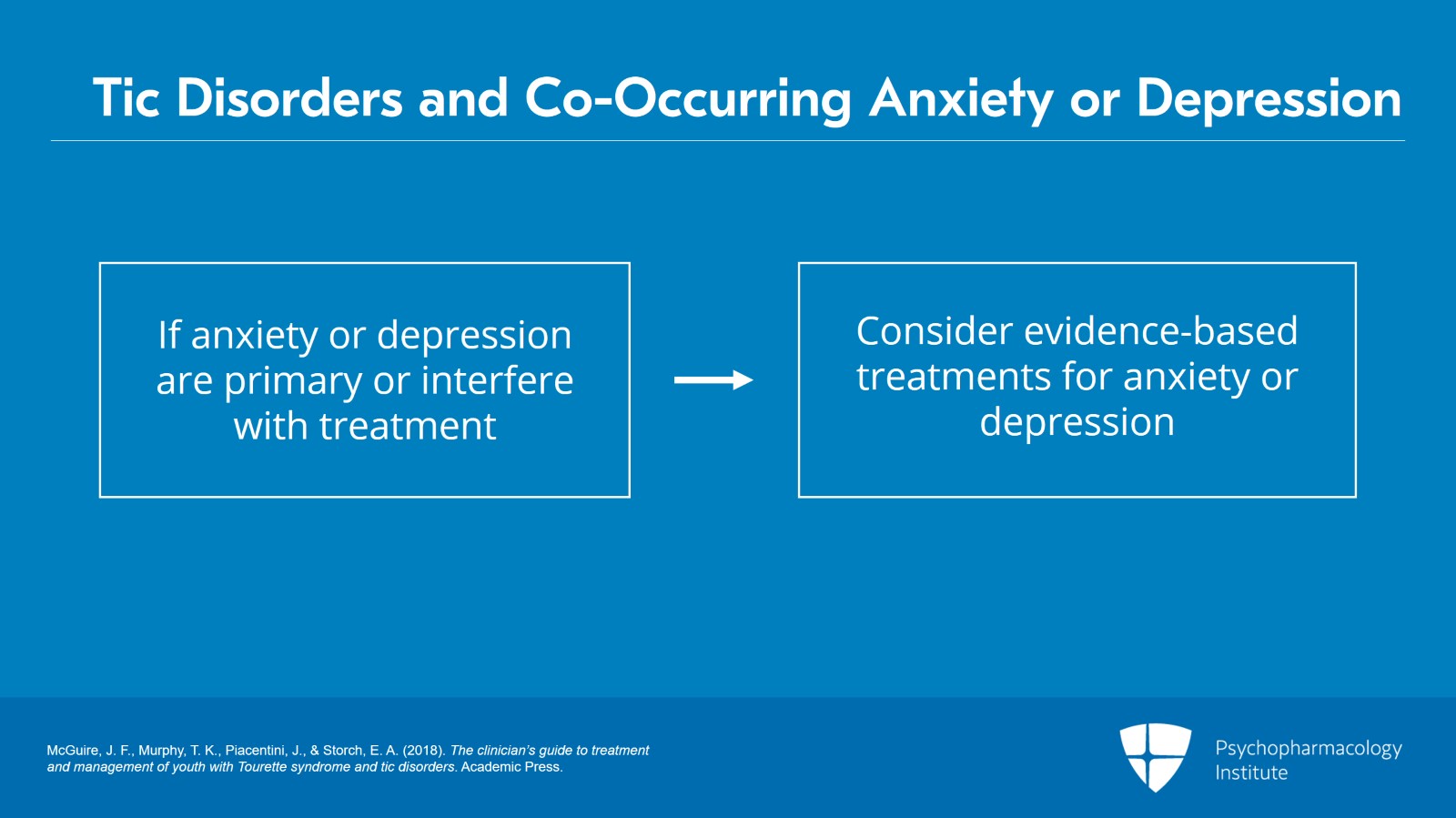
If anxiety or depression appear to be primary, unrelated to tics or interfere with treatment motivation and adherence, evidence-based treatment for anxiety or depression needs to be considered.
References:
- McGuire, J. F., Murphy, T. K., Piacentini, J., & Storch, E. A. (2018). The clinician’s guide to treatment and management of youth with Tourette syndrome and tic disorders. Academic Press.
Slide 20 of 25
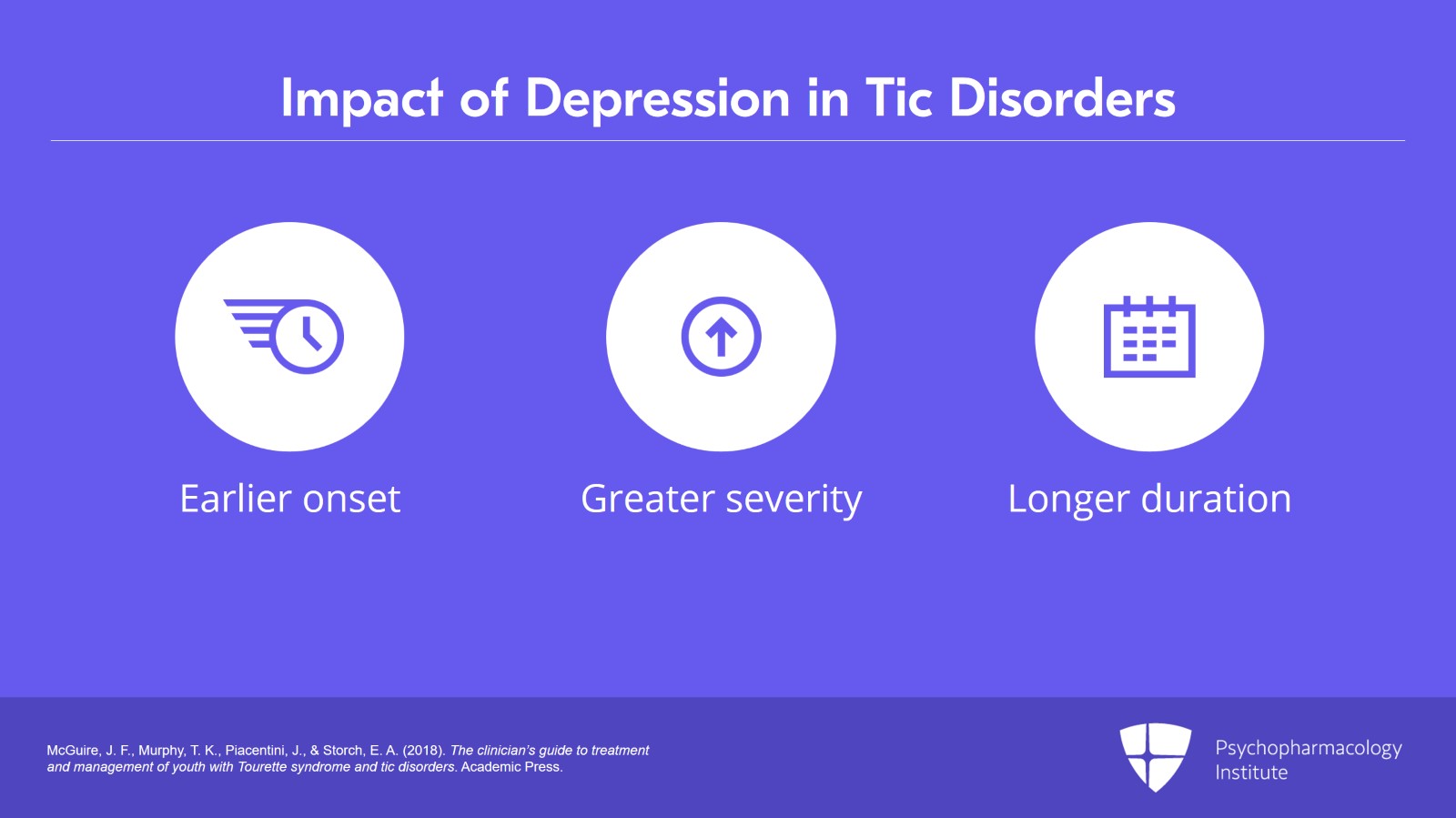
The presence of depression in patients with tic disorders has been positively associated with an earlier onset, greater severity, and a longer duration of tics.
References:
- McGuire, J. F., Murphy, T. K., Piacentini, J., & Storch, E. A. (2018). The clinician’s guide to treatment and management of youth with Tourette syndrome and tic disorders. Academic Press.
Free Files
Download PDF and other files
Success!
Check your inbox, we sent you all the materials there.
Slide 21 of 25
Tic disorders and disruptive behaviors.
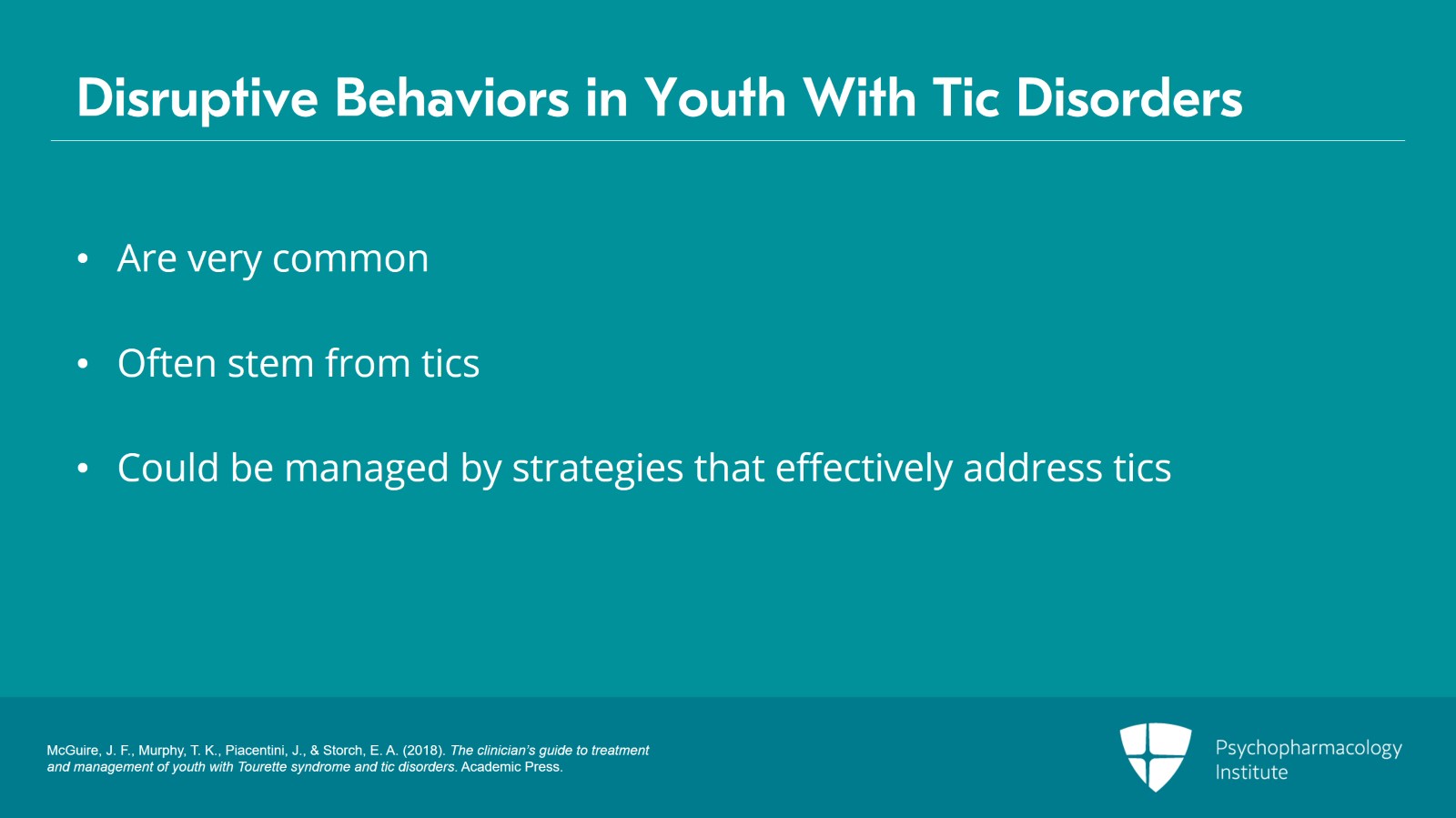
Symptoms such as irritability, mood instability, problems with emotional regulation and anger control, impulse control and other disruptive behaviors are very common in youth with tics.
These symptoms often stem from tics and/or tic impairment and could be managed by strategies that effectively address tics.
References:
- McGuire, J. F., Murphy, T. K., Piacentini, J., & Storch, E. A. (2018). The clinician’s guide to treatment and management of youth with Tourette syndrome and tic disorders. Academic Press.
Slide 22 of 25
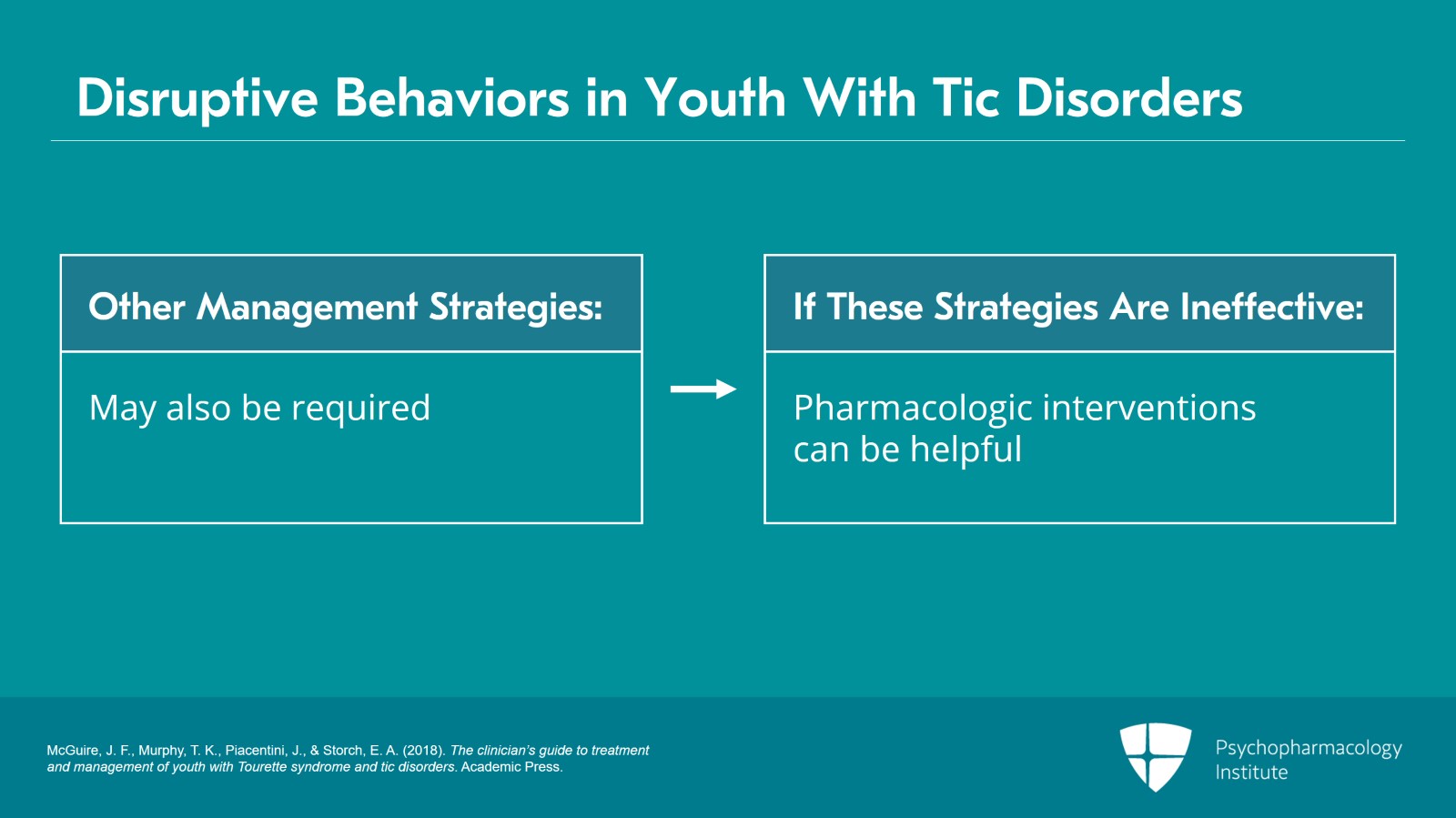
However, other strategies such as parent training, anger management, emotion regulation and mindfulness may also be required.
If these strategies are ineffective, there are pharmacological interventions that can be helpful including topiramate.
References:
- McGuire, J. F., Murphy, T. K., Piacentini, J., & Storch, E. A. (2018). The clinician’s guide to treatment and management of youth with Tourette syndrome and tic disorders. Academic Press.
Free Files
Download PDF and other files
Success!
Check your inbox, we sent you all the materials there.
Slide 23 of 25
Key points here.
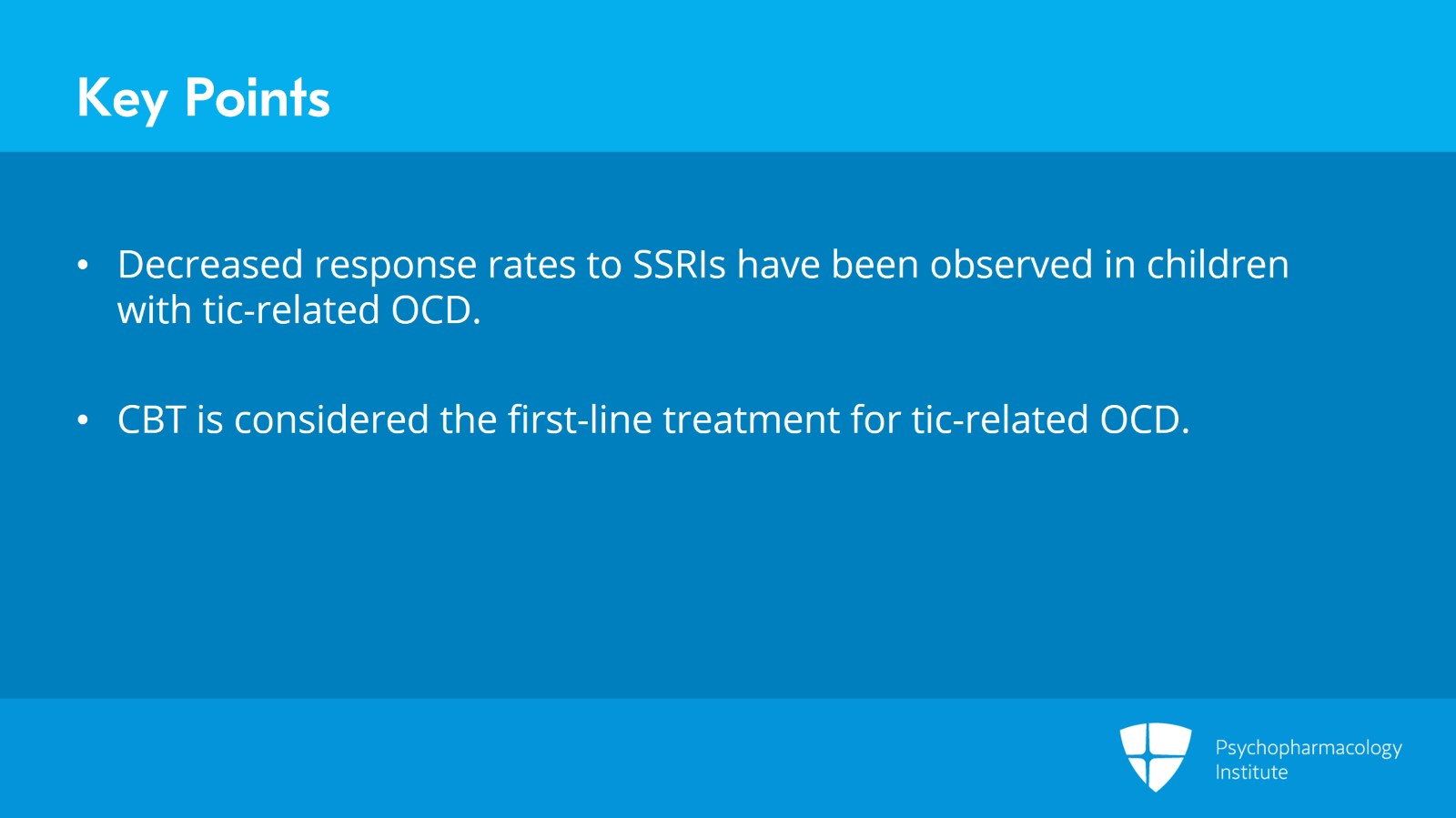
Decreased response rates to SSRIs have been observed in children with tic-related OCD.
CBT with or without SSRI is considered first-line treatment in tic-related OCD.
Slide 24 of 25
The presence of depression in patients with tic disorders is positively correlated with earlier onset, greater severity, and longer duration of tics.
Irritability, mood instability, emotional dysregulation, and problems with impulse and anger control are common in youth with tic disorders.
Free Files
Download PDF and other files
Success!
Check your inbox, we sent you all the materials there.