Slides and Transcript
Slide 1 of 19
Turning to video 9, potential indications of melatonin and secretin in children and adolescents.
Here are two examples of perhaps some of the most studied and most controlled studies in children and adolescents and there does appear to be a significant signal for melatonin.
Secretin, while it has had a fair amount of promise, that promise has not been realized. We’ll discuss that in more detail shortly.
Slide 2 of 19
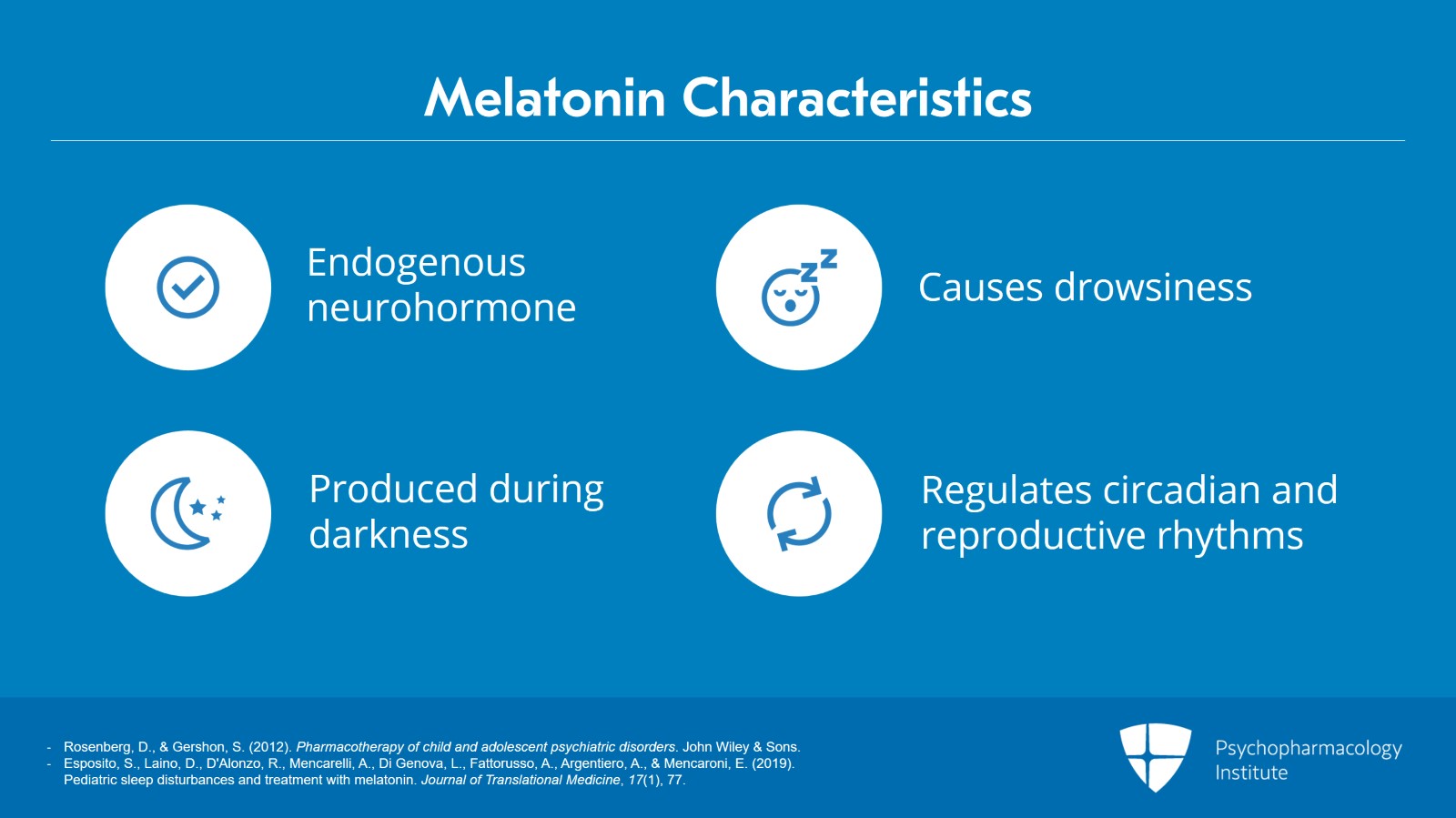
Melatonin is an endogenous neurohormone synthesized and secreted by the pineal gland and causes drowsiness.
Melatonin synthesis and secretion are controlled by the suprachiasmatic nucleus of the hypothalamus which is synchronized by ambient light so that melatonin production occurs during darkness and is actually inhibited during daylight. Thus, melatonin levels increase rapidly after nightfall, peak in the middle of the night and decrease towards dawn.
While the mechanism of action has yet to be clearly elucidated, melatonin is a potent hormone believed to regulate both circadian and reproductive rhythms. Factors such as genetic regulation, age, diet, and seasonal changes have been demonstrated to affect serum melatonin levels in humans.
References:
- Rosenberg, D., & Gershon, S. (2012). Pharmacotherapy of child and adolescent psychiatric disorders. John Wiley & Sons.
- Esposito, S., Laino, D., D'Alonzo, R., Mencarelli, A., Di Genova, L., Fattorusso, A., Argentiero, A., & Mencaroni, E. (2019). Pediatric sleep disturbances and treatment with melatonin. Journal of Translational Medicine, 17(1), 77.
Free Files
Download PDF and other files
Success!
Check your inbox, we sent you all the materials there.
Slide 3 of 19
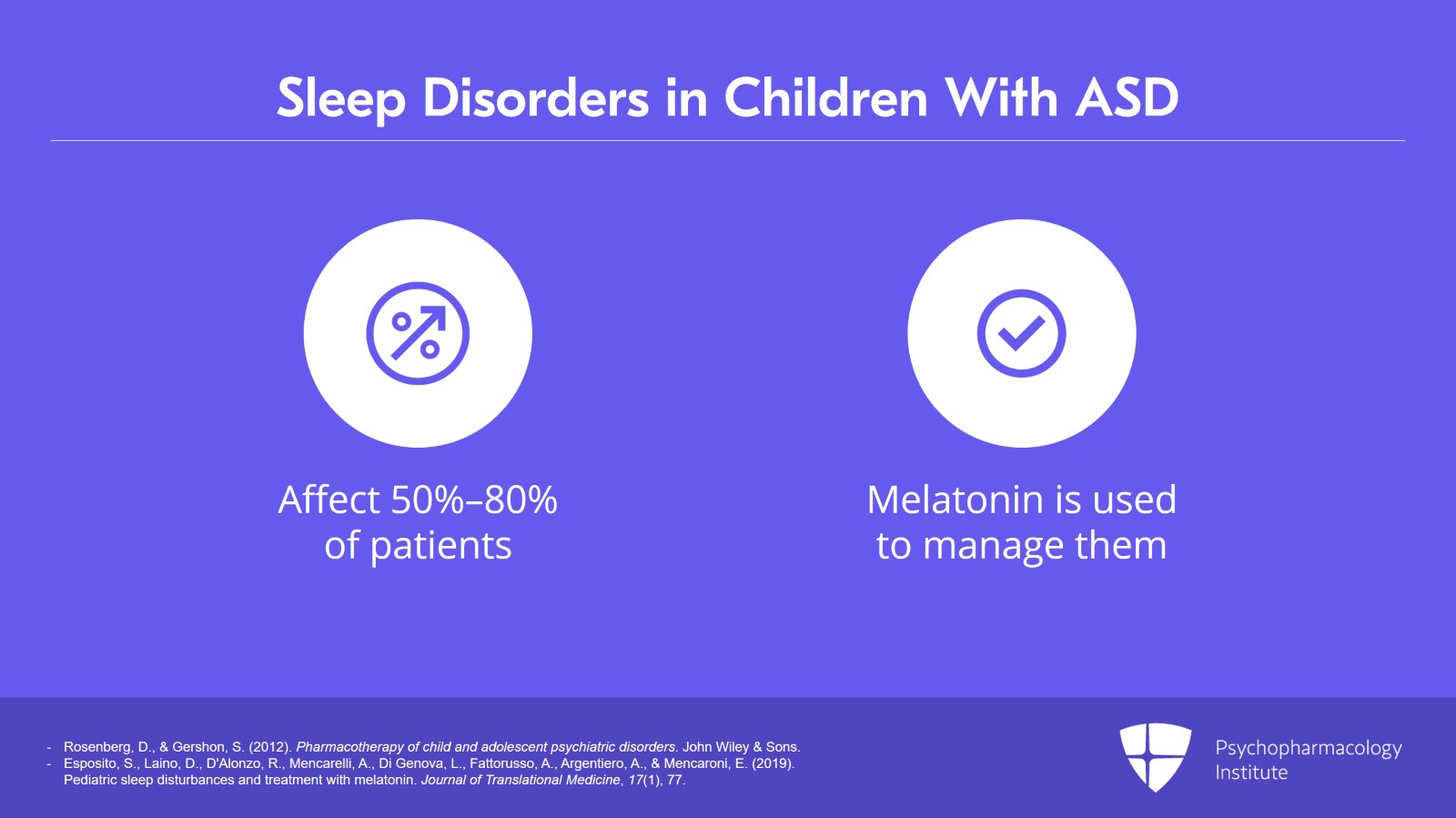
Potential indications for melatonin, autism spectrum disorder.
Sleep disorders affect an estimated 50% to 80% of patients with autism spectrum disorders.
Melatonin has been increasingly used to manage sleep disorders in children with ASD.
References:
- Rosenberg, D., & Gershon, S. (2012). Pharmacotherapy of child and adolescent psychiatric disorders. John Wiley & Sons.
- Esposito, S., Laino, D., D'Alonzo, R., Mencarelli, A., Di Genova, L., Fattorusso, A., Argentiero, A., & Mencaroni, E. (2019). Pediatric sleep disturbances and treatment with melatonin. Journal of Translational Medicine, 17(1), 77.
Slide 4 of 19
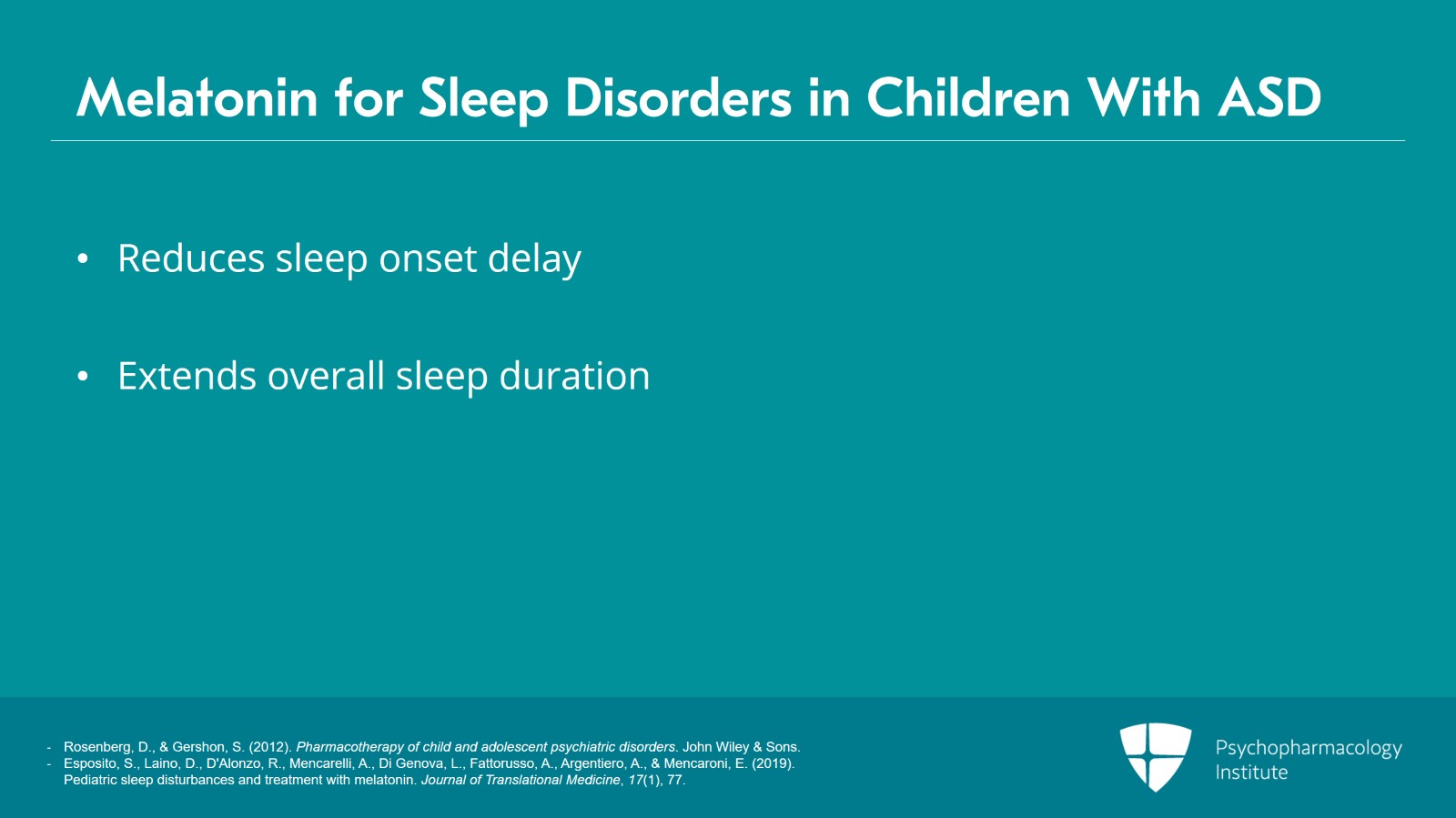
Results from several randomized controlled trials and open-label trials do in fact suggest that melatonin reduces sleep onset delay and extends overall sleep duration in children with ASD.
References:
- Rosenberg, D., & Gershon, S. (2012). Pharmacotherapy of child and adolescent psychiatric disorders. John Wiley & Sons.
- Esposito, S., Laino, D., D'Alonzo, R., Mencarelli, A., Di Genova, L., Fattorusso, A., Argentiero, A., & Mencaroni, E. (2019). Pediatric sleep disturbances and treatment with melatonin. Journal of Translational Medicine, 17(1), 77.
Free Files
Download PDF and other files
Success!
Check your inbox, we sent you all the materials there.
Slide 5 of 19
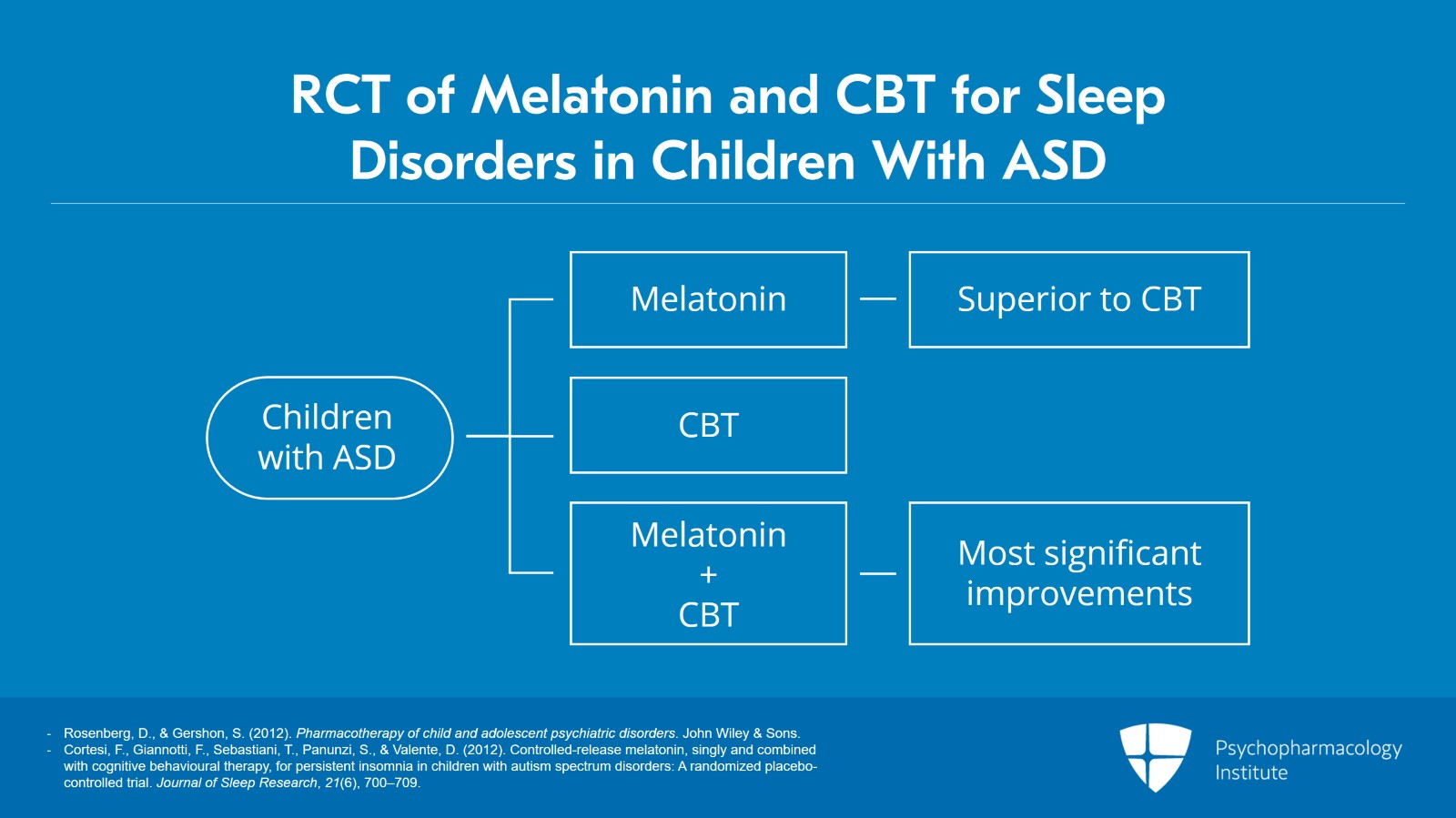
A randomized controlled trial in children with autism spectrum disorder comparing melatonin versus CBT versus CBT plus melatonin found that melatonin was superior to CBT.
However, the most significant improvements across multiple sleep domains were seen in patients receiving both CBT plus melatonin therapy.
References:
- Rosenberg, D., & Gershon, S. (2012). Pharmacotherapy of child and adolescent psychiatric disorders. John Wiley & Sons.
- Cortesi, F., Giannotti, F., Sebastiani, T., Panunzi, S., & Valente, D. (2012). Controlled-release melatonin, singly and combined with cognitive behavioural therapy, for persistent insomnia in children with autism spectrum disorders: A randomized placebo-controlled trial. Journal of Sleep Research, 21(6), 700–709.
Slide 6 of 19
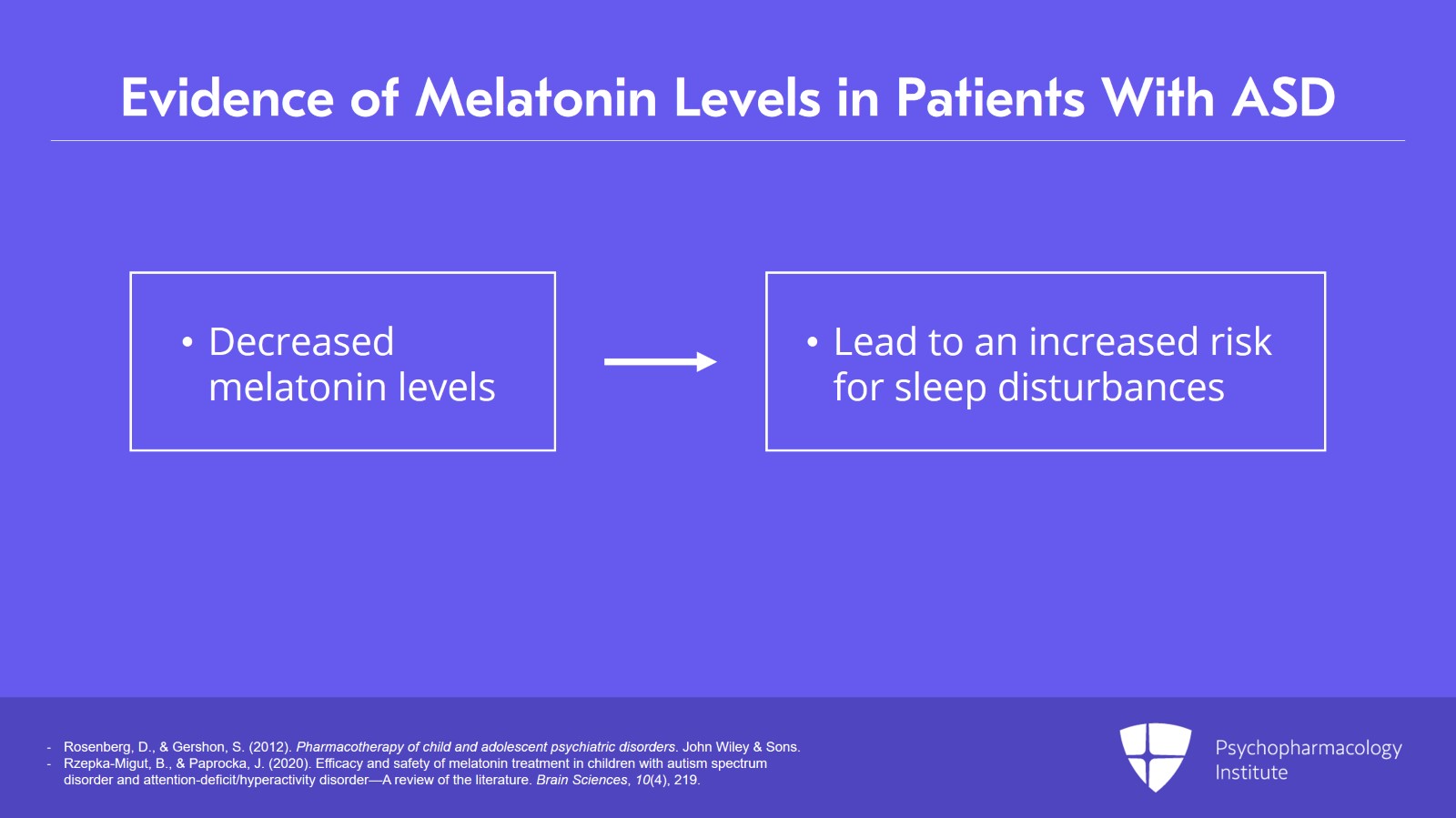
A review and meta-analysis of nine studies also noted decreased melatonin levels in patients with ASD which may result from decreased production of endogenous melatonin that leads to an increased risk for sleep disturbances.
References:
- Rosenberg, D., & Gershon, S. (2012). Pharmacotherapy of child and adolescent psychiatric disorders. John Wiley & Sons.
- Rzepka-Migut, B., & Paprocka, J. (2020). Efficacy and safety of melatonin treatment in children with autism spectrum disorder and attention-deficit/hyperactivity disorder—A review of the literature. Brain Sciences, 10(4), 219.
Free Files
Download PDF and other files
Success!
Check your inbox, we sent you all the materials there.
Slide 7 of 19
However, additional studies have also indicated a positive effect of melatonin in patients with endogenous melatonin levels comparable with controls which suggest that the effects of exogenous melatonin may extend beyond correcting melatonin deficiencies.
References:
- Rosenberg, D., & Gershon, S. (2012). Pharmacotherapy of child and adolescent psychiatric disorders. John Wiley & Sons.
- Rzepka-Migut, B., & Paprocka, J. (2020). Efficacy and safety of melatonin treatment in children with autism spectrum disorder and attention-deficit/hyperactivity disorder—A review of the literature. Brain Sciences, 10(4), 219.
Slide 8 of 19
Overall melatonin has clear physiologic rationale and is one of the best studied CAMs for ASD.
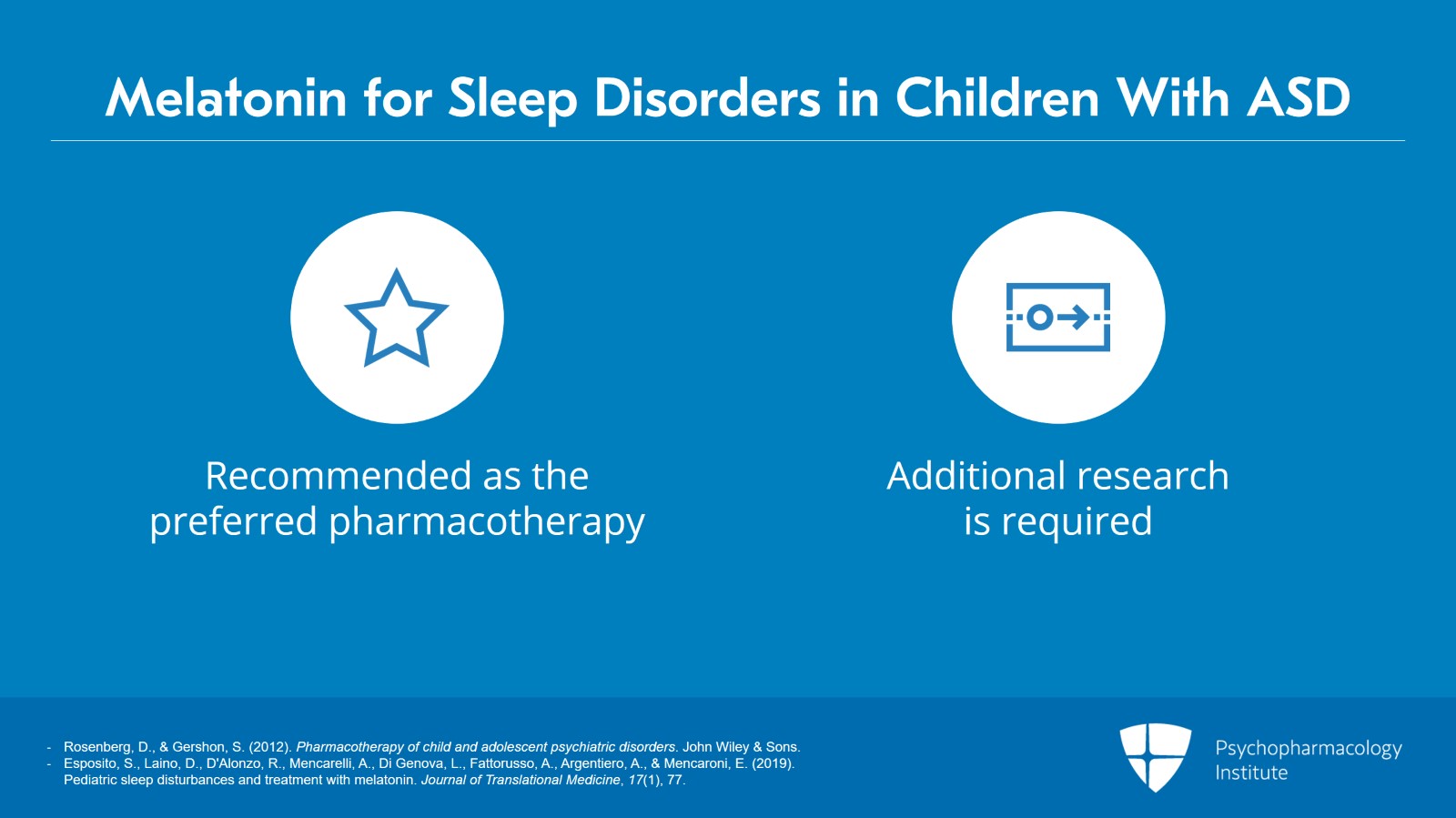
It’s currently recommended as the preferred pharmacotherapy to treat insomnia and sleep issues in children with autism spectrum disorder.
Additional research is still required to elucidate the mechanism of action of melatonin supplementation and identify those patients who are most likely to benefit from melatonin treatment.
References:
- Rosenberg, D., & Gershon, S. (2012). Pharmacotherapy of child and adolescent psychiatric disorders. John Wiley & Sons.
- Esposito, S., Laino, D., D'Alonzo, R., Mencarelli, A., Di Genova, L., Fattorusso, A., Argentiero, A., & Mencaroni, E. (2019). Pediatric sleep disturbances and treatment with melatonin. Journal of Translational Medicine, 17(1), 77.
Free Files
Download PDF and other files
Success!
Check your inbox, we sent you all the materials there.
Slide 9 of 19
Given its safety and tolerability profile, melatonin is attractive in terms of its use. It’s also being used particularly for sleep disturbances and many other childhood-onset neuropsychiatric disorders. One of those is ADHD.
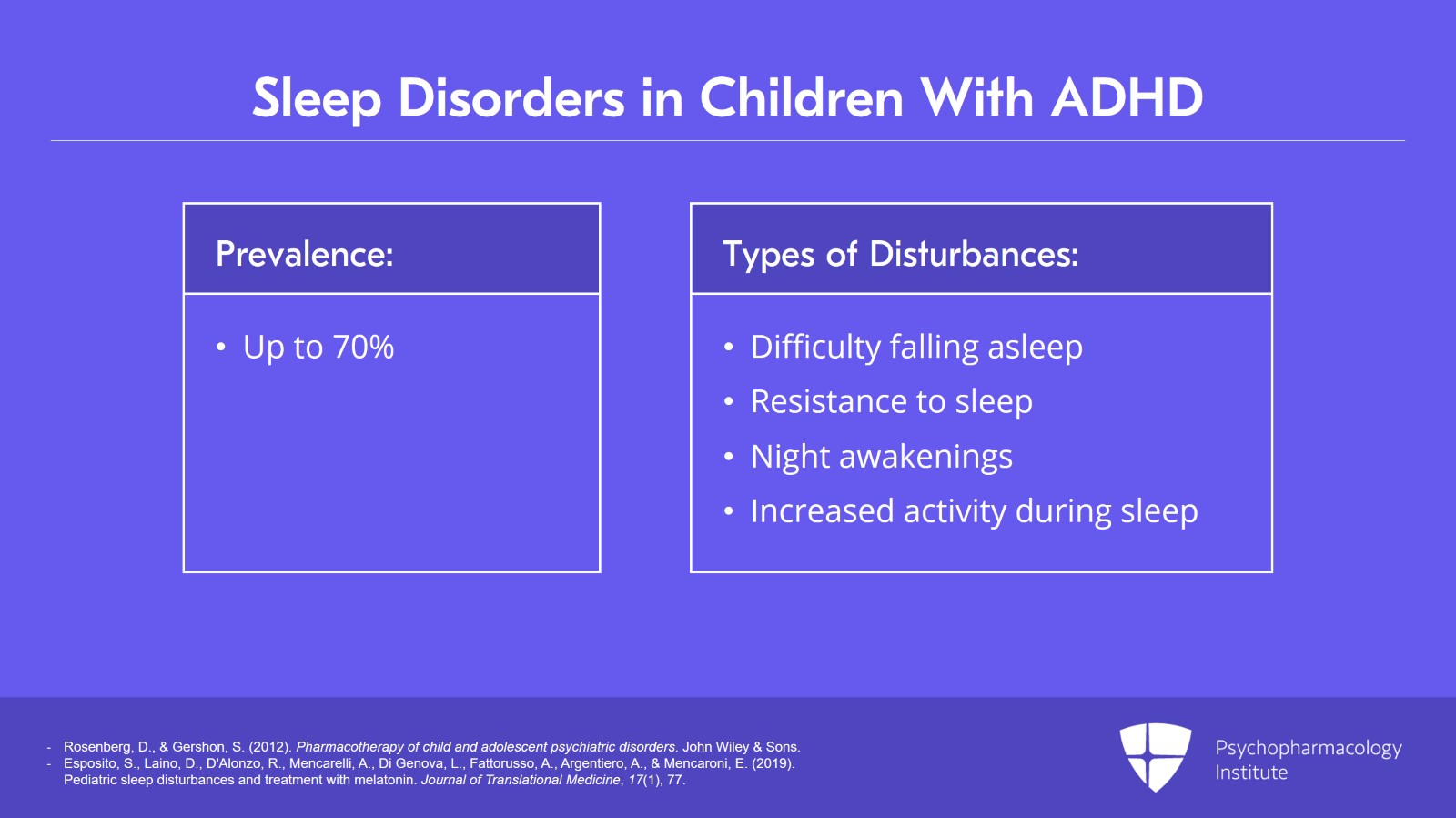
Estimates regarding the prevalence of sleep disorder in ADHD patients vary widely but up to 70% of patients with ADHD are estimated to have sleep problems which range from mild to severe.
The specific type of sleep disturbances in ADHD children also varies widely and includes difficulty falling asleep, resistance to sleep, night awakenings, and increased activity during sleep.
References:
- Rosenberg, D., & Gershon, S. (2012). Pharmacotherapy of child and adolescent psychiatric disorders. John Wiley & Sons.
- Esposito, S., Laino, D., D'Alonzo, R., Mencarelli, A., Di Genova, L., Fattorusso, A., Argentiero, A., & Mencaroni, E. (2019). Pediatric sleep disturbances and treatment with melatonin. Journal of Translational Medicine, 17(1), 77.
Slide 10 of 19
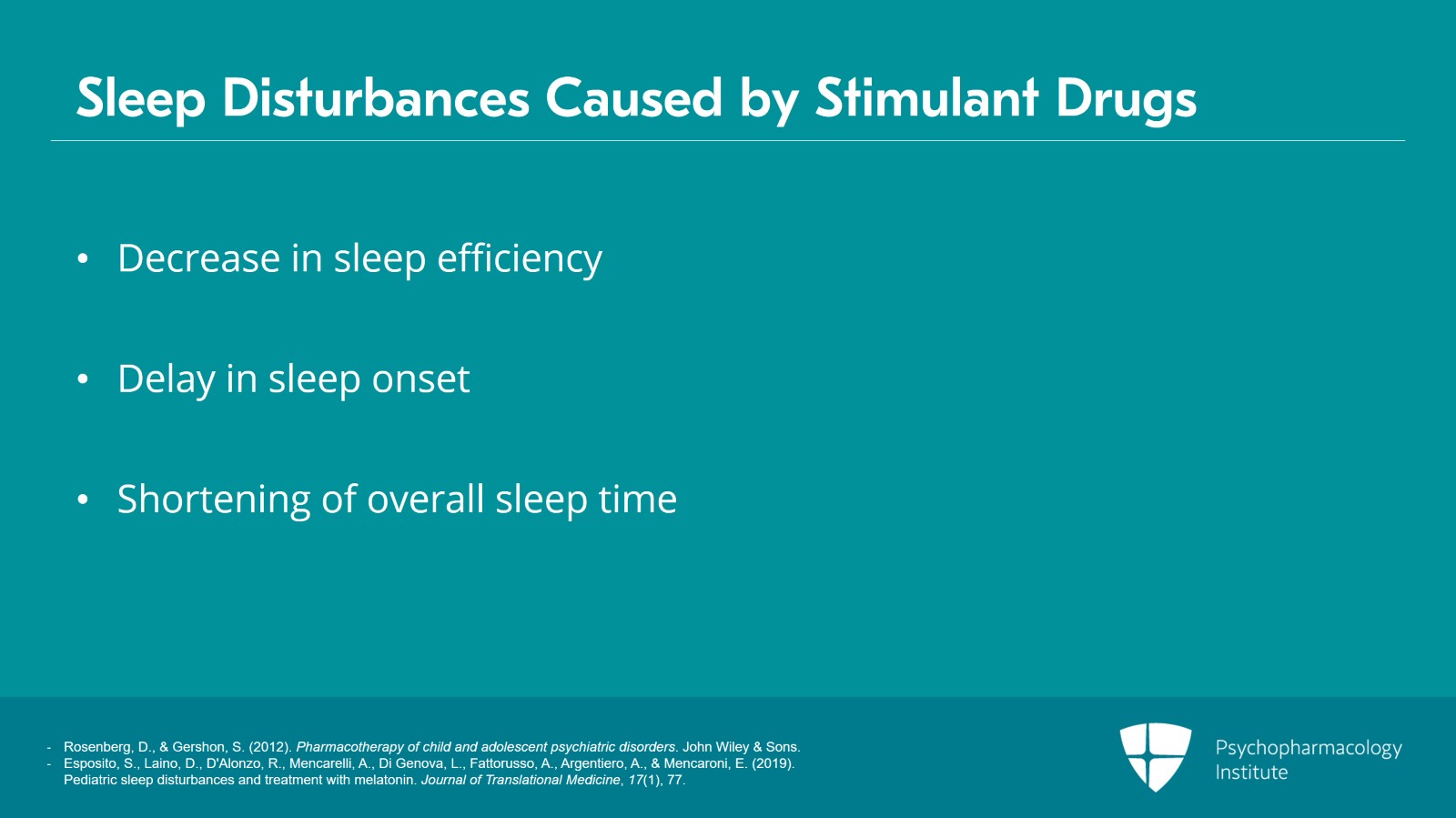
Treatment of ADHD with stimulant drugs may contribute to sleep disorders. Stimulants have been identified to cause decrease sleep efficiency, delay sleep onset, and shorten overall sleep time by more than one hour.
However, stimulants do not appear to alter sleep architecture, that is stage I and II sleep, slow wave sleep, and REM sleep.
References:
- Rosenberg, D., & Gershon, S. (2012). Pharmacotherapy of child and adolescent psychiatric disorders. John Wiley & Sons.
- Esposito, S., Laino, D., D'Alonzo, R., Mencarelli, A., Di Genova, L., Fattorusso, A., Argentiero, A., & Mencaroni, E. (2019). Pediatric sleep disturbances and treatment with melatonin. Journal of Translational Medicine, 17(1), 77.
Free Files
Download PDF and other files
Success!
Check your inbox, we sent you all the materials there.
Slide 11 of 19
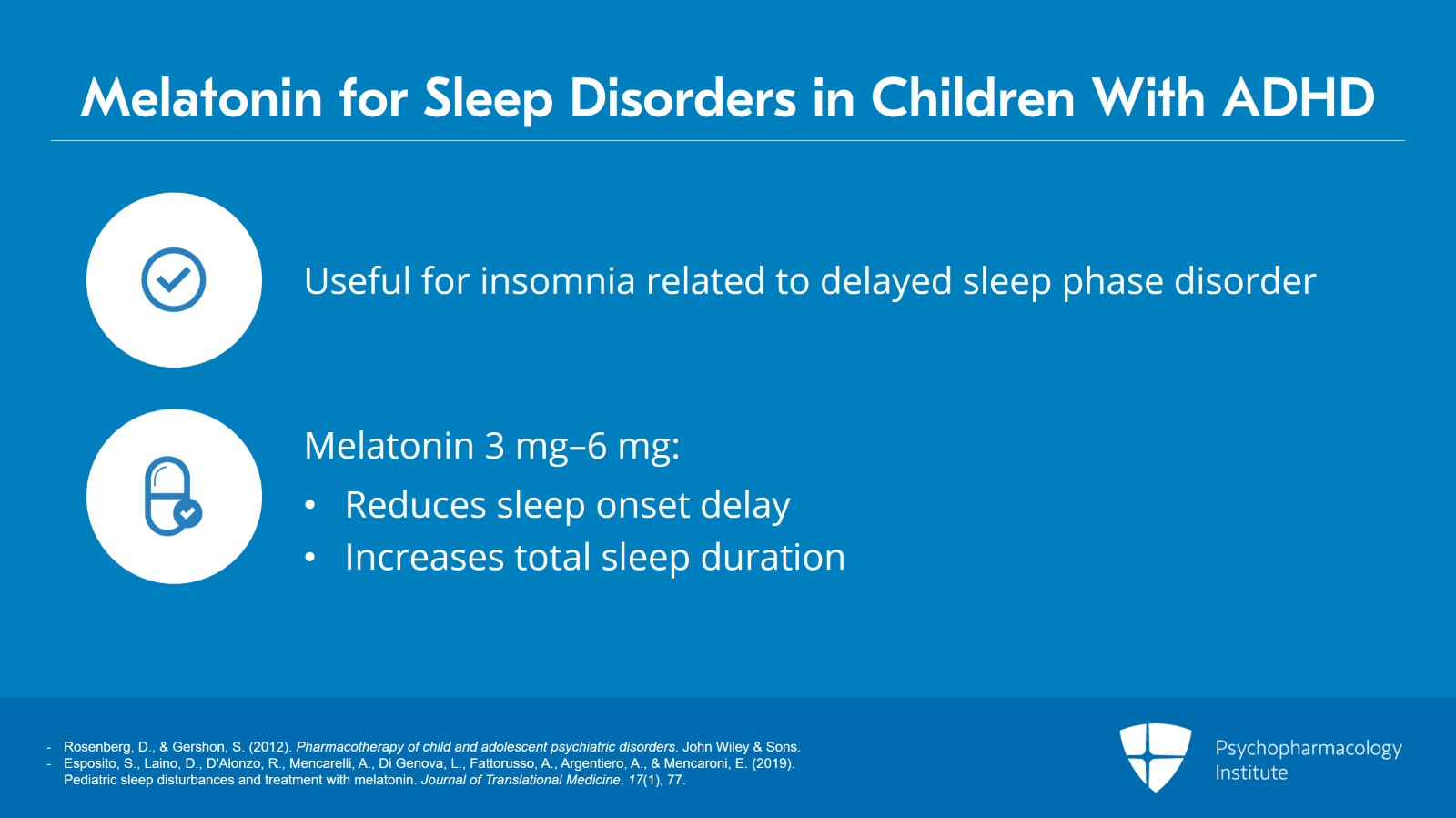
There is no current consensus as to how to treat sleep disorders in ADHD and only low-grade empirical evidence is available. However, melatonin may be an option if insomnia is related to a delayed sleep phase disorder.
Results from randomized controlled trials have demonstrated that treatment with 3 to 6 mg of melatonin per night significantly reduces sleep onset delay and increases total sleep duration.
References:
- Rosenberg, D., & Gershon, S. (2012). Pharmacotherapy of child and adolescent psychiatric disorders. John Wiley & Sons.
- Esposito, S., Laino, D., D'Alonzo, R., Mencarelli, A., Di Genova, L., Fattorusso, A., Argentiero, A., & Mencaroni, E. (2019). Pediatric sleep disturbances and treatment with melatonin. Journal of Translational Medicine, 17(1), 77.
Slide 12 of 19
While more evidence is still needed, melatonin is considered a reasonable, safe, and affordable treatment for children with ADHD who experience delayed sleep phase disorder.
References:
- Rosenberg, D., & Gershon, S. (2012). Pharmacotherapy of child and adolescent psychiatric disorders. John Wiley & Sons.
- Esposito, S., Laino, D., D'Alonzo, R., Mencarelli, A., Di Genova, L., Fattorusso, A., Argentiero, A., & Mencaroni, E. (2019). Pediatric sleep disturbances and treatment with melatonin. Journal of Translational Medicine, 17(1), 77.
Free Files
Download PDF and other files
Success!
Check your inbox, we sent you all the materials there.
Slide 13 of 19
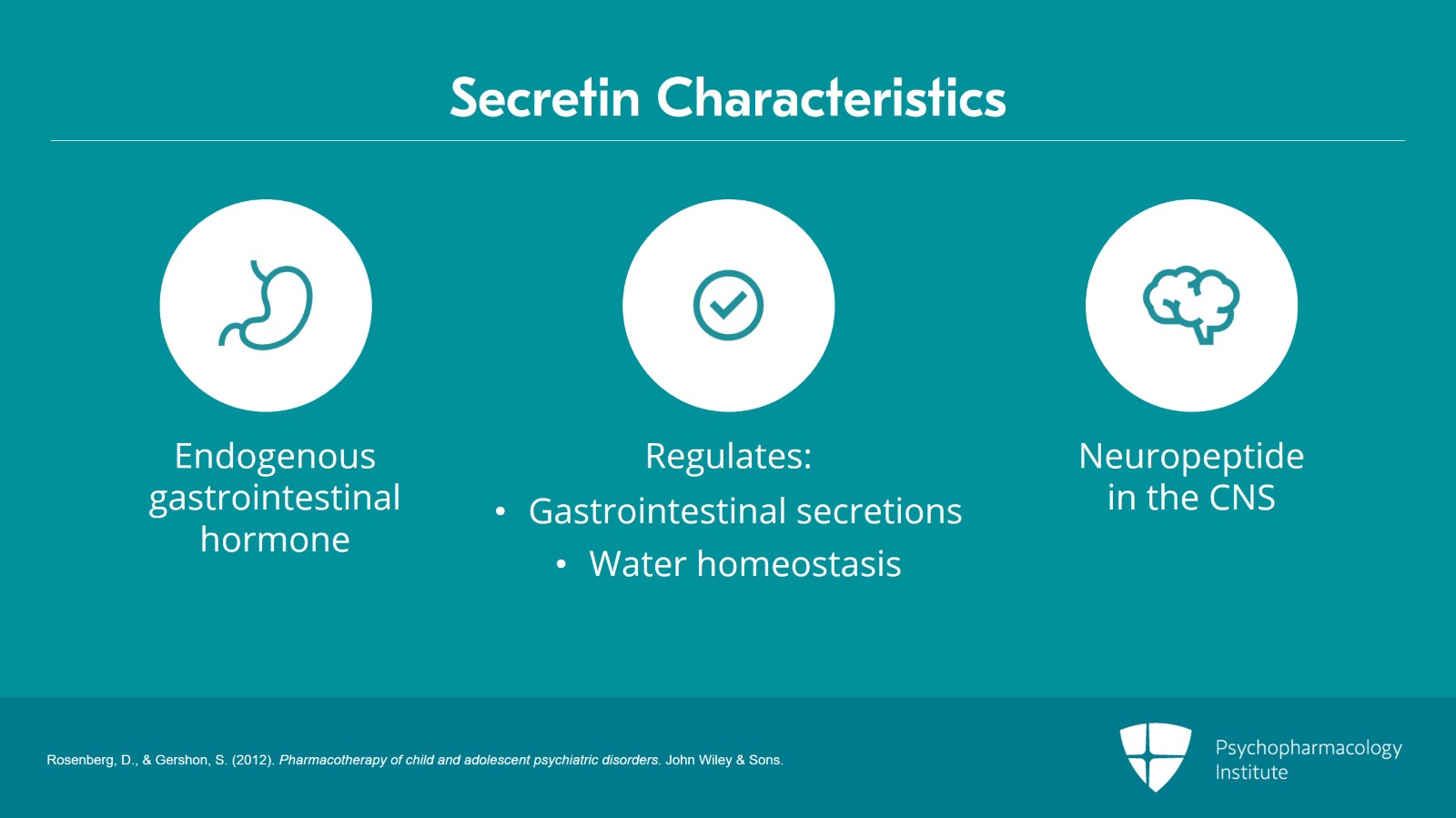
Secretin.
Secretin is an endogenous gastrointestinal hormone produced in the duodenum that regulates exocrine secretions in the stomach, pancreas, and stimulates flow of bile from the liver to the gallbladder.
It also plays a role in water homeostasis and acts as a neuropeptide in the central nervous system.
Secretin receptors have been found in the brains of rats and pigs though its role in the central nervous system is not well understood.
References:
- Rosenberg, D., & Gershon, S. (2012). Pharmacotherapy of child and adolescent psychiatric disorders. John Wiley & Sons.
Slide 14 of 19
Potential indications, autism spectrum disorder.
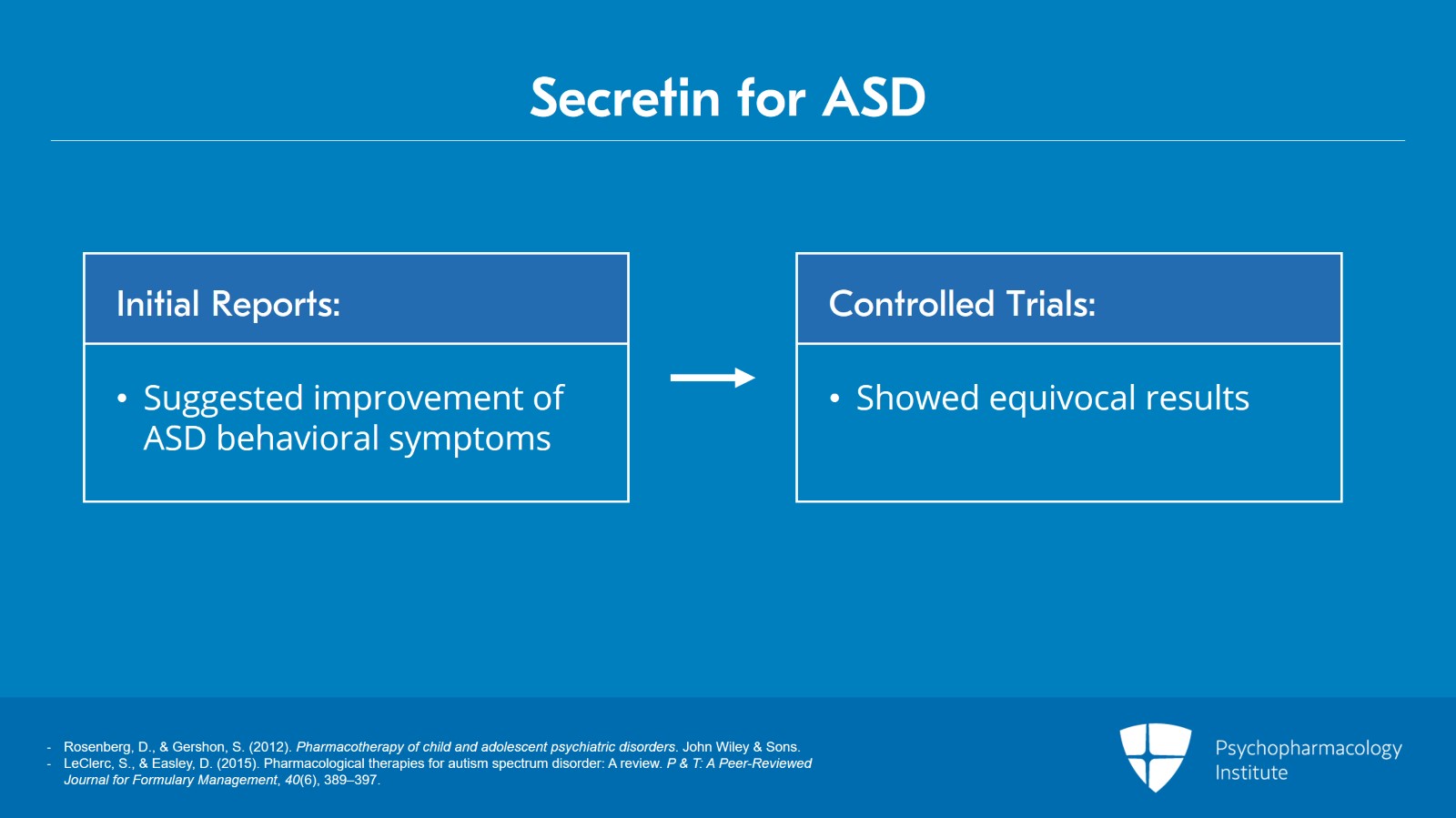
Secretin has actually been well studied as a potential treatment of ASD. Initial anecdotal reports and results from small scale studies suggested improvement of autism behavioral symptoms.
However, evidence from controlled trials examining the effectiveness of intravenous secretin has produced much more equivocal results.
References:
- Rosenberg, D., & Gershon, S. (2012). Pharmacotherapy of child and adolescent psychiatric disorders. John Wiley & Sons.
- LeClerc, S., & Easley, D. (2015). Pharmacological therapies for autism spectrum disorder: A review. P & T: A Peer-Reviewed Journal for Formulary Management, 40(6), 389–397.14
Free Files
Download PDF and other files
Success!
Check your inbox, we sent you all the materials there.
Slide 15 of 19
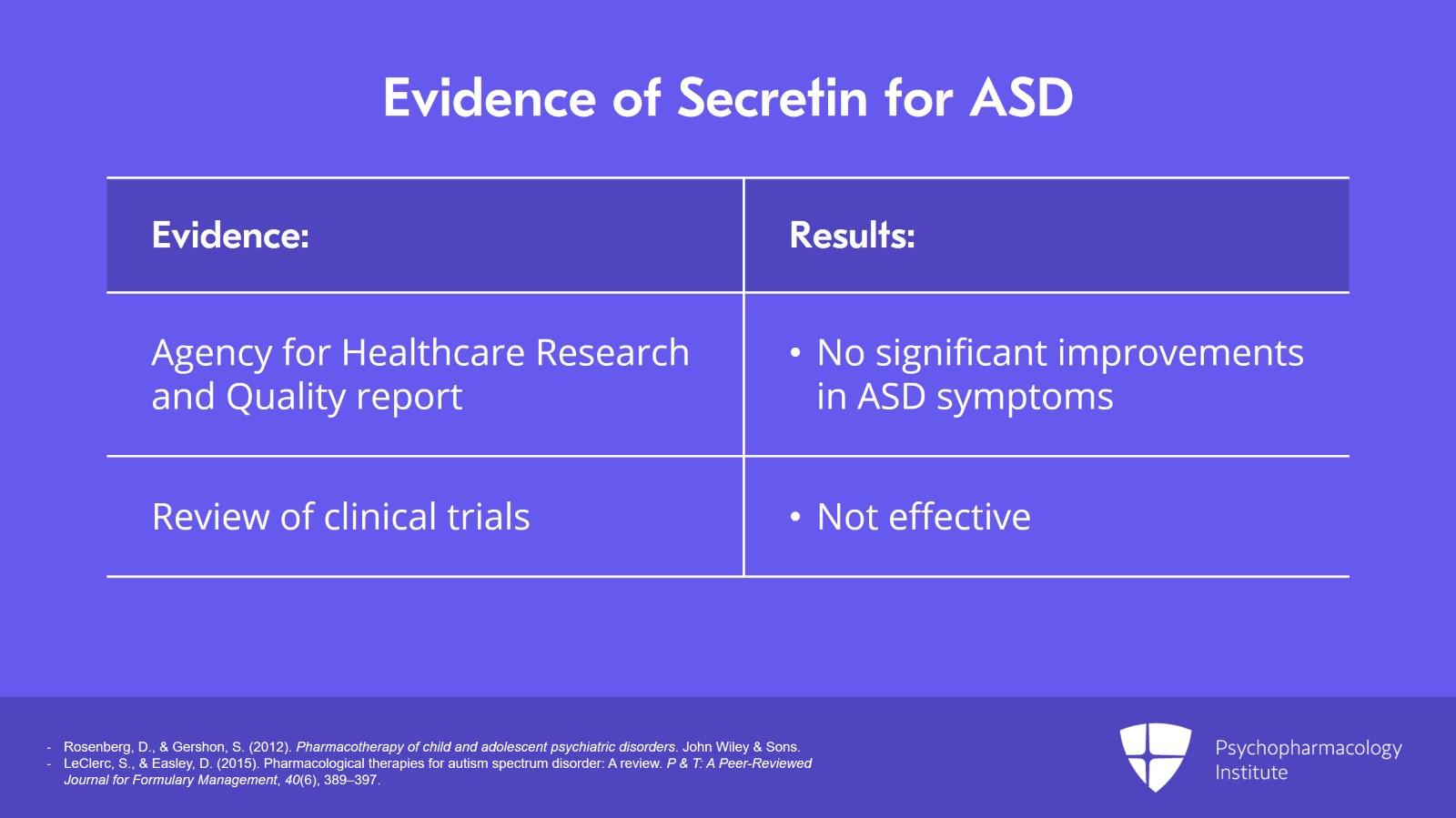
A report from the Agency for Healthcare Research and Quality compared eight trials and found that none demonstrated significant improvements in measures of language, cognition or, autism symptoms compared to placebo.
Similarly, a review of 16 clinical trials of IV secretin completed in 900 children with ASD also found no evidence that secretin was effective for ASD.
References:
- Rosenberg, D., & Gershon, S. (2012). Pharmacotherapy of child and adolescent psychiatric disorders. John Wiley & Sons.
- LeClerc, S., & Easley, D. (2015). Pharmacological therapies for autism spectrum disorder: A review. P & T: A Peer-Reviewed Journal for Formulary Management, 40(6), 389–397.
Slide 16 of 19
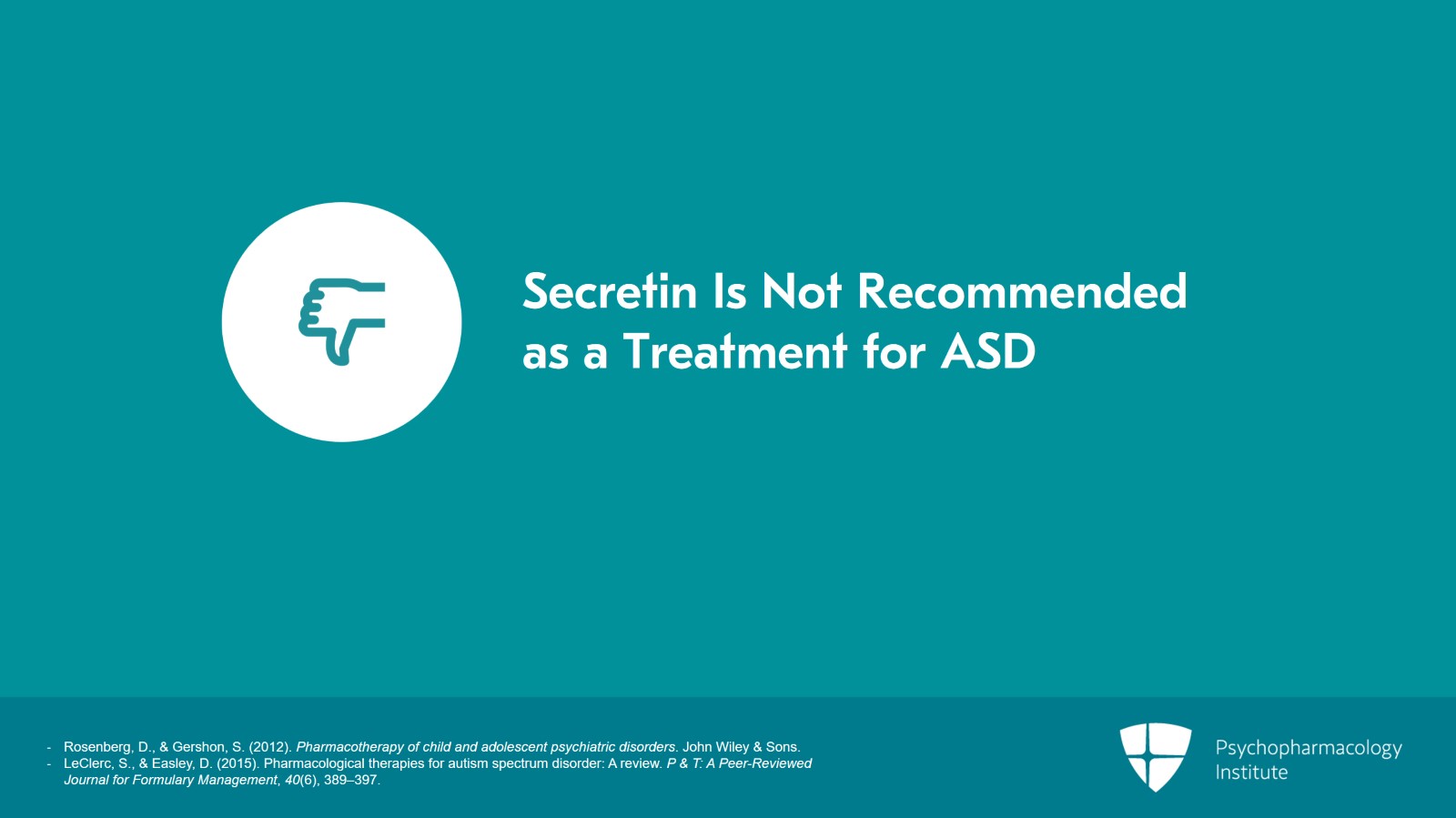
Based on the evidence examined in these reviews, it was concluded that secretin should not be recommended or administered as a treatment for ASD.
References:
- Rosenberg, D., & Gershon, S. (2012). Pharmacotherapy of child and adolescent psychiatric disorders. John Wiley & Sons.
- LeClerc, S., & Easley, D. (2015). Pharmacological therapies for autism spectrum disorder: A review. P & T: A Peer-Reviewed Journal for Formulary Management, 40(6), 389–397.
Free Files
Download PDF and other files
Success!
Check your inbox, we sent you all the materials there.
Slide 17 of 19
Key take-home points here.
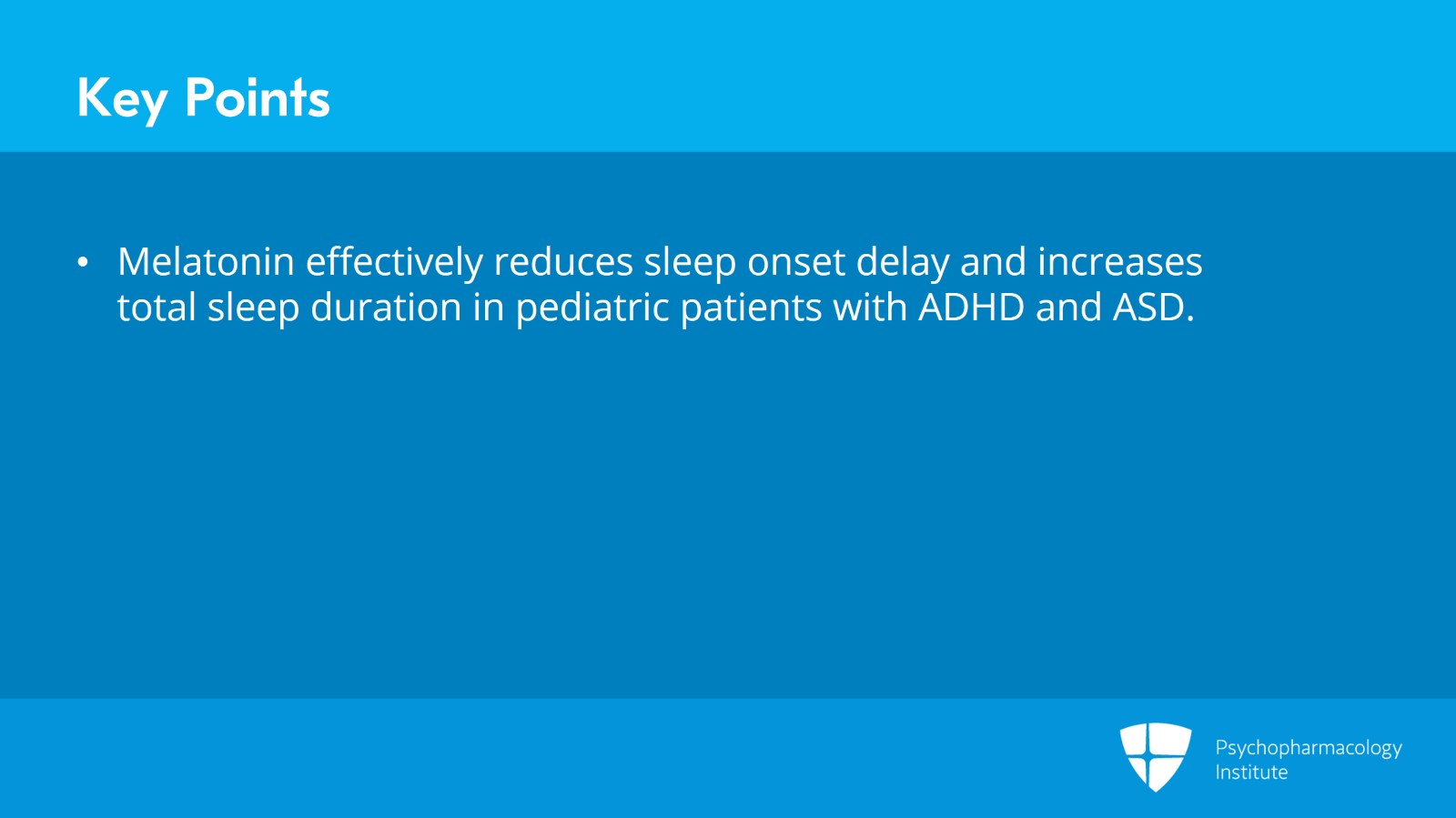
Current evidence suggests that melatonin is effective in reducing sleep onset delay and increasing total sleep duration in pediatric patients with ADHD and/or ASD.
Slide 18 of 19
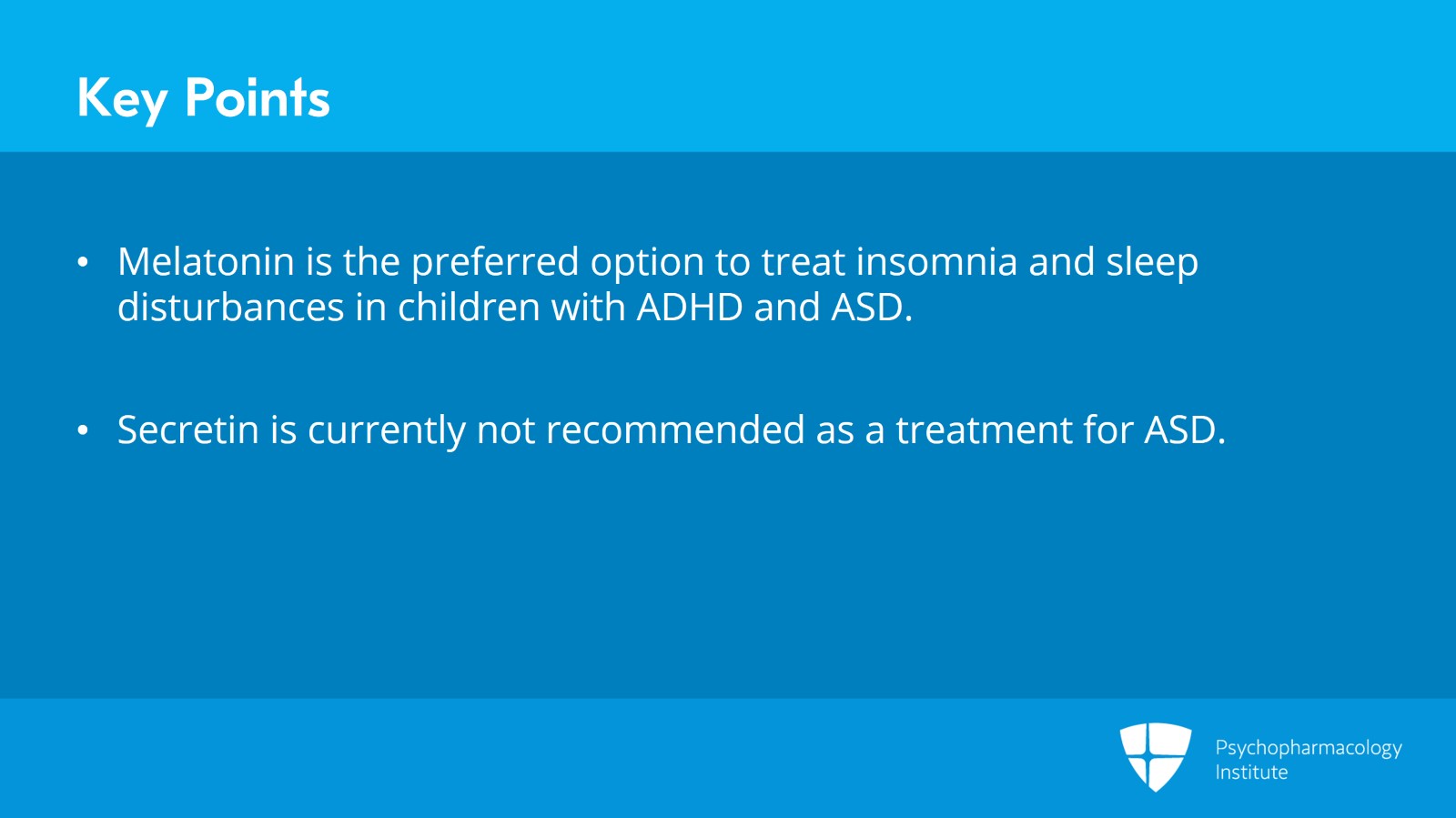
Given the safety and tolerability profile of melatonin and limited data with other treatments, melatonin is currently the preferred pharmacotherapy option to treat insomnia and sleep issues in children with ADHD and ASD.
Secretin has been well studied as a potential treatment of autism spectrum disorder. However, based on results from current studies, it was concluded that secretin should not be recommended or administered as a treatment for ASD.
Free Files
Download PDF and other files
Success!
Check your inbox, we sent you all the materials there.