Close Banner
Free Section  - Video Lectures

10. Long-Term Follow-Up of Psychosis and Schizophrenia in Children and Adolescents

Published on May 1, 2022 Expired on May 1, 2025

David R. Rosenberg, M.D.

Chair of the Department of Psychiatry & Behavioral Neuroscience - Wayne State University School of Medicine

Key Points

  • Follow-up studies of child- and adolescent-onset schizophrenia suggest moderate-to-severe impairment across the lifespan.
  • Youth with EOS have greater social deficits, lower levels of employment, and lower likelihood to live independently.
  • Suicidality is prevalent in youth with schizophrenia spectrum disorders.

Free Downloads for Offline Access

  • Free Download Audio File (MP3)
  • Free Download Video (MP4)
  • Free Download Presentation File (PPTX)

Slides and Transcript

Slide 1 of 9

Video 10, the long-term follow-up of psychosis and schizophrenia in children and adolescents.

Slide 2 of 9

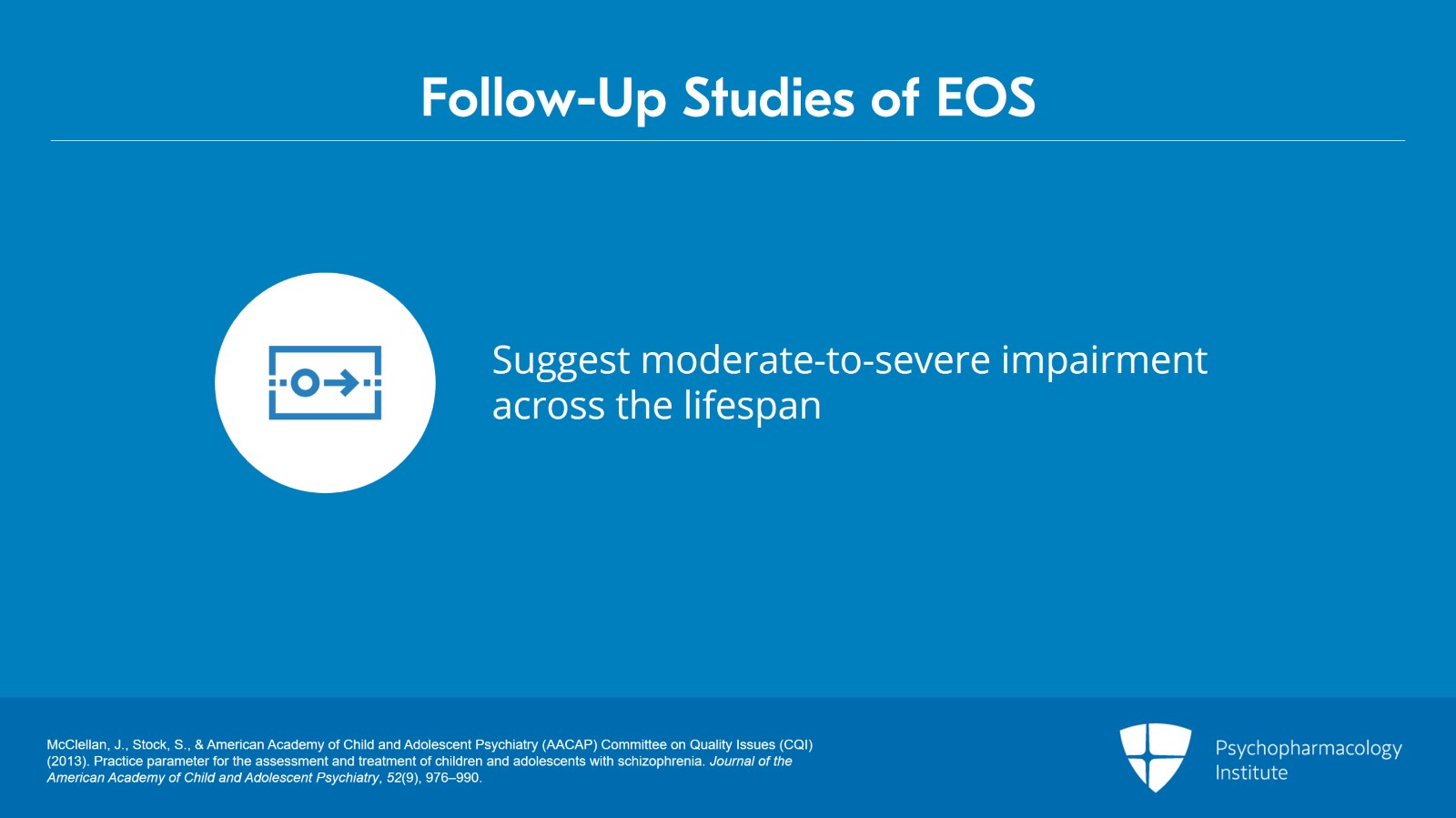
Follow-up studies of child and adolescent-onset schizophrenia suggest moderate to severe impairment across the lifespan.  
References:
  • McClellan, J., Stock, S., & American Academy of Child and Adolescent Psychiatry (AACAP) Committee on Quality Issues (CQI) (2013). Practice parameter for the assessment and treatment of children and adolescents with schizophrenia. Journal of the American Academy of Child and Adolescent Psychiatry, 52(9), 976–990.
Free Files
Success!
Check your inbox, we sent you all the materials there.

Slide 3 of 9

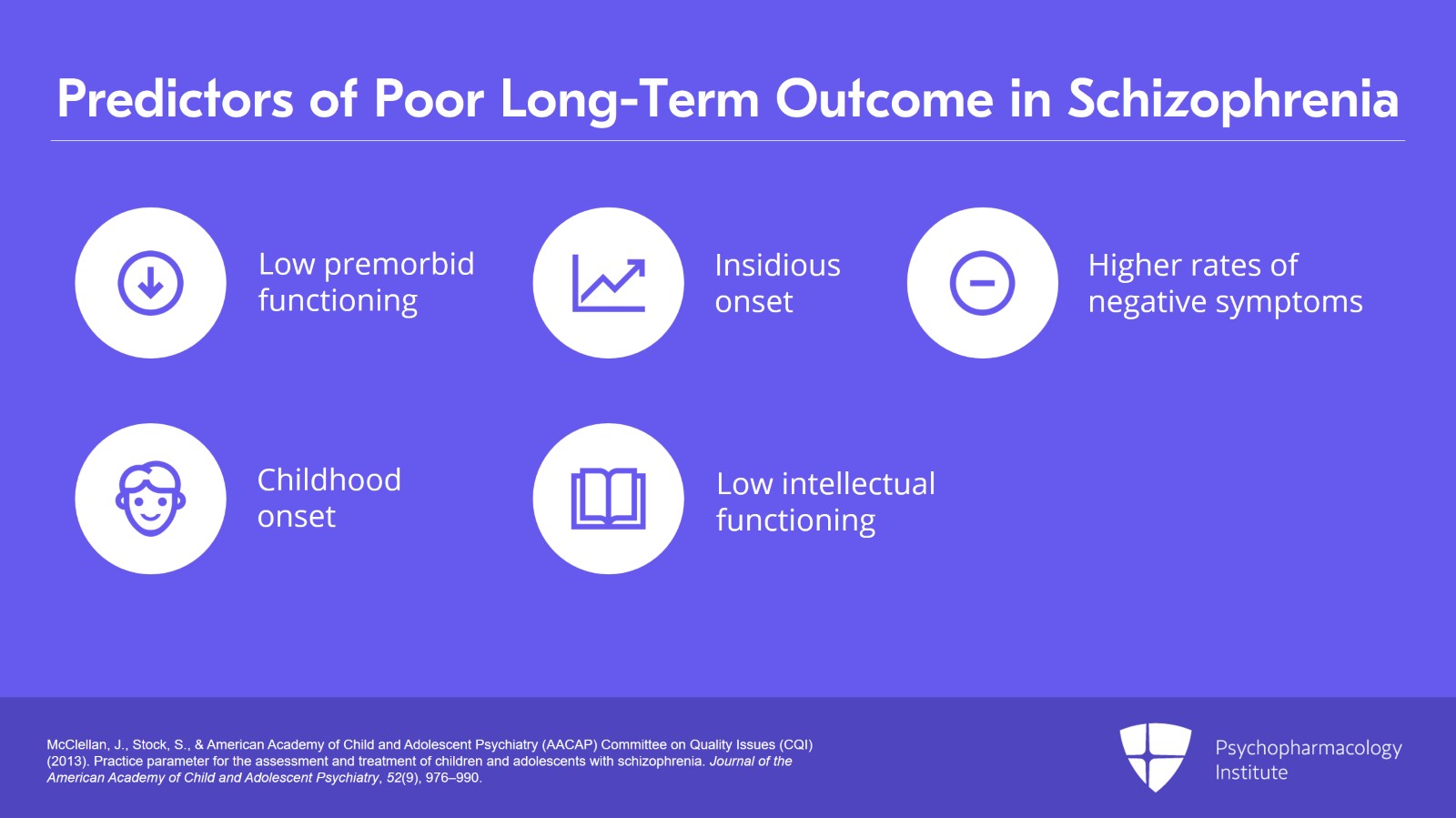
Poor long-term outcome is predicted by low premorbid functioning, insidious onset, higher rates of negative symptoms, childhood onset, and low intellectual functioning.
References:
  • McClellan, J., Stock, S., & American Academy of Child and Adolescent Psychiatry (AACAP) Committee on Quality Issues (CQI) (2013). Practice parameter for the assessment and treatment of children and adolescents with schizophrenia. Journal of the American Academy of Child and Adolescent Psychiatry, 52(9), 976–990.

Slide 4 of 9

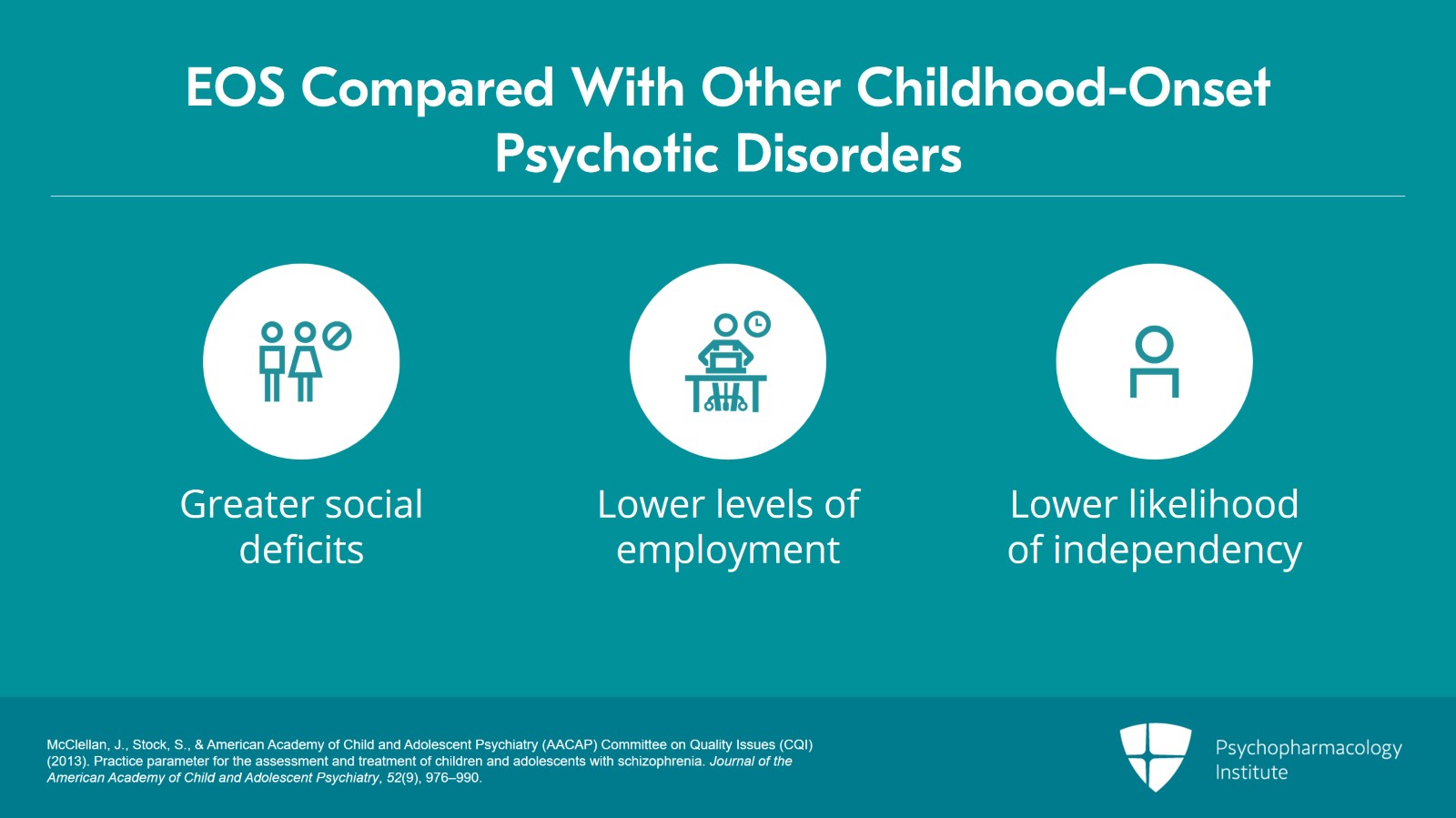
Youth with EOS compared with those with other childhood-onset psychotic disorders go on to have greater social deficits, lower levels of employment, and lower likelihood to live independently.
References:
  • McClellan, J., Stock, S., & American Academy of Child and Adolescent Psychiatry (AACAP) Committee on Quality Issues (CQI) (2013). Practice parameter for the assessment and treatment of children and adolescents with schizophrenia. Journal of the American Academy of Child and Adolescent Psychiatry, 52(9), 976–990.
Free Files
Success!
Check your inbox, we sent you all the materials there.

Slide 5 of 9

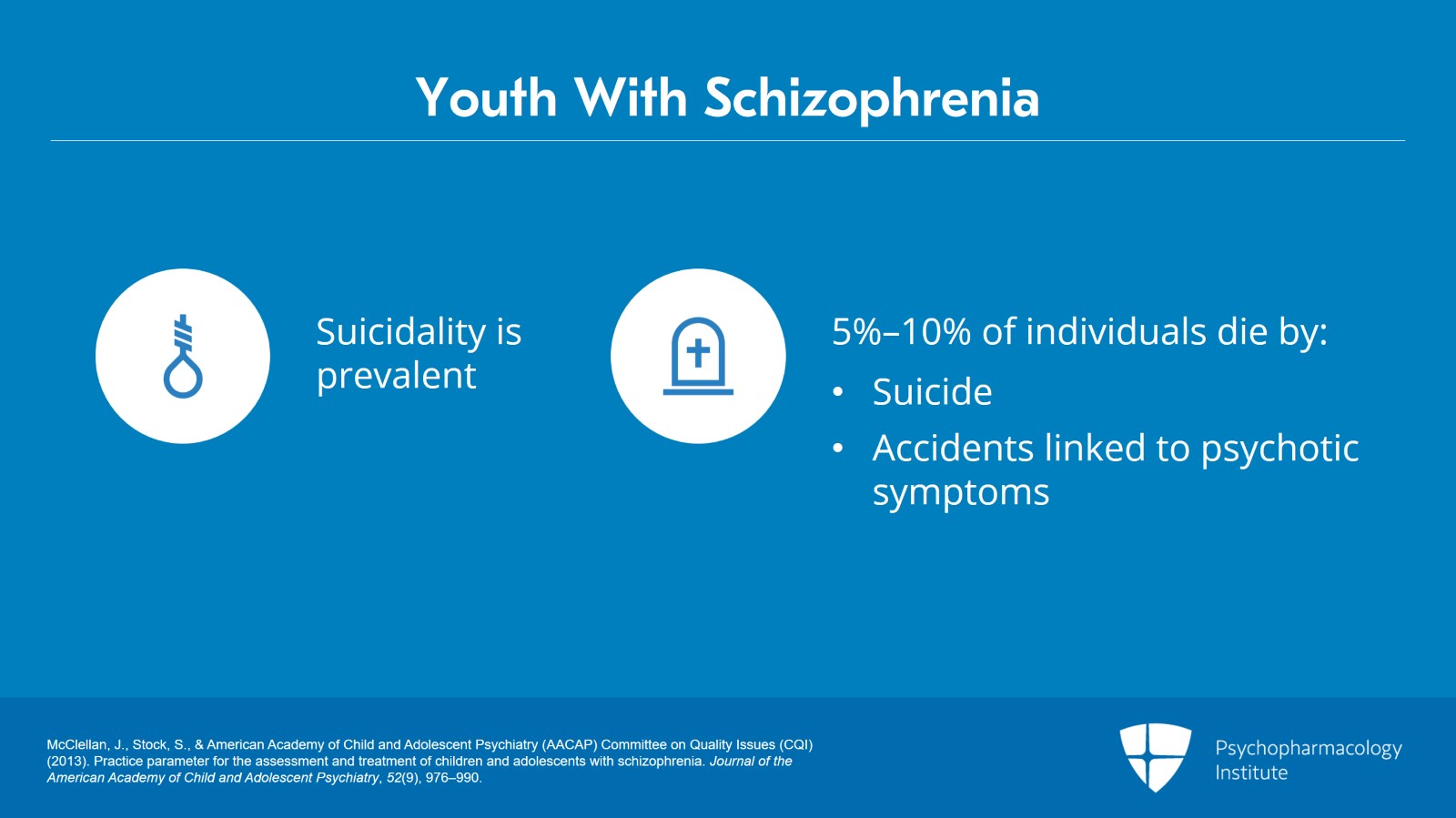
Suicidality is also prevalent in youth with schizophrenia spectrum disorders and in follow-up studies between 5% and 10% of individuals with EOS die by completed suicide or by accidental death due to behaviors linked to psychotic symptoms.
References:
  • McClellan, J., Stock, S., & American Academy of Child and Adolescent Psychiatry (AACAP) Committee on Quality Issues (CQI) (2013). Practice parameter for the assessment and treatment of children and adolescents with schizophrenia. Journal of the American Academy of Child and Adolescent Psychiatry, 52(9), 976–990.

Slide 6 of 9

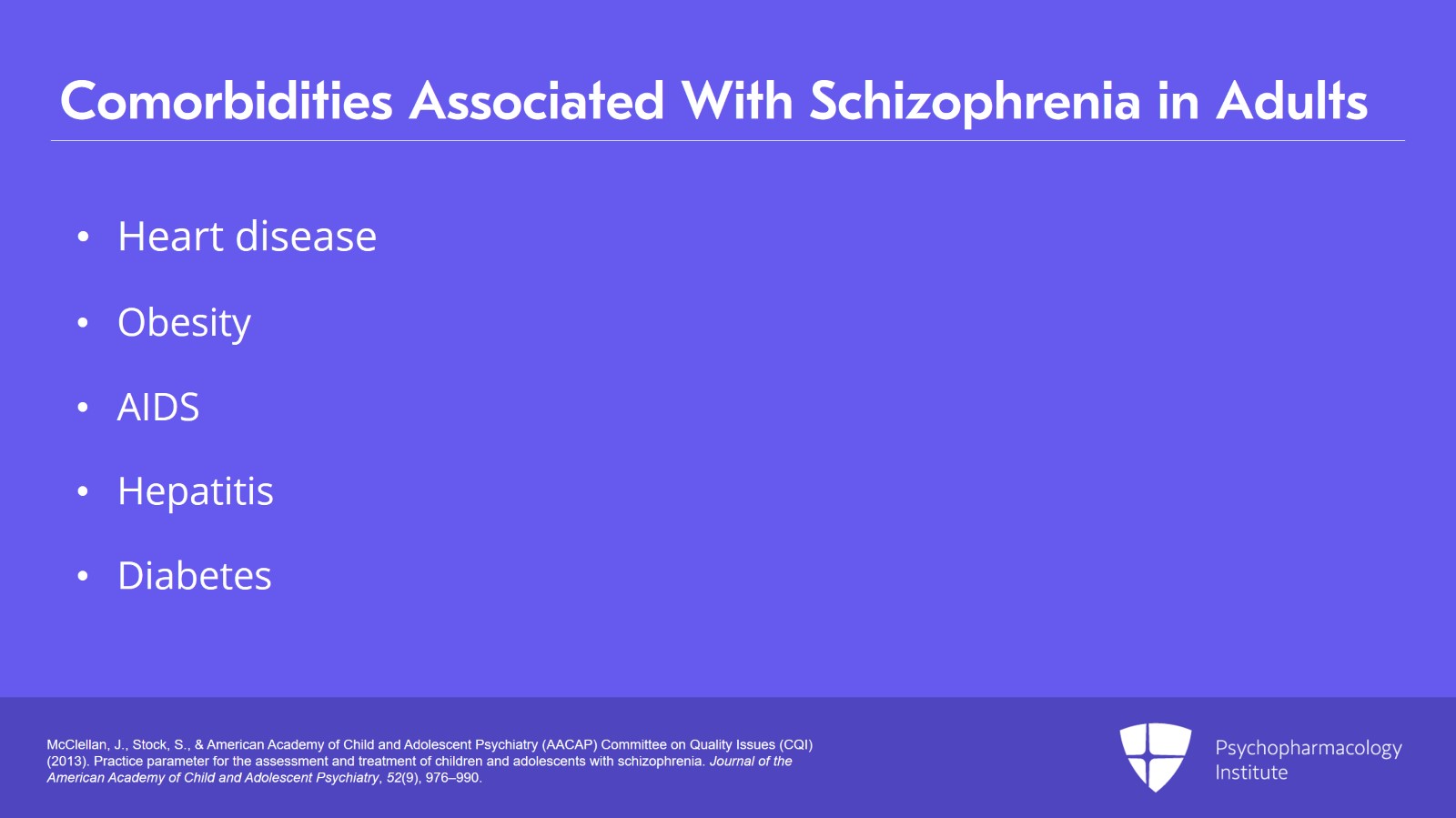
As adults, there is higher risk of other comorbidities such as heart disease, obesity, human immunodeficiency virus, AIDS, hepatitis, and diabetes.
References:
  • McClellan, J., Stock, S., & American Academy of Child and Adolescent Psychiatry (AACAP) Committee on Quality Issues (CQI) (2013). Practice parameter for the assessment and treatment of children and adolescents with schizophrenia. Journal of the American Academy of Child and Adolescent Psychiatry, 52(9), 976–990.
Free Files
Success!
Check your inbox, we sent you all the materials there.

Slide 7 of 9

Key take-home points. Follow-up studies of child and adolescent-onset schizophrenia suggest moderate to severe impairment across the lifespan. Youth with EOS also go on to have greater social deficits, lower levels of employment and lower likelihood to live independently compared with those with other childhood-onset psychotic disorders.

Slide 8 of 9

Suicidality is prevalent in youth with schizophrenia spectrum disorders.
Free Files
Success!
Check your inbox, we sent you all the materials there.

Slide 9 of 9

Learning Objectives:

After completing this activity, the learner will be able to:

  1. Recognize and assess unique features of childhood- and early-onset schizophrenia.
  2. Perform a throughout evaluation of psychotic symptoms in children and adolescents.
  3. Identify the recommended treatments for youth with schizophrenia and prescribe them accordingly.

Original Release Date: May 1, 2022

Review and Re-release Date: March 1, 2024

Expiration Date: May 1, 2025

Expert: David Rosenberg, M.D.

Medical Editor: Paz Badía, M.D.

Relevant Financial Disclosures: 

None of the faculty, planners, and reviewers for this educational activity have relevant financial relationships to disclose during the last 24 months with ineligible companies whose primary business is producing, marketing, selling, re-selling, or distributing healthcare products used by or on patients.

Contact Information: For questions regarding the content or access to this activity, contact us at support@psychopharmacologyinstitute.com

Instructions for Participation and Credit:

Participants must complete the activity online during the valid credit period that is noted above.

Follow these steps to earn CME credit:

  1. View the required educational content provided on this course page.

  2. Complete the Post Activity Evaluation for providing the necessary feedback for continuing accreditation purposes and for the development of future activities. NOTE: Completing the Post Activity Evaluation after the quiz is required to receive the earned credit.

  3. Download your certificate.

Accreditation Statement

This activity has been planned and implemented in accordance with the accreditation requirements and policies of the Accreditation Council for Continuing Medical Education through the joint providership of Medical Academy LLC and the Psychopharmacology Institute. Medical Academy is accredited by the ACCME to provide continuing medical education for physicians.

Credit Designation Statement

Medical Academy designates this enduring activity for a maximum of 1.50  AMA PRA Category 1 credit(s)™. Physicians should claim only the credit commensurate with the extent of their participation in the activity.


Free Files
Success!
Check your inbox, we sent you all the materials there.
Continue in the website
Instant access modal

Become a Bronze, Silver, Gold, Bronze extended, Silver extended or Gold extended Member.

2025–26 Psychopharmacology CME Program

Unlock up to 155 CME Credits, including 40 SA CME Credits.