Close Banner
Section Free  - Video Lectures

09. Long-Term Treatment of FEP

Published on November 1, 2021 Expired on April 1, 2025

Stephen R. Marder, M.D.

Professor, Psychiatry and Biobehavioral Sciences Director, Section on Psychosis - Resnick Neuropsychiatric Hospital at UCLA Ronald Reagan UCLA Medical Center

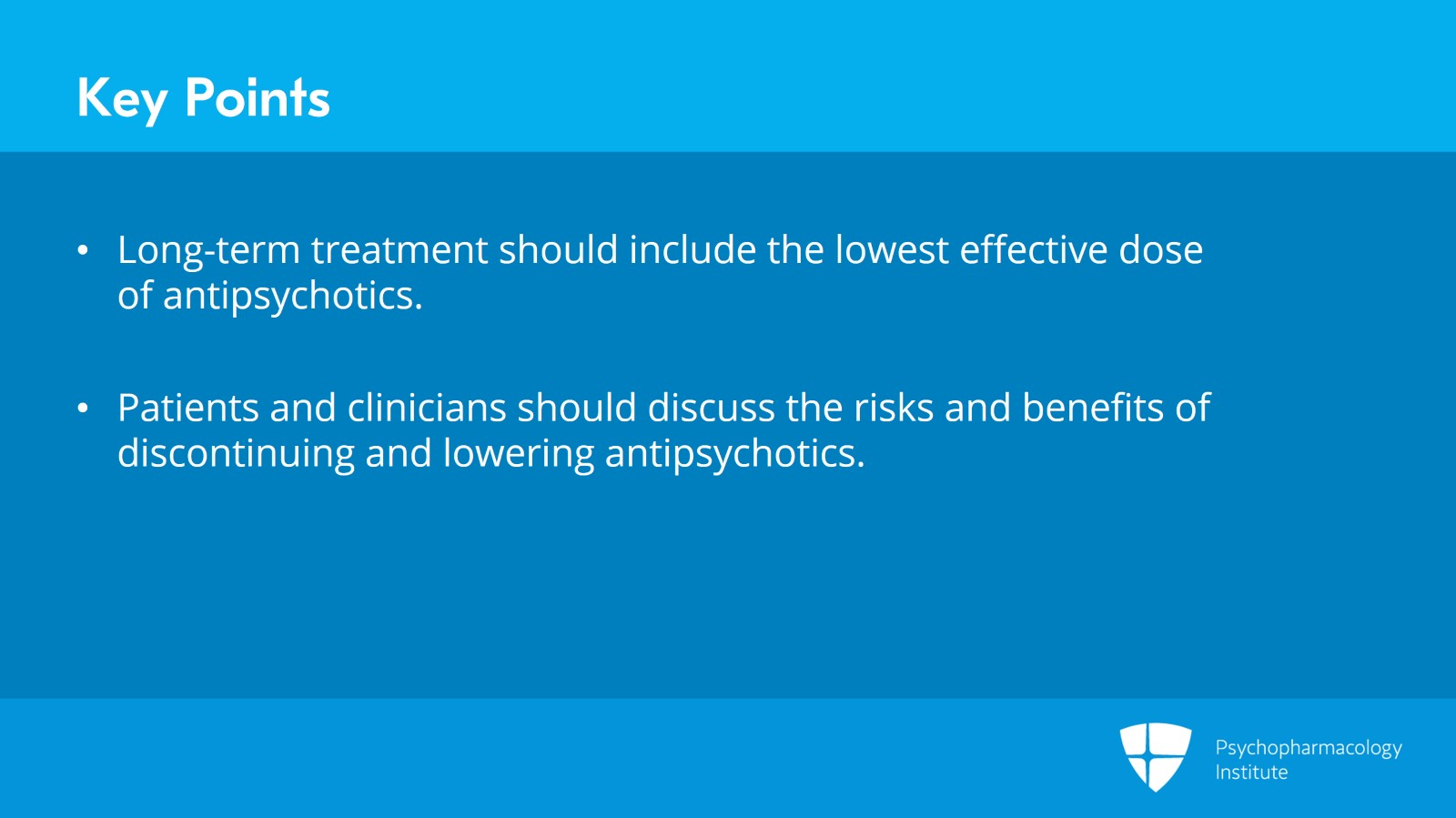
Key Points

  • Long-term treatment should include the lowest effective dose of antipsychotics.
  • Patients and clinicians should discuss the risks and benefits of discontinuing and lowering antipsychotics.

Free Downloads for Offline Access

  • Free Download Presentation File (PPTX)
  • Free Download Video (MP4)
  • Free Download Audio File (MP3)

Slides and Transcript

Slide 1 of 12

In this final talk, I'm going to focus on the long-term treatment of first episode psychosis.

Slide 2 of 12

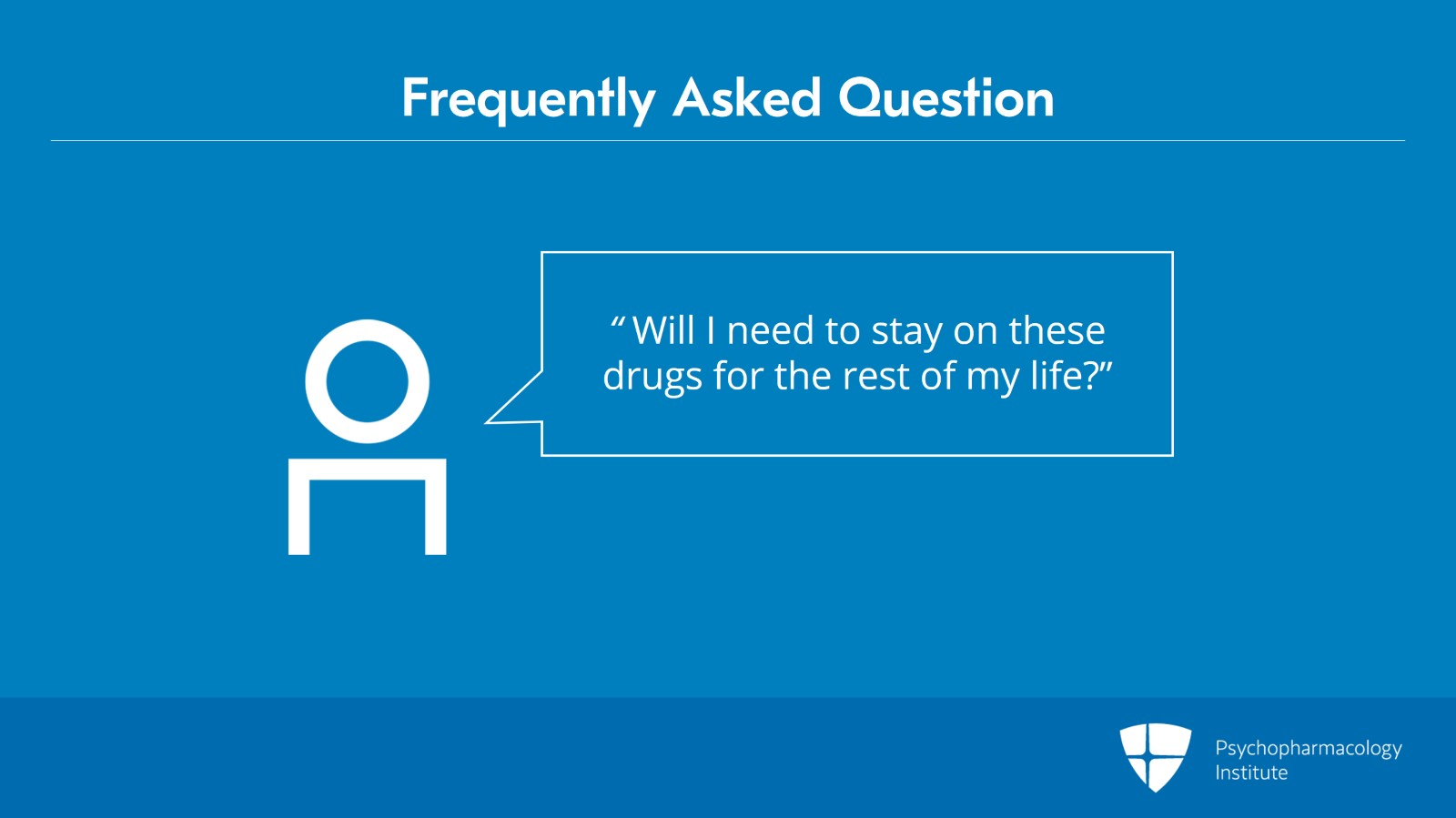
Let me start with this question which every psychiatrist or anybody who treats schizophrenia will need to answer in almost every case of a first episode patient: Will I need to stay on these drugs for the rest of my life? This is not such an easy question to answer and let me sort of focus on addressing it. 
Free Files
Success!
Check your inbox, we sent you all the materials there.

Slide 3 of 12

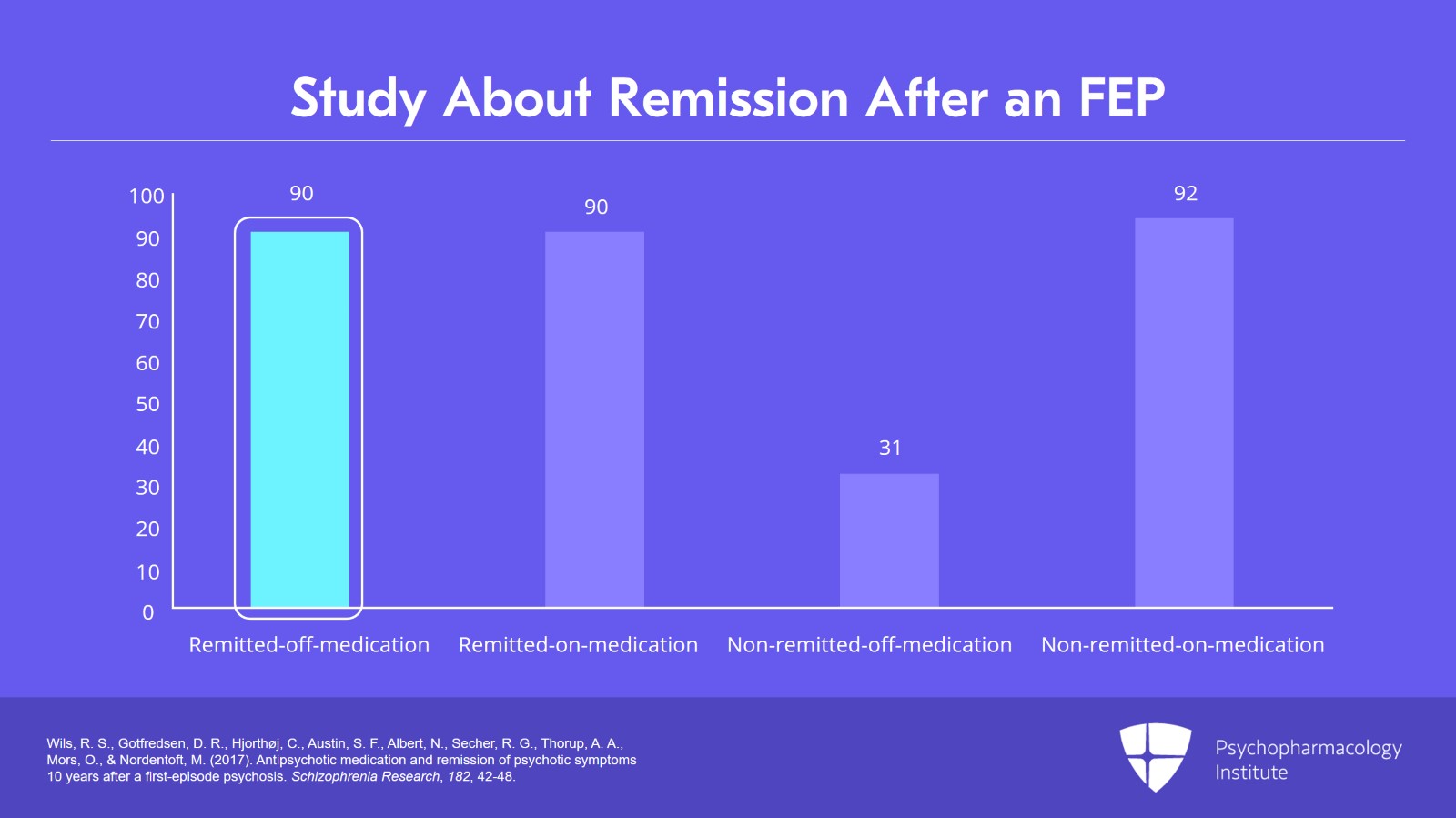
This is from a study in Scandinavia which looked at populations of patients 10 years after a first episode. And these are numbers of patients, not percentages. But what you could see is that there are a substantial number of people who 10 years later were in remission and off medication.
References:
  • Wils, R. S., Gotfredsen, D. R., Hjorthøj, C., Austin, S. F., Albert, N., Secher, R. G., Thorup, A. A., Mors, O., & Nordentoft, M. (2017). Antipsychotic medication and remission of psychotic symptoms 10 years after a first-episode psychosis. Schizophrenia Research, 182, 42-48.

Slide 4 of 12

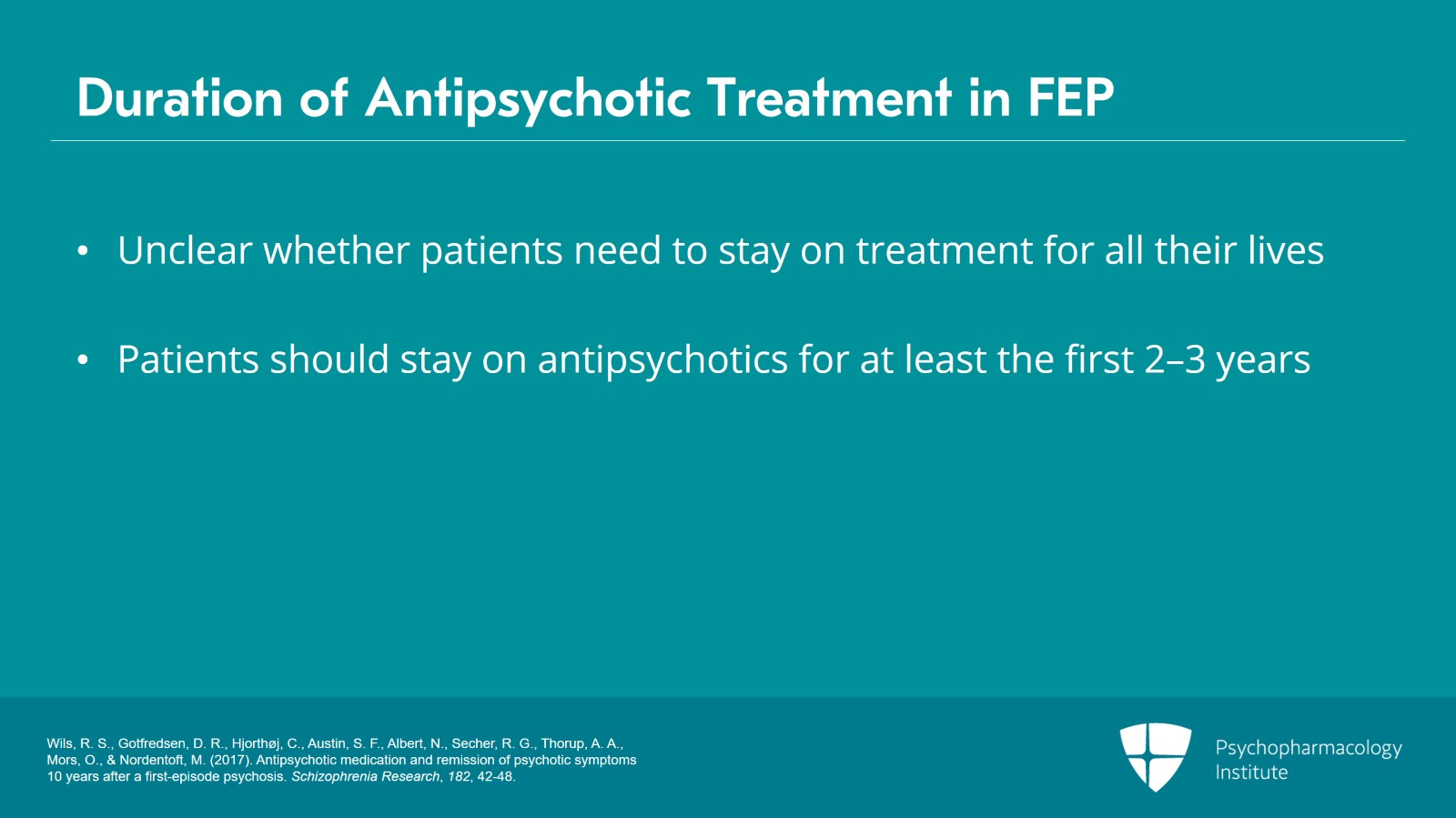
I don't think that these patients need to stay on antipsychotics for all their lives. There's a high likelihood that they should stay on antipsychotics for at least the first two or three years. And if they haven't reached a really complete remission, it may be a good idea for them to stay. But for those who are in a real remission, it's unclear.
References:
  • Wils, R. S., Gotfredsen, D. R., Hjorthøj, C., Austin, S. F., Albert, N., Secher, R. G., Thorup, A. A., Mors, O., & Nordentoft, M. (2017). Antipsychotic medication and remission of psychotic symptoms 10 years after a first-episode psychosis. Schizophrenia Research, 182, 42-48.
Free Files
Success!
Check your inbox, we sent you all the materials there.

Slide 5 of 12

There's other evidence that's come from studies such as this from Lex Wunderink. They followed up the results from a long-term study. In the first two years, first episode patients were randomized to having dosage reduction or regular dosing.
References:
  • Wunderink, L., Nieboer, R. M., Wiersma, D., Sytema, S., & Nienhuis, F. J. (2013). Recovery in remitted first-episode psychosis at 7 years of follow-up of an early dose reduction/discontinuation or maintenance treatment strategy: long-term follow-up of a 2-year randomized clinical trial. JAMA Psychiatry, 70(9), 913-920.

Slide 6 of 12

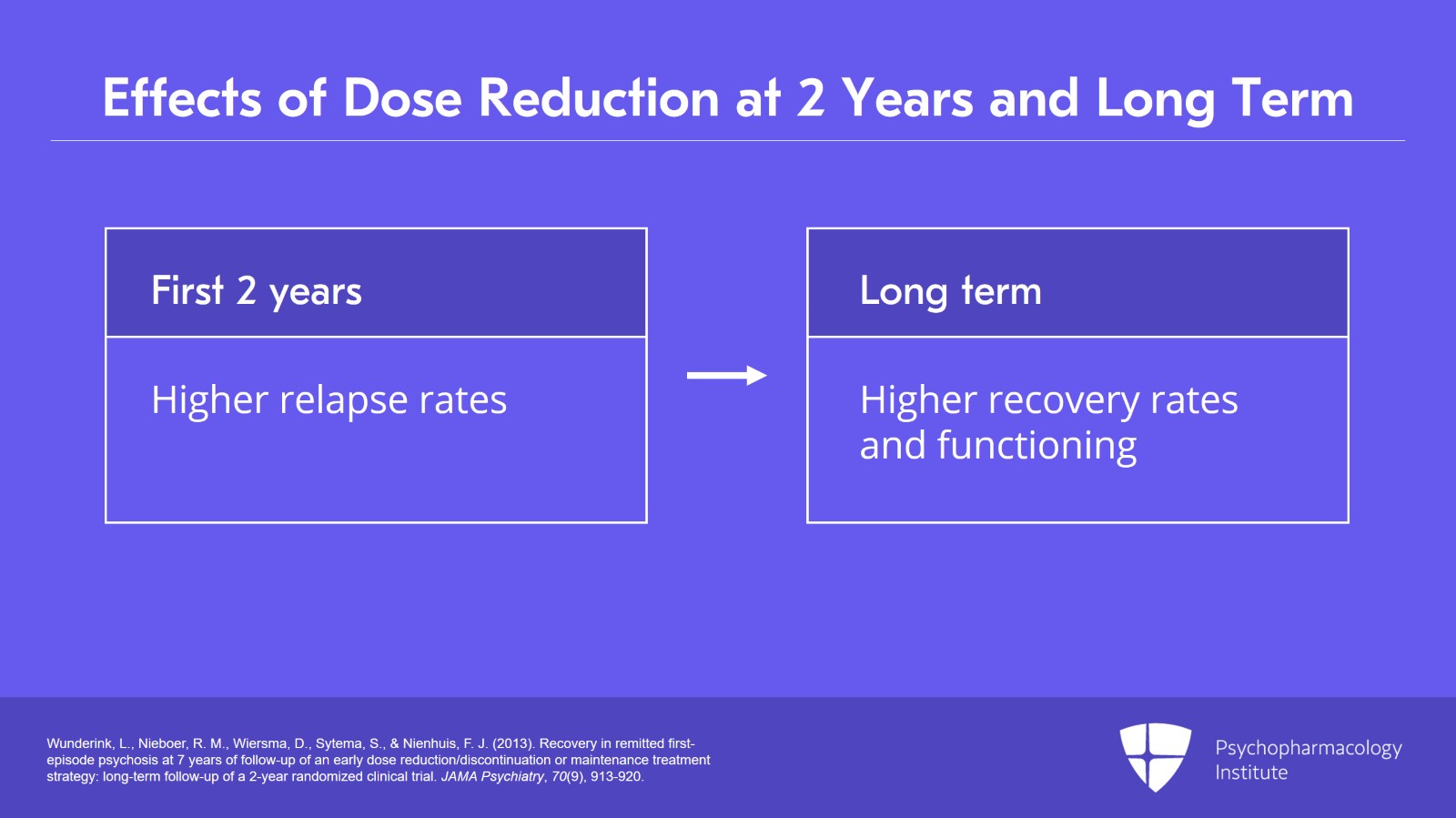
If you would look during the first two years, those who had dosage reduction had higher relapse rates. You would've thought that dosage reduction is a mistake. But when you look in the longer term, there was evidence that dosage reduction led to higher recovery rates and higher functioning, and there was a population in this study, 17 individuals, who discontinued antipsychotics and were functioning well.
References:
  • Wunderink, L., Nieboer, R. M., Wiersma, D., Sytema, S., & Nienhuis, F. J. (2013). Recovery in remitted first-episode psychosis at 7 years of follow-up of an early dose reduction/discontinuation or maintenance treatment strategy: long-term follow-up of a 2-year randomized clinical trial. JAMA Psychiatry, 70(9), 913-920.
Free Files
Success!
Check your inbox, we sent you all the materials there.

Slide 7 of 12

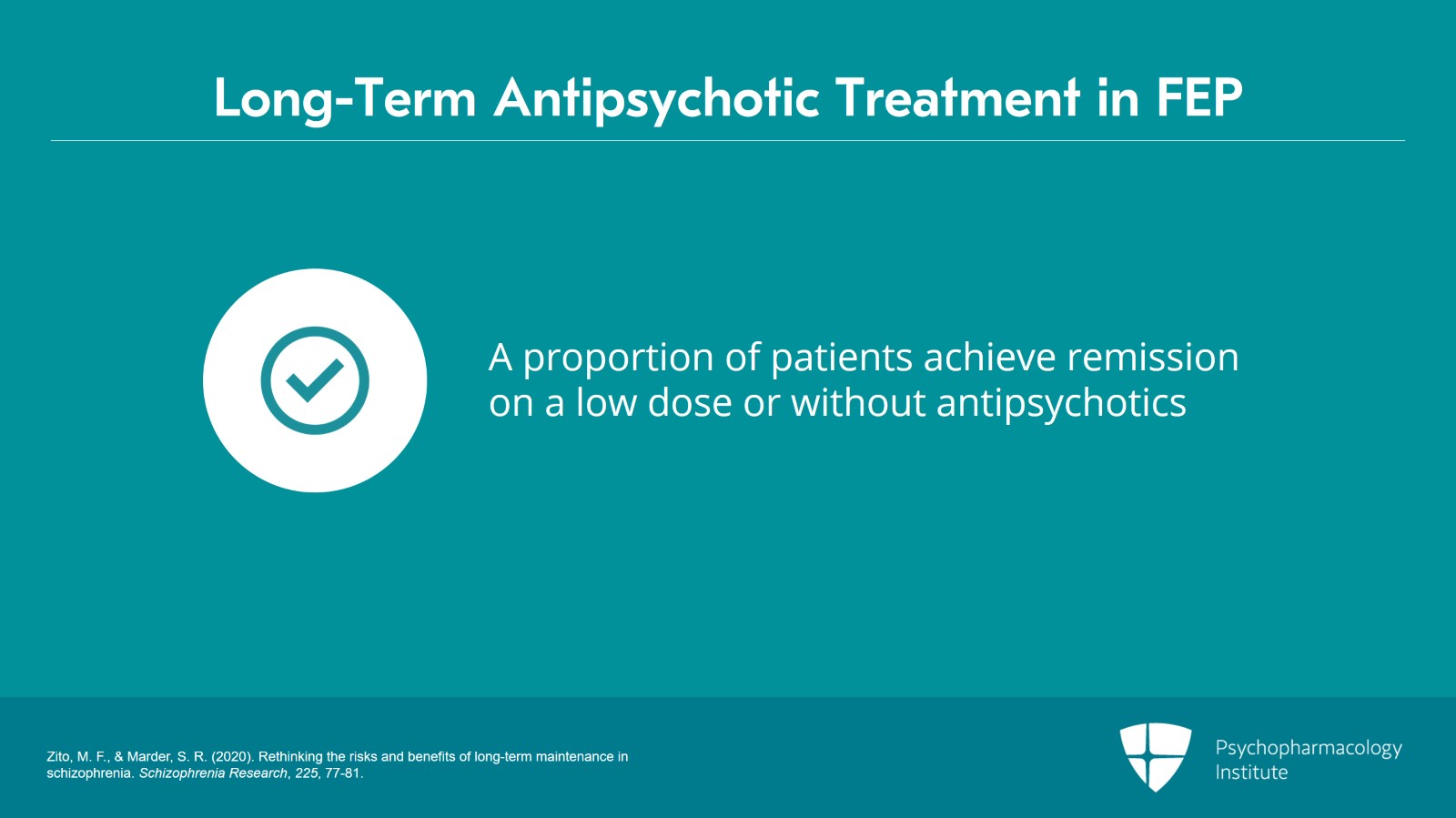
There's a proportion of patients, some people have suggested as high as 30%, who will achieve a clinical remission and can do well on a low dose or without long-term antipsychotic.
References:
  • Zito, M. F., & Marder, S. R. (2020). Rethinking the risks and benefits of long-term maintenance in schizophrenia. Schizophrenia Research, 225, 77-81.

Slide 8 of 12

There's also evidence that staying on antipsychotics for a very long time can change your dopamine system. There could be some kind of upregulation and maybe relapse occurs as patients withdraw from medications. That's an argument to make someone lean towards stopping antipsychotics. There's the other argument that people who are stable and staying on antipsychotics tend to derive the most benefit from psychotherapies and rehabilitation. And relapse after a first episode is associated with high rates of suicide and poorer psychosocial adjustment. These are the considerations that people who are managing schizophrenia, patients, and their families need to consider as they make decisions about antipsychotic medications.
References:
  • Zito, M. F., & Marder, S. R. (2020). Rethinking the risks and benefits of long-term maintenance in schizophrenia. Schizophrenia Research, 225, 77-81.
Free Files
Success!
Check your inbox, we sent you all the materials there.

Slide 9 of 12

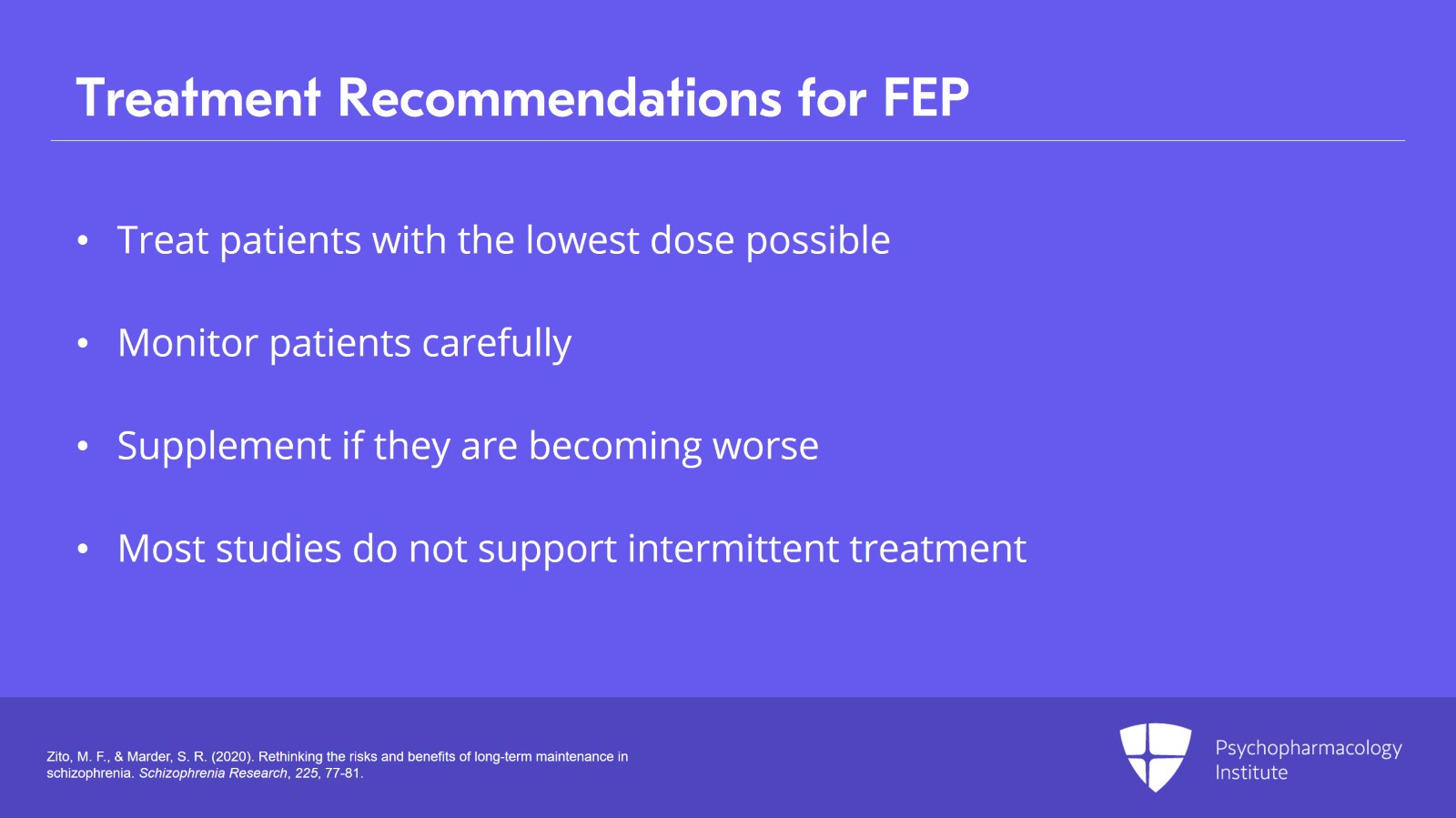
There are important arguments suggesting that patients should be treated on the lowest dose of antipsychotic possible. If you monitor patients carefully and then supplement them if they're becoming worse, you can prevent episodes. Most studies of treating patients just until they recover and then stopping treatment have shown intermittent treatment doesn't work very well but that's in groups of patients. I've seen patients in my clinic who are able to see when they're getting worse, and they can be treated intermittently.
References:
  • Zito, M. F., & Marder, S. R. (2020). Rethinking the risks and benefits of long-term maintenance in schizophrenia. Schizophrenia Research, 225, 77-81.

Slide 10 of 12

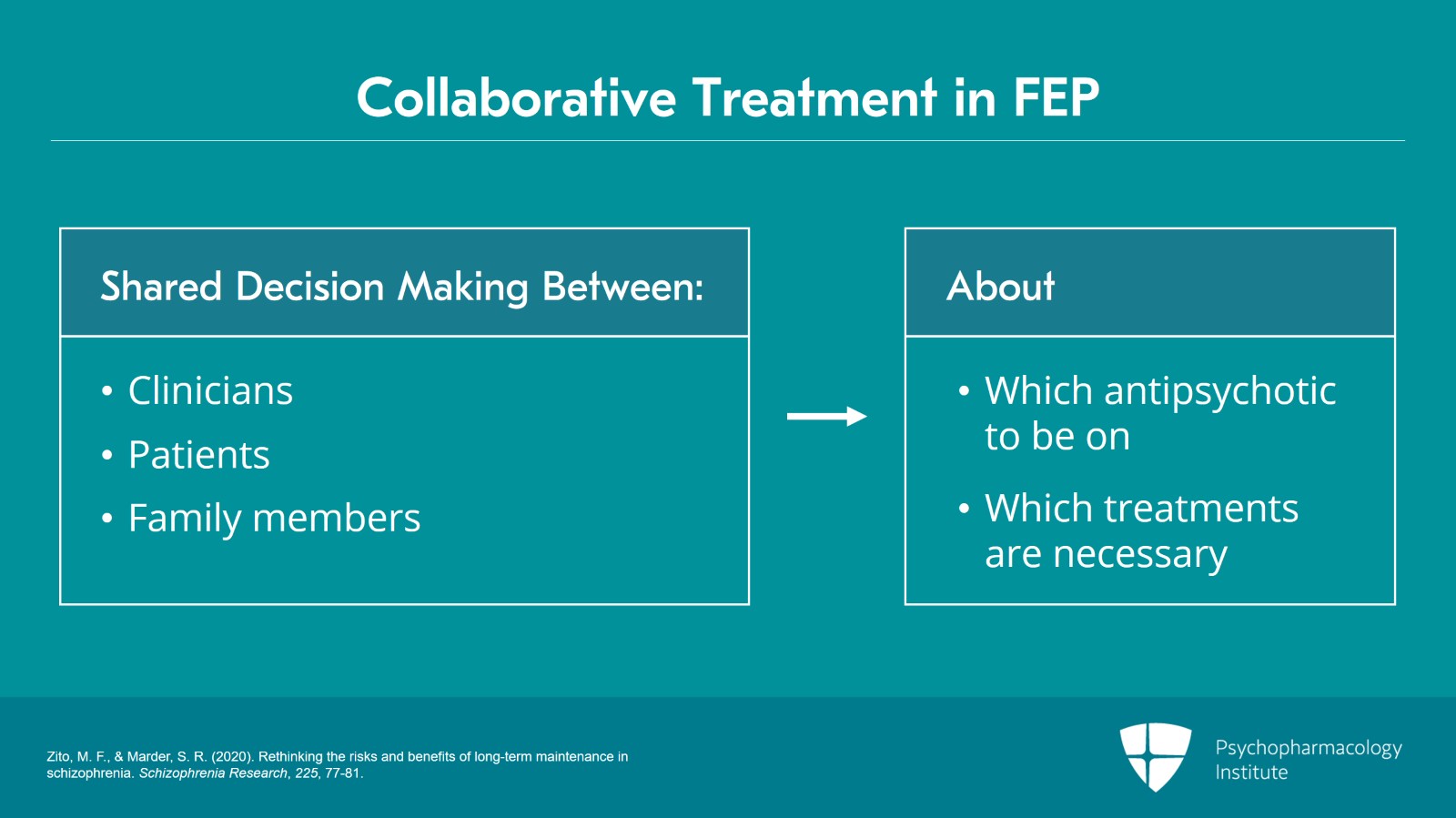
But an important thing to emphasize is that treatment for these populations should be collaborative. There should be a process of shared decision making where clinicians, patients and family members if the patient wants them brought into the discussion, should share the decision about what antipsychotic to be on, what kinds of treatments are necessary.
References:
  • Zito, M. F., & Marder, S. R. (2020). Rethinking the risks and benefits of long-term maintenance in schizophrenia. Schizophrenia Research, 225, 77-81.
Free Files
Success!
Check your inbox, we sent you all the materials there.

Slide 11 of 12

So what I've tried to emphasize in this final section is that we do know that planning long-term treatment for first episode patients should include using the lowest effective dose of an antipsychotic and that patients and their clinicians should have careful discussions on the risks and benefits of discontinuing and lowering antipsychotics. Thanks so much for your attention during this series of talks.

Slide 12 of 12

Free Files
Success!
Check your inbox, we sent you all the materials there.

Learning Objectives:

After completing this activity, the learner will be able to:

  1. Discuss the typical course of first episode psychosis and predictors of clinical outcome.
  2. Review evidence on the use of psychotropic medications, as well as their potential benefits and risks, in the treatment of first episode psychosis.

Original Release Date: 11/01/2021

Review and Re-release Date: 03/01/2024

Expiration Date: 04/01/2025

Expert: Stephen Marder, M.D.

Medical Editor: Melissa Mariano, M.D

Relevant Financial Disclosures:

The following planners, faculty, and reviewers have the following relevant financial relationships with commercial interests to disclose:

Dr. Marder has disclosed the following relationships:

  • Sunovion: Consulting
  • Mmerck: Consulting
  • Boeringer ingelheim: Consulting
  • Roche: Consulting

All of the relevant financial relationships listed for these individuals have been mitigated.

Contact Information: For questions regarding the content or access to this activity, contact us at support@psychopharmacologyinstitute.com

Instructions for Participation and Credit:

Participants must complete the activity online during the valid credit period that is noted above.

Follow these steps to earn CME credit:

  1. View the required educational content provided on this course page.
  2. Complete the Post Activity Evaluation for providing the necessary feedback for continuing accreditation purposes and for the development of future activities. NOTE: Completing the Post Activity Evaluation after the quiz is required to receive the earned credit.
  3. Download your certificate.

Accreditation Statement

This activity has been planned and implemented in accordance with the accreditation requirements and policies of the Accreditation Council for Continuing Medical Education through the joint providership of Medical Academy LLC and the Psychopharmacology Institute. Medical Academy is accredited by the ACCME to provide continuing medical education for physicians.

Credit Designation Statement

Medical Academy designates this enduring activity for a maximum of 0.75 AMA PRA Category 1 credit(s). Physicians should claim only the credit commensurate with the extent of their participation in the activity.


Free Files
Success!
Check your inbox, we sent you all the materials there.
Continue in the website
Instant access modal

Become a Bronze, Silver, Gold, Bronze extended, Silver extended or Gold extended Member.

2025–26 Psychopharmacology CME Program

Unlock up to 155 CME Credits, including 40 SA CME Credits.