Slides and Transcript
Slide 1 of 16
In section 7, we are going to briefly go through some technology-facilitated adherence enhancement data and family involvement evidence as well.
Slide 2 of 16
So, technology-facilitated adherence enhancement is becoming more common. There are a variety of commercial supports out there and apps.
References:
- Moore, D. J., Montoya, J. L., Blackstone, K., Rooney, A., Gouaux, B., Georges, S., Depp, C. A., Atkinson, J. H., & TMARC Group, T. (2013). Preliminary evidence for feasibility, use, and acceptability of individualized texting for adherence building for antiretroviral adherence and substance use assessment among HIV-infected methamphetamine users. AIDS Research and Treatment, 2013, 1-11.
Free Files
Download PDF and other files
Success!
Check your inbox, we sent you all the materials there.
Slide 3 of 16
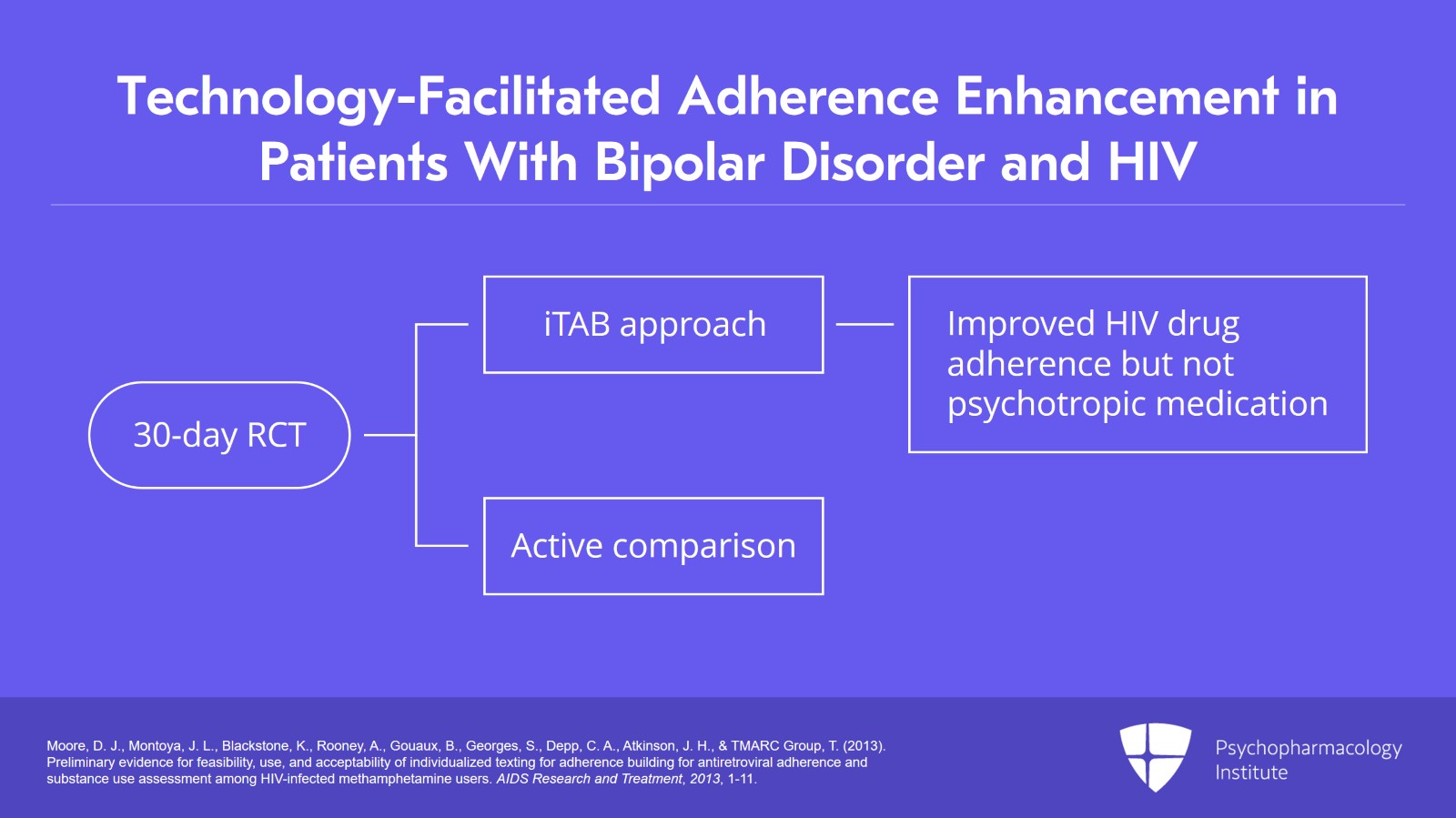
One study that was reported several years ago looked at technology-facilitated adherence enhancement in people with bipolar disorder and HIV.
And it was a 30-day randomized controlled trial or RCT that compared two-way text messaging using something called the iTAB approach versus an active comparison to improve antiretroviral and psychotropic drug adherence.
They found that the iTAB improved HIV drug adherence but not psychotropic medication.
References:
- Moore, D. J., Montoya, J. L., Blackstone, K., Rooney, A., Gouaux, B., Georges, S., Depp, C. A., Atkinson, J. H., & TMARC Group, T. (2013). Preliminary evidence for feasibility, use, and acceptability of individualized texting for adherence building for antiretroviral adherence and substance use assessment among HIV-infected methamphetamine users. AIDS Research and Treatment, 2013, 1-11.
Slide 4 of 16
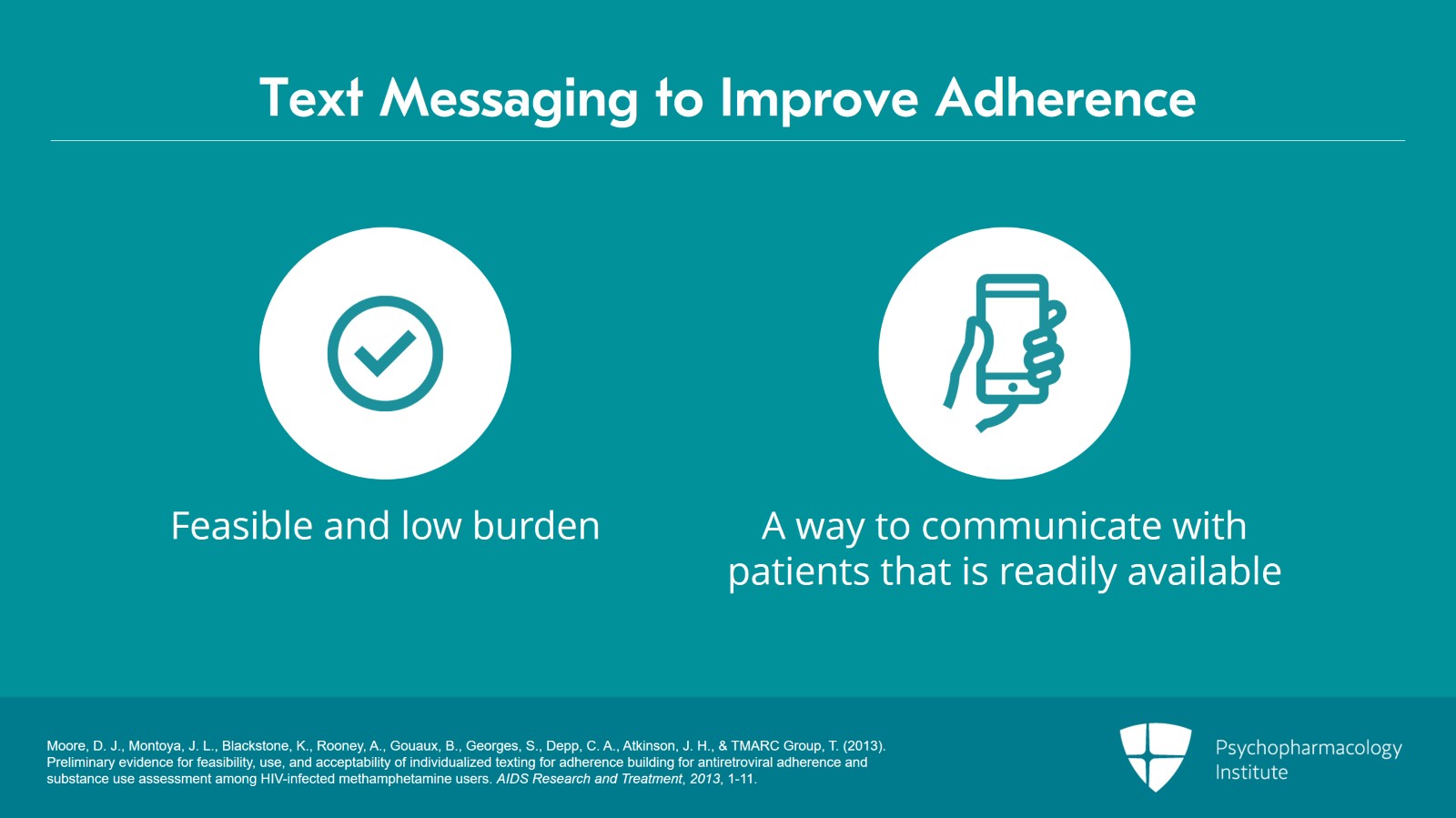
The text messaging was feasible and low burden so it’s kind of low-tech tech.
We’re actually using this in some of our adherence research so this could be a way to communicate with patients that is readily available.
References:
- Moore, D. J., Montoya, J. L., Blackstone, K., Rooney, A., Gouaux, B., Georges, S., Depp, C. A., Atkinson, J. H., & TMARC Group, T. (2013). Preliminary evidence for feasibility, use, and acceptability of individualized texting for adherence building for antiretroviral adherence and substance use assessment among HIV-infected methamphetamine users. AIDS Research and Treatment, 2013, 1-11.
Free Files
Download PDF and other files
Success!
Check your inbox, we sent you all the materials there.
Slide 5 of 16
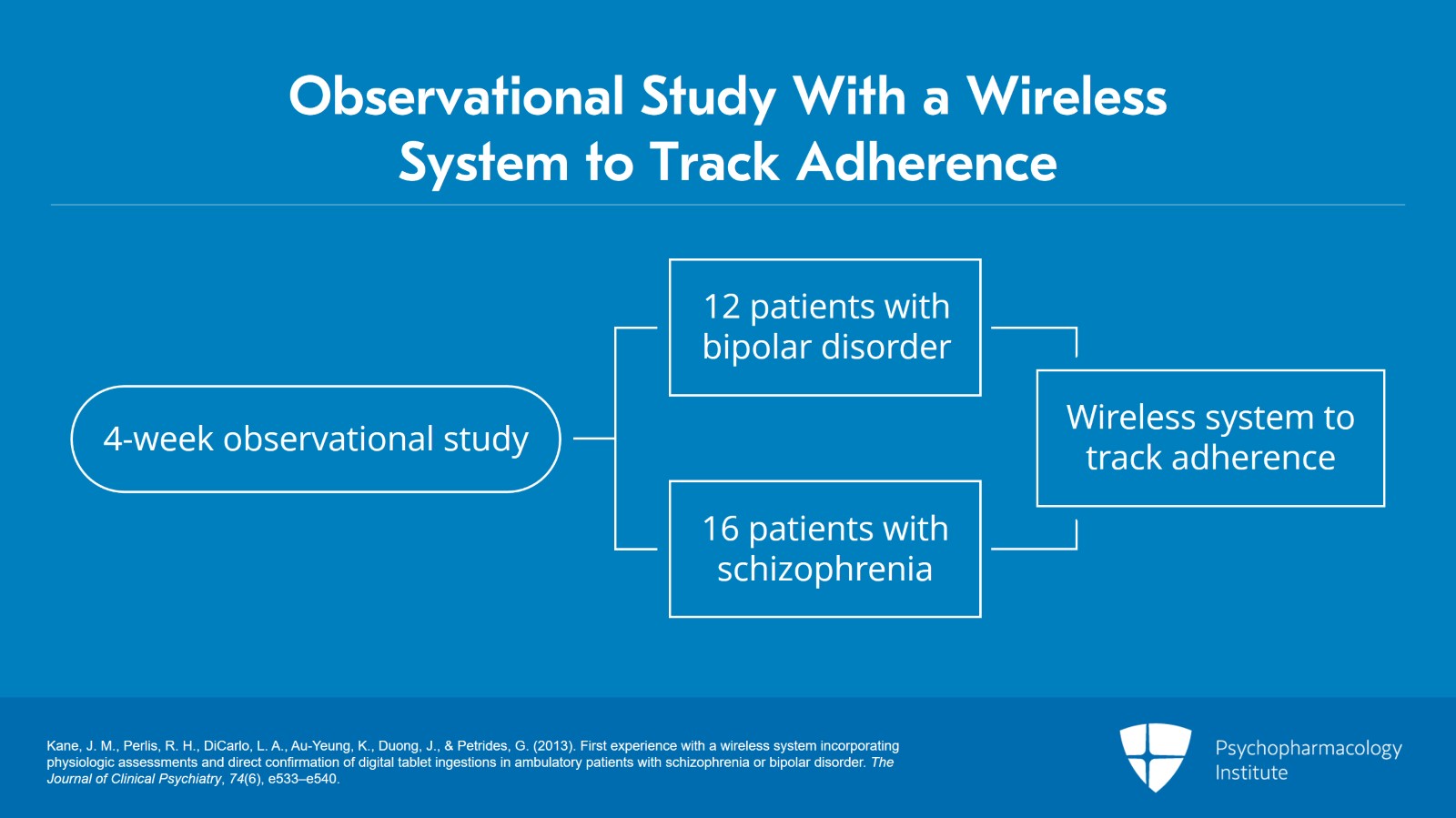
Another study a four-week observational study at two US academic sites. Small sample, 12 patients with bipolar disorder, 16 with schizophrenia. They were all on stable oral medication.
It used a wireless system to incorporate physiologic assessments and direct confirmation of digital tablet ingestion to track adherence.
References:
- Kane, J. M., Perlis, R. H., DiCarlo, L. A., Au-Yeung, K., Duong, J., & Petrides, G. (2013). First experience with a wireless system incorporating physiologic assessments and direct confirmation of digital tablet ingestions in ambulatory patients with schizophrenia or bipolar disorder. The Journal of Clinical Psychiatry, 74(6), e533–e540.
Slide 6 of 16
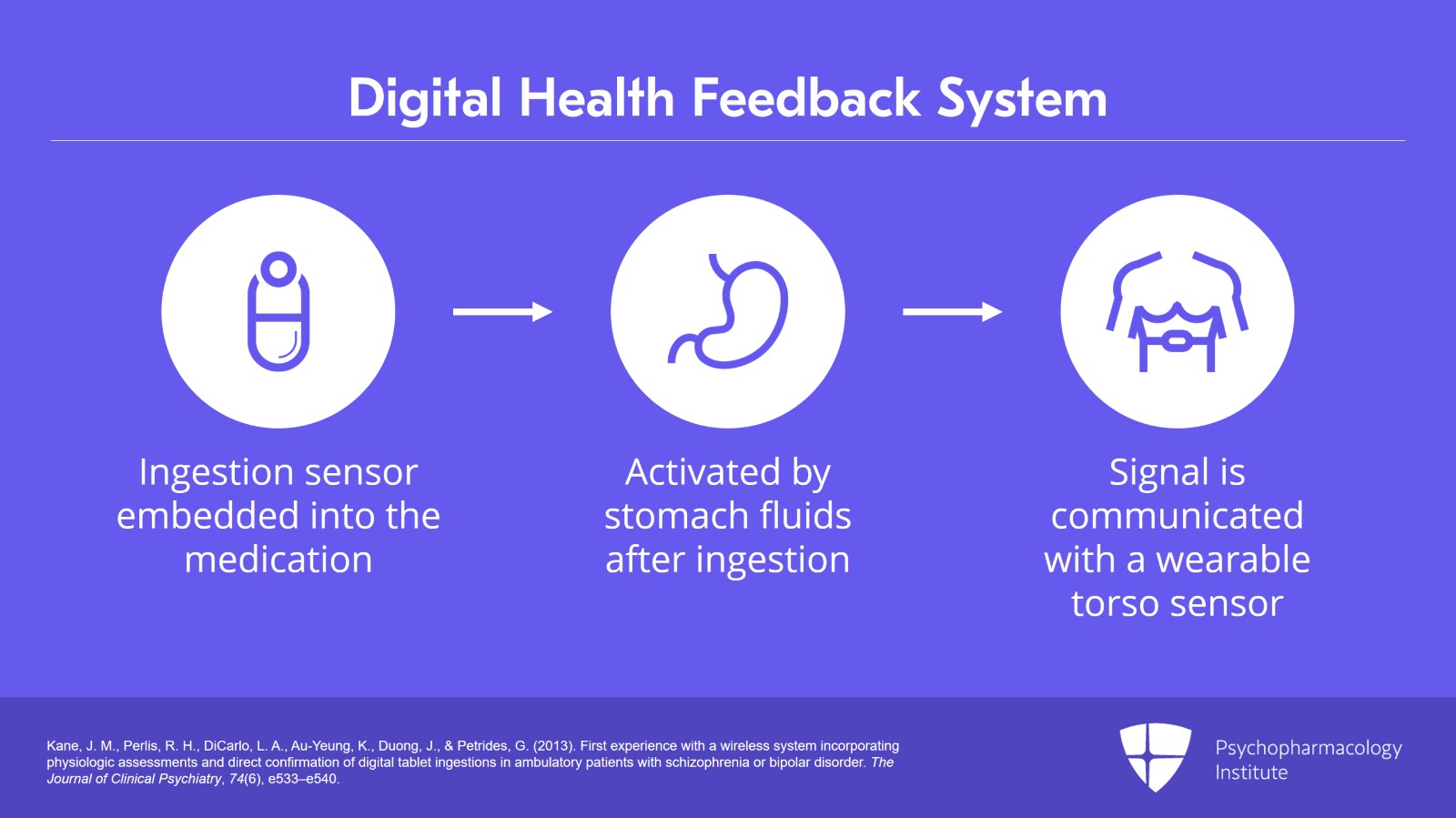
The system included digital health feedback system with an ingestion sensor embedded into the medications which is activated by stomach fluids after ingestion and the signal is communicated with a wearable torso sensor.
So, the sensor facilitated tracking the date and time of drug ingestion and the wearable sensor tracked activity and heart rate.
References:
- Kane, J. M., Perlis, R. H., DiCarlo, L. A., Au-Yeung, K., Duong, J., & Petrides, G. (2013). First experience with a wireless system incorporating physiologic assessments and direct confirmation of digital tablet ingestions in ambulatory patients with schizophrenia or bipolar disorder. The Journal of Clinical Psychiatry, 74(6), e533–e540.
Free Files
Download PDF and other files
Success!
Check your inbox, we sent you all the materials there.
Slide 7 of 16
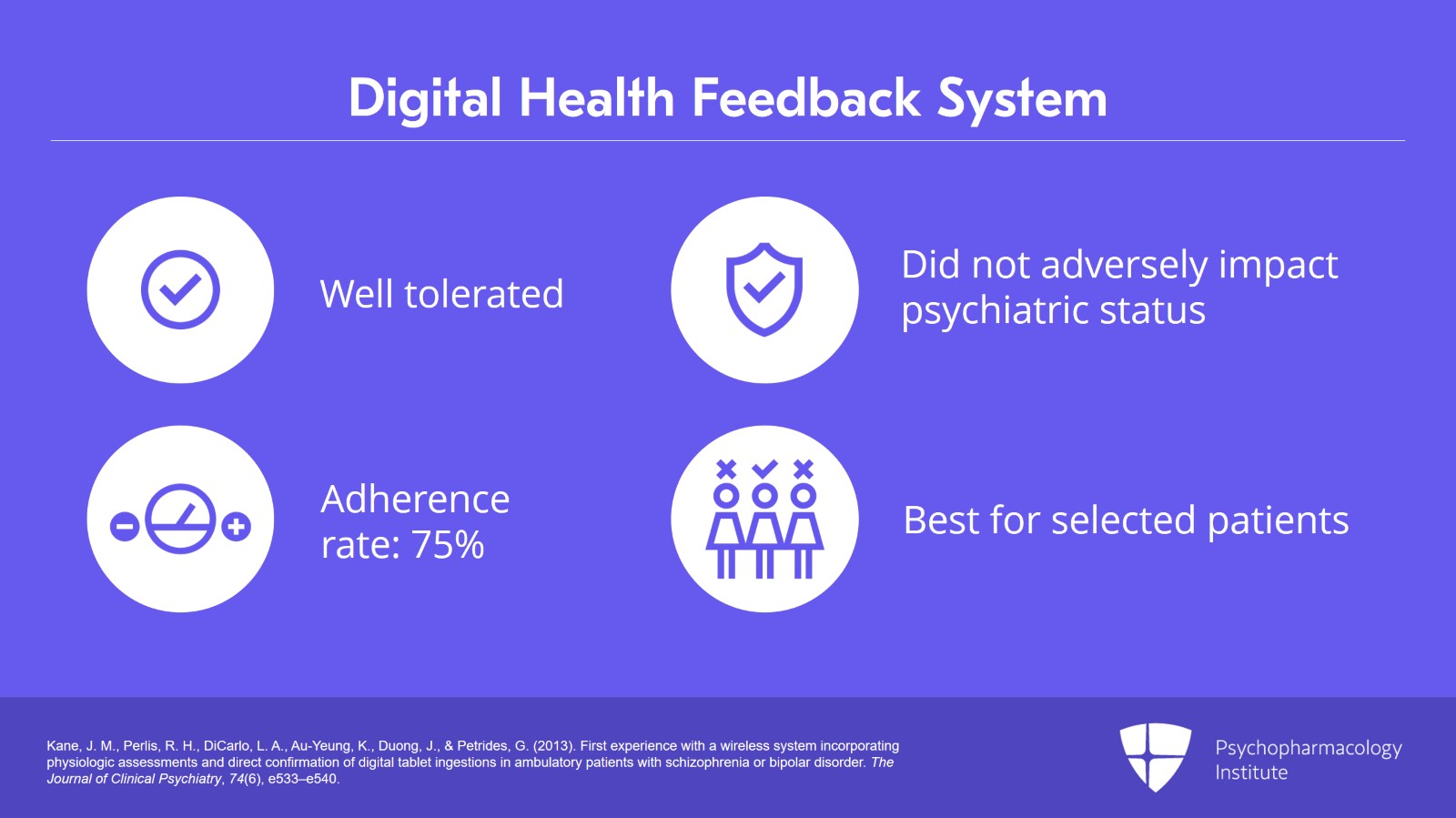
The system was well tolerated. It did not adversely impact psychiatric status. But I think what was worth noting here is that the adherence rate was still only approximately 75%. So, in spite of that, you know, multiple interventions, this may be something that would work best in, you know, selected groups of patients who are able to use this variety of components.
References:
- Kane, J. M., Perlis, R. H., DiCarlo, L. A., Au-Yeung, K., Duong, J., & Petrides, G. (2013). First experience with a wireless system incorporating physiologic assessments and direct confirmation of digital tablet ingestions in ambulatory patients with schizophrenia or bipolar disorder. The Journal of Clinical Psychiatry, 74(6), e533–e540.
Slide 8 of 16
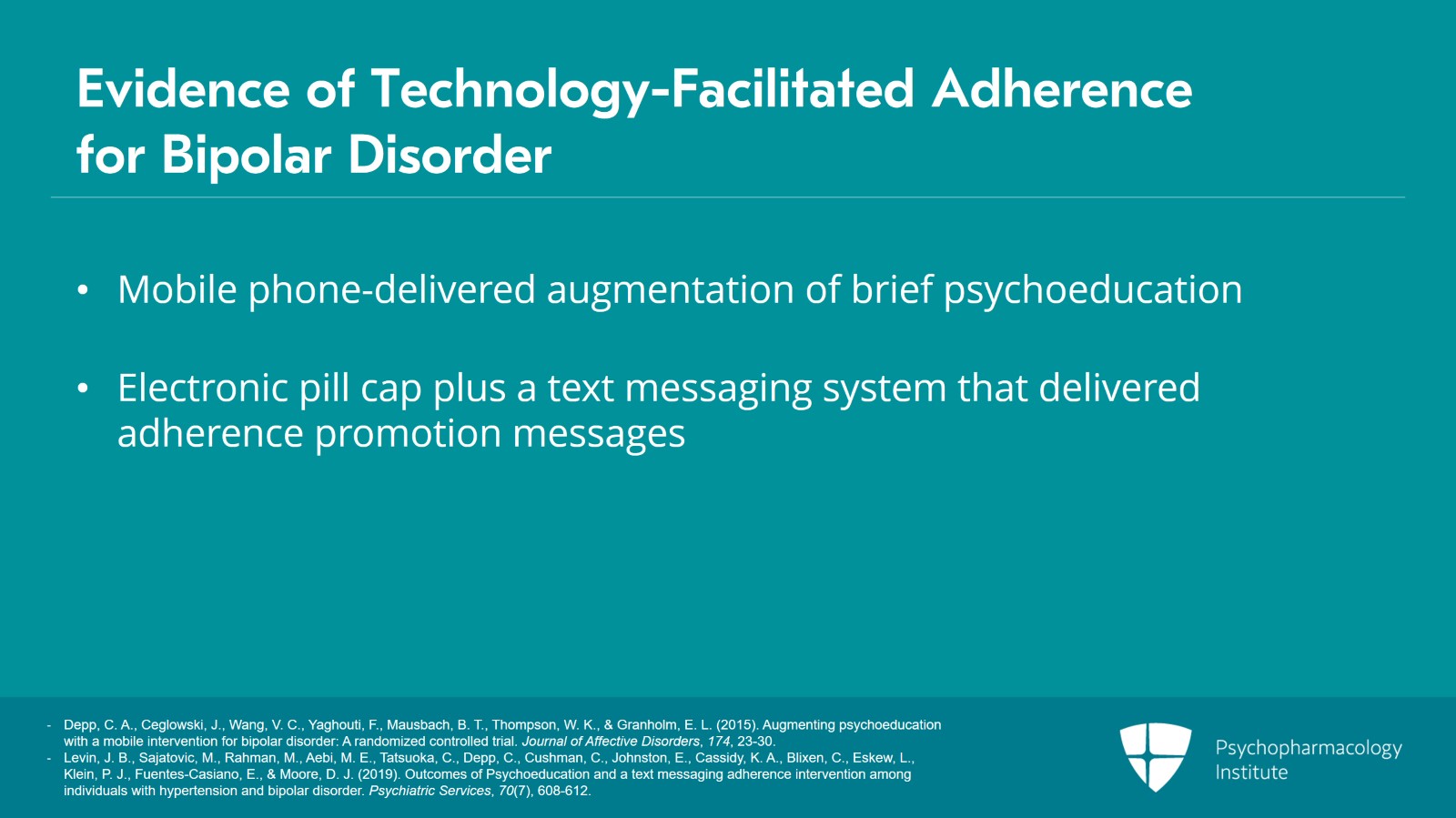
Additional evidence in the literature on technology-facilitated adherence here specific to bipolar disorder is Colin Depp and colleagues piloted a mobile phone-delivered augmentation of a brief psychoeducation to improve self-management adherence and found that it was feasible and promising.
Levin et al., piloted an electronic pill cap plus phone base so it was a text messaging system that assessed both adherence and delivered adherence promotion messages. So, it looked promising also.
References:
- Depp, C. A., Ceglowski, J., Wang, V. C., Yaghouti, F., Mausbach, B. T., Thompson, W. K., & Granholm, E. L. (2015). Augmenting psychoeducation with a mobile intervention for bipolar disorder: A randomized controlled trial. Journal of Affective Disorders, 174, 23-30.
- Levin, J. B., Sajatovic, M., Rahman, M., Aebi, M. E., Tatsuoka, C., Depp, C., Cushman, C., Johnston, E., Cassidy, K. A., Blixen, C., Eskew, L., Klein, P. J., Fuentes-Casiano, E., & Moore, D. J. (2019). Outcomes of Psychoeducation and a text messaging adherence intervention among individuals with hypertension and bipolar disorder. Psychiatric Services, 70(7), 608-612.
Free Files
Download PDF and other files
Success!
Check your inbox, we sent you all the materials there.
Slide 9 of 16
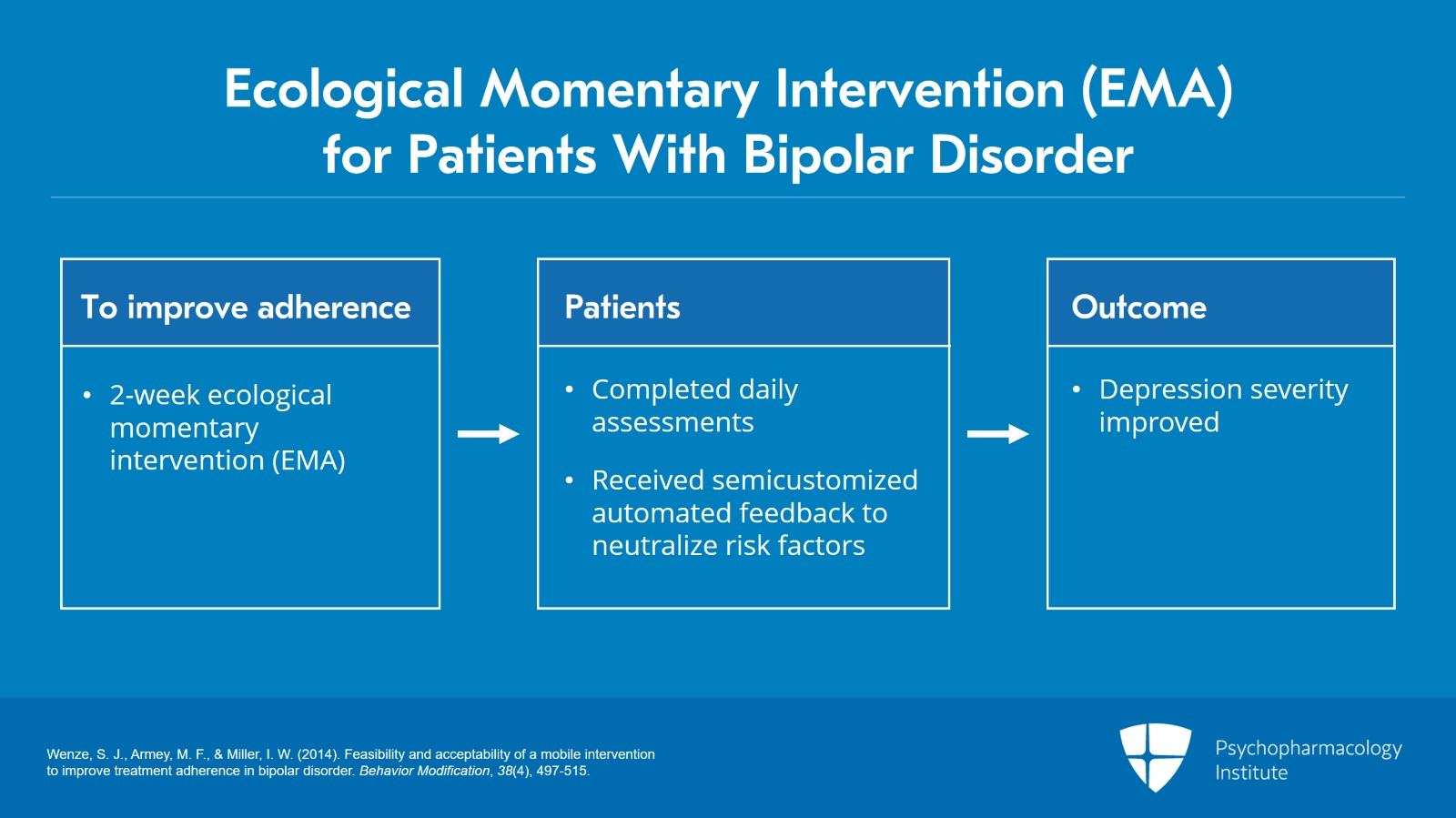
Wenze piloted a two-week ecological momentary intervention so that’s commonly used acronym of EMA to improve adherence.
Patients completed twice daily assessments about symptoms and adherence risk factors as they went about their daily routines.
So, they provided kind of frequent input. And the patients also received semi-customized automated feedback intended to neutralize risk factors such as forgetting or side effect concerns.
Wenze and colleagues found that depression severity improved.
References:
- Wenze, S. J., Armey, M. F., & Miller, I. W. (2014). Feasibility and acceptability of a mobile intervention to improve treatment adherence in bipolar disorder. Behavior Modification, 38(4), 497-515.
Slide 10 of 16
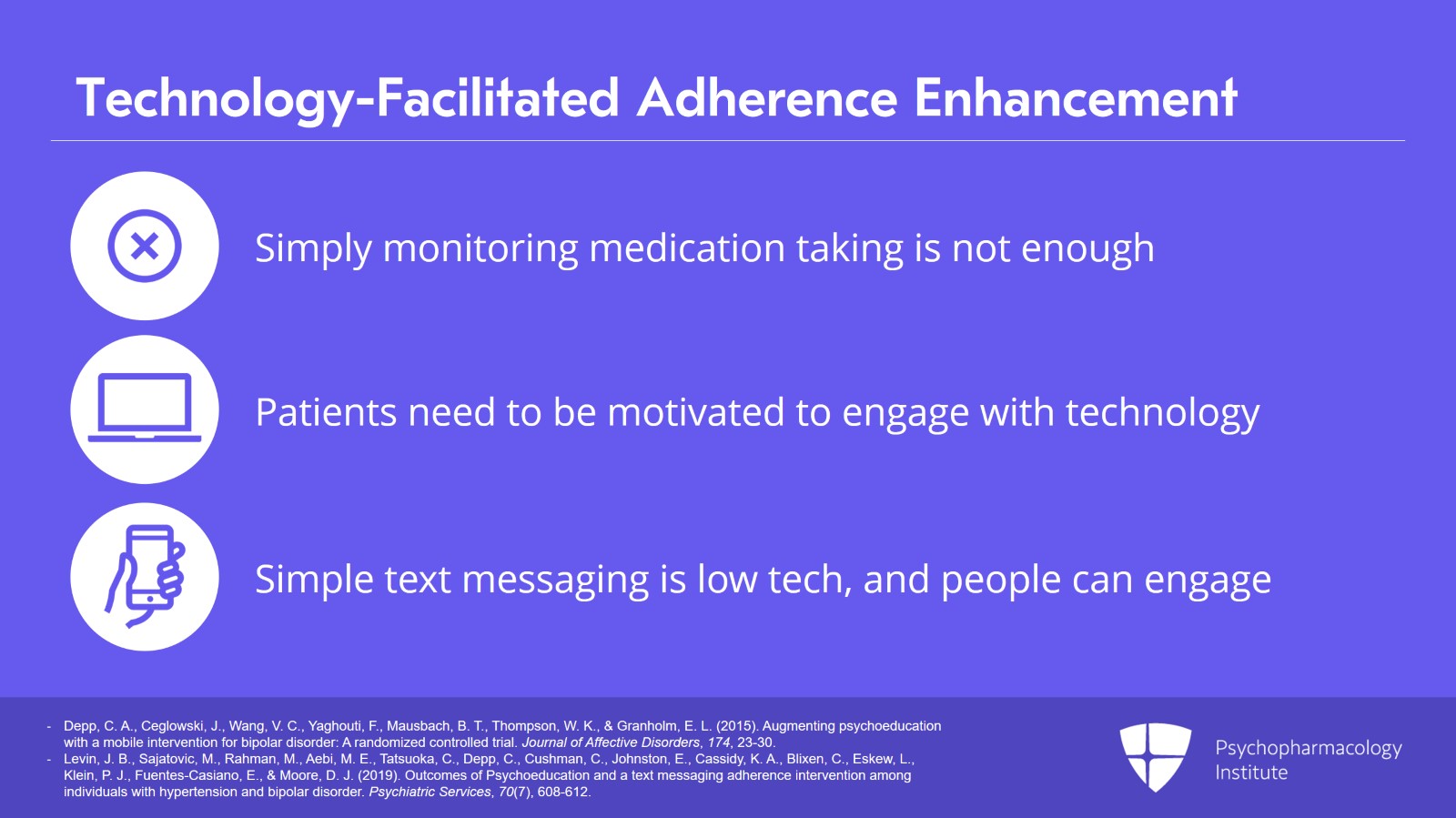
I think that the take-home message that I’d like to make here is that simply monitoring medication taking is not enough.
So, you saw that earlier with the MEMS data that I showed you. Choosing to use a technology such as an app needs to be something that the patient is motivated to engage with. This can be challenging for people with serious mental illnesses. Simple text messaging, you know, even though it’s pretty low tech can be something that people can engage with and use as evidenced by the studies of Depp and Levin.
References:
- Depp, C. A., Ceglowski, J., Wang, V. C., Yaghouti, F., Mausbach, B. T., Thompson, W. K., & Granholm, E. L. (2015). Augmenting psychoeducation with a mobile intervention for bipolar disorder: A randomized controlled trial. Journal of Affective Disorders, 174, 23-30.
- Levin, J. B., Sajatovic, M., Rahman, M., Aebi, M. E., Tatsuoka, C., Depp, C., Cushman, C., Johnston, E., Cassidy, K. A., Blixen, C., Eskew, L., Klein, P. J., Fuentes-Casiano, E., & Moore, D. J. (2019). Outcomes of Psychoeducation and a text messaging adherence intervention among individuals with hypertension and bipolar disorder. Psychiatric Services, 70(7), 608-612.
Free Files
Download PDF and other files
Success!
Check your inbox, we sent you all the materials there.
Slide 11 of 16
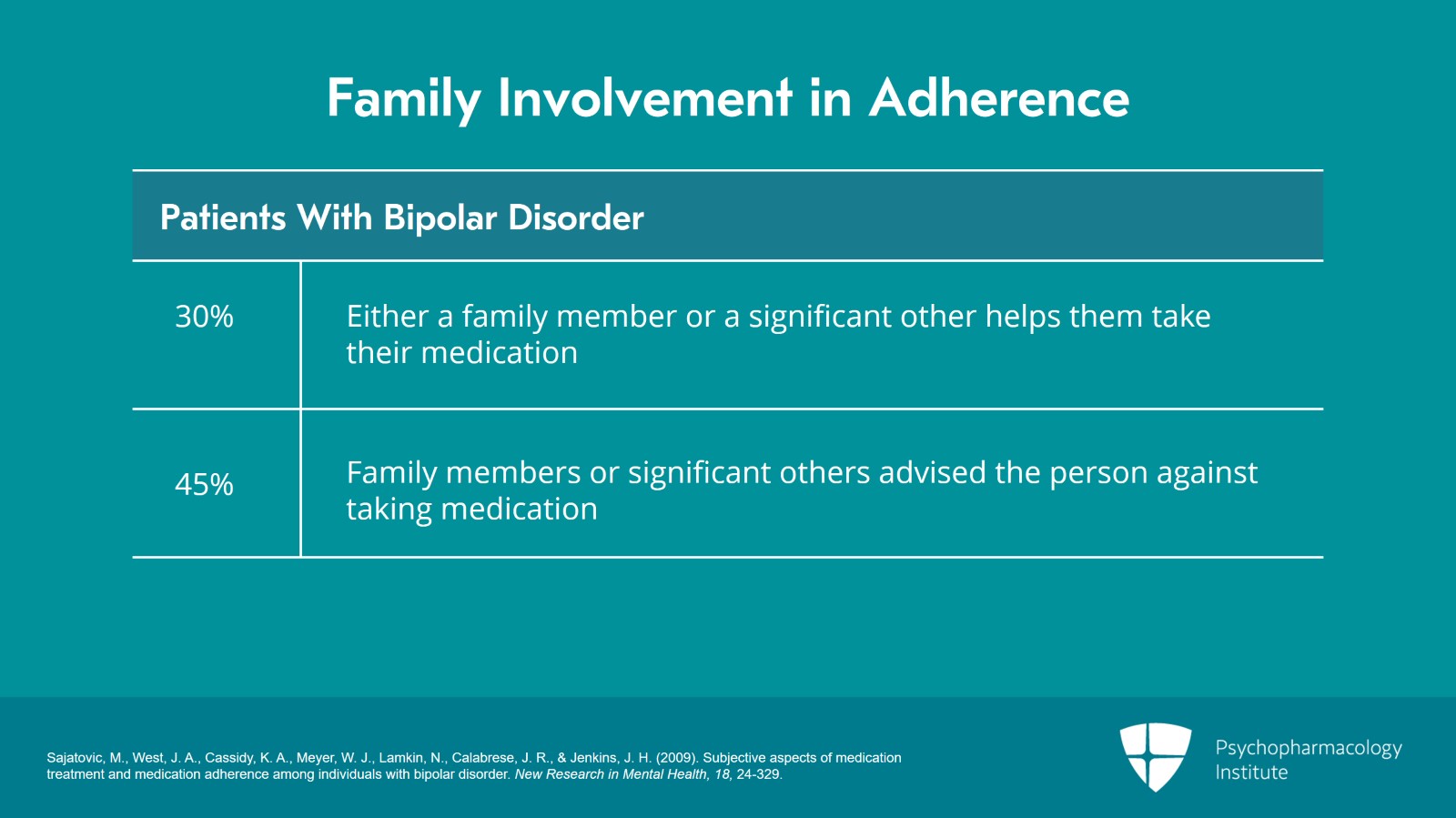
And then I want to talk a little bit about family involvement. So, research suggests that social supports can be helpful. We found that in our bipolar disorder research that 30% of people with bipolar disorder noted that either a family member or a significant other helps them to take their medication.
However, we also found that 45% of family members or significant others including parents, children, spouses argued or advised the person against taking medication.
References:
- Sajatovic, M., West, J. A., Cassidy, K. A., Meyer, W. J., Lamkin, N., Calabrese, J. R., & Jenkins, J. H. (2009). Subjective aspects of medication treatment and medication adherence among individuals with bipolar disorder. New Research in Mental Health, 18, 24-329.
Slide 12 of 16
So, what’s the challenge for the clinician is don’t make the assumption that family members will be, you know, pro-adherence and they need to be assessed just like the patients to see whether they’re going to be somebody that’s going to help engage in care versus not.
References:
- Sajatovic, M., West, J. A., Cassidy, K. A., Meyer, W. J., Lamkin, N., Calabrese, J. R., & Jenkins, J. H. (2009). Subjective aspects of medication treatment and medication adherence among individuals with bipolar disorder. New Research in Mental Health, 18, 24-329.
Free Files
Download PDF and other files
Success!
Check your inbox, we sent you all the materials there.
Slide 13 of 16
The key points to this section are that clinicians can take advantage of technology to help with adherence supports.
Low-tech technology like text messaging is fast, simple and works well for many individuals even those with cognitive challenges.
Slide 14 of 16
Many clinical settings use texting for appointment reminders but they could also be used in other aspects of care. Simply monitoring adherence behavior is unlikely to have a long-term effect. So that Hawthorne effect usually becomes exhausted over time. People go about and do their thing and adherence reverts to what is normal for that person.
Apps can be useful for motivated individuals who feel comfortable using web-based tools. They can be quite helpful for those who like this technology and there are a variety of apps out there and they can be used to manage health really fairly holistically.
Free Files
Download PDF and other files
Success!
Check your inbox, we sent you all the materials there.
Slide 15 of 16
Family support can be helpful, but clinicians should take an effort to understand the family member attitudes. Do not assume that family will universally or uniformly support adherence promotion.
Free Files
Download PDF and other files
Success!
Check your inbox, we sent you all the materials there.