Close Banner
Free Section  - Video Lectures

09. Special Considerations in Delirium: Catatonia and COVID-19

Published on May 1, 2021 Expired on April 1, 2025

Scott R. Beach, M.D.

Associate Professor of Psychiatry - Harvard Medical School - Massachusetts General Hospital

Key Points

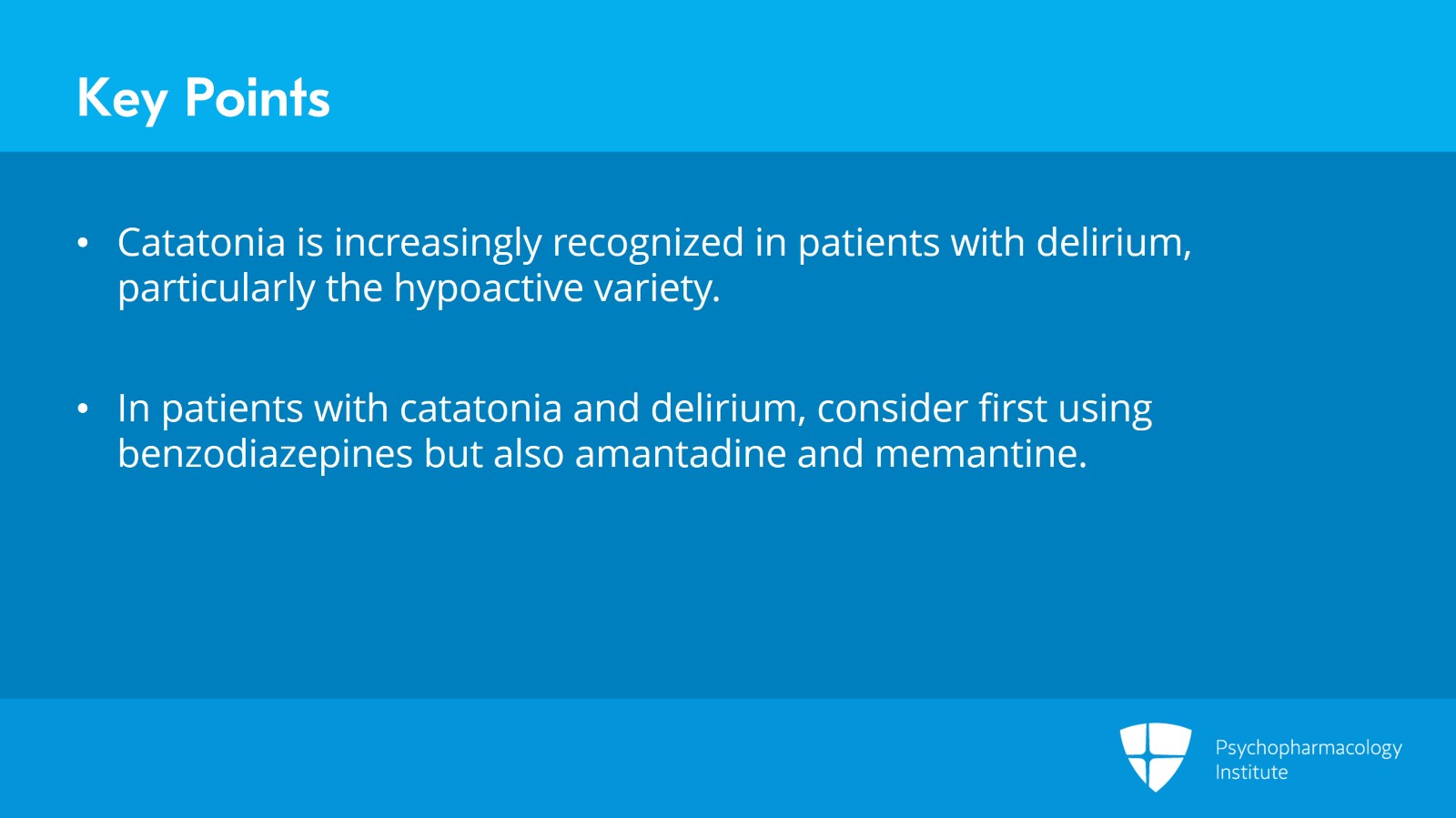
  • Catatonia is increasingly recognized in patients with delirium, particularly the hypoactive variety.
  • In patients with catatonia and delirium, consider first using benzodiazepines but also amantadine and memantine.
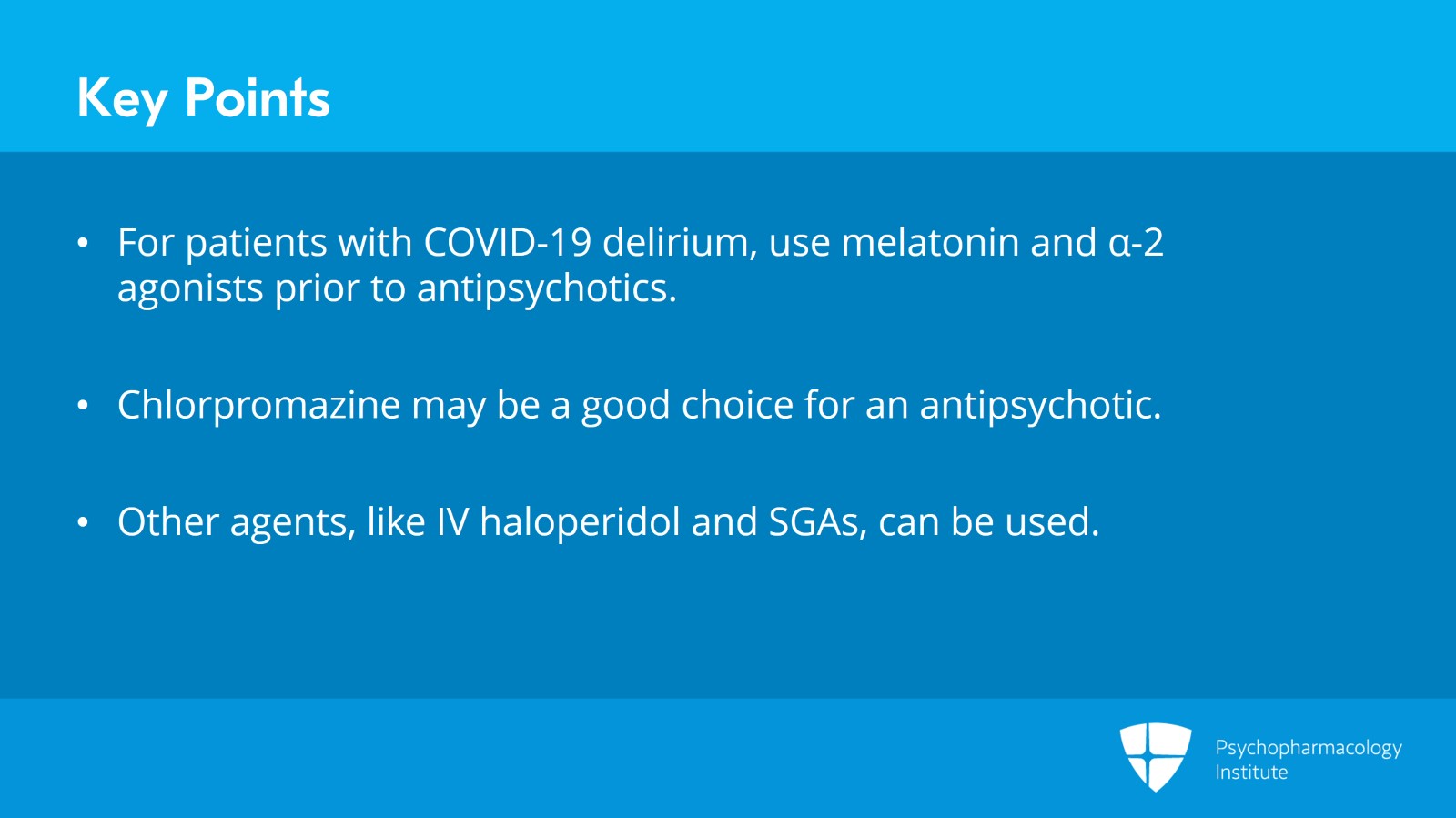
  • For patients with COVID-19 delirium, use melatonin and α-2 agonists prior to antipsychotics. 
  • Chlorpromazine may be a good choice for an antipsychotic.
  • Other agents, like IV haloperidol and SGAs, can be used.

Free Downloads for Offline Access

  • Free Download Video (MP4)
  • Free Download Audio File (MP3)
  • Free Download Presentation File (PPTX)

Slides and Transcript

Slide 1 of 12

We’ll switch now to talking about a couple of important special considerations in delirium.

Slide 2 of 12

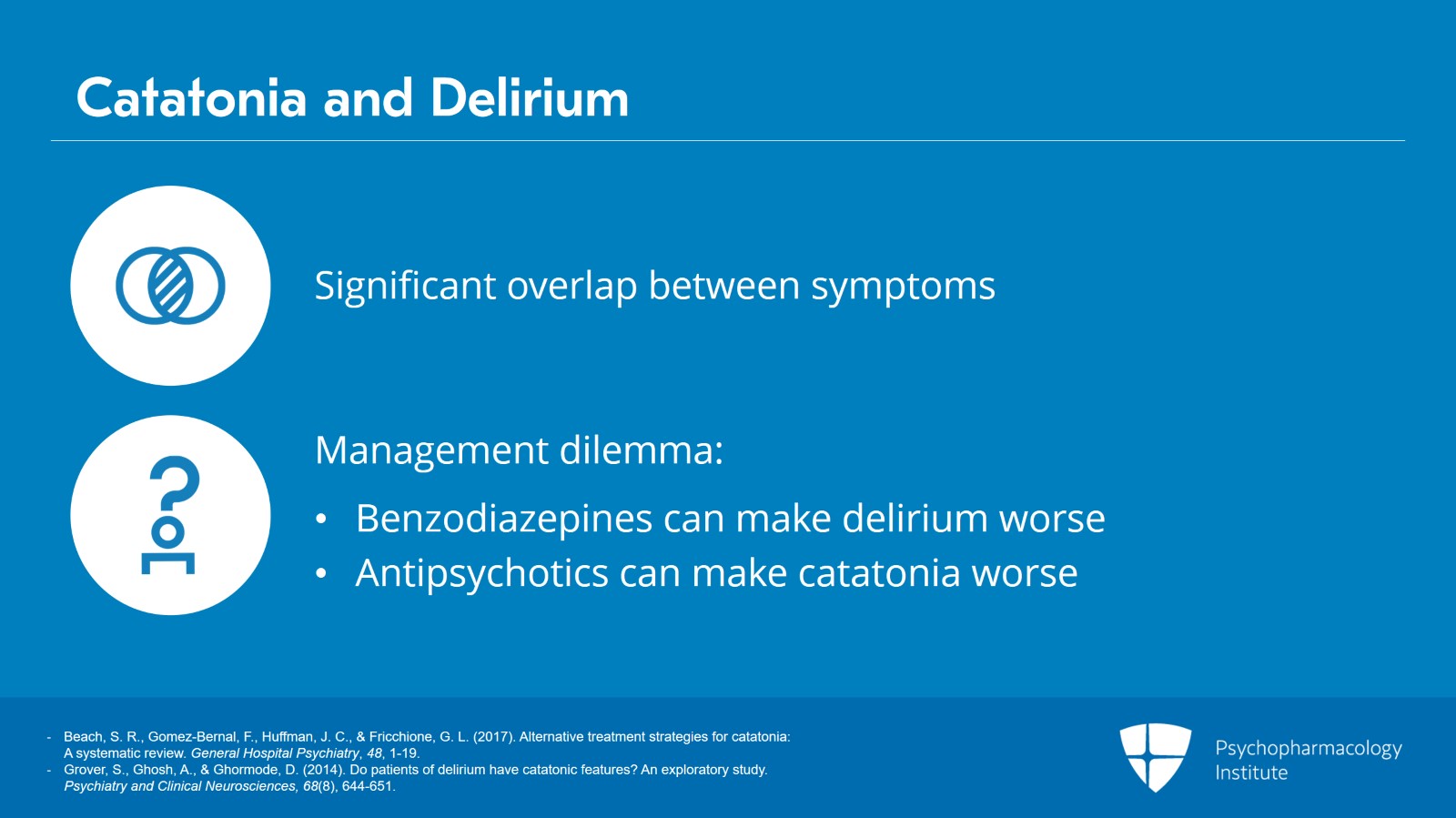
The first is near and dear to my heart and something that I’m always mindful of and that is catatonia. Increasingly, catatonia is being recognized in patients with delirium and there is starting to be described a significant overlap between symptoms of catatonia and symptoms of delirium particularly in patients with a hypoactive delirium. This causes a significant dilemma when it comes to management because we would typically use benzodiazepines for catatonia though they can make delirium worse and we would typically use antipsychotics for delirium but those can make catatonia worse.
References:
  • Beach, S. R., Gomez-Bernal, F., Huffman, J. C., & Fricchione, G. L. (2017). Alternative treatment strategies for catatonia: A systematic review. General Hospital Psychiatry, 48, 1-19. 
  • Grover, S., Ghosh, A., & Ghormode, D. (2014). Do patients of delirium have catatonic features? An exploratory study. Psychiatry and Clinical Neurosciences, 68(8), 644-651. 
Free Files
Success!
Check your inbox, we sent you all the materials there.

Slide 3 of 12

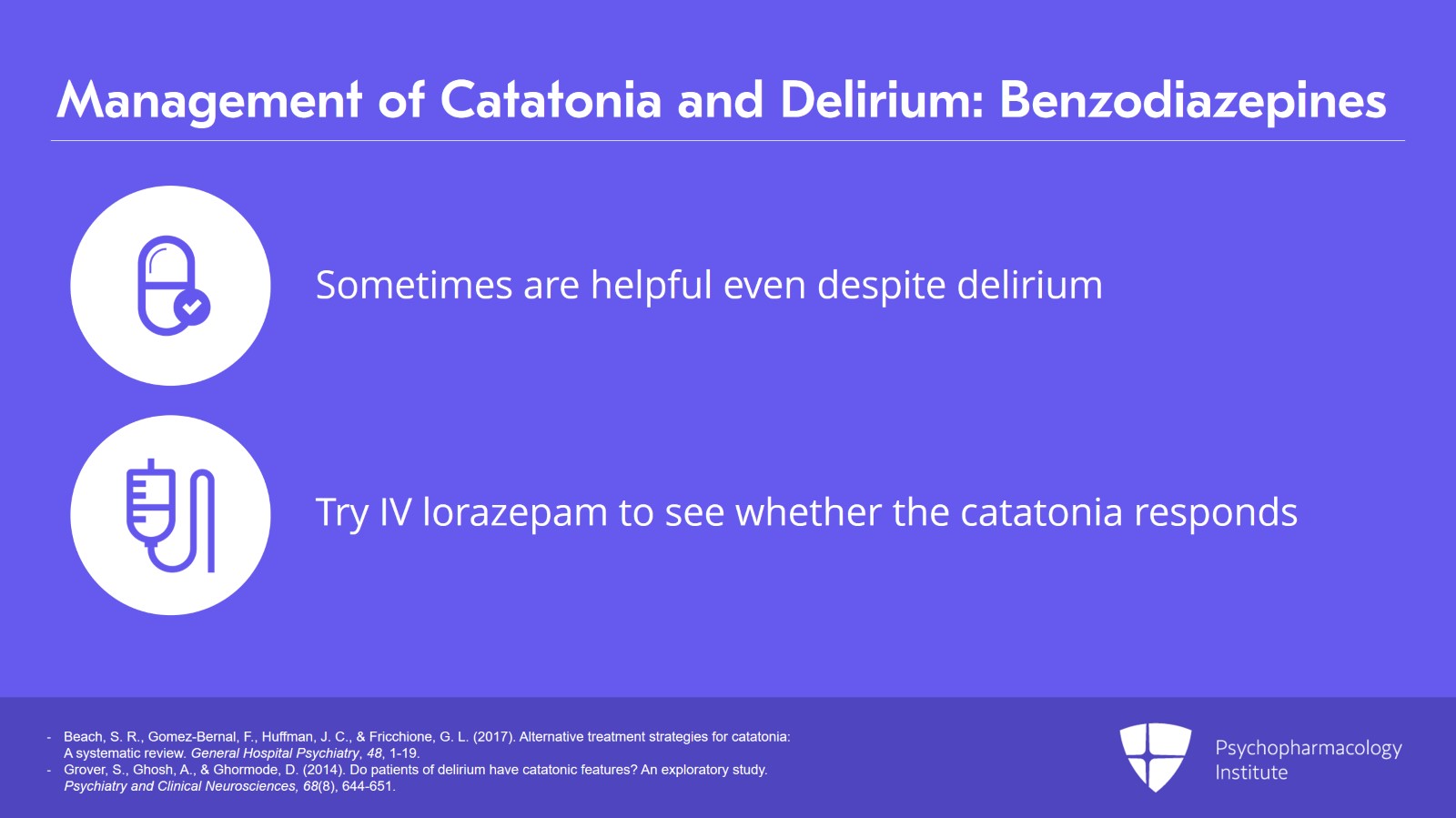
An important principle for physicians to keep in mind if they see patients who look both delirious and catatonic is that benzodiazepines are in fact sometimes helpful in this situation even despite the delirium. So my first choice would usually be to try some intravenous lorazepam to see if the catatonia responds even if I think the person is delirious. I can then make a decision about where to go from there once I’ve confirmed whether there is a response to the benzodiazepine.
References:
  • Beach, S. R., Gomez-Bernal, F., Huffman, J. C., & Fricchione, G. L. (2017). Alternative treatment strategies for catatonia: A systematic review. General Hospital Psychiatry, 48, 1-19. 
  • Grover, S., Ghosh, A., & Ghormode, D. (2014). Do patients of delirium have catatonic features? An exploratory study. Psychiatry and Clinical Neurosciences, 68(8), 644-651. 

Slide 4 of 12

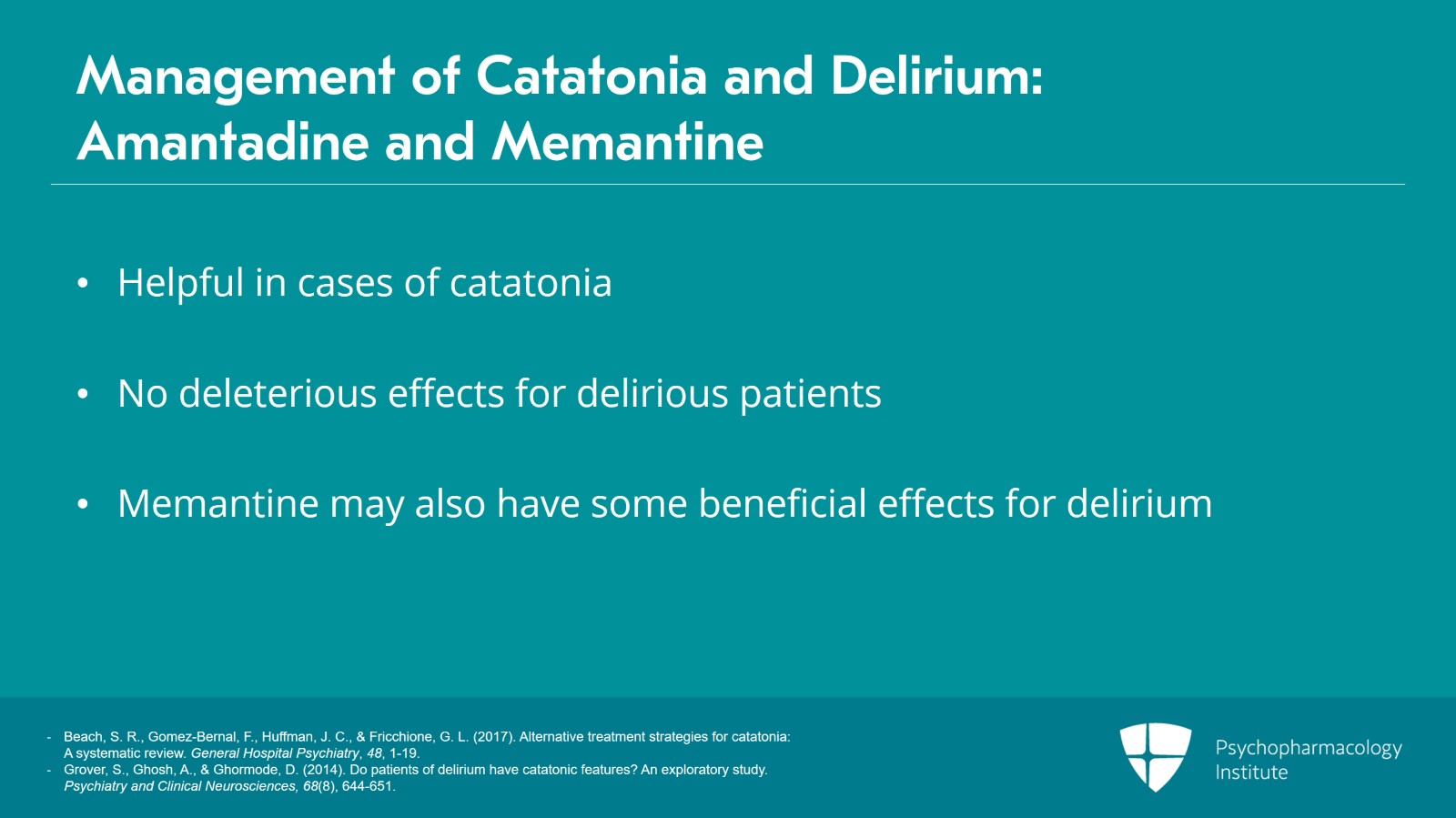
In terms of other agents, the two I would most often go to in this setting are amantadine and memantine. Both have been shown to be helpful in cases of catatonia and neither will have deleterious effects for delirious patients. And in fact, memantine may actually have some beneficial effects in delirium.
References:
  • Beach, S. R., Gomez-Bernal, F., Huffman, J. C., & Fricchione, G. L. (2017). Alternative treatment strategies for catatonia: A systematic review. General Hospital Psychiatry, 48, 1-19. 
  • Grover, S., Ghosh, A., & Ghormode, D. (2014). Do patients of delirium have catatonic features? An exploratory study. Psychiatry and Clinical Neurosciences, 68(8), 644-651. 
Free Files
Success!
Check your inbox, we sent you all the materials there.

Slide 5 of 12

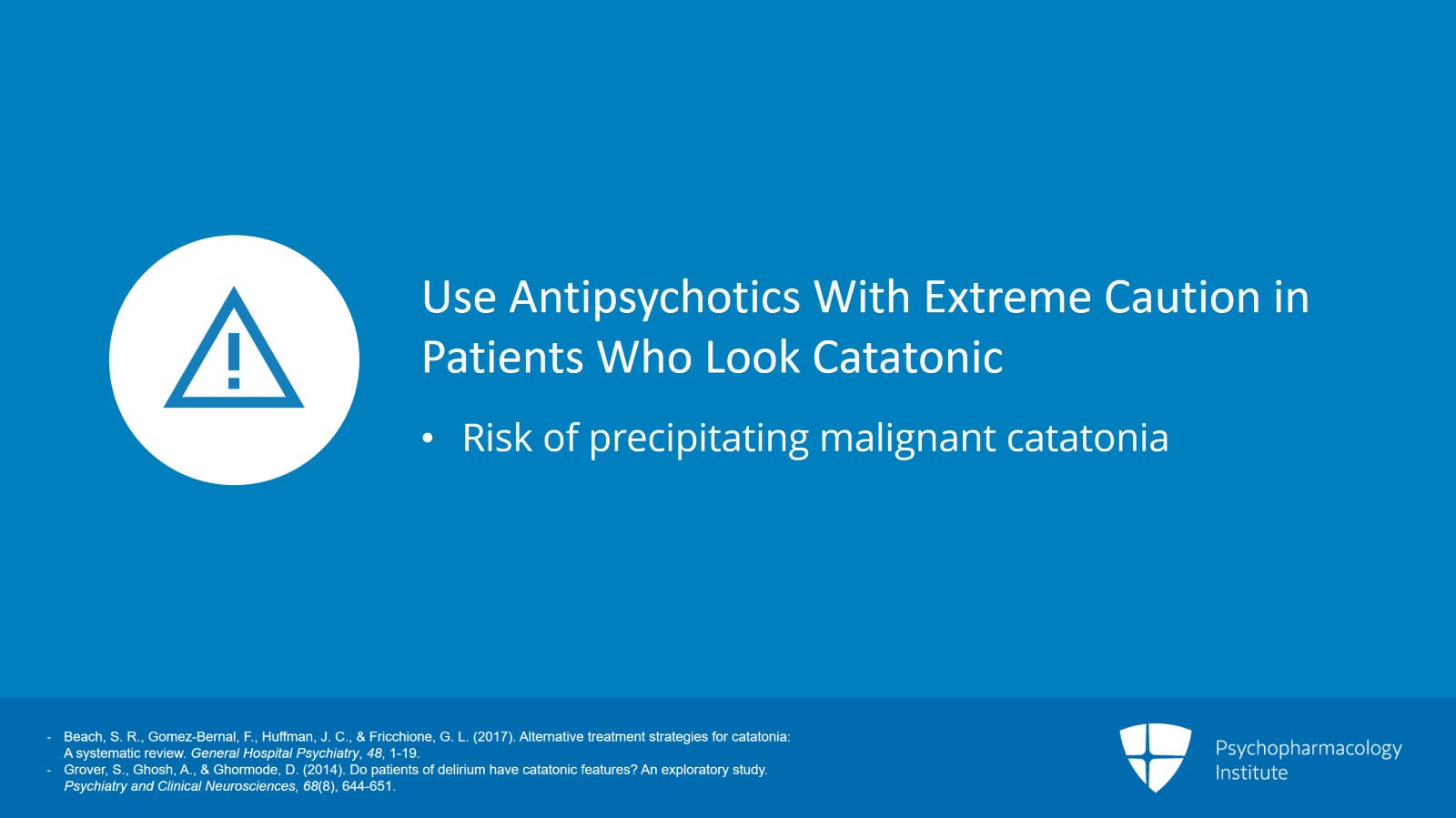
Always remember to use antipsychotics with extreme caution in any patient who looks catatonic due to the risk of precipitating malignant catatonia. So even if somebody has a prominent delirium, if they have catatonic features, I’m going to shy away from using antipsychotics in that situation.
References:
  • Beach, S. R., Gomez-Bernal, F., Huffman, J. C., & Fricchione, G. L. (2017). Alternative treatment strategies for catatonia: A systematic review. General Hospital Psychiatry, 48, 1-19. 
  • Grover, S., Ghosh, A., & Ghormode, D. (2014). Do patients of delirium have catatonic features? An exploratory study. Psychiatry and Clinical Neurosciences, 68(8), 644-651. 

Slide 6 of 12

The second special consideration that I want to talk about is: What do we do for delirious patients who are infected with SARS-CoV2, the so-called COVID delirium? Delirium as many of you know is being frequently described in patients with COVID-19. It’s actually now one of the key symptoms and may be a presenting symptom.
References:
  • Beach, S. R., Praschan, N. C., Hogan, C., Dotson, S., Merideth, F., Kontos, N., Fricchione, G. L., & Smith, F. A. (2020). Delirium in COVID-19: A case series and exploration of potential mechanisms for central nervous system involvement. General Hospital Psychiatry, 65, 47-53.
Free Files
Success!
Check your inbox, we sent you all the materials there.

Slide 7 of 12

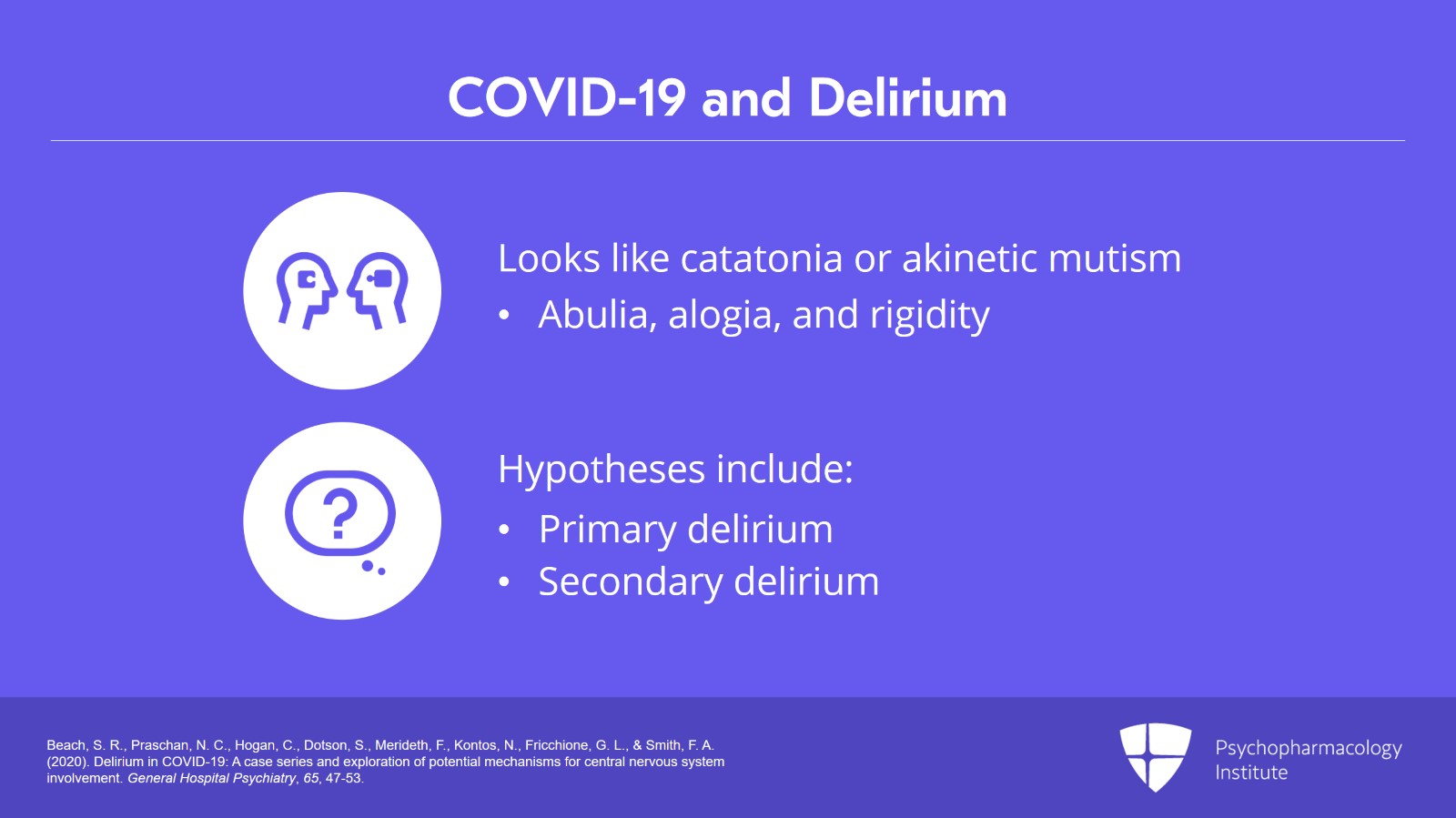
There’s also interestingly a syndrome seen in delirious patients with COVID-19 that looks very much like catatonia or akinetic mutism with abulia, alogia and rigidity being described. And there are all sorts of hypotheses in terms of why patients with COVID-19 may get delirious including ideas about a primary delirium like an encephalitis or a secondary delirium caused by other systemic effects.
References:
  • Beach, S. R., Praschan, N. C., Hogan, C., Dotson, S., Merideth, F., Kontos, N., Fricchione, G. L., & Smith, F. A. (2020). Delirium in COVID-19: A case series and exploration of potential mechanisms for central nervous system involvement. General Hospital Psychiatry, 65, 47-53.

Slide 8 of 12

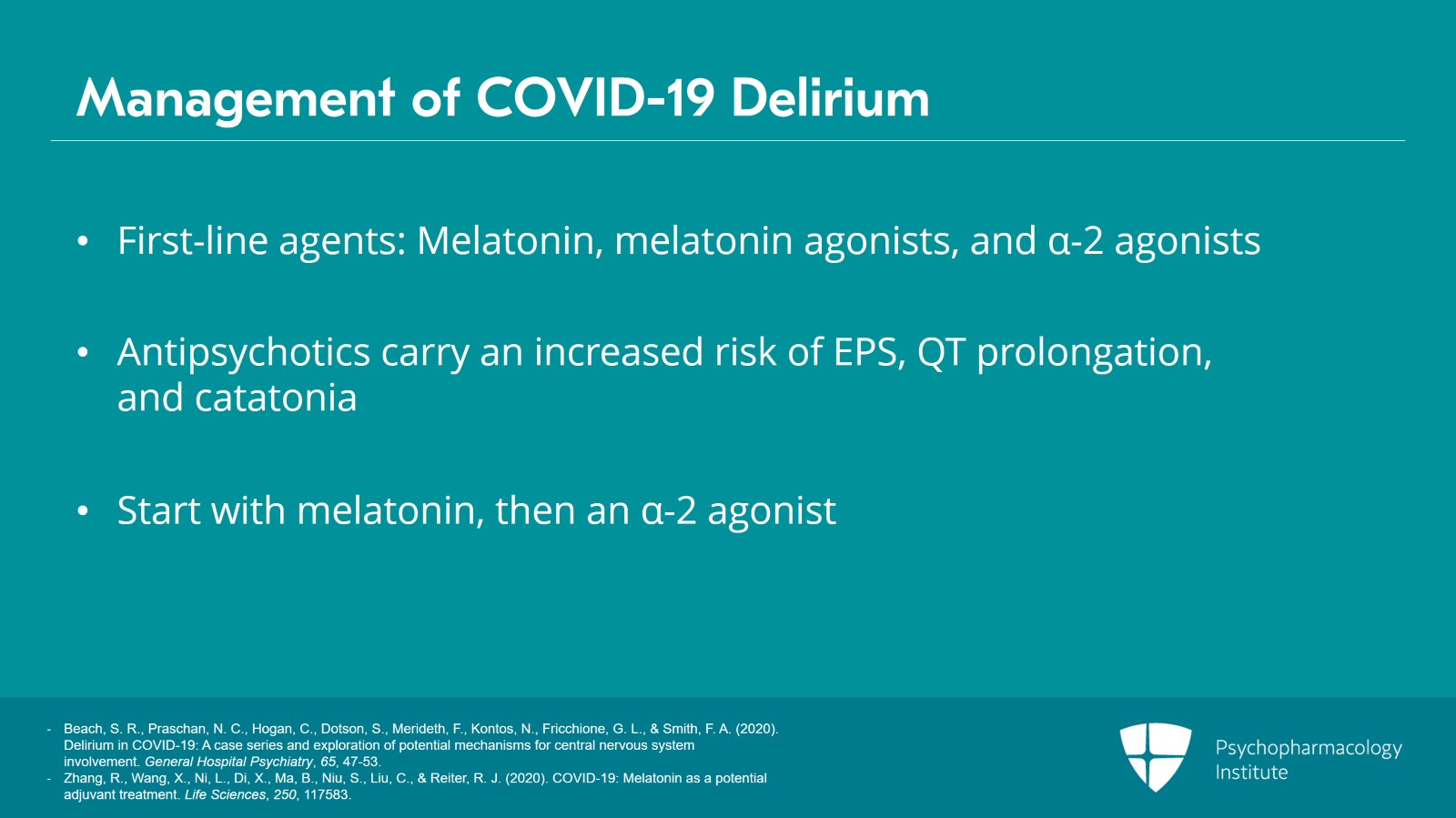
We developed an algorithm based on our anecdotal experience early in the course of COVID and a similar algorithm was independently developed by folks at Stanford and they align really well. In both algorithms, first-line agents for COVID delirium include melatonin or melatonin agonists as well as alpha-2 agonists. This is because antipsychotics carry some increased risk in these patients particularly around EPS, QT prolongation given other medications they may be receiving and catatonia. And so we want to just move the antipsychotic a step back one beat. So generally, we’d start with melatonin and then we’d start with an alpha-2 agonist.
References:
  • Beach, S. R., Praschan, N. C., Hogan, C., Dotson, S., Merideth, F., Kontos, N., Fricchione, G. L., & Smith, F. A. (2020). Delirium in COVID-19: A case series and exploration of potential mechanisms for central nervous system involvement. General Hospital Psychiatry, 65, 47-53.
  • Zhang, R., Wang, X., Ni, L., Di, X., Ma, B., Niu, S., Liu, C., & Reiter, R. J. (2020). COVID-19: Melatonin as a potential adjuvant treatment. Life Sciences, 250, 117583.
Free Files
Success!
Check your inbox, we sent you all the materials there.

Slide 9 of 12

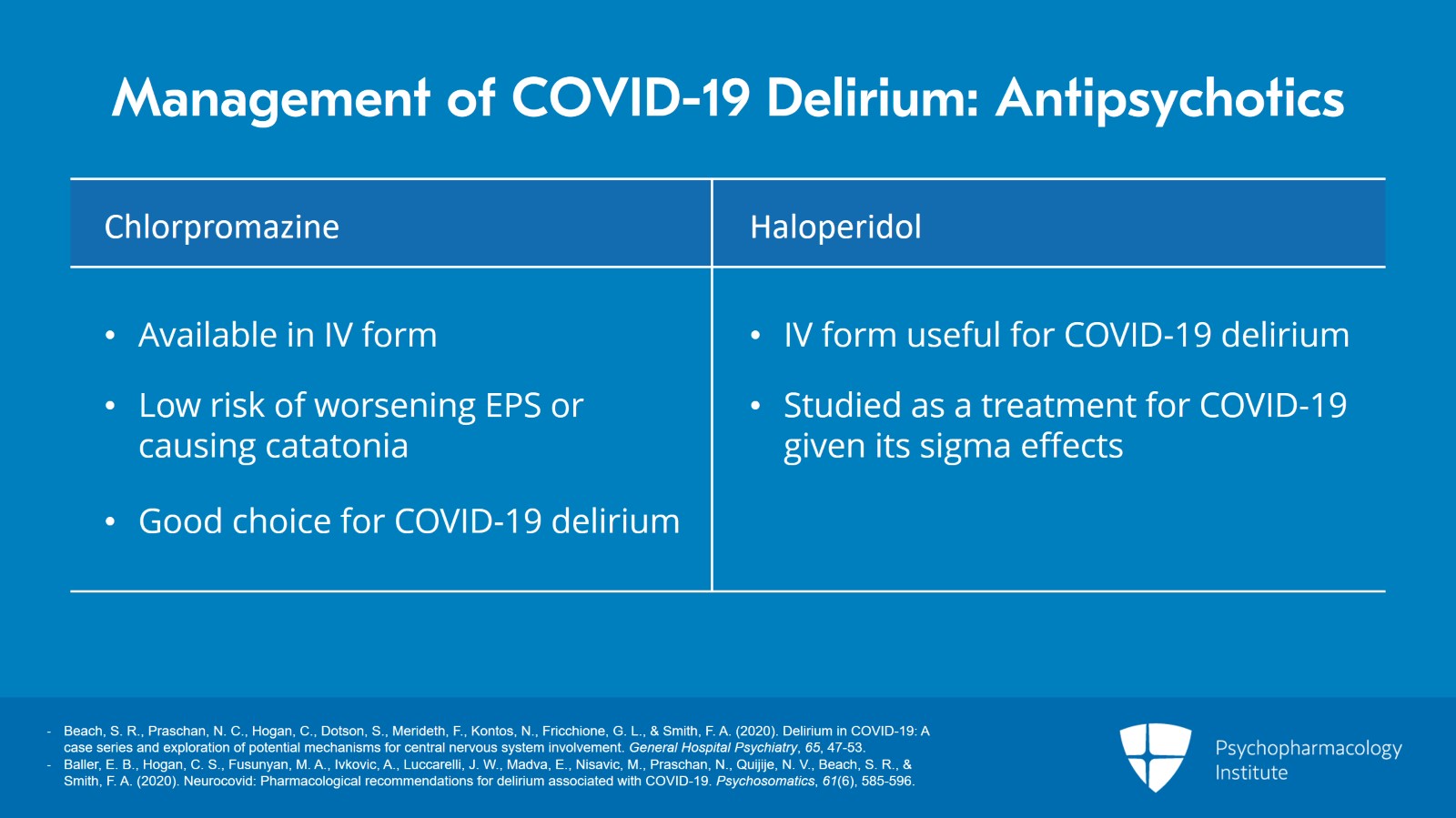
And then if we needed something else, we would typically reach for an antipsychotic. The choice of antipsychotic in the setting of COVID may also be driven by the potential side effects. One agent that we had a lot of experience with early in the pandemic was chlorpromazine which again is available in IV form. It’s low potency so it carries a lower risk of worsening EPS or causing catatonia. And we found it to be a particularly good choice for patients with COVID delirium. Interestingly though, I would also highlight that IV haloperidol is not only useful in COVID delirium but it’s actually being studied as a treatment for COVID given its sigma effects.
References:
  • Beach, S. R., Praschan, N. C., Hogan, C., Dotson, S., Merideth, F., Kontos, N., Fricchione, G. L., & Smith, F. A. (2020). Delirium in COVID-19: A case series and exploration of potential mechanisms for central nervous system involvement. General Hospital Psychiatry, 65, 47-53.
  • Baller, E. B., Hogan, C. S., Fusunyan, M. A., Ivkovic, A., Luccarelli, J. W., Madva, E., Nisavic, M., Praschan, N., Quijije, N. V., Beach, S. R., & Smith, F. A. (2020). Neurocovid: Pharmacological recommendations for delirium associated with COVID-19. Psychosomatics, 61(6), 585-596.

Slide 10 of 12

Key points in this section include the ideas that catatonia is increasingly recognized in patients with delirium particularly those of a hypoactive variety. In patients with catatonia and delirium, we would consider first using benzodiazepines but also using amantadine and memantine.
Free Files
Success!
Check your inbox, we sent you all the materials there.

Slide 11 of 12

For patients with a COVID delirium, you want to consider using melatonin and alpha-2 agonists prior to using antipsychotics. And in those patients, chlorpromazine may be a particularly good choice for an antipsychotic agent though other agents like IV haloperidol and second-generation antipsychotics can certainly be used.

Slide 12 of 12

Free Files
Success!
Check your inbox, we sent you all the materials there.

Learning Objectives:

After completing this activity, the learner will be able to:

  1. Identify and assess different symptoms and presentations of delirium
  2. Summarize research on medications with evidence for the prevention and management of delirium
  3. Discuss special considerations in delirium, such as catatonia and COVID-19 delirium

Original Release Date: 05/01/2021

Review and Re-release Date: 03/01/2024

Expiration Date: 04/01/2025

Expert: Scott Beach, M.D.

Medical Editor: Melissa Mariano, M.D

Relevant Financial Disclosures:

None of the faculty, planners, and reviewers for this educational activity have relevant financial relationship(s) to disclose during the last 24 months with ineligible companies whose primary business is producing, marketing, selling, re-selling, or distributing healthcare products used by or on patients.

Contact Information: For questions regarding the content or access to this activity, contact us at support@psychopharmacologyinstitute.com

Instructions for Participation and Credit:

Participants must complete the activity online during the valid credit period that is noted above.

Follow these steps to earn CME credit:

  1. View the required educational content provided on this course page.
  2. Complete the Post Activity Evaluation for providing the necessary feedback for continuing accreditation purposes and for the development of future activities. NOTE: Completing the Post Activity Evaluation after the quiz is required to receive the earned credit.
  3. Download your certificate.

Accreditation Statement

This activity has been planned and implemented in accordance with the accreditation requirements and policies of the Accreditation Council for Continuing Medical Education through the joint providership of Medical Academy LLC and the Psychopharmacology Institute. Medical Academy is accredited by the ACCME to provide continuing medical education for physicians.

Credit Designation Statement

Medical Academy designates this enduring activity for a maximum of 1.00 AMA PRA Category 1 credit(s). Physicians should claim only the credit commensurate with the extent of their participation in the activity.


Free Files
Success!
Check your inbox, we sent you all the materials there.
Continue in the website
Instant access modal

Become a Bronze, Silver, Gold, Bronze extended, Silver extended or Gold extended Member.

2025–26 Psychopharmacology CME Program

Unlock up to 155 CME Credits, including 40 SA CME Credits.