Close Banner
Free Section  - Video Lectures

05. Management of Delirium: Nonpharmacologic Strategies

Published on May 1, 2021 Expired on April 1, 2025

Scott R. Beach, M.D.

Associate Professor of Psychiatry - Harvard Medical School - Massachusetts General Hospital

Key Points

  • For the management of delirium, prioritize nonpharmacologic strategies.

Free Downloads for Offline Access

  • Free Download Video (MP4)
  • Free Download Audio File (MP3)
  • Free Download Presentation File (PPTX)

Slides and Transcript

Slide 1 of 7

We know already that there are a lot of nonpharmacologic management strategies for delirium that have shown to be effective.

Slide 2 of 7

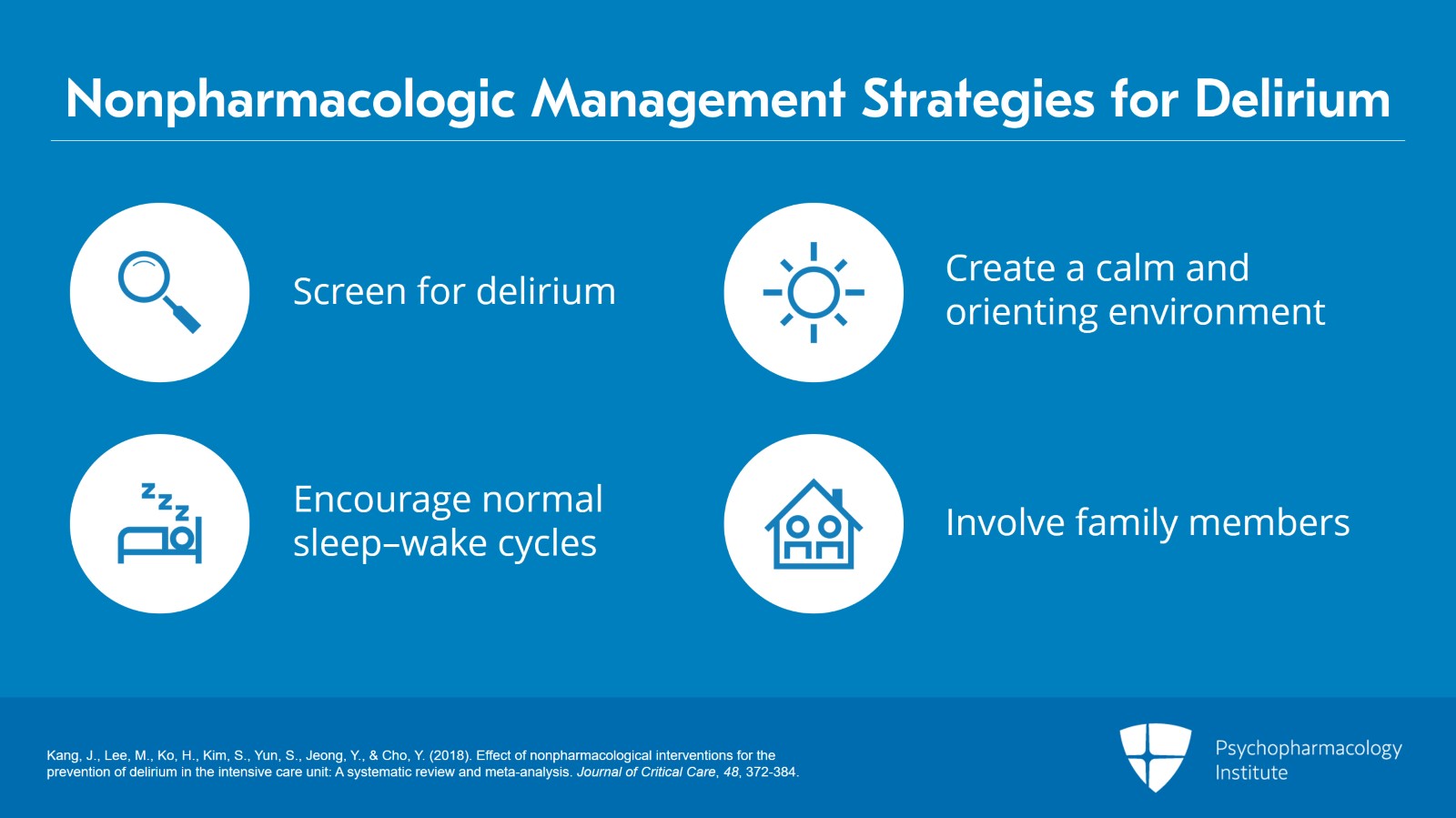
These include screening for delirium multiple times a day generally at every shift, creating a calm, orienting environment for patients using clocks, calendars, familiar objects from home, encouraging normal sleep-wake cycles for patients which are often challenging in hospital settings, involving family members in support of care.
References:
  • Kang, J., Lee, M., Ko, H., Kim, S., Yun, S., Jeong, Y., & Cho, Y. (2018). Effect of nonpharmacological interventions for the prevention of delirium in the intensive care unit: A systematic review and meta-analysis. Journal of Critical Care, 48, 372-384.
Free Files
Success!
Check your inbox, we sent you all the materials there.

Slide 3 of 7

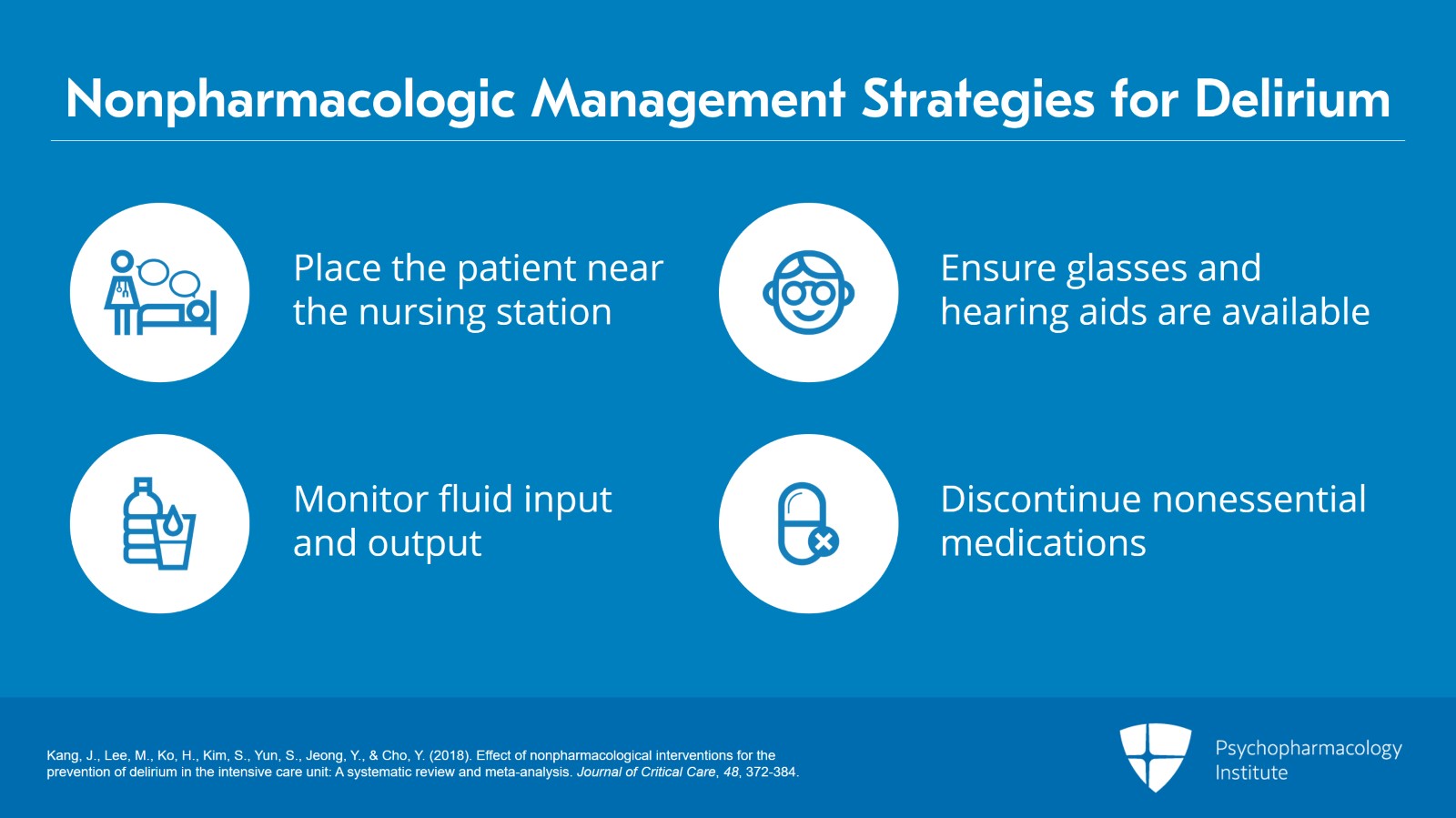
Placing the patient near the nursing station as a means of reorienting them, ensuring that glasses and hearing aids are available to patients, closely monitoring fluid input and output, and a really important one that sometimes gets missed, discontinuing all nonessential medications or as we like to say at MGH, cleaning the patient up.
References:
  • Kang, J., Lee, M., Ko, H., Kim, S., Yun, S., Jeong, Y., & Cho, Y. (2018). Effect of nonpharmacological interventions for the prevention of delirium in the intensive care unit: A systematic review and meta-analysis. Journal of Critical Care, 48, 372-384.

Slide 4 of 7

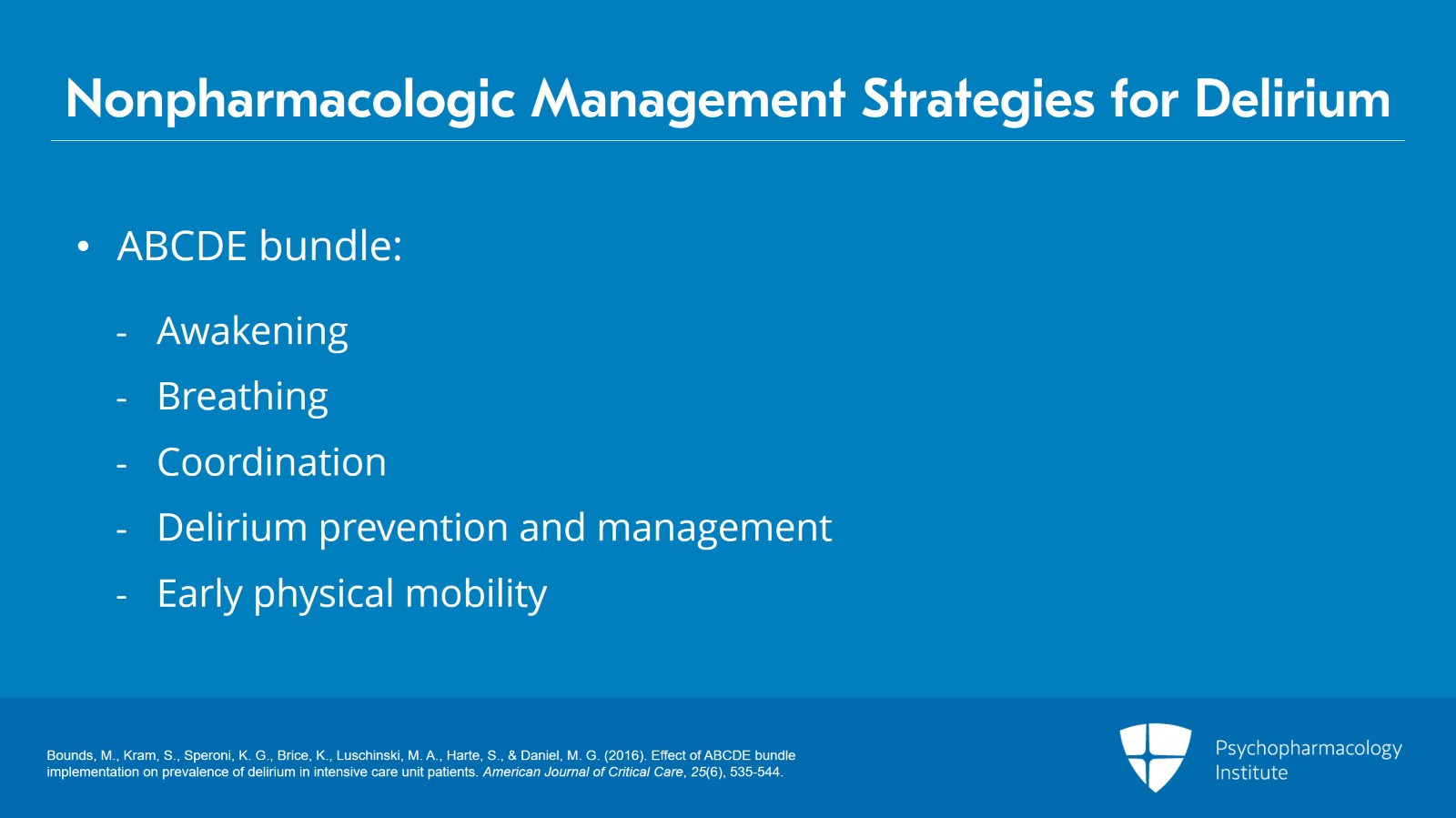
These nonpharmacologic strategies have sometimes been described as bundles like the ABCDE bundle which includes awakening and breathing coordination, delirium prevention and management and early physical mobility.
References:
  • Bounds, M., Kram, S., Speroni, K. G., Brice, K., Luschinski, M. A., Harte, S., & Daniel, M. G. (2016). Effect of ABCDE bundle implementation on prevalence of delirium in intensive care unit patients. American Journal of Critical Care, 25(6), 535-544. 
Free Files
Success!
Check your inbox, we sent you all the materials there.

Slide 5 of 7

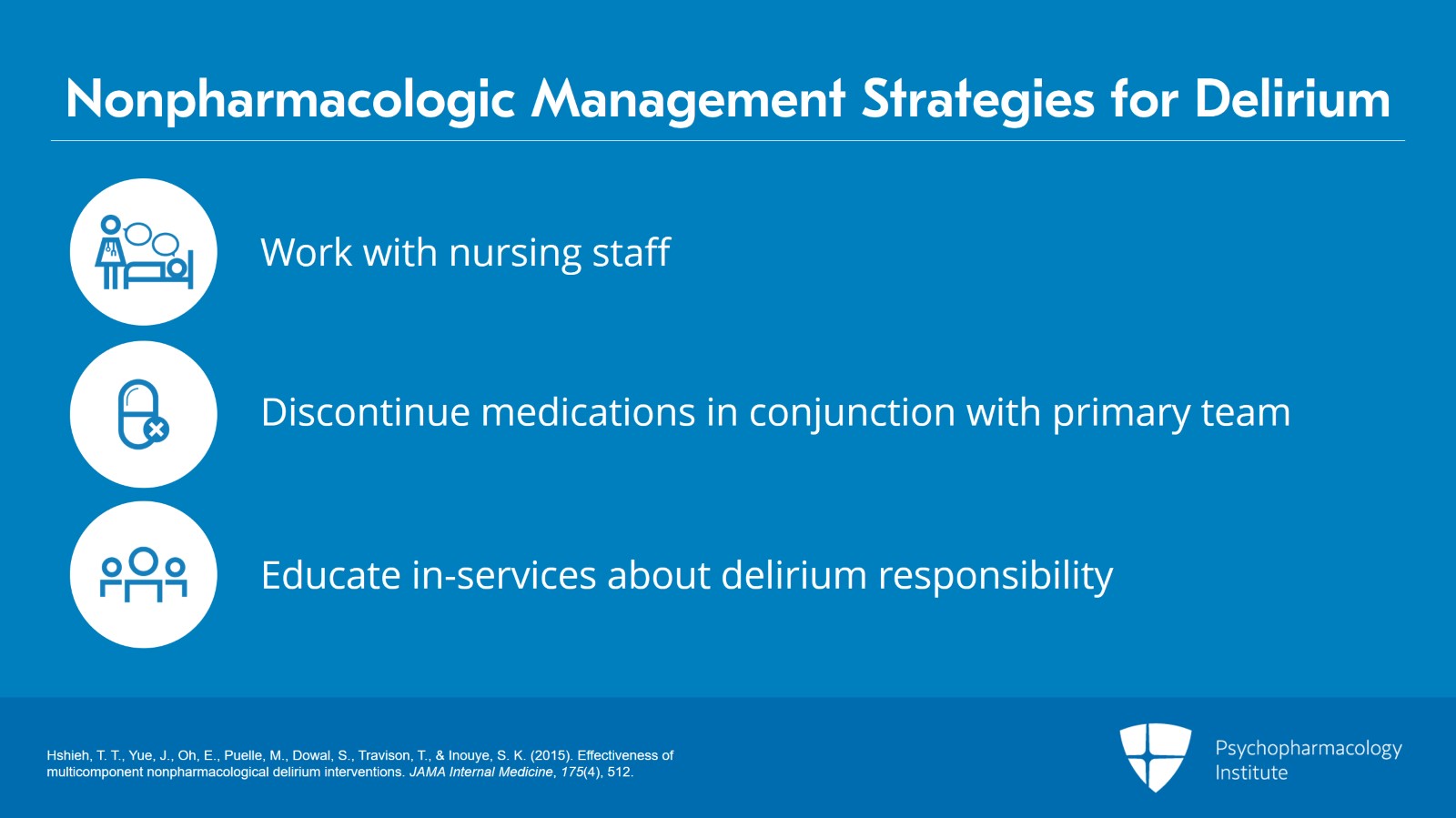
Experts recommend working directly with nursing around many of these recommendations. If there’s a nurse member on the psychiatric consultation team, this can be a particularly great role for that person. In terms of discontinuing medications or cleaning the patient up, be sure to do this in conjunction with the primary team and other consultants so that it’s not seen as a battle between specialties. And we have found that education in in-services can go a long way towards helping primary teams understand that delirium is part of their responsibility and not just the responsibility of Psychiatry or Neurology. So we have several nonpharmacologic strategies to help manage delirium.
References:
  • Hshieh, T. T., Yue, J., Oh, E., Puelle, M., Dowal, S., Travison, T., & Inouye, S. K. (2015). Effectiveness of multicomponent nonpharmacological delirium interventions. JAMA Internal Medicine, 175(4), 512.

Slide 6 of 7

When thinking about the management of delirium overall, remember to prioritize nonpharmacologic strategies.
Free Files
Success!
Check your inbox, we sent you all the materials there.

Slide 7 of 7

Learning Objectives:

After completing this activity, the learner will be able to:

  1. Identify and assess different symptoms and presentations of delirium
  2. Summarize research on medications with evidence for the prevention and management of delirium
  3. Discuss special considerations in delirium, such as catatonia and COVID-19 delirium

Original Release Date: 05/01/2021

Review and Re-release Date: 03/01/2024

Expiration Date: 04/01/2025

Expert: Scott Beach, M.D.

Medical Editor: Melissa Mariano, M.D

Relevant Financial Disclosures:

None of the faculty, planners, and reviewers for this educational activity have relevant financial relationship(s) to disclose during the last 24 months with ineligible companies whose primary business is producing, marketing, selling, re-selling, or distributing healthcare products used by or on patients.

Contact Information: For questions regarding the content or access to this activity, contact us at support@psychopharmacologyinstitute.com

Instructions for Participation and Credit:

Participants must complete the activity online during the valid credit period that is noted above.

Follow these steps to earn CME credit:

  1. View the required educational content provided on this course page.
  2. Complete the Post Activity Evaluation for providing the necessary feedback for continuing accreditation purposes and for the development of future activities. NOTE: Completing the Post Activity Evaluation after the quiz is required to receive the earned credit.
  3. Download your certificate.

Accreditation Statement

This activity has been planned and implemented in accordance with the accreditation requirements and policies of the Accreditation Council for Continuing Medical Education through the joint providership of Medical Academy LLC and the Psychopharmacology Institute. Medical Academy is accredited by the ACCME to provide continuing medical education for physicians.

Credit Designation Statement

Medical Academy designates this enduring activity for a maximum of 1.00 AMA PRA Category 1 credit(s). Physicians should claim only the credit commensurate with the extent of their participation in the activity.


Free Files
Success!
Check your inbox, we sent you all the materials there.
Continue in the website
Instant access modal

Become a Bronze, Silver, Gold, Bronze extended, Silver extended or Gold extended Member.

2025–26 Psychopharmacology CME Program

Unlock up to 155 CME Credits, including 40 SA CME Credits.