Close Banner
Section Free  - Video Lectures

07. Valproate/Divalproex: Metabolism, Kinetics, and Warnings

Published on April 1, 2021 Expired on April 1, 2025

Jonathan M. Meyer, M.D.

Assistant Clinical Professor - University of California San Diego

Key Points

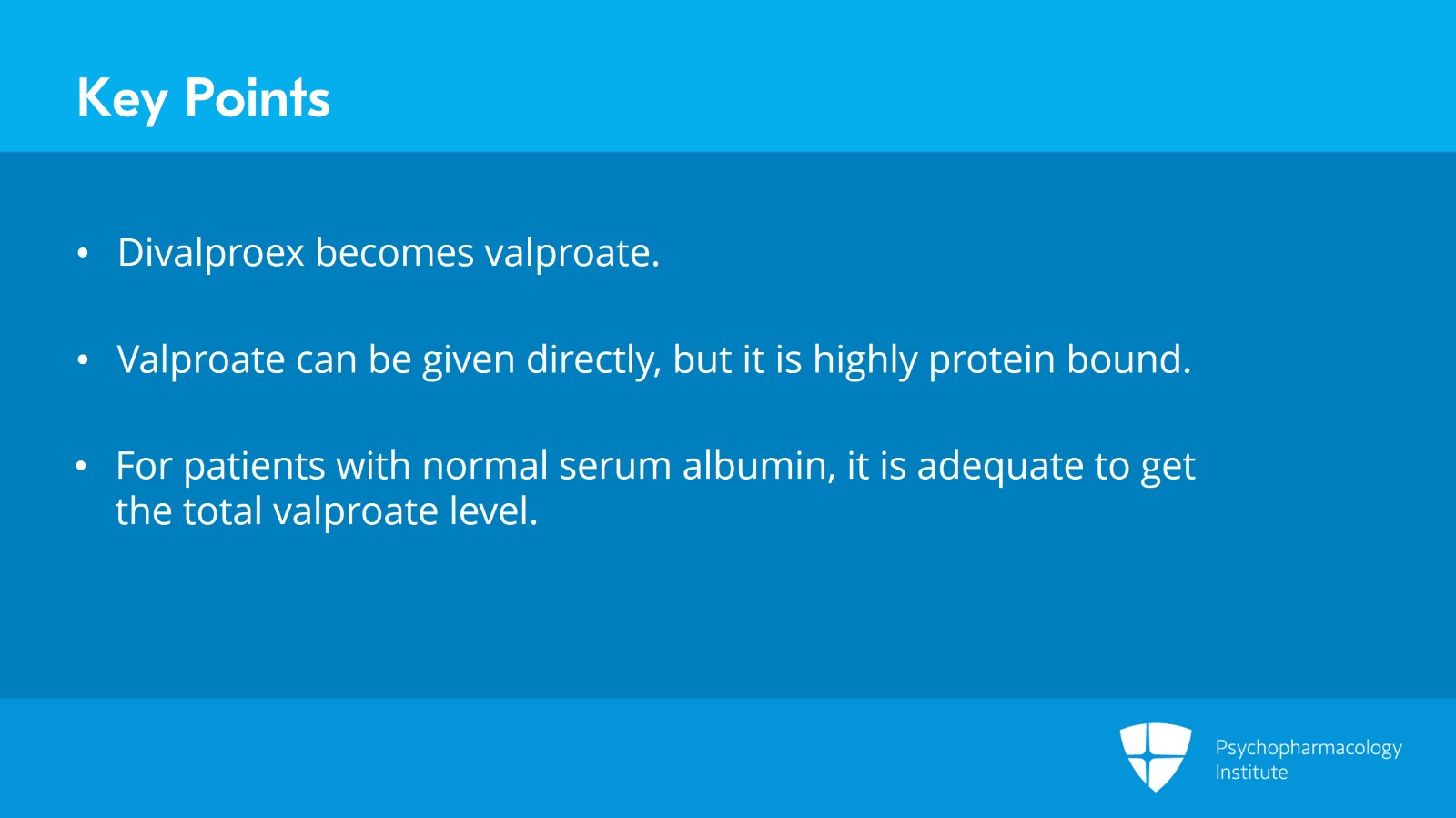
  • Divalproex becomes valproate.
  • Valproate can be given directly, but it is highly protein bound. 
  • For patients with normal serum albumin, it is adequate to get the total valproate level.
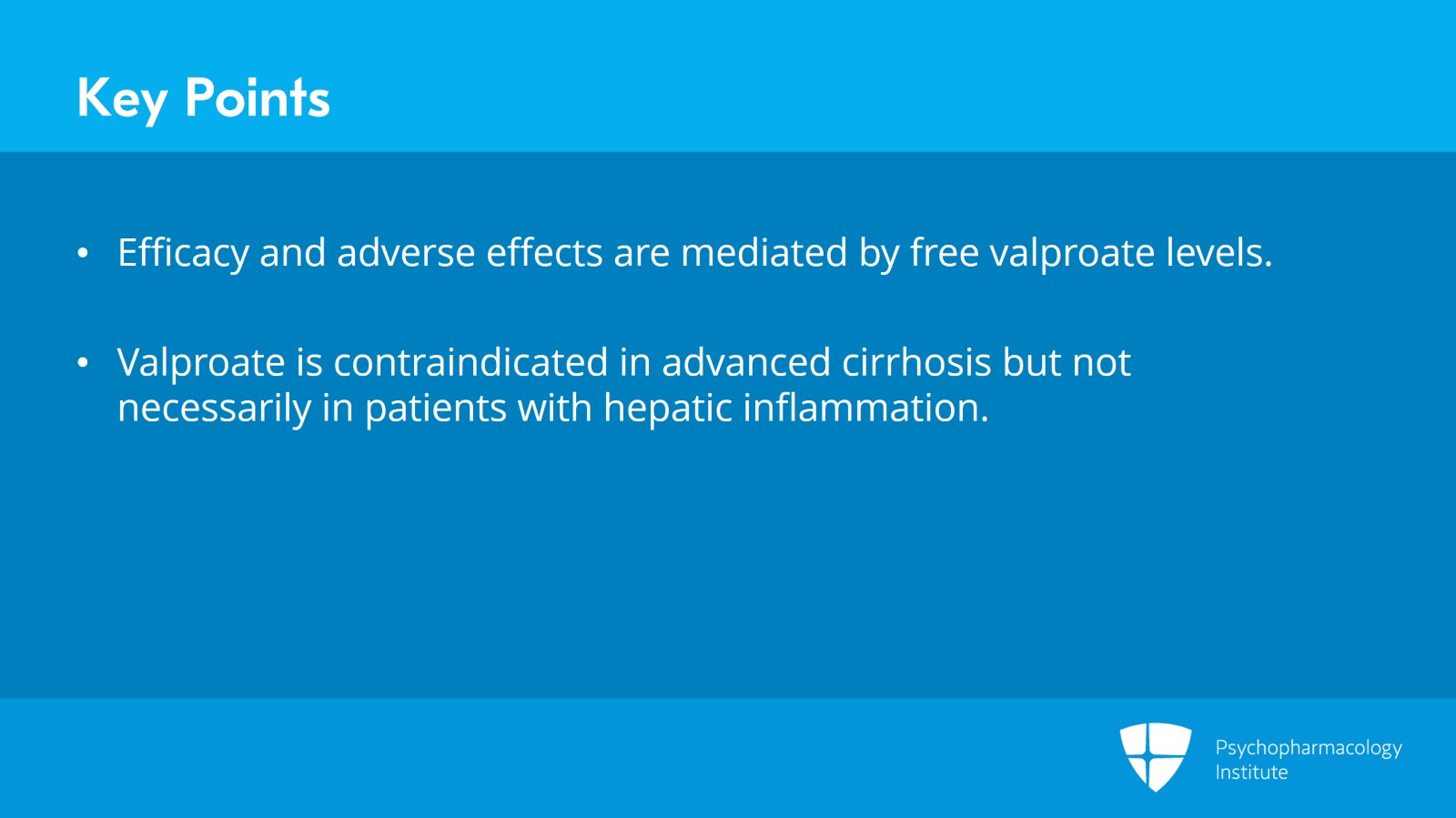
  • Efficacy and adverse effects are mediated by free valproate levels.
  • Valproate is contraindicated in advanced cirrhosis but not necessarily in patients with hepatic inflammation. 

Free Downloads for Offline Access

  • Free Download Audio File (MP3)
  • Free Download Presentation File (PPTX)
  • Free Download Video (MP4)

Slides and Transcript

Slide 1 of 12

Since we’re spending a lot of time talking about the liver, I just want to give a bit of information about the use of divalproex or valproate in people who have liver inflammation in particular.

Slide 2 of 12

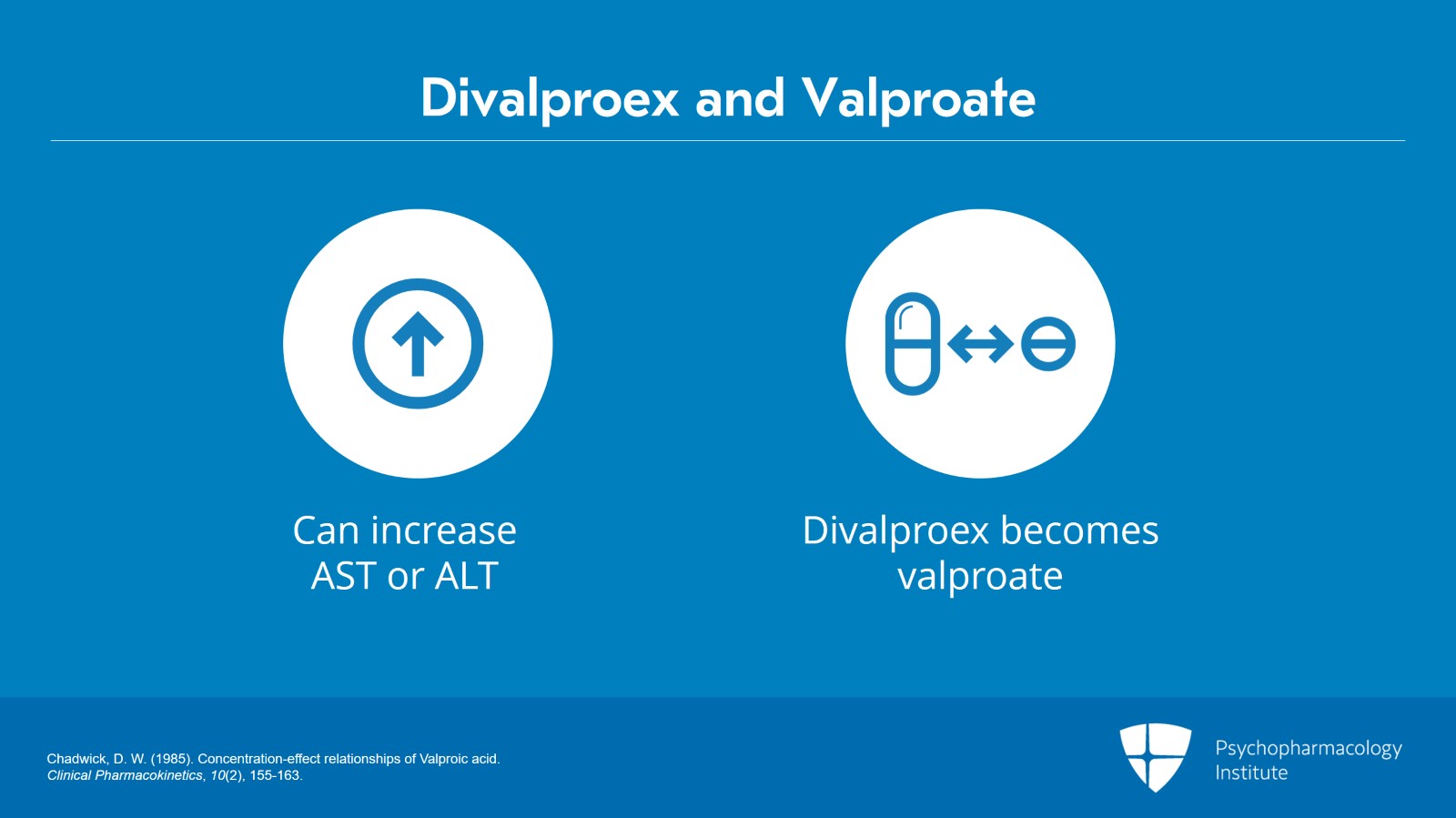
And the reason I choose that language very carefully is that this is often a concern because as we know divalproex or valproate itself can increase your AST or ALT. Again, these are the same drug. When you ingest divalproex, it becomes valproate in your system. But we have a lot of people out there who drink. We have still some people with untreated hepatitis C. We have folks with nonalcoholic fatty liver. And these are the people who are going to come into your clinic with an abnormal AST or ALT just like the case we’ve been talking about.
References:
  • Chadwick, D. W. (1985). Concentration-effect relationships of Valproic acid. Clinical Pharmacokinetics, 10(2), 155-163.
Free Files
Success!
Check your inbox, we sent you all the materials there.

Slide 3 of 12

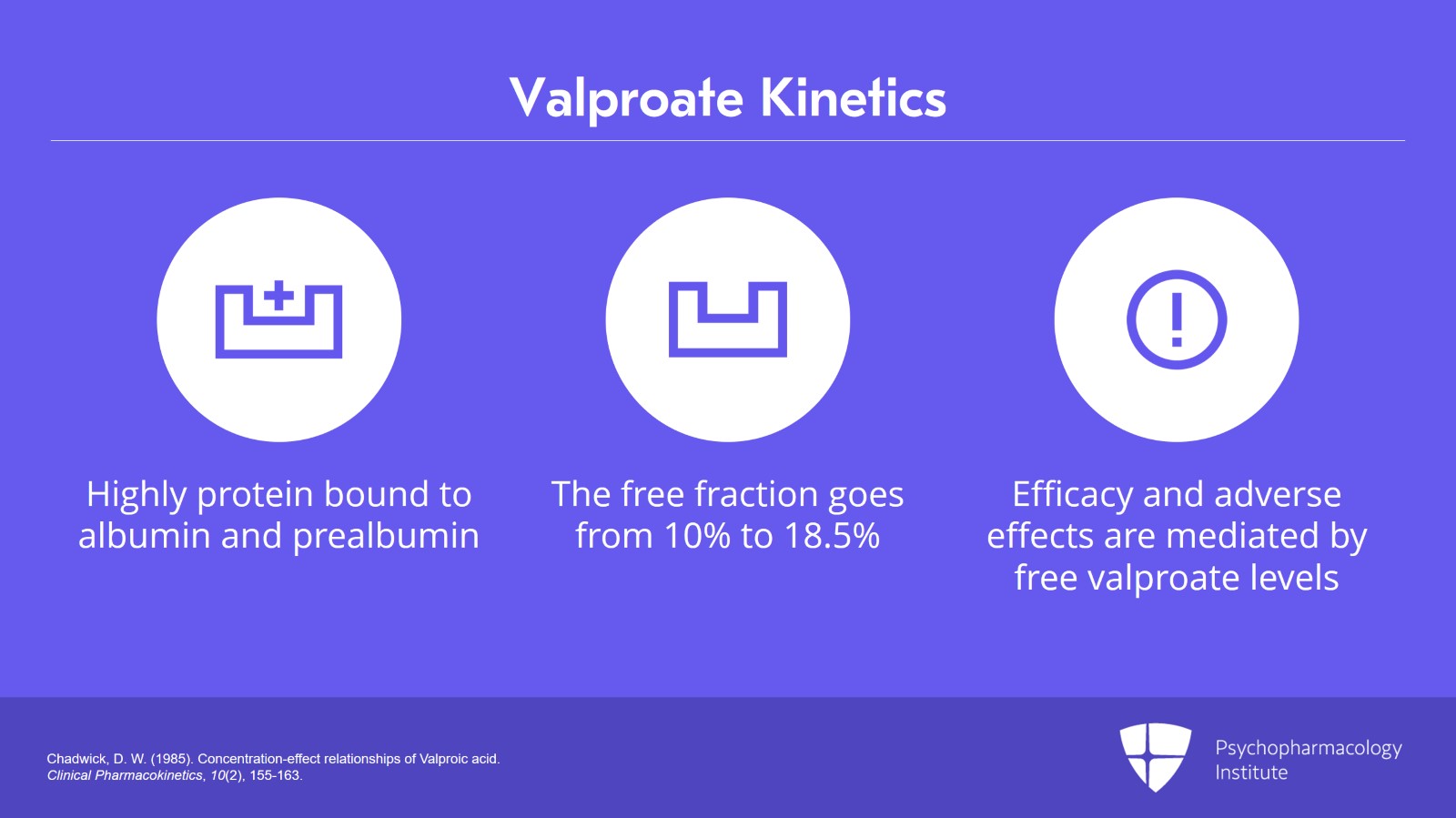
So, valproate is an interesting drug because it is highly protein bound to albumin and prealbumin. The free fraction is quite low. With a serum level of 40, it is only 10%. But as we increase the serum level up to 130, the free fraction increases to 18.5%. And not surprisingly, all of the effects of the drug, both good and bad, are mediated by the free valproate level.
References:
  • Chadwick, D. W. (1985). Concentration-effect relationships of Valproic acid. Clinical Pharmacokinetics, 10(2), 155-163.

Slide 4 of 12

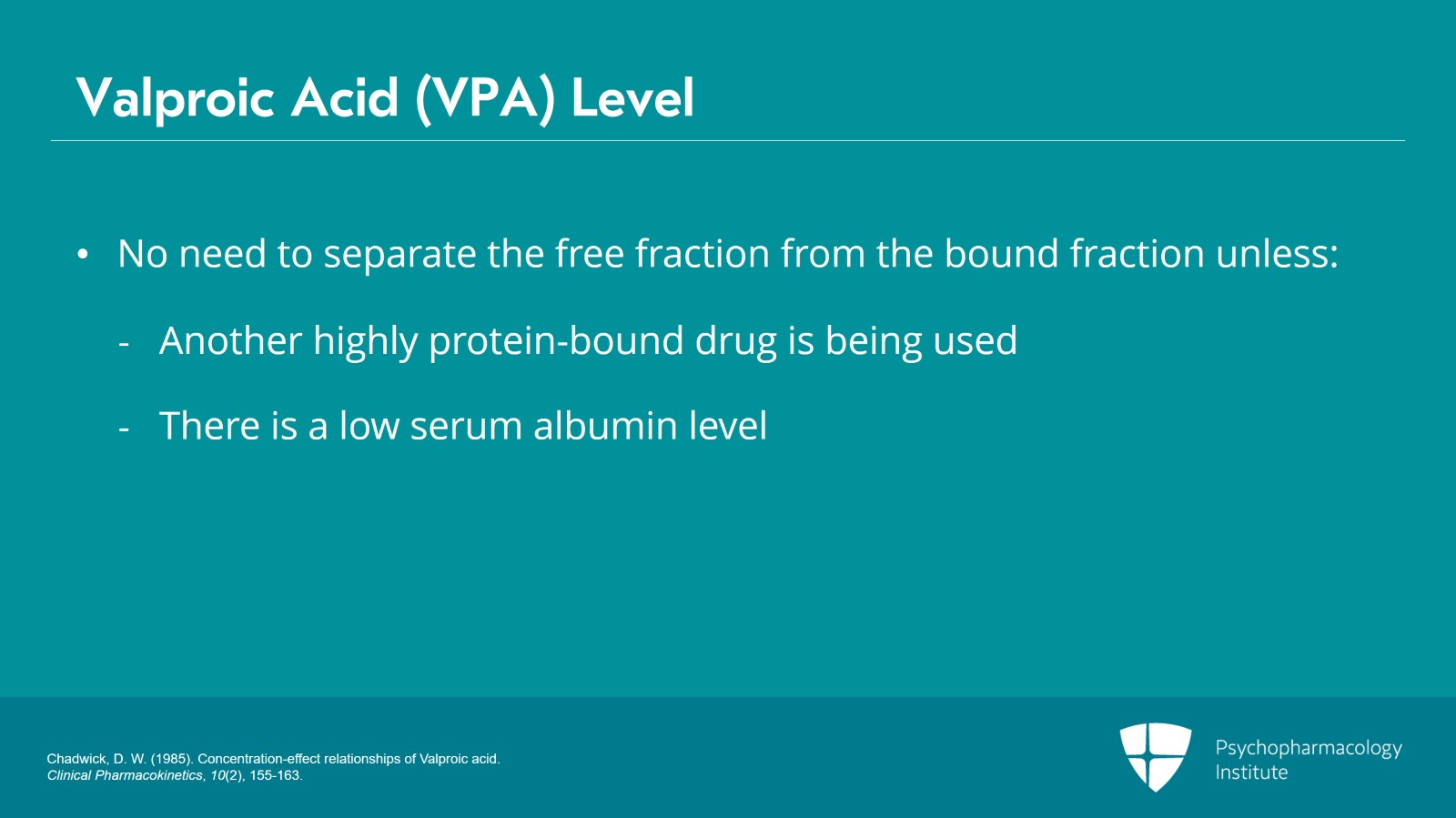
In general, we don’t separate the free fraction from the bound fraction. This is only done in certain unusual circumstances. And typically, it occurs if you have another drug which is highly protein bound like another anticonvulsant where you’re worried the free fraction may be too high even though the total level may look normal or if you have patients with very low serum albumin. In those instances, there’s simply not enough binding sites and the free fraction will be much higher for any given total serum level.
References:
  • Chadwick, D. W. (1985). Concentration-effect relationships of Valproic acid. Clinical Pharmacokinetics, 10(2), 155-163.
Free Files
Success!
Check your inbox, we sent you all the materials there.

Slide 5 of 12

In those unusual circumstances where you might want to order a free valproate level, there is a therapeutic range and it’s 7 to 23 mcg/mL. Again, the total which is what we normally order is 60 to 120 mcg/mL. We normally don’t order the free fraction as I said but there will be circumstances you may run into where you have to do that and it’s good to know what the reference range is for free valproate levels.
References:
  • Chadwick, D. W. (1985). Concentration-effect relationships of Valproic acid. Clinical Pharmacokinetics, 10(2), 155-163.

Slide 6 of 12

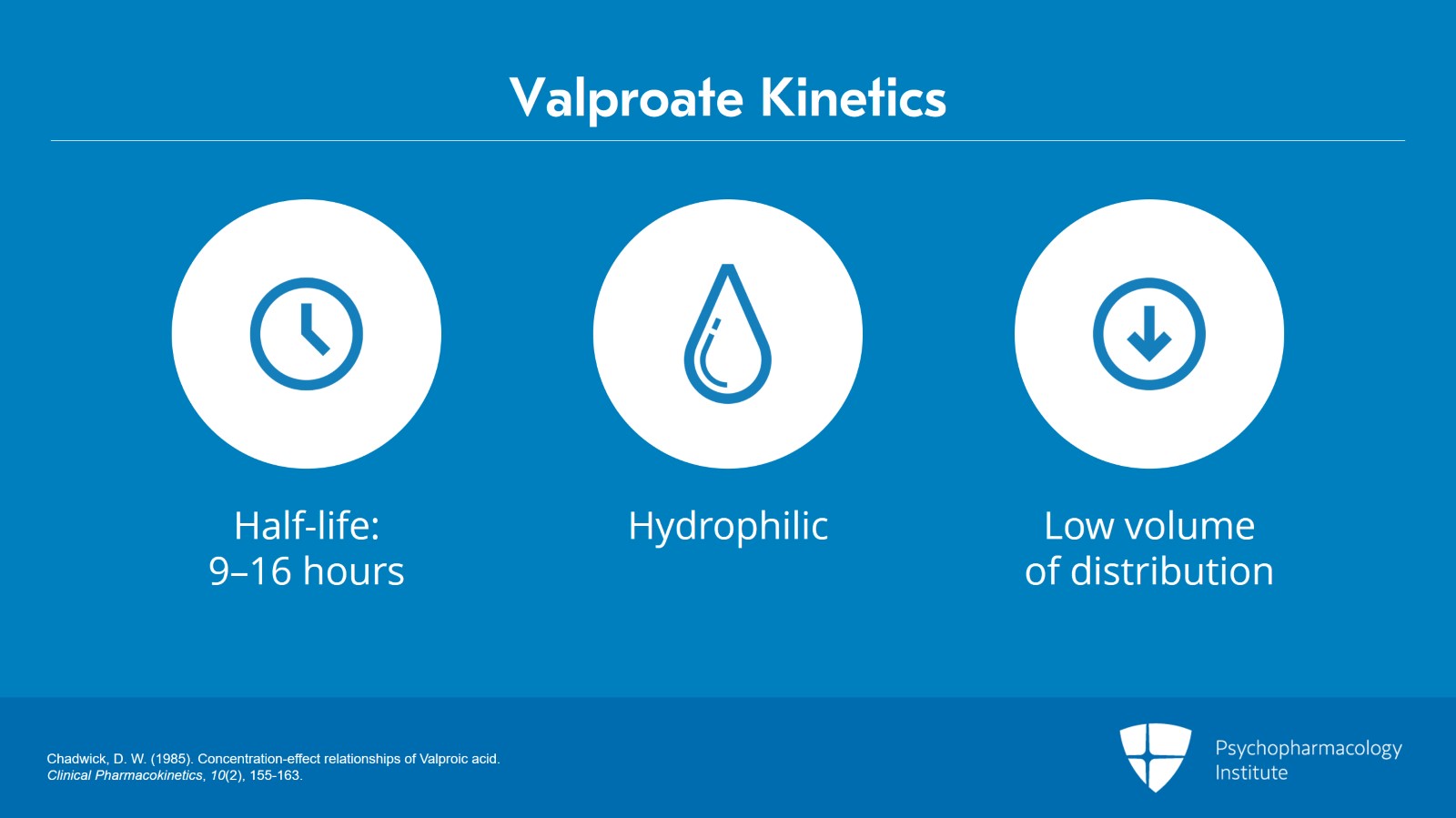
So, valproate has a half-life between 9 and 16 hours. There are extended-release forms which can be used once a day. It’s an interesting drug because it’s actually hydrophilic with a low volume of distribution.
References:
  • Chadwick, D. W. (1985). Concentration-effect relationships of Valproic acid. Clinical Pharmacokinetics, 10(2), 155-163.
Free Files
Success!
Check your inbox, we sent you all the materials there.

Slide 7 of 12

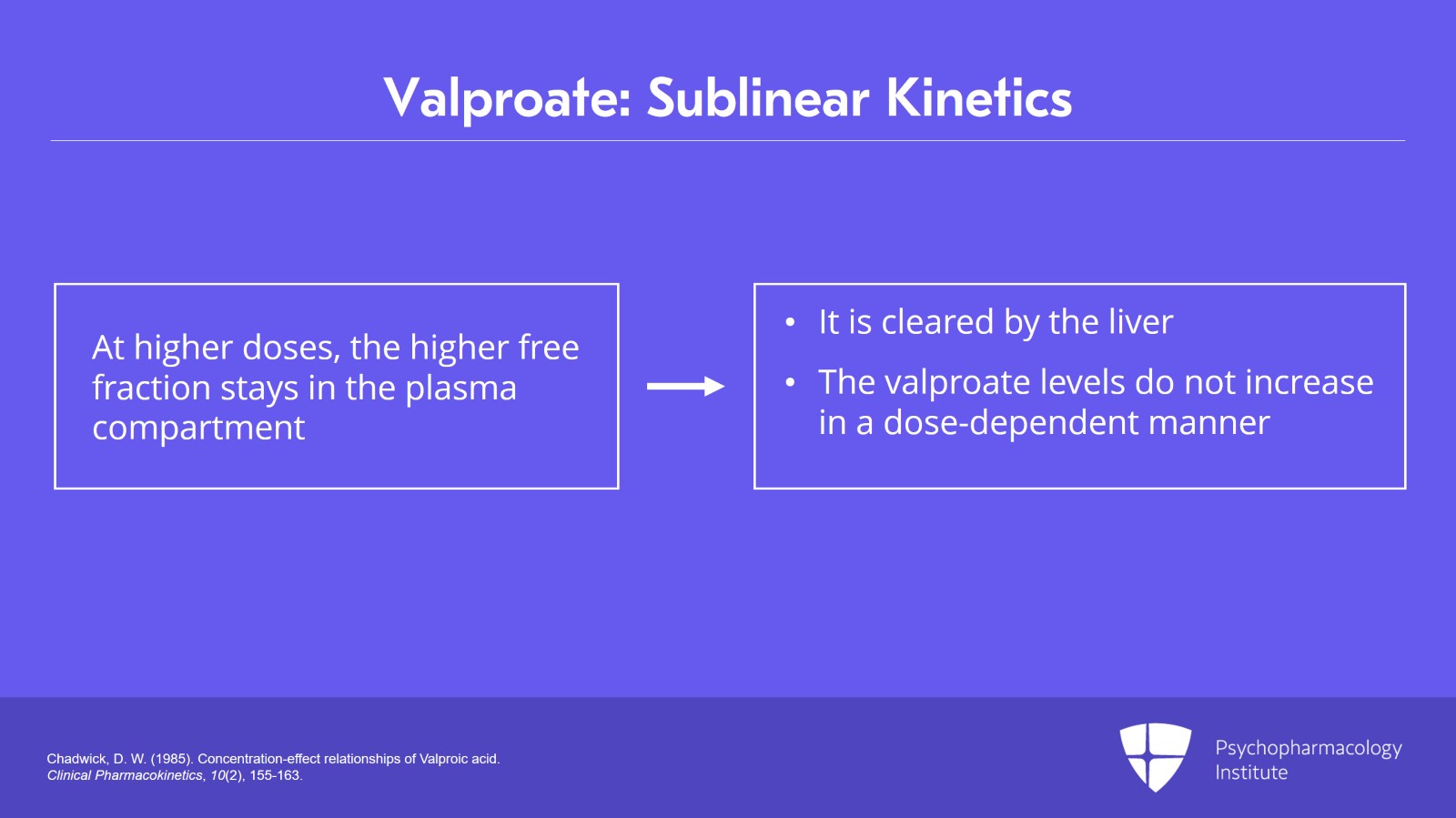
And the net result is that the kinetics are not linear. They’re actually what’s called sublinear. At higher doses, the higher free fraction tends to stay in the plasma compartment and then gets cleared by the liver. So, time and again, I hear from individuals who say, I increased the valproate dose by 50%. How come the level does not go up? And I have to explain to them it has sublinear kinetics. The patient could be nonadherent which often happens but it’s often simply sublinear kinetics.
References:
  • Chadwick, D. W. (1985). Concentration-effect relationships of Valproic acid. Clinical Pharmacokinetics, 10(2), 155-163.

Slide 8 of 12

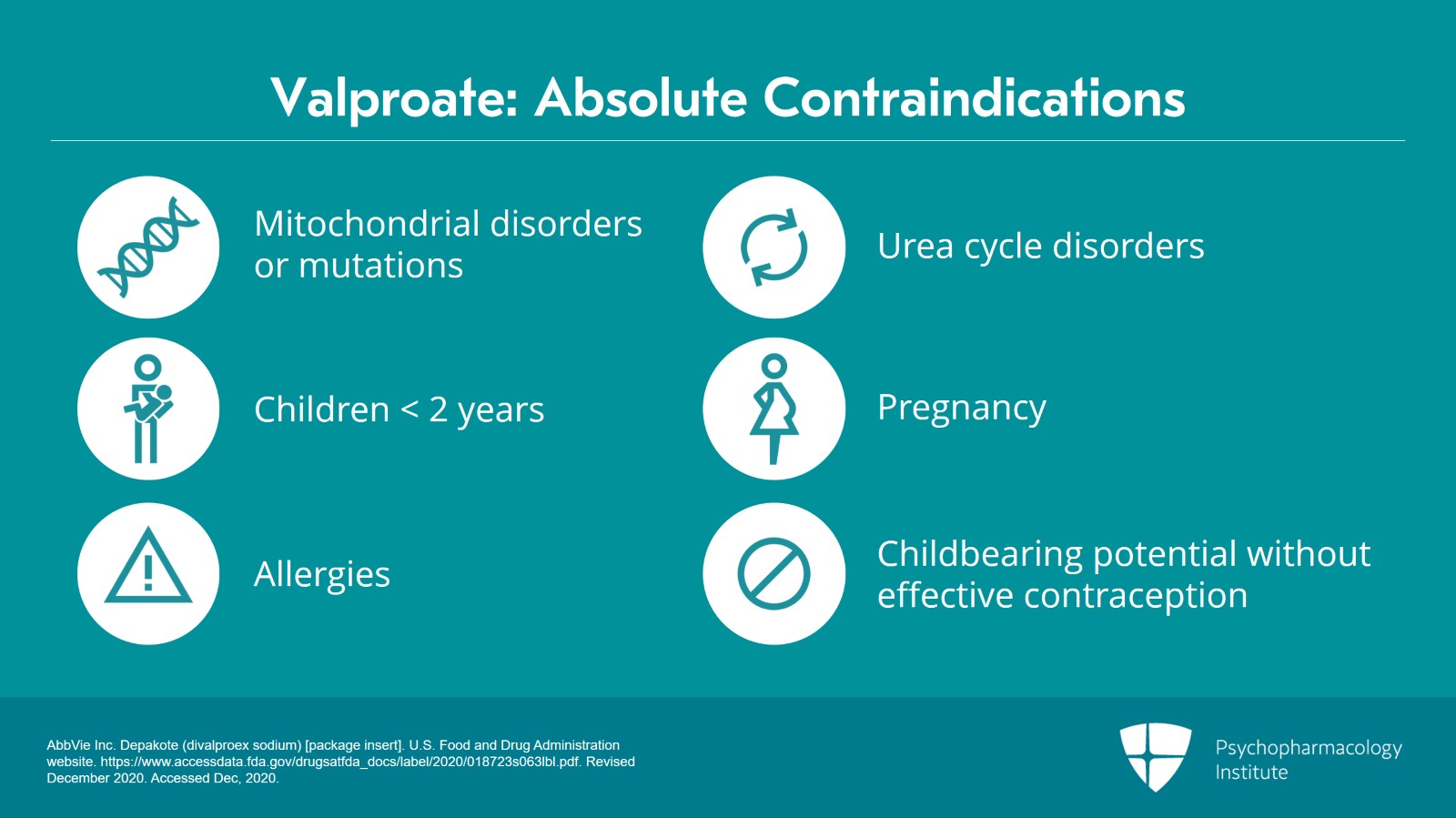
There are a lot of contraindications in the valproate package insert. It’s an old package insert and sadly a lot of the language is vague and alarming. There certainly are some absolute contraindications, people with certain unusual mitochondrial disorders or mutations most of which we never see, children under the age of 2, obvious allergies to valproate, urea cycle disorders, those who are pregnant and those who are of childbearing potential without effective contraception.
References:
  • AbbVie Inc. Depakote (divalproex sodium) [package insert]. U.S. Food and Drug Administration website. https://www.accessdata.fda.gov/drugsatfda_docs/label/2020/018723s063lbl.pdf. Revised December 2020. Accessed Dec, 2020.
Free Files
Success!
Check your inbox, we sent you all the materials there.

Slide 9 of 12

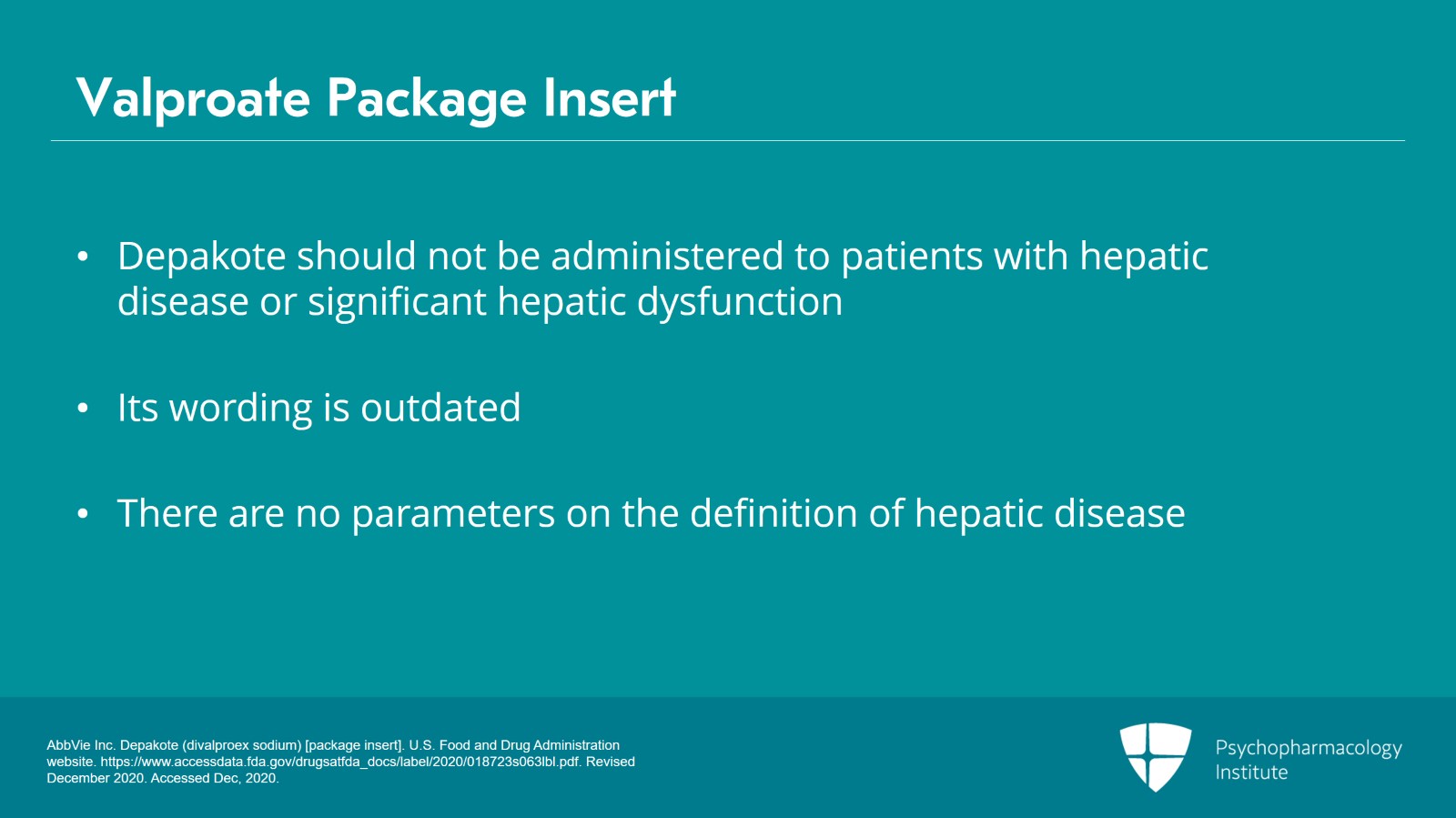
But the package insert is very vague. It says divalproex should not be administered to patients with hepatic disease or significant hepatic dysfunction. And this is the core of the problem. This is old, outdated wording but it will never change. When I put together this lecture, this language still persisted in the 2020 package insert of divalproex. No parameters on what they mean about hepatic disease. Are they talking about cirrhosis, inflammation? And it’s caused a lot of difficulties for clinicians.
References:
  • AbbVie Inc. Depakote (divalproex sodium) [package insert]. U.S. Food and Drug Administration website. https://www.accessdata.fda.gov/drugsatfda_docs/label/2020/018723s063lbl.pdf. Revised December 2020. Accessed Dec, 2020.

Slide 10 of 12

So, a couple of points here. Again, divalproex is what you ingest but it becomes valproate. You can also give people valproate directly as well. But this is a highly protein bound drug. Most of the time, we just get the total level and that’s fine for patients who have normal serum albumin. But if you have very low albumin or you’re on another highly protein-bound drug, there will be need to check the free valproate level.
Free Files
Success!
Check your inbox, we sent you all the materials there.

Slide 11 of 12

All the effects, good and bad, are mediated by the free valproate levels. It is clearly contraindicated in advanced cirrhosis but given that vague wording in the package insert, the clinical question which we’ll discuss is whether you can use valproate in people who have hepatic inflammation without cirrhosis.

Slide 12 of 12

Free Files
Success!
Check your inbox, we sent you all the materials there.

Learning Objectives:

After completing this activity, the learner will be able to:

  1. Discuss the safety of psychotropics in patients with hepatic issues. 
  2.  Assess liver function with laboratory tests and the Child-Pugh scale to make the best clinical decisions.

Original Release Date: 04/01/2021

Review and Re-release Date: 03/01/2024

Expiration Date: 04/01/2025

Expert: Jonathan Meyer, M.D.

Medical Editor: Lorena Rodriguez, M.D

Relevant Financial Disclosures:

The following planners, faculty, and reviewers have the following relevant financial relationships with commercial interests to disclose:

Dr. Meyer has disclosed the following relationships:

  • Acadia Pharmaceuticals: Advisory committee, speaking
  • Alkermes: Advisory committee, speaking
  • Abbvie: Advisory committee
  • Intra-Cellular Therapies: Advisory committee, speaking
  • Neurocrine: Advisory committee, speaking
  • Otsuka America, Inc.: Speaking
  • Sunovion Pharmaceuticals: Speaking
  • Teca: Speaking

All of the relevant financial relationships listed for these individuals have been mitigated.

Contact Information: For questions regarding the content or access to this activity, contact us at support@psychopharmacologyinstitute.com

Instructions for Participation and Credit:

Participants must complete the activity online during the valid credit period that is noted above.

Follow these steps to earn CME credit:

  1. View the required educational content provided on this course page.
  2. Complete the Post Activity Evaluation for providing the necessary feedback for continuing accreditation purposes and for the development of future activities. NOTE: Completing the Post Activity Evaluation after the quiz is required to receive the earned credit.
  3. Download your certificate.

Accreditation Statement

This activity has been planned and implemented in accordance with the accreditation requirements and policies of the Accreditation Council for Continuing Medical Education through the joint providership of Medical Academy LLC and the Psychopharmacology Institute. Medical Academy is accredited by the ACCME to provide continuing medical education for physicians.

Credit Designation Statement

Medical Academy designates this enduring activity for a maximum of 1.00 AMA PRA Category 1 credit(s). Physicians should claim only the credit commensurate with the extent of their participation in the activity.


Free Files
Success!
Check your inbox, we sent you all the materials there.
Continue in the website
Instant access modal

Become a Bronze, Silver, Gold, Bronze extended, Silver extended or Gold extended Member.

2025–26 Psychopharmacology CME Program

Unlock up to 155 CME Credits, including 40 SA CME Credits.