



Slides and Transcript
Slide 1 of 5
Okay. So next, we’ll specifically talk about antidepressant treatment during breastfeeding. So many times, women and healthcare providers are specifically concerned about exposure via breastmilk to an antidepressant on behalf of the baby which is an important topic. So fortunately, antidepressants are among the best studied class of medication during breastfeeding. Really across fields of medicine, they’re very well studied. And some of the SSRI antidepressants are among the most studied specific medications.
Slide 2 of 5
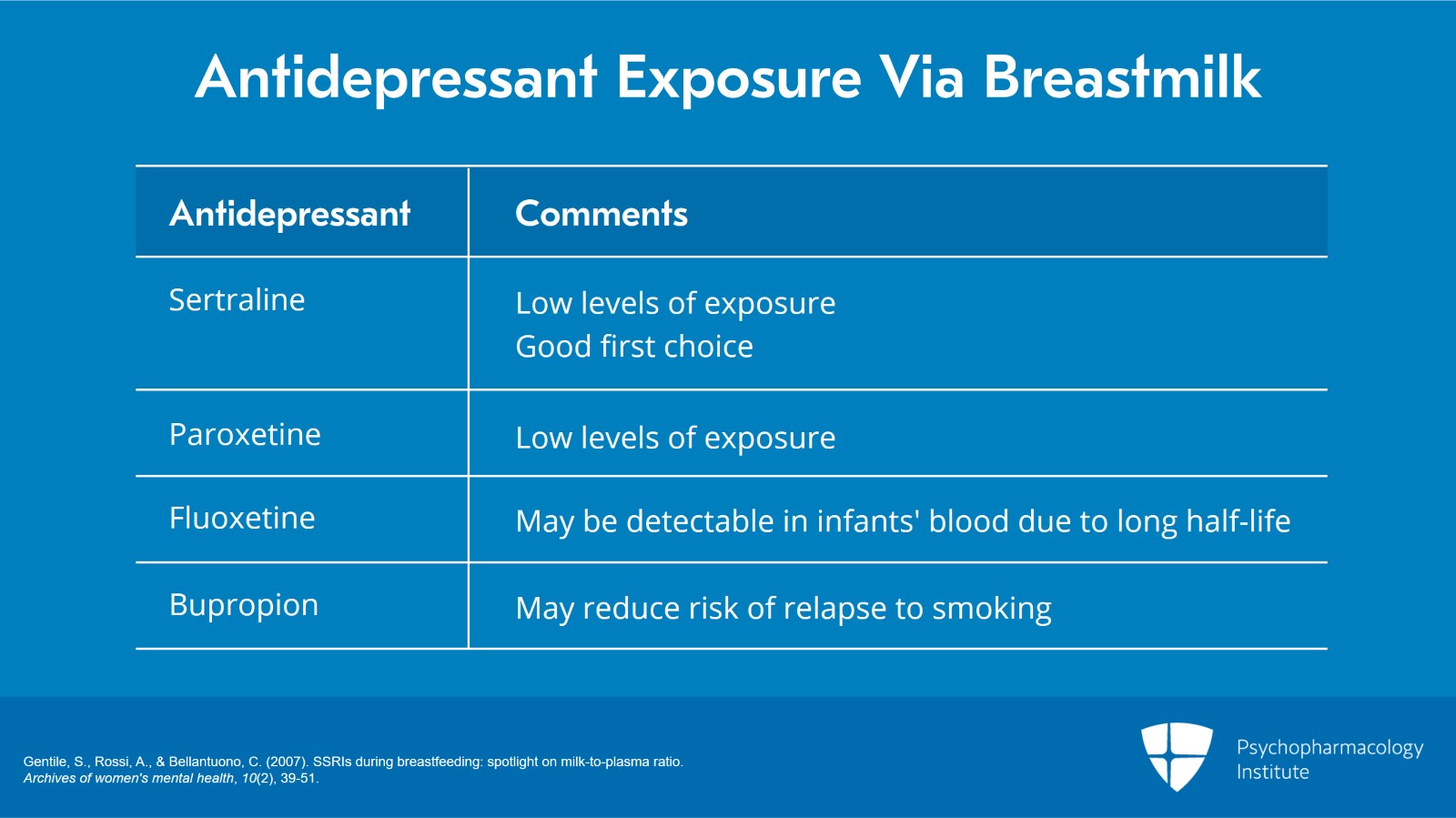
So the way we have gathered good data regarding antidepressants in breastfeeding is that a number of mothers and babies have been in studies where the amount of medication that gets through the breastmilk and then gets through the infant blood level is quantified, so studies that really rigorously measured the amount of antidepressant that the baby is exposed to. And for those studies for the most part do not show high levels of antidepressant. The antidepressants that have received the most study with consistently low levels of exposure are sertraline and paroxetine which have the most mom-baby pairs in the literature.
Now, fluoxetine also has been the focus of a reasonable amount of study but because it has a longer half-life, it’s more likely to be detectable in infant blood levels. So if a woman has been responsive to fluoxetine, she still can be treated with fluoxetine. So it’s not contraindicated in breastfeeding by any means. And if a woman is treated with fluoxetine during the pregnancy, we would not switch to another antidepressant during breastfeeding. So fluoxetine is considered compatible but in studies may be more detectable in infant blood. And as we all know, these medications aren’t interchangeable.
Bupropion is an interesting antidepressant to think about in the postpartum particularly if a woman is a smoker or has been able to quit smoking for pregnancy. The relapse rates for smoking are very high in the postpartum. So if a woman is at risk of relapse to smoking, bupropion may be an especially helpful antidepressant. Some of the newer antidepressants have less data regarding breastfeeding and amount of exposure and safety data.
Now, it can be misleading because there are some case reports of N equals 1, N equals 2 baby in the literature where some adverse effects have been potentially blamed on antidepressants when it’s not possible to discern whether or not a problem is due to the antidepressant. And some of those case reports have actually demonstrated very low levels of exposure via infant blood levels.
So what we really lean on are the mom-baby pair studies that quantified the amounts in the breastmilk. And so if a woman has never been on an antidepressant before, sertraline is often a very good choice because there have been a lot of mom-baby pairs represented in the literature without adverse effects and is a medication that can address both postpartum depression and comorbid anxiety.
References:
- Gentile, S., Rossi, A., & Bellantuono, C. (2007). SSRIs during breastfeeding: spotlight on milk-to-plasma ratio. Archives of women's mental health, 10(2), 39-51.
Unlock this Video Lecture and earn 1.25 CMEs
Become a Bronze, Silver, Gold, Bronze extended, Silver extended or Gold extended Member.
Already have an account? Sign in
