Close Banner
Free Section  - Video Lectures

06. Pharmacogenomics in Psychiatry: Antidepressant Metabolism

Published on March 18, 2019 Expired on March 31, 2022

Simon Kung, M.D.

Associate Professor of Psychiatry - Mayo Clinic

Key Points

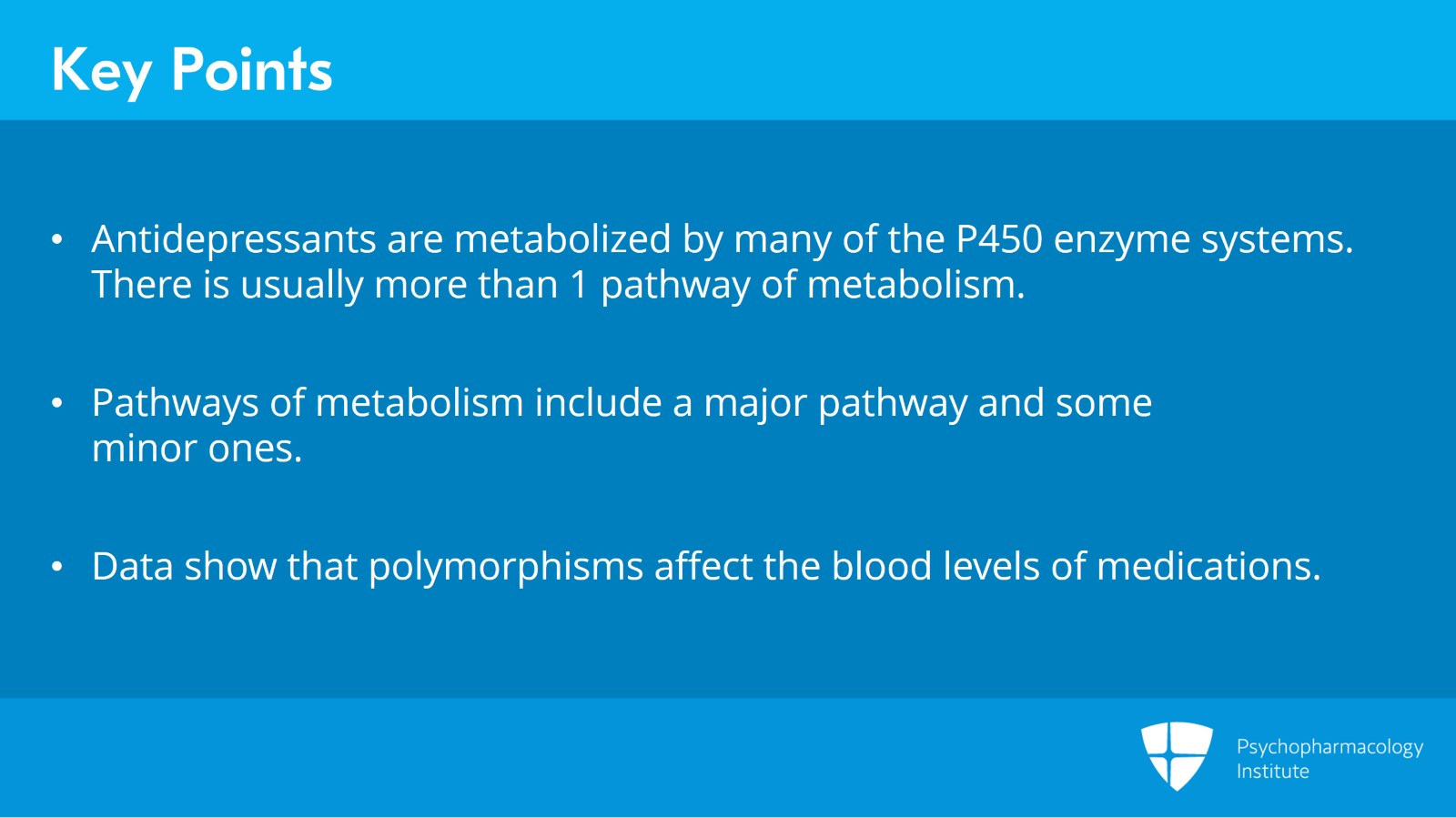
  • Antidepressants are metabolized by many of the CYP450 enzyme systems.
  • There is usually more than 1 pathway of metabolism of a medication, usually consisting of a major pathway and some minor ones.
  • Data show that polymorphisms affect the blood levels of medications.

Free Downloads for Offline Access

  • Free Download Video (MP4)
  • Free Download Audio File (MP3)
  • Free Download Presentation File (PPTX)

Slides and Transcript
Slide 1 of 9

Now, I’ll talk about how this is applied to our psychiatry medicines.

Slide 2 of 9

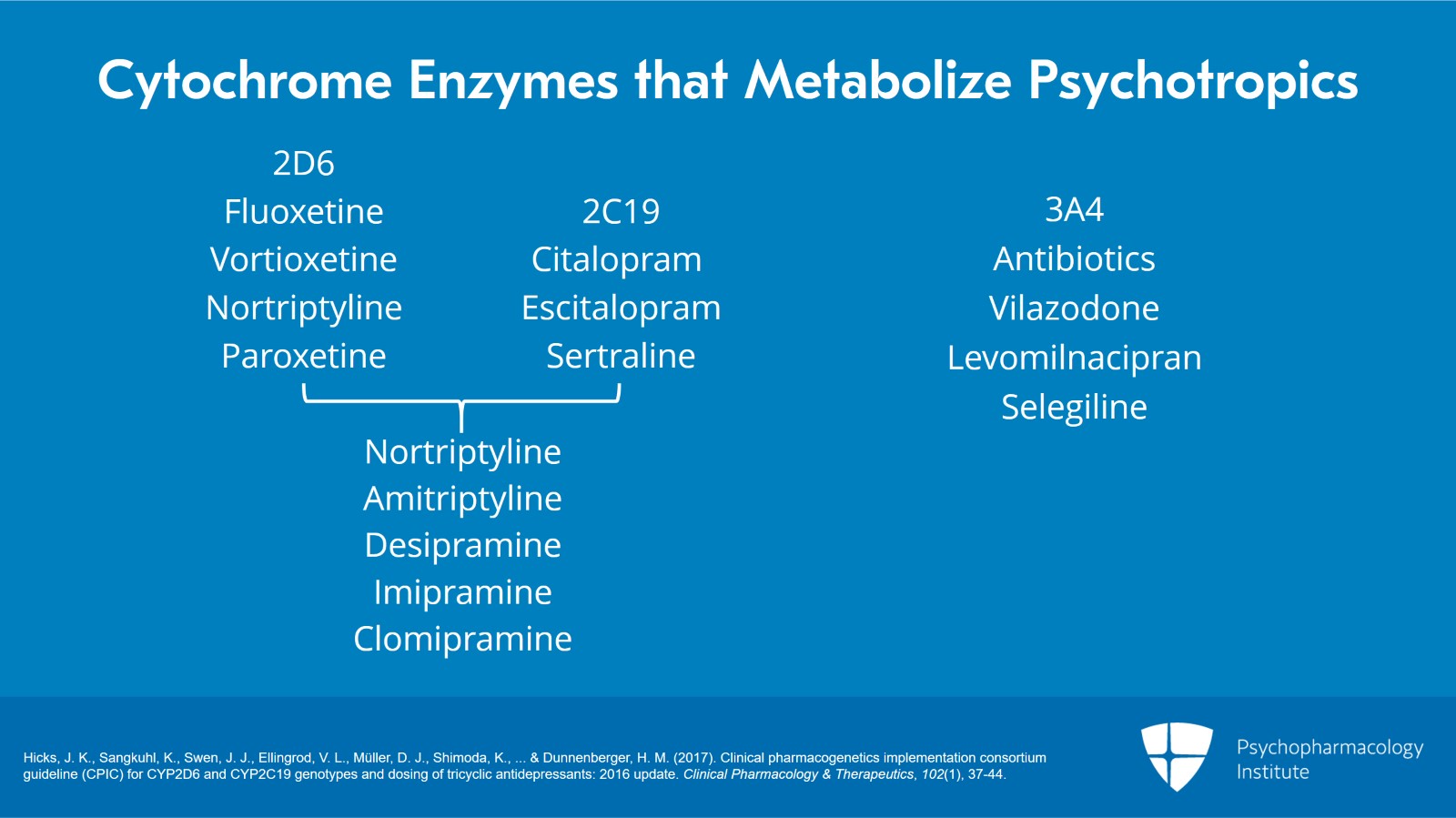
So I’m showing a table of the different medicines we use in Psychiatry and what the enzymes are which metabolize those medicines. So for example, fluoxetine, vortioxetine, nortriptyline, paroxetine, these are classically metabolized by 2D6. Citalopram and escitalopram, sertraline are 2C19. The 3A4 is the largest enzyme in this P450 family and that processes a lot of non-psychiatry medicines, antibiotics, for example. For the psychiatry medicines, vilazodone, levomilnacipran, selegiline, so there are some that are processed by 3A4. Most tricyclic antidepressants such as nortriptyline, amitriptyline, desipramine, imipramine, clomipramine, these are metabolized by mostly 2D6 and some 2C19.
Free Files
Success!
Check your inbox, we sent you all the materials there.
Slide 3 of 9

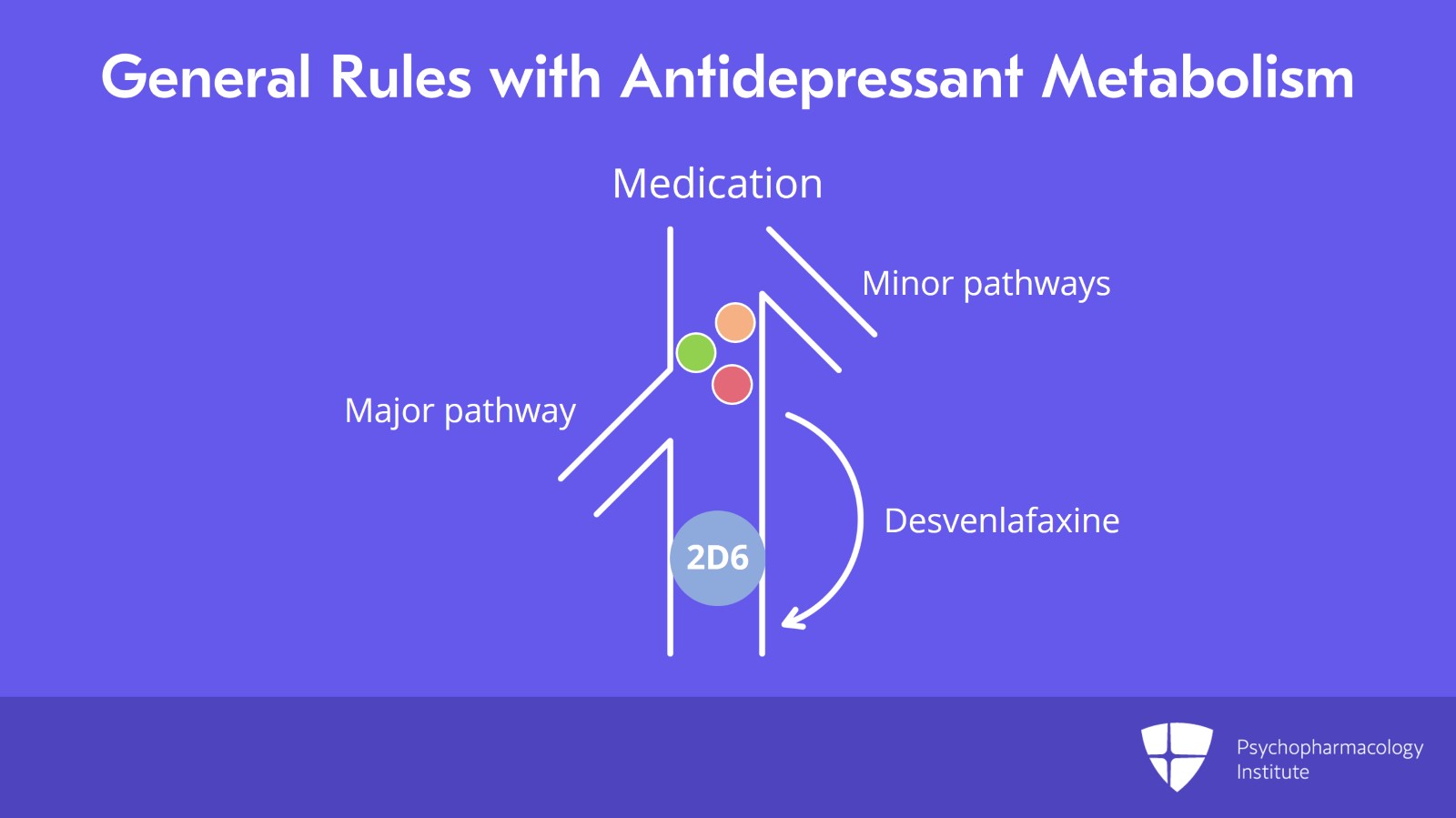
So there are some general rules or observations with antidepressant metabolism. So typically, a medicine has several metabolism pathways and usually one is a major pathway and the others are minor pathways and sometimes, metabolites might undergo different pathways. So pharmaceutical companies have noticed this and they’ve produced medicines that can bypass the 2D6. So for example, desvenlafaxine which is Pristiq, that one really bypasses 2D6. Pristiq is basically the active form of venlafaxine which is Effexor.

Slide 4 of 9

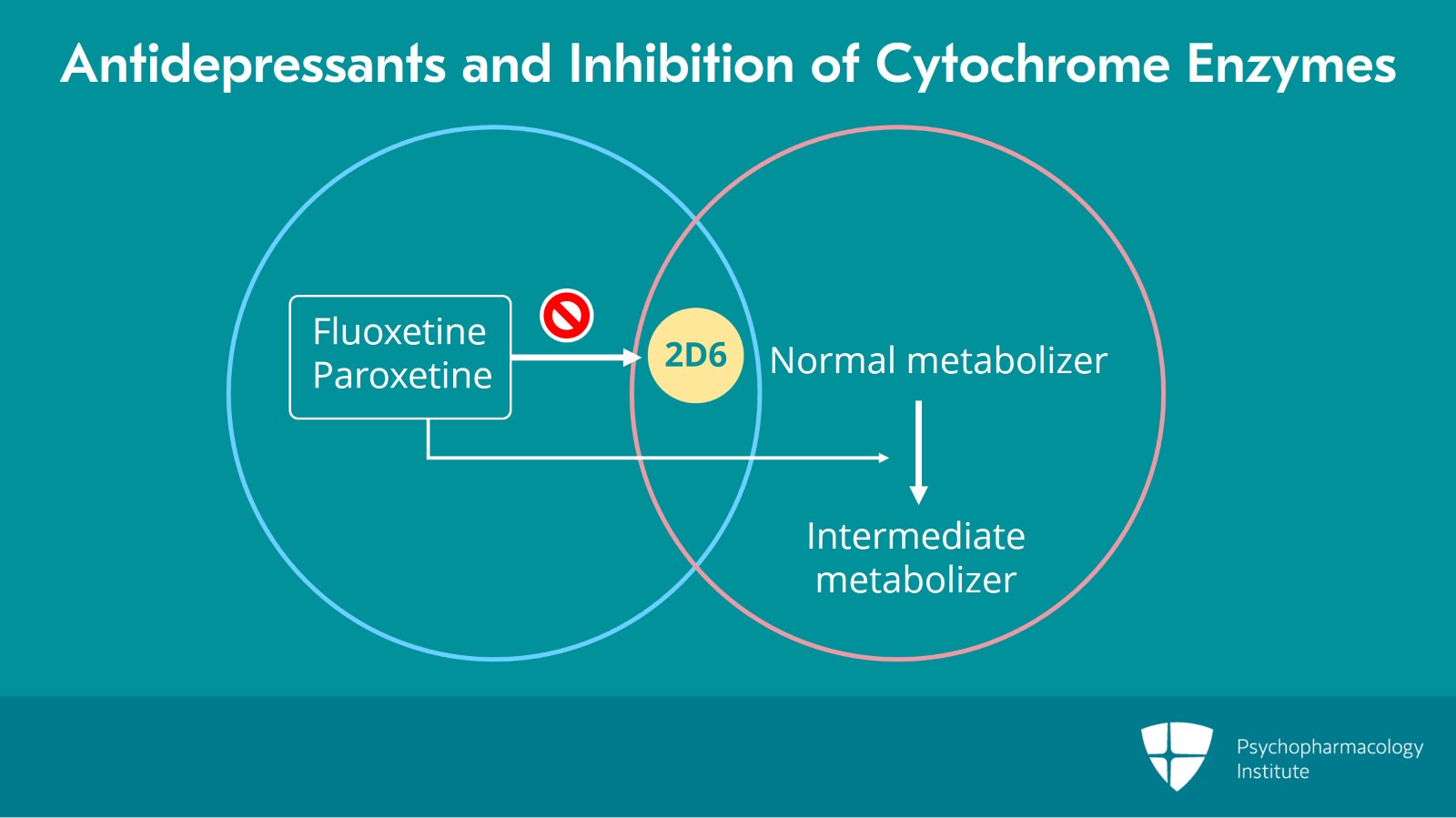
Sometimes, our antidepressants will inhibit an enzyme as well as be metabolized by it. For example, fluoxetine and paroxetine, they inhibit 2D6. So it can also cause a person who’s a normal metabolizer of 2D6 to turn into somebody who is a little slower than normal which is an intermediate metabolizer of 2D6. The antidepressant fluvoxamine which is Luvox, that also inhibits several different pathways.
Free Files
Success!
Check your inbox, we sent you all the materials there.
Slide 5 of 9

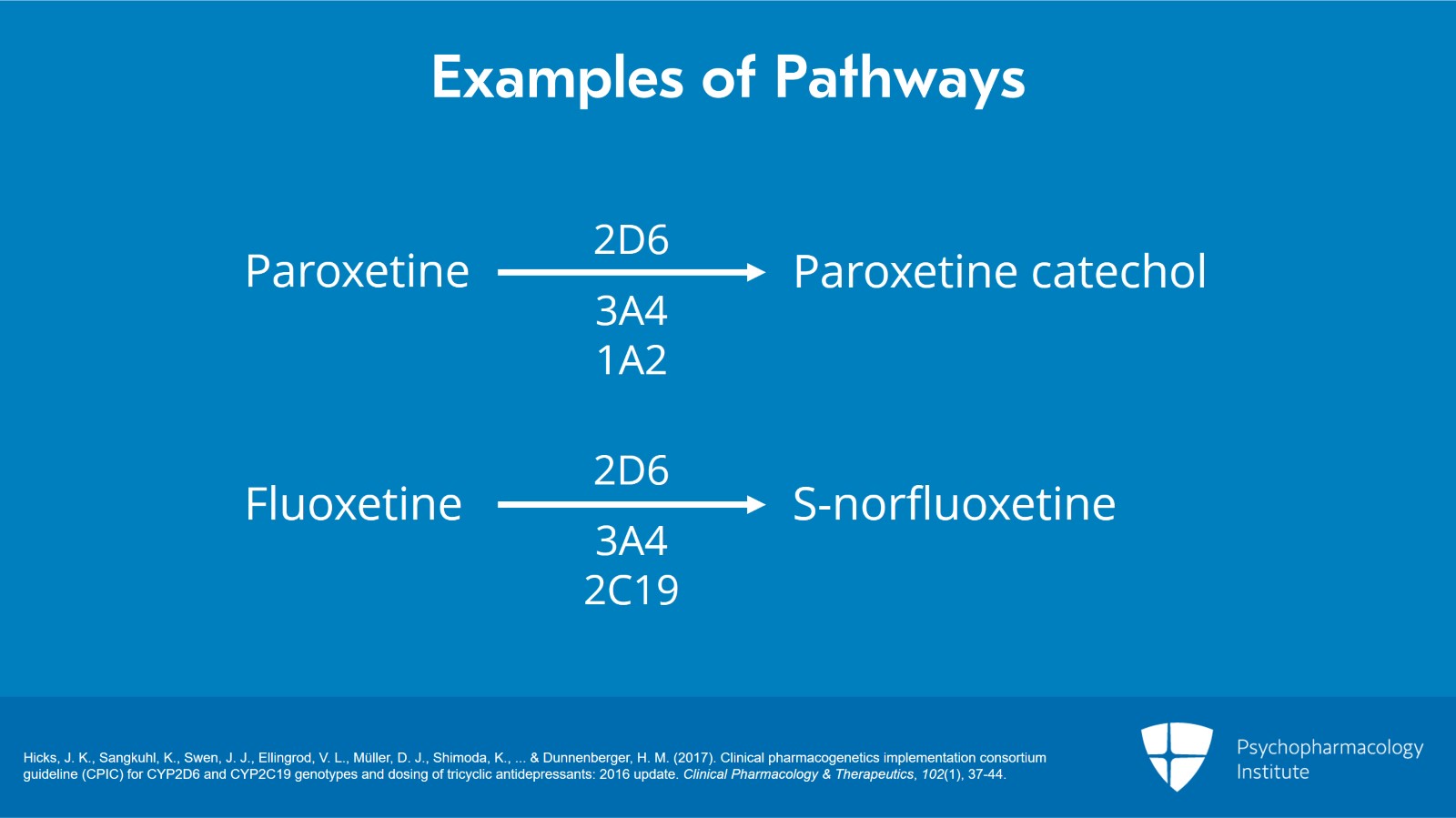
The next slide is showing you some examples of the pathways. So for example, paroxetine which is Paxil, that’s mostly 2D6 metabolized but there’s also some 3A4 and 1A2 involvement. Similarly, fluoxetine is mainly 2D6 but a few other enzyme metabolism pathways are involved. So the lesson there is if one is deficient in one pathway it doesn’t mean it’s a catastrophic event. There frequently are other minor pathways that the medicine can get metabolized through.

Slide 6 of 9

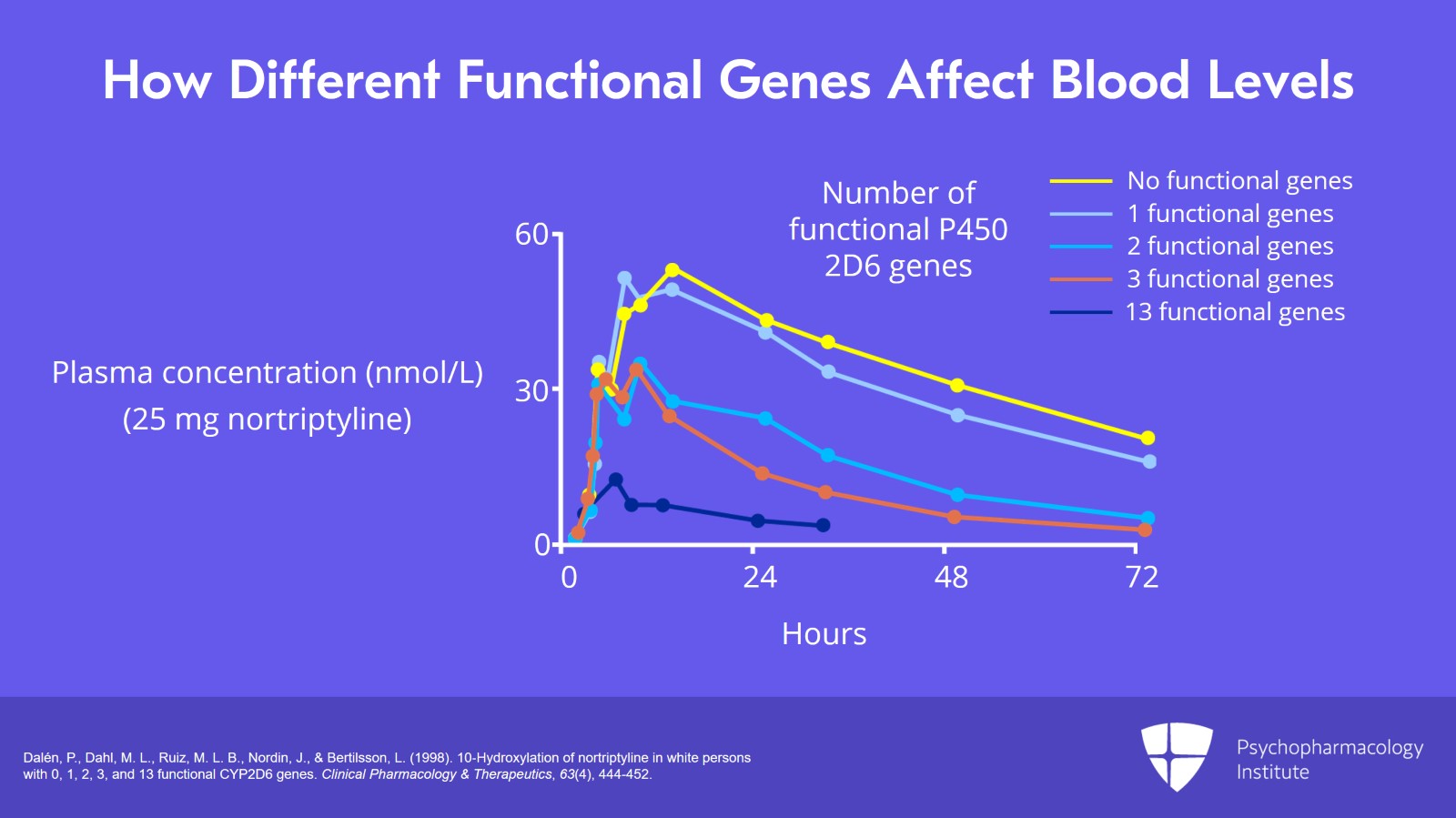
And there are some studies which support the idea that different functional genes affect the different blood levels. So there’s a study back in 1998 which looked at P450 2D6 and they classified patients according to whether they had none of the functional genes or one or two or three or even there’s a patient who had duplication and had 13 of these functional genes. So they gave the patient a dose of 25 mg of nortriptyline which we know is classically 2D6 metabolized. Then they measured the blood level for nortriptyline over the next 72 hours. And sure enough, they found that if you are an ultra-rapid metabolizer, the person who has 13 copies of this gene, within 24 hours, that dose of 25 mg is pretty much gone. And if you are a person who has no functional genes, then three days later, there’s still almost half of that dose still in your body. And you’ll note that even though they had no functional genes some of the medicine was still getting processed.
Free Files
Success!
Check your inbox, we sent you all the materials there.
Slide 7 of 9

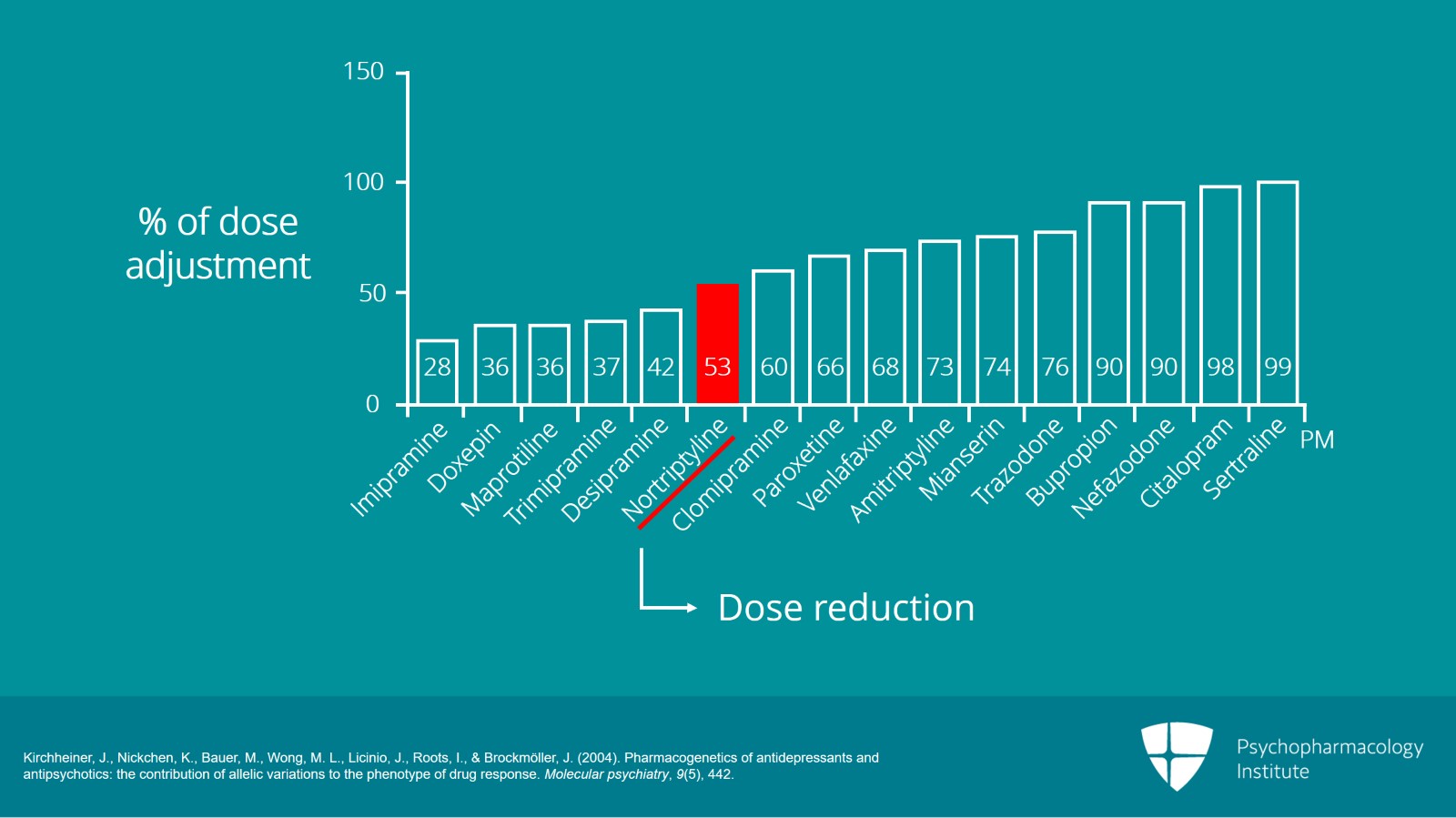
There’s another study by Kirchheiner back in 2004. She did a literature review and came up with this nice looking graph where it shows if you are a, for example, poor metabolizer and if you are taking nortriptyline, then you should be taking a lower dose. And she gives specific numbers of, for example, there should be about a 50% reduction in the dose if you’re a poor metabolizer taking nortriptyline. So that was based on literature review of many different studies.

Slide 8 of 9

The key points in this section are that antidepressants are metabolized by many of the P450 enzyme system. There’s usually more than one pathway of metabolism of a medicine. So usually, it consists of a major pathway and some minor ones. And there are data supporting that polymorphisms affect the blood levels of medications.
Free Files
Success!
Check your inbox, we sent you all the materials there.
Slide 9 of 9

Learning Objectives:

After completing this activity, the learner will be able to:

  1. Understand the basic pharmacogenomic factors that affect plasma levels of drugs.
  2. Weigh out the benefits of pharmacogenomic testing and how it needs to develop further.

Original Release Date: March 18, 2019

Expiration Date: March 31, 2022

Relevant Financial Disclosures: 

Simon Kung declares the following interests:

- Psychopharmacology Institute:  preparing CME presentation

All of the relevant financial relationships listed above have been mitigated by Medical Academy and the Psychopharmacology Institute.

Contact Information: For questions regarding the content or access to this activity, contact us at support@psychopharmacologyinstitute.com

Free Files
Success!
Check your inbox, we sent you all the materials there.
Continue in the website
Instant access modal

Become a Bronze, Silver, Gold, Bronze extended, Silver extended or Gold extended Member.

2025–26 Psychopharmacology CME Program

Unlock up to 155 CME Credits, including 40 SA CME Credits.