



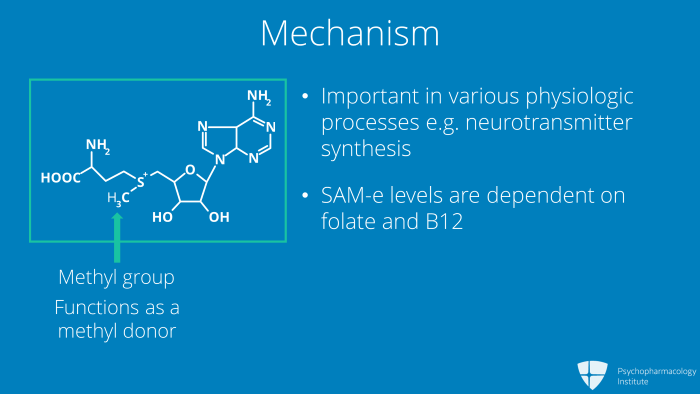
The next natural remedy I’ll discuss is called S-adenosyl methionine or SAM-e. SAM-e functions as a methyl donor. In the diagram, you can see the methyl group pointed to by the green arrow. This particular methyl group is very important in various physiologic processes, in particular neurotransmitter synthesis. SAM-e levels are dependent on the vitamins folate and B12.
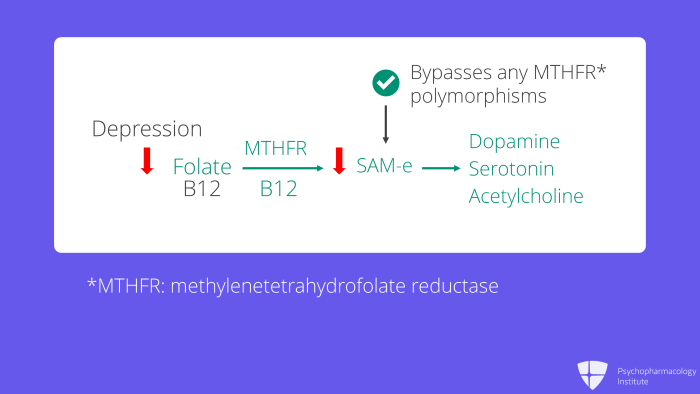
We know that depression has been linked to deficiencies in these two vitamins and as you can see in the diagram, it’s possible that one of the results of folate or B12 deficiency may be reduction of SAM-e. One advantage of using SAM-e for depression is that it may bypass any MTHFR polymorphisms. MTHFR is the enzyme methylenetetrahydrofolate reductase which is very important in the reaction shown in the diagram.
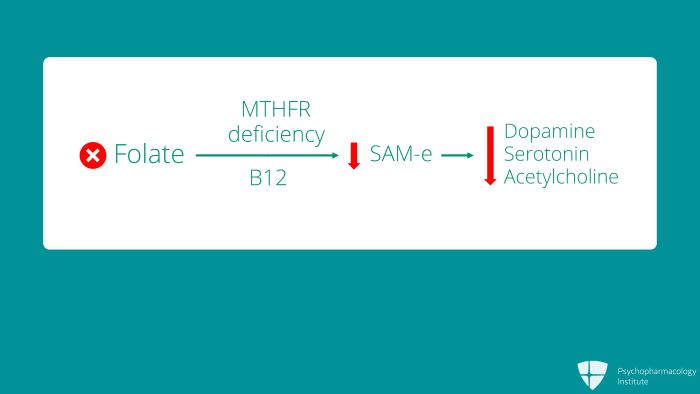
A person with this deficiency may not be able to metabolize folate properly and thus result in lower levels of SAM-e and hence in less synthesis of the neurotransmitters such as dopamine, serotonin, and acetylcholine as well as others. So by giving SAM-e, we continue to stimulate synthesis of these key neurotransmitters and this may be how it exerts its antidepressant effect.
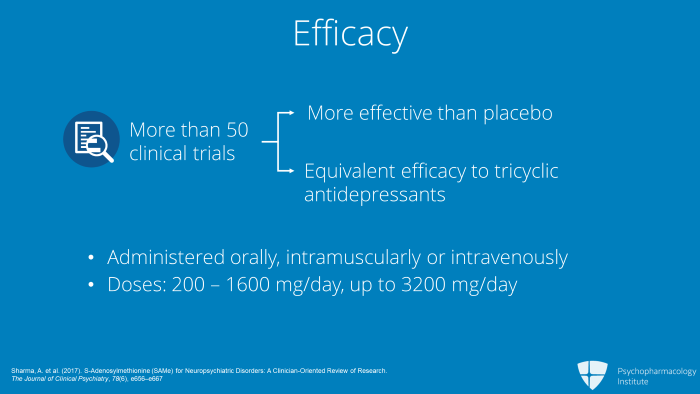
SAM-e like St. John’s wort is also very well studied. There are more than 50 clinical trials published for SAM-e and depression. And in these studies, SAM-e has been administered orally, intramuscularly or intravenously and doses have ranged from 200 to 1600 mg a day and more recently doses even as high as 3200 mg a day. By and large, the studies support SAM-e as more effective than placebo and about equivalent in efficacy for depression as the tricyclic antidepressants.
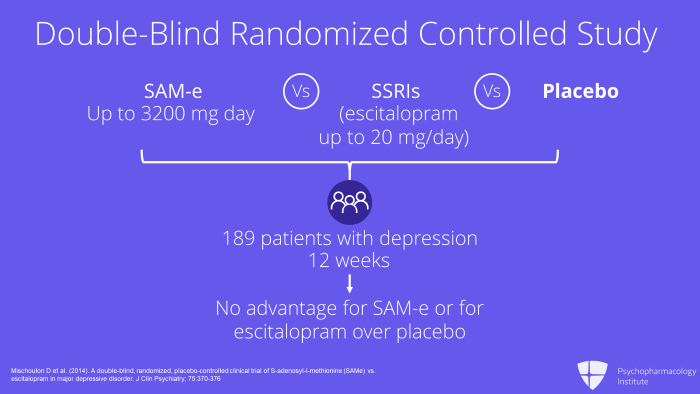
So far, there has only been one published comparison between SAM-e and SSRIs. In this study, we recruited 189 people with depression and for 12 weeks they were treated with SAM-e up to 3200 mg a day or escitalopram up to 20 mg a day or a placebo. This was a double-blind randomized controlled study. The results of the study showed no advantage for SAM-e or for escitalopram over placebo. All the treatment arms improved about the same. So it’s not clear from this study how much of SAM-e’s benefit might be due to a placebo effect.
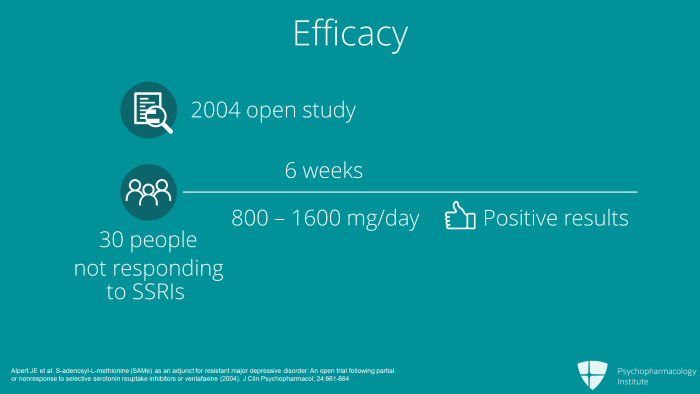
In 2004, Alpert and colleagues published an open study of SAM-e in which it was given to 30 people who were not responding to SSRIs at doses between 800 and 1600 mg a day for six weeks and the results were positive showing efficacy.
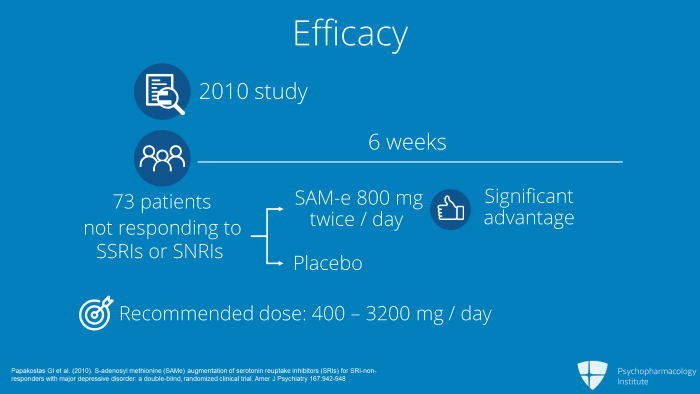
Papakostas and colleagues followed up this study in 2010. They recruited 73 individuals who were not responding to SSRIs or SNRIs and for six weeks they were treated with SAM-e 800 mg twice daily or placebo. This study found a significant advantage for SAM-e. The recommended doses of SAM-e based on the literature are between 400 and 3200 mg a day.
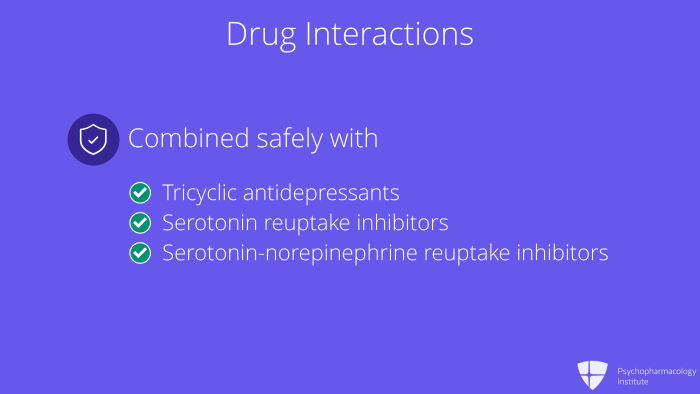
SAM-e can be combined safely with other drugs since it doesn’t have very many interactions. It has been combined with tricyclic antidepressants, serotonin reuptake inhibitors, and serotonin-norepinephrine reuptake inhibitors.
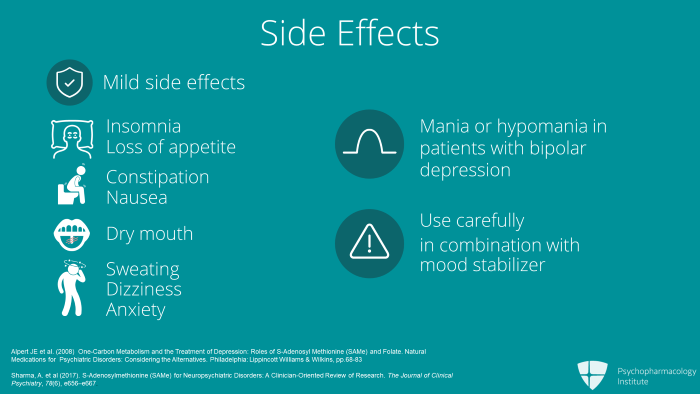
SAM-e appears to be a very safe drug. Most of the side effects reported tend to be mild. These include insomnia, loss of appetite or anorexia, constipation, nausea, dry mouth, sweating, dizziness, and anxiety. There have been cases of mania or hypomania developing in individuals with bipolar depression. These individuals should use SAM-e carefully and preferably in combination with a mood stabilizer.
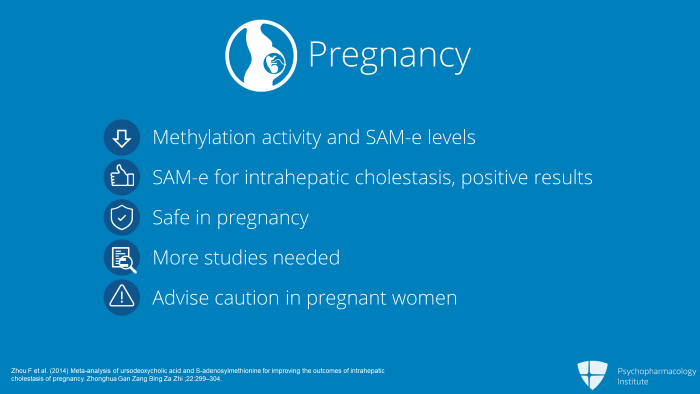
What about in pregnant women? It has been shown that pregnancy actually decreases methylation activity and SAM-e levels. So in theory, SAM-e should be beneficial. There is one study done in pregnant women who were given SAM-e for intrahepatic cholestasis and results were positive. This suggests at least that SAM-e is safe in pregnancy but we need more studies to answer the question more conclusively. For now, we advise caution in pregnant women.
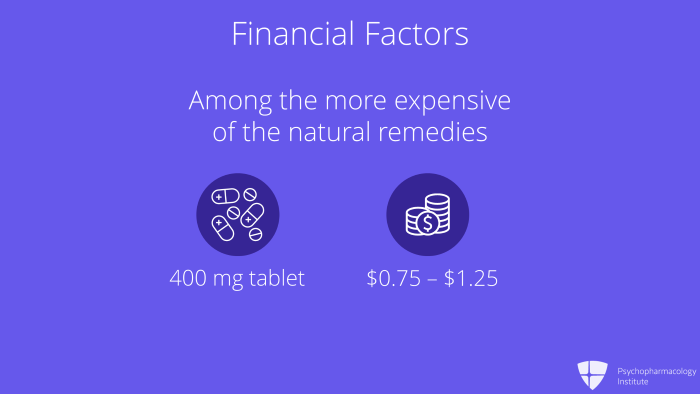
One final consideration about SAM-e is that it is among the more expensive of these natural remedies. A 400 mg tablet may cost between $0.75 and $1.25. So for the individual who needs a very high dose, the cost could be quite substantial.
I will now summarize some key points on SAM-e. Overall, the evidence supports antidepressant efficacy as well as safety. SAM-e can be used by itself as monotherapy or in combination with standard antidepressants. Unfortunately, the cost of SAM-e may be prohibitive to some individuals.
References
- Sharma, A. et al. (2017). S-Adenosylmethionine (SAMe) for Neuropsychiatric Disorders: A Clinician-Oriented Review of Research .The Journal of Clinical Psychiatry, 78(6), e656–e667
- Mischoulon D et al. (2014). A double-blind, randomized, placebo-controlled clinical trial of S-adenosyl-l-methionine (SAMe) vs. escitalopram in major depressive disorde r. J Clin Psychiatry; 75:370-376
- Alpert JE et al. S-adenosyl-L-methionine (SAMe) as an adjunct for resistant major depressive disorder: An open trial following partial or nonresponse to selective serotonin reuptake inhibitors or venlafaxine (2004) . J Clin Psychopharmacol; 24:661-664
- Papakostas GI et al. (2010). S-adenosyl methionine (SAMe) augmentation of serotonin reuptake inhibitors (SRIs) for SRI-non-responders with major depressive disorder: a double-blind, randomized clinical trial . Amer J Psychiatry 167:942-948
- Alpert JE et al. (2008) One-Carbon Metabolism and the Treatment of Depression: Roles of S-Adenosyl Methionine (SAMe) and Folate. Natural Medications for Psychiatric Disorders: Considering the Alternatives. Philadelphia: Lippincott Williams & Wilkins, pp.68-83
- Zhou F et al. (2014) Meta-analysis of ursodeoxycholic acid and S-adenosylmethionine for improving the outcomes of intrahepatic cholestasis of pregnancy . Zhonghua Gan Zang Bing Za Zhi ;22:299–304.
